

“Lingering Questions” is one of my favorite parts of the Masters in Marketing newsletter because it’s an opportunity for marketers to talk directly to each other.
This year, some clear themes emerged: Yes, AI can help you be a better, more efficient marketer, but Human connection is more important than ever; Authenticity, even if it means being somewhat unpolished, is preferable to perfection; and consumers in all industries are hungry for community.
We’ve rounded up all the questions marketers have been asking each other over the last 12 months:
April Sunshine Hawkins, Head of Marketing and Communications
“What warm memory comes to mind when you hear these three words: creative, curious, courageous?”
Irina Novoselsky, CEO of Hootsuite
“For the past year, I’ve focused on building meaningful relationships on LinkedIn – sharing personal and professional experiences to create real connections. Each of these words has shaped this journey: staying curious about what my audience cares about and wants to learn from me, experimenting with creative ways to share my experiences and connect with others, and embracing the courage it took to start and be vulnerable.”
“As the CEO of a social media company, I recognize the transformative power of social media. It drives the pipeline, builds connections, and ensures your voice shapes conversations that happen with or without you. But what’s even more powerful is the impact the relationships built through social media can have outside of the digital world.”
“One standout memory is the first “IRL” dinner I had with a marketing executive I connected with on LinkedIn after months of engaging with each other’s content. What started as a digital connection has since blossomed into a real friendship (and lots of double dates with our husbands!) – all thanks to social media.
“To any marketers reading this who may be hesitant to get started, let this be your cue: Take the plunge into posting. You don’t know what new friendships you might be missing out on.”
Read more: Generation Z is turning this CEO’s business model on its head
Novoselsky asked“How do you approach your personal brand on social media? Has social media created meaningful opportunities or opened doors for you professionally and personally?”
Preston Rutherford, Co-founder of Chubbies
“I approach personal branding by trying to be exactly who I am in person. I don’t know how to do anything else.”
“And yes, it has opened endless doors, not least the opportunity to speak with (Masters in Marketing)!”
Read more: Chubbies co-founder warns: Don’t get addicted to the performance marketing drug
Rutherford asked“What’s your favorite movie that you’re embarrassed for anyone to know about?”
Anna Engel and Nathaniel Gaynor, Director of Brand, Content and Culture; Senior Marketing Manager, Brand Partnerships at McDonald’s
Gaynor: Eurovision Song Contest: The Story of the Fire Saga
Angel: The Princess Diaries
Read more: Beyond the golden arches: How two McDonald’s marketers are winning over Generation Z
Angel and Gaynor asked“Which brand do you think is taking bold risks to connect with Generation Z today?”
Jeff Wirth, Co-founder of Interactive PlayLab
“Party At Anna’s is a company that pushes boundaries by creating interactive and immersive experiences that reflect Generation Z’s love of storytelling and social engagement.
“Their projects take bold risks by incorporating real-time audience participation, unconventional venues and dynamic, unpredictable narratives. Embracing themes of identity, community and collective storytelling, they create highly shareable and deeply personal experiences that redefine what theater can be for a new generation.”
Read more: Blue Man Group, consultants behind Meow Wolf, share lessons on joy, play and brand experiences
Wirth asked“What is a blind spot in the marketing world that, if addressed, would improve people’s lives?”
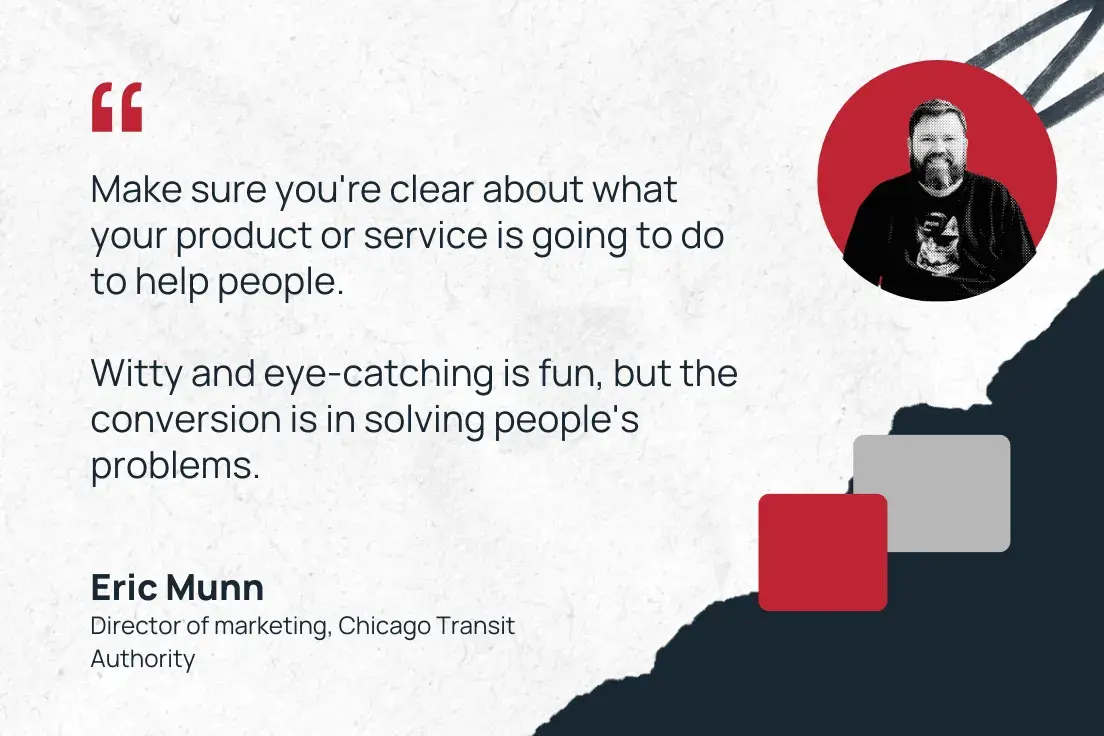
Eric Munn, Chicago Transit Authority Marketing Director
“A big blind spot in the marketing world is forgetting that most people don’t know your brand as well as you do. Many brands use messaging that already assumes people know who you are or what you offer. Make sure you’re clear about what your product or service will do to help people. Being funny and eye-catching is fun, but conversion is in solving people’s problems.”
Read more: Marketing like a castaway
Munn asked“What career have you always wanted to pursue but never did?”
Jennifer Waters, Co-founder of the 7 Figure Dojo and head sensei at Seigler’s Karate Center
“Honestly, I’ve always wanted to do what I’m doing today! No other career I would want to do!”
Read more: Be a slam dunk in marketing for small and local businesses
Waters asked“What is a marketing mechanism that quickly generates the most revenue for a startup?”
Erin Quinn, The original pickle shot
“I know it’s annoying to say ‘it depends’, but my recommendation for rapid revenue growth would probably vary depending on the startup.
“For example, paid social is likely a cost-effective and impactful choice for a budget-friendly DTC skincare brand targeting Generation Z. (There’s a reason paid social is the first and only paid medium many brands invest in!)
“Promotional codes, discounts and couponing can be an important addition to this campaign as these tactics provide an additional incentive for conversion and you can use redemption as a KPI.”
“No matter the business model, my main recommendation to do this above all else would be to invest time in targeting your customers, your positioning and developing your brand identity so that you are targeting the right people in the right places with the right messaging and the right creativity. While this won’t increase sales in the short term, it will save you money and increase sales in the long term.”
Read more: How this small startup outperformed a stagnant industry
Quinn asked“What is the most memorable advertisement (commercial, print ad, OOH, anything!) you can remember and why do you think it stuck with you?”
Alex Liebermanco-founder, Morning brew
“The OG Dollar Shave Club commercial “Our Blades Are F*cking Great.”
This spot hits everything I look for in a good ad:
- It tells a story that makes you FEEL before you THINK.
- His approach is novel, which creates intrigue and makes you want to lean forward (instead of leaning back).
- No product is sold. It sells an emotion. And once you feel that feeling, you become open to the product. It’s an advertisement disguised as entertainment. The best ads make you feel like you’re eating ice cream when you’re actually eating cauliflower.
The spot generated 27 million YouTube views on a budget of $4,500 and I believe this is a big reason why DSC was eventually sold to Unilever for $1 billion.”
Read more: Morning Brew co-founder on the three channels that will win in 2025 (and how to create a standout voice)
Lieberman asked“What do you think about the ongoing “attribution” hype? And what is the right level of attribution without making your marketing strategy overly scientific/metrics-driven?”
Jackie Widman, Vice President of Marketing at Bero Brewing
“When you’re building a new brand from scratch, you don’t have to look at historical data when evaluating performance. We do everything we can to combine a mix of more tactical metrics (e.g. sales of our products across all channels as we invest in various marketing tactics, how quickly we’re growing our community and how engaged they are with the information we share with them, and of course we monitor sentiment in everything we say and do).
“The best thing brands can do now is to act with a connected strategy and treat every moment as an opportunity to be 360° – and really analyze their results in the same way.”
Read more: Be a Complement, Not a Replacement: Lessons from Tom Holland’s NA Beer Brand
asked Widmann“Right now it seems like so many brands are investing in beautifully produced, curated experiential moments designed to increase awareness and shareability (and are probably very expensive). How do you think new brands with limited budgets should approach this tactic and still manage to get out of the clutter?”
Kevin Indig, Growth Consultant for Hims, Reddit, Toast, Dropbox and more
“In my experience, the highly produced moments are important at certain moments, such as when customers are considering a purchase, but what often catches their attention is the extremely authentic, raw moment.
“This is why influencer marketing works. So, as a brand with a limited budget, I would focus my budget on a few well-produced marketing assets (like videos with product images) and the rest on authentic, raw moments that build trust and curiosity.”
Read more: Reddit’s growth advisor for finding your industry-specific SEO strategy
Indigo asked“What is the most underrated marketing channel right now and why do you think it deserves more attention?”
Lisa Lozelle, Senior Director of Government Communications and Engagement at Best Buddies International
“For me, direct mail is the most underrated marketing channel right now. A well-designed print item can stand out in the clutter and make an impact.”
“People save postcards from their favorite nonprofits that capture an important moment and connect them to the cause. They highlight pages in a well-designed catalog with products they covet and are encouraged to purchase through direct mail that feels curated and personal.”
“Pro tip: Mail isn’t dead – ask Generation Z. According to a USPS survey, 72% of digital natives enjoy good, old-fashioned mail. Give them something to hold on to.”
Read more: Brand-building brilliance from Best Buddies
Lozelle asked“As a marketing thought leader, how do you see AI impacting the strategic thinking and creative process of brand building?”
Heike Jung, Head of Content, Social and Integrated Marketing at Microsoft
“AI is effective as a thought partner. Ask it to poke holes in your strategy and play devil’s advocate. Also ask it to find additional research and data points that you didn’t consider. These workflows can make your original ideas even stronger.”
“Still, I believe human creativity is more important than ever, and I love seeing human fingerprints on the content I personally consume. For example, I recently fell in love with all the little creative touches in Severance.”
“I believe that some AI-related changes in marketing will happen faster than we expect, and others will happen more slowly. Only time will tell what falls into which category. That’s why I use AI where it’s useful to me and don’t force it where it doesn’t seem helpful.”
Read more: How Heike Young is changing B2B marketing with humor
Young asked“What marketing advice would you have given at the beginning of your career but no longer give it because of the changes in marketing?”
Sonia Thompson, Founder of Inclusion and Marketing
“Early in my career, I would have advised marketers to focus on a unique brand and really invest in what you can do to deliver a remarkable customer experience.”
“It’s not that remarkable experiences and strong brands aren’t necessary, but spending too much time there – especially in advance – prevents brands from showing up consistently. Today’s world and consumers are changing quickly – and frankly, consumers will be the ones to guide you in what makes a remarkable experience.”
“That’s why it’s more important now to show up and make your voice, your point of view, and what you stand for known. Refine your experience over time based on feedback from your customers and the community you’re building. That community and the trust they need to have in you is hard to build if you don’t show up regularly. Don’t fall into the trap of analysis paralysis.”
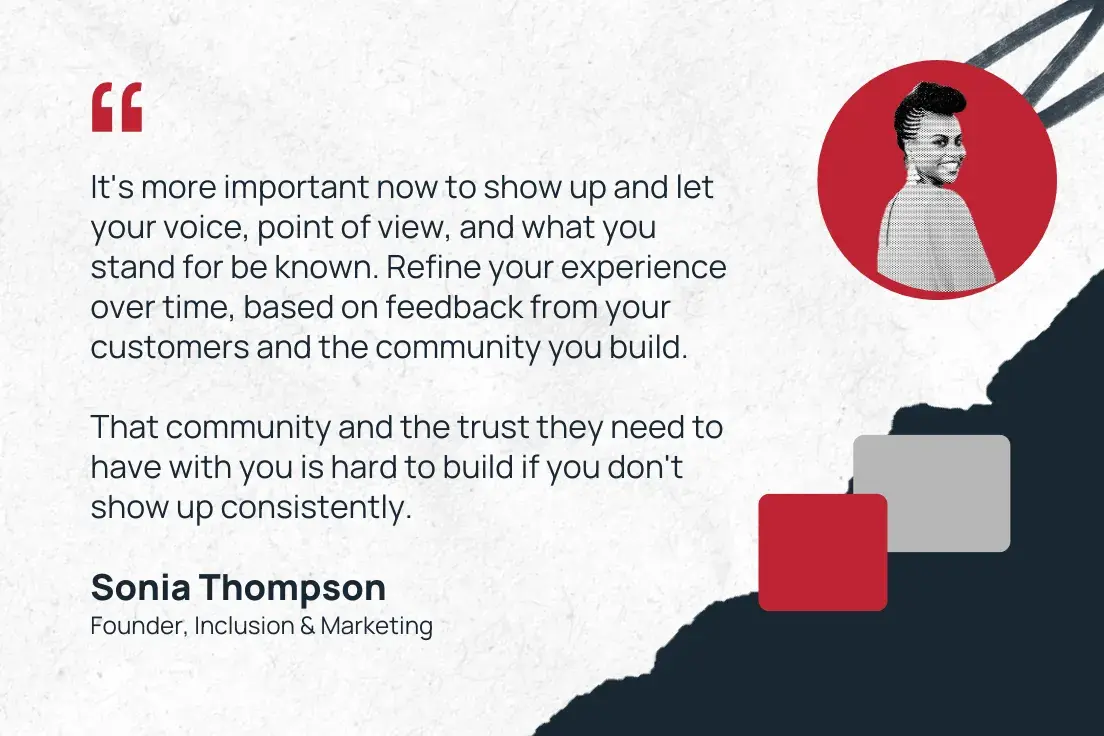
“This isn’t about delivering poor quality, but rather about brands and marketers becoming more active in their work and contributing to the culture as it happens. Be relevant and notable to consumers in a way that is most valuable and relevant to them. Your marketing and impact will be much more effective as a result.”
Read more: Energy of the main character: What Black panther can teach you about inclusive marketing
Thompson asked“How has inclusion shaped the way marketing has been done over the last five years, and how do you think it will shape (if at all) the next five years of marketing?”
Jay Schwedelson, Founder of SubjectLine.com and host of Try This, Not That! For marketers only!
“Over the last five years, inclusion has evolved from a checkbox for companies to an essential part of our overall marketing and business approach (or at least it should be!).
“It’s no longer just about who appears in stock photos; it’s about who develops the strategy, writes the copy and makes the decisions.”
“In our own work, from virtual events to newsletters to agency services, we have seen that people engage more, share more and stay loyal longer when they feel seen.
“Looking forward, inclusion will shape not just marketing, but marketing itself. As AI continues to dominate content creation, the ability to add a human touch and make every person feel acknowledged, respected and understood will be the ultimate differentiator.”
Read more: Name-calling is rubbish, says this email expert. (Plus, 3 Reasons Jay Is a Loser)
Schwedelson asked“What marketing belief you held five years ago has completely changed your mind?”
Brian Morrissey, Founder of The Rebooting and former editor-in-chief of Digiday
“That in-person events would become less important. 100% wrong. In-person events are more important than ever.”
“Humans are social animals and will always gather. No matter what AI brings, I don’t think the human species will throw in the towel on gathering.”
Read more: According to Digiday’s former editor-in-chief, the era of growth hacks is coming to an end
Morrissey asked“Will SEO be obsolete in three to five years?”
Shelagh Dolan, Head of Content Marketing at Quora for Business
“Honestly? Yes.
“Traditional, organic SEO has always been challenging – requiring constant research and maintenance with no guaranteed returns, not to mention reliance on an algorithm that could derail your strategy at any moment.”
“AI overviews and zero-click search have made it ten times harder to drive organic traffic, and in three to five years there will be no reason for anyone to ever scroll through results pages to land on a company-sponsored blog post reading a long-winded, H2-filled overview of an industry topic – and I say that as a long-time content marketer.”
“I think about how my own information-seeking behavior has completely changed in the last year with AI, from finding quick answers and troubleshooting technical problems at work to creating recipes and getting TV/movie recommendations at home.”
“I don’t have a technical background, but I get a daily behind-the-scenes look at the AI product the Quora team is building (it’s called Poe and it’s a central place where you can access any AI model and build your own custom bots). The biggest shock was how quickly new models and features are introduced – announcements and launches almost daily.
“I think marketers – probably especially B2B marketers – are very aware of the capabilities of AI and its impact on SEO and other aspects of marketing, but it won’t be long before the general public catches up and becomes accustomed to the deeply personalized experiences possible through AI.
“Soon everyone will gravitate towards their preferred method of finding and consuming information, whether that’s scanning an AI overview, sending messages to a chat app (which can already do so much more than just chat), talking out loud to AI, or referencing a handful of trusted sources.”
“I think that in three to five years we will be far from scrolling through SERPs and much closer to one Her (the 2013 sci-fi film in which a man falls in love with his AI) Situation.
Read more: Does Quora Work for Marketing?
Dolan asked“Besides AI, what marketing trends or technologies are you keeping an eye on or planning to try this year?”
Katie Parkes, Director of Social, Community and Customer Marketing for Apollo.io
“I’m following the evolution of data storytelling closely, especially as trust in traditional marketing claims continues to decline.
“Today’s standout brands don’t just publish content – they show evidence. Customer impact. Product usage. Transparent benchmarks. As social algorithms continue to reward who gets the most attention, credibility is the new currency.”
“But here’s the thing: Credibility can’t just be established and it’s not just about numbers. It has to be achieved in creative, human ways, so you have to rely on real voices.”
“That’s why I’m excited about creator-led and community-focused B2B marketing – engaging your power users, internal experts and community members to share the story in their own words. We’re moving away from sophisticated brand narratives and toward trusted individuals who bring both expertise and authenticity.”
“It’s not about saying more, it’s about being believed.”
Read more: Turn your power users into creatives (and vice versa)
Parkes asked“What is a ‘boring’ marketing channel or tactic that is currently working much better for you than expected, and why do you think that is?”
Jay Schwedelson, Founder of SubjectLine.com and host of Try This, Not That! For marketers only!
“Weekend email sends! Email campaigns targeting contacts at director level and above generate a 40% increase in click-through rates compared to last year. Left untested, Sunday sends remain an extremely valuable opportunity to engage with key people when they have the time to really engage with what you share.”
Read more: What You’re Doing Wrong in Your Marketing Emails (According to an Email Expert)
Schwedelson asked“You always say ‘create once, distribute forever’ – what content have you been milking for longer than anyone should reasonably admit? And why this one?”
Ross Simmonds, Founder and CEO of Foundation Marketing
“One piece of content I really liked? A tweet I wrote in 2019 simply said ‘Create once, distribute forever’ and it was a hit… It wasn’t even intended as a flagship idea at the time… Just a brain dump about a repurposing strategy. But I kept referencing it in talks and turned it into a slide, a workshop, a tweet thread, the title of my book, a core framework for Foundation.”
“Why that? Because the concept resonated not only with marketers, but also with entrepreneurs, creators, and executives who realized they were sitting on gold without mining it. It gave people permission to stop chasing new things and start maximizing what they already had. That message stuck, and I’ve been doubling down ever since.”
Read more: Trash AI content, experimental budgets and TikTok for B2B: Ross Simmonds unfiltered
Simmonds asked“What’s a marketing hill you’ll die on… Even if the data or trends say otherwise?”
Grace Wells, Creative Director
“It’s not about how big you are, it’s about how connected your audience feels.
“Buying followers is worse for your credibility than having a small organic following. Avoiding events because they cost money robs you of the customer interaction you need. Organic content and brand storytelling are what make conversion content work. I see so many brands busy chasing instant conversion in order to scale as quickly as possible.”
“To make it big, you have to connect with an audience that is committed to your growth, and that requires soft skills.”
Read more: Give customers space to see their company as part of your company
Wells asked“What is one thing you learned in your very first job that is still central to the entrepreneur you are today?”
Joy Gendusa, Founder and CEO of PostcardMania
“I learned that most people give 80% to their work and some give 100%. If you give 110%, you are the best.”
Read more: 239% growth through… print email?! Why you shouldn’t sleep on direct mail
Gendusa asked“What marketing strategy do you think will be outdated in five years?”
Maya Grossman, Executive Career Coach and CEO of the Maya Grossman Group
“In 5 years, content will no longer be king.
“We’re already seeing that AI can generate ‘good’ content on demand (just spend 5 minutes on LinkedIn). What wins out is not just quality, but sales strategy, speed of iteration, strategic positioning and relevance. Your brilliant thought leadership doesn’t matter if your buyer’s AI skips it for something faster, easier or more emotionally compelling.”
“Marketers’ jobs will be less about creation and more about finding partners.”
Grossman asked“Which trend do you think is overrated or completely misunderstood?”
Brenna Loury, CMO of Doist
“Add AI chatbots everywhere. *takes cover*
“Unless there’s a very obvious use case, I think this is a lazy implementation of AI. Most companies need to think much more deeply about their users’ pain points before simply putting a chatbot on their UI.”
Read more: Memorable marketing, visible mistakes and a faster horse
asked Loury“What do you like most about marketing that isn’t easily measured?”
MacKenzie Kassab, Director of Creative Strategy at Rare Beauty
“The emotional connection. I love the way marketing can make people feel something. That could be inspiration, motivation, curiosity, nostalgia, or just a moment of joy. For us, it comes down to self-acceptance and belonging. That connection drives everything we do, no matter how impossible it is to quantify (though I’m sure AI tries).
“Making even one person in our community feel seen and comfortable in their own skin – I love my work so much, but that’s what really gives it all meaning.”
Read more: Rare Beauty’s “anonymous insider” spills the tea about their new Substack
Kassab asked“What do you like least about your job and how do you motivate yourself to overcome it?”
Max Miller, Founder and presenter of Tasting History
“My least favorite thing about the job is the constant need for growth and more content. Whenever a video is released, YouTube gives me a ranking of how the video compares to the last 10 videos. If it’s 1 out of 10, it’s a good day; if it’s 10 out of 10, I spend the whole day wondering why people didn’t like it as much.”
“The best way to motivate myself through this is to remind myself that I can do what I love for a living – even on difficult days, that perspective keeps me going.”
Read more: Tasting Marketing: What a Viral YouTube Star Wants, Marketers Know
Miller asked“Have you found AI to have an impact on your work at Condé Nast? If so, has it been positive or negative overall? In many ways, the proliferation of AI content makes it more difficult to create quality content, especially educational content, so I’m always excited to see how this new technology impacts other areas.”
Sheena Hakimian, Senior Director of Digital Consumer Marketing at Condé Nast
“From a marketing and subscription perspective, we’re excited to explore how AI can help us deliver more dynamic, personalized experiences on our websites. However, the human touch is still at the heart of our strategy, particularly when it comes to brand voice and creative direction.
“The rise of AI-generated content has made high-quality, thoughtful content even more valuable. It’s easier than ever to distribute content, but much harder to build trust, credibility and originality.”
“At Condé Nast, our unique selling point still lies in our storytelling and editorial integrity. For us, AI is a tool to align our voices with, not to replace. So overall, I would say it can have a positive impact if used with intent. But as with anything, it depends on how thoughtfully it is integrated.”
Read more: Condé Nast’s marketing director shares her approach to crushing your imposter syndrome
Hakimian asked“You’ve built an incredible reputation for understanding Gen Z behavior and creating authentic, community-focused content. How do you balance consistency with creativity in a world constantly looking for virality, and what advice would you give to brands trying to build, not JUST achieve, real relationships over time?”
Jayde Powell, Founder and Head of Creative at The Em Dash Co.
“Remember that there is a difference between consistency and rhythm. A lot of times I feel, especially when it comes to building a community on social media, that there is a mentality that the more content you put out, the more you interact with people – and the more beneficial that is for your brand. And I disagree.”
“I think what people are looking for is a feeling of comfort, a feeling of home, a feeling of familiarity. And that’s what you can achieve through consistency. Consistency is less about how much and how often you publish content and more about the feelings your audience will associate with your brand.”
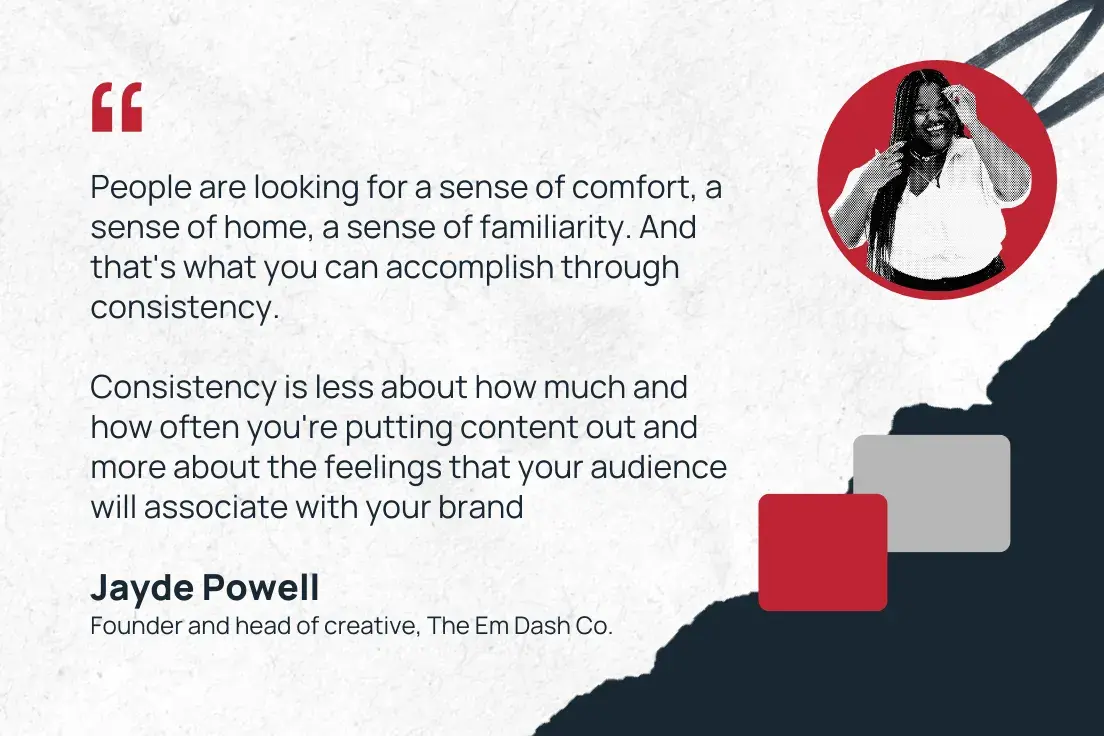
“So it could literally be something as simple as the style and tone in which you communicate or create your content. It could be the visual elements that you use. It could be the way you greet your audience when you post – those are the things that really build a community.”
“Think of it like a relationship. You don’t have a relationship with someone just because they do so many things for you, but because they do it for you. That’s how it should be for your community when it comes to brands.”
Read more: Marketing Without Fear: Jayde Powell on Gen Z Audiences
Powell asked“What brings you joy?”
Ryan Atkinson, Founder and CEO of Spacebar Visuals
“Professionally speaking, when you make a bet on something and it works.
“Personal: being with family and friends, playing sports and reading books.”
Read more: Don’t just grow to grow: Real talk from a serial founder
Atkinson asked“If you could only invest in one tool to help your business grow over the next three years, what would it be?”
Al Iverson, Head of Industry Research and Community Engagement at Valimail and Deliverability Consultant and Editor at Spam Resource
“Email deliverability is a land of best practices, codes of conduct that we collectively advise people to adhere to, but we can potentially become too complacent to stay in our lane and not challenge the status quo on how best to do something, be it engaging with our audience or marketing a new product.”
Read more: Here’s why your next newsletter won’t send spam
Iverson asked“What is an emailing habit or best practice that you think we should collectively stop, and what would you replace it with?”
Lindsey Gamble, Creator Economy Consultant and Lindsey Gamble Newsletter Author
“It’s a mistake to rely solely on last-click attribution to measure influencer marketing success. Sure, tracking links and promo codes indicate direct sales, but creators play a much larger role in awareness, brand building, consideration, traffic, and more, all of which lead to subsequent purchases even if the link or code isn’t used.”
“We need to measure creator impact more creatively and look at the bigger picture, including content performance, website traffic, brand follower growth, search growth, share of voice, brand and sales lift studies, post-campaign surveys and other methods to capture the true impact of influencer campaigns, otherwise you’re likely missing a lot.”
Read more: Why creator marketing works for every business
Gamble asked“What is a marketing strategy or trend that you think is widely overlooked but currently has great potential for impact?”
Brandon Smithwrick, Founder of Content to Commas
“One strategy that I think is often overlooked is using social media to drive exclusive offers directly within the community you’ve already built. For example, announcing a promotion through Instagram Close Friends can help you build a sense of traction before launch. Tools like ManyChat also make it easy to create DM-only offers that feel special and personal.”
Read more: “Can you make money with this?!”
Smithwrick asked“What’s a creative hot-take that makes a marketer question how they work with creatives?”
Alicia Mickes, Senior Creative Director at Magic: The Gathering
“In my experience, the business side (i.e. product strategists, sales and marketing managers) brings creativity in too late… Often creativity is viewed as a shiny gift wrap around product strategy – but in reality, creativity is product strategy.”
“If you bring us in at the end, you don’t get design, just decoration. Every time you give us a baked plan and ask us to make it pop, you’ve already cut out the basics for a more effective marketing campaign.”
“Let creatives lead sooner! I always recommend working in groups: Have holistic conversations about campaign development early with key stakeholders across media, strategy, product and creative. The future of marketing is all about experiences where creative execution is indistinguishable from brand strategy. If you’re still thinking of creative as just a service department, you’re already behind.”
Read more: Why creative teams need the security to fail, according to a senior director at Magic: The Gathering
Mickes asked“How are you or your company rethinking the role of the creative as marketing shifts from communication and storytelling to creating authentic cultural experiences?”
Deesha Laxsav, Senior Manager of Brand Marketing at Clutch
“At Clutch, we ensure that every piece of content is supported by creative elements based on real experiences. This means we include authentic perspectives from influencers and vendors that we quote so that the stories are not just sophisticated narratives, but a reflection of what is actually happening in the market.”
“Recently, we’ve been testing more video content that’s intentionally less demanding, rather than investing in big, glossy productions. We’re seeing people consistently choose authenticity over stiffness. They want to hear directly from trusted experts in a way that feels conversational and relatable. For us, the job of creativity is to amplify real voices and experiences, not produce them.”
Read more: Why You Should Build Relationships Backwards (and How)
Laxsav asked“When it comes to building partnerships for CultureCon, how do you decide which people to work with – be they speakers, creators, or community leaders – to ensure they authentically represent CultureCon’s mission and resonate with your audience?”
Shareese Bembury Coakley, Vice President of Business Development and Partnerships at CultureCon
“At CultureCon, data is paramount to everything we do. So we don’t make assumptions about our audience, we don’t just come up with ideas. We really let that (data) influence everything you see.”
“So, the program you think is super relevant? Our communities told us what they wanted, the brands they liked to interact with, the speakers they wanted to hear from, and we listened to them.”
“I think a lot of brands and communities sometimes try to go against the grain and force something on their audience, and that’s not what they want. We evolve and iterate (based on data), and that’s why the brands, the community and the speakers can come out and have a great time.”
Read more: It’s all about you
Bembury-Coakley asked“I think nostalgia is something that’s overdone. I’d like to know: How can brands better engage with communities or consumers they want to connect with?”
Bryetta Calloway, Co-founder and CEO of Stories Seen
“I agree, nostalgia has become the easy button for connection. But real community is built forward, not backward. The better way for brands is participatory storytelling: inviting people to help shape the narrative rather than simply consuming it. Communities don’t want to be reminded of who they were; they want to be seen for who they are becoming.”
“This requires marketers to move from campaigns to contexts, to spaces where shared curiosity, lived experience, and emerging identity meet. Whether through local storytelling, transparency behind construction, or platforming authentic user voices, brands can move from “remember when” to “imagine with us.”
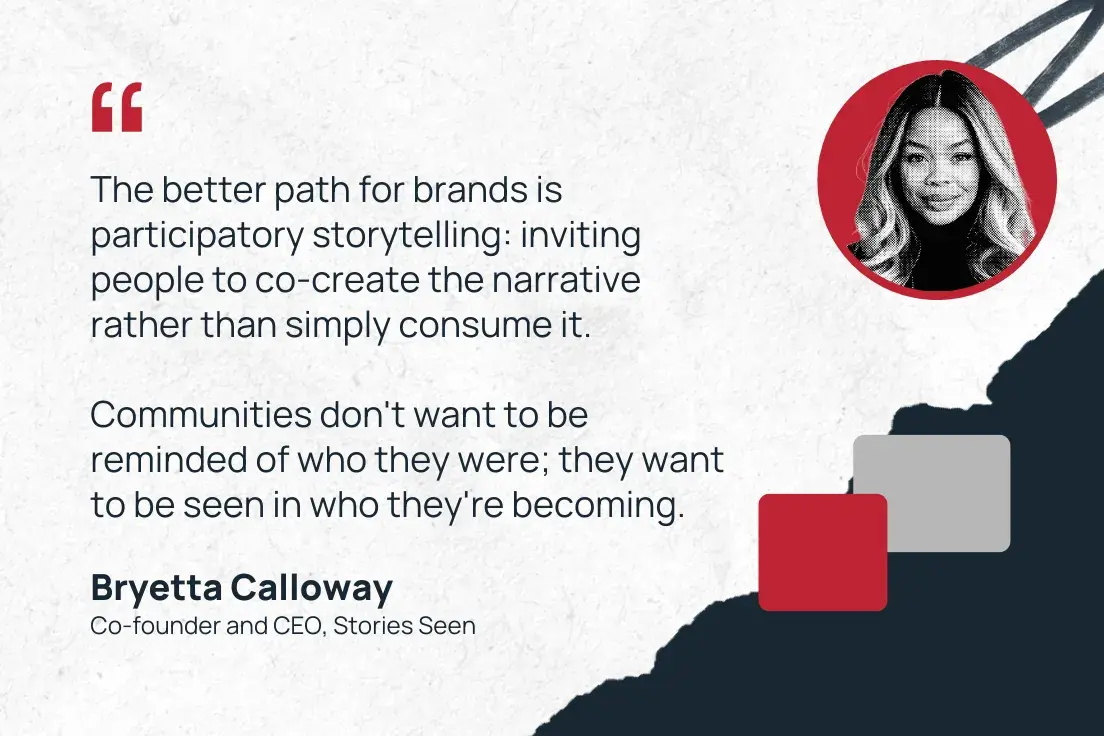
“Today, connection is no longer about familiarity, but about agreement. The question is not, ‘How do we go back to what people loved?’ but rather, “How do we stand next to what they create next?” Trust, loyalty and modern belonging live here.”
Calloway asked“As marketers, we often talk about authenticity and alignment, but these words can quickly become buzzwords. How do you ensure your team stays connected to real people and not just the performance of the connection?”
Katie Miserany, Chief Communications Officer and SVP Marketing at SurveyMonkey
“You really need to know what your customers care about and what they want from you. I think a lot of brands want to be ‘cool’ these days, and that’s currently contributing to a major flattening of brands and content across the ecosystem.
“At SurveyMonkey, we don’t strive to be cool. We want to be the lovable nerd you want to work with in your high school chemistry lab because you know we’ll do all the work and make you look fancy. How to differentiate yourself today: Know the value you provide in the eyes of your customers and maximize it in everything you do.”
Read more: Why SurveyMonkey’s marketing director says your foundation is broken
Elend asked“Every executive must justify marketing and brand investments with hard numbers. How do you functionally bridge the gap between creative, intangible brand value and tangible financial results, and how do you justify that brand investment to key stakeholders?”
Ashley Judge, Managing Director at Destination Salem
“In destination marketing, our work lies between numbers and imagination. We’re here to drive economic value for residents and small businesses, so we measure everything: visits, spending, seasonality, excise taxes. But we get there by creating a little imagination. People come not because of data, but because they’ve been drawn into a story about a place. Our creative work builds that story, and when it works, you can see it in the numbers below.”
Read more: Marketing Removes Barriers: Lessons from a Destination Marketing Expert
Judge asked“What does your team do out of pure love for the user – not metrics, not growth, just because it feels right?”
Ashley Faus, Head of Lifecycle Marketing, Portfolio, at Atlassian
“We offer that Atlassian Team PlaybookAvailable for free and without gating to make it easier for teams to collaborate. It’s packed with practical advice, exercises, and templates to help teams identify dependencies, conduct retros, and define roles and responsibilities.
“We’ve also added some whimsical experiences to the product, such as a Halloween animation or confetti when you move a task to complete. This makes our users’ day a little brighter!”
Faus asked“What tactics are marketers using to make their messages stand out in a show floor full of AI booths?”
Jihan Donawa Gibson, Senior Growth Marketing Manager at Swoogo
“The best way to differentiate your booth from AI is to be human. Seems simple, but sometimes we forget that just setting up the booth doesn’t mean visitors will come. In this AI-driven time, people crave human connection.”
“Make sure you have the best, most welcoming representatives at your booth. This means sometimes standing outside the booth and making it clear to visitors passing by that you want to talk to them. Don’t wait for them to come to you. 85% of consumers are likely to buy from a brand that offers a positive, memorable experience.”
“Make sure your booth’s message is very clear. Not just your company’s name and logo – but also what your company can help people with.”
“Incorporate gaming and experiential elements into your booth. Schedule live lectures so attendees can stop by the booth and chat with an expert. Make thoughtful and meaningful giveaways. Not everything needs to be branded with your logo.”
Moni Oyolede, Founder of MoMartech
Read: 3 bitter truths all marketers need to hear now
Oyolede asked“If you could redesign the way creatives and marketers work, what non-negotiables would you include?”
Cristina JeromeFounder of Off Worque
“First, I would make work-life balance a structural expectation rather than a personal responsibility. After working in marketing for ten years, I have seen that every team performs best not only when we are well-rested, but also when we are not afraid to ask for rest and use our PTO.
“Structurally, I would include flexible work schedules, scheduled time slots without meetings, and half days on Fridays throughout the year. Additionally, I would prioritize mental health literacy for managers. If marketing is an always-on industry, we need leaders who know how to recognize burnout, support employees in times of high stress, and set boundaries themselves.”
Read more: Use the ick to create better marketing
