
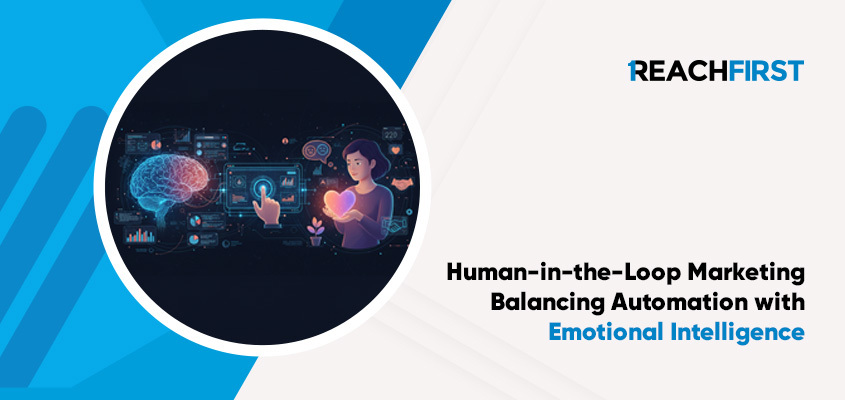
In an age dominated by marketing automation and AI systems, human understanding is more important than ever. No algorithm can replicate empathy, instinct or creative intuition. For this reason, many companies rely on human-in-the-loop marketing (HITL).
It is an approach that combines the precision of automation with emotional intelligence and ethical control. This method ensures that digital marketing strategies remain authentic, transparent and customer-centric.
It enables data-driven creativity while putting empathy at the heart of every campaign. Organizations focused on innovative, human-centered marketing, such as those leveraging AI-powered digital marketing solutions, demonstrate how technology and human insights can coexist to deliver meaningful results.
What is Human in the Loop Marketing?
Human-in-the-loop marketing actively involves real people in automated marketing systems. While AI can analyze data and predict audience behavior, humans bring emotional and ethical context to every decision.
For example, AI might create content variations or segment audiences, but human marketers refine tone, cultural relevance and brand storytelling. This approach ensures that automation supports authenticity rather than replacing it, producing more accurate and emotionally intelligent campaigns.
How automation has redefined modern marketing

Automation has revolutionized digital marketing by improving precision, productivity and personalization. AI now manages ad targeting, SEO analysis, customer segmentation and lead nurturing, enabling brands to operate at scale.
Modern platforms use machine learning to analyze millions of behavioral signals and predict which campaigns will perform best. Small businesses now have access to the same level of insight once reserved for corporate budgets.
However, full automation brings new risks. AI models can misinterpret tone or context, reproduce bias in datasets, and produce emotionless messages that turn off audiences. Keeping people informed avoids these problems by adding empathy, ethical awareness and brand personality.
In other words, automation increases speed, but humans maintain the connection.
Why emotional intelligence is the human advantage

Emotional intelligence (EQ) enables marketers to understand audience sentiment, motivation, and trust – areas where automation still falls short.
According to the National Research Council of Canada (NRC)It is AI safety and responsible AI initiative is “We are guided by the principles of fairness, privacy, inclusivity and sustainability to ensure that our AI solutions are aligned with human values.”
This emphasis on ethical, human-centered systems reflects the foundation of human-in-the-loop marketing, where humans remain at the center of decision-making and creative control.
By combining emotional awareness with data-driven insights, marketers can:
- Identify audience pain points and respond with empathy.
- Create storytelling that resonates authentically.
- Strengthen long-term brand relationships based on trust and relevance.
When emotional intelligence guides technology, marketing becomes more than a process. A relationship is created between brand and audience.
Balance between human creativity and machine precision

A balanced marketing ecosystem recognizes the unique strengths of people and technology.
AI contributes to:
- Data analysis, targeting and optimization at scale.
- Predictive modeling to anticipate audience behavior.
- Workflow automation for repetitive tasks.
Humans contribute:
- Creative storytelling and emotional intelligence.
- Cultural interpretation and ethical oversight.
- Strategic thinking that combines empathy with insight.
When the two work together, AI generates insights and humans convert them into authentic communication, creating a continuous feedback loop that drives innovation.
Companies that adopt integrated solutions like data-driven digital marketing services often find that this balance between humans and AI leads to greater engagement and sustainable growth.
Real-world applications of human-in-the-loop marketing

The concept of human-in-the-loop marketing is already changing the way companies communicate and adapt to audience needs.
- Chatbots monitored by humans
AI handles basic queries, but trained agents monitor interactions for tone and emotional accuracy. This prevents automated responses from sounding insensitive or impersonal.
- AI-powered content creation
Generative AI can write first drafts or captions while editors refine structure, context and emotion. The result is efficient yet compelling storytelling.
- Predictive campaign management
Algorithms predict audience engagement and click-through rates. Human strategists interpret this data to refine messaging, creative direction and timing.
- Social listening and sentiment analysis
AI monitors online sentiment, but human teams evaluate why reactions occur and how to respond strategically. It ensures empathy in brand interactions.
- Marketing compliance monitoring
Automated systems flag sensitive or non-compliant messages. Human reviewers review and correct content before it goes live, protecting reputation and accuracy.
Taken together, these examples illustrate how human oversight improves automation and makes marketing both scalable and emotionally intelligent.
Ethical AI and Transparency: Building Trust
In Canada, responsible AI design is an important part of the national digital innovation effort. According to the Canadian Institute for Advanced Research (CIFAR), that is Pan-Canadian Artificial Intelligence Strategy “The goal is to position Canada as a global leader in the responsible use of AI by advancing research, fostering trust and ensuring AI development benefits all Canadians.”
This commitment to ethical, inclusive and human-centered innovation is closely aligned with modern marketing principles that emphasize transparency, fairness and accountability when using automation.
When brands speak openly about the use of AI, they strengthen their credibility. Disclosing how automation supports personalization or campaign analysis reassures audiences that humans, not machines, remain in control of communications. Transparency creates trust and trust creates loyalty.
How to create a human-in-the-loop framework
- Identify what should be automated: Select tasks that are suitable for AI, such as data processing, A/B testing, and performance analysis.
- Define human oversight: Assign teams to review tone, inclusivity, and brand compliance.
- Create feedback loops: Bringing human refinements back into AI systems for smarter results.
- Audit and optimize: Track the scale’s performance and then adjust based on the results.
This framework ensures campaigns remain efficient, transparent and emotionally engaging – a crucial combination for modern digital growth.
The future of emotionally intelligent marketing

AI will soon interpret more than just text and numbers. It detects moods in speech, analyzes emotions in images, and predicts customer intentions with increasing accuracy. As this evolution unfolds, marketers must act as ethical leaders and ensure technology is used responsibly and compassionately.
The next generation of marketers will ensure that AI tools become an extension of human creativity, not a replacement for it. Emotionally intelligent AI systems will personalize the customer experience while human oversight ensures fairness, inclusion and cultural awareness.
Canadian research organizations, government programs and private innovators are already investing in emotionally aware AI, positioning Canada as a leader in ethical, human-centered digital transformation. The future belongs to brands that see AI as a creative partner and not a creative replacement.
Final thoughts
The future of marketing is not about replacing people with automation. It’s about collaboration that enhances what people do best. AI brings precision, speed and scalability; People bring empathy, cultural context and purpose. Together, they create campaigns that perform better, achieve greater response, and build trust for longer.
Brands that practice human-in-the-loop marketing have a key advantage: they remain efficient without losing their humanity. This approach transforms marketing from a mechanical process into a meaningful dialogue between companies and their audiences.
As AI evolves, the most successful companies will integrate emotional intelligence into the core of every strategy, combining ethics, transparency and automation in marketing that feels personal, intelligent and deeply human.
About Reach First
Reach First is a Canadian AI-powered digital marketing agency headquartered in Edmonton. The team specializes in full-service digital marketing including SEO services, social media management, PPC and web design. Every campaign is built on transparency, measurable analytics and creative innovation that drives real business growth.
If your business is ready to scale with proven digital marketing strategies, contact us to learn how data-driven insights and human creativity can help your brand stand out from the crowd.