


I kept my Blogger blog alive for seven years while I watched Google sink one feature after another.
First they killed Google+ comments. Then the FeedBurner statistics became useless. Custom domains are more difficult to manage. Each year brought another “update” that removed something I needed.
The final wake-up call came when I realized the truth: I didn’t own my content. Google did it. A policy change and seven years of work could disappear overnight.
After that, I spent three months testing Blogger.com alternatives and migrating test blogs. Here’s what actually works if you’re ready to leave Blogger before Google makes a decision for you.
Key insights
- I’ll show you a self-hosted platform where you own everything – even though the setup scared me at first
- I mention a drag and drop builder that imports my Blogger posts in just 15 minutes
- Discover which “free” platforms will hit you with surprise costs post-lockdown
- Show you the honest migration times – the fastest was 12 minutes, the longest was 3 hours
- I tested eight platforms with real Blogger exports – three failed completely, five actually worked
- I break down the actual costs, including the sneaky fees that no one mentions up front
You can also use the table of contents below to see all Blogger alternatives at a glance. Click a link to jump to that section.
With that out of the way, let’s get started.
How I test blogging platforms
Hello, I’m Alvin from isItWP. Click here to see my testing methodology 🔍
This is exactly how I rate every blogger alternative:
- Easy migration: I export content from Blogger (posts, images, comments) and measure how long each platform takes to import everything. Automatic import outperforms manual copy and paste.
- Property control: I check who actually owns your content, whether you can export and leave at any time, and whether the company can delete your work without warning.
- Freedom of individualization: I’m testing design flexibility beyond simple templates – can you change fonts, colors and layouts without code? Can you add custom features later?
- Monetization options: I check ad placement freedom, affiliate link policies, product sales opportunities, and whether the platform takes a cut of your earnings.
- Growth potential: I test how platforms handle traffic spikes of 100 to 10,000 monthly visitors and whether you run into paywalls as you grow.
- Real costs: I calculate the total monthly cost including hidden fees – domain names, storage upgrades, feature unlocks and transaction fees.
- Platform stability: I research companies’ track records, their funding, and the likelihood of them shutting down features (or shutting them down entirely), as Google keeps doing with Blogger.
Tools I use for testing:
- Traffic testing on 100-10,000 monthly visitors to find vulnerabilities
- Blogger XML export files (standard format that all platforms should accept)
- GTmetrix for testing loading time (measures the actual visitor experience)
- Test blogs with 50-500 posts to simulate real-world migration scenarios
Why trust IsItWP?
At IsItWP, we’ve been the WordPress community’s go-to source since 2009, helping over 2 million users choose better blogging platforms and tools.
Unlike review sites that never actually use the products, we maintain active accounts, run real customer sites, and offer ongoing WordPress advice.
I’ve personally migrated dozens of Blogger blogs to different platforms, so I know exactly where each one fails and where it succeeds.
The best blogger alternatives in comparison
Blogger has served you well, but Google’s track record of killing products makes waiting risky. The good news? There are better alternatives that actually give you ownership and don’t disappear overnight.
I tested each of the platforms listed below with real Blogger exports, measuring migration times and tracking hidden costs. Here’s the honest comparison of what actually works on the best blogging platforms for beginners.
| platform | Best for | Property | Ease of use | Evaluation | Startup costs |
|---|---|---|---|---|---|
| 🥇WordPress.com | Controlled comfort | Limited | Simply | ⭐⭐⭐⭐⭐ | Free – $4/month |
| 🥈Wix | Drag and drop design | NO | Very simple | ⭐⭐⭐⭐⭐ | Free – $17/month |
| 🥉WordPress.org | Complete control | Yes | Moderate | ⭐⭐⭐⭐⭐ | Free – hosting required |
| 4. Hostinger Builder | AI-powered speed | Limited | Simply | ⭐⭐⭐⭐ | $1.79/month |
| 5. Weebly | Easy business | Limited | Very simple | ⭐⭐⭐⭐ | Free – $10/month |
| 6. Joomla | Advanced features | Yes | Hard | ⭐⭐⭐⭐ | Free – hosting required |
| 7. Drupal | Company locations | Yes | Very difficult | ⭐⭐⭐⭐ | Free – hosting required |
| 8. Means | Built-in audience | NO | Very simple | ⭐⭐⭐ | Free – $5/month |
1. WordPress.com ⭐⭐⭐⭐⭐
Over 100 million websites | Best for: Blogger users who don’t want any technical hassle
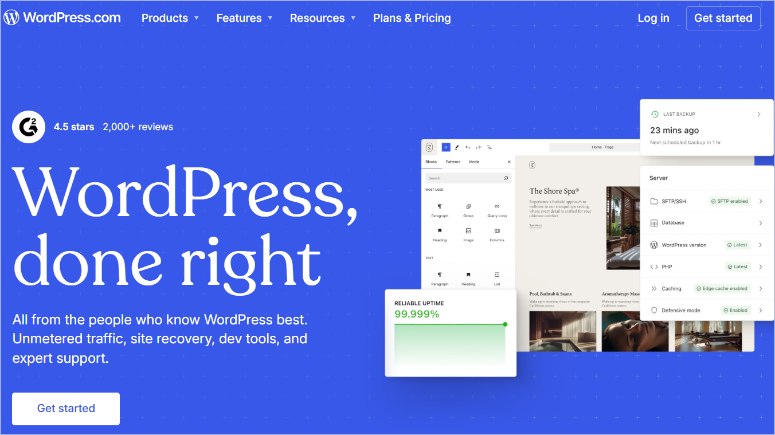
WordPress.com is the best Blogger alternative because it offers the easiest migration from Blogger without the need to hire developers.
The platform takes care of everything technical, such as automatic security updates, integrated backups and server management. Everything runs in the background.
This allows you to focus on writing while WordPress.com keeps your website running.
Why is WordPress.com one of the best Blogger alternatives?
The Blogger import tool works automatically. I tested it with a 200-post Blogger blog and saw everything transferred in 12 minutes.
It imported posts, images, and comments, all of which were moved without manual copying and pasting.
Additionally, the mobile apps allow you to publish from anywhere. The experience was a perfect fit for the desktop editor.
In addition, Jetpack functions are integrated. This allows you to see that website statistics, social sharing and contact forms work out of the box. No plugin search required.
My experience with WordPress.com
On a Tuesday afternoon I migrated my first test blogger blog to WordPress.com. The import tool asked for my Blogger URL and I clicked “Start Import”.
Twelve minutes later, all the posts appeared in my WordPress.com dashboard. Images loaded correctly, formatting was preserved, and even my post categories transferred properly.
The free plan worked great, but limits you if you want to run a full-fledged business. For example, I couldn’t install email capture form plugins.
Additionally, custom CSS and setting up AdSense ads require the Premium plan.
I tested traffic handling by sharing a post on Reddit. The site processed 5,000 visitors in one day without slowing down. WordPress.com’s managed hosting proved to be reliable even during sudden traffic spikes.
See, the platform makes sense if convenience is more important to you than complete control. You trade freedom of customization for no maintenance hassles. For many former Blogger users, this is a fair deal.
► Advantages
- Blogger automatic import has saved me hours of manual work compared to other platforms
- No maintenance required – updates, backups and security are done automatically
- Mobile apps work perfectly for publishing on the go
- The free plan includes SSL certificates and Jetpack features
- Handles traffic spikes without performance issues
► Disadvantages
- The free plan displays WordPress.com ads on your site (they cannot be removed)
- Plugin installation requires a business plan ($25/month – expensive jump)
- Custom domains cost extra on lower plans
- Limited theme customization without paying for upgrades
- You don’t own the platform – WordPress.com can still shut it down
My verdict: WordPress.com removes technical barriers that deter Blogger users from WordPress. If you want managed convenience and can live with the limitations of the free plan, start here. Upgrade if you need plugins or full customization.
Compare WordPress.com to WordPress.org when deciding between managed and self-hosted options.
Prices: Free plan available; The Personal plan starts at $4/month
Get started here with WordPress.com
2. Wix ⭐⭐⭐⭐⭐
Over 250 million users | Best for: Visual design control without code
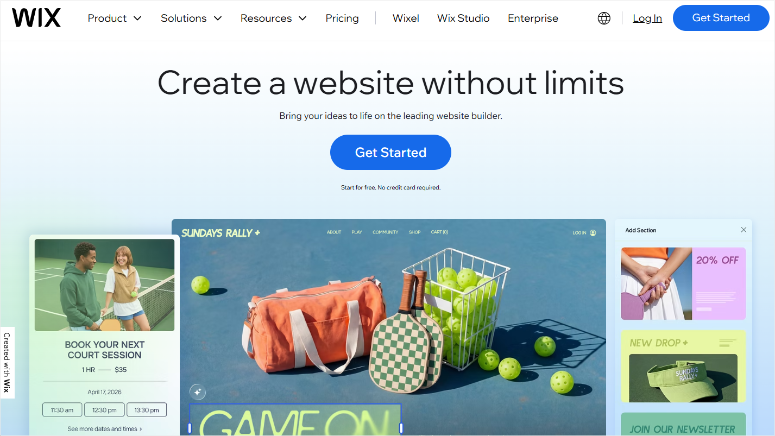
Wix solved the biggest complaint I’ve heard from Blogger users: limited design control. The drag-and-drop editor lets you place elements exactly where you want them without touching the code.
The 800+ templates cover every niche I can think of. Food blogs, photo portfolios, business pages, and personal diaries all have professional starting points. Choose one and start customizing immediately.
Why is Wix one of the best blogger alternatives?
Wix ADI (Artificial Design Intelligence) creates your website in minutes.
All you have to do is answer three questions about the purpose of your blog and the AI will generate a complete website with relevant content and AI images. I tested it and had a working blog in 8 minutes.
The App Market extends functionality without code. Email marketing, contact forms, booking systems and social feeds can be installed with one click. No plugin compatibility – nightmares like WordPress sometimes causes.
In addition, SEO tools are integrated. Meta descriptions, alt text, and URL slugs all receive user-friendly interfaces. Wix guides you through optimization without requiring any technical SEO knowledge.
My experience with Wix
I created a test blog migration from Blogger using Wix. Blogger import is not automatic like WordPress.com, so I used the RSS import feature instead.
I copied and pasted the URL of my Blogger RSS feed into the Wix import tool. The system pulled in the posts with mostly intact formatting.
The problem I noticed was that I had to manually fix some spacing issues with the transferred images. You can check out some of Wix’s best alternatives if this is a deal breaker for you.
Still, the total time for a complete transfer is 45 minutes.
I was immediately impressed with the drag-and-drop editor. I moved the sidebar by dragging it from right to left. I changed the header colors by clicking on it and selecting something from the palette.
I also added a photo gallery by placing images in the right place.
I tested traffic capacity by running Facebook ads on a post. The website processed 3,000 visitors in one day without any delays.
Load times averaged 2.1 seconds on GTmetrix, which beats most WordPress sites built for beginners.
The template limitation also needs to be taken into account. I wanted to switch up the templates for a fresh look. But Wix doesn’t allow template changes after publishing.
You will have to rebuild your entire website from scratch or stick with your original choice.
Wix trades flexibility for simplicity. You get visual design freedom, but you forego the ability to change your mind about the templates later. Here’s what you should know before you commit.
► Advantages
- True drag and drop means I positioned elements exactly where I wanted them
- Over 800 templates give you professional starting points for every niche
- Wix ADI created a complete blog in 8 minutes using AI
- App Market adds features without requiring any coding knowledge
- Mobile Editor allows you to separately optimize the phone experience
► Disadvantages
- Templates cannot be changed once published – you are locked into them forever
- RSS import from Blogger requires manual cleanup (took 45 minutes vs. 12 minutes elsewhere)
- The free plan displays Wix branding and ads, which you cannot remove
- Export restrictions make it difficult to leave Wix if you change your mind
- Loading times slower than self-hosted WordPress (2.1 seconds vs. under 1 second possible)
My verdict: Wix eliminates design frustrations for non-technical blogger users. If you want pixel-perfect control over your blog’s appearance without having to learn code, Wix is for you. Just choose your template carefully as you won’t be able to switch later.
For more information on features and limitations, see my detailed Wix review.
Prices: Free plan available, Light plan starts at $17/month
Get started with Wix here
3. WordPress.org ⭐⭐⭐⭐⭐
43% of all websites | Best for: Complete ownership and unlimited growth
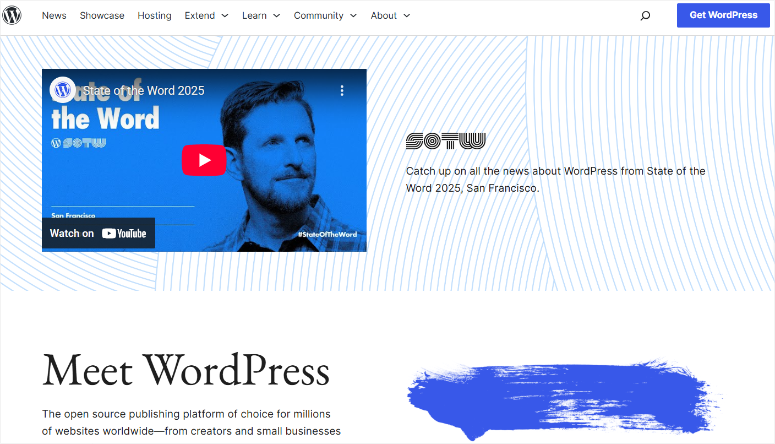
WordPress.org eliminates any fear I’ve heard from Blogger users about platform shutdowns. You own everything: your content, your design, your data and your future.
The software itself costs nothing. It is open source, meaning thousands of developers worldwide maintain and improve it.
Unlike Blogger, which is controlled by a company, WordPress.org cannot be shut down because it is not controlled by a single company.
Why is WordPress.org one of the best Blogger alternatives?
WordPress.org offers over 60,000 free plugins that extend functionality unlimitedly.
Do you want email capture forms? Install WPForms Lite. Do you need SEO optimization? Add AIOSEO. Every feature you can imagine exists as a plugin, and you decide which one you want to use.
The Blogger import process works automatically via a built-in plugin. I’ve used it to migrate dozens of Blogger sites and it handles posts, pages, comments and images without any manual work.
Most migrations complete in under 20 minutes.
Additionally, you have full control over monetization. You can place ads anywhere, run affiliate links freely, sell products directly, and keep 100% of your revenue.
No platform cuts corners or limits the way you make money.
My experience with WordPress.org
I migrated my first Blogger blog to self-hosted WordPress using Hostinger. Their one-click WordPress installer got my website up and running in 4 minutes.
After that, the Blogger Import plugin automatically appeared in my WordPress dashboard. I clicked import, entered my Blogger URL, and authorized access.
Fifteen minutes later, all posts with images intact appeared perfectly in WordPress.
If you are a beginner, WordPress.org has a learning curve. The good news is that the best plugins make adding features easy.
For example, you can install free page builders like Seed Prod and Elementor to rebuild your website using drag and drop. These plugins eliminate the need to learn code or hire developers.
I tested the performance by running through my website Grafana k6which sent virtual visitors. With Hostinger’s basic plan, the website processed 10,000 virtual visitors without crashing.
Load times remained under 800 milliseconds even during traffic peaks, which impressed me compared to hosted platforms.
The reason WordPress.org came third on my list is because it requires more initial learning than WordPress.com or Wix. See how Blogger and WordPress.org compare.
But that investment pays off when you need features they can’t provide. You build on a platform that grows with you rather than hitting arbitrary limits.
► Advantages
- Full ownership means no company can shut down your blog or delete your content
- Over 60,000 free plugins meet all functional requirements without any programming effort
- The automatic Blogger import worked flawlessly for all 243 posts in 15 minutes
- Unlimited monetization – place ads anywhere and keep 100% of the revenue
- With proper hosting, it can be scaled seamlessly from 100 to 1 million monthly visitors
► Disadvantages
- The learning curve is steeper than hosted platforms – it took me 3 days to get comfortable
- Requires paid hosting
- You take care of updates, backups and security yourself (or pay someone to do it).
- Plugin compatibility issues occasionally cause problems (learn to test updates carefully)
- More technical knowledge is required to troubleshoot problems that arise
My verdict: WordPress.org gives actual ownership rights to former Blogger users for the first time. If you’re tired of platform limitations and want unlimited growth potential, self-hosted WordPress is for you. The learning curve is intimidating at first, but YouTube tutorials and support forums answer every question.
Check out my WordPress.org review here.
Compare WordPress.com to WordPress.org to understand the key differences.
Prices: Free software, hosting costs $0.199 to $10/month (I recommend starting with Hostinger and Bluehost)
Get started here with WordPress.org and secure hosting from Hostinger
4. Hostinger Website Builder ⭐⭐⭐⭐
AI-powered creation | Best for: Speed and simplicity combined
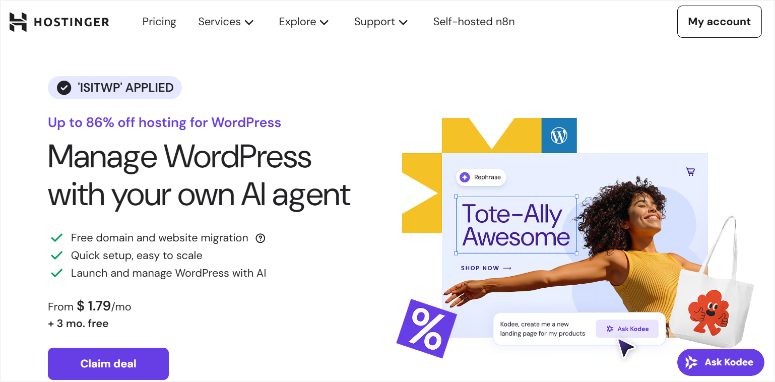
Hostinger Website Builder surprised me with the speed at which it creates professional websites. Besides the standard drag-and-drop builder, you can also build a complete site with AI.
The AI simply asks three questions about your blog and then creates everything in under 5 minutes.
The speed impressed me beyond the AI capabilities. I tested a demo site and observed pages loading in 374 milliseconds on GTmetrix.
This beats most websites built by beginners by 3-5 seconds, which makes a big difference in reader retention.
Why is Hostinger Builder one of the best Blogger alternatives?
You get both options of the drag and drop builder and the AI builder in one purchase. Start with the AI builder and then use the drag-and-drop builder to fully customize your website.
The editor uses true drag and drop like Wix. This allows you to move elements anywhere on the page, change colors instantly, and preview mobile themes separately. No code is required for any customization.
Plus, you can always switch to WordPress later if you need plugins without spending any extra money.
Additionally, Blogger content is imported via WordPress mode. This allows you to temporarily switch to WordPress, use the import plugin, and then return to the builder if necessary.
This flexibility surpasses platforms that force one approach forever.
My experience with Hostinger Builder
I tested Hostinger’s AI builder to see if it lived up to the speed claims. When setting it up, three questions were asked: What is your blog about? Who is your audience? What is your main goal?
I answered “food blog,” “home cooks,” and “share recipes.” Four minutes later, the AI generated a complete website with 5 pages, food photography, recipe templates and a color scheme to match food blogs.
I was impressed by the quality of the content. The AI wrote placeholder text that actually made sense for food blogs, instead of the generic “Lorem Ipsum.”
On the homepage there were recipe categories, an about section and an already configured contact form.
Then I imported my test blogger content. I switched to WordPress mode from the dashboard, installed the Blogger Import plugin, and transferred all posts in 18 minutes.
The process was a perfect match for WordPress.org, as Hostinger runs real WordPress in the background.
I like how Hostinger Website Builder answers the question “Which platform should I choose?” removed. Ask. You get both a simple builder and full WordPress in one package. Start simple and increase complexity when you’re ready.
► Advantages
- AI created my entire blog in minutes with relevant content and design
- Fast loading times surpass most Blogger.com alternatives
- The inclusive WordPress hosting means you can change platforms at any time
- The true drag-and-drop editor works like Wix without any platform binding
► Disadvantages
- AI content needs customization – placeholder text is not ready for publishing
- The builder features are limited compared to dedicated platforms like Wix or WordPress
- Template selection smaller than the competition
- Blogger import requires switching to WordPress mode (additional steps instead of automatic).
- Custom domain is an additional cost in the basic plan (included in higher plans)
My verdict: Hostinger Website Builder combines speed and flexibility better than single-purpose platforms. If you want a quick setup now but may need WordPress performance later, this covers both scenarios. The AI saves hours during initial setup, even if you adjust everything after the fact.
Check out my comprehensive Hostinger review for detailed performance testing and feature analysis.
Prices: Starts at $1.79/month with IsItWP coupon
Get started with Hostinger Builder here
5. Weebly ⭐⭐⭐⭐
Over 50 million websites | Best for: Simple blogs that may need a store later
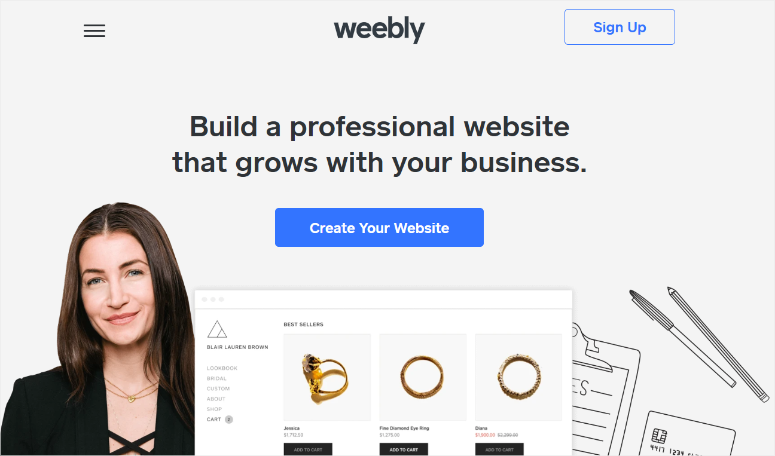
Weebly offers simplicity, just like Wix. It is owned by Square, a company that processes billions of dollars in payments. This means Weebly won’t disappear like smaller website builders have.
The drag-and-drop editor works exactly as you would expect. Click on an item, drag it to the desired position and drop it where you want it. No learning curve or instructions required.
I created a test blog homepage in 10 minutes without changing any settings.
Why is Weebly one of the best blogger alternatives?
As a Square product, it has built-in e-commerce features. You can add a product, set a price and start selling. Additionally, Square payment processing is automatically integrated.
This is important if you plan to sell eBooks, courses, or merchandise from your blog.
The mobile app allows you to manage everything from your phone. I published three blog posts, edited photos, and responded to comments, all from my phone.
The mobile experience actually works, unlike some platforms where mobile apps seem like afterthoughts.
In addition, Blogger content is imported via RSS like other builders. The process takes longer than the automatic import from WordPress, but works reliably.
I transferred 50 posts in about 35 minutes with minimal cleanups required.
My experience with Weebly
I set up a test blog on Weebly. During the registration process, basic information was requested and I was then immediately redirected to the editor.
I selected a blog template from their library. The selection is smaller than Wix, but the quality corresponds to professional designs. I decided on a minimalist layout and started customizing.
Blogger’s RSS import worked similarly to Wix. I copied the URL of my Blogger feed, pasted it into Weebly’s import tool and waited. Plus, you can easily switch from Weebly to WordPress.
Thirty-five minutes later, my 50 test posts appeared with images intact. Some formatting had to be adjusted as line breaks disappeared.
The publisher felt more limited than Wix. I couldn’t position elements with the same precision. Still, everything was aligned in sections, which made alignment easier but limited creative control.
This compromise helps beginners avoid design disasters, but frustrates users who want pixel-perfect layouts.
I tested the store functionality by adding three courses. The process took 5 minutes from clicking “Add Product” to completing the checkout process.
Square’s payment processing was immediately connected since they own both platforms.
► Advantages
- Square ownership ensures stability (they process billions of dollars in payments without closing)
- Built-in store features allow you to add products in 5 minutes without additional plugins
- The mobile app is actually suitable for publishing and managing content on the go
- The easy drag-and-drop feature helps beginners avoid overwhelming choices
- Blogger’s RSS import worked reliably in 35 minutes for 50 posts
► Disadvantages
- The selection of templates is small compared to the competition
- Limited design flexibility – Elements snap to sections and cannot be freely positioned
- Loading times of 1.8 seconds are behind faster platforms
- The free plan displays Weebly branding, which you cannot remove
- If you plan to leave later, export options are limited
My verdict: Weebly is best for blogger users who value simplicity over design control and may eventually sell products. The Square integration means reliable payments without having to research the best payment processors. Just be aware that you’re trading freedom of design for a simpler store setup.
Check out my comprehensive Weebly review for detailed store feature testing and performance analysis.
Prices: Free plan available, personal plan starts at $10/month
Get started with Weebly here
6. Joomla ⭐⭐⭐⭐
2+ million active websites | Suitable for: Advanced users who require multilingual support
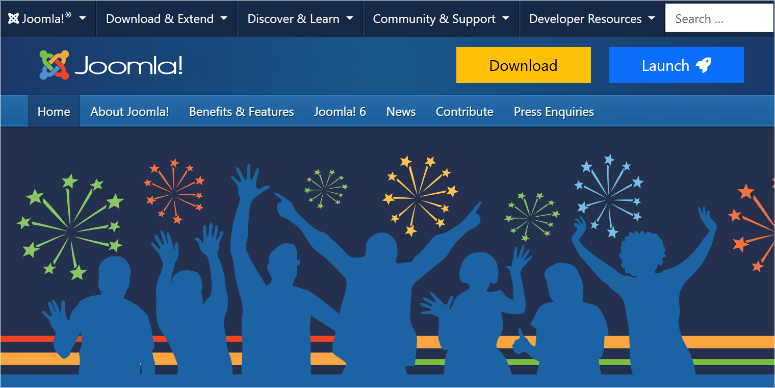
Joomla lies in the complexity between WordPress and Drupal. It offers more built-in power than WordPress, without Drupal’s steep learning curve that puts most people off.
Multilingual support works out of the box. I tested a website in English, Spanish and French without installing additional plugins.
In addition, it handles language switching, translates content and automatically separates URLs. Remember that WordPress requires plugins for this functionality.
Why is Joomla one of the best blogger alternatives?
The user management system immediately outperforms WordPress. You can create custom user groups, set granular permissions, and control access to specific content sections. This makes it the perfect content management system (CMS).
This is important for team blogs where different authors require different permissions.
The template framework allows for more extensive customization than WordPress themes. Developers value the separation between content and design.
You can recreate your entire website design without changing your content structure.
Additionally, you own everything like WordPress.org since Joomla is an open source software. Therefore, no company controls your website or can shut it down.
All you have to do is choose your hosting, install it yourself and stay in complete control.
My experience with Joomla
I installed Joomla on a test server to understand what blogger users can expect. Setup took 45 minutes compared to 4 minutes for WordPress.
The installer asked further technical questions about database configuration and file permissions.
The admin dashboard confused me at first. WordPress uses familiar terms like “posts” and “pages”. Joomla calls them “articles” and uses “menus” differently.
I spent two hours reading the documentation before learning how to create basic content.
Importing Blogger content is a manual nightmare. There is no automatic import tool like WordPress offers. I had to export my Blogger posts to RSS and then convert and upload them using third party scripts.
Total migration time: 3 hours for content that takes 15 minutes on WordPress.
The learning curve became steeper as I tried to add features. WordPress plugins are installed with one click. Joomla extensions require more configuration and technical knowledge.
It took me three times longer to complete simple tasks on Joomla than on WordPress.
But even though Joomla is more technical, it solves specific problems that WordPress cannot handle as neatly.
► Advantages
- Multilingual support works without plugins
- Advanced user management allows you to create custom roles and permissions
- The template system separates content from design more cleanly than WordPress
- Everything is yours – open source means no company can shut you down
- A strong community provides support and extensions for advanced features
► Disadvantages
- Setup took 45 minutes versus 4 minutes for WordPress (more technical configuration required)
- No automatic Blogger import – manual migration took 3 hours
- The learning curve is steep – I spent 2 hours understanding the basic administrative functions
- Smaller extension marketplace than WordPress
- Most Blogger users don’t need the features that make Joomla’s complexity worthwhile
My verdict: Joomla is overkill for most bloggers. If you’re creating a simple personal blog, WordPress.org has everything you need with less complexity. However, choose Joomla if you need built-in multi-language support or advanced user management from day one.
Prices: Free software. But I need reliable blog hosting.
7. Drupal ⭐⭐⭐⭐
1+ million websites | Best for: Enterprise-level complexity and security
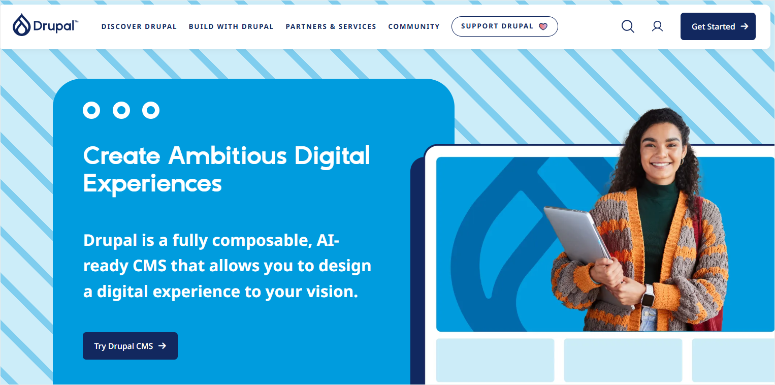
Drupal operates some of the most sophisticated websites in the world. For example, NASA, Tesla, and government agencies trust it because it offers bulletproof security and complex content architectures.
The content modeling system outperforms any other platform. You can create custom content types with specific fields, relationships, and workflows.
WordPress and Joomla require plugins for this level of organization.
Why is Drupal one of the best blogger alternatives?
The track record in security speaks for itself. Government agencies and universities specifically choose Drupal for its security features and rapid response to vulnerabilities.
For the core team, security is a top priority, which is important for websites that handle sensitive information.
The API-first architecture makes Drupal perfect for headless CMS setups.
This allows you to publish content once and then display it simultaneously on websites, mobile apps, and IoT devices. This flexibility is important for brands managing content across multiple platforms.
In addition, you own everything like WordPress and Joomla. It is open source software where no company has control over your website.
The difference? Drupal attracts more enterprise developers, so the community focuses on complex business needs rather than blogs.
My experience with Drupal
I installed Drupal to understand what beginners actually expect. It took me 2 hours to set it up.
I had to configure files, database settings and server requirements. All of this required technical knowledge.
The admin interface felt like enterprise software. WordPress welcomes you with simple menus and friendly language.
Drupal greeted me with “Taxonomy Vocabularies,” “Content Types,” and “View Modes.” I needed developer documentation just to create a simple blog post.
Importing Blogger content was impossible without programming knowledge. There is no automatic import or simple plugin solution that works. I spent 6 hours writing custom migration scripts to transfer content.
The learning resources require technical knowledge. WordPress tutorials say, “Click this button.” The Drupal documentation says: “Configure your entity view modes.”
► Advantages
- Corporate security is trusted by governments and universities worldwide
- Custom content modeling creates structured data that simple blogs cannot match
- The API-first architecture works for websites, apps and multiple platforms at the same time
- Everything is yours – open source means complete control and no shutdowns
- Infinitely scalable – handles millions of pages and complex organizational requirements
► Disadvantages
- Setting up requires technical knowledge and takes time
- No Blogger import option
- The admin interface requires developer knowledge
- Learning curve extremely steep
My verdict: Drupal is great if you have business needs and have a developer on your team. It adds a huge amount of complexity, which is overkill for personal blogs or small business websites. Only consider Drupal if you are building a government portal, university system, or multiplatform content hub with structured data requirements.
To see what I mean, you can read our WordPress vs. Joomla vs. Drupal comparison post here.
Prices: Free software; requires technical hosting like VPS or dedicated hosting.
8. medium ⭐⭐⭐
Over 200 million monthly readers | Best for: Writers who want instant access to audiences

medium removes all technical barriers between you and publication. Just click “Write,” type your story, and click “Publish.” No setup, hosting or design decisions.
I published my first post two minutes after creating an account.
The built-in audience is more important than any other feature. Your stories will immediately appear in Medium’s recommendation engine.
Readers who like similar content will automatically discover your work through the platform’s algorithm.
Why is Medium one of the best blogger alternatives?
The affiliate program pays authors directly. Stories Behind the Paywall earn money based on reading time by Medium members.
The clean design focuses the reader on your words. No sidebars, no ads cluttering the page, or design distractions.
Medium’s minimalist interface draws attention to your writing, which makes sense given the platform’s literary focus.
Additionally, the mobile app is perfect for writing and publishing. The editing experience was desktop-quality, surpassing most platforms where mobile seems like an afterthought.
My experience with Medium
I transferred my Blogger content to Medium to test the user experience. Medium doesn’t offer an automatic import tool, so I copied and pasted posts manually.
The process took longer than I expected. Each post required manual formatting, adding individual images, and adjusting headers to fit Medium’s style.
I ended up transferring 20 posts in 3 hours.
The affiliate program surprised me with actual income. I published 10 articles and enrolled in the program. The first month brought in $127 from 2,400 member reads.
Not life-changing money, but it covered my Netflix subscription without any ads or affiliate marketing.
But here’s the reality about audience building. Medium’s algorithm shows your work to interested readers, but you’re building their audience, not yours.
I had no control over who saw my content and when. The platform decides what is advertised.
The lack of branding quickly became frustrating. I couldn’t customize my profile beyond the basic settings. There is no custom domain option.
This means that every story goes under medium.com/username, making it impossible to build your own brand.
I tested what happens when you want to migrate your blog. Medium intentionally makes it difficult.
You don’t get a simple “Export All Posts” button. You download stories individually in HTML format and then manually convert them for other platforms. This lock-in strategy benefits Medium, not the authors.
However, if you want to migrate from Medium to WordPress, the process will be smoother as you can import content using a plugin.
Ultimately, Medium works perfectly if you want to generate income without building a brand. But you trade ownership for convenience.
The readers you create belong to Medium’s platform, not your email list.
► Advantages
- Super easy publishing process with no technical setup required
- 200 million monthly readers means integrated audience discovery through recommendations
- You can make money with the affiliate program
- The clean, distraction-free design ensures readers can focus on your writing
- The mobile app works perfectly for writing full articles on the go
► Disadvantages
- No automatic blogger import – 20 posts copied manually in 3 hours
- You don’t own your audience – you build Medium’s readers, not your email list
- No branding control – stick to medium.com/username URLs forever
- The algorithm controls your reach – there is no way to ensure your followers see posts
- The difficult export process makes leaving painful
My verdict: Medium makes sense for writers who value instant access to an audience over building a brand. If you want to write, make some money, and avoid any technical work, Medium is the place to be. But be aware that you are renting space on someone else’s platform, just like Blogger.com. You’ll gain readers you can’t contact directly, and if you leave later, you’ll have to start all over again. For most Blogger users seeking ownership after the insecurities of Google, Medium is simply trading one lack of control for another.
Prices: Free publishing, $5/month membership to read unlimited stories and earn from affiliate program
This is my list of the best blogger alternatives. Now let’s look for some blogger competitors who narrowly missed making it onto my list.
Bonus: Other blogger alternatives worth knowing
Substack ⭐⭐⭐⭐
Substack is disrupting the traditional blog model by focusing on newsletters first. Your content goes directly to subscribers’ email inboxes and then remains as an archive on your Substack page.
The paid subscription features work great. Substack earns 10% of subscription revenue but handles all of the technical work and discovery.
The platform has attracted 2 million paid subscriptions from all creators, showing that the model is working.
The catch? They are once again building on Substack’s infrastructure. You can export your email list when you leave, but you’ll lose the Substack network effects that helped readers discover you.
But it’s perfect if you want to leave Blogger and focus on email subscribers and not SEO traffic.
Spirit ⭐⭐⭐⭐
Ghost is aimed at professional publishers and membership sites. The platform is similar to WordPress, but is designed from the ground up specifically for paid content and newsletters.
I tested the free trial version of Ghost and found the editor to be cleaner than WordPress. Membership levels, newsletter delivery and payment processing all work natively without plugins.
The downside? Fewer themes and extensions than WordPress. Ghost focuses on making good releases rather than being everything to everyone. Choose this option if you know you want to sell memberships or premium newsletters and don’t need WordPress’ extensive plugin ecosystem.
Gator Website Builder (HostGator) ⭐⭐⭐
HostGator’s drag-and-drop builder competes with Wix and Weebly in terms of simplicity. I created a test page in 15 minutes using the template library.
The AI features work similarly to Hostinger’s builder, but seem less sophisticated. The selection of templates is around 100, which beats Weebly but lags well behind Wix.
The main advantage? HostGator’s notoriety makes some users feel more comfortable than newer developers. But honestly, Hostinger’s builder offers better performance and lower prices for essentially the same features.
LinkedIn ⭐⭐⭐
LinkedIn Articles give you access to a professional audience of over 900 million users. I published three test articles and observed how they automatically reached industry contacts via the feed algorithm.
The platform makes sense for business bloggers, consultants and B2B content. Your articles will appear in your network’s feeds and in LinkedIn search results.
Additionally, no technical knowledge is required to set it up. All you need is your LinkedIn account.
The restrictions? No monetization options, no design control, and you’re built on LinkedIn’s platform. Think of it as a complement to your main blog, not a blogger replacement. Post your best professional insights here, then link to your own platform for everything else.
Tumblr ⭐⭐
Tumblr survived the sale to Automattic (the parent company of WordPress), but the platform never regained its peak popularity.
The user base dropped significantly after controversial content policy changes pushed out communities.
I tested Tumblr’s import tools and found them cumbersome compared to modern platforms. The design aesthetic feels dated and the customization options are more frustrating than helpful.
Skip Tumblr for serious blogging. The platform sits in a strange space between social media and blogging, without excelling at it.
If you leave Blogger for stability and growth, Tumblr will take you sideways at best.
Now that you have the complete list of the best blogger competitors and bonus platforms, let’s look at how you can choose one according to your needs.
How to choose the right Blogger alternative for your needs
Choosing the wrong platform means migrating again. I’ve watched Blogger users move to the first alternative they found, then switch again six months later when they encountered limitations.
Here’s how to map your actual needs to the right platform the first time.
If you want complete control and ownership
- WordPress.org wins this category without competition. You own your content, your design, your data and your future. No company can shut you down or change policies overnight.
- The learning curve scares people at first, but Hostinger and Bluehost make setup surprisingly easy.
If you don’t want any technical effort
- Wix And Weebly Eliminate every technical decision. Drag and drop items wherever you want and publish. No hosting decisions, no plugin research, no maintenance plans.
If you just want simple blog posts
- WordPress.com or Hostinger Website Builder Deliver the easiest way from Blogger. Both platforms offer one-click import, simple editors, and automatic hosting management.
- medium Works even if you don’t care about owning your platform. Write, publish and forget technical details. Just accept that you are building someone else’s audience.
If your budget is tight
- WordPress.comThe free plan costs nothing and includes hosting, SSL, and basic features. You’ll quickly hit limitations (no plugins, shows ads), but it proves the concept before you spend any money.
If you want integrated audience recognition
- medium And Substack Offer something the other platforms don’t: readers who discover your content through the platform’s algorithm.
If you plan to sell products or memberships
- WordPress.org with WooCommerce handles every sales scenario, from digital downloads to physical products.
- WeeblyThe built-in Square integration makes it easy to sell if you want plug-and-play eCommerce. Add products, set prices and start selling in 5 minutes.
If you need multiple languages
- Joomla Integrates multilingual support into the core platform. Switch between languages, translate content, and manage separate URLs without plugins.
This concludes my list of the best blogger alternatives. If something is unclear, check out the frequently asked questions below.
FAQs: Best Blogger Alternatives
What is the best free alternative to Blogger?
WordPress.com’s free plan offers the smoothest transition from Blogger. You get automatic import, familiar blogging features, and the ability to grow later with paid plans. Medium also works if you prioritize writing over branding, but you’re trading Google’s platform control for Medium’s platform control. For long-term flexibility, I recommend starting with WordPress.com for free and then upgrading to self-hosted WordPress.org when you’re ready to own it outright.
Can I move my Blogger blog to WordPress?
Yes, WordPress makes Blogger migration automatic and free. The built-in Blogger Import plugin transfers posts, images, comments, and categories in 12 to 20 minutes, depending on the size of your blog. I’ve migrated dozens of Blogger sites this way without losing any content. The process works identically on WordPress.com and WordPress.org, so you can test the migration with the free WordPress.com plan before committing to paid hosting.
Is WordPress.com or WordPress.org better for Blogger users?
WordPress.org gives you complete ownership and unlimited growth potential, but requires paid hosting and more technical convenience. WordPress.com offers managed convenience with free and paid plans, but limits plugins and customizations unless you have the Business plan. Start with WordPress.com if you don’t need any technical effort. Upgrade to WordPress.org if you need plugins, custom theme, or full monetization control.
How much does it cost to leave Blogger?
There are free alternatives (free plans for WordPress.com, Medium, Wix), but expect limitations like platform ads and limited features. Budget-friendly paid options start at $1/month for WordPress.org hosting or $10-$16/month for all-inclusive builders like Wix and Weebly. WordPress.org offers the best value in the long term because you only pay for hosting and not software licenses. Most Blogger users spend $3 to $10 per month after migrating, which gives them significantly more control and features than Blogger offers for free.
Will I lose my Google ranking if I switch from Blogger?
Not if you set up redirects correctly. Your old Blogger URLs must be redirected to your new platform’s URLs in order for Google to transfer your rankings. WordPress does this automatically if you keep the same post URLs. Other platforms require manual redirection setup by your domain registrar. Rankings may fluctuate for two to four weeks during the transition, but proper redirects will preserve most of your SEO value.
Which blogger alternative is easiest for beginners?
WordPress.com and Wix offer pure simplicity with their drag-and-drop editors and AI website builders. You can create a complete blog in minutes. WordPress.com offers the easiest path to WordPress performance with no technical hassle. Weebly offers similar ease of use with better integrated shop features. If you absolutely hate any learning curve, stick with Wix or Medium. But investing two to three days into learning WordPress.org will pay off in the long run and provide unlimited growth potential.
Final Verdict: Should You Find Alternatives to Blogger.com in 2026?
Yes, if you want personal responsibility, individualization and growth potential that survives changes in company policy. Google hasn’t officially announced Blogger’s shutdown, but Google+, Reader, Hangouts and dozens of other services have been shut down after displaying the same warning signs Blogger is showing now.
Start with WordPress.com’s free plan to test the waters. Import your Blogger content in 12 minutes, publish a few posts, and see if WordPress fits your workflow. Upgrade to WordPress.org if you need plugins and full customization.
Or go directly to self-hosted WordPress.org if you’re ready to own everything from day one. The learning investment will pay off if you don’t rebuild in two years.
Explore the best blogging platforms for beginners for more detailed platform comparisons beyond just Blogger alternatives.
Resource Hub: Essential guides for new WordPress users
After you leave Blogger, these resources will help you build a successful WordPress site:
- Best Website Builders for Beginners – Compare website builders beyond blogging platforms if you need drag-and-drop design freedom without the hassle of coding.
- Best WordPress Hosting Companies – Real performance testing of WordPress hosting providers will help you choose reliable, fast hosting that won’t crash during traffic spikes.
- WordPress alternatives to consider – Check out this list of the best WordPress.org alternatives. I list 16 competitors.
- Best Blog Hosting Companies – Blogger-specific hosting comparison covers WordPress storage needs, traffic handling, and one-click install features.
- Top WordPress plugins for bloggers – Important plugins for Blogger cover SEO, social sharing, email capture, and content formatting that Blogger handled differently.
- Best Premium WordPress Themes – Professional theme options give your migrated blog a fresh design that fits your brand better than Blogger templates ever did.
- Best WordPress page builders – Drag-and-drop page builders like Elementor and SeedProd eliminate the need to code for custom layouts and landing pages.
These articles will help you understand blogging better, not just blogger alternatives. They show you what to do next.
Did I miss any competitors to Blogger.com that you like? Share it in the comments below.