
As a content writer with over seven years of SEO experience, I can say with certainty that keyword clustering is a crucial technique – even in a world where the SEO landscape has changed significantly.
Keyword clustering builds authority, strengthens your company’s web presence, and helps you find your target audience anywhere in the buyer’s journey. But what is keyword clustering and how does it work? Read on to find out.
Table of contents

What is Keyword Clustering?
Keyword clustering is an SEO technique that groups related keywords with the same search intent while targeting them on the same page. For example, people who search for “cat toys,” “toys for cats,” and other variations are searching for the same product and will see the same search results when using search engines or answer engines.
Keyword clustering involves targeting a primary keyword and secondary keywords on the same page. The primary keyword is the main term you want to rank for (“cat toys”), and secondary keywords are synonyms and Long-tail variants (“toys for cats”).
How keyword clustering builds topic authority
By building your content around central topics and related keywords, you signal to search engines that you are knowledgeable about the topic. It’s like someone went through my record collection and noticed that I have albums by various punk artists. You’re probably assuming I’m pretty knowledgeable about the genre.
If you prove yourself competent to search engines, your site will rank higher in search results on that topic. Other ways keyword clustering builds topic authority include:
Comprehensive insurance coverage: When you group keywords, you create a pillar page for a broad topic that is connected to multiple “spoke pages” for related subtopics that cover the topic from different angles.
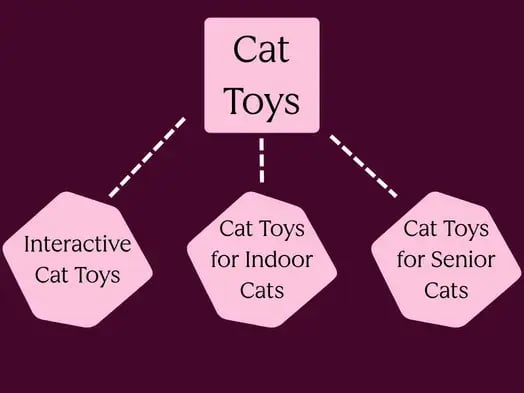
Let’s go back to the example of the cat toy. A Pillar page would cover the broad topic of “cat toys,” and the Spoke pages would cover subtopics such as “interactive cat toys,” “cat toys for indoor cats,” and “cat toys for senior cats.”
Strong internal linking: Clustered content consists of closely related keywords, topics, and intent. Not only does this create a clear semantic picture of your site’s expertise, it also makes it easier for search engines to crawl your site and pass authority from one page to the next.
Complete Search Trip Coverage: Clusters are typically associated with different search intents, from informational to navigational to transactional. By covering all stages of the consumer’s search journey, you capture users at every point in the funnel and reinforce authority signals across all query types.
Reduced cannibalization: Disorganized keyword targeting often results in multiple pages competing for the same search query, which can result in one page “cannibalizing” another. When Pages can cannibalize each other, authority, backlinks and traffic are divided, resulting in a decline in overall rankings.
Strategic keyword clustering maps each keyword to a single URL, consolidating authority and rankings.
Keyword clustering methods
The three main keyword clustering methods are SERP-based clustering, semantic keyword grouping and hybrid clustering. I’ll go into detail about each feature, explain its pros and cons, and best use cases.
SERP based clustering
Serp-based clustering groups keywords based on common search results. For example, if two keywords result in a significant overlap of the same URLs in Google’s top 10, Google will assign those keywords to the same cluster because Google itself has decided that a page satisfies both search queries.
Advantages:
- Reflects actual search engine behavior and not assumptions
- Reduces the risk of cannibalization with high precision
- Automatically takes search intent into account
- Data-driven and objective
Disadvantages:
- Tool dependent and costly at scale as SERP-based clustering requires live SERP data
- SERP overlap fluctuates because clusters can shift over time
- It lacks semantic relationships between keywords that do not yet have overlapping results
- Can be slow and resource intensive for large keyword lists
Best fit scenarios:
- Competitive niches where cannibalization is a real risk
- When you need to decide whether to merge or split existing pages
- Large e-commerce sites that map search queries to product/category pages
- Whenever precision is more important than speed
2. Semantic keyword grouping
Semantic keyword grouping sorts keywords based on linguistic and conceptual similarity, e.g. B. for common root words, synonyms and interchangeable terms. The idea is that if words mean similar things, they belong together.
Advantages:
- Fast and scalable as no live SERP views are required
- Works well for creating content overviews and topic maps
- Shows thematic relationships that SERP data may miss
- Ideal for early-stage research before content exists
Disadvantages:
- Ignores actual search intent; Semantically similar does not always mean the same user goal
- Can incorrectly group keywords that Google treats as different
- Less reliable in cannibalization decisions
- The quality of the embedding depends heavily on the model or tool used
Best fit scenarios:
- Early site planning and theme architecture
- Content ideation and siloing for new industries
- When working with very large keyword sets (10,000+) that require quick organization
- Information content where intent variation is low
3. Hybrid clustering
Hybrid clustering combines both methods, typically using semantic grouping as a first pass to quickly organize large keyword sets, and then validating or refining clusters using SERP overlap data for high priority groups. Some tools overlay additional signals such as cost per click, volume and click intent.
Advantages:
- Combines speed with precision
- Cost-effective as semantic pass-through reduces SERP views needed
- More robust clusters that reflect both importance and actual ranking behavior
- Flexible as you can adjust the weighting of each signal
Disadvantages:
- More complex to implement and maintain
- Requires either a sophisticated tool or a defined manual workflow
- Can produce conflicting signals that require human judgment to resolve
- Small websites may not require any overhead
Best fit scenarios:
- Medium to large websites developing comprehensive topic expertise strategies
- SEO teams conduct regular content audits and gap analysis
- If you need both strategic content planning And tactical side decisions
- Agencies that serve multiple clients from different industries
So how do you choose the best method for your SEO strategy? I recommend starting with semantic keyword grouping if your focus is discovery, such as mapping a new niche, planning your website structure, or working with a large raw keyword list.
Use the SERP-based method when the stakes are high – such as when merging pages, deciding on URL structure, or working in a competitive environment where the wrong cluster can lead to cannibalization of your site.
Finally, choose a hybrid solution if you are building a sustainable content operation where both strategic planning and tactical execution must occur consistently and at scale.
The method is not a fixed choice; In fact, most mature SEO workflows are shifting through Use all three at the right stage of the process.
How to do keyword clustering
Step 1: Keyword collection and data enrichment
Before you group anything, you need a comprehensive, enriched keyword set. In my experience, thin data leads to weak clusters.
Sources for reference:
- Google Search Console (queries you already rank for)
- Keyword research tools (Ahrefs, SEMrush, Moz)
- Analysis of the competitive gap
- Autocomplete and “People Also Ask” scrapings
- Internal site search data
Enrich each keyword with:
- Search volume
- Keyword difficulty
- CPC (signals commercial intent)
- Current rankings
- Classification of search intent (informational, navigational, commercial, transactional)
Intent classification is crucial because it is your first filter before any clustering logic is applied. Remember that keywords with fundamentally different intent should never be grouped together, regardless of their semantic similarity.
Step 2: Intent Segmentation
Divide your keyword list by intent before Clustering. This prevents the most common clustering mistake: grouping keywords that share a topic but serve completely different user needs.
A user is searching “What is a CRM?” And “Buy CRM software” are at opposite ends of the journey. Putting them in the same cluster creates a page that satisfies neither.
Intent categories to segment by:
- Informative — Questions, instructions, definitions (“How does keyword clustering work?”)
- Commercially — Comparisons, reviews, best-of lists (“Best Keyword Clustering Tools”)
- Transactional – ready to purchase or register (“Keyword Clustering Tool Free Trial”)
- navigation – brand or target specific (“Ahrefs Keyword Clustering”)
Group by segmentation within each intent category. This keeps your content created specifically for a specific user status.
Step 3: Apply your clustering method
Group your intent-segmented keywords into clusters using the method appropriate to your scope and goal (SERP-based, semantic, or hybrid, as described previously). Each cluster should:
- Have one thing clear main term (the primary keyword that defines the topic of the cluster)
- Contain Support for long tail variants that a single page can address
- Represent a individual search intent through
- They must be different from other clusters so that there is minimal overlap in content
A practical threshold for SERP-based clustering: If two keywords share three or more of the same top 10 URLs, they belong to the same cluster. If the overlap is 0 or 1, they probably warrant separate pages.
For semantic clustering, use cosine similarity scores between keyword embeddings. A similarity threshold of 0.75-0.85 typically results in clean clusters without excessive merging.
Step 4: Map clusters to a columnar architecture
Once clusters are formed, assign them to a content hierarchy. This is where clustering becomes a structural strategy and not just an organizational exercise.
The three-tier architecture:
Stage 1 – Column Pages: Extensive topics with a wide scope and high level of difficulty. The aim of these pages is to be the definitive source of information on a topic. Pillar pages form the hub that gives authority to the surrounding content rather than trying to rank for every keyword in their cluster.
Stage 2 – Cluster Pages: Each keyword cluster from step 3 is assigned to a cluster page. These go deep into a specific subtopic, target the long tail, and support keywords within their cluster. They draw authority from the column and give it back through internal links.
Level 3 – Supporting Content: Highly specific pages – FAQs, glossary entries, case studies, data pages – that target very narrow queries and feed authority upward into clustered pages.
Each piece of content should know its level, its parent pillar, and its sibling cluster pages to directly influence your internal linking strategy.
Step 5: Internal link architecture
Internal linking turns your cluster map into a living authority machine. Most websites treat internal links as an afterthought. With a correctly implemented cluster strategy, they serve as structural supporting elements.
The basic principle: Links pass on PageRank and topical relevance signals. A well-connected cluster focuses on the pages that need ranking while displaying the semantic relationships between pages and search engines.
How to build your internal link structure:
Column ↔ cluster links (bidirectional) Each cluster page links to its pillar with keyword-rich anchor text. The column links to each of its cluster pages. This bidirectional flow creates a closed authority loop – equity does not escape from the issue silo.
Cluster ↔ Cluster links (contextual): Related cluster pages should be linked together if there is real contextual relevance. One page further “Keyword research process” should of course be linked “Keyword clustering methods” – These links strengthen the semantic proximity to search engines.
Anchor text strategy: Use exact or similar anchor text for your most important links. Google uses anchor text as a relevance signal – vague anchors like “Click here” or “learn more” miss the opportunity. Vary anchors naturally to avoid over-optimization flags, but do so consciously.
Link depth management: Important cluster pages should be accessible within 2-3 clicks from the homepage. Pages buried more than 5 clicks deep receive little crawling attention and minimal PageRank. Your cluster architecture should of course enforce a low link depth across topic areas.
Avoid orphaned pages: Each page in your cluster must have at least one inbound internal link. Orphaned pages receive no PageRank, are rarely crawled, and are virtually non-existent in your authority structure, no matter how good the content is.
Crawl budget efficiency: For large websites, internal linking directly impacts which pages are crawled and how often. A tightly coupled cluster structure ensures that crawlers efficiently discover and recrawl your highest priority content, while naturally deprioritizing thin or duplicate pages.
Step 6: AEO – Response Engine Optimization
Searching is no longer just about ranking in the 10 blue links. Response engines—including Google’s AI Overviews, SGE, Bing Copilot, and standalone LLMs like ChatGPT and Perplexity—pull content directly into synthesized responses.
AEO is the practice of structuring your content to be selected as a source.
Why keyword clustering directly enables AEO: Answer machines prefer sources that demonstrate in-depth and comprehensive coverage of a topic. A well-organized content library signals exactly that: you haven’t written a single article on a topic, but have built a deep knowledge base around the topic.
Structural elements that improve response engine selection:
Direct response formatting: In the first 100 words of an informational page, provide a concise, direct answer to the main question. Reply machines often fall back on the first few paragraphs. Don’t bury the answer after three paragraphs of the preamble.
FAQ and Q&A blocks. Each cluster page should contain a structured FAQ section that addresses the secondary questions within its keyword cluster. These map directly to the People Also Ask fields and are prime extraction targets for AI overviews. Use proper FAQ schema markup to simplify extraction.
Schema markup at scale. Implement structured data across your cluster:
- Item schema to all editorial content
- FAQ page schema in the question and answer sections
- HowTo scheme to the process content
- Breadcrumb list schema to strengthen your content hierarchy
- Speakable specification for language-optimized content
Schema provides machine-readable confirmation of what your content is about, increasing selection confidence.
Snippet-optimized formatting: Response engines extract content that is already formatted for quick consumption. Use definition blocks for concepts, numbered lists for processes, comparison tables for multi-option topics, and short declarative sentences for factual statements. If your content reads like an answer, it will be treated as such.
optimization at passage level, Google’s passage indexing allows individual sections of a page to rank independently of each other. Each H2/H3 section on your cluster pages should be self-contained enough to answer its own specific question – don’t rely on the surrounding context to give meaning to a section.
Step 7: Semantic search optimization
Semantic search is the underlying technology that enables clustering. If you understand it thoroughly, you can write content that can be correctly interpreted by search engines, not just indexed.
After following the steps, here’s how semantic search actually works:
Modern search engines do not assign keywords, but rather map their meaning. Google’s language models (based on a transformer architecture similar to BERT and MUM) convert queries and documents into high-dimensional vectors and find the closest meaning match. That means:
- Synonyms and paraphrases rank as well as exact keywords
- The context within a document influences how each sentence is interpreted
- Even without exact keyword repetition, terms that occur at the same time signal thematic depth
- The absence Number of expected related terms can reduce the topical relevance score of a page
When writing for semantic depth, keep the following elements in mind:
Company coverage: Identify the key entities (people, places, concepts, products) that belong to your topic cluster and make sure your content references them naturally.
If you write about it “Content marketing strategy” Semantic completeness means covering entities like editorial calendars, buyer personas, content distribution, and funnel stages – not just repeating the main keyword.
Co-occurrence and LSI signals. Although the term “LSI keywords” is technically outdated, the underlying principle holds true: content that naturally uses the vocabulary of a subject area achieves higher semantic relevance.
Use tools like Clearscope, Surfer SEO, or MarketMuse to identify the terms that top-ranking sites use regularly, then make sure your content covers the same conceptual background.
Topic completeness vs. keyword density: Semantic search penalizes thin coverage as much as it rewards depth. A page that mentions a keyword 20 times but only covers one dimension of a topic loses to a page that mentions it 5 times but goes into detail about related concepts, common questions, counterarguments, and practical applications.
Contextual relevance through proximity. The semantic relationship between your pages is just as important as the content within them. When your cluster pages are linked together with descriptive anchor text, you create a contextual graph that can be interpreted by search engines.
Two pages linked by relevant anchors are considered semantically related – it is essentially a manual creation of knowledge graphs.
Structured data as semantic markup, Schema.org vocabulary is a direct semantic signal. When you tag a page with structured data, you not only contribute to rich results, but you also provide machine-readable semantic labels that overwrite any ambiguities in your natural language content.
A page with an article schema about a specific topic entity authored by a known person entity is semantically unique.
The 4 Best Keyword Clustering Tools
1. Keyword insights
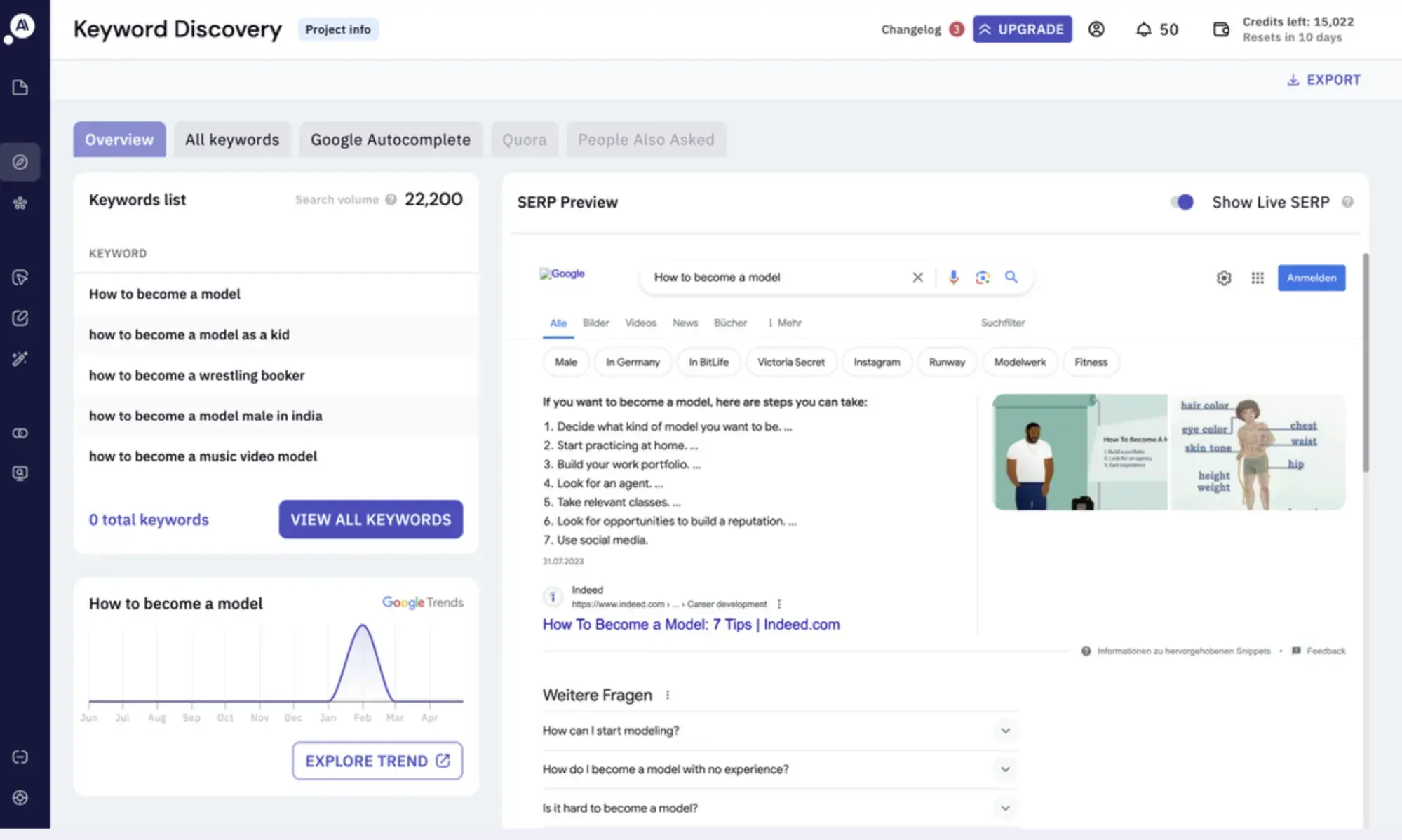
What we like: Keyword Insight’s SERP-based clustering engine is the most accurate I’ve ever tested. It groups keywords based on real URL overlap in Google’s top results, so clusters reflect how search engines actually think, not just how words sound similar.
Generating content briefs directly from clusters saves our team hours, and the GSC integration means we work with live ranking data rather than guesswork.
Best for: SEO experts and content teams who need a dedicated, precision-focused clustering tool with a complete workflow from research to brief, without paying for a bloated all-in-one suite.
2. SEMrush keyword strategy builder
What we like: SEMrush’s visual topic map provides a useful planning interface that shows how pillar topics and subtopics are related, changing the way we think about content architecture.
Best for: Marketing teams and agencies already run their SEO operations within SEMrush and want to integrate clustering into a single, end-to-end workflow rather than managing a separate tool.
3. Ahrefs Keywords Explorer
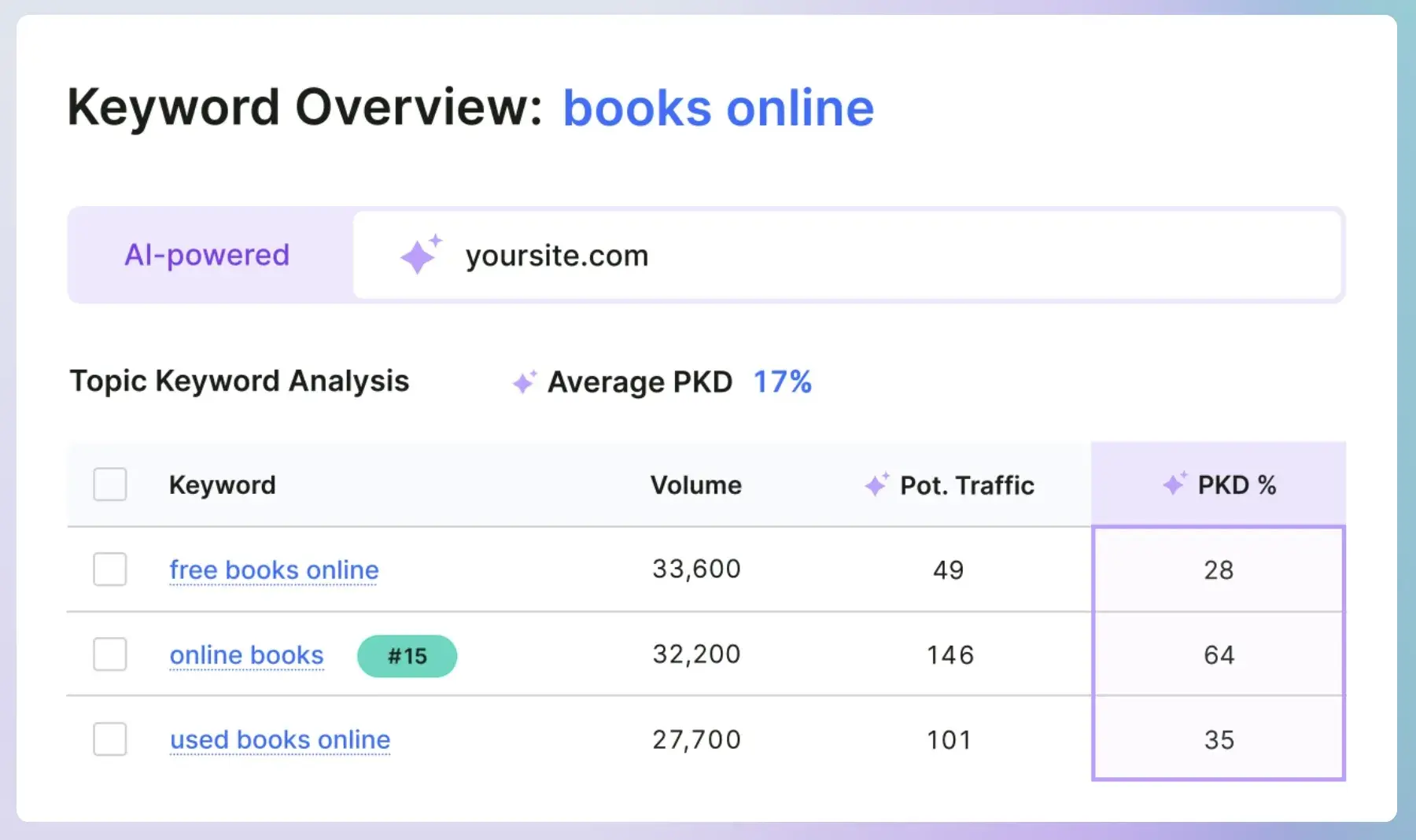
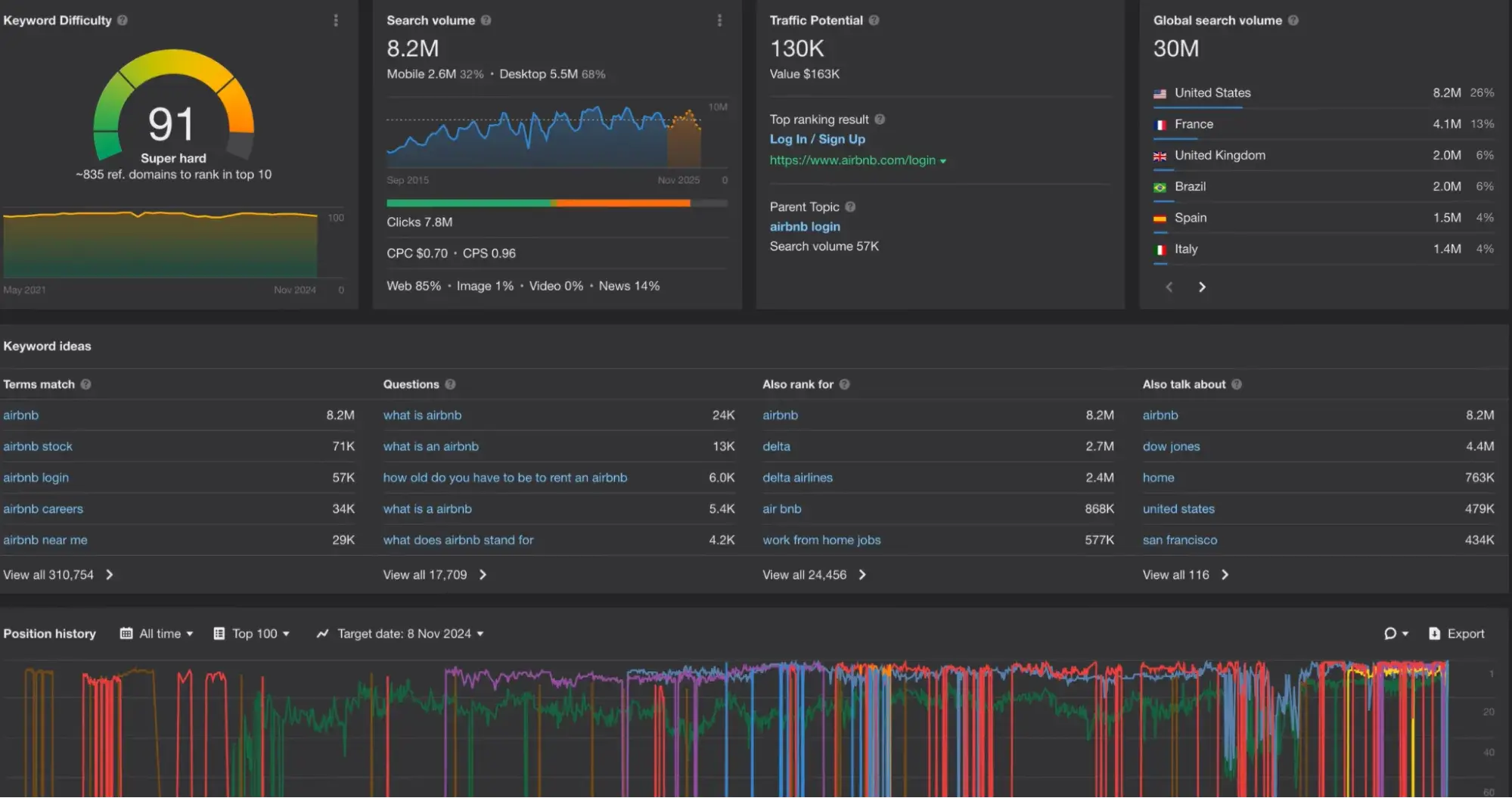
What we like: Ahref’s Parent Topic methodology is fast and efficient, especially for large-scale keyword research across multiple markets or customers.
Best for: Research-intensive teams that need to process large keyword sets quickly, or anyone who already uses Ahrefs as their primary SEO platform and wants reliable clustering without adding another tool to the stack.
4. Low fruits
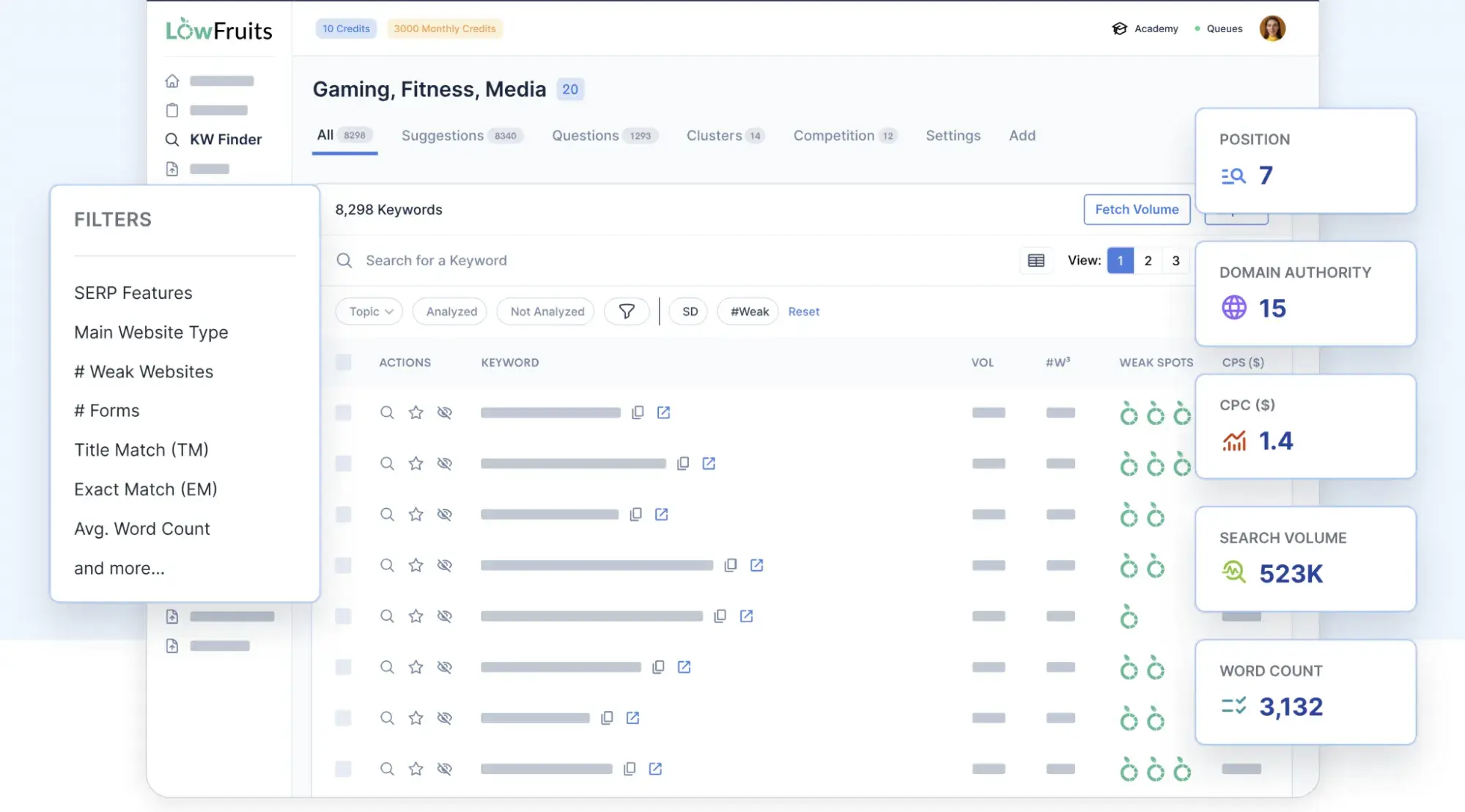
What we like: The pay-as-you-go model is convenient and the clustering itself is free; Credits are only used for a more in-depth SERP analysis.
For niche sites and smaller projects, the signal-to-noise ratio is excellent: clusters are clean, actionable, and don’t require a steep learning curve to interpret.
Best for: Bloggers, niche site operators, and small teams who want solid SERP-based and semantic clustering without the overhead of an enterprise platform – especially useful when budget flexibility is more important than feature depth.
Frequently asked questions about keyword clustering.
When should you not use keyword clustering?
Keyword clustering loses its value if your site is too new to gain topic authority. At this stage, a single, targeted pillar page will outperform a half-finished cluster every time.
It is also counterproductive when applied to a keyword list that has not been previously segmented by intent, as clustering mixed-intent keywords creates pages that satisfy no one.
If you run a single product or niche site with a limited keyword universe, the overhead of a full cluster architecture may outweigh the benefits. In these cases, a flat content structure with strong internal linking is often just as effective.
How many keywords belong in a cluster?
There is no one-size-fits-all number, but most well-structured clusters contain 5-20 keywords targeting a single page. The right size depends on how much variation there is within the topic – a broad information cluster might support 15-20 long-tail variants, while a transactional cluster might only need 5-8 closely related terms.
The real test is not quantity, but whether a single piece of content can naturally target every keyword in the cluster without diluting its focus. If you expand the page to cover keywords that seem tangent, that’s a signal to split the cluster.
Should every cluster have a pillar page?
Not necessarily – the pillar page model works best when you have enough clustered content to justify a central hub, usually at least 6-10 supporting pages. For smaller clusters that focus on narrow subtopics, a well-optimized cluster page can serve as a standalone asset without its own pillar above it.
However, each cluster should at least be mapped to a broader topic level, even if there isn’t a full pillar page yet – this will keep your content architecture scalable as you publish more. Think of the pillar as something you grow into, not a requirement to start.
How do you prevent keyword cannibalization with clusters?
The most effective prevention is to assign unique keyword ownership during the clustering phase – each keyword should be associated with exactly one URL before writing content. Use a tracking sheet that logs the primary keyword, target URL, and cluster mapping for each page, highlighting conflicts before they become ranking problems.
If cannibalization is already present, run a SERP overlap check.
If two of your pages appear in the same results for the same query, consolidate them or use canonical tags to declare the authoritative version. Keep cluster boundaries tight and review your keyword map quarterly to prevent overlap from silently accumulating over time.
What is the best way to quickly validate cluster intent?
The fastest method is a manual SERP audit: search your primary cluster keyword and scan the format, content type and language of the top 5 results in under 2 minutes. If the results are mostly listicles, your cluster is informational only. If they are product pages or comparison tables, they are commercial or transactional content.
A second check using the People Also Ask field shows the adjacent questions your clustered content needs to answer and confirms whether your keyword grouping matches what users actually think about the topic.
For larger lists, tools like Semrush’s intent filter or Keyword Insights’ automatic intent classification can validate hundreds of clusters in a single pass.