Here’s a tough pill to swallow: The way shoppers discover brands has fundamentally changed. As a result, response engine optimization tools have become essential technology for marketers navigating the new era of search, where AI platforms like ChatGPT, Perplexity, and Google AI Overviews provide direct answers rather than links.
AEO tools bridge this visibility gap by tracking how AI systems mention, cite, and recommend your brand. These AI search monitoring tools reveal data that traditional analytics cannot capture, such as:
- Whether you will be recommended to others
- How they are described
- Where competitors win
- Prompts you should own
As programmatic SEO evolves and the best content for SGE becomes structured, authoritative, and responsive, AI visibility tools help you measure what’s working and identify what needs to change.
In this guide you will get:
- A breakdown of 8 AI engine optimization tools, from free entry points to enterprise-class platforms
- Clear comparisons based on company size, budget and integration requirements
- Step-by-step guide to measuring AI visibility and tracking citations over time
- A framework for aligning AEO metrics with inbound KPIs like leads, pipeline, and retention
- Common mistakes to avoid when selecting tools and warning signs that indicate shelf ware risk
- A handy rubric for evaluating which platform meets your team’s needs
Whether you’re exploring AEO for the first time or looking to upgrade your current stack, this guide will help you choose an answer engine optimization tool that delivers results instead of collecting dust.
Table of contents
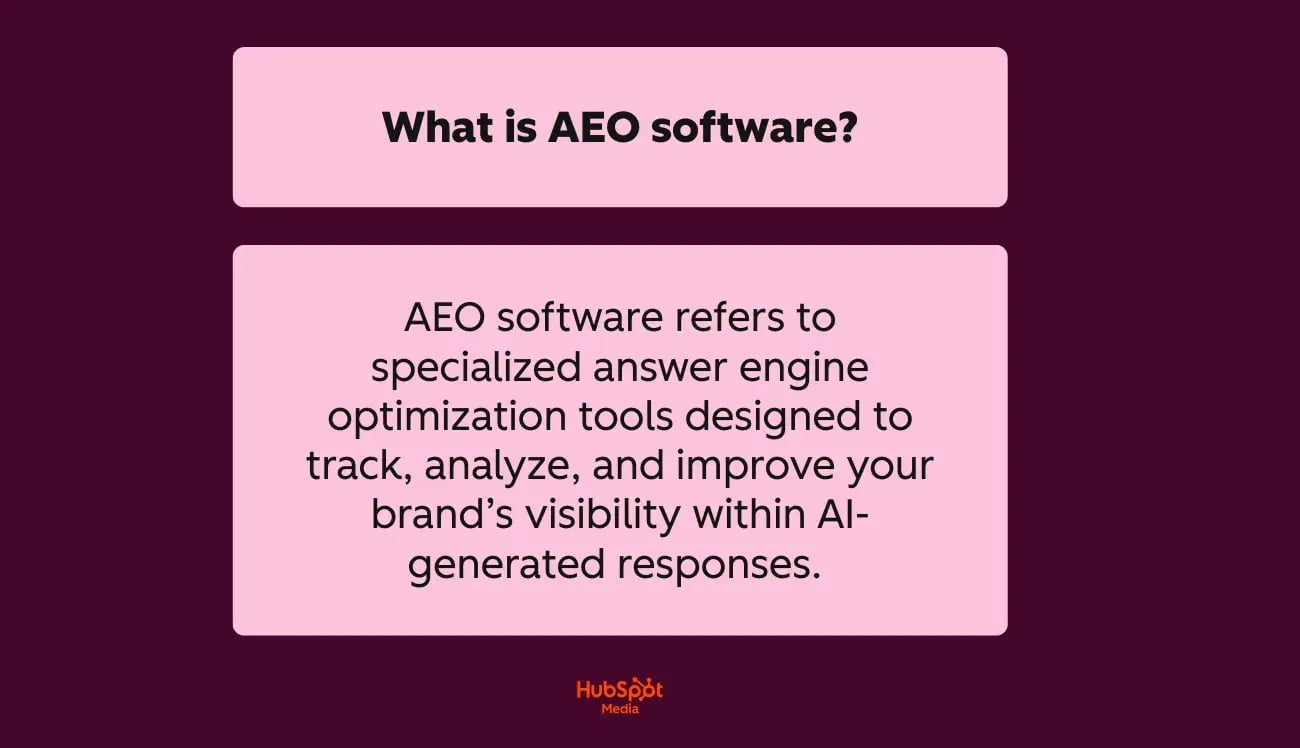
What is AEO software?
AEO software is dedicated response engine optimization tools designed to track, analyze, and improve your brand visibility in AI-generated responses.
This is how AEO tools differ from traditional SEO platforms:
- Monitoring focus. SEO tools track SERP positions and organic traffic. AI visibility tools track brand mentions, quotes, and sentiment in AI-generated responses.
- Data sources. SEO platforms rely on search engine indexes. AI search monitoring tools query multiple large language models to capture how each AI responds to industry-relevant prompts.
- Success metrics. SEO measures clicks and impressions. AEO measures citation frequency, recommendation sentiment and share of voice across all AI platforms.
- Content instructions. SEO tools optimize for keywords and backlinks. AEO tools are optimized for the structured, authoritative content patterns that AI models prefer to cite.
Even if you are already using it HubSpot’s SEO marketing softwareAhrefs or SEMrush, you still need dedicated response engine optimization tools because traditional platforms are not designed to query AI models or interpret how LLMs select sources.
Here’s the thing: AI engines don’t just crawl and index; They aggregate information from multiple sources and decide which brands to recommend based on perceived authority, clarity and relevance. Additionally, AEO tools integrate with CRM and content workflows, allowing marketing teams to directly link AI visibility data to pipeline performance.
This integration allows you to measure the correlation between improvements in AI recommendations and actual lead generation, not just vanity metrics.
Pro tip: Want to see where your brand currently ranks in AI search results? HubSpot’s AI Search Grader provides a free assessment of your visibility on major AI platforms, giving you a baseline before investing in comprehensive AI engine optimization tools.
How do AEO tools work?
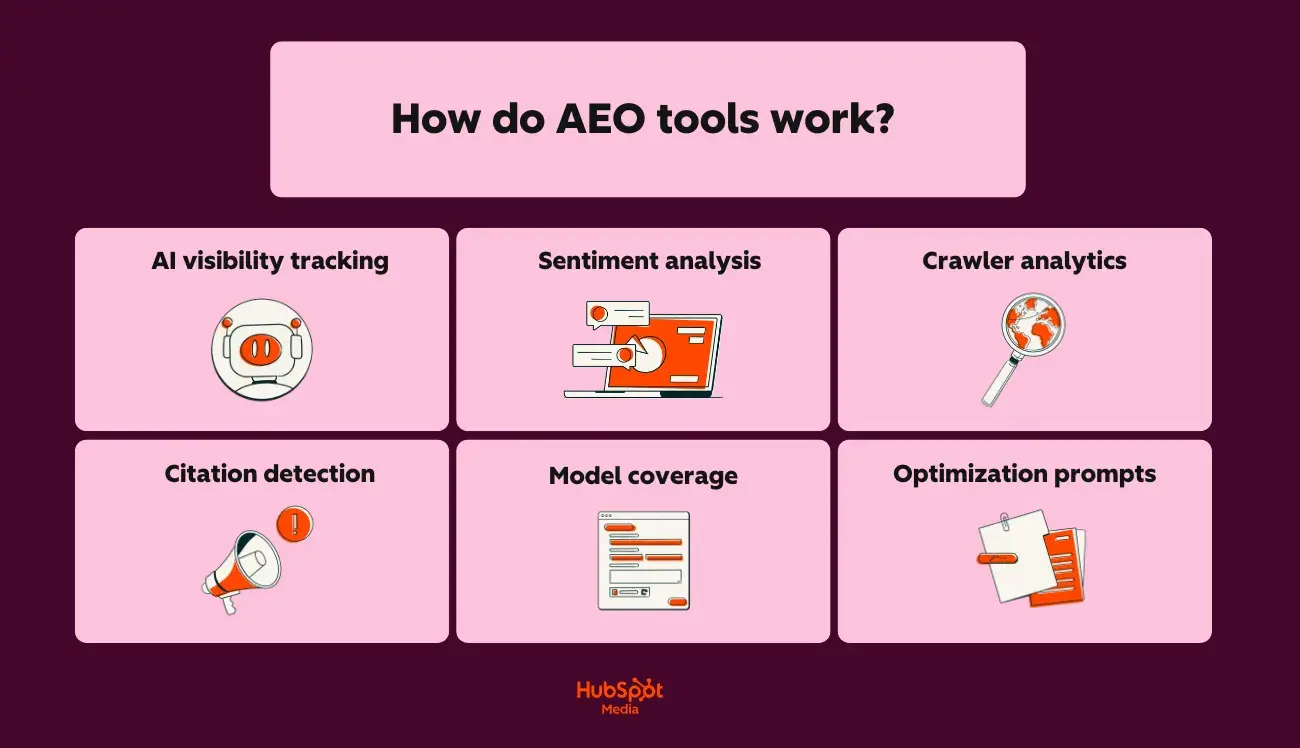
AEO tools work by systematically querying AI models, collecting their answers, and analyzing how those answers relate to your brand, your competitors, and industry topics.
Unlike traditional SEO crawlers that scan web pages, AI search monitoring tools interact directly with large language models to extract visibility data from AI-generated answers.
For more context, here’s how the core features work:
1. AI visibility tracking
AI visibility tools submit prompts to multiple AI platforms (including ChatGPT, Perplexity, Google AI Overviews, Copilot, Gemini, and Claude) and record whether your brand appears in the responses.
This tracking occurs across different prompt variations, user intent categories, and geographic settings to create a comprehensive visibility profile.
2. Quote recognition
AEO tools track brand mentions and citations in AI-generated responses by detecting when AI models point to your content as a source. When it comes to citation recognition, a distinction is made between:
- Direct quotes. The AI explicitly names your brand or links to your content.
- Indirect references. The AI paraphrases your content without citing the source.
- Competition quotes. The AI recommends a competitor instead of your brand.
3. Sentiment analysis
Response engine optimization tools evaluate the tone and context around your brand mentions.
Sentiment analysis shows whether AI models describe your brand positively, neutrally or negatively and flags potential reputational risks before applying them to millions of AI-generated responses.
4. Model cover
Different AI platforms provide different answers.
AI engine optimization tools monitor multiple models simultaneously, as a brand may appear prominently in Perplexity but not present in other models such as Claude or Gemini. Comprehensive model coverage ensures you understand visibility gaps across the AI ecosystem.
5. Crawler analysis
AEO platforms track how AI training crawlers and retrieval systems interact with your website. This is what crawler analytics show:
- Which pages do AI systems access most often?
- Regardless of whether your robots.txt file or your technical setup blocks AI crawlers
- How page structure and schema markup influence AI content intake
6. Optimization prompts
Based on visibility data, AEO tools generate specific content recommendations. Identify these optimization calls:
- Structural changes
- Semantic improvements
- Authority signals (which increase the likelihood of an AI citation)
Pro tip: Want the full scoop on everything AEO-related? Check out this video from HubSpot Marketing’s YouTube channel.
The best AEO tools (at a glance)
|
Tool |
Best for |
Key Features |
Prices |
Free trial |
|
HubSpot (AEO Grader + Content Hub) |
SMEs and medium-sized companies are already using HubSpot |
Brand awareness assessment Competitive benchmarking Assessment of market position (leader/challenger/niche player) |
Content Hub starts at $15/month for individuals Content Hub Professional starts at $500/month |
Yes (AEO Grader is free forever) |
|
Medium-sized companies and agencies looking for consistent SEO and AEO |
xFlow visualization Buying journey analysis Optimization playbooks Dedicated analyst support Experimental platform |
Individual pricing only; requires booking a strategy meeting or demo |
Yes |
|
|
Semrush (AI Visibility Toolkit) |
SMBs and agencies are looking for affordable AI visibility tracking |
AI visibility score Quick research Analysis of the competitive gap |
SEMrush One Starter starts at around $199/month (50 prompts) SEMrush Pro+ starts at $300/month (100 prompts) |
Yes |
|
SMBs and agencies are looking for affordable AI visibility tracking |
Search for prompts Brand visibility index Quote tracking |
Lite starts at $29/month (15 prompts) Standard for $189/month (100 prompts) Premium for $489/month (400 prompts) |
No (demo required) |
|
|
Corporate brands (Fortune 500) that require compliance and comprehensive analytics |
Conversation Explorer (over 200 million prompts) Evaluating citation accuracy AI crawler log analysis SOC 2 Type II and HIPAA compliance |
Starter starts at $99/month Growth starts at $399/month Individual pricing is required for companies |
Free AI search assessment |
|
|
Mid-sized to large brands in need of end-to-end optimization |
Intelligent prompt engine Attribution dashboard that connects AI visibility to sales AEO content author |
Starts at around $495/month Custom team and company levels are available by arrangement |
Yes |
|
|
Ahrefs (brand radar) |
SEO teams add AI monitoring to existing Ahrefs workflows |
Brand mention monitoring Quote tracking Integration with existing backlink and keyword data |
Included with Ahrefs subscriptions starting $129/month The standard tier starts at $249/month The advanced tier starts at $449/month |
Yes |
|
Surfer SEO (AI tracker) |
Content teams prioritize optimization in addition to visibility tracking |
Content editor with NLP recommendations AI visibility tracking SERP analyzer |
Essential starts at $99/month Sliding scale starts at $219/month Enterprise starts at $999/month |
Yes |
8 AEO tools every marketer should use
Overall, choosing the “right” response engine optimization tools depends on the following factors:
- Your company size
- budget
- The required level of integration into existing workflows
However, the following platforms represent the current landscape of AEO tools and range from free, entry-level solutions to enterprise-class offerings. Check out these to get a better feel for what you might need:
1. HubSpot (AEO Grader and Content Hub)
HubSpots AI visibility tools provide a free entry point for brands concerned with response engine optimization. Over and beyond, HubSpot’s AEO Grader analyzes your brand visibility in GPT-4o, Perplexity and Gemini and provides:
- Competitive positioning data
- Sentiment analysis
- Share-of-voice metrics without requiring a subscription
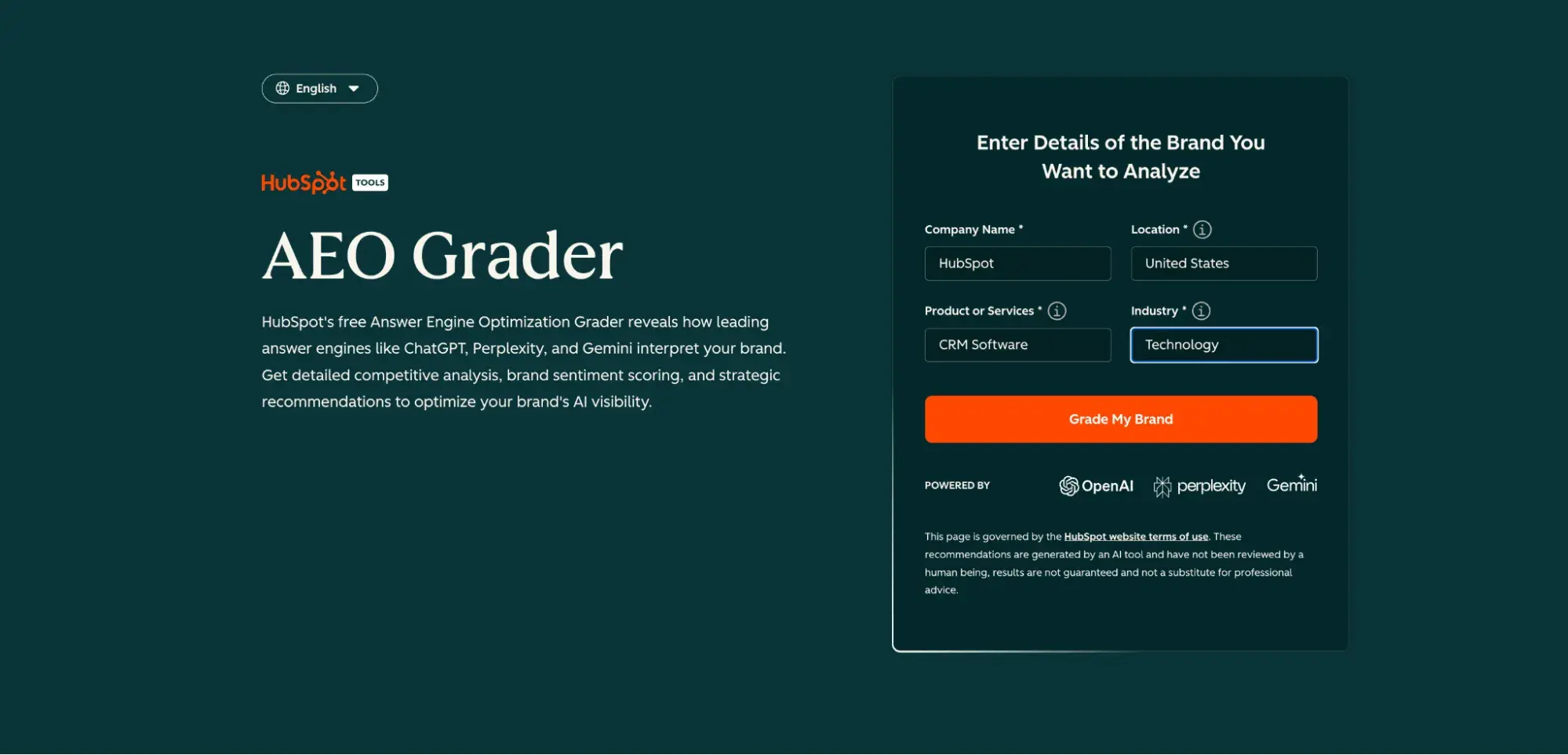
Best for: SMEs and medium-sized companies are already using HubSpot.
HubSpot’s key features:
- Brand awareness assessment. This feature shows how frequently your brand appears in search results when users search for information about your industry.
- Competitive benchmarking. This feature shows the proportion of language gaps between your brand and the competition.
- Assessment of market position (leader/challenger/niche player). This feature categorizes your brand’s reputation compared to competitors in AI search.
HubSpot Prices for Content Hub (and AEO Grader):
- AEO Grader is free
- Content Hub starts at $15/month for individuals; Content Hub Professional starts at $500/month
2. xFunnel (now part of HubSpot)
xFunnel helps brands monitor, experiment, and strengthen their visibility on AI-powered search engines. AEO tools track brand mentions and citations in AI-generated responses from:
- ChatGPT
- Claude
- Gemini
- confusion
- Google AI overviews
- Google AI mode
- Microsoft Copilot
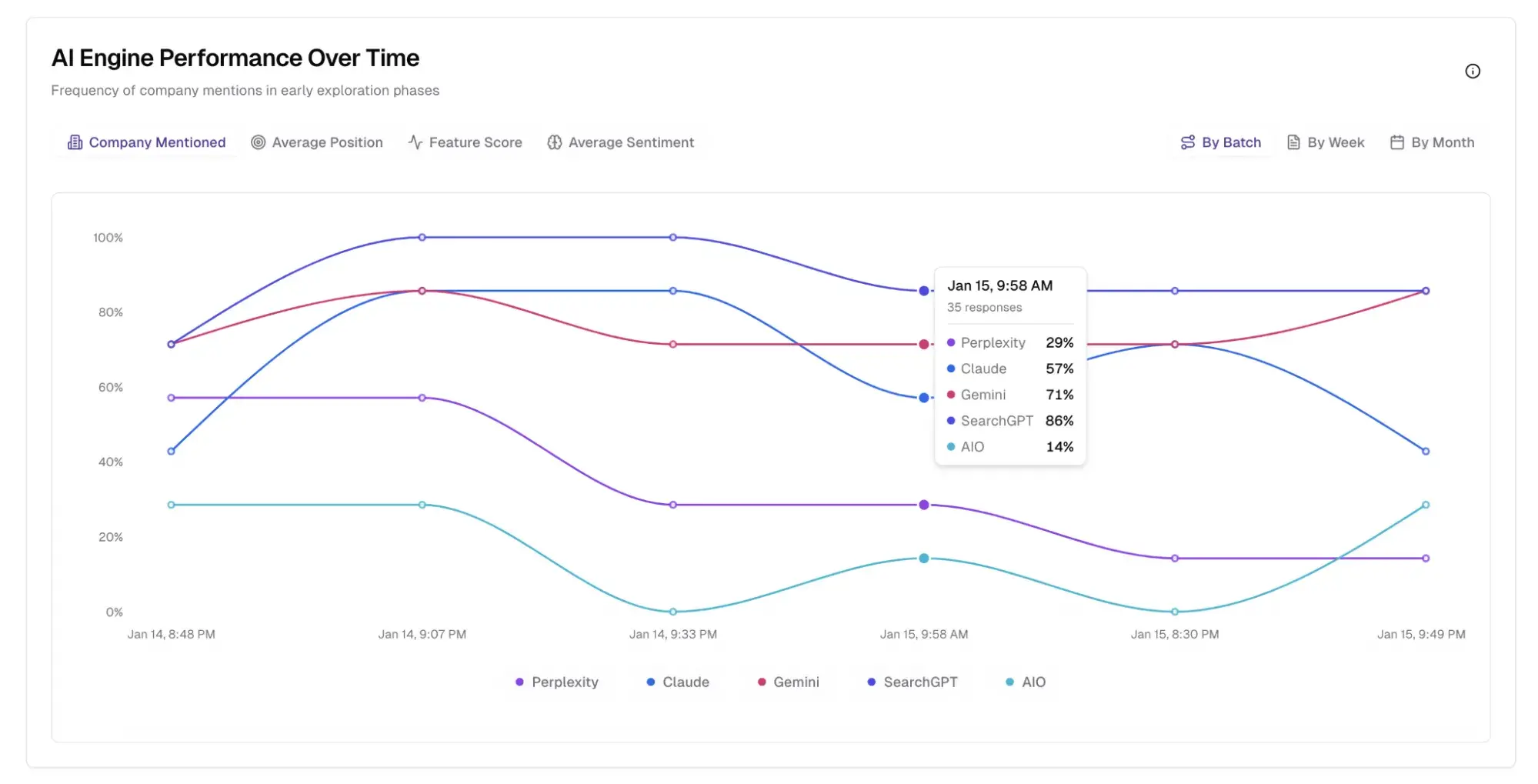
Best for: Mid-sized to large brands looking for dedicated AEO analyst support and experimentation frameworks
The most important features of xFunnel:
- xFlow visualization. This feature maps how content and brand mentions appear in AI search results.
- Research and segmentation. This feature identifies top queries by intent level and segments data by region, persona, or product to find out what buyers are asking about your industry.
- Visibility tracking. This feature measures share of voice, brand sentiment and competitive positioning across multiple AI engine optimization tools.
XFunnel Pricing:
- Individual pricing only; requires booking a strategy meeting or demo
- Pre-acquisition reports indicated that the enterprise-level positioning was comparable to other premium AEO tools in the $500+ per month range
Note: HubSpot announced its acquisition of xFunnel on October 31, 2025. Standalone xFunnel accounts will be migrated to HubSpot’s ecosystem, which will integrate xFunnel’s technology Content Hub’s AEO features as part of the Loop marketing framework.
3. Semrush
Semrush launched its AI Visibility Toolkit in 2025, integrating AI search monitoring tools into its established SEO ecosystem. The platform tracks brand mentions in the following areas:
- ChatGPT
- confusion
- Google AI overviews
- AI mode
- Gemini
All of this is accessible from the same dashboard used for traditional keyword research.
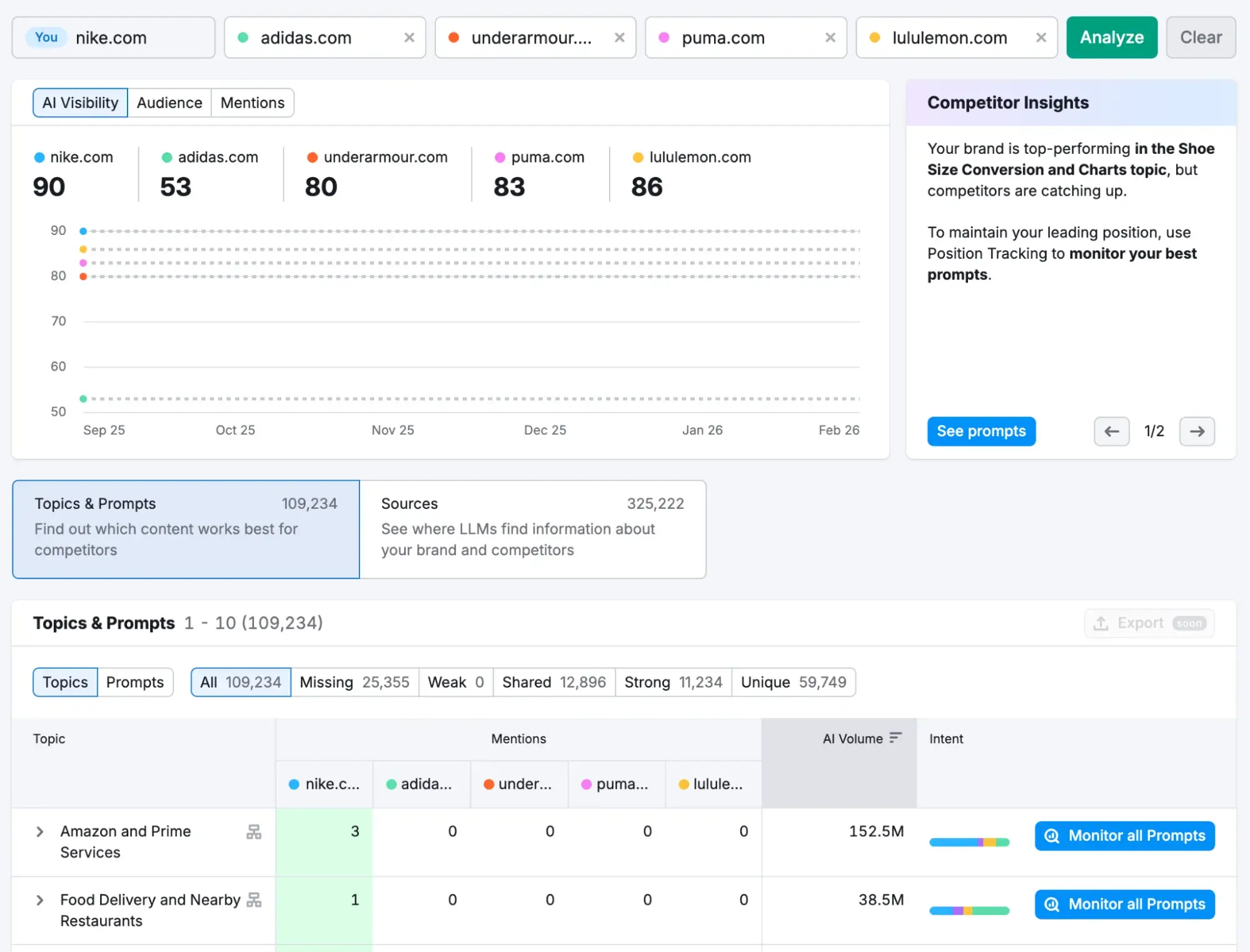
Best for: Medium-sized companies and agencies looking for consistent SEO and AEO.
Semrushs Key Features:
- AI visibility score. This feature quantifies your brand’s presence across all AI platforms compared to competitors.
- Quick research. This feature helps you discover and prioritize AI search topics based on volume and intent.
- Analysis of the competitive gap. This feature highlights prompts where competitors appear but your brand does not.
Semrush Prices:
- SEMrush One Starter starts at around $199/month (50 prompts)
- SEMrush Pro+ starts at $300/month (100 prompts)
4. Otterly.AI
Otterly.AI offers AI engine optimization tools at affordable prices, making it ideal for teams taking their first steps into response engine optimization. AEO tools monitor AI models including:
- ChatGPT
- confusion
- Google AI overviews
- Gemini
- Microsoft Copilot
Additionally, it monitors all these platforms through automatic daily tracking.
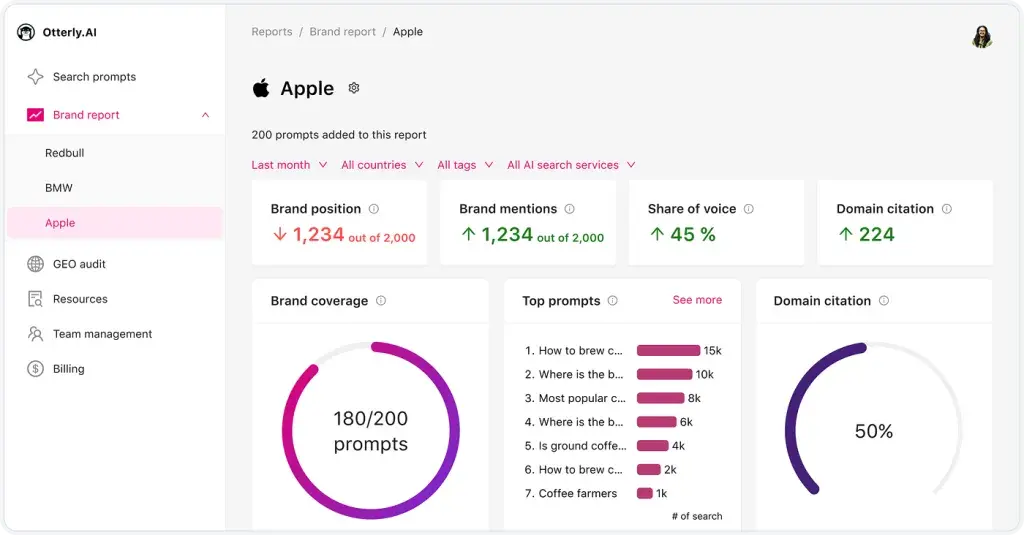
OtteRThe most important features of ly.ai:
- Search for prompts. This feature uncovers high-quality prompts your audience uses when searching for solutions like yours.
- Brand visibility index. This feature provides a single score that tracks your brand’s presence across all AI platforms over time.
- Quote tracking. This feature shows which of your URLs AI platforms reference as sources in their responses.
Otterly.ai Prices:
- Lite starts at $29/month (15 prompts)
- Standard for $189/month (100 prompts)
- Premium for $489/month (400 prompts)
5. Profound
Profound positions itself as an AEO tools platform for companies. It tracks visibility across 10+ AI engines including:
- ChatGPT
- Claude
- confusion
- Google AI overviews
- Gemini
- Microsoft Copilot
- DeepSeek
- Grok
- Meta AI
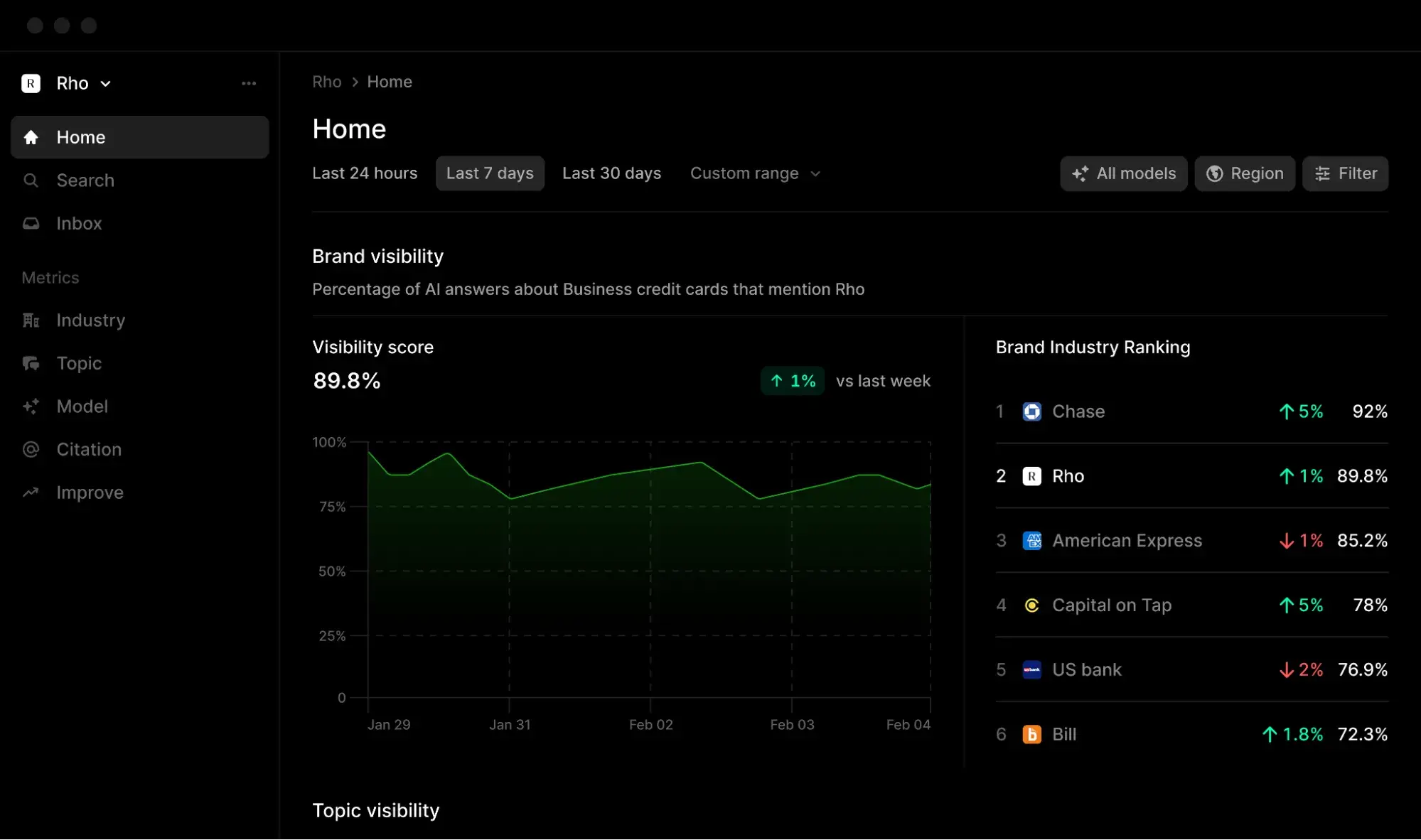
Key features of Profound:
- Conversation Explorer. This feature displays real user prompts from various conversations to reveal what your audience demands from AI platforms.
- Evaluating citation accuracy. This feature reports when AI engines misrepresent your products, services, or brand attributes.
- AI crawler log analysis. This feature tracks how AI bots access and index your content to identify technical obstacles.
Profound Prices:
- Starter starts at $99/month
- Growth starts at $399/month
- Individual pricing is required for companies
6. Goodie AI
Goodie AI excels at combining visibility monitoring with actionable optimization through its Optimization Hub. It tracks data from AI visibility tools across 11 models including:
- ChatGPT
- Gemini
- AI overview
- Claude
- confusion
- Grok
- DeepSeek
- Meta AI
- AI mode
- co-pilot
- Amazon Rufus
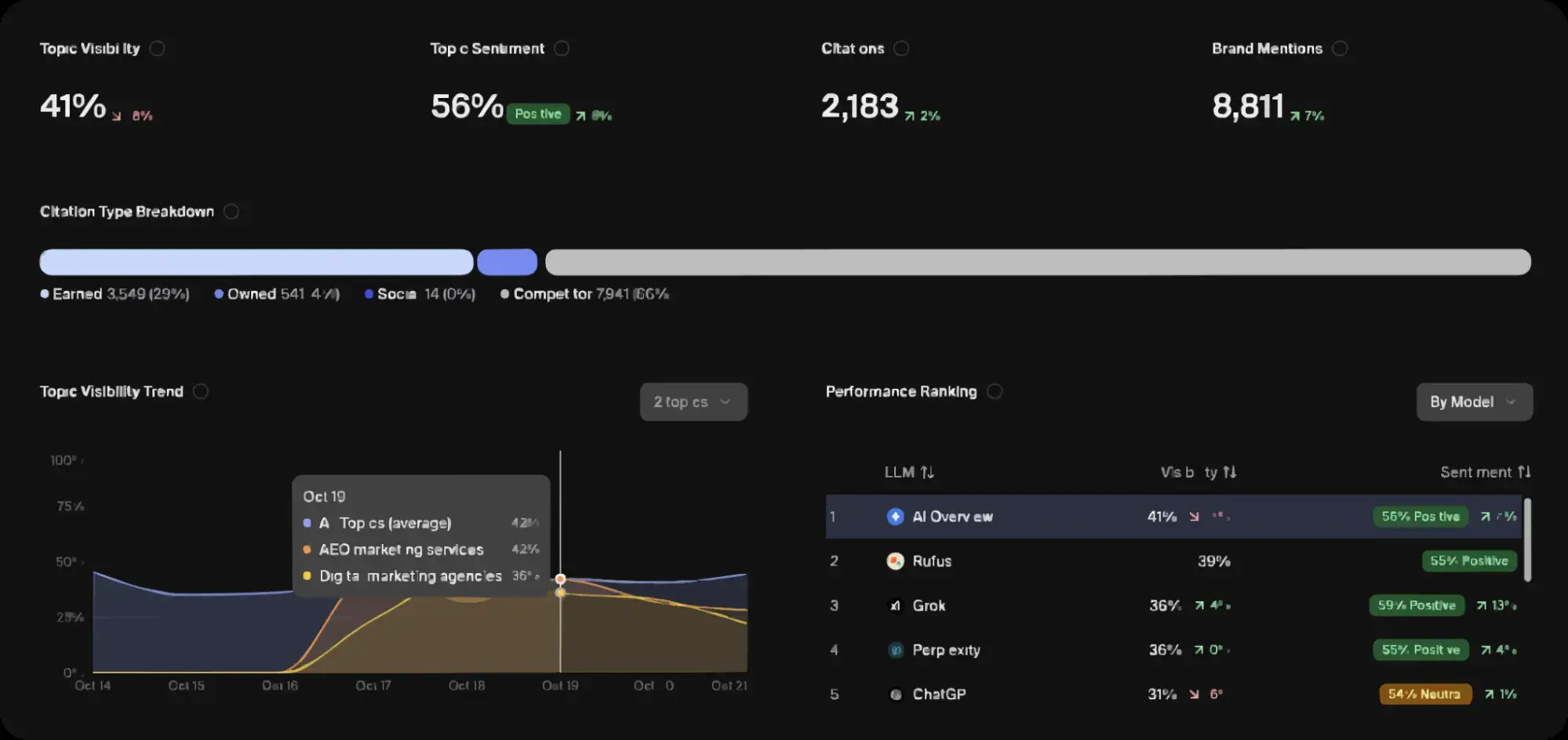
The most important features of Goodie AI:
- Intelligent prompt engine. This feature recommends topics and prompts to optimize based on your audience and ICPs.
- Attribution dashboard that connects AI visibility to sales. This feature links AI response impressions to website sessions and supports revenue through UTM tracking.
- AEO content author. This feature generates optimized content designed to get citations across all AI platforms.
Goodie AI Prices:
- Starts at around $495/month
- Custom team and company levels are available by arrangement
7. Ahrefs
Ahrefs expanded its traditional SEO platform Brand radarThis allows teams already using response engine optimization tools to perform multi-level AI visibility tracking without having to switch providers.
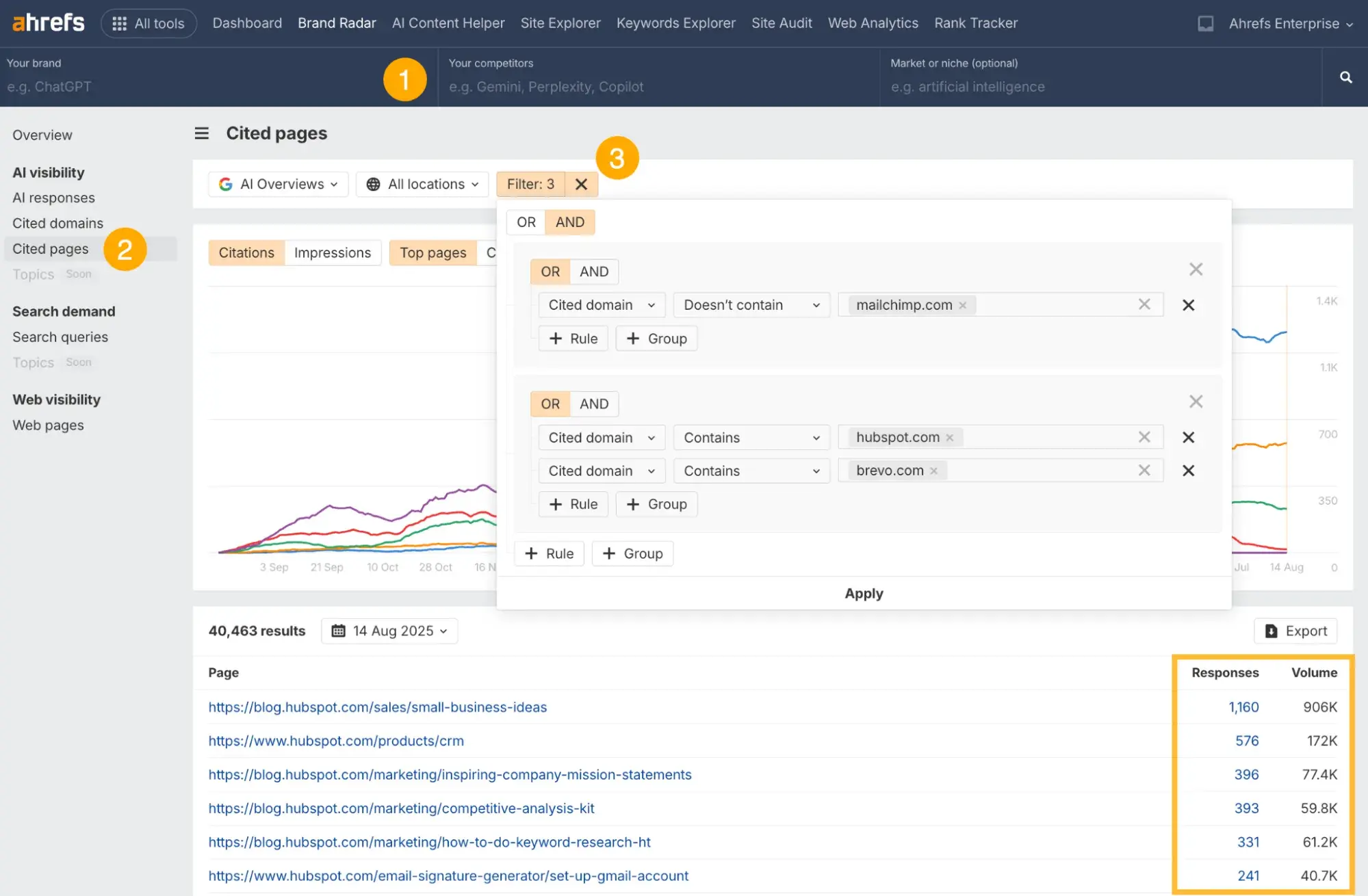
Best for: SEO teams looking to integrate AI monitoring into their existing Ahrefs workflows.
Key features of Ahrefs:
- Brand mention monitoring. This feature tracks how often AI engines reference your brand across major platforms.
- Quote tracking. This feature identifies which of your pages are cited as sources by AI platforms.
- Integration with existing backlink and keyword data. This feature allows you to view AI citation data alongside traditional SEO metrics in a dashboard.
Ahrefs Prices:
- Included with Ahrefs subscriptions starting at $129/month
- The standard tier starts at $249/month
- The advanced tier starts at $449/month
8. Surfer SEO
Combining content optimization with AI search monitoring tools, Surfer SEO helps teams both track their AI presence and improve content structure for higher citation likelihood.
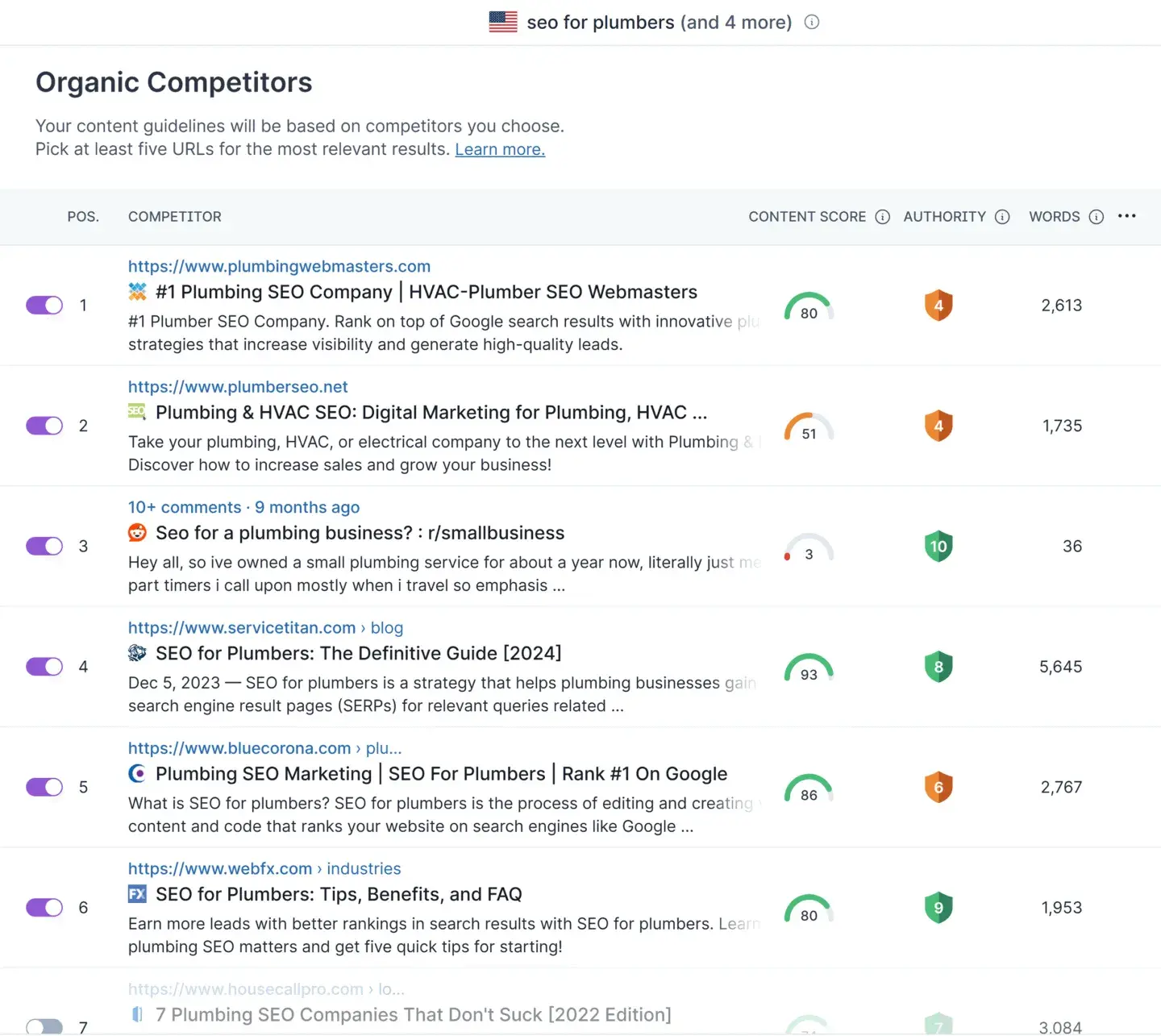
Key features of Surfer SEO:
- Content editor with NLP recommendations. This feature provides real-time feedback on content structure to improve citation likelihood through AI.
- AI visibility tracking. This feature monitors where your content appears in AI-generated responses across major platforms.
- SERP analyzer. This feature examines search results to identify content patterns that drive both rankings and AI citations.
Surfer SEO Prices:
- Essential starts at $99/month
- Sliding scale starts at $219/month
- Enterprise starts at $999/month
How to measure AI visibility and citations
Now that we’ve explored which response optimization tools might be a good fit for your team, let’s talk about measuring AI visibility and citations.
First, traditional SEO metrics (like rankings, clicks, and impressions) don’t capture whether AI platforms recommend your brand when users ask for solutions. Additionally, measuring AI visibility requires tracking different signals across different platforms using purpose-built AEO tools.
Essentially, AEO tools track brand mentions and citations in AI-generated responses, providing data that traditional analytics platforms cannot access.
In the next section, you’ll learn how to set up a measurement framework that connects AI visibility to business outcomes.
Key AEO metrics to track
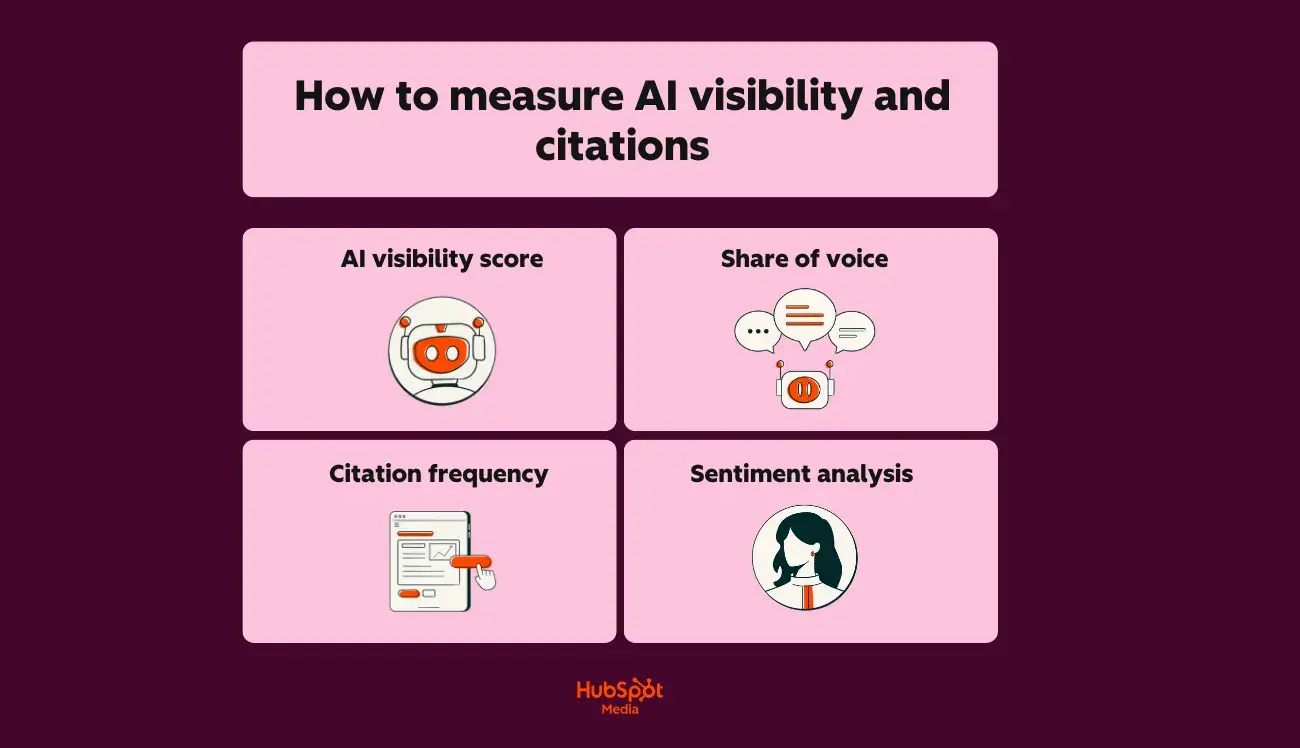
1. AI visibility score
An AI visibility score measures how often your brand appears in AI-generated responses compared to competitors.
Most AI visibility tools calculate this as a percentage based on a defined set of prompts relevant to your industry.
2. share of the vote
Share of Voice quantifies your brand’s presence compared to competitors on the same prompts.
For example, if you appear in 15 out of 100 prompts tracked and your top competitor appears in 40, your share of voice is 15% versus 40%.
3. Citation frequency
Citation frequency is simple. What counts is how often AI platforms point to your content as a source.
However, AI search monitoring tools differentiate between the following forms of brand visibility:
- Direct quotes. AI generates a name for your brand or links to your URL.
- Indirect mentions. AI refers to your content without explicit mention.
- Recommendation position. Where your brand appears in rankings or comparisons.
4. Sentiment analysis
Sentiment analysis assesses whether AI platforms describe your brand positively, neutrally or negatively.
This metric uncovers reputational risks that could influence purchasing decisions before potential customers even reach your website.
How to track brand visibility over time
The one-time measurement of AI visibility provides a snapshot of the current state. Continuous measurement uncovers trends, identifies what’s working, and catches visibility losses before they impact the pipeline.
Here’s how to track brand visibility over time in six easy steps
Step 1: Set up your Command Prompt library.
Start by creating a list of 50 to 200 prompts that reflect how your audience asks questions on AI platforms. Contain:
- Category-level queries (“What is the best CRM for small businesses?”)
- Comparison queries (“HubSpot vs. Salesforce for Startups”)
- Problem-based queries (“How do I improve email open rates?”)
- Brand-specific queries (“Is (your brand) good for (use case)?”)
Step 2: Select your model cover.
Different AI platforms provide different answers.
Response engine optimization tools should track visibility across multiple models simultaneously, as your brand may rank well in ChatGPT but not show up on Perplexity or Claude.
Overall, prioritize the platforms your audience uses the most.
Step 3: Set your tracking frequency.
Next, set your tracking cadence based on your team’s needs. I recommend using this breakdown as a guide:
- Daily tracking captures rapid changes and allows you to correlate visibility shifts with content updates.
- Weekly tracking strikes a balance between data timeliness and cost efficiency for most midsize teams.
- Monthly tracking is effective for baseline benchmarking but misses short-term fluctuations.
Step 4: Segment by prompt category.
Group prompts by funnel stage, product line, or persona to find out where you’re winning and where you’re losing.
AI engine optimization tools with segmentation capabilities reveal whether visibility gaps are clustering around specific topics or buyer intent.
Step 5: Monitor competitor movement.
Then follow the same prompts for three to five key competitors.
If a competitor’s visibility on prompts is increasing while your visibility has decreased, examine what content or quotes drove the change.
Step 6: Document citation sources.
Finally, note which URLs AI platforms cite when mentioning your brand. This data shows which sites consider AI systems to be authoritative, helping to prioritize optimization efforts.
Pro tip: Start by benchmarking your current AI presence with HubSpot’s AI Search Graderthat analyzes visibility in GPT-4o, Perplexity and Gemini for free.
Aligning AEO metrics with inbound marketing KPIs
AI visibility data is valuable in its own right, especially when benchmarking against competitors. However, it is most actionable when linked to sales results. AEO metrics align with inbound marketing KPIs such as:
This alignment occurs via integrated dashboards that track the entire process, from AI quote to contract closing.
Check out below to learn how to balance AEO metrics with your inbound reporting:
1. Combine visibility with traffic.
HubSpot’s marketing hub Now segments AI recommendation traffic separately from organic search, so you can measure how many visitors arrive after coming across your brand in an AI-generated response.
Pro tip: Mark these visitors as “LLM-referred” to track their behavior in the funnel.
2. Match quotes with lead generation.
Create dashboard views that correlate:
- The AI visibility score changes as lead volume evolves
- The proportion of language improvements with demo requests increases
- Citation frequency growth with MQL conversion rates
3. Attribute pipeline influence.
When prospects mention that they “asked ChatGPT” or “saw you recommended in Perplexity,” log that as an AI-influenced touchpoint.
Over time, this attribution data shows which prompts and platforms offer the most valuable opportunities.
4. Track commitment signals.
Monitor whether AI platforms accurately describe your product capabilities. Inaccurate AI responses can lead to discrepancies in expectations, leading to increased customer churn.
AEO tools with sentiment tracking flag these risks before they grow.
5. Create your AEO dashboard.
Insert these metrics side by side:
|
AEO metric |
Incoming KPI |
Relationship |
|
AI visibility score |
Website traffic through AI recommendations |
Leading indicator of discovery |
|
share of the vote |
Lead volume compared to competitors |
Market position signal |
|
Citation frequency |
MQL conversion rate |
Authority indicator |
|
Sentiment score |
Customer retention rate |
Experience alignment |
AEO tools integrate with CRM and content workflows and enable teams to directly connect AI visibility data HubSpot’s reporting infrastructure. This integration transforms AI measurement from a standalone metric into an integrated component of your marketing analytics.
Mistakes to avoid when choosing AEO tools
Here’s the deal: The market for AEO tools has grown from 5 platforms to over 60 providers in 18 months, creating decision paralysis for marketing teams when evaluating options. (Crazy, I know!)
However, many companies invest in AI visibility tools only to find that they have purchased expensive dashboards that create fear without solutions.
Avoiding these common mistakes will help you choose answer search engine optimization tools that get results and don’t end up gathering dust.
Take a look below to avoid the pitfalls that turn AEO tools into shelf stock:
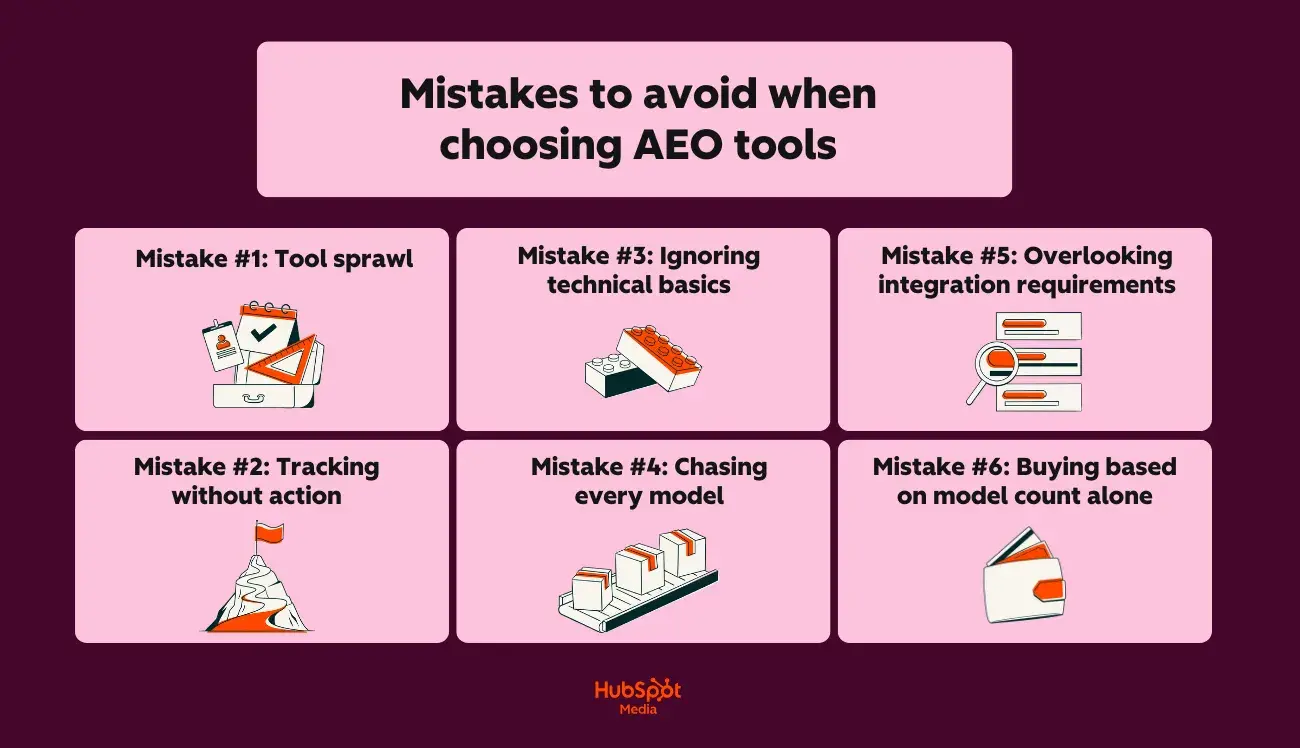
Mistake #1: Tool Overgrowth
Adding a dedicated AEO platform on top of your existing SEO suite, content tools, and analytics stack results in fragmented data and duplicated costs. Teams end up reviewing multiple dashboards without a unified view of performance.
The solution? Evaluate whether your current SEO platform offers AI visibility features before purchasing standalone AI search monitoring tools. HubSpot, SEMrush, Ahrefs, and Surfer SEO all have additional AEO features.
If your existing stack cannot cover AI visibility, choose one dedicated platform rather than three.
Mistake #2: Following up without taking action
The most common AEO error pattern: Teams buy expensive tracking tools, create monthly reports with an 8% share of voice while the competition dominates at 40%, and then don’t know what to do next. Viewability data without optimization guidance is a wasted investment.
The solution? Prioritize AEO tools that provide actionable recommendations, content descriptions, or optimization playbooks, not just dashboards.
Then ask the providers: “After I see the data, what specific actions does your platform recommend?”
Mistake #3: Ignoring technical fundamentals
No amount of AI optimization will compensate for fundamental technical problems. If AI crawlers can’t access your content due to JavaScript rendering issues, blocked robots.txt statements, or missing schema markup, AI engine optimization tools simply report persistent invisibility.
The solution: Check technical accessibility before investing in visibility tracking. Confirm the following:
- AI crawlers (GPTBot, Google-Extended, Anthropic) are not blocked
- The content is rendered server-side or uses the correct SSR
- Schema markup is present on key pages
- Page loading speed does not cause crawler request timeouts
Pro tip: HubSpot’s Content Hub supports AEO content structuring and publishing workflows, ensuring your content is technically accessible to AI systems before you start tracking visibility.
Mistake #4: Tracking every model
As mentioned earlier, AEO tools monitor AI models such as:
- ChatGPT
- confusion
- Google AI overviews
- co-pilot
- Gemini
- Claude
But tracking all platforms is equally draining on resources. Each model requires different optimization approaches and your target audience is likely focused on two to three platforms.
The solution? Identify which AI platforms your target buyers actually use, then prioritize those models in your tracking and optimization. A B2B SaaS company could focus on ChatGPT and Perplexity; An eCommerce brand might prioritize Google AI Overviews and Amazon Rufus.
Mistake #5: Overlooking integration requirements
Standalone AI visibility tools that cannot connect to your CRM, analytics, or content systems create data silos. Therefore, you have to manually export CSVs, copy and paste insights, and struggle to map AI visibility to revenue results.
The solution? Check integration capabilities before purchasing. AEO tools can be integrated into CRM and content workflows via APIs, native connectors or webhook support. If your organization keeps running HubSpot’s intelligent CRMPrioritize tools that sync with Marketing Hub’s reporting infrastructure.
Mistake #6: Buying based on the number of models alone
Vendors compete with “We’re tracking 12 AI engines” headlines, but breadth of coverage means nothing if data accuracy is poor. Some platforms use API polling, which captures different responses than what real users see; others rely on infrequent sampling that misses daily volatility.
The solution? Ask providers how they collect data (e.g. real browser queries vs. API calls), how often they update results (e.g. daily vs. weekly), and whether they save response screenshots for review.
“Tool selection” section.
Use this framework to systematically evaluate response engine optimization tools:
|
Criteria |
Questions you should ask |
|
AI engine coverage |
Which models are being pursued? Does the reporting match your target audience’s search queries? |
|
Prompt follow-up |
Can you add custom prompts? How many prompts are included per level? |
|
Citation transparency |
Does it show which URLs AI platforms cite? Can you trace quotes back to specific pages? |
|
Export/API access |
Can you export data to CSV? Is API access included or just for business? |
|
CRM integration |
Does it connect to HubSpot, Salesforce, or your existing stack? |
|
Onboarding |
Do you set it up yourself or does it require the support of a provider? How long does it take to get the first insights? |
|
Support |
Do you get dedicated analyst support or just documentation? |
|
Price clarity |
Are the prices published or are they based on offers? What triggers level upgrades? |
Warning signs that indicate shelfware risk
Sometimes not choosing a tool means dodging a bullet.
Watch out for these warning signs that an AEO platform may no longer be used:
- No published prices. Custom offers often mean pure corporate positioning that doesn’t fit your budget or team size.
- Dashboard-only value prop. If the provider only talks about “visibility scores” without mentioning optimization tips, buy a report generator.
- No free trial or exam. With reputable AI search monitoring tools, you can test with your actual brand before purchasing.
- Excessive onboarding schedules. If setup takes four weeks or longer with mandatory vendor engagement, adoption is likely to stall.
- API access occurs behind the top levels. You may need to link this data elsewhere. Blocked APIs cause future problems.
The “Less but Better” stack design.
In this crowded climate, it can be difficult to resist the temptation to put together a comprehensive AEO stack.
However, to avoid overcomplicating your stack, follow this minimalist approach:
- Start with a clear baseline. Use HubSpot’s AI Search Grader to understand your current visibility before spending.
- Choose a primary platform. Choose a single AEO Tools solution that covers your core AI engines, provides actionable guidance, and integrates with your existing systems.
- Let your SEO platform handle overlap. If SEMrush or Ahrefs covers basic AI visibility, don’t duplicate that feature in a standalone tool.
- Invest in execution, not just follow-up. Allocate budget for content creation, technical optimization, and earned media—the activities that actually drive visibility—rather than stacking multiple tracking dashboards.
- Check quarterly. The AEO market is developing rapidly. Re-evaluate your tools every 90 days as platforms add features and new entrants join the market.
Again, AEO metrics align with inbound marketing KPIs like leads, pipeline, and retention, but only if you have the bandwidth to act on insights. A simple stack that you actually use will outperform a sophisticated stack that overwhelms your team.
Frequently asked questions (FAQs) about AEO tools
What is the best AEO entry-level tool for a small team?
The best AEO tools for beginners combine three features:
- Extensive AI engine coverage to capture where your audience is searching
- Simple interfaces that can be used even without dedicated analysts
- The price is affordable enough to justify the investment before you’ve proven the ROI
What “beginner-friendly” means in practice:
- Cover. At a minimum, tracks ChatGPT, Perplexity, and Google AI Overviews (the three platforms with the highest current usage).
- Simplicity. Provides pre-built command prompt libraries so you don’t have to start from scratch. provides clear recommendations instead of just raw data.
- Cost. Includes a free tier or trial period; paid plans under $100/month for basic features.
Pro tip: For small teams, start with HubSpot’s AI Search Grader And Content Hub – It’s free, requires no setup, and provides instant insights into GPT-4o, Perplexity, and Gemini visibility.
How to try AEO tools in 30 days:
- Week 1. Run the AI Search Grader to determine your current visibility score and identify top competitors for AI answers.
- Week 2. Sign up for a free trial of a paid platform. Configure 25 to 50 prompts tailored to your core product or service.
- Week 3. Check the first data. Identify 3 to 5 prompts where competitors show up but you don’t.
- Week 4. Create or update a piece of content that targets a visibility gap. Document your baseline metrics for future comparisons.
This approach validates whether AI visibility tools provide actionable insights for your specific situation before entering into annual contracts.
Do I need AEO tools if I already use an SEO suite?
You may not need a standalone platform. Several established SEO suites now include AI search monitoring tools as add-on features, reducing the need for separate subscriptions.
This is where SEO and AEO tools overlap:
- Keyword research (SEO) informs quick selection (AEO)
- Content optimization recommendations apply to both channels
- Competitor analysis includes traditional and AI search
- Technical audits (crawlability, schema, page speed) benefit both
This is where AEO tools differ:
- AEO tools track brand mentions and citations in AI-generated responses, data that traditional SEO platforms do not capture.
- AEO tools simultaneously monitor AI models including ChatGPT, Perplexity, Google AI Overviews, Copilot, Gemini and Claude.
- Sentiment analysis shows how AI describes your brand, not just whether you rank.
- Citation tracking shows which specific URLs AI platforms point to as sources.
Now that I’ve covered the overlaps and differences, let’s go over how to stack tools without duplication:
- Check whether your current SEO platform offers AI visibility features. HubSpot has developed its AEO Grader; Semrush launched its AI Visibility Toolkit in 2025; Ahrefs added Brand Radar; Surfer SEO includes an AI Tracker add-on.
- If your SEO suite covers basic AI visibility, use it first before adding specialized response engine optimization tools.
- Only add a dedicated AEO platform if you need features that your SEO suite is missing. More comprehensive prompt tracking, optimization playbooks, or dedicated analyst support are all signs that you’ve outgrown your current setup.
Finally, here’s how to know when to upgrade to dedicated AEO tools:
- The AI capabilities of your SEO suite seem more like an afterthought than a core feature.
- You’ll need to track more prompts than your current platform allows.
- You need a CRM integration to connect visibility data to pipeline metrics.
- Competitors gain AI visibility faster than you can respond with existing tools.
How do I choose prompts to track across AI models?
Quick selection determines whether your AI engine optimization tools provide relevant insights or noise. A structured approach ensures you’re tracking the questions your buyers are actually asking.
Step 1: Match prompts to personas.
Start by identifying two to three primary buyer personas, then consider the questions each persona asks when searching for solutions like yours.
For example, a marketing manager asks different questions than a CFO evaluating the same product. Therefore, adjust your prompts accordingly.
Step 2: Align prompts with buyer stages.
Next, categorize the prompts based on where buyers are in their journey. Here are some examples to get you started:
- Consciousness phase. “What is (category)?” / “How do I solve (problem)?”
- Consideration phase. “Best (Category) Tools for (Use Case)” / “How to Choose a (Solution Type)”
- Decision phase. “(Your brand) vs. (competitor)” / “Is (your brand) good for (specific need)?” / “(Your Brand) Prices”
Step 3: Include use case variants.
The same buyer intent is reflected in different wording. Be sure to keep an eye on other prompt variations, such as: E.g.:
- “Best CRM for Small Businesses”
- “Which CRM should a startup use?”
- “CRM recommendations for teams under 50 people”
Step 4: Add competitor-specific prompts.
Then monitor the prompts where competitors currently dominate to identify opportunities for displacement, such as:
- “(Competitive) alternatives”
- “(Competitor) vs. (other competitor)”
- “Problems with (competitor)”
Step 5: Associate prompts with report segments.
Group prompts into categories that correspond to your marketing performance reporting, such as: E.g.:
- product line
- region
- Funnel stage
This structure ensures that data from AI visibility tools is neatly integrated into existing dashboards.
Pro tip: Start with 50 prompts spread across personas and buyer stages. Once you’ve verified which categories provide actionable insights, expand to 100 to 200 submissions.
When should you pay for enterprise AEO features?
Answer engine optimization tools for businesses typically cost $500 to $1,000 per month and include features that mid-sized platforms don’t offer.
These features only justify the investment if the size, complexity, or compliance needs of your organization warrant it.
Below are some signals that justify companies’ AEO capabilities:
- Governance needs. You manage multiple brands, regions, or product lines that require separate tracking, permissions, and reporting hierarchies.
- Scale requirements. You need to track 500+ prompts across 10+ AI engines with daily refresh rates.
- Complexity of collaboration. Multiple teams (SEO, Content, PR, Product Marketing) require role-based access and workflow handoffs within the platform.
- Security mandates. Your organization needs SOC 2 Type II certification, SSO integration, HIPAA compliance, or data residency controls.
- Depth of integration. You need API access, webhook triggers, or native connectors to BI tools like Tableau, Looker, or Power BI.
- Strategic support. They want dedicated analyst partnerships, quarterly business reports, or developing custom playbooks instead of self-service documentation.
However, here’s how to recognize when company features are overdone:
- Less than 5 people in your team use the platform.
- You track less than 100 prompts.
- They have no compliance requirements beyond standard data security.
- Self-service onboarding and documentation meet your needs.
Pro tip: HubSpot’s Content Hub supports AEO content structuring and publishing workflows, meaning teams are already using this HubSpot’s enterprise marketing tools may find that integrated AEO capabilities meet their needs without the need for a separate enterprise platform.
How quickly can I see meaningful results from AEO?
AI visibility improvements typically occur faster than traditional SEO gains, but timelines vary depending on your starting position, content velocity, and the competitive landscape.
Here are some realistic schedule expectations:
- Week 1 to 2. Basic visibility data is available immediately after configuring AI search monitoring tools. You will know where you stand.
- Week 3 to 4. Initial content optimizations (schema updates, answer formatted sections, TL;DR additions) can begin to influence AI responses.
- Months 2 to 3. Teams that publish two to four optimized posts per week see measurable improvements in visibility. (Expect a 10 to 20% voice gain with targeted prompts.)
- Months 4 to 6. Reinforcing effects arise when AI systems recognize your domain as authoritative for related topics. Teams report a 40 to 60% improvement in visibility within this time frame.
- Month 6+. Sustainable visibility requires continued investment in content. AI citation patterns change as models are updated and competitors are optimized.
Additionally, here are some factors that accelerate results:
- Strong existing domain authority (AI systems prefer trusted sources)
- Active third party mentions and citations across the web
- Consistent publishing rhythm with AEO structured content
- Technical accessibility for AI crawlers already exists
Next, here are some factors that slow down results:
- Low domain authority requires basic SEO work first
- Minimal mention of existing brands across the web
- Infrequent content publishing (monthly or less)
- Technical barriers block access to AI crawlers
Finally, an approach from baseline to iteration:
- Determine your visibility score before making changes
- Document specific prompts when you are away (but competitors appear)
- Prioritize 5 to 10 high-quality prompts for your first optimization sprint
- Measure visibility changes after 30, 60 and 90 days
- Double down on the tactics that changed metrics; Give up on those who didn’t
AEO tools integrate with CRM and content workflows and allow you to correlate visibility improvements with downstream pipeline metrics over time. The goal is not just “higher visibility scores,” but to connect AI presence to leads, opportunities, and revenue.
SEO is not dead, AEO is here to stay.
In my experience, the brands that succeed in AI search don’t give up on SEO. Instead, they layer AEO tools on a strong foundation. The fundamentals haven’t changed: authoritative content, technical accessibility, and trusted backlinks are still important.
What has changed, however, is where that content needs to appear. AI search monitoring tools reveal whether your investment in quality content is resulting in AI citations, not just traditional rankings.
My top recommendations? Before investing in answer search engine optimization tools, do the following:
- Check your current AI visibility with a free tool like HubSpot’s AI Search Grader to set your baseline.
- Confirm that AI crawlers can access your content (no amount of optimization compensates for technical obstacles).
- Identify 3 to 5 high-value prompts where competitors are showing up (but not yours), and then prioritize those gaps first.
This assessment ensures you’re solving the right problems before adding AI visibility tools to your stack.
Plus, HubSpot’s marketing hub supports your AEO strategy with:
- Segment AI referral traffic separately so you can measure how visibility converts into leads.
- Link content performance to pipeline results through unified reporting.
- Integration with AI engine optimization tools to centralize competitive intelligence along with customer data.
Whether you track share of voice quarterly or monitor daily citation changes, integrated data shows which tactics are driving sales—not just visibility scores.
Ready to see where your brand ranks in AI search? Get started with HubSpot’s AI Search Grader to assess your visibility, identify competitive gaps, and develop a strategy that captures demand wherever your buyers are looking.