
Search has changed faster than most teams have adapted. For years, visibility meant ranking – climbing search pages through backlinks, keywords and authority signals. Now customers open ChatGPT or Gemini, enter a question, and receive a synthesized answer from multiple sources.
McKinsey’s latest finding is just that 16% of brands Systematically tracking AI search performance highlights the gap between how people search and how companies measure visibility. Most teams simply don’t know whether AI systems will recognize their brand or include it in the responses generated.
AI visibility tracking tools fill this blind spot. These tools track key brand health outcomes such as brand mentions, sentiment, and share of voice in AI search engines and connect these insights to CRM and pipeline data. This visibility shows what content is being cited, what competitors are emerging, and what topics need reinforcement.
With this data, marketers can finally measure whether quotes in generative responses correlate with qualified leads, faster sales cycles, or higher conversion rates.
Table of contents
What are AI visibility tools and how do they work?
AI visibility tools analyze how often and how accurately a brand is mentioned in AI-generated responses. AI visibility tools track brand mentions, citations, sentiment and share of voice in AI search engines. They use prompt sentences, screenshots or APIs to collect data on platforms like ChatGPT, Gemini, Claude and Perplexity. They assign this data to measurable categories (e.g. presence, positioning and perception) so that marketing teams can see where they stand and whether these mentions actually correlate with qualified leads.
In practice, AI visibility tools do three things:
- Search for mentions across large language models (LLMs) and AI search environments.
- Score performance using metrics such as quality of presence or brand sentiment.
- Visualize changes by showing how visibility changes as content or coverage evolves.
The data often seems familiar, but it is based on a completely new level of digital behavior. Instead of analyzing clicks or rankings, these tools analyze Depiction: whether a brand is included in the knowledge frameworks that drive generative AI.
How data is collected
Every AI visibility platform collects data differently, and the method is just as important as the metrics.
- Prompt phrases: Enter curated prompts into AI models and record responses. Fast and flexible, but accuracy depends on on-time quality.
- Screenshot selection: Regularly capture screenshots of AI search results and extract text to identify mentions. Good for visual inspections, but less precise.
- API access: Retrieve structured citation data directly from LLM APIs, including timestamps and regions. Ideal for corporate reporting and integration.
This connection turns mentions into actionable insights and shows whether AI presence aligns with brand search growth, demo requests, or qualified leads.
Remember that visibility data only works if it is trustworthy. Reliable platforms disclose how they collect and store information, update schedules, and meet compliance standards such as GDPR or SOC 2.
The Models AI Visibility Tools Track
At the time of writing, five major ecosystems dominate AI search visibility.
|
platform |
type |
What brings it to the surface |
Why it matters |
|
ChatGPT (OpenAI) |
Conversational AI |
Synthesized summaries, limited procurement |
Wide user base; Early stage discovery |
|
Gemini (Google) |
Search integrated |
AI-generated text overlaid with web results |
Double visibility: organic + AI |
|
Claude (anthropic) |
Chat assistant |
Quoted, attribution-friendly answers |
Transparent procurement; Credibility in the B2B sector |
|
Copilot (Microsoft) |
Productivity oriented |
Contextual answers in Bing + 365 |
Visibility in corporate search |
|
confusion |
AI search engine |
Source-rich, transparent quotes |
Reliable signal for authoritative content |
Each model handles attribution differently:
- Perplexity shows direct links.
- Gemini combines web and AI outputs.
- ChatGPT paraphrases based on its model data (unless browsing is enabled).
These differences are critical for teams comparing AI visibility tools and AI search optimization platforms. The same content may appear in Perplexity but not in Gemini simply because of the way the engines handle citations.
How to compare AI search optimization tools for your needs
Marketing teams evaluating AI visibility tools should choose Clarity over Flash. Consistent coverage, transparent methodologies, CRM-level integration, and defensible data practices are important considerations. The right AI visibility optimization tool tracks mentions and shows what those mentions are worth.
Which is really important in a visibility tool
Certain patterns distinguish marketing toys from operational tools. Good AI visibility tools do five things:
- Show consistent coverage. You follow at least ChatGPT, Gemini and Perplexity – ideally Claude and Copilot too.
- Update visibility data weekly. Weekly updates are usually enough to reveal meaningful patterns without overreacting to noise.
- Explain your methods. Learn whether the tools use prompts, screenshots, or APIs. Transparency is an indicator of accuracy.
- Integrate cleanly. Look for AI visibility tools that integrate with GA4 and CRM platforms. CRM or GA4 connections are more important than custom widgets.
- Respect governance. Region-based storage, audit trails, and role controls protect data integrity.
Other features like visualizations, animations, or “AI-powered insights” are nice, but not necessary. Visibility tools often offer feature sets based on the size and maturity of the organization.
- A startup may just need a simple boost in visibility with a simple tool to find out where they are being cited.
- A mid-sized company that manages multiple product lines values visibility segmentation and timely analytics.
- An enterprise team with dedicated analysts needs complete data lineage: timestamps, update logs, exportable APIs, and enterprise-class AI visibility tracking solutions that meet security and compliance requirements.
A quick checklist that keeps me honest
When I got serious about evaluating vendors, I created a simple list of things to consider:
|
Evaluation criteria |
What I asked |
Why it matters |
|
cover |
Which AI platforms and regions are monitored? |
Missing a key engine means you’re missing part of your audience. |
|
Refresh rate |
How often is visibility data updated? |
Outdated data provides false trends. |
|
methodology |
How are prompts collected and results recorded? |
Transparency creates trust. |
|
integration |
Can it connect to GA4 or CRM data? |
Visibility means nothing without attribution. |
|
reporting |
Can I filter by product, campaign or persona? |
Granularity shows what actually works. |
The 5 best AI visibility tools currently
AI visibility tools measure how often a brand appears in AI-generated responses and indicate whether those mentions contribute to qualified traffic or pipeline results. Strong platforms track multiple AI models, update data consistently, and demonstrate transparent methods for collecting and evaluating citations. The following comparisons show how each tool measures visibility, supports lead quality, and manages attribution. It also highlights some of the best tools for tracking brand visibility on AI search platforms.
1. HubSpot AEO Grader
Best for: SMB and mid-sized teams that need automated visibility diagnostics.
HubSpots AEO grader gives teams a baseline for how their brand appears in AI search. It evaluates visibility in ChatGPT, Gemini, and other engines using five metrics: recognition, market rating, quality of presence, sentiment, and share of voice.
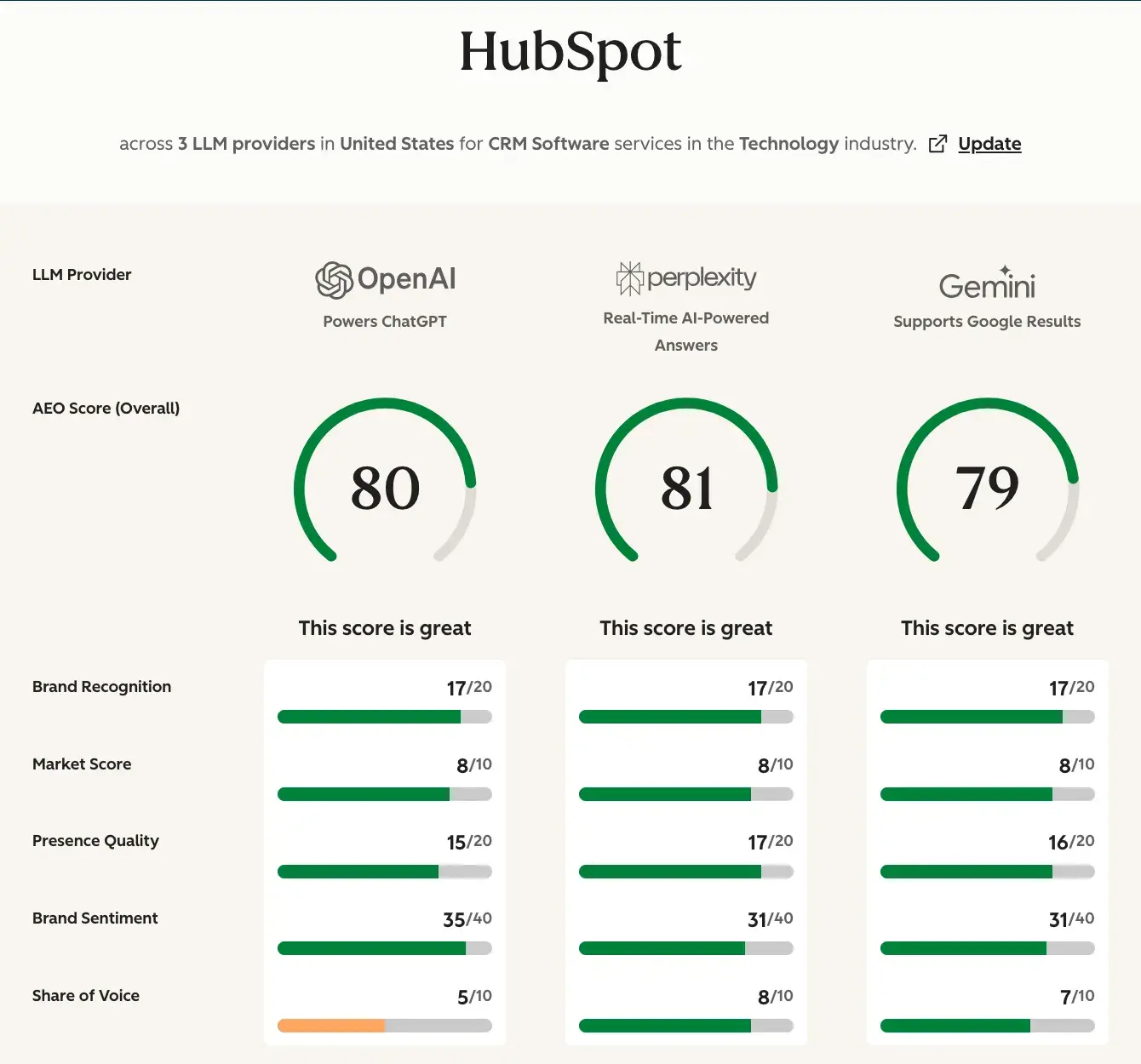
Best use case: Creating a reliable visibility baseline and identifying factors that shape brand perception.
Where it falls short: Advanced segmentation and historical analysis requires the full HubSpot platform.
How to use it to improve lead quality: Benchmark visibility, isolate weak units or topics, and track improvements in HubSpot’s Smart CRM to see how AI citations impact qualified leads and business velocity. HubSpot Smart CRM maps AI-driven contacts to deals and lead quality fields.
2. Peec.ai
Best for: Marketing teams, SEO/AEO specialists and agencies managing multiple brands.
Peec.ai provides AI search analytics that show how brands appear in ChatGPT, Perplexity, Gemini, Grok and AI overviews. It tracks brand mentions, ranking position, sentiment, and citation sources using UI scraping output that corresponds to real user responses.
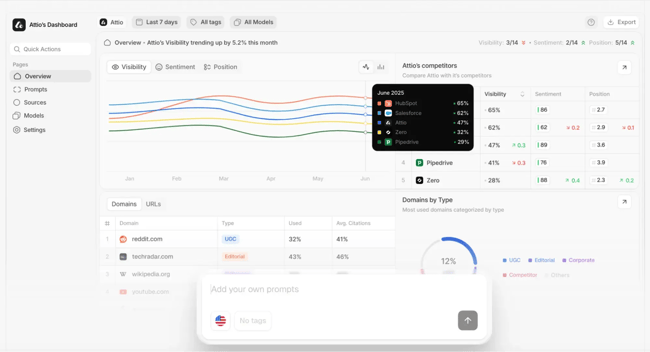
Best use case: Visibility tracking at a timely level, brand and competitor monitoring, sentiment insights, and identification of citation sources that influence AI rankings.
Where it falls short: No native CRM or GA4 integrations; Attribution workflows remain manual.
How to use it to improve lead quality: Use prompt and source insights to identify high-intent searches where brand visibility is low. Prioritize PR, reviews, or content updates around the sources AI models rely on, then track position and sentiment changes as well as pipeline performance.
3. Aivisibility.io
Best for: SMB and mid-sized teams that need quick, real-time visibility snapshots.
Aivisibility.io Tracks how brands appear in key AI models, highlighting visibility, sentiment and competitive positioning. Its public leaderboards and cross-model comparisons show where brand presence is increasing or decreasing.
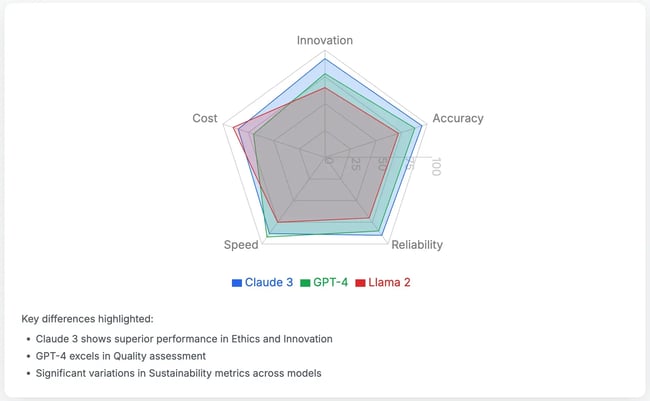
Best use case: Competitive benchmarking and easy visibility monitoring for all AI models.
Where it falls short: Limited CRM and GA4 integrations; The attribution options are minimal.
How to use it to improve lead quality: Monitor ranking shifts along with incoming demand to see when AI visibility improvements correlate with higher quality traffic.
4. Otterly.ai
Best for: SMBs, content teams and individual marketers who need structured, automated visibility reports.
Otterly.ai Tracks brand mentions and website citations in ChatGPT, Google AI Overviews, Gemini, Perplexity and Copilot. It combines brand monitoring, link citation tracking, prompt monitoring and generative engine optimization (GEO) checking to show what content appears in AI responses and how visibility changes over time.
Best use case: AI search monitoring, citation tracking across multiple search engines, GEO audits, and identifying visibility gaps in prompts, brands, and URLs.
Where it falls short: No native CRM or GA4 integrations; The assignment requires manual assembly.
How to use it to improve lead quality: Analyze domain citations and visibility gaps at the prompt level. Use Otterly’s GEO audit and keyword-to-prompt insights to adjust on-page content, PR outreach, and UGC signals to increase visibility in high-intent AI responses.
5. Parse.gl
Best for: Data-focused teams and analysts who prefer exploratory analysis over guided dashboards.
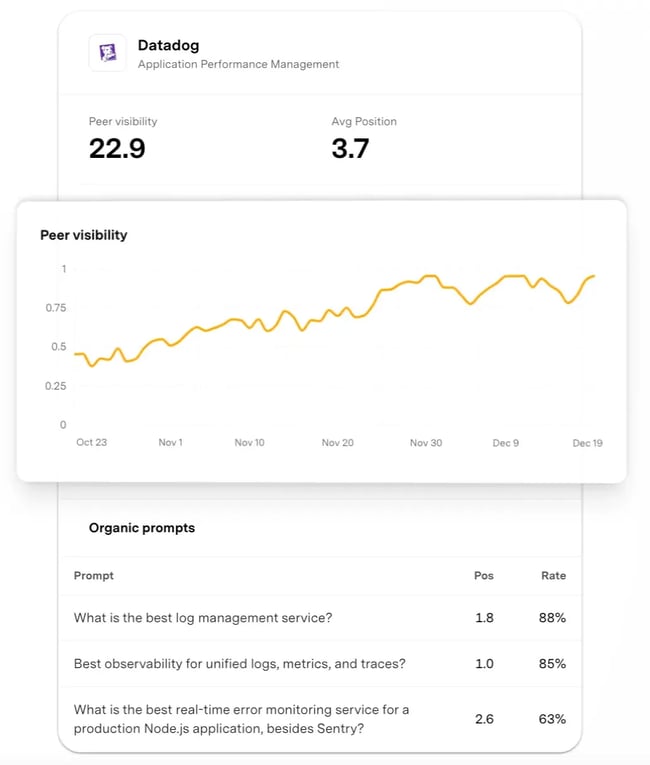
Parse.gl Tracks brand visibility via ChatGPT, Gemini, Copilot and other AI models. It displays detailed metrics including reach, peer visibility, authority, and model-level performance. The public demo playground allows teams to test brand or prompt visibility without creating an account.

Best use case: Comprehensive visibility tracking, peer comparisons, and flexible prompt-level analytics.
Where it falls short: No native CRM or GA4 integrations; The name must be embroidered manually.
How to use it to improve lead quality: Review patterns at the model and prompt levels to identify inconsistent visibility. Map these changes using CRM or GA4 data to see which AI interfaces are driving demand for higher quality.
Comparison of AI visibility tools
|
Tool |
Best for |
Cover (models/engines) |
CRM/GA4 integration |
Price range |
Ideal team size |
Notable features |
|
HubSpot AEO Graders |
Visibility baseline and lead attribution |
ChatGPT, Gemini, Claude, Perplexity |
Indigenous (HubSpot Smart CRM) |
Free (extended via HubSpot) |
SME – medium-sized businesses |
5-metric rating; CRM connection; Perceptual insights |
|
Peec.ai |
Fast tracking and competitive benchmarking |
ChatGPT, Perplexity, Gemini, Grok, AI overviews |
Limited (manual exports, API available) |
€89-199/month |
Marketing teams, agencies |
Data scraped from the UI; Feeling; source analysis; quick discovery |
|
Aivisibility.io |
Leaderboards and benchmarking |
GPT-4, Gemini, Claude |
Limited |
$19-$49/month |
SME – medium-sized businesses |
public rankings; mood tracking; Cross-model comparisons |
|
Otterly.ai |
Multi-engine brand and URL citation monitoring |
ChatGPT, Google AI Overviews, AI Mode, Perplexity, Gemini, Copilot |
None |
$29-$189/month |
SMEs, content teams, solos |
GEO exam; Keyword to Prompt Tool; domain citations; weekly automation |
|
Parse.gl |
Technical cross-platform monitoring |
ChatGPT, Gemini, Copilot, others |
manual |
$159+/month |
Medium-sized companies |
prompt explorer; visibility among peers; public demonstration playground |
Most AI visibility tools are limited to showing where a brand appears in AI-generated responses. Few platforms link these visibility shifts to qualified traffic, lead quality, or sales results. This connection between visibility and driving measurable growth is the core of HubSpot AEO grader And Smart CRM Ecosystem stand out. Visibility signals flow directly into contact and deal-level data sets, allowing marketers to understand how AI mentions influence conversions, deal velocity, and pipeline impact.
AI visibility can turn mentions into higher quality leads.
AI search visibility doesn’t behave like traditional traffic. When a brand appears in AI-generated responses, it appears later in the decision-making process – at a point where users already understand the landscape and narrow their options. Early industry data confirms what many marketers have felt anecdotally: AI-guided visitors convert more often because they arrive having completed more of their assessment within the model itself.
Ahrefs figured this out AI search for visitors Converted 23x better than traditional organic traffic – low volume but exceptionally high intent. SE Ranking observed and reported on a similar trend AI related users spent approximately 68% more time on the site than regular organic visitors. Taken together, these patterns signal that AI visibility attracts prospects who already know what they are looking for.
This shift is changing the way marketers think about discovery and purchasing behavior.
“We coined the term ‘AI-driven multimodal funnel’ to describe the shift in user behavior and platform dynamics that will likely eventually replace the ‘traditional’ AIDA marketing funnel, from active search and exploration to passive one-click actions driven by AI recommendations,” he said Takeo ApitzschChief Digital Officer and Deputy Managing Director The Hoffman Agency.
“By integrating purchasing and transaction options directly into LLMs (like ChatGPT), we continue to evolve our strategies to include purchase-ready content development to ensure customers’ content aligns with AI-powered intent paths.”
AI visibility becomes the bridge in this multimodal funnel – the point where awareness, validation and purchase intent converge in a single interaction.
AEO content patterns that increase citations in AI answers
AEO content patterns increase citations in AI-generated answers. AEO content works when each paragraph directly answers a question, stands on its own as a retrievable “block,” and reinforces important entities. Short paragraphs, clear definitions and clear sentence structures help LLMs reuse your content without confusion.
“AEO writing is designed for systems that scan a piece, store blocks of information in their data set, and then pull and cite them when people search for specific queries,” he said Kaitlin Millikensenior program manager HubSpot.
Each of the following helps AI systems accurately recognize and reuse your information.
Lead with clear, direct definitions.
Generative engines prioritize content that answers the question immediately. The first paragraph under each heading should summarize the section itself. Direct definitions improve the likelihood of citation in AI answers.
Write in modular, self-contained paragraphs.
LLMs work best with modular paragraphs and simple hierarchies. Aim for three to five sentences per paragraph so that each one makes sense on its own. Lists and tables strengthen this hierarchy and reveal important points for retrieval.
Use semantic triples to anchor meaning.
Semantic triples – concise subject-verb-object statements – clarify relationships between ideas and help models store them as factual units.
Example: AI visibility tools track brand mentions in AI search engines.
Prioritize specificity and eliminate fillers.
Precision signals authority. Replace vague transitions with specific nouns, timestamps, and named entities. Specificity helps models test claims and classify them accurately.
Separate facts from experiences.
The AEO structure puts objective information first and personal insights or interpretations are reserved later in the section. This hierarchy allows LLMs to cleanly extract factual content while capturing the human perspective where EEAT matters most.
Expert POV: How agencies optimize for AI-generated answers
Agency teams are already adapting their content structures specifically for AI retrieval and their workflows are reinforcing the AEO patterns described above.
“We’ve focused on optimizing content to answer the user intent behind our clients’ targeted queries and prompts. This includes leveraging on-page SEO best practices for content published in paid, earned, shared and owned media (and) strengthening real-world credibility through studies, impact data and quotes from proven subject matter experts,” he shares Kimberly JeffersonEVP at PANBlast.
Jefferson says her team uses tools like Peec.ai and Semrush Enterprise AIO to identify the sources that provide LLM output. Depending on the LLM and request or prompt, sources may also include Wikipedia, a brand’s website, and community platforms such as Reddit and LinkedIn.
“We monitor these platforms to track organic mentions from customers and competitors and advise clients on strategies to provide helpful, authoritative answers,” says Jefferson.
Measure impact beyond vanity metrics in GA4 and your CRM.
AI visibility metrics are related to lead quality and pipeline attribution. To prove the value of AI visibility, visibility signals need to be linked to measurable conversions in Google Analytics 4 (GA4) and a CRM like that HubSpot Smart CRM. This means setting up LLM referral tracking, segmenting traffic from AI-powered sources, and connecting that traffic to landing pages and business results.
Track LLM referral traffic in GA4.
To capture traffic from LLMs such as ChatGPT, Gemini or Claude in GA4, create a custom exploration with dimensions such as session source/medium and page reference and apply a regex filter for LLM domains. Some LLMs do not consistently share referrer data, so GA4 visibility depends on the platform maintaining click-through URLs. But if there are referrers, they will be accurately recorded using this method.
Step by step:
- In GA4, navigate to Explore → Empty exploration.
- Add dimensions: Session source/medium, Page reference.
- Add metrics: meetings, Conversions (Key events).
- Create a segment with a regex filter for LLM domains (e.g. .*(chatgpt|gemini|copilot|perplexity).*).
- Add a landing page or landing page as a dimension to see where LLM-referred users go.
Once this research is saved, teams can compare the behavior of LLM recommended users compared to other sources using metrics such as interaction time, conversion rate, and path length.
Segment traffic and link it to landing pages and conversions.
After identifying LLM referral traffic, associate it with meaningful results. If an AI visibility tool helped a brand stand out in an LLM response, marketers want to know whether that visibility led to a qualified session, a conversion, or ultimately a deal. This tracking depends on whether the LLM retains referrer or UTM data upon click-through, which varies by platform.
The HubSpot Smart CRM allows users to flag contacts or deals associated with this referrer segment and compare their performance to other leads. HubSpot points out that effective AI-powered customer acquisition requires tracking prospects “from the moment the AI finds them, all the way through to closing deals.”
Checklist for effective segmentation and measurement:
- Configure a custom contact property or UTM parameter (e.g. utm_source=llm, utm_medium=ai_chat) when landing pages receive LLM-related sessions.
- In GA4, associate this parameter with your key conversion events (e.g. form submissions or demo requests).
- In your CRM, segment contacts by this characteristic and compare deal velocity, average deal size, and pipeline conversion rate.
- Create dashboards that combine GA4 and CRM data to visualize the path from LLM related traffic → landing page → conversion → deal won.
Frequently asked questions about AI visibility tools
How many prompts should I track to get a reliable view?
Most AI visibility platforms recommend tracking 50-100 prompts per product line start. This volume offers a representative selection of different models (ChatGPT, Gemini, Perplexity, Claude and Copilot). Tracking fewer than 20 prompts may produce biased results as model outputs fluctuate daily.
How do I introduce AI visibility tracking for my team?
Start by documenting your core entities – product names, spokespersons, content pillars, and brand terms – as these entities influence how AI models classify your brand. Assign unique owners for (1) prompt set management, (2) analytics, and (3) CRM targeting so reporting does not deviate.
Most teams track visibility in a shared dashboard, update it weekly, and then send that data to GA4 or a CRM so visibility insights can be mapped directly to business results.
What is the best way to find prompts that people actually use on AI platforms?
Use a mixture of manual discovery And Platform signals. Autocomplete in ChatGPT, Gemini or Claude uncovers real phrasing patterns, while social listening tools highlight questions that buyers repeat in public forums. Visibility platforms add another layer with anonymized prompt libraries that reflect how people search conversationally, not just how they type on Google.
How often should I update my AI visibility data?
Most teams update visibility weekly to record short-term fluctuations and monthly for pattern analysis. Retrieval levels in large LLMs change frequently, and shifts in model rankings or web crawl updates can change brand visibility overnight.
Choose a cadence that aligns with campaign cycles and reporting expectations so that visibility data is actionable and not stale.
How do I avoid vanity metrics and tie visibility to pipeline?
Do I need enterprise-grade tools to get started?
No. Many teams start with free or basic tools, especially when creating their first visibility benchmark. AEO from HubSpot Graders provides a clean baseline and tools like Otterly.ai or Aivisibility.io offer cost-effective monitoring for small teams. Enterprise-class AI visibility tracking solutions provide security, governance, and multi-region support. Enterprise-grade AI visibility tracking solutions become useful when teams need governance, API access, and structured exports.
AI visibility is only important if it drives results.
The age of AI search has made it harder to fake visibility. But with the right AI marketing tools and a reliable reporting setup, marketing teams can see exactly how visibility drives growth. Successful brands will view AI visibility as a sales signal, not a reach metric. Tracking mentions in GA4 and a CRM helps teams stop guessing what the AI presence is worth and start proving it instead.
HubSpot’s AEO Grader is a simple starting point: it assesses your brand’s presence in AI-driven response engines, highlights where visibility could be improved, and provides a basis for action. From there, insights flow into your Smart CRM (or connect via a GA4 dashboard) so you can set up configuration and track mentions and start attributing them to pipeline metrics.
I’ve found that this shift in mindset – from chasing clicks to chasing trust – changes everything. The best marketing creates structures that ensure the right people find you, trust you, and act on their insights. This is the true value of visibility in the age of AI.
Find your visibility on AI platforms now HubSpots AEO Graders.