


I love Cloudflare. It’s on most of my WordPress sites.
However, the reality is that not every website needs the same CDN solution. Some customers need stronger security, others want simpler pricing, while some simply need easier setup.
That’s when I started testing Cloudflare alternatives. And I found some great options!
The right CDN can speed up your WordPress site by serving content from servers close to your visitors.
However, choosing one shouldn’t require hours of research. This guide will show you 5 top alternatives to Cloudflare as well as a bonus option. Each works well for different needs and budgets.
Whether you want free, unlimited bandwidth, built-in security, or just the easiest setup, there’s a CDN to suit you
Key Takeaways:
- Free CDNs can work for small businesses
- Security features are more important than pure speed
- Pay-as-you-go pricing beats surprise monthly bills
- Avoid technical CDNs without developer help
- For simpler needs, there are image-only CDNs
How I evaluate CDNs for WordPress
Testing CDNs isn’t about fancy benchmarks. It’s about what really matters when running a WordPress site.
Here’s what I’m looking at:
- Easy setup – Can a beginner install this without calling a developer? Some CDNs only require a plugin. Others require name server changes or complex account settings.
- Price clarity – Do you get surprise bills? I check whether the costs are predictable. For example, usage-based pricing sounds good until you no longer know what you’re going to pay each month.
- Speed improvements – Does it actually make websites faster? I look at real metrics like time to first byte and page load times. Not just marketing claims.
- WordPress compatibility – Does it work smoothly with popular plugins like WooCommerce and WordPress caching tools? Or does it cause conflicts that break your website?
- Quality of support – Can you get help if you get stuck? Free plans often just mean community forums. Paid plans should include real support from people who know WordPress.
These five things will help you determine whether a CDN is right for your website. No server count or technical specifications that don’t matter for beginners.
Why trust IsItWP?
At IsItWP, we’ve been the WordPress community’s go-to source since 2009, helping over 2 million users choose better WordPress tools.
Unlike review sites that never actually use the products, we maintain active accounts, test real features, and offer ongoing WordPress advice to small businesses.
We don’t just read data sheets; We’ll look at what each CDN actually does for WordPress sites.
This means testing performance, checking compatibility with popular plugins, and seeing how beginners handle the setup process.
Our goal is simple: to help you choose the right CDN without wasting time or money on the wrong choice.
Cloudflare alternatives for WordPress
Before we dive into the details, here’s how these CDNs compare to Cloudflare.
Use the comparison table below to learn about pricing, whether there is a free version, how easy it is to use, and what it is best suited for.
Additionally, if you want to jump to a WordPress CDN tool with the following table of contents.
With that out of the way, let’s get started!
1. Cloud flare ⭐⭐⭐⭐⭐
Over 330 locations worldwide | Best for: Websites that need free, unlimited bandwidth

Cloud flare is the CDN that everyone compares to.
As mentioned, it’s my top choice because it offers something no other CDN offers: truly unlimited bandwidth in a free plan. This is huge for small businesses that care about every dollar.
My experience
I like that setup takes about 20 to 30 minutes with three main steps. You create an account, change your name servers and install the WordPress plugin.
I would like to point out that changing the name server may be difficult for some beginners, but Cloudflare provides you with the exact addresses to copy and paste.
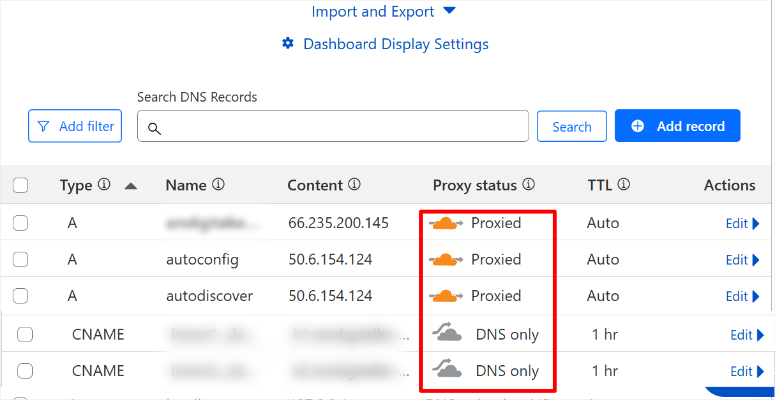
You can also check out my Cloudflare setup step by step tutorial.
What’s special about Cloudflare is APO (Automatic Platform Optimization).
Instead of just caching images and CSS files like traditional CDNs, APO caches your entire HTML pages in over 330 edge locations worldwide.
So a visitor in Tokyo gets your page from a nearby server, while someone in London or New York gets your page.
The results are real. Websites experience a significant improvement in responsiveness (Time to First Byte) and display content earlier (First Contentful Paint).
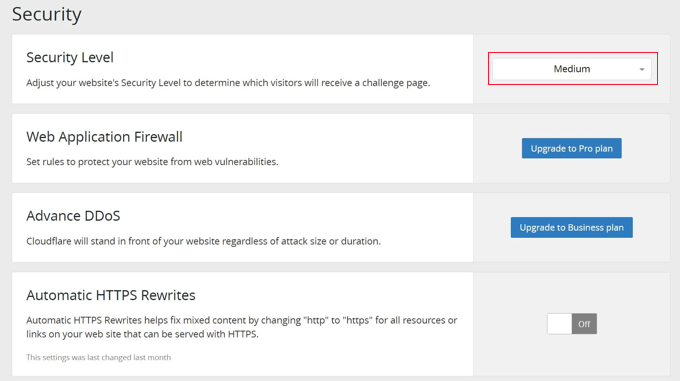
Additionally, the WordPress Cloudflare plugin makes management easier.
You can clear cache, adjust security levels, and toggle development mode with one click right from your WordPress dashboard. You don’t need to log into a separate platform every time you update content.
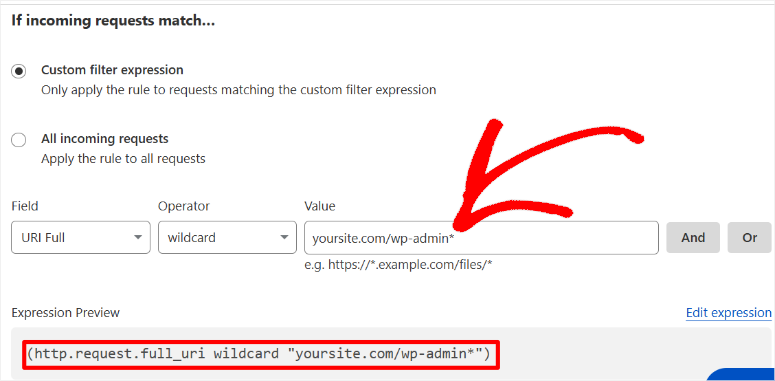
The free plan gives you 3-page rules.
This allows you to decide how Cloudflare handles caching in different parts of your website. For example, you can cache your homepage longer or skip caching for your admin area.
This allows you to easily control how your website loads for visitors and improve speed where it matters most.
Additionally, you get free SSL certificates, basic DDoS protection, and fast DNS management.
►Advantages
- Truly unlimited bandwidth in the free tier (no other CDN can match it)
- Simple WordPress plugin for one-click management
- Built-in security with DDoS protection and optional WAF
- Monthly prices without long-term contracts
►Disadvantages
- Requires name server change (not only CNAME records can be used)
- For the best performance on the free plan, full HTML caching costs an additional $5 per month
- The dashboard has many settings that can be overwhelming for beginners
My verdict
Start with Cloudflare if you want a free CDN with unlimited bandwidth. Add APO (full HTML caching) for $5/month if your budget allows for maximum speed.
It is the best starting point for most WordPress sites, especially if your budget is tight.
Prices: Free forever. Starts at $20/month.
2. Sucuri ⭐⭐⭐⭐⭐
Over 700,000 active plugin installations | Best for: Security-conscious website owners

Sucuri takes a different approach than most CDNs.
While others focus solely on speed, Sucuri puts safety first. This is important if your website processes customer data, is subject to constant hacking attempts, or processes payments.
My experience
The free Sucuri plugin can be installed from the WordPress plugin directory in less than 5 minutes.
Get instant security scans and one-click hardening buttons that enhance protection without any technical knowledge.
But the real power comes from Sucuri’s Web Application Firewall (WAF).
WAF sits between your website and visitors, blocking attacks before they reach your server. It protects your website from hackers trying to steal data or take control.
Additionally, Sucuri offers malware scanning, removal services, and post-hack cleanup. If your website is compromised, the security team steps in to fix the problem. This is included in your plan and is not charged separately.
This works great with the CDN and also speeds up your website.
It has a worldwide system that absorbs heavy traffic and ensures the smooth operation of your website during attacks.
Virtual patching is another standout feature. If WordPress or your plugins have security vulnerabilities, Sucuri will fix them at the firewall level while you update the actual code.
Your website will remain protected during this critical window.
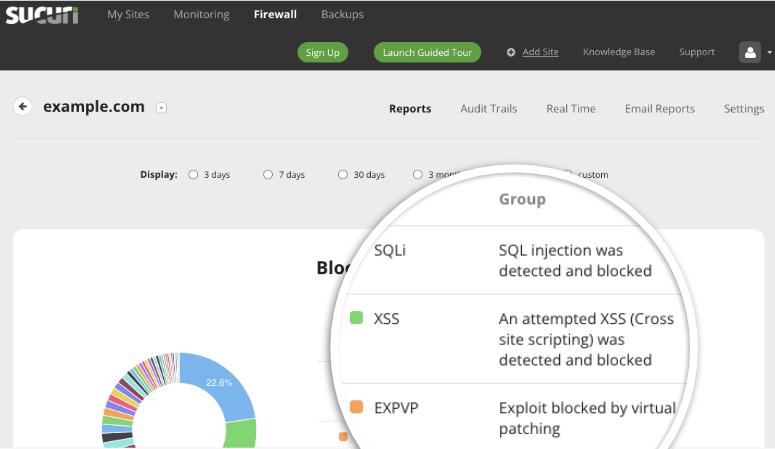
Additionally, you receive detailed security reports that show blocked attacks, bandwidth usage, and threat patterns. It helps you understand what your website is targeting.
►Advantages
- Security focused with WAF included in paid plans
- Free plugin available for basic security scanning
- Includes post-hack cleanup service (saves thousands on emergency repairs)
- Simple one-click hardening features for beginners
►Disadvantages
- Paid plans are required for CDN and firewall features
- Overkill if you just need speed improvements
- A name server change is required for full firewall protection
My verdict
Choose Sucuri if security is more important than just speed. It is perfect for e-commerce websites, membership communities, and any website that cannot afford downtime due to attacks. The price is higher, but the included security features and cleaning services justify the cost.
Prices: Free plugin available. Starts at $229/year.
Check out my detailed Sucuri review here.
Additionally, you can see how the number one and number two CDNs compete against each other in my comparison article on Sucuri vs. SiteLock vs. CloudFlare.
3. BunnyCDN ⭐⭐⭐⭐⭐
114 global locations | Best for: Budget-conscious growing locations

BunnyCDN offers complete price transparency that won’t surprise you at the end of the month. You only pay for what you use, and the cost is just $0.01 per gigabyte.
My experience
The setup is a little different than other CDNs on this list. This is because BunnyCDN requires a caching plugin like W3 Total Cache or WP Rocket as BunnyCDN does not have its own WordPress plugin.
Once connected, it manages all your static files across 114 locations worldwide.
What stands out is Perma-Cache.
This feature permanently caches your content in Edge locations until you delete it manually.
This eliminates the delay that normal CDNs face when the cache expires after set time periods, forcing visitors to wait for new copies.
BunnyCDN offers advanced features across all price ranges. HTTP/3 support speeds up connections. Brotli compression reduces file size better than regular gzip.
In addition, Image Optimizer automatically converts images and resizes them depending on the device type.
The real-time analytics dashboard shows exactly what you’re using and what you’re paying for. No guesswork about next month’s bill. You’ll see bandwidth by region, popular files, and cache hit rates.
Additionally, BunnyCDN offers video streaming features and storage zones should you need them. Most small companies don’t, but they offer the same transparent pricing per GB.
►Advantages
- Highly affordable pay-as-you-go pricing (starting at $1/month)
- Transparent billing with no surprise overage fees
- Advanced features included (HTTP/3, Brotli, image optimization)
- Detailed real-time analytics show exactly what you’re paying for
►Disadvantages
- Requires a separate caching plugin such as WP Rocket or W3 Total Cache
- Less beginner-friendly than all-in-one solutions
- Pricing can be confusing for absolute beginners who are unfamiliar with bandwidth usage
My verdict
BunnyCDN offers the best value if you want professional CDN features without breaking your budget. It’s great for growing websites that need predictable costs and don’t mind using a separate caching plugin.
Prices: Starts at $0.01/GB. At least $1/month.
4. KeyCDN ⭐⭐⭐⭐
Pay-as-you-grow pricing, 150+ locations | Best for: Predictable monthly usage
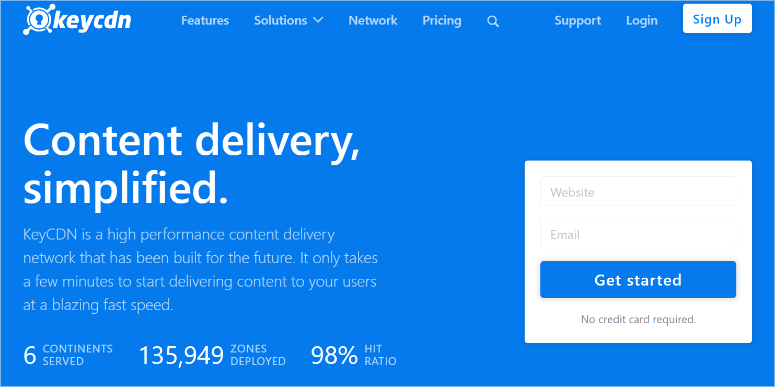
KeyCDN lies between the free options and technical enterprise solutions. It offers straightforward per-gigabyte pricing with a credit system that keeps costs predictable.
My experience
Setup requires the purchase of $4 in advance credits. This will serve as your first payment. You then use these credits when bandwidth is consumed. Once the credit is used up, you can add more credits starting at $4.
Like BunnyCDN, WordPress integration works via WordPress plugins like CDN Enabler or W3 Total Cache.
But the setup is straightforward.
All you need to do is create a pull zone in the KeyCDN dashboard, connect this CDN tool to your WordPress site, and the CDN will start serving your static files across 150+ global edge locations.
What makes KeyCDN attractive is its simple pricing structure per gigabyte. A website that uses 500GB per month pays $20. Using 1TB costs $40. There are no complex price levels or regional differences to calculate.
Free SSL certificates are provided through the Let’s Encrypt integration. Additionally, HTTP/2 and Brotli compression are included at all usage levels. This means you don’t pay extra for modern protocols that speed up your website.
The dashboard provides real-time cache cleaning and detailed statistics. You’ll see exactly which files are cached, bandwidth usage by location, and cache hit rates.
This transparency helps you understand what you are paying for.
I like that KeyCDN also offers instant cleanup when you update content. Unlike some CDNs with delays of 5 to 10 minutes, changes appear immediately at all edge locations.
►Advantages
- Clear pricing structure of $0.04/GB (no surprise bills)
- Good global coverage with over 150 edge locations
- Free SSL certificates and modern protocols included
- Real-time analytics and instant cache control
►Disadvantages
- Minimum balance of $4 required (barrier for small sites)
- Not as beginner-friendly as all-in-one solutions
- The credit system can be confusing for beginners who are unfamiliar with prepayment
My verdict
KeyCDN is good if you want predictable pay-per-use pricing and don’t mind upfront investments. It is a good intermediate solution between free CDNs and complex enterprise solutions.
Prices: From $0.04/GB, minimum balance of $4.
5. Google Cloud CDN ⭐⭐⭐⭐
Integrated into Google Cloud Platform | Best for: Websites already available on Google Cloud
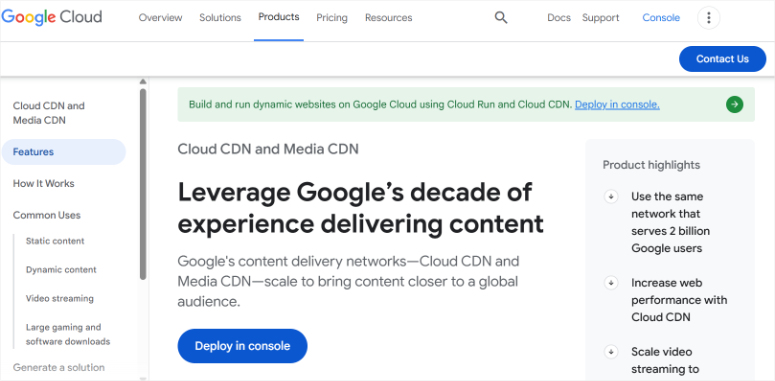
Google Cloud CDN is powerful and works on the Google Cloud infrastructure that many companies already use. You may want to keep your frameworks. This is a big reason why it is on this list.
But to say it straight away: This is not for beginners. In addition to a Google Cloud Platform account, it also requires technical skills that most small businesses don’t have.
My experience
As mentioned, setup requires knowledge of load balancers, backend services, configurations, and manual management of SSL certificates. Additionally, there is no simple WordPress plugin.
The power comes from Google’s vast global infrastructure.
Your content is on the same network that provides YouTube and Gmail. That’s more than 130 edge locations with direct connections to the major Internet service providers worldwide.
Cloud Armor offers enterprise-level DDoS protection and custom security rules. You can block traffic by region, create rate limiting rules, and filter requests based on complex conditions.
The CDN deeply integrates with other Google Cloud services. If you already use Google Cloud Storage, Compute Engine, or Kubernetes, the CDN provides a seamless connection. It is built for this ecosystem.
Prices are based on usage and there are no minimum fees. You pay for bandwidth, HTTP/HTTPS requests, and cache invalidation requests.
►Advantages
- Powerful Google infrastructure (same network as YouTube)
- Great if you already use Google Cloud Platform services
- Advanced security with Cloud Armor DDoS protection
- Highly customizable for technical users with specific needs
►Disadvantages
- NOT beginner friendly (this is crucial)
- Requires a Google Cloud Platform account and technical knowledge
- Complex pricing structure with multiple cost factors
- No easy WordPress integration or plugin available
My verdict
Honestly, skip Google Cloud CDN unless you have technical staff or developers on your team. The performance and flexibility don’t matter if you can’t set it up properly. Stick with beginner-friendly options like Cloud flare or instead BunnyCDN.
Prices: Starts at $0.08/GB. Usage-based pricing.
6. Amazon CloudFront ⭐⭐⭐
Amazon’s 450+ Edge Locations | Best for: AWS ecosystem users
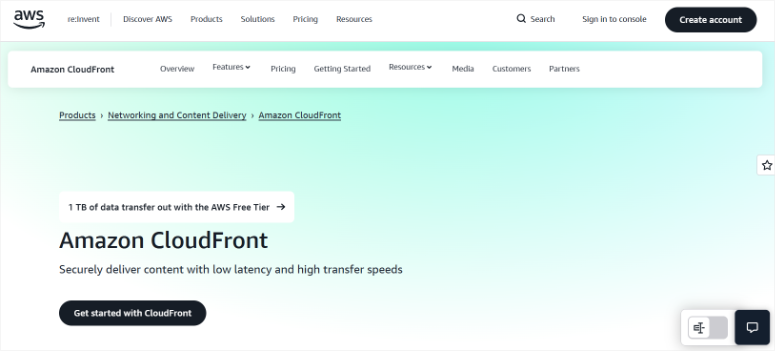
Amazon CloudFront offers massive scale with over 450 edge locations. That’s why it’s on this list. But like Google Cloud CDN, it’s intended for developers, not beginners.
To use it properly, you need AWS experience.
My experience
Setup requires an AWS account and knowledge of distributions, origins, and cache behavior.
CloudFront uses AWS-specific terminology that confuses beginners and doesn’t have a WordPress plugin to simplify the process.
The network is impressive.
CloudFront connects to Amazon’s global server network. If you already host on AWS or use S3 for storage, CloudFront integrates seamlessly.
AWS Shield automatically provides DDoS protection for all CloudFront distributions. The service absorbs attacks before they reach your origin server.
Additionally, you can upgrade to Shield Advanced to improve protection and 24/7 response team support.
Additionally, Lambda@Edge allows you to run custom code on edge locations. This means you can modify requests and responses, personalize content, or authenticate users without contacting your origin server.
However, programming knowledge is required to use it.
►Advantages
- Huge location network with over 450 locations (one of the largest)
- Perfect if you already use AWS services like S3 or EC2
- AWS Shield DDoS protection automatically included
- Highly scalable to traffic spikes and growth
►Disadvantages
- NOT for beginners (critical caveat)
- Complex AWS console and setup process
- Confusing pricing with multiple cost factors
- Technical expertise is required for proper configuration
My verdict
Only consider Amazon CloudFront if you have AWS developers or a technical team managing your infrastructure. Like Google Cloud CDN, the huge network won’t help if you can’t set it up properly.
Beginners should choose simpler options like Cloud flare or BunnyCDN.
Prices: Free for the first 1TB. Starts at $0.085/GB. Usage-based pricing.
Bonus: Envira CDN – Image specific CDN
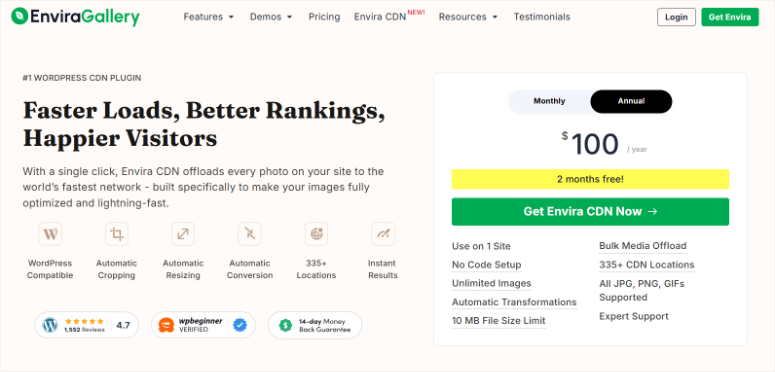
Why include an image-only CDN? Because images are the biggest culprit behind slow WordPress sites. Most beginners don’t need to speed up every file. All you need is faster image loading.
Envira CDN launched in 2025 by the Envira Gallery Team. Setup takes two minutes. All you have to do is install the plugin, flip a switch and you’re done. No name server changes. No technical configurations.
It uses over 335 locations worldwide and costs $10/month. Therefore, it is perfect for photographers, bloggers, and small businesses with lots of images.
The limitation? It only processes images (PNG, JPG, GIF). CSS and JavaScript files are not included. But for most beginners, faster images solve 80% of their speed problems.
For more information, see my Envira Gallery review.
This concludes my list of the best Cloudflare alternatives. Now let me help you choose the solution that makes the most sense for your business.
Which CDN should you choose?
Choosing the right CDN comes down to three things: your budget, your technical comfort level, and what you need most.
- If you want free, unlimited bandwidth: Start with Cloudflare’s free plan. Then upgrade when your budget allows for maximum speed.
- If security is your primary concern: Choose Sucuri because the Web Application Firewall blocks attacks before they reach your website.
- If you want the best value for money for growing websites: BunnyCDN offers professional features at affordable prices. Pay only for what you use with transparent pricing per GB.
- If you just need an image CDN and easy setup: Envira CDN is the simplest option available. Literally a toggle switch in WordPress. However, remember that it only processes images, not full website acceleration.
- If you need predictable pay per use: KeyCDN Credit offers straightforward pricing. Good middle ground between free options and enterprise solutions.
- Avoid the following if you are a beginner: Google Cloud CDN And Amazon CloudFront require technical expertise that most small businesses do not have. But they are powerful and have large global networks that other CDNs find difficult to compete with.
Now that we have listed the best Cloudflare alternatives and you know how to choose one according to your needs, you are ready! If something is unclear, check out the frequently asked questions below.
FAQs: Cloudflare Alternatives for WordPress
What is a CDN and why do I need one?
A CDN (Content Delivery Network) stores copies of your website on servers worldwide. When someone visits your website, they receive content from the nearest server and not your main hosting. This makes pages load faster, especially for visitors who are far from your hosting location.
Will a CDN actually make my WordPress site faster?
Yes. Real results show significant improvements. On average, Cloudflare users experience 72% faster time to first byte. You’ll see the biggest speed gains on image-heavy sites and if you have a global audience. Visitors in Asia loading from a North American server will notice dramatic improvements.
Do I need to be tech-savvy to set up a CDN?
It depends on which one you choose. Cloudflare and Sucuri are beginner-friendly with WordPress plugins and easy setup instructions. Envira CDN is even simpler with just a toggle switch. Google Cloud CDN and Amazon CloudFront require technical knowledge, although they are very powerful.
Can I use a free CDN for my business site?
Absolutely. Cloudflare’s free plan is great for small businesses with unlimited bandwidth and basic security. Consider upgrading to paid plans for better performance features like full HTML caching and web application firewall protection as your business grows.
What is the difference between a CDN and hosting?
Your website hosting stores your actual WordPress site and database. A CDN delivers copies of static files like images, CSS, and JavaScript from servers closer to visitors. You need both; Hosting powers your website while CDN makes it load faster. They work together, not as replacements.
Will changing CDNs break my website?
No, if you follow the setup instructions carefully. Most CDNs offer migration help or detailed instructions. The key is to test and clear all caches after setup. If you’re nervous, start with a staging site. You can always disable and restore the CDN if something goes wrong.
Should I choose a Cloudflare alternative?
Cloudflare works great for most WordPress sites. But it’s not always the perfect fit.
Sometimes you need stronger security than Cloudflare’s free plan offers. Or you’re tired of guessing what your monthly bill will be.
Sometimes Cloudflare feels too complicated. Too many settings. Too many decisions. They just want something that works without having to learn.
There are alternatives for exactly these situations. If Cloudflare doesn’t quite meet your needs, there’s probably a better option.
That’s why this guide exists. Each CDN solves certain problems better than others. Choose the solution that is currently causing you the biggest headache. Start there and see how it works.
The good news? Switching CDNs is easier than you think. Your content remains secure. Your website continues to run. They just change the way files are delivered.
Now, to improve your website beyond CDNs, I created a detailed WordPress performance checklist. You only need 35 minutes to go through the entire list.
You can also find other performance-related articles that might interest you.
These resources build on what you’ve learned here about CDN performance. Combined with the right CDN choice, they will completely transform the speed of your WordPress site.