
HubSpot’s 2026 State of Marketing report revealed some good news: 65% of marketers are meeting or exceeding their performance benchmarks. But this success does not come by chance. Behind these results are clear priorities, rigorous testing and a clear focus on the right metrics.
This post examines how the most successful teams optimize their performance in 2026 and which KPIs they trust most to make decisions.
Table of contents
Why performance optimization matters in 2026
Marketers report that their budgets are under greater scrutiny than in years past and expectations are rising. Executives want to tie revenue to marketing activities, which means every line item in their budget must deliver ROI.
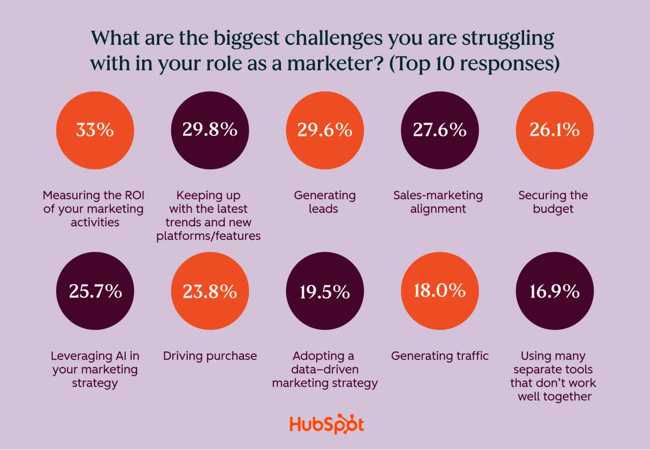
Key barriers to success include:
- Measuring marketing ROI (33%).
- Generating high-quality leads (29.6%).
- Keeping up with platform and algorithm changes (29.8%).
- Sales and marketing misalignment (27.6%).
- Use AI effectively (25.7%).
This means that marketers cannot afford to create a campaign and let it run for months without checking the results. Measuring, analyzing and optimizing should happen quickly and often so brands can focus on what works best.
Top Marketing KPIs to Track in 2026
Based on HubSpot’s 2026 State of Marketing Report, marketers are fully focused on quality, revenue impact, and efficiency when it comes to key performance indicators (KPIs). These reflect a move away from vanity metrics towards performance that directly supports business objectives.
Here are the top five marketing KPIs that marketers cite as critical to success.
1. Lead Quality and Marketing Qualified Leads (MQLs)
This KPI measures how well inbound leads match your ideal customer profile and sales readiness. This metric reflects an emphasis on quality over quantity, with 39.4% of marketers tracking this KPI.
Lead scoring allows you to evaluate leads and determine which lead sources are producing high-quality leads and then optimize them. Prioritizing lead quality seems to be working, as 94% of marketers say lead quality has improved in the last year.
2. Conversion rates
Conversion rates (lead-to-customer) capture the percentage of leads that convert into paying customers. With 33.9% of teams prioritizing this KPI, this reflects a strong focus on optimizing the entire funnel, not just top-of-funnel activities and vanity metrics. Top performers test calls to action (CTAs), audience targeting, and messaging weekly to improve this metric.
3. Return on Marketing Investment (ROMI)
To measure ROMI, use the following formula:
(Revenue Earned – Marketing Expenses) / Marketing Expenses
Multiply this number by 100 to get a percentage.
4. Customer Acquisition Cost (CAC)
CAC calculates the average cost of acquiring a new customer. To calculate it, divide the total cost of your marketing activities for a given period by the number of new customers acquired during that period.
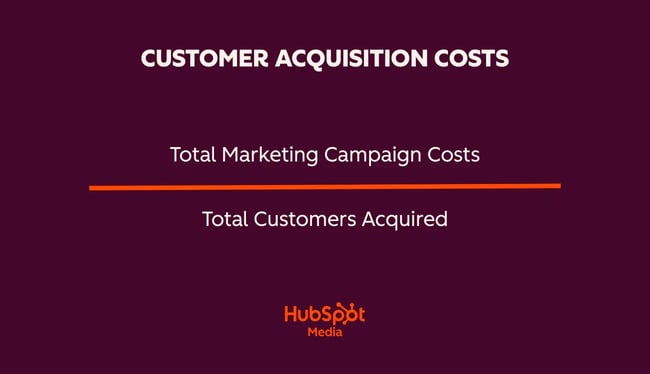
CAC shows how efficiently a marketing team is converting spend into new customers and provides a clear benchmark for improvement.
5. Lead generation volume
While quality and efficiency are the focus, volume still matters: 29.2% of marketers cite lead volume as a key metric for success. Lead volume speaks to both message and reach.
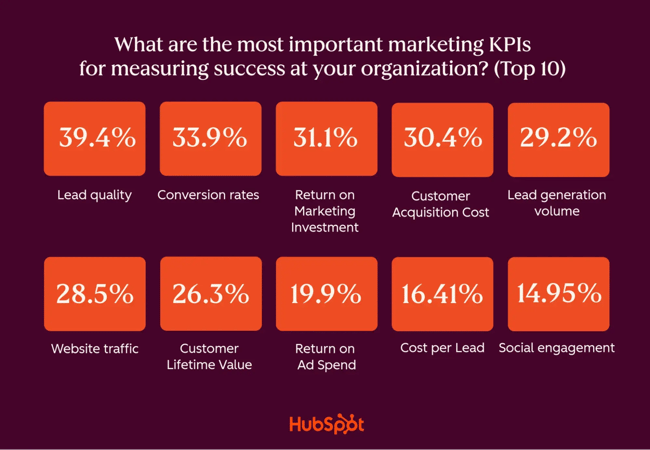
It’s also interesting to take a look at what’s missing from the top KPIs in 2026. Significantly less important are social media engagement (only 15% say it is a top KPI) and email open/click rates (8.4%). Although website traffic is still important and ranks sixth, it is almost always paired with conversion or lead quality metrics. The most successful marketers in 2026 will measure what moves the revenue needle, not just volume or clicks.
Marketing optimization trends to expect in 2026
Optimization sounds complex, but it boils down to two basic levers: reduce costs or improve results. Teams can reduce costs by finding ways to produce marketing content faster and more cost-effectively, especially with AI. You can increase results by identifying which channels and formats are working and then investing more heavily in them.
Our data from over 1,500 marketers reveals four dominant trends that are driving how teams optimize today.
1. Real-time campaign refinement
Marketing is no longer about “set it and forget it.” The most successful teams view campaigns as living initiatives and adjust direction, timing, and creativity based on early signals. 67.4% of marketing teams are already using AI to optimize campaign performance and another 21.9% plan to start in the next 12 months.
“With web traffic declining, it takes nine weeks for A/B testing to be meaningful and we can’t wait that long. Direct feedback is essential now,” he comments Johann WredeCMO of UserTesting. “At UserTesting, we’re constantly asking, ‘What do you think of this campaign creative? How does this message land?'”
All signs point to campaigns becoming more iterative and refined in interactive cycles. The numbers speak for themselves: 27.4% of marketers analyze their campaign performance monthly, 44.2% weekly, and 15.3% daily. Half of marketers say they can implement and measure changes to active campaigns within days, while nearly a quarter say they can do so in just a few hours.
Pro tip: Implement Loop marketing for this type of constant live feedback and update cycle on your active campaigns.
2. AI-powered production and workflows
Marketers use AI for many purposes – 94.6% of marketers use AI in some form and 25.6% say they use it extensively. The State of Marketing data shows that this saves teams time and increases productivity. This happens both through administrative support – writing emails, posting on social networks, optimizing workflows – and through improved production.
AI assistance is becoming increasingly popular in content creation, media, and content reuse. Nearly half of marketers (48.6%) use AI to create personalized content, which our research shows has a high ROI. Teams can use AI to tailor messaging by segment, behavior, or lifecycle stage. This trend allows brands to scale personalization without proportional increases in time or cost.
3. SEO development for AI-driven search
For two decades, SEO has been the gold standard for web content optimization. As search engines evolve and searchers skim AI-generated summaries instead of clicking through pages, marketers are rethinking keyword targeting.
40.6% of marketers update SEO strategies for algorithm changes and 24% optimize specifically for generative AI (like Google’s AI overviews). To become more visible in search in 2026, you need to create content that clearly answers questions and earns mentions in AI search engines.
Pro tip: Check out our guide to creating and implementing an AI search strategy in 2026.
4. Repurpose content across channels
To maximize ROI in content creation, teams systematically adapt core assets into different formats, such as turning webinars, reports, or videos into social, email, or promotional content. A third (35.1%) repurpose content across platforms to increase reach and maximize production ROI. To achieve maximum success, brands should optimize content for each channel rather than publishing the exact same text or images on different platforms.
How to optimize marketing Performance
How can brands optimize their marketing performance in the face of all these changes? Here’s what the 1,500 marketers we surveyed (and some experts) said works.
1. Prioritize lead quality over quantity.
Teams that produce high-quality leads are far more likely to exceed their goals. Focus on segmentation, behavioral triggers, and tighter ICP alignment to ensure your campaigns resonate with audiences—and encourage them to respond.
Work with sales to review your lead sources monthly so you can identify your top-performing channels. Discontinue channels or campaigns that drive volume but produce poor sales results. Increase your investments in channels and campaigns that generate the best leads.
2. Pay attention to the gap.
One of the best ways to improve campaign performance is to look for leaks in your pipeline. When we asked marketers what factors influenced their optimization decisions, their top answers were: 1) areas with the largest performance gaps and 2) periods with the highest abandonment rates.
Essentially, you can reverse engineer better campaigns by analyzing where prospects drop off and where your content is underperforming.
Then work to improve campaigns in those areas. You can start with optimizations to your messaging or images, or you may need to revise your targeting or channel strategy if that doesn’t work.
3. Test extensively and test the right elements.
Testing is the best way to determine which approach produces the best results. A/B testing is still a valid testing method, but not the only one. Consider other methods such as:
- Refining audience segmentation. This technique converts your broader audience into smaller, better-defined groups (e.g. by behavior, demographics, or buyer stage) and tailors content or offers to each segment. More relevant messages lead to higher engagement, better lead quality and higher conversion rates.
- Conversion rate optimization. CRO systematically tests and improves elements of the customer journey to increase the percentage of visitors who take a desired action. The more efficiently you use existing traffic, the more leads or sales you will get without increasing expenses.
- Message timing optimization. This technique adjusts the timing of sending or displaying messages based on user behavior, time zones, or lifecycle stage (e.g., sending a follow-up email two hours after a download versus two days later). In theory, this increases the relevance and responsiveness of the message, resulting in higher open rates, clicks, and conversions.
“We’re constantly asking, ‘What do you think of this campaign creative? How is this message being received?'” he shares Johann WredeCMO of UserTesting. “Web traffic is declining and A/B testing takes nine weeks to determine its significance, and we can’t wait that long. Immediate feedback is essential now.”
Testing shouldn’t be random – it should focus on high impact variables that directly impact conversion. The most frequently tested optimization areas in our survey are:
- Visual elements (55.5%).
- Audience targeting parameters (44.2%).
- CTA wording and placement (43.3%).
- Design and structure of the landing page (42.1%).
- Offer structure and pricing (34.4%).
Run at least one test per active campaign and use AI to analyze results and automate improvements. Even small optimizations in copying and design become more complex over time.
4. Align KPIs with revenue, not vanity metrics.
We’ve already covered the top KPIs teams should track, like lead quality, conversions, and ROMI. Vanity metrics like website traffic, social likes, and impressions are no longer the best metrics to follow. Instead, look for ones that are linked to sales and meaningful promotions.
It’s also important to find the balance between pivoting and giving the approaches time to work.
“I think the most important thing when testing new channels is that we also need to give them time to do their work,” he advises Amy KenlyVice President of Marketing at The Launch Box. “Investing for a few weeks or a month and then not seeing the vanity metrics we expected doesn’t tell us the whole story. This is especially true if you’re taking a more human touchpoint approach – you sometimes need to give new channels a little more time. Don’t give up too quickly.”
Assign each campaign to at least one sales-related KPI. If you can’t link it to your pipeline or sales, ask yourself what it does for your brand. Kenly recommends assigning responsibility for each KPI to a team member to ensure ownership.
Increase marketing ROI through campaign optimization.
Marketers are already working hard, but optimizing performance is one way to work smarter. AI tools give marketers more data points than ever before – but it’s your judgment that’s needed to target campaigns according to the data. So measure what matters, test relentlessly, and align every tactic with business outcomes.
Want the full picture? Download the full 2026 State of Marketing Report for exclusive data on marketing trends, AI adoption, channel performance and more.