
Search engines have become much more intelligent than before. You no longer have to repeat the same keyword a dozen times to get noticed. Google’s AI models, as well as large language models like ChatGPT and Gemini, now understand meaning, intent and context. So does this mean you don’t have to use synonyms and related keywords? Of course not, and to avoid confusion you should definitely do that. Using synonyms and related keywords isn’t just about improving your writing style. It helps both people and search engines understand what your page is about.
Key insights
- Search engines now understand context, which is why it is essential to use synonyms and related keywords for better clarity.
- Using synonyms improves readability and helps both people and search engines better understand the meaning of the content.
- Tools like Yoast SEO Premium can suggest related keywords, making the writing process easier.
- Focus on natural language instead of keyword density to improve your SEO strategy.
- Writing for readers and AI is all about choosing word choices that create engaging and informative content.
A synonym is a word that has the same or very similar meaning as another. For example, “quick” and “fast” are synonyms.
A related key phrase, on the other hand, is not necessarily a direct synonym; It is a word or phrase associated with the same topic. If your main keyword is chocolate candy, candies, desserts, or sugary treats could be related keywords.
Using synonyms and related keywords will make your text more natural and informative. You’ll also help search engines better understand your topic, increasing your chances of appearing in relevant searches.
Why variation is important for SEO and readability
Modern SEO copywriting and readability is about helping people and search engines understand the context of your text. Varying your word choice and using synonyms and related keywords will make your text more appealing to readers and clearer to algorithms.
If you’ve ever read a page that repeats the same keyword endlessly, you know how mechanical it feels. Years ago that might have worked. These days, it can frustrate readers and even hurt your SEO.
Using synonyms and related keywords also improves your readability score, a ranking factor that reflects how easy your text is to understand. When your content is varied, visitors stay longer, bounce less, and gain a better understanding of you.
How search engines and AI understand language today
Search engines rely on natural language processing (NLP) and machine learning to interpret meaning. Instead of simply counting keywords, they analyze how words relate to each other in context.
Therefore a post about AI tools for copywriting can be displayed when searching for AI software for content writing. Google assumes that these terms belong to the same topic. This is part of semantic SEO, which involves optimizing content so that search engines can understand its overall context and not just individual words.
By naturally including synonyms and related keywords, you help Google see that your content addresses a broader range of questions related to your topic.
Understanding search intent is crucial here. Once you know what users expect, you can use language that naturally fits their intent while covering your most important keywords.
Keyword density versus natural language
In early search engine optimization, keyword density, i.e. the percentage with which a keyword appeared in your text, was considered a relevance signal. But search engines have grown beyond that. Today, keyword density has little to no impact on search engine rankings.
Still, using your synonyms and related keywords naturally throughout the text can help clarify context. The key is balance: write as if you were explaining the topic to a colleague or client.
Yoast SEO’s Readability and SEO Guidelines illustrate why tone, pacing, and sentence length are essential parts of optimization today. The goal is not to count words, but to communicate clearly.
If you remember the candy store analogy from before, let’s look at a real-world example. If you enter:best candy store New YorkWhen you search Google, the results show pages related to “candy stores” and “candy stores.” Google understands that “Store” and “Shop” are synonyms and treats them as such.
However, this doesn’t change the fact that you should still include your focus keyword a few times in your post. After all, the focus keyword is still the word or phrase your target audience searched for. These are the words your audience will use and expect in your text. The exact match remains important. However, to avoid using your keyword too often (also called keyword stuffing), you can use synonyms and related keywords to create a more natural flow of language. This allows you to rank for these keywords while keeping your text attractive and readable.
Yoast SEO can help you find related key phrases based on your focus keyword, saving you time and hassle. All you need to do is click the “Get Related Keywords” button. You can find it right under your focus keyword in the Yoast SEO sidebar. Clicking this button will display a list of related keywords and search trend data.
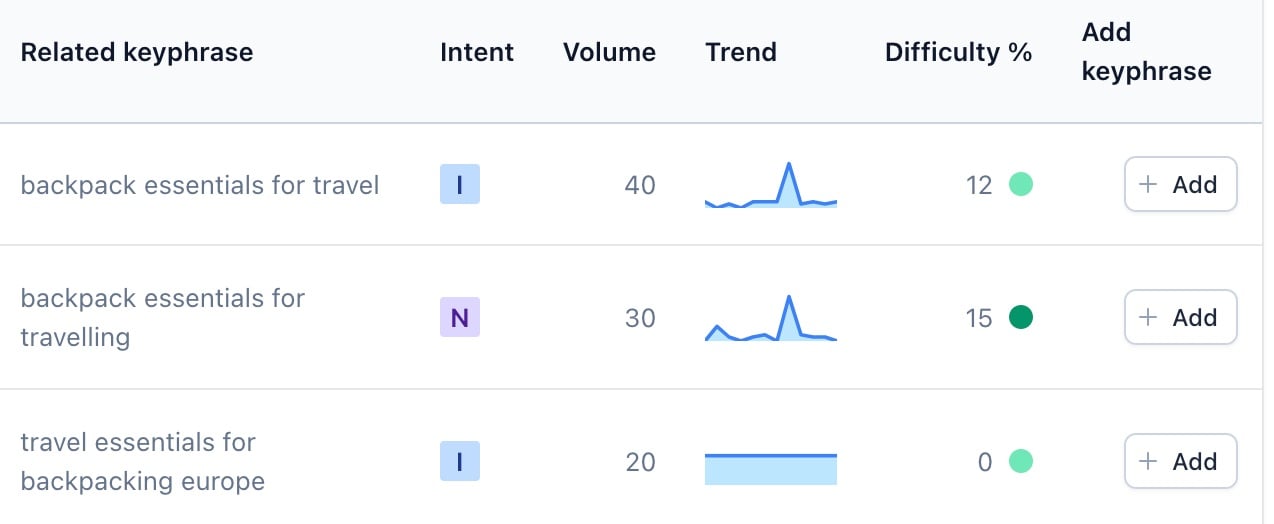
As a Yoast SEO Premium or Yoast SEO for Shopify user, you can add up to five related keywords to your SEO analysis. This allows you to optimize your text for these additional terms, similar to your focus key phrase. As always, our well-known feedback balls are displayed as a guide. If you are a Yoast SEO Free user, the tool allows you to explore related keywords, but does not allow you to add them to your SEO analysis.
Yoast SEO can help you balance the usage of your keywords, synonyms and related keywords by recognizing word forms in different languages. If you want to know more, you can learn about the related keywords feature in Yoast SEO for WordPress and related keywords in Yoast SEO for Shopify.
Using synonyms versus using focus keywords is not an exact science. The most important criterion is the way the reader experiences your text. So read it and read it again. Is it engaging and easy to read? Or does the constant use of a certain term annoy you? Be critical of your writing and ask others for feedback on your writing.
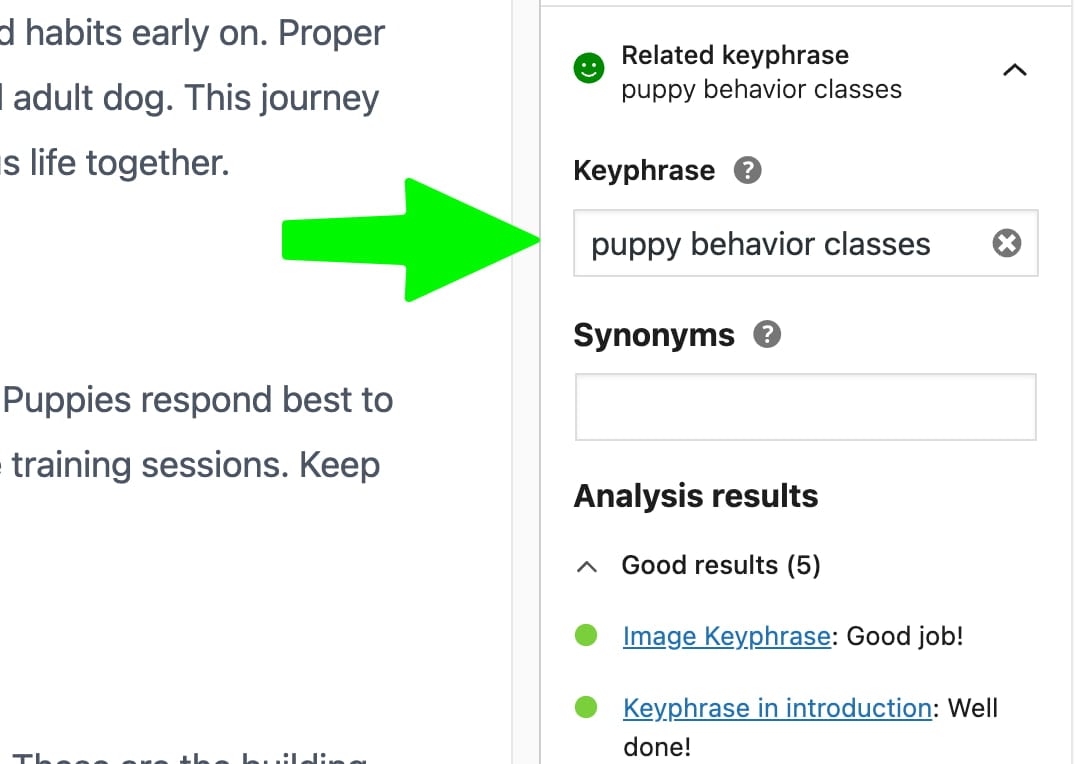
As mentioned earlier, you can add your related keywords for analysis in Yoast SEO Premium and Yoast SEO for Shopify. Adding these allows the plugin to check whether you are using them in your text. However, your focus keyword remains the most important keyword and therefore the plugin is less strict in analyzing your related keywords.
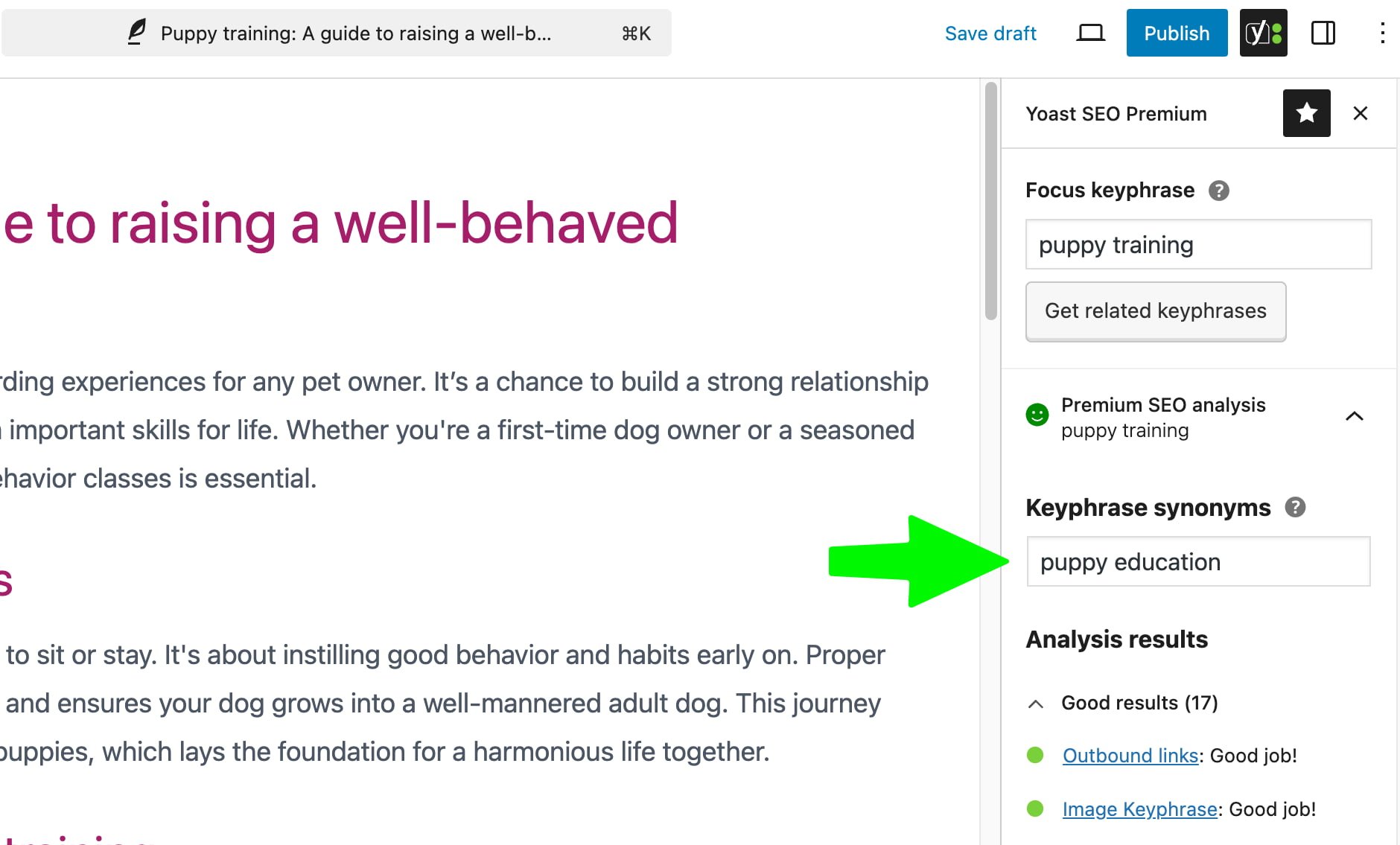
You can also add synonyms of your focus and related keywords if you use our premium SEO analysis or Yoast SEO for Shopify. These analyzes include checks to ensure that you have used these synonyms in your copy and meta description, introduction, subheadings, or image alt text. Additionally, our keyphrase distribution check rewards you for alternating use of your keyphrase and its synonyms in your text.
As mentioned earlier, Google has made great strides in SEO since its inception. It can understand text, consider related concepts and synonyms, and recognize related entities. This allows it to deliver the best results to its users. To achieve the best result, you need to ensure that your texts are easy to read. Google wants to provide readable texts.
So make sure you deliver! Consider synonyms for your keyword or key phrase and use them to your advantage. Take a moment to find a few alternatives for your keyword. Also consider topics that are closely related to your keyword. You’ll find that writing naturally flowing text becomes much easier when you don’t have to use your focus keyword in every other sentence. Using synonyms and related key phrases helps Google understand the context of your text, increasing your chances of ranking.
Conclusion: Write for readers and AI
Using synonyms and related keywords is not about tricking algorithms. It’s about writing naturally for humans while helping machines interpret meaning.
Varying your choice of words will make your text clearer, richer, and more engaging. That’s what search engines reward today: real content that really helps users and shows thematic depth
