


I used to spend entire weekends worrying about product attribute SEO.
Every time my client added new colors or sizes to their WooCommerce store, I had to manually configure the SEO settings for each one. Title tags, meta descriptions, robots settings – all done individually.
For a shop with 200 products and 8 attributes per product, that’s over 1,600 pages to optimize. My solution was to automate some of the on-page SEO with AI.
But with so many eCommerce sites, it can be overwhelming.
In the end it was exhausting.
Then AIOSEO released version 4.7.8 and everything changed. Now I can set up attribute SEO once and apply it across the entire store.
I can also track which attributes are actually ranking without having to pay for expensive tools.
In this guide, I’ll show you exactly how to:
- Automate SEO of product attributes with global settings
- Automatically include attributes in your XML sitemap
- Export and import settings for multiple stores
- Track attribute rankings without additional tools
Additionally, please use the table of contents below to jump to any section of this article you would like to read.
Let’s get started.
What you need before we begin
Before we get started, make sure you have the following ready:
- WordPress site with WooCommerce installed – Your shop should be operational
- AIOSEO Pro plugin – Version 4.7.8 or higher (free version does not include these features)
- Google Search Console tied together – You will need this to import keyword data
- Administrator access to your WordPress dashboard – You will change the plugin settings
Time estimate: 20-30 minutes for complete assembly
Skill level: Beginner friendly – I explain every click
Most of the work is a one-time setup. After that, your attribute SEO will run on autopilot.
What we will achieve in this tutorial
By the end of this guide, you will have a complete system for managing WooCommerce product attribute SEO at scale.
Here’s what you set up:
- Global SEO settings that automatically apply to all product attributes (no more repetitive work)
- Integration of an XML sitemap To help Google find and index your attribute pages faster
- Export/import capability for managing multiple shops or backing up your settings
- Integrated rank tracking to see which attributes drive traffic without paying for separate tools
The result? Hours saved and better rankings for your attribute pages every week. Additionally, you can manage hundreds of attribute pages as easily as one.
The old vs. the new way of managing WooCommerce product attributes
Let me show you exactly what has changed.
Traditional way:
Previously, I had to configure SEO settings for each product attribute individually.
To do this, I would open the attributes section in my WooCommerce settings, write a title, add a meta description and set Robots meta settings. Then repeat the process for the next attribute. And the next. And the next.
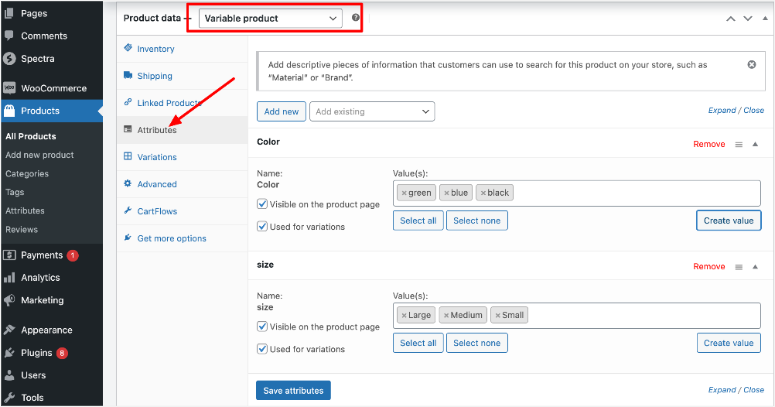
For a store with 50 attributes, that’s 50 separate configurations. The worst part is that every time there was a change, all 50 had to be updated manually.
Additionally, tracking attribute rankings required expensive tools like SEMrush or Ahrefs. That’s over $99 per month just to see what works.
With AIOSEO Pro:
A global setting controls all attributes. Now all I have to do is change my title template again and it will instantly update everywhere. Need to track rankings? It’s integrated directly into your WordPress dashboard.
Here is the difference:
- Time to optimize 50 attributes: 4 hours → 15 minutes
- Monthly cost for rank tracking: $99 → $0
- Consistency across attributes: Hit or Miss → 100%
The time and cost savings are enormous.
How I manage WooCommerce product attributes at scale
While using WooCommerce attribute settings to manually optimize each product is fine for a small store, as you grow you will need a more consistent solution.
And that’s what I’m going to share with you today.
Step 1: Set up global product attribute settings
Estimated time: 10 minutes | Automates SEO for ALL your attributes
First of all, you need to do the following Buy the all-in-one SEO Download plugin from their website. They offer four plans. So choose one that suits your needs. After that, you need to install and activate the AIOSEO plugin.
If you run into any problems here, check out my post on installing plugins. After that, you also need to activate the Pro plan with the license key. Once done, use the wizard to complete the setup process.
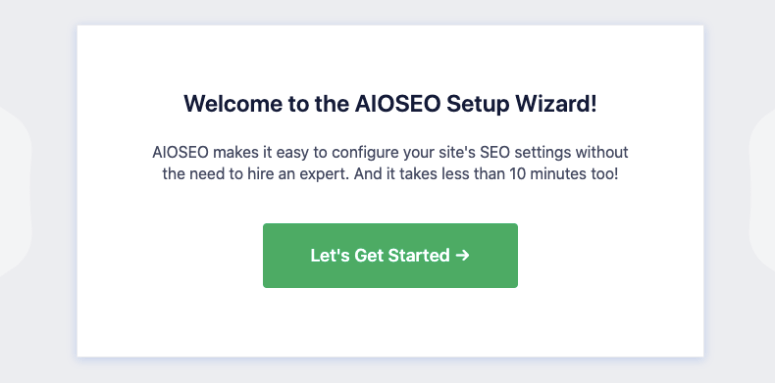
If you run into any problems, here is my guide to setting up AIOSEO.
Once this SEO plugin is ready, you can now influence every product attribute in your shop with one setting.
Here’s exactly what to do:
First, navigate to AIOSEO » Search representation in your WordPress dashboard. Then click Product attributes Tab above.
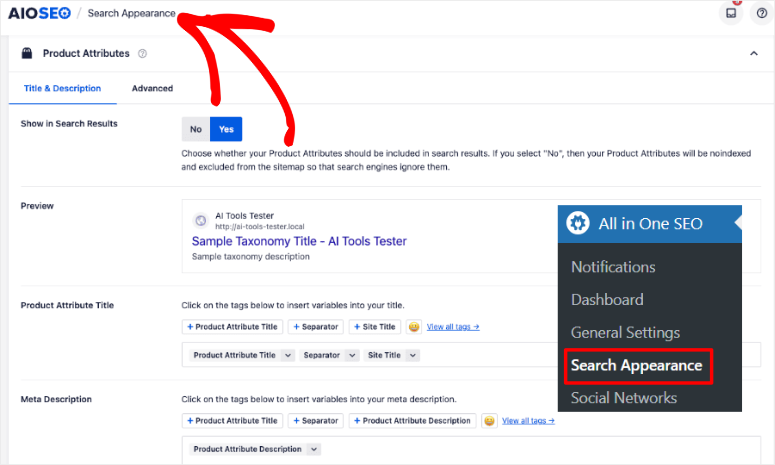
Then on the next screen you will see the global settings panel. This is your control center for all attribute SEO. Now All in One SEO uses tags to help you automate your metadata.
For example, {{Product Attribute Title}} Grabs the actual attribute name, while {{site_name}} Gets the title of your website.
By doing this, you write the template once with these tags and AIOSEO automatically fills in the specific details for each attribute page.
Let me show you exactly how this works with screenshots to illustrate the point.
Set up your SEO title template:
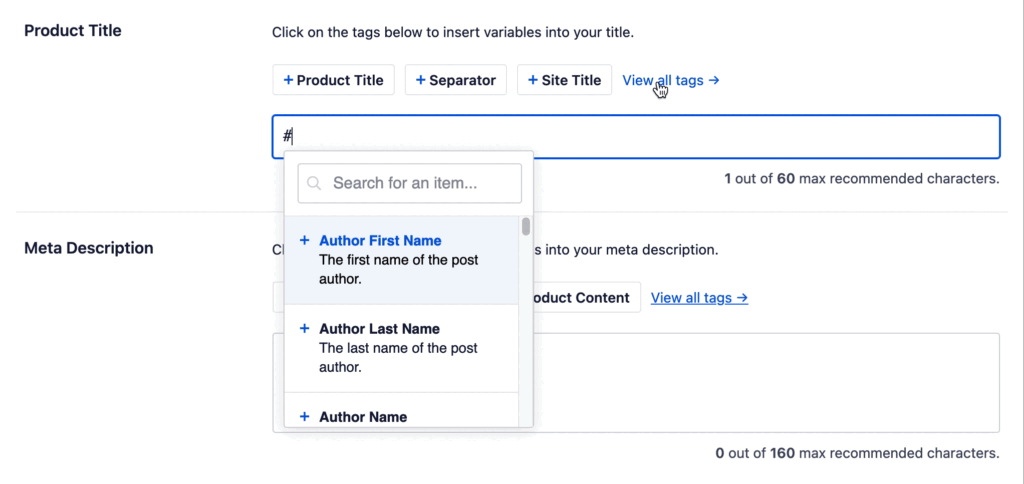
Go to the Product Attribute Title section and select or click one of the tags displayed View all tags to open all your options.
Here you will see tag options such as site title, separator, product attribute title and many more.
Additionally, you can also combine these dynamic content tags with your own wording to make it sound better. For example, you can have something like.
Shop for {{Product Attribute Title}} {{separator}} {{site_name}}
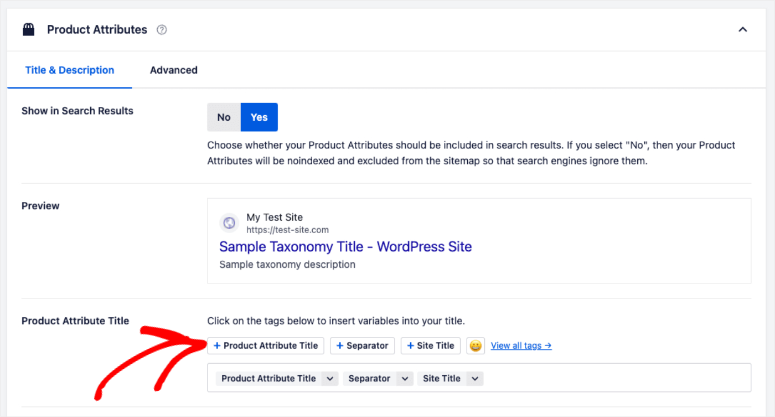
So it would read like this: “Search by product attribute title > site name”. Suppose the site name is IsItWP and the product name is AIOSEO Plugin. The full title of the product attribute would be:
"Shop for AIOSEO Plugin > IsItWP.com"
As you can see, the variables for each attribute are automatically populated. After that, you no longer need to change the product meta title manually.
Create your meta description template:
The meta description product attribute settings work in the same way. All you need to do is click on the “Meta Description” field. You can create something like this
{{Product Attribute Name}} {{separator}}{{Product Attribute Description}} Item with fast shipping.

Remember to limit the length to under 160 characters to avoid being truncated in search results.
Check out the GIF below to see the AIOSEO WooCommerce product attributes feature in full swing.
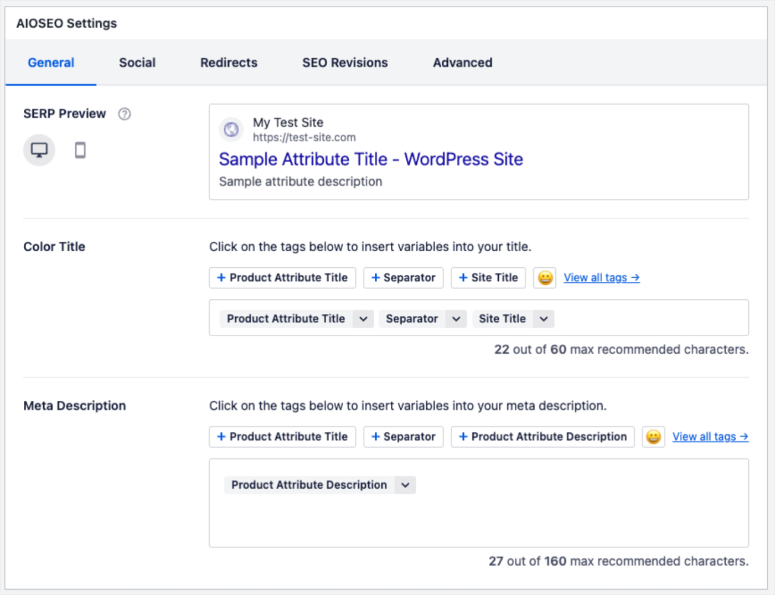
Also, here is a screenshot showing what your all-in-one SEO product attribute page should look like after setup.
Configure Robots meta settings:
Please do not skip this step as it is important.
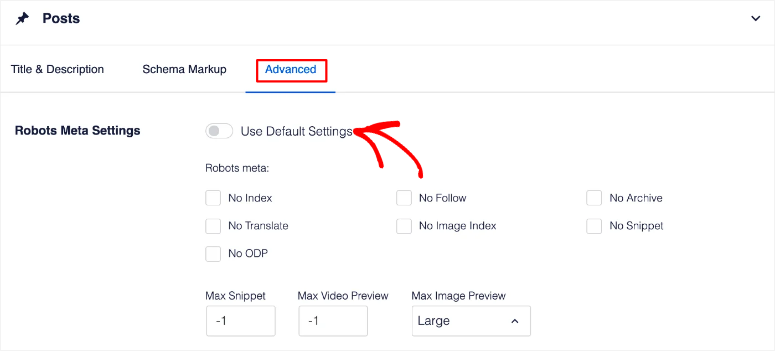
Next in yours AIOSEO » Search representation Go to the Advanced tab. Then use the Robots Meta Settings toggle to enable these settings.
Alternatively, you can turn it off and manually check the boxes you want.
Finally, click the “Save Changes” button at the top right. And you have already automated your product attributes for WooCommerce.
👀 Quick check: Visit any product attribute page on your website. Then right-click and select “View Page Source.” Next, search for your title template. You should see it in the
⚠️Pro tip: Start with a template and test it against a few attributes first. You can always come back and refine it later based on what performs best.
Step 2: Add attributes to your XML sitemap
Estimated time: 5 minutes | Helps Google find your attribute pages faster
Typically, submitting your sitemap to Google Search Console requires a few steps.
First you need to find your sitemap. To do this, go to your browser and type: yourdomain.com/sitemap.xml (replace “yourdomain.com” with your actual domain).
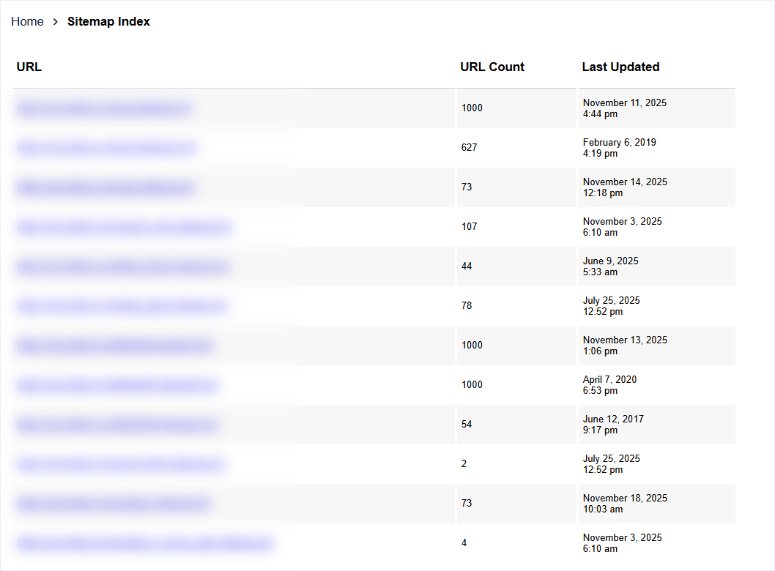
This will open your main sitemap page. In the list, look for a line that says “productattribute-sitemap.xml” and click it.
You should see all of your product attributes listed with their URLs. This confirms that your attributes are included in the sitemap.
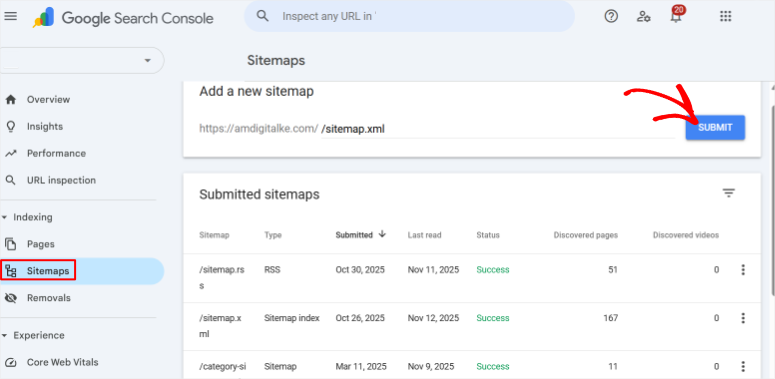
Next, go to Google Search Console and navigate to Sitemaps in the left menu. Paste your sitemap URL (yourdomain.com/sitemap.xml) in the field and click Submit.
The AIOSEO way – automatic and much easier
AIOSEO automatically processes sitemap submission once it connects to Google Search Console through its setup wizard.
All you have to do is navigate AIOSEO » Sitemaps in your WordPress dashboard and select the General sitemap Tab above.
On this page, Shift-click “Activate Sitemap” and you’re done!
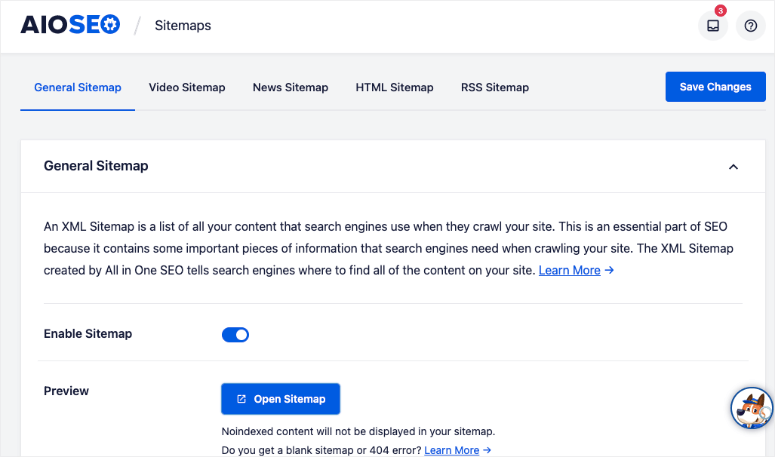
Once activated, AIOSEO automatically keeps your sitemap up to date and syncs it with Google Search Console.
To check if your product attributes are included, click Open sitemap button under “Preview”. Your sitemap will open in a new tab and you can see all the links in it.
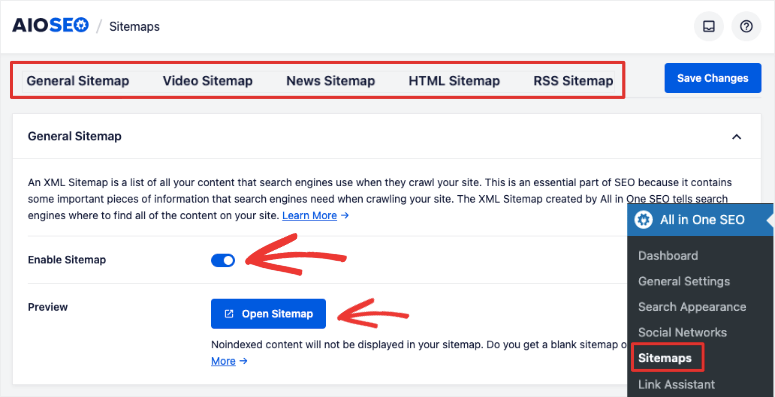
Find “productattribute-sitemap.xml” in the list and click it. You will see all your product attributes listed with their URLs and ready for Google to crawl.
However, you can customize your sitemap settings even further.
You can see below the preview Sitemap Settings with options like “Enable sitemap indexes” and “Links per sitemap”. The default settings work fine for most stores.
However, if necessary, you can change the features you need with simple checkboxes.
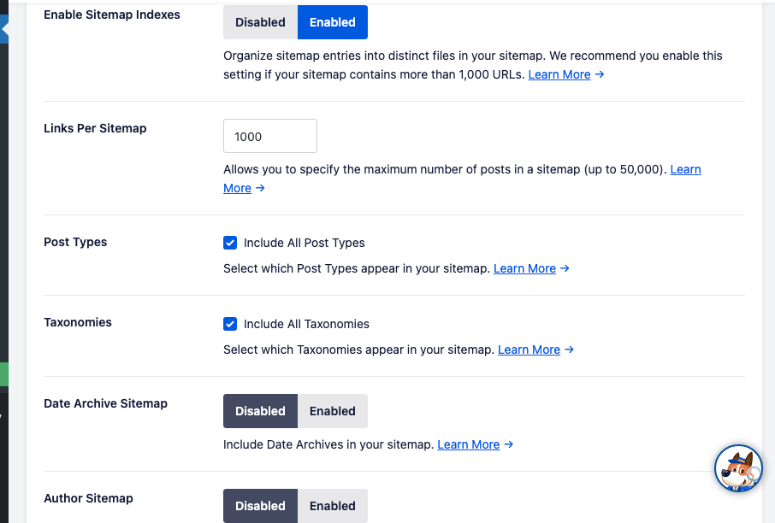
For detailed information on customizing this section, see my tutorial on setting up sitemaps with AIOSEO.
⚠️What this means for you: Your attribute pages will be indexed within 48-72 hours. Google automatically detects new attributes as you add them, with no manual work required.
Step 3: Export and Import for Multiple Stores
Estimated time: 5 minutes | Perfect for agencies or multi-store owners
If you manage multiple WooCommerce stores or want to back up your settings, this feature is a lifesaver.
This is because this feature allows you to replicate your attribute SEO settings across different stores. It can also help you create a backup of your multisite before making major changes.
How to export your attribute data using AIOSEO
First, navigate to AIOSEO » Tools in your WordPress dashboard and select the Import/Export Tab above.
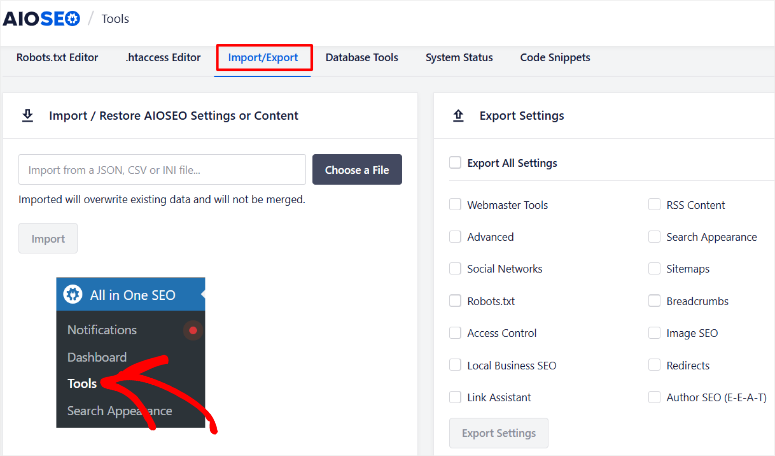
Under “Export Settings,” scroll down until you find the “Product Attributes” option. Then click on the “Export Settings” button.
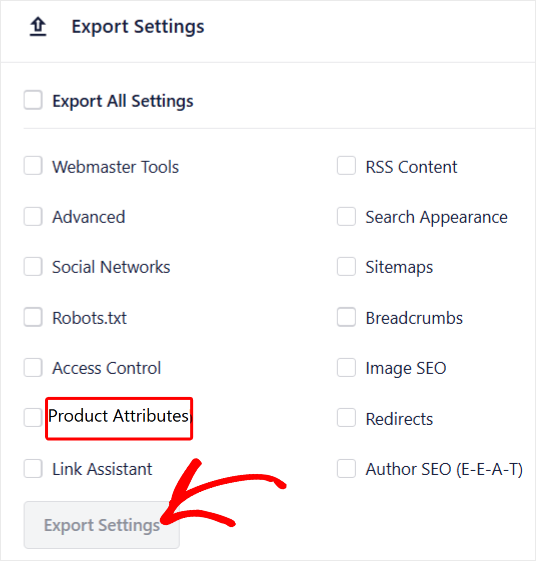
A JSON file will then be downloaded to your computer containing all of your SEO templates and settings.
How to import product attributes to another store
In your second shop, first make sure that AIOSEO is installed and activated. Then go to All in one SEO » Tools » Import/Export. The same steps you took above.
Then, under “Import Settings,” click the “Select File” button and select the export file you just downloaded.
After adding, click “Import” and wait for the success message.
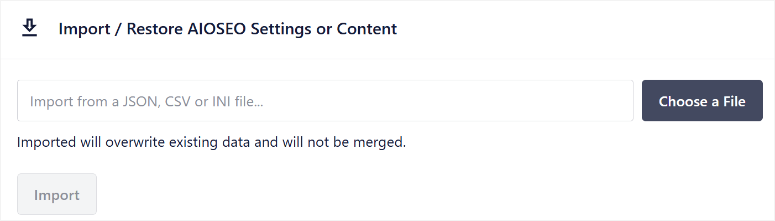
After that, all your attribute SEO settings will be copied immediately without the need for manual reconfiguration.
Estimated time: 10 minutes setup | Finally know what works
Here’s the problem most people face: you optimize your attributes but have no idea if they actually rank. Additionally, it is best to set up expensive rank tracking tools.
AIOSEO solves this problem with four built-in features, which we will discuss below.
Feature 1: Import keywords from Google Search Console
I always start here because it’s the smartest approach.
First, you need to make sure your website is connected to Google Search Console via All in One SEO.
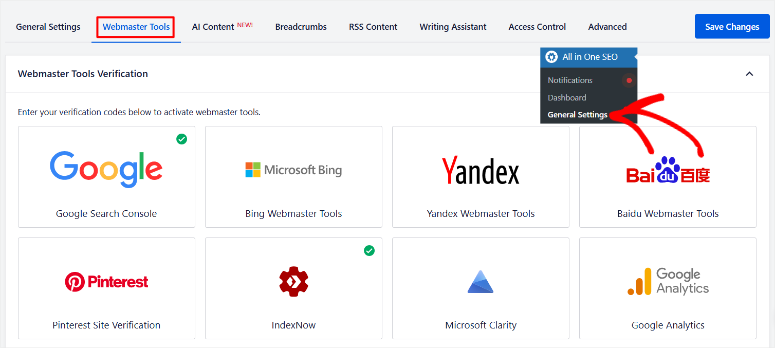
You should have already done this through the setup wizard, but can go to AIOSEO » Click “General Settings” to confirm. Simply select “Webmaster Tools” and check if Google Search Console is connected.
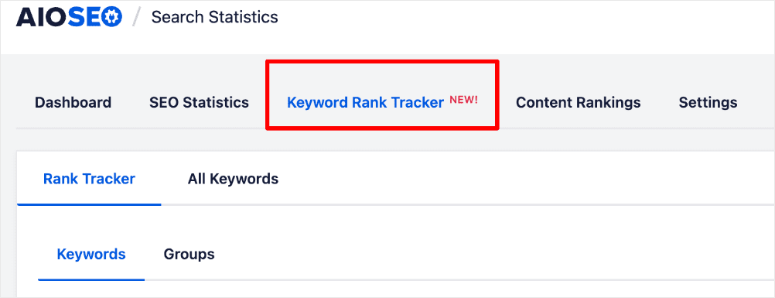
Then go to AIOSEO » Search statistics and navigate to “Keyword Rank Tracker” in your WordPress dashboard.
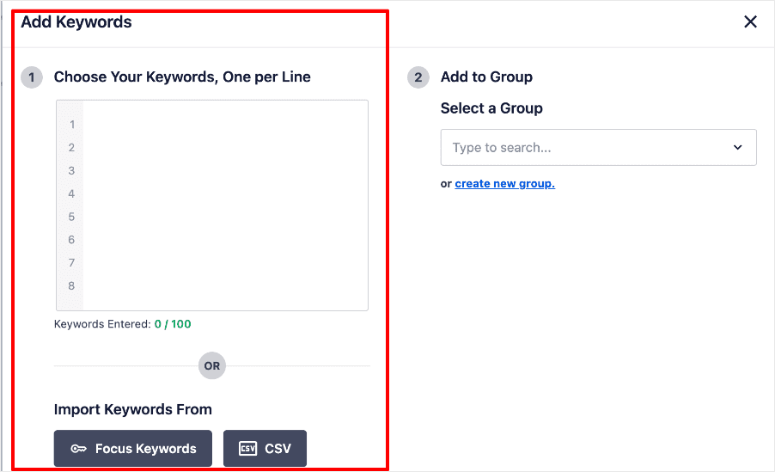
Next, click the “Add Keywords” button at the top and select “Import from Google Search Console” from the options.
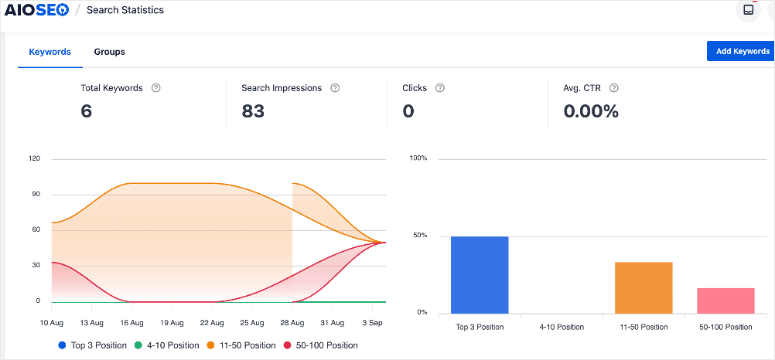
Once done, you’ll see an easy-to-understand chart that includes your top keywords, search impressions, clicks, average CTR, and more.
⚠️ Why this works: They track keywords you already rank for right in your WordPress dashboard, ensuring you don’t have to guess.
Feature 2: See which pages rank for each keyword
In the Keyword Rank Tracker, click the “>” arrow at the end of any keyword line to expand the line.
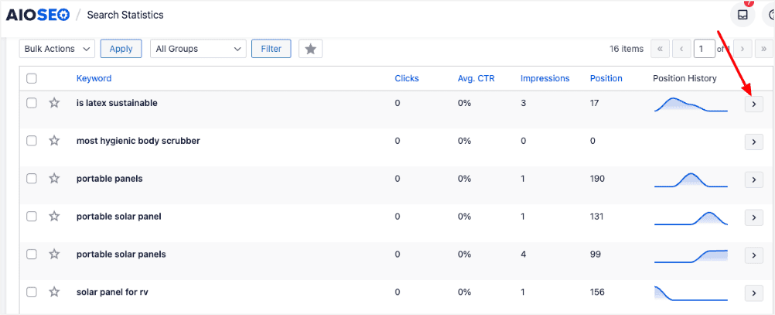
Next, select the “Keyword Ranking Pages” tab. Here you can see exactly which attribute pages are ranking for that term, along with clicks, impressions, and position data.
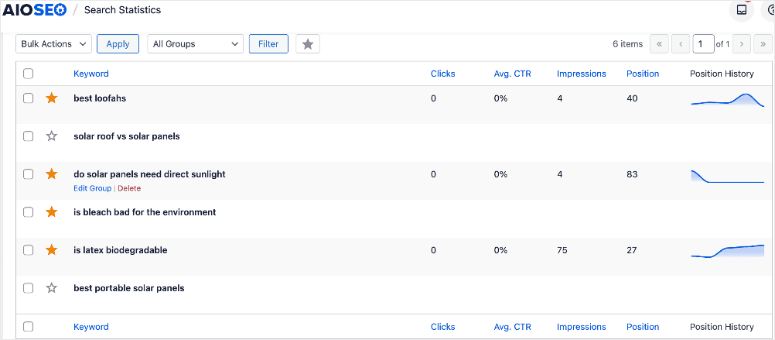
⚠️ The insight: They perform keyword discovery that allows you to rank them higher in search results. For example, your attribute “Organic Cotton” could be ranked #8.
That’s close enough to be optimized and break into the top 5.
Feature 3: Discover related keywords
Still in the advanced keyword view, click the “Similar Keywords” tab. There you will see 8-9 keyword suggestions based on Google search data.
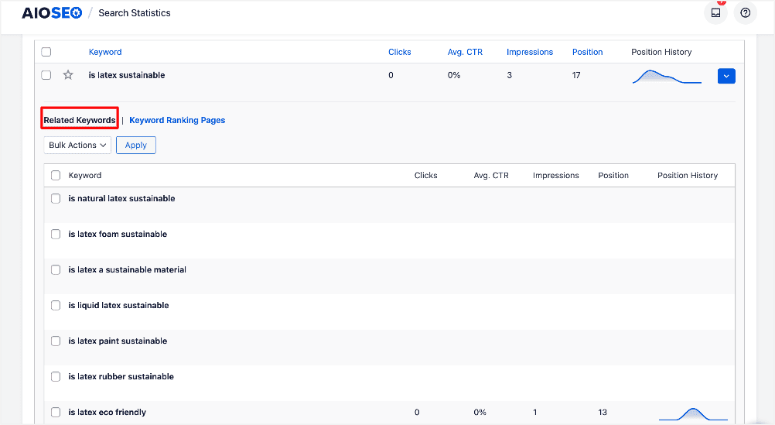
These highlight ways to expand the content of your attribute page and rank for even more keywords.
Feature 4: Check rankings when editing products
To use this all-in-one SEO feature, open any product in the WordPress editor. Then scroll to the “AIOSEO Settings” section under the content editor and click on the “Keyword Rank Tracker” icon.
Here you’ll see ranking data specific to this product’s attributes without leaving the page you’re editing.
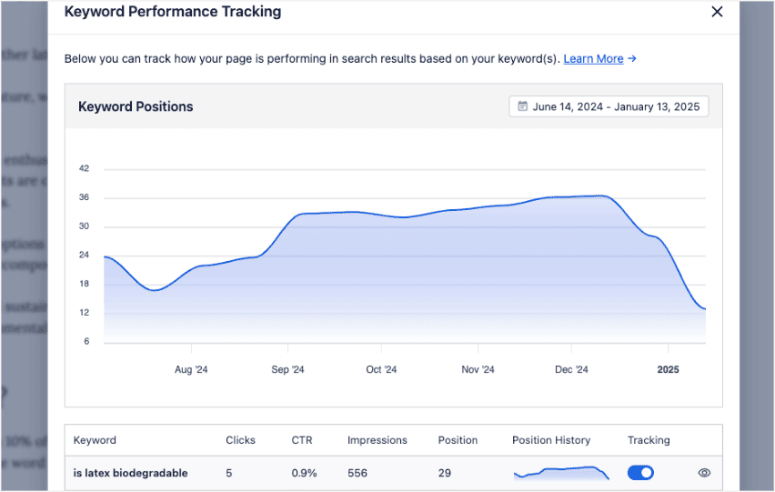
👀 Quick check: Your rank tracker should show data within 24 hours. Check back tomorrow if you see “No Data Yet.”
That’s it! As you can see, I use AIOSEO to set up automatic WooCommerce product attributes and track them too. All in one simple eCommerce SEO plugin.
But even with the best tools, the best SEO experts can still make mistakes.
To help you with this, here are the most common mistakes to avoid when setting up and tracking product attributes for your WooCommerce store.
Common mistakes to avoid with product attributes
Error 1: Indexing low value attributes
Don’t allow Google to index attributes that only have one or two products attached to them. To do this, use the Robots meta setting “No Index”. Google penalizes thin content and empty attribute pages affect your website’s overall ranking.
Mistake 2: Using generic attribute names
It’s important to include keywords in your URLs, titles, and meta descriptions. Remember that descriptive names will help you rank for long-tail searches.
Mistake 3: Ignoring your best performers
Use the Keyword Ranking Pages feature to find attributes that rank in positions 8-15. These are low-hanging fruit. So a little content optimization will quickly get you to page 1.
Error 4: Not using Google Search Console Import
If you manually guess which keywords you want to track, you’re wasting time. Google Search Console shows what is already working. With that in mind, start there and grow your business from proven winners.
Mistake 5: Set it once and forget it
Check your rank tracker monthly. As you do this, look for new opportunities for related keywords and update underperforming attributes with better content.
Mistake 6: Skipping Sitemap Verification
Always confirm that your attributes appear in your sitemap and submit them to Google Search Console. Without this, it could take months for Google to recognize your attribute pages.
Check out this post now if you need a complete guide to WordPress SEO in one place. Also check out how you can improve your EEAT signals to rank even higher.
Great! Now that you understand how to set up product attributes, how to track them, and what to avoid, let’s do a quick recap.
Quick Summary: Your Action Plan
Check out the quick summary table below that summarizes all the steps we discussed above for you.
| Task | Time requirement | To use |
|---|---|---|
| Step 1. Set global attribute SEO settings | 10 minutes | Automates SEO for all attributes across the site |
| Step 2. Activate sitemap and check attributes | 5 minutes | Faster indexing (48-72 hours vs. weeks) |
| Step 3. Export/import settings | 5 minutes | Replicate settings across multiple stores |
| Step 4. Set up rank tracking | 10 minutes | Track performance without expensive tools |
Here’s what you just learned:
- ⚙️Set global SEO settings for all product attributes (10 minutes)
- 🤖 Automatically include attributes in your sitemap (5 minutes)
- 📥 Export/import settings for multiple stores (5 minutes)
- 📈 Track attribute rankings without expensive tools (10 minutes)
Total setup time: Under 30 minutes
Time saved per month: 10-15 hours
Costs saved: $99+/month for rank tracking
Your next steps:
- Upgrade to AIOSEO Pro today
- Configure your global attribute settings
- Import keywords from Google Search Console
- Check back in 30 days to see how your rankings improve
The competitive advantage is huge. Most WooCommerce stores completely ignore attribute SEO. You now have the tools to dominate this space.
FAQs: About managing WooCommerce product attributes
Can I use different SEO settings for certain attributes?
Yes. The global settings serve as the default settings, but you can override them for individual attributes. Simply edit the specific attribute directly and adjust its SEO settings. The global template does not overwrite your custom changes.
Do I need AIOSEO Pro for product attribute functions?
Yes, the Product Attributes and Keyword Rank Tracker features are only available for Pro. The free version does not contain them. But the time and money saved make the investment worthwhile. They replace expensive rank tracking tools.
How long does it take until I see ranking improvements?
For most stores, attribute page rankings begin within 30 to 60 days. Focus on attributes that already appear in Google Search Console first for faster results. These are easier to push into top positions.
Does this work with variable products?
Absolutely. Variable product attributes such as size and color fit these functions perfectly. The global settings automatically apply to all WooCommerce attributes.
Final Thoughts: Managing WooCommerce Product Attributes with AIOSEO
Managing product attribute SEO used to mean hours of repetitive work. No longer.
AIOSEO Pro gives you automation and tracking in one place. No expensive tools or technical skills are required.
I use this exact setup in every WooCommerce store I manage. The results speak for themselves.
Are you ready to scale your WooCommerce SEO? Get AIOSEO Pro here and set up your attributes in less than 30 minutes.
Resource Center
These guides will walk you through everything WooCommerce related. From setup to improving conversions. When you combine it with automatically adding product attributes, you can really scale.