Search results used to be a door. You ranked, someone clicked and landed on your website. But today, that model is falling apart faster than most marketing teams are prepared for.
This is what research by Bain & Company has shown about 80% of consumers now rely on zero-click results for at least 40% of their searches. For some businesses, this means more impressions, but overall it reduces organic web traffic by an estimated 15 to 25%.
What does this mean for your team and how do they measure and achieve success?
In this guide, you’ll learn what zero-click searches are, why they’re important, and how to convert zero-click visibility into conversions using Answer Engine Optimization (AEO).
Table of contents
TLDR summary
Zero-click searches occur when a user gets their answer on the search results page via an AI overview or other rich search results without clicking on a website. AI Overviews increase the likelihood of zero-click behavior in informational queries, while Featured Snippets satisfy simple question intent directly on the SERP and People Also Ask (PAA) boxes expand response paths without requiring a click.
Answer engine optimization is about getting citations, summaries, answer placements, and even voice mentions for your website and brand in ways that aren’t possible with traditional SEO. AEO includes, among other things, creating reply-first content to increase eligibility for featured snippets, AI overviews, and other reply interfaces.
HubSpot’s free AEO grader can help you see how you are currently doing do in AI engines and understand what you need to do to improve your visibility.
What are zero-click searches?
A zero-click search occurs when a search engine query is answered directly on the website Search results page via a featured snippet, a knowledge panel, a People Also Ask (PAA) field, a local pack, an AI overview or others rich results rather than a user visiting a separate website.
AI-powered rich results include:
- Selected excerpts, which return a direct answer in a boxed format at the top of the SERP
- knowledge panels, which provide a quick overview of entities such as companies, people and places
- People also ask: which contains surface-level questions with expandable answers
- AI overviews, synthesize the answers from multiple sources directly in the SERP
- Local package, Here you’ll see a map and three local business listings based on your location or search.
Here’s an example from the very branded search: “What is Bollywood?”
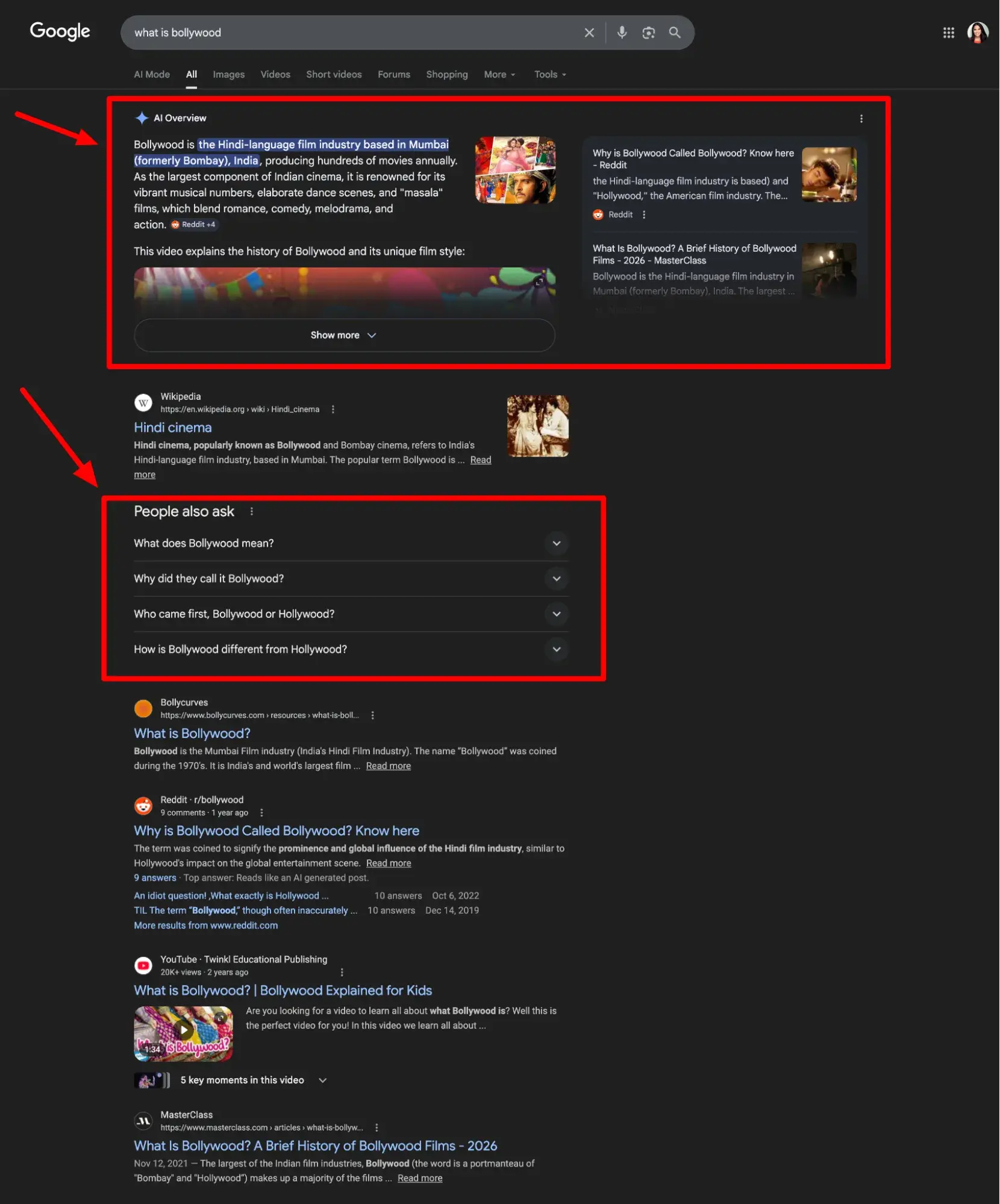
For consumers, these results can be practical and helpful, but for businesses, they take a toll on organic website traffic, once a golden metric.
Why should marketers care about zero-click search?
They have changed the way shoppers search.
According to McKinsey, half of Google results already contain these AI overviews along with other rich search results, and trends predict that number will reach 75% by 2028. Thanks to these rich search results, Google itself also reports that over 27% of search queries now end without a click.
This means that many search queries that companies used to generate clicks and bring potential buyers to their websites no longer perform as well as they once did.
Just remember my “What is Bollywood?” seek. Searchers are confronted with an AI overview and a PAA module. Traffic double whammy.
They changed the reporting.
However, the challenge with AI capabilities for marketers is not just traffic; it is also an attribution.
Have organic click-through rates (CTR). fell to 40.3% in the USA and 43.5% in the EU/UK, while clicks on Google-owned properties such as YouTube and Maps rose to 14.3% in the US
Because of this, the impression data in your Search Console may be stable or growing, but it is likely increasingly coming from sources other than the sessions, leads, and pipeline your stakeholders expect. However, zero clicks aren’t all bad news.
They can improve brand awareness and recall.
While zero-click results may not directly drive organic traffic, they can still demonstrate expertise and the brand awareness that comes from the mention can lead to higher conversion rates when users finally visit your website.
If a buyer sees a brand mentioned in an AI overview or featured snippet multiple times during their research, they will automatically go to your website and require far less convincing to convert.
Now that you know how zero-click searches impact businesses, let’s take a closer look at why.
Are you curious about how you currently work with AI tools like ChatGPT and Gemini? Use HubSpot’s free AEO grader to receive a detailed analysis of brand perception in five dimensions with a written interpretation of your results.
How zero-click disrupts the marketing funnel
The traditional marketing funnel (illustrating the buyer’s journey) assumed that search triggered a click, the click triggered a visit, and the visit ultimately led to a lead.
Zero-click searches don’t eliminate this path, but they do restructure it as more of the early stages take place directly on the SERP. HubSpot’s evolved hourglass buyer journey visualization and Loop marketing explains this.
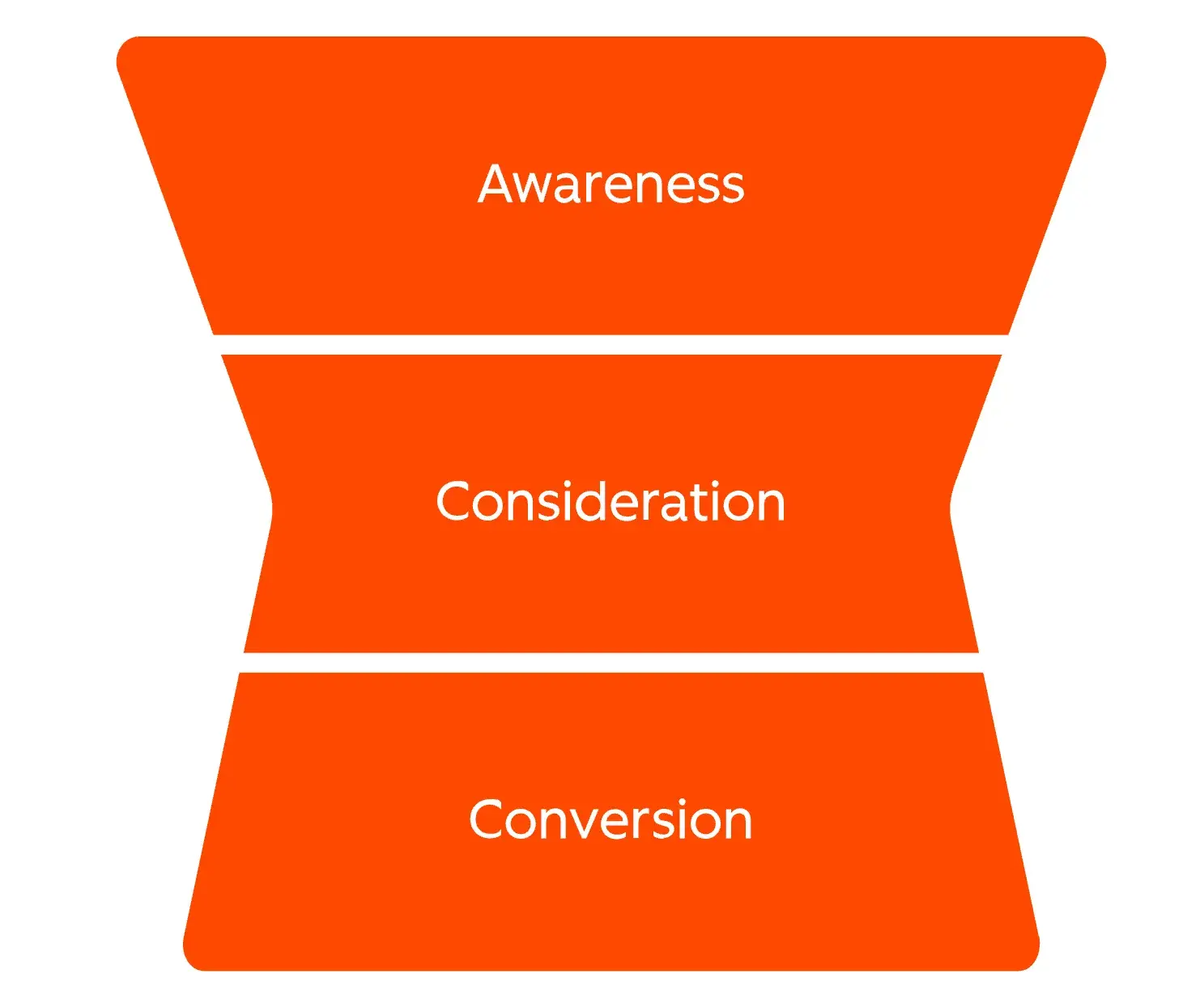
Let’s take a look at the potential impact of zero-click searches at every stage of the buyer’s journey.
Awareness: The SERP is now a branding arena
At the top of the funnel, users are just beginning to understand their pain point and become aware of possible solutions. In the SERP, they learn more about brands that are part of that conversation before they even get to a website.
Before AI, users would scroll through the SERP, see different brand names and favorites, and associate them with their search even if they didn’t click.
Now, when a query has an AI overview or other rich result, scrolling no longer occurs as often. Users only see and “become aware” of the brands and websites mentioned in the results, while everything below is ignored.
Showcasing your brand in these responses works like advertising. They are key to building awareness and attracting leads in the SERP.
Let’s say you’re a luxury travel agent specializing in the Caribbean. Users researching “how to plan a trip to Saint Lucia” may get their ideas and information from AI recommendations and sponsored results, not from your content.
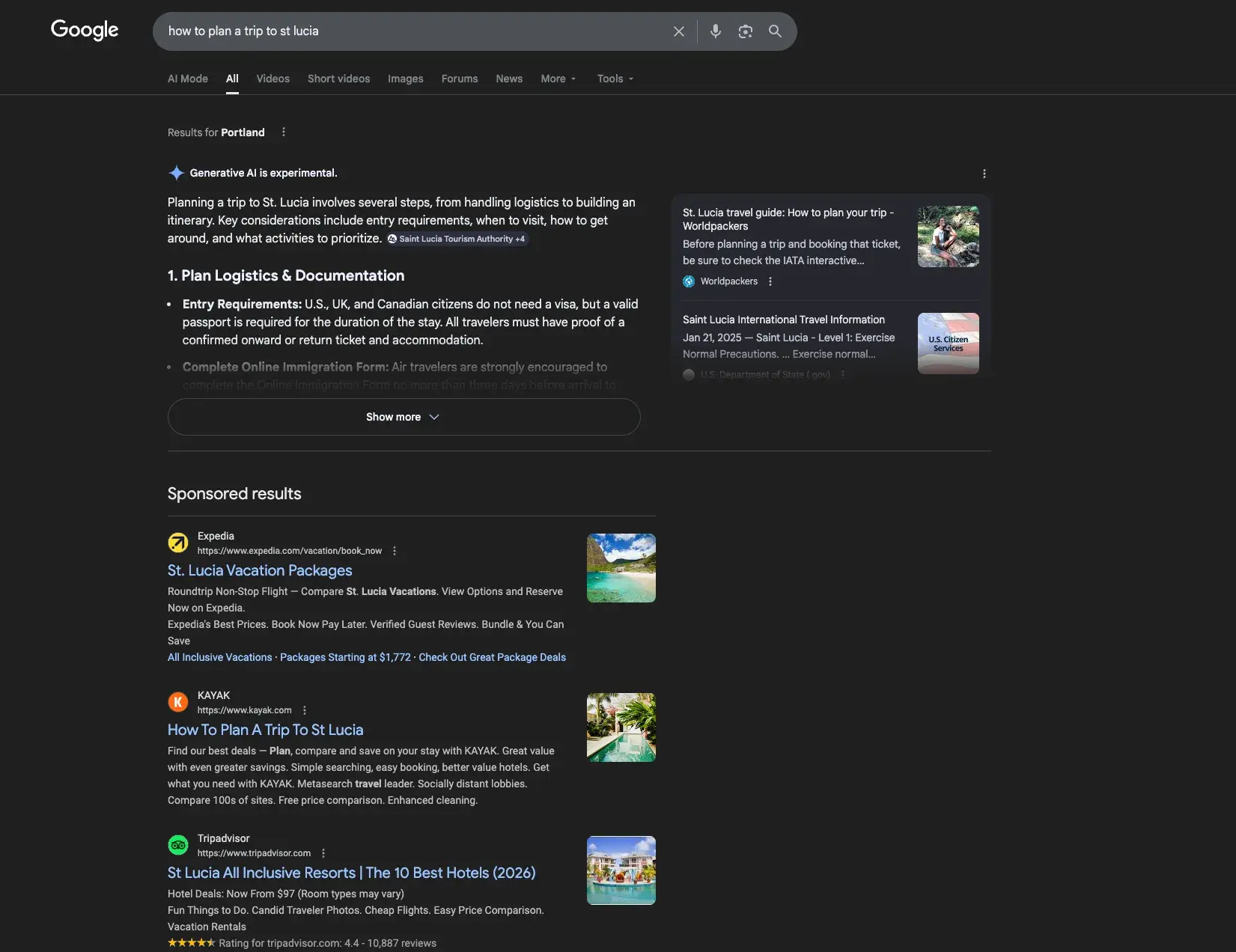
However, this is particularly consequential for B2B teams. Let’s say someone searches for “best CRM for mid-sized businesses” or “content marketing tools for enterprises.” There’s a good chance they’re creating vendor shortlists based on AI overviews and not your content.
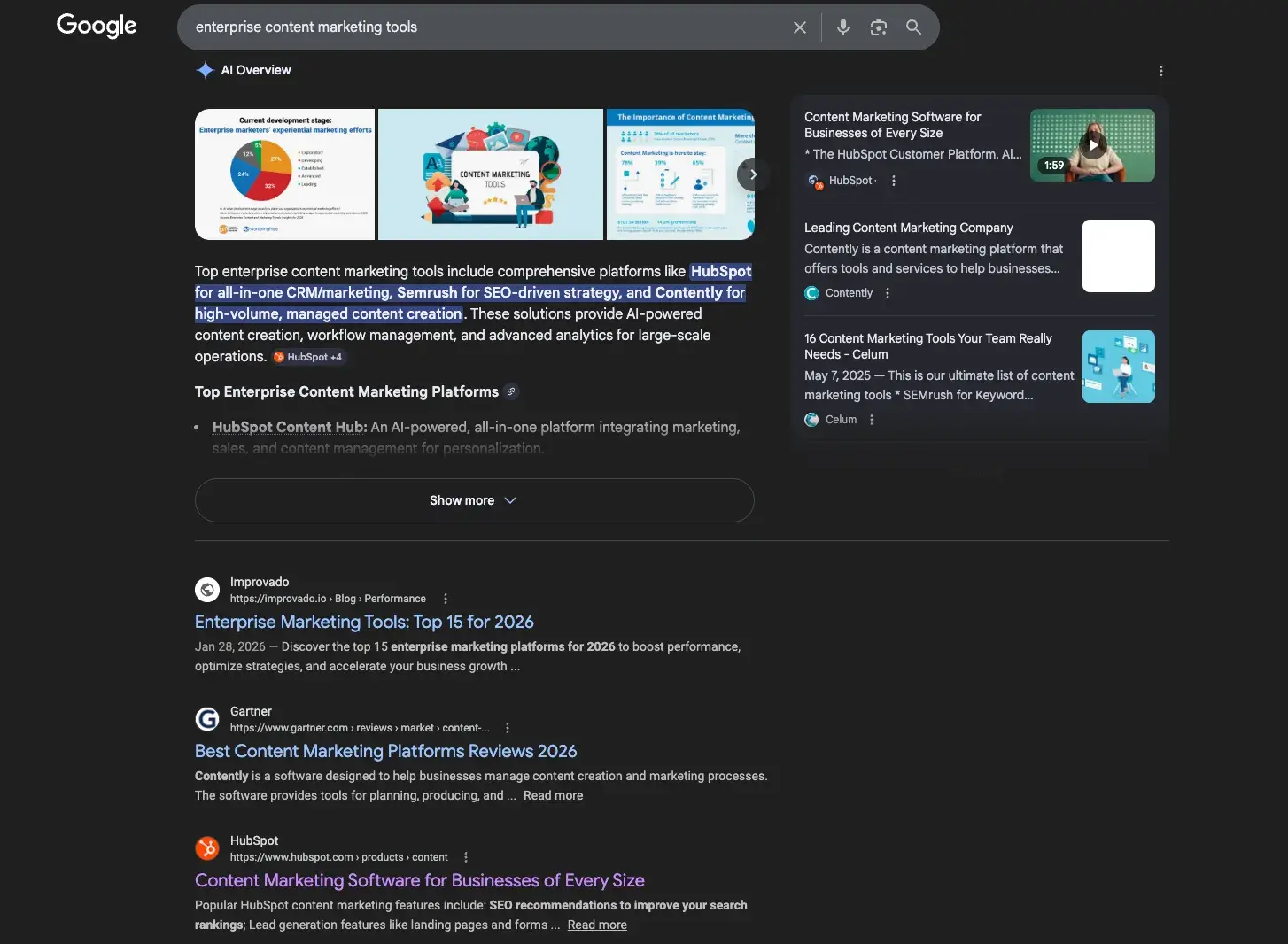
Consideration: Interest and evaluation without a click
In the consideration phase, people actively look for solutions and consider which one might be right for them. “People Also Ask” boxes and featured snippets provide the depth of research that previously required three or four site visits at this stage.
For example, if a user sees your brand mentioned in a featured snippet and then cited in the PAA, they are already ready to develop a preference. In the consideration phase, the goal is not to force a click; It’s about making your brand the right answer over and over again.
Let’s take our travel agent example: If users searching for “plan a trip to St. Lucia” see your website in both the AI overview and the PAA, there’s a good chance they’ll start to perceive you as someone who knows your stuff.
The same applies to our B2B SaaS example:
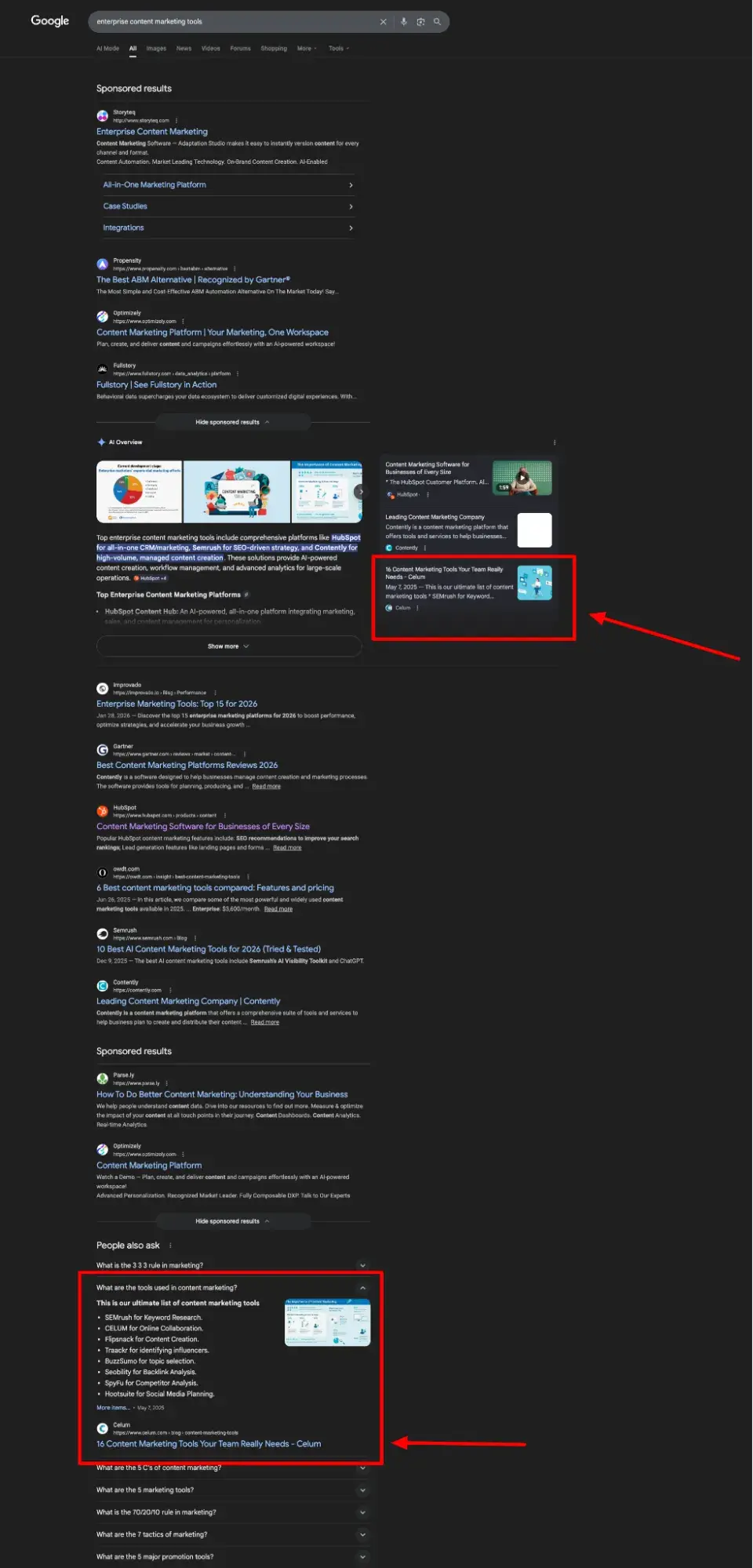
Repetition breeds familiarity, and familiarity breeds trust.
Conversion: Querying with intent
Conversion is the only stage in the buyer’s journey where the traditional SERP is still somewhat intact.
In some cases, queries in the conversion phase may display a local package or a local package Structured snippets with commercial intent. However, many conversion-related queries, such as comparisons or those containing words like “buy,” “demo,” or “advice,” are less likely to trigger AI overviews. Therefore, investing in paid search and SEO still makes sense.
For example, if we think about our St. Lucia search, the search query “St. Lucia travel agent advice” does not provide an AI overview or rich search results.
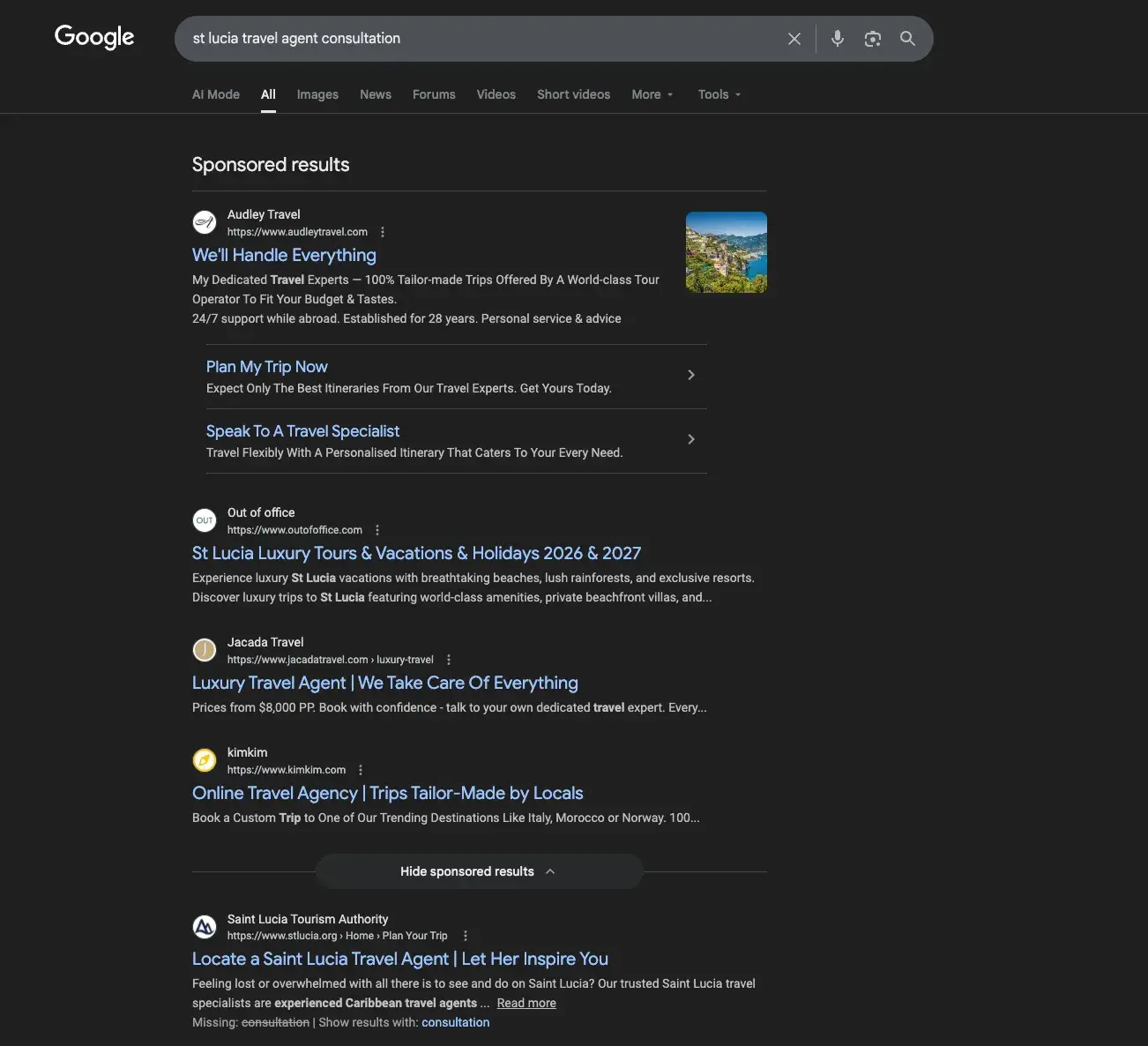
Kind of a relief, right? This can be especially true for B2B companies.
For B2B with high-intent commercial queries, the path from SERP to engagement can be compressed thanks to AI. As with our St. Lucia trip, the query “free content marketing tools demo” does not return rich results for our SaaS example.
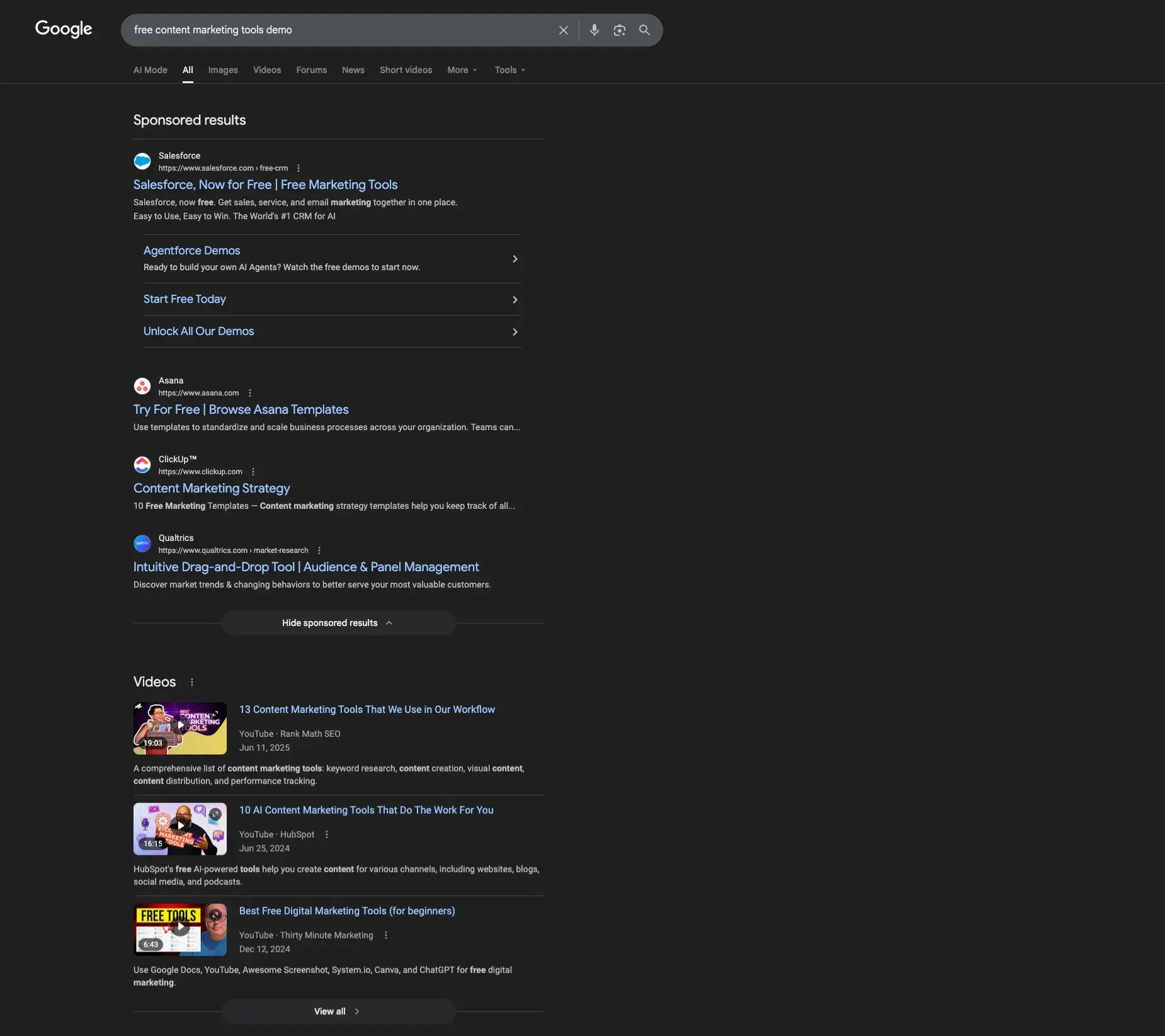
Alternatively, a search for “HubSpot vs. Salesforce” may bring up a comparison page in an AI overview, but it still requires a click for the user to get full value. Plus, the prospect who comes to your website already understands what you have to offer. At this point, the job of the landing page is confirmation, not introduction.
However, keep in mind that buyers typically don’t move straight into the conversion phase of their journey. So stay alert. Regardless of experience, the path to the brand’s website and purchase can be significantly longer than before due to AI interventions.
Note: Loop Marketing re-examines the buyer’s journey and marketing funnel to adapt to modern behaviors and the influence of AI on search. Find out more about it here.
Content and collection strategy by funnel stage:
How to Adapt SEO in a Zero-Click World
Here’s what you should do.
Put your KPIs before your content
The first thing you need to pay attention to is how you define success. If your team is still reporting organic sessions as a primary SEO metric, you’re measuring declining output, not the influence that’s driving it.
Swap or add these key figures:
- Organic meetings as the most important KPI → Add: SERP impression share, brand search volume and AI citation frequency
- Rank tracking for individual keywords → Add: Featured Snippet and AI Overview ownership rate across all keyword clusters
- Traffic-based content ROI → Add: Pipeline influenced by organic touchpoints, including zero-click touchpoints
This realignment also protects your team internally.
When leadership asks why traffic is down, you will have data showing that despite the traffic drop, impressions are stable, branded search is increasing, and the organically supported pipeline is growing.
Format your content so that it leads to direct answers
AI search platforms such as Google’s AI Overviews, Google’s AI Mode, ChatGPT Search, Perplexity and Microsoft Copilot do not process web content like traditional crawlers. Rather, they build knowledge networks that connect facts, entities, and relationships, and formatting plays a big role in this.
Fortunately, the content formatting that improves zero-click suitability is much of the same that helped traditional SEO:
- Lead with the answer. Begin each section with a direct 40 to 60 word answer to the implicit question before discussing evidence and context. AI and snippet algorithms reward answer-first architecture.
- Use structured headings as question formats. “What is zero-click SEO?” performs better in SERP features than “Overview” or “Introduction.”
- Add definition fields or labels. A clearly formatted definition paragraph will most likely be adopted as a snippet.
- Use tables for comparisons and lists for sequential steps. Google consistently prefers these formats for list and table featured snippets.
- Add an FAQ schema to pages that already rank on page one. This pushes the question and answer structure to both Google and AI systems so you can appear in FAQs and PAA results.
Speaking of PAA, for PAA eligibility ensure the following:
- Map the questions your content needs to answer
- Include these questions verbatim as H3 subheadings
- Give a direct answer of 2 to 4 sentences for each.
This reflects the format Google uses to deliver PAA results and can also power other AI-powered rich searches.
Pro tip: Prioritize pages that already have strong impressions but declining CTR. These are your clearest signs that a SERP feature has been introduced and that your content formatting is not competing with it.
From there, check your content for “Reply First” permission and ask yourself: “Does this page answer the target query within the first 100 words or force the reader to scroll to find it?”
Sites that hide their answer lose snippet authority to competitors who lead with it.
Implement structured data in your content
Speaking of formatting, more and more AI SERP results, such as: Some knowledge panels, such as knowledge panels and featured snippets, specifically depend on structured data (aka: Schema markup) to provide answers directly in search results.
The main schema types to implement:
- FAQ schema: Displays answers in expandable SERP formats and signals question-and-answer structure to AI systems. Note that since 2024, Google has limited FAQ rich results to authoritative government and health sites, but FAQ Schema continues to provide structural value for AI citations. This is particularly helpful with PAA.
- Article/BlogPosting Scheme – Makes your editorial content eligible for Top Stories and sets author, publication date and content context
- Organization and website schema – Anchors your entity in the Knowledge Graph and supports Knowledge Panel permission
- HowTo scheme – Supports how-to queries with step-based response formats
Accordingly Google’s own structured data documentationRotten Tomatoes saw a 25% higher click-through rate after adding structured data to 100,000 pages, and Nestlé found that pages that appeared as rich results had an 82% higher click-through rate than pages without them.
Implement the schema in JSON-LD format (Google’s preferred method) and validate with Google’s rich results testand prioritize the pages that are already ranking on page one.
Use local SEO to optimize for knowledge panels and packages
For brands with physical locations or local service areas, local search optimization is one of the most impactful zero-click investments available. In fact, according to Backlinko, 42% of searchers click on Google Map Pack results for local searches, making a 3-pack listing one of the most valuable local search placements.
How to strengthen local zero-click presence:
- Make sure your Google business profile is completed and updated regularly
- Implement the LocalBusiness schema with consistent NAP data (name, address, phone number).
- Earn structured citations in relevant directories
- Increase review volume – Star ratings in rich snippets directly impact clicks
Let’s take a look at how this relates to the buyer journey.
Optimize third-party channels trusted by AI systems
When your product appears consistent with similar messaging across Reddit discussions, forums, industry articles, and review sites, AI systems gain trust relying on the consensus around you.
In practice, this means your pivot plan needs to include channels that are aligned with but directly support SEO:
- Third Party Review Platforms (G2, Capterra, Trustpilot): AI systems rely heavily on this for product category queries. An incomplete or outdated profile or poor reviews here could indicate a missed mention.
- Industry publications and guest contributions: One mention in a high-profile article has more AI citation weight than ten posts on your own blog. They are an external confirmation of your professional competence.
- Reddit and community forums: Google and AI systems increasingly see these as key signals for how real users perceive a product. It’s important to participate authentically and not spam.
- YouTube: YouTube is considered to be the second most visited website in the world and its content is even featured in Google SERPs. A video that answers a core question your audience is looking for is a zero-click asset that works on multiple surfaces at once.
Focus your efforts on commercial intent
When AI summaries are present, click-through rates drop to just 8%, compared to 15% for traditional search results without AI summaries The digital blossom.
The Pivot Point: Reduce investment in purely informational, top-of-funnel content, which is increasingly answered by click-free AI, and reinvest in:
- Commercial comparison content (“X vs. Y”, “Best (Category) for (Use Case)”): These queries still drive clicks because users need to evaluate details.
- Original research and proprietary data: AI systems cannot synthesize what does not already exist; Your own studies become both quote bait and click driver
- Tool pages, templates and calculators: Helpful content that requires interaction cannot be removed with a mouse click. it has to be experienced.
This doesn’t mean you have to forego awareness content entirely, but be strategic about where you expect a click and where you optimize for citation and brand recall.
When to Track or Avoid Zero-Click Keywords
Not every keyword deserves an optimization investment for zero-click visibility. The decision should be based on commercial potential and content differentiation. Here are some quick tips to help you decide when you should and shouldn’t pursue zero-click visibility.
Aim for zero-click visibility when:
- The query has commercial or navigational intent. Users who search for things like “best project management tools for agencies” are evaluating vendors, not just learning.
- You aim Brand awareness on a large scale, and SERP placement brings your brand to a whole new audience.
- You can Win the snippet with differentiated dataB. Original research, unique statistics, or a proprietary framework that no other competitor has.
- The keyword represents a easy win where your existing content is almost snippet-ready with minor reformatting
Avoid zero-click investing if:
- The query is purely informational and of little commercial value. Definitions, basic guidance and commodity facts will not move the pipeline.
- Your The negative keyword strategy already prioritizes this traffic as irrelevant.
- Winning the neckline would Cannibalize an existing high-performing page by satisfying the intent before clicking on a higher value offer.
Pro tip: Use a test-first approach. Run a 30-day experiment with 3-5 target keywords: restructure the content with a “reply first” format, add an FAQ schema, and compare CTR and brand mentions before and after. This will let you know if the investment is scalable before all the editorial resources are committed.
How to measure zero-click impact
Like its counterparts SEO, content marketing, social media, etc., AEO is a long-term strategy. However, you need to make it a habit to review your work and track your performance.
Let’s take a look at the metrics you want to report on.
AEO and AI visibility metrics
Click-through rate is no longer a sufficient measure of search performance. A robust zero-click measurement framework includes SERP, brand and pipeline measurements.
SERP visibility metrics:
- Impression share by keyword cluster (not just ranking keywords)
- Featured Snippet and AI Overview ownership rate for target queries
- Frequency of occurrence of PAA in priority subject groups
Brand influence metrics:
- Monthly brand-related search volume
- Direct traffic trends correlated with SERP feature gains
- Share of voice in AI-generated answers (trackable via HubSpot’s AEO Grader)
Pipeline influence metrics:
- Assisted conversions where the first or last touch was a branded or non-branded organic search
- Demo and test volume of pages receiving AI overview or snippet traffic
- Time-to-conversion trends for search-driven vs. direct traffic leads
An example zero-click scorecard
Frequency of reporting
Create a monthly cadence to measure your AEO performance. Teams that do this are increasing their advantage as AI search continues to expand.
Your assessment cadence should include:
- Run yours again AEO grader Score to track AI visibility trends
- Check your top priority 20 queries for snippet and AI summary ownership changes
- Reviewing Search Console impression data for queries that generate impressions without corresponding click growth (a non-click capture signal)
- Check search trends to stay ahead of the curve when introducing new SERP features
Zero-Click Searches Playbook by Funnel Stage
Notoriety: How to get quoted in AI overviews and snippets
Being cited in AI Overviews is not a purely technical challenge, but a credibility challenge. AI systems prefer sources that demonstrate expertise, consistency, and validation across multiple platforms.
In other words, when your product appears consistent in Reddit discussions, forums, industry articles, and review sites with similar messages, AI systems gain trust citing consensus around you.
Actions in the awareness phase:
- Publish original research and proprietary data. AI systems are trained to evaluate primary sources
- Earn mentions in reputable industry publications, not just your own blog. Think interviews, guest articles, podcast appearances, reporting and reviews.
- Maintain consistent brand messaging and positioning across all owned and earned content. This means both visually and verbally.
- Optimize for EEAT signals: first-hand author bios, testimonials, and expertise markers
Consideration: How to generate interest without a click
In the consideration phase, the goal is to consistently make your brand the right answer to the questions buyers are actively researching. Even if they don’t click, repeated positive SERP presence builds trust and ultimately preference.
Measures in the consideration phase:
- Form “vs.” and comparison content that emerges as buyers evaluate alternatives
- Create FAQs (answers first) on product and service pages – these are great for PAA boxes
- Targeted questions with commercial intent: “How does (your product) work”, “How much does (your product) cost”, “(Competitive) alternative”
- Use SERP feature tracking to monitor which of your pages are achieving snippet rankings and optimize those that are close to the threshold
Conversion: How to turn zero-click visibility into demand
When it comes to the conversion question, most zero-click guides remain silent. Here’s the practical answer: Visibility that doesn’t convert is a targeting problem, not a zero-click problem.
Actions in the conversion phase:
- Make sure your AI overview quotes lead to pages with strong, single CTAs – don’t send AI-related traffic to general blog posts
- Create conversion paths that don’t require a click-first journey: Branded search demand, direct input traffic, and email re-engagement all benefit from SERP-level exposure
- Use retargeting to attract users who search for your branded terms but don’t convert on their first visit
- In B2B, measure demo requests and pipeline influenced by branded search as a proxy for the impact of zero-click conversions
Pro tip: Mark AI overviews and featured snippet traffic as a separate segment in your analytics. If those visitors convert faster than average organic traffic – what Data suggests this is the case – It is a strong signal to strengthen zero-click optimization.
FAQs about zero-click searches
How do I convert zero-click visibility into conversions?
The key is to recognize that zero-click visibility is the influence at the top of the funnel. It builds brand recall and trust before the conversion moment occurs.
To convert this visibility, ensure that every page that receives AI citations or featured snippets has a high-intent CTA visible above the fold (e.g. free trial, demo request, gated asset).
Track branded search volume as your leading conversion indicator. If zero-click awareness works, branded searches (and their conversion rates) should increase.
If you’re building this infrastructure now, start with HubSpot’s free AEO grader To understand your current AI representation baseline, then create a map of what cited content leads or discourages users from converting.
When should you prioritize AEO over traditional SEO?
AEO and traditional SEO are not competing priorities; AEO is a part of SEO.
Prioritize AEO-specific investments (answer-first content formatting, FAQ schema, AI quote tracking) if your organic traffic is stagnant despite stable or improving rankings, if your product is being evaluated in AI-powered research interfaces, or if you are in a category where buyers conduct extensive zero-click research before ever reaching a brand’s website (software, financial services, professional services).
Traditional SEO is still essential to capture the 40% of searches that still result in clicks, and good rankings remain a prerequisite for AI citation eligibility. Build both and measure them separately.
What is the best way to report zero-click profits internally?
Align zero-click reporting with business outcomes, not search mechanisms. Show stakeholders the connection between SERP impression share and brand search volume growth, between AI citation frequency and direct traffic trends, and between featured snippet ownership and pipeline-influenced revenue.
For teams that use The Marketing Hub Professional from HubSpot or higher, our AEO tools provide more in-depth assessment, guidance and content recommendations that can help you build dashboards that combine page performance, AI visibility and conversion impact – giving you the data architecture you need to clearly represent your business case.
The most effective internal reporting presents zero-click search not as “traffic we are losing,” but rather as “influence we are gaining in a channel that is growing faster than traditional search.”
AEO is SEO Evolved
Think about it AEO as an evolution of SEO: a unified strategy where content ranks in the SERPs and is cited in rich search results.
The same structured data, EEAT signals, and authoritative content that rank well in traditional search also improve AI citation rates. So if anything, AEO is just a new “zero-click layer” to your SEO strategy.
- Run HubSpot’s free AEO grader to determine your baseline AI visibility score for ChatGPT, Perplexity and Gemini before making any changes. This will help you measure the impact of your pivot
- Add answer-first sections to your top 10 SEO pages instead of creating new content from scratch
- Include schema as a standard step in your content production workflow, not an afterthought
- Report on both traditional rankings And AI citations in your regular SEO reporting so leadership sees the bigger picture.
HubSpots AEO grader is a free tool that assesses how ChatGPT, Perplexity and Gemini currently represent your brand – assessed by sentiment, quality of presence, brand awareness, share of voice and market position. Conduct your analysis to establish a baseline before your next optimization cycle.