
Local search has become one of the most competitive areas for small businesses. Customers no longer browse randomly. You search specifically and compare options quickly.
This shift in customer behavior means companies have less time to make an impression. People want quick answers, clear information and strong evidence that a company can solve their problem. Without understanding what the competition is doing, it becomes harder to show up in these moments.
You choose the company that stands out for its greater relevance, credibility and visibility. This is why competitor analysis is one of the most powerful parts of any local SEO strategy.
It gives you a more realistic view of the market. Instead of guessing why certain companies appear first, you can identify the real factors behind their visibility. This helps you understand what customers value and how your business can present itself more effectively.
It shows what competitors are doing nearby, how they are attracting customers, and where gaps exist that can be turned into opportunities.
A well-structured competitor analysis provides the clarity needed to outperform similar companies and attract steady local leads, especially when you understand it how local SEO works as a whole.
It also helps you prioritize your efforts. Knowing which actions will have the greatest impact will help you avoid spreading your efforts too thin. This makes the entire local SEO process more manageable and result-oriented.
The process doesn’t have to feel complicated. With a simple step-by-step approach, any local business can understand what works, what is missing and what can be improved.
Why competitor analysis is important for local SEO
Competitor analysis provides a clear picture of why certain companies rank higher in local searches.
It shows the gap between customer expectations and what every company is currently delivering. Understanding how competitors position themselves makes it easier to see what factors influence trust, authority, and visibility in your space.
Instead of guessing, it shows what actually works in your area. It shows what keywords customers search for most often, what type of content they respond to, and how competitors attract consistent leads.
It also highlights areas where competitors are performing strongly and where they are lagging behind.
These strengths and weaknesses can be used to clarify which elements customers value most when selecting a local provider. By looking at both sides, companies get a more realistic picture of what it takes to be competitive and where improvements can lead to quick wins.
Details like well-structured service pages, stronger optimization options, or clearer messaging can explain why one company ranks higher than another.
These differences may seem simple at first glance, but they shape the way search engines evaluate a website’s relevance and how customers judge its credibility. Understanding these factors helps companies strengthen the areas that influence both rankings and conversions.
By understanding these patterns, a company can focus on strategies that produce results instead of wasting time on unimportant things.
Most importantly, competitive insights help create a more efficient local SEO plan. It becomes easier to keep up with competitors’ good performances and improve in areas they neglect. This leads to more visibility, greater credibility and faster ranking improvements.
How to Conduct a Local SEO Competition Analysis
A simple, structured process makes it easier to understand and apply competitive analysis.
Also, the entire review focuses on what actually influences local rankings. Instead of becoming overwhelmed by too much data, a clear framework will help you identify patterns, compare strengths, and understand why certain competitors are performing better. This approach makes it easier to identify practical next steps that directly support your local SEO goals.
The following steps break everything down into clear measures that any local business can follow to find out what the competition is doing well and where new opportunities exist.

Step 1: Identify your true local competitors
Before analyzing anything, the first step is to understand who the real competitors are.
This will help you narrow your focus so that you only investigate the companies that truly impact your visibility. Knowing exactly who customers are comparing you to makes your SEO efforts more direct, relevant, and easier to prioritize.
A competitor is not always the biggest brand or the company with the largest following. The main competitors compete for:
Searches like “dentist near me” or “pet groomer in Las Vegas” usually immediately show the top competitors. These are the companies that matter the most because they attract the same customers.
To build your list, search for your main keywords as if you were a customer. Note the top three Google Map Pack results and the top five organic results (what appears under sponsored companies).
This simple method gives you a clear starting point and eliminates guesswork. It also shows which competitors currently have the strongest visibility, making it easier for you to compare your setup against theirs and understand the impact of ranking in your region.
These are your main competitors.
Step 2: Analyze your Google business profiles
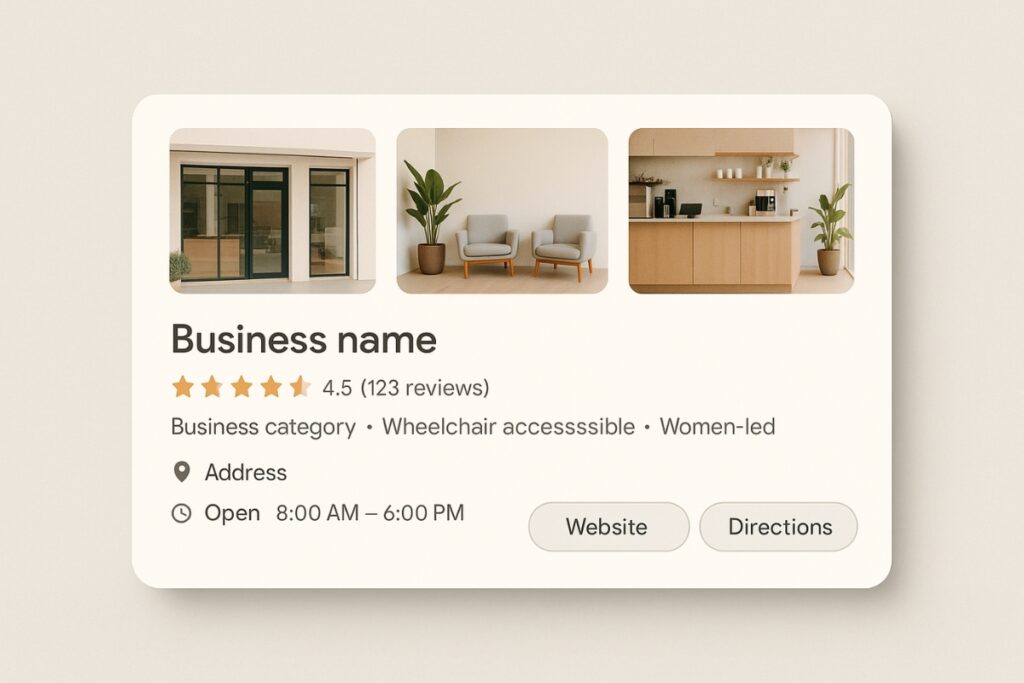
Google business profiles have a big impact on who appears in the map pack. Therefore, it is important to understand how to do this Optimize your Google business profile becomes essential when looking at how competitors structure their businesses.
Start with categories. Competitors who choose the most accurate primary and secondary categories tend to rank higher because Google understands their relevance better.
A quick comparison of the category selection also shows how clearly the competitors position themselves. Some companies use broader categories, while others choose more specific categories that fit niche services. This will help you see if your own category selection needs to be refined to help Google understand your offerings more accurately.
Attributes are also important, especially those tied to customer filters, such as: B. Wheelchair accessible, female-led or outdoor seating.
Photos and videos signal activity. Competitors who upload fresh, high-quality images continually build more trust and engagement.
Also look at the style of her pictures. Some competitors use professional photos, others rely on quick snapshots. The quality and consistency of their visual presentation often reflects how much effort they put into presenting their business, which can impact customer perception and click behavior.
Evaluation patterns are equally important. Pay attention to how often competitors receive reviews, what keywords customers mention, and what the general sentiment is. Frequent, keyword-rich reviews boost rankings.
Check out their GBP posts and Q&A section. Some competitors share weekly updates or answer customer questions that reveal local concerns.
Observing the tone and topics of their posts can also reveal what customers respond to most. Some use promotional posts, others share helpful tips or local updates. This will help you understand what style of content your audience values and how you can communicate more effectively.
These details will help you refine your own GBP and find out what customers expect.
Step 3: Study your website’s strengths
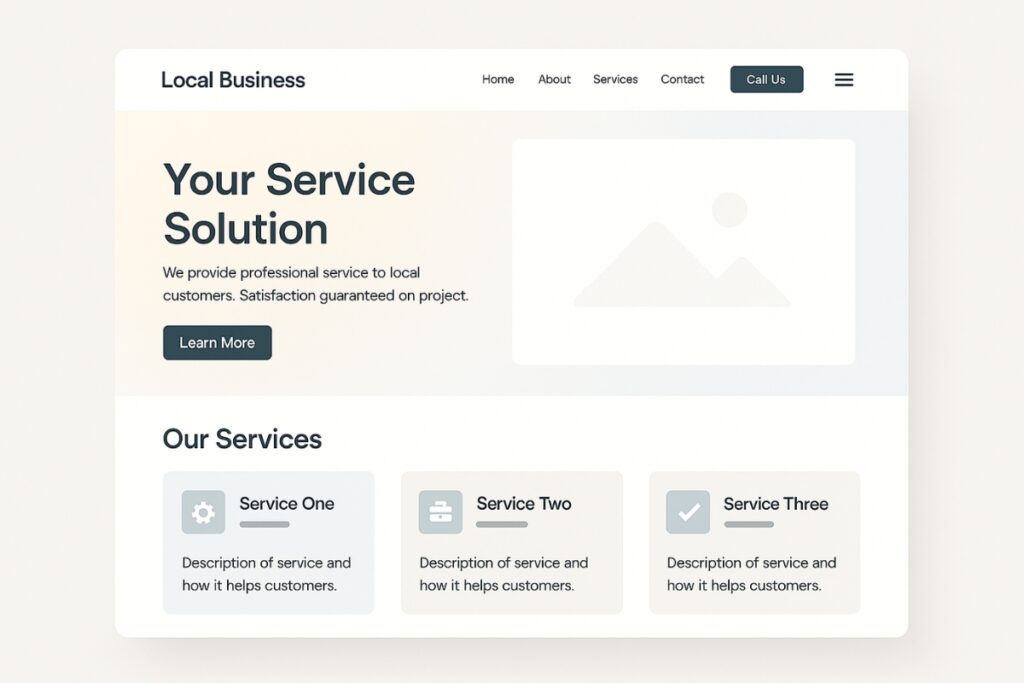
Strong competitor websites share common features that improve rankings. Start with the homepage. Look at how clearly they explain what they offer, highlight service areas, and display important information like badges, reviews, or warranties.
Service pages offer another ranking advantage. Competitors who create individual pages for each service are often better than those who combine everything. These pages usually have meaningful headings, clear descriptions and useful images or FAQs.
Location pages also increase visibility. Competitors with dedicated pages for specific neighborhoods or cities often appear in more local searches.
A website that loads quickly, explains services clearly, and directs visitors smoothly gives the competition a natural advantage in both rankings and conversions.
Step 4: Examine your local keywords and ranking patterns
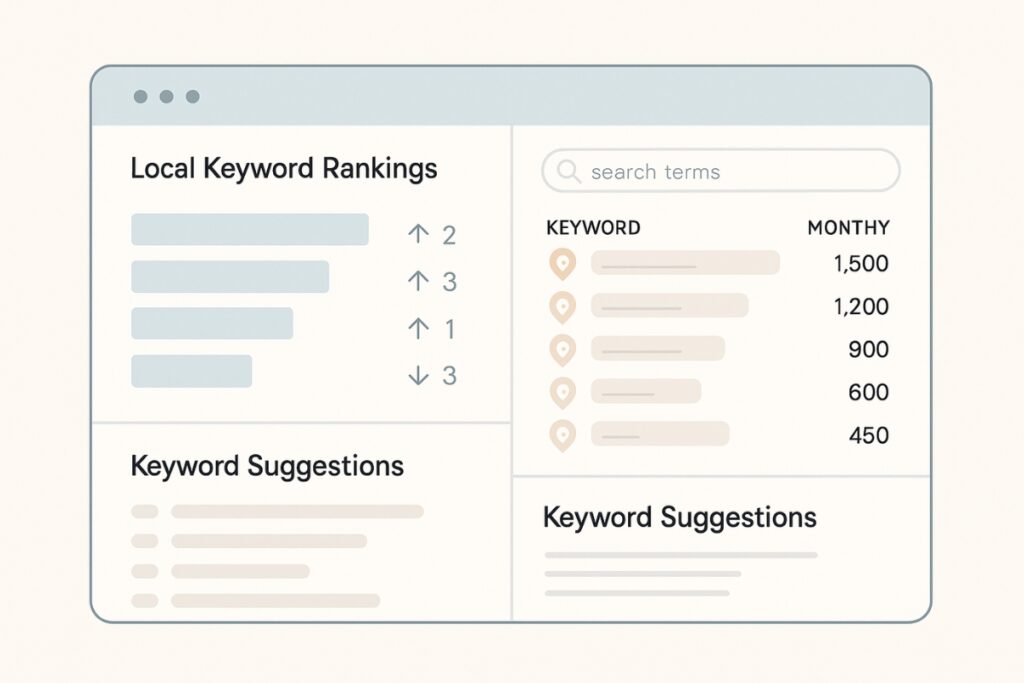
Competitor keywords show what customers are actually searching for, which makes local keyword research an important part of understanding why certain pages rank higher.
Understanding these keywords also shows how competitors align their pages with actual customer behavior. If the terms they target match those people type into search, Google sees their content as more relevant. This will make it easier for you to understand which topics are most important in your field and which keywords you should add or improve on your own pages.
First, check page titles and headers to determine which primary keywords they prioritize. Look for patterns like “service + city” or “service + near me,” which usually lead to highly intelligent traffic.
Review URLs and meta descriptions to identify long-tail keywords, including specific services or neighborhood-based searches. These often bring in highly qualified leads.
Pay attention to search intent. Some competitors focus on informational queries while others target transactional queries. Understanding this mix shows how competitors acquire customers at different stages.
Identify which competitor sites rank highest. Often it is a few well-optimized service pages or guides that generate the majority of traffic. These insights will help you decide which pages to prioritize on your own website.
Step 5: Check your local backlinks and directory presence
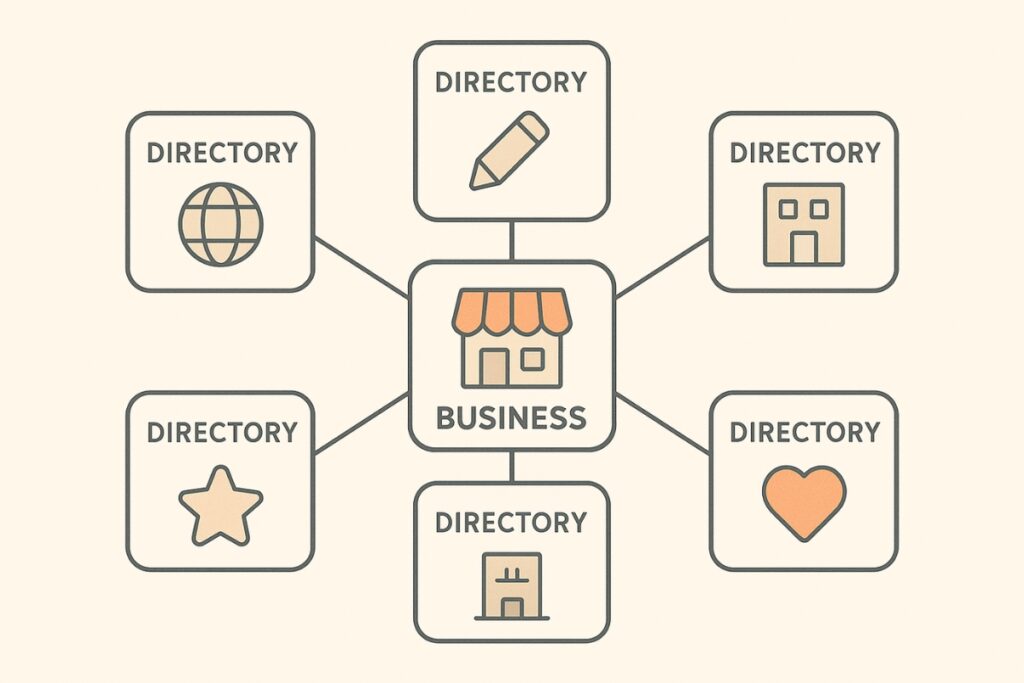
Local SEO relies heavily on local citations and backlinks. Competitors often gain authority by appearing in:
- local directories
- Industry-specific offers
- Chamber of Commerce website
- Community websites
- local blogs
- Sponsorship sites
Check how many directories your competitors list that don’t already have your business listed. These become quick successes and show where it might be necessary Optimize your business listings to remain competitive.
Backlinks don’t have to be complicated. Even a few trusted local links can significantly boost rankings.
Step 6: Understand your content strategy and publishing frequency
Competitors who publish regularly tend to outperform those who don’t. Take a close look at what type of blogs they publish, how often they post, whether their content targets local topics, and how educational or helpful their articles are.
Strong content strategies typically include how-to guides, local tips, buying guides, comparisons and FAQs. If your content is clearer or better organized, it can outperform the competition even with fewer resources.
Step 7: Study reviews to find customer gaps and opportunities
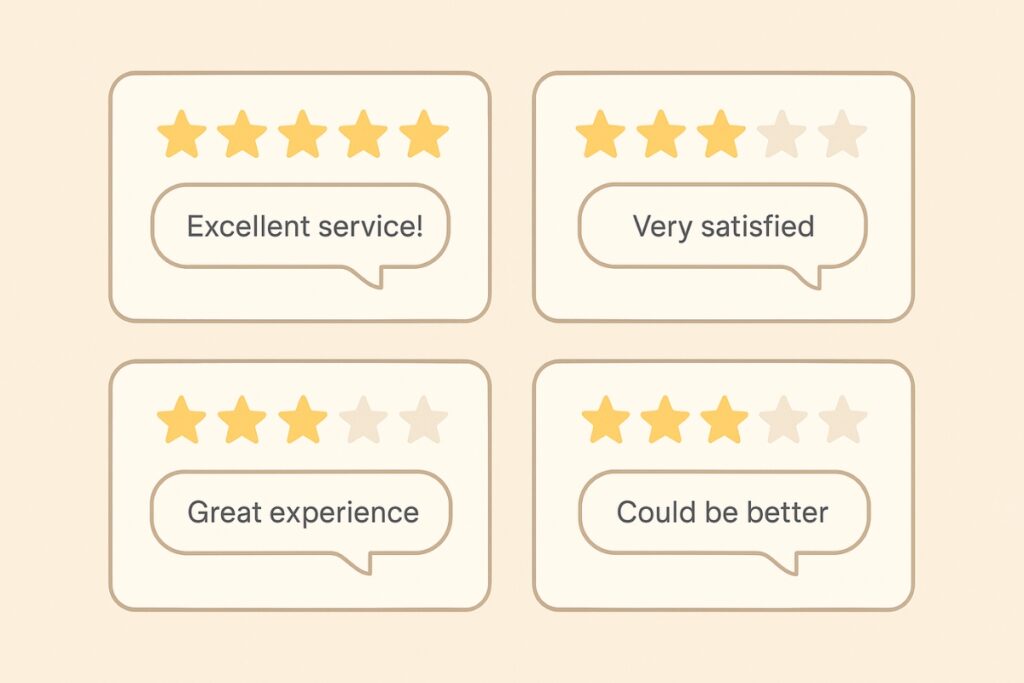
Reviews reveal information that no keyword tool can provide. They show exactly what customers value and what frustrates them. This is where real insights emerge.
Focus on:
- repeated praise
- repeated complaints
- Customer service quality
- Feedback on pricing
Patterns in reviews show what competitors do well and what they fail to deliver. These gaps become your opportunity to stand out.
For example, if customers frequently complain about long wait times, unclear pricing, or poor communication, you can address this through your company positioning and website content.
Step 8: Compare engagement and visibility across platforms
Some competitors may rely heavily on Google. Others may dominate Facebook, Instagram or YouTube. Visibility is not just about ranking. It’s about relevance across multiple touchpoints.
Check:
- Frequency of posts
- Quality of visual representation
- how customers interact
- what is shared the most
The goal is not to copy competitors, but to understand what appeals to local audiences.
Step 9: Identify content gaps and develop a stronger strategy

Content gaps reveal opportunities to outdo competitors by covering topics they ignore or poorly explain. Start by checking out competitor blogs and guides. Look for missing local content such as neighborhood guides, pricing information, how to choose a provider, or seasonal advice. These topics are quickly gaining authority and relevance.
Check the service pages for missing details. Some pages may be missing graphics, FAQs or clear explanations. More complete content provides a better experience for both customers and search engines.
Local tour guides are particularly effective. Companies often skip content that focuses on local regulations, preparation tips, or general community issues. These topics attract long-tail traffic and help position the company as a local authority.
Updating outdated themes offers another benefit. When competitors publish older content, a newer and more helpful version can rank faster.
If a business wants to strengthen its online presence, a small, consistent blog will help fill those gaps and capture searches missed by competitors. Prioritize gap topics that closely align with your services and the questions customers ask most often. This approach builds a long-term content library that consistently outperforms the competition.
Step 10: Monitor the competition regularly
Competitor analysis is not a one-time task. Local rankings change based on new reviews, content updates, new backlinks, or platform changes. A quick review each month helps raise awareness of what is working and what changes are occurring in the local landscape.
Competitor tracking can be done manually or with tools. If a company already uses systems that track local leads and reports, such as CRM tools or local funnels, these can help visualize patterns over time. If not, manual controls are still more than sufficient to produce meaningful results.
Competitor analysis makes local SEO more predictable
Competitor analysis takes the guesswork out of local search engine optimization. It shows which strengths need to be taken into account, which weaknesses should be avoided and where the greatest opportunities lie. Local businesses gain a clearer path when they examine how others are succeeding in the same field.
With a simple, step-by-step approach, any business can figure out what matters most for ranking, visibility, and trust. Creating stronger content, improving listings, and answering customer questions become easier when competitor patterns are understood.
Companies that adopt this mindset consistently attract more local leads, build stronger authority, and stand out in search results even in competitive markets.
Frequently asked questions

Local SEO competitor analysis checks nearby businesses that rank for the same keywords or services. It helps to find out what competitors are doing well, where they are lagging behind, and how you can improve your own visibility in local search.
Your real competitors are the companies that appear in the map pack and end up in the top organic results when customers search for your service or service plus city. These are the companies that compete directly for the same local audience and keywords.
Simple manual checks work well, but tools like keyword explorers, rank trackers, and citation finders speed up the process. They help identify keywords that competitors are ranking for, their backlinks, and the directories in which they are listed.
A quick monthly review is ideal. Local rankings shift due to new reviews, updated content, and changes in the Google algorithm. Regular tracking helps you react quickly and maintain a strong position.
The fastest improvements come from optimizing your Google business profile, updating service pages, collecting consistent reviews, and publishing content that your competitors don’t cover.
Yes. Competitor analysis shows exactly what your target audience expects and how similar companies attract leads. This helps small businesses eliminate the guesswork and focus on the strategies that will have the greatest impact.