
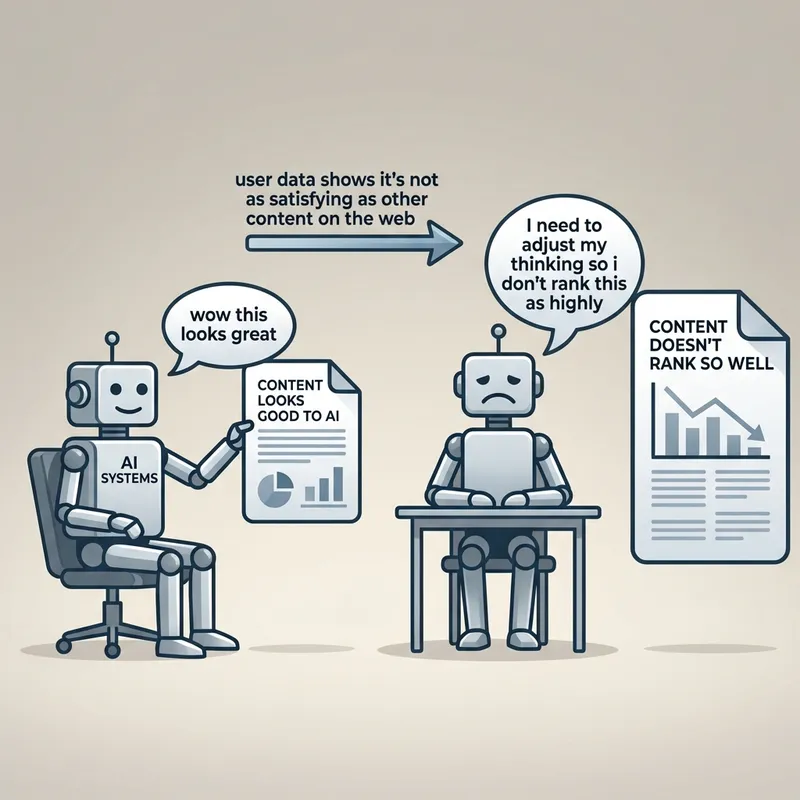
Let’s see if I can convince you!
I shared some of it in this video and summarized my thoughts in the article below. Also, this is the second blog post I’ve written on this topic in the last week. You can find much more information about user data and how Google uses it in my previous blog post.
The ranking consists of 3 components
In the DOJ vs. Google test, we learned that Google’s ranking process includes three main components:
- Traditional systems are used for the initial ranking
- AI systems (such as RankBrain, DeepRank and RankEmbed BERT) rerank the top 20-30 documents
- These systems are refined through Quality Rater results and, more importantly in my opinion, results from live user testing.
The DOJ’s lawsuit against Google talked at length about how Google’s enormous advantage comes from the large amounts of user data they use. In hers appealGoogle explained that it did not want to comply with the judge’s order to hand over user data to competitors. They listed two ways they use user data – in a system called Glue, a system that integrates Navboost that checks what users click and interact with, and also in the RankEmbed model.
RankEmbed is fascinating. It embeds the user’s query in a vector space. Content that is likely to be relevant to that search query will be found nearby. RankEmbed is optimized by two things:
1) Quality Rater Ratings. You get two sets of results – “frozen” Google results and “retrained” results – or in other words, the results of the newly trained and refined AI-driven search algorithms. Your reviews help Google’s systems understand whether the newly trained algorithms are producing higher quality search results.
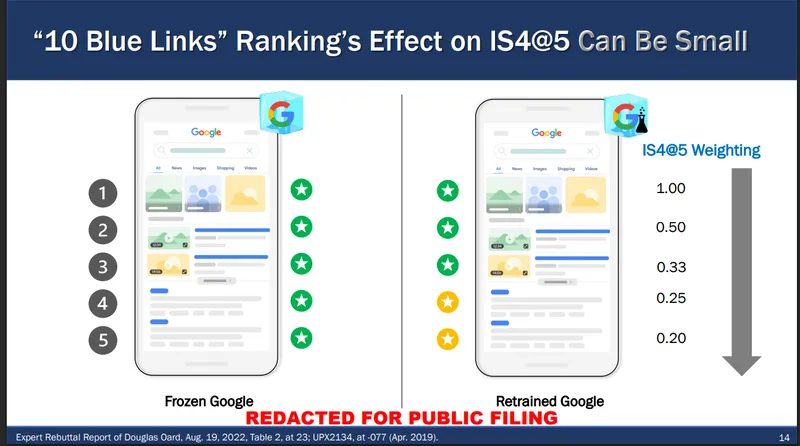
(From Douglas Oard’s statement re Frozen and retrained Google)
2) Live experiments in the real world A small percentage of real searchers are shown results from the old vs. retrained algorithms. Your clicks and actions help fine-tune the system.
The ultimate goal of these systems is to continually improve the creation of rankings that satisfy the searcher.
More considerations for live testing – users tell Google this Types of the pages that are helpful, not the actual pages
I realized that Google’s live user testing isn’t just about collecting data about specific pages. It’s about training the system to recognize it Pattern. Google doesn’t necessarily track every single user interaction to rank a particular URL. Instead, they use this data to teach their AI what “helpful” looks like. The system learns to identify them Types of content that meets user intent and then predicts whether your website fits that successful mold.
They will continue to evolve their process for predicting what content is likely to be helpful. It definitely goes far beyond simple vector searches. Google finds all the time New ways to understand user intent and how to deal with it.
What this means for SEO
If you rank on the first few pages of search, you have convinced the traditional ranking systems to include you in the ranking auction.
There, numerous AI systems work to predict which of the top results is really the best for the searcher. This is even more important as Google starts using it “Personal Intelligence” in Gemini and AI mode. My top search results are tailored specifically to the way Google systems think I will find it helpful.
Once you understand how AI systems search, which is primarily vector search, it can be tempting to work on reverse engineering it. When you optimize with a deep understanding of the benefits of vector search (including the use of cosine similarity), you work to look good to the AI systems. ID Be careful not to delve too deeply into this.
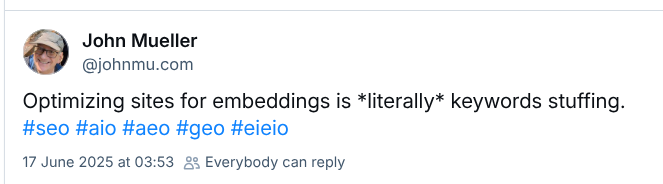
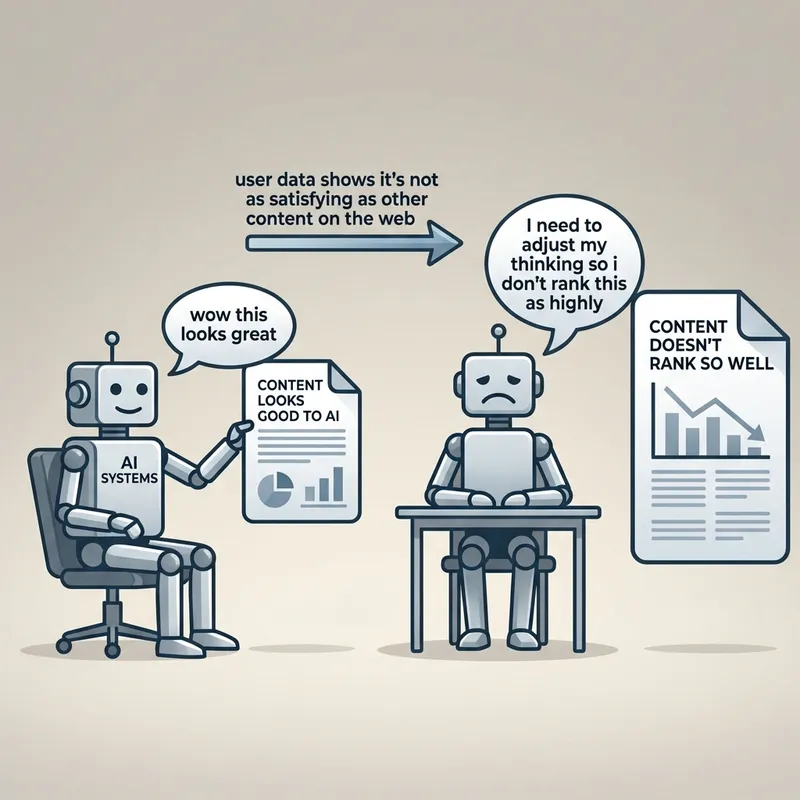
Given that the systems are optimized to continually produce better results that are most satisfactory to the searcher, looking good is not nearly as important for AI as actually being the most helpful result. I would say so Optimizing for vector search can do more harm than good Unless you really have the type of content that users will later find more helpful than the other options available to them. Otherwise, there’s a good chance you’ll be training the AI systems to do so not favor yourself.
I’m once again offering quality reviews for websites.
For a limited time, I’ll be opening site reviews where I’ll compare your pages to the ones Google likes and give you lots of suggestions for improvement.
For more information, check out my website reviews here.
My advice
My advice is: loosely optimize for vector search. By this I mean don’t worry about keywords and cosine similarity, but rather understand what your audience wants and make sure your pages meet the specific needs they have. Is it helpful to use knowledge of Google’s query fan-out here? To a certain extent, yes, as it is helpful to know what questions users generally ask about a request. But I think my same fears apply here too. If you look Really Good for the AI systems that are trying to find content that satisfies the query fanout search, but users tend not to agree, or if you lack other qualities associated with usefulness compared to competitors, you can train Google’s systems to favor you less.
Use headings – not visible to the AI systems, but to help your readers understand that the things they are looking for are on your page.
Look at the pages that Google ranks for searches that should lead to your site and really ask yourself what searchers find helpful about these sites. Look at how well they answer certain questions, whether they use good images, tables or other graphics, and how easy the page is to skim and navigate. Find out why this site was chosen as one of the sites most likely to be helpful in satisfying searchers’ needs.
Instead of obsessing over keywords, work on improving the actual user experience. Of course, if you make your site more engaging and focus more on metrics like scrolling and session duration, rankings should improve.
And above all, you are obsessed with helpfulness. It can be helpful to have an outside party look at your content and share why it may or may not be helpful. If you’re interested, I’m back to offering website reviews for a limited time, where I do just that: look at your pages, compare them to those that make Google’s systems worthwhile, and then give you lots of suggestions for improvement.
While I know that search is designed to continually learn and improve by showing searchers pages they are likely to find helpful, I have found that I Despite it I fight the urge to optimize for machines and not users. It’s a hard habit to break! Given that Google’s deep learning systems work tirelessly toward one goal – predicting which pages are likely to be helpful to the searcher – this should be our goal too. As Googles Helpful content documentation suggeststhe type of content that people tend to find helpful is content that is original, insightful, and provides significant value compared to other pages in search results.
If you liked this, you’ll love my newsletter:
Or come to us Search bar for the latest news on search and AI.