

Search engine optimization has changed quietly but clearly. Many bloggers still focus on rankings, keywords and traffic numbers, but in 2026 this approach is no longer enough. SEO today is about how content is understood, trusted and used, not just where it appears.
Bloggers who adapt to this change build long-term visibility, while bloggers who don’t often struggle, even if the copy itself is good.
This guide explains what SEO really means for bloggers in 2026 and how search visibility actually works today.
Key insights
- Rankings alone no longer reflect SEO success
- Search intent and utility are more important than keywords
- Blog structure directly affects visibility
- Trust signals influence the way content is displayed
- Simple systems outperform complex SEO tactics
Table of contents
Why rankings are less important in 2026
Search results don’t look like they used to.
Featured snippets, summaries, and AI-driven answers often appear before organic listings.
That means:
- Users get answers without clicking
- Pages can perform well without being ranked first
- Visibility doesn’t always equal traffic
Ranking is still part of SEO, but it is no longer the goal.
It is simply one signal among many.
Search engines are now evaluating Usefulness, clarity and relevance deeper than the position alone.
What SEO is really about now
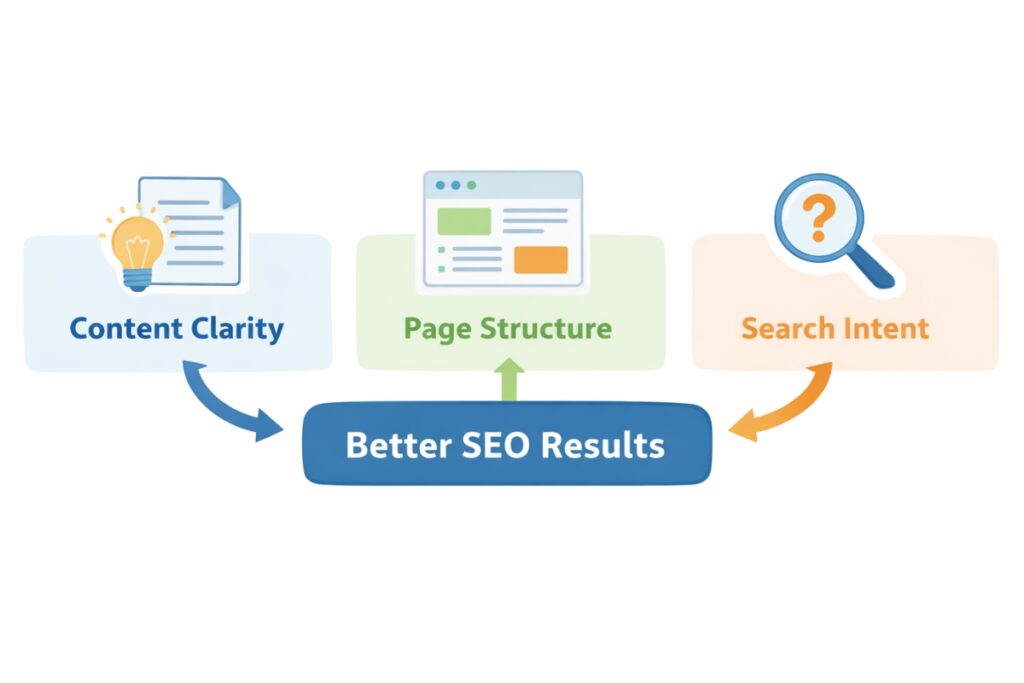
SEO in 2026 is no longer about optimizing pages in isolation.
It’s about how well content fits into the overall search experience.
Search engines evaluate:
- Whether the content clearly answers a real question
- How easily the information can be understood
- If the page structure supports fast scanning
Instead of rewarding pages with lots of keywords, search systems now emphasize clarity and usefulness.
A helpful comparison:
- Before: Pages were ranked because they matched the keywords
- Now: Pages show up because they fulfill the intent
For example, a clearly structured guide that fully answers a question can appear in search summaries even if it doesn’t appear in the top three results.
Content that explains a topic clearly and in the right order is more likely to be viewed, even if it isn’t listed first.
SEO today rewards content that feels complete, accurate, and easy to use, which is why an evergreen content strategy is more important than short-term optimization.
Start with search intent, not keywords

Search intent explained why someone was lookingnot just what they entered.
Many bloggers still choose keywords based solely on volume.
This often results in content ranking poorly or not receiving any clicks.
There are four common intent types:
- Informative
The reader wants to learn something.
Example: “SEO for bloggers in 2026” - navigation
The reader wants a specific website or tool.
Example: “Yoast SEO plugin” - Commercially
The reader compares options.
Example: “Best SEO Tools for Bloggers” - Transactional
The reader is ready to act.
Example: “Buy blog hosting”
Intent match is more important than keyword difficulty.
Common mistakes bloggers make
- Writing sales content for informational searches
- Stuffing keywords without answering the question
- Cover multiple intentions in one post
These errors confuse search engines and readers.
How Intention Affects Visibility
If the intent is mapped correctly:
- Content is more likely to be displayed in summaries
- Engagement increases
- Bounce rates are falling
Search engines interpret these signals positively and are more likely to rank your content positively.
Additionally, choosing the right intent first makes it easier to choose your keywords later.
Focus on a clear reader problem
Each post should solve one main problem.
Avoid:
- Too many topics are covered in one article
- Write extensive, unfocused content
- Add sections just for length
Instead:
- Define a problem
- Explain it clearly
- Offer practical steps
This helps search engines understand the content.
It also sets expectations for readers and keeps them hooked from start to finish.
The structure of the content is more important than the length
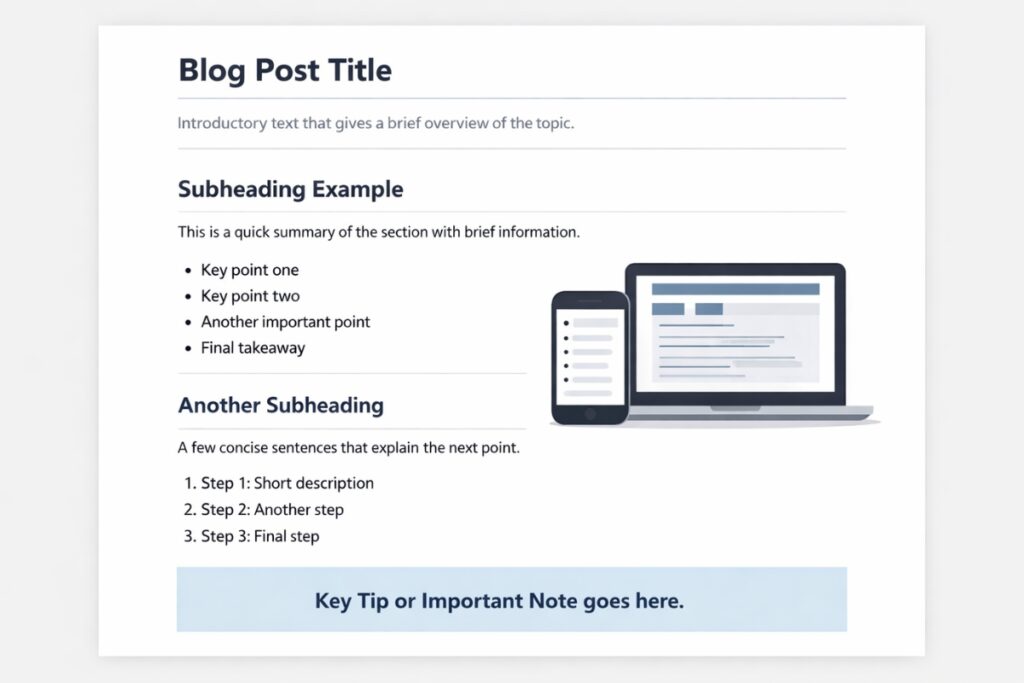
Most readers don’t read every word.
You scan first.
A strong structure includes:
- Delete headings H2 and H3
- Short paragraphs
- Bulleted lists were helpful
This brings the following advantages:
- Mobile users
- Voice search
- AI content summaries
Well-structured posts are easier to understand and easier to rank.
Trust signals are more important than authority
Authority does not require credentials or fame. Most of the time it requires consistency and some strategy.
Trust comes from:
- Clear explanations
- Consistent publishing
- Honest, accurate information
Avoid exaggerated claims and keyword stuffing. Instead, focus on providing your own first-hand accounts whenever possible.
Alternatively, try linking to current and relevant data to show that you understand your topic and value accuracy.
Search engines evaluate trust based on how content is written, not necessarily who wrote it.
How to measure SEO success in 2026
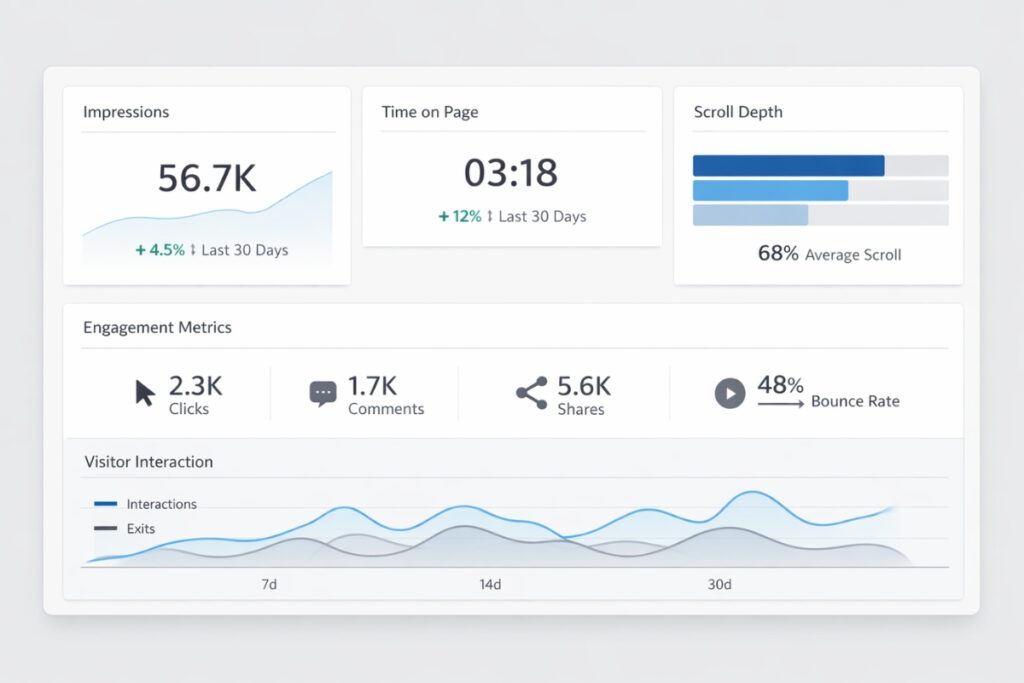
SEO success is not only measured by placement in the SERPs.
Engagement signals provide greater insight into performance.
The key metrics to focus on include:
- Impressions → Shows how often content appears in search results
- Time on page → Indicates whether readers find the content useful
- Scroll depth → Shows how much of the content is consumed
- Interaction signals → Includes clicks, navigation and page flow
A post can do well even if it isn’t ranked number one.
This is especially true for informational content that appears in summaries or highlighted sections.
Some bloggers use simple tracking dashboards or content systems to monitor engagement across posts.
The goal is to understand how content is usednot just where it ranks.
Where blogging fits in 2026
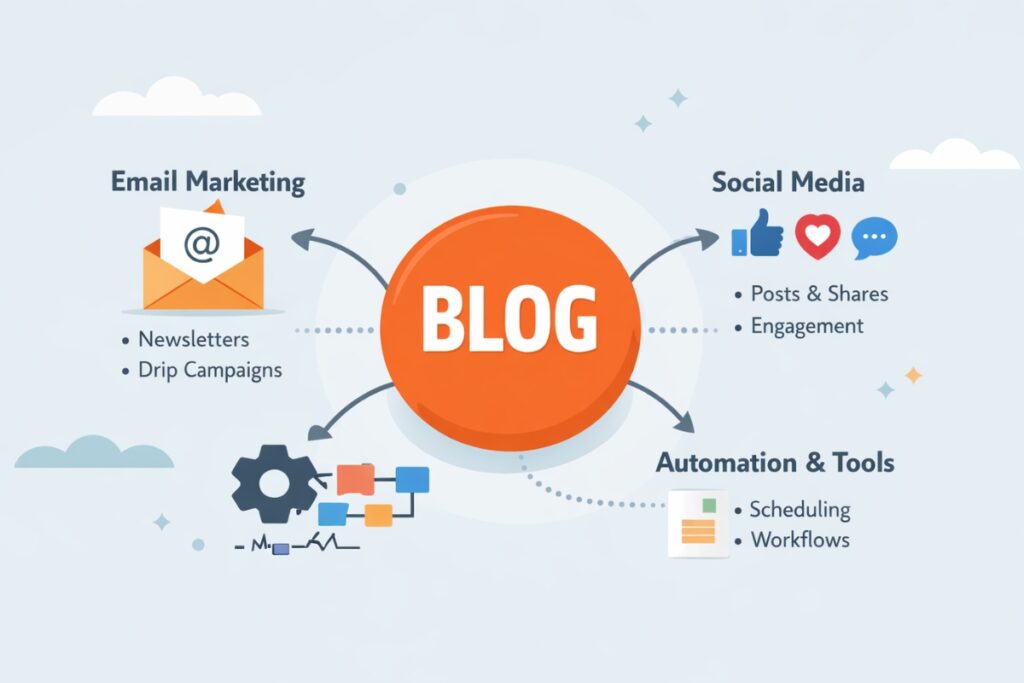
Blogging still plays a crucial role in digital visibility, but its purpose has evolved.
Blogs now act as:
- Thematic competence hubs
- Educational entry points
- Content basics for other platforms.
Blogs offer structured, always up-to-date content that other formats rely on.
This makes blogging more valuable, not less.
For those starting a blog, focusing on clarity and intent brings long-term benefits without complex SEO tactics.
Frequently asked questions
Yes. SEO still determines how content is discovered, understood and displayed. What has changed is the focus. SEO now prioritizes usefulness, clarity and search intent rather than just going for top rankings.
Yes, but keywords should support the topic, not control it. Search intent and content structure are more important than precise keyword placement. Keywords help search engines understand context and do not dictate writing style.
There is no ideal word count. Blog posts should be long enough to fully answer the search query. Clear explanations and structured sections are more important than length.
Backlinks still play a role, but are no longer the primary factor. Well-structured, helpful content can work without aggressive link building, especially for informative blog posts.
Engagement-based signals are most important. Time on page, scroll depth, impressions, and frequency with which content appears in search results provide better insights than rankings alone.
Yes. New blogs can gain visibility through a focus on specific topics, a clear structure, and realistic search intent. Authority comes from consistency and relevance, not just age.