
AI search is changing the way visibility works. Users receive direct answers instead of clicking on links, which means there are fewer chances of driving traffic. In this shift, AI citations are becoming the new gatekeepers, deciding which sources are mentioned in answers. Over the past year, search has shifted from ranking pages to selecting sources, moving us from traditional SEO to AI-driven visibility.
In this article, we explain what AI Citations are, how they work, and how you can earn them.
Key insights
- AI citations are references that search engines include in AI-generated answers, increasing credibility and visibility
- This shift in visibility is moving from traditional SEO ranking to AI-driven inclusion as a key factor in brand visibility
- AI tools pull information from various sources, with citations coming from both high-level and deeper sites
- To get AI citations, create valuable, structured content and establish topic authority in your niche
- Tools like Yoast AI Brand Insights help track your AI visibility and citation presence across platforms
What are AI citations?
Quotes have always been a way to show where information comes from and why it can be trusted. The same idea now applies to AI-generated answers.
AI citations are the references that search engines and AI tools use to support the answers they generate. When a tool like ChatGPT responds to a query, it often points to specific pages or sources that support the information. These references act as credibility signals, helping users understand where the answer is coming from and giving them the opportunity to explore the original content.
Simply put, when your content is cited, it becomes part of the answer itself and not just another link in the results.
AI quotes compared to the Blue Link era
If AI citations determine what is included in answers, it’s worth asking how this differs from how search previously worked. Because this is not just a feature update, but a change in the way visibility itself is achieved.
In the traditional model, higher ranking meant getting more clicks. When it comes to AI-driven search, source selection is just as important, if not more so.
| aspect | Traditional SEO | AI quotes |
| Visibility | Blue links | AI generated answers |
| Traffic | Click controlled | Influence oriented |
| Authority signal | Backlinks | Credibility and accuracy |
| User action | Visit the website | Use instant responses |
This doesn’t mean traditional SEO will disappear. Rankings, indexing and backlinks still play a crucial role. However, the way in which this value emerges is changing. Instead of just competing for position on a results page, you’re now competing to be part of the answer itself.
Watch Alex Moss’ talk BrightonSEO, 2025about the development of search intent and findability.
Where do AI quotes come from?
Before you try to get AI citations, it’s important to understand where they actually come from. Because you’re not just competing with other blog posts, but with an entire information ecosystem.
AI models get their answers from various sources:
- Web content: Blog posts, guides, landing pages and long-form articles
- Structured sources: Platforms such as Wikipedia, documentation centers and product data feeds
- Forums and UGC: Discussions from Reddit, Quora and Stack Overflow
- First-party data: Brand websites, help centers and official resources
It is quite interesting how the sources are selected. A current one analysis Google’s AI overviews have found that citations don’t necessarily come from the highest ranking pages. Actually just about 38% of the cited sources end up in the top 10 resultsmeaning a large portion comes from deeper pages or alternative formats.
Another important finding from CXL: AI models tend to prioritize clear, early answers within the contentwith a significant portion of the citations coming from the top sections of a page rather than deeper sections.
Takeaway is easy. AI systems don’t just evaluate content; They select the most useful information from different formats and sources. This means your content is competing not only for rankings, but also for clarity, structure and trustworthiness across the ecosystem.
Types of AI Citations
Not all AI quotes look the same. Depending on the query and intent, AI models draw on different types of sources to support their answers.
Broadly speaking, there are three main types:
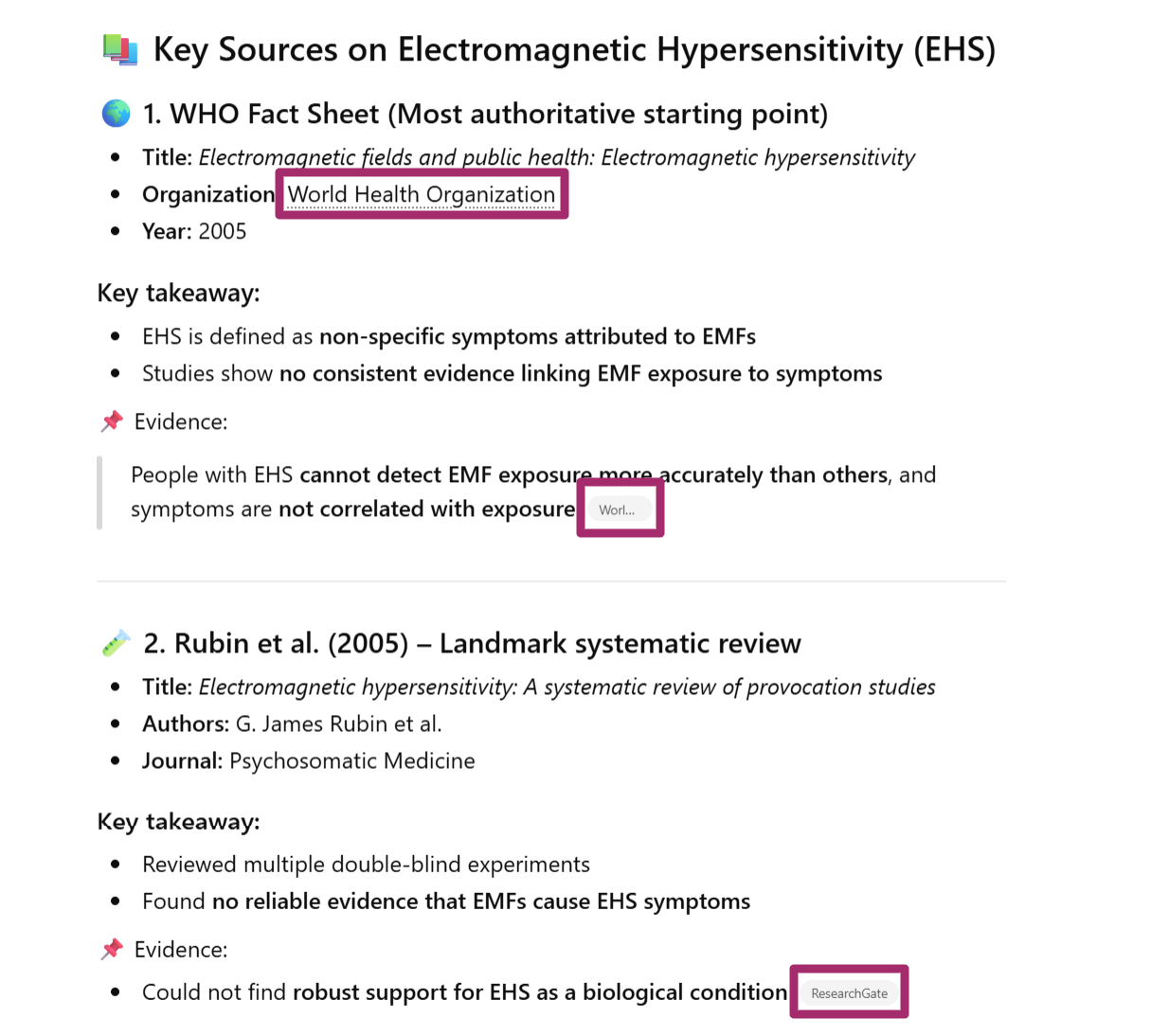
Informational quotes
These are the most common. AI tools refer to blog posts, guides, and educational content to explain concepts or answer questions. If someone asks, “What are AI quotes?” The sources cited are usually detailed, explanatory content.
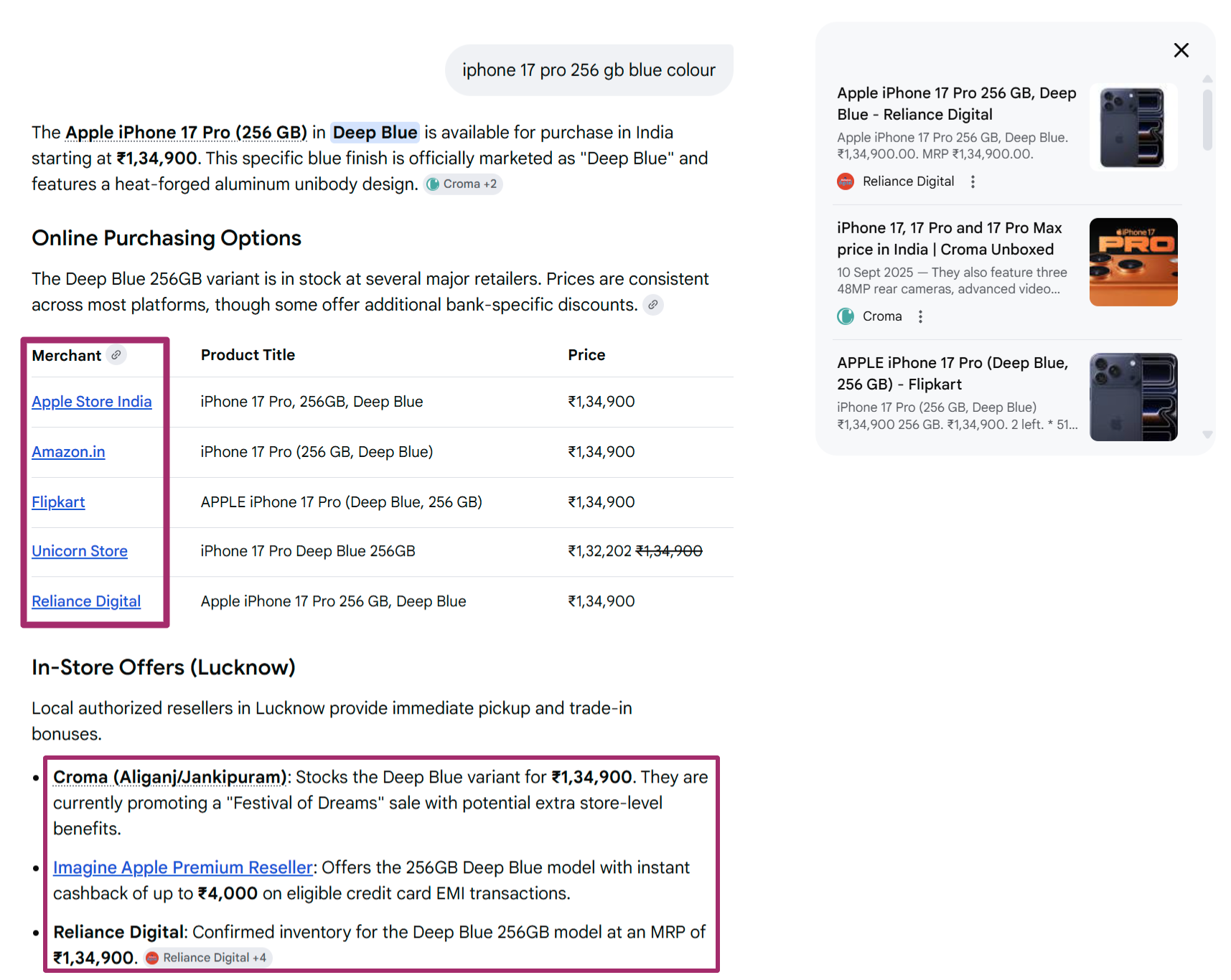
Product quotes
These appear in advertising or comparison queries. For example, “Best SEO Tools” or “Top project management software.” Here, AI models cite product pages, listicles, and review-based content to support recommendations.
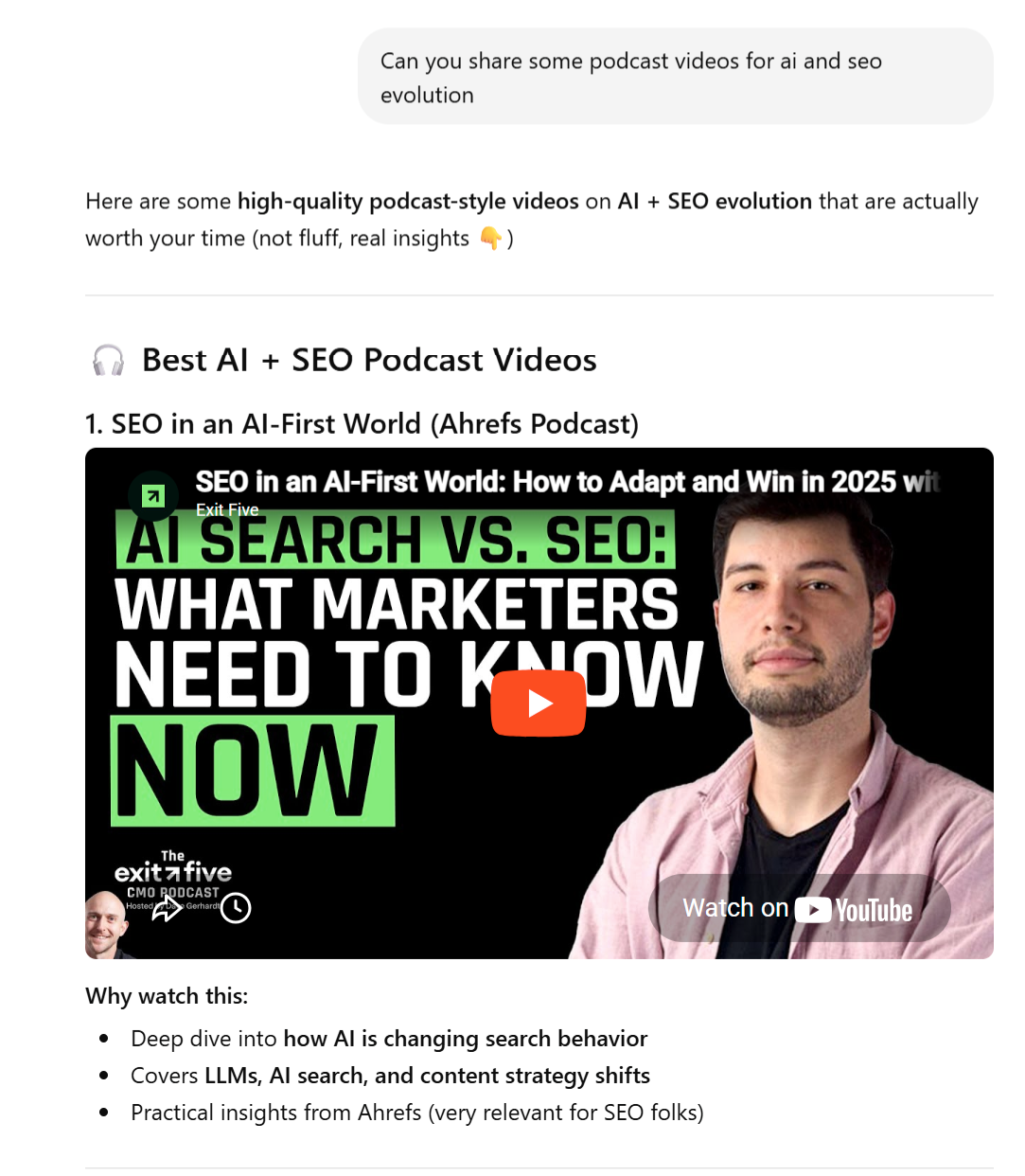
Multimedia quotes
AI doesn’t just rely on text. Videos, images, and other visual formats can also be cited, especially if they explain something better than text alone. Think tutorials, walkthroughs, or demonstrations.
How AI quotes influence brand credibility
AI citations don’t just increase visibility. They shape the perception of your brand before a user even visits your website.
When your content is cited in an AI-generated response, some of that trust transfers to your brand. They are no longer just another result on a page; You are part of the answer itself. And that changes the way users interpret your authority.
This also means that buyer decisions start earlier. Users can form opinions, shortlist options, or even make decisions directly from AI answers without ever having to click through. If your brand is not mentioned, you are not included in this consideration.
There is also a strong signal of relevance. Inclusion in AI responses suggests that your content is not only optimized, but actually useful in context. It shows both users and algorithms that your brand deserves to be exposed.
Over time this creates a reinforcing effect. The more your content is cited, the more your brand will be associated with certain topics. This repeated encounter creates familiarity, authority and trust.
How AI citations work: a complete breakdown
So far we’ve talked about what AI quotes are and where they come from. But how do AI systems actually decide what to quote?
Let’s break it down.
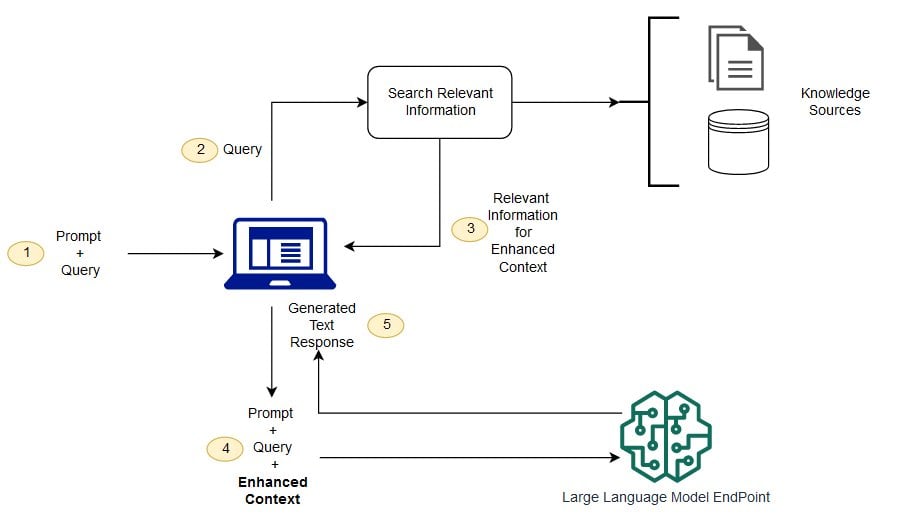
At a high level, most AI-powered search systems follow a retrieval and synthesis process, often supported by approaches such as Retrieval Augmented Generation (RAG). To put it simply, they don’t just generate answers; They search, evaluate, and synthesize information from multiple sources before deciding what to cite.
This is what this process looks like in practice:
1. Understanding the query
Everything starts with intention. The AI interprets what the user is really asking, be it informational, navigational or commercial. This step determines what type of sources to look for.
2. Query sources
Next, the system pulls in potential sources from several places:
- Web indices
- Training data patterns
- Live retrieval systems (depending on model)
This is where your content first enters the consideration set.
3. Source evaluation
Not all sources are treated equally. AI models evaluate them based on:
- Relevance to the query
- Authority and trust signals
- Clarity and structure of information
- Entity-level trust (how credible the brand or author is)
If you look closely at these signals, they all point in one direction. Experience, Expertise, Authority and Trustworthiness (EEAT) play a central role in determining what is cited. In other words, AI systems don’t just look for answers; They look for reliable sources for these answers.
4. Response synthesis
Instead of showing individual links, AI combines insights from multiple sources into a single, cohesive answer. Your content may be used here, even if it is not directly quoted.
5. Quote selection
Finally, the model decides which sources to use:
- Quote explicitly (with links or references)
- Implied use (without direct attribution)
This is the step that ultimately determines your visibility.
How this differs between AI systems
While the core process is similar, different AI tools prioritize different parts of this pipeline.
| AI systems | How quotes are handled |
| ChatGPT | Leans more Third Party Sources and Consensussuch as directories, reviews and aggregator sites, rather than relying heavily on branded content. |
| confusion | Focuses on Retrieval-first behaviordraws on a wide range of web sources and displays multiple citations to promote transparency (strong emphasis on external validation). |
| Gemini | Prioritized Branded and structured contentespecially pages that are clearly organized and easy to interpret. |
Must Read: Why is it important for brand visibility to have insights into multiple LLMs?
Key signals that AI models use to cite content
Even though the process is complex, the signals that increase your chances of getting a mention are surprisingly consistent:
- Well organized structure: Clear headings, bullet points, and a logical flow make it easier for AI to extract information
- Evidence-based reasoning: Content that links to data, sources, or supporting claims is more likely to be trustworthy
- Currentness and relevance: Fresh, updated content is often prioritized, especially on evolving topics
- Authoritative voice and depth: Content that demonstrates expertise and comprehensively covers a topic stands out
- Current consistency: Brands that regularly publish on a topic are more likely to be recognized as reliable sources
The key takeaway here is simple: AI citations are not random. They are the result of a structured assessment process where clarity, trust and relevance determine who is included in the final answer.
Must Read: How to use headings on your website
Strategies to get cited by AI models
So far we’ve explored what AI citations are and how models decide what to cite. The next question is the one that matters most: How do you actually get quoted?
Because it’s not just about creating content, it’s also about sending the right signals that your content is worth citing. Here are some strategies that can help you achieve just that:
1. Create quote-friendly content
Quotable content goes beyond superficial answers. It offers original thinking, clear explanations and real value, helping AI models confidently support their answers. In other words: not only is it optimized, it also deserves references because it is really useful.
The following content types are regularly cited by AI models:
| Content type | What should I write? | Why AI loves them |
| Original research | Studies or data that answer new or unexplored questions | Does AI provide concrete evidence to support claims |
| Case studies | Practical examples show how something works in practice | Helps AI justify recommendations with evidence |
| Thought leadership | Opinion-based content with unique insights or perspectives | Adds depth and variety to AI-generated answers |
| News content | Timely and accurate reporting on current developments | Fills gaps where training data is insufficient |
2. Build professional authority (cluster)
AI models don’t just evaluate individual pages; You evaluate how consistently you treat a topic.
When you publish multiple articles on a specific topic, each covering different aspects, you demonstrate depth, expertise, and reliability. This is what current authority is all about.
And of course this is where EEAT comes into play. The more consistently you demonstrate experience and expertise in a niche, the more likely your content is to be trusted and cited.
What to do in practice:
- Create clusters around a core topic (pillar page/cornerstone content + supporting content)
- Cover both general and specific questions in your niche
- Go beyond basic answers and add expert insights, examples, or real-world context
- Make sure your messaging and terminology is consistent across all content
3. Strengthen entity signals (brand, authorship, schema)
AI systems evaluate content, but they also evaluate who is behind it.
Strong entity signals help models understand your brand, your authors, and your credibility within a topic. The clearer these signals are, the easier it is for AI to trust and cite your content.
What to do in practice:
- Create clear author profiles with expertise and references
- Maintain consistent brand mentions on your website and across the web
- Use structured data (schema) to define authors, organizations, and content relationships
- Make sure your About and Author pages are clearly credible
4. Receive external validation signals across the web
AI models are not based on a single source of truth. They validate information by cross-referencing multiple sources on the Internet.
This means your credibility doesn’t just rest on your website. It depends on how consistently your brand appears on trusted platforms. The more aligned and authoritative these signals are, the easier it is for AI systems to trust and cite your content.
Think of it as building a web-wide layer of validation that reinforces your brand through multiple independent sources.
Traditional SEO practices such as link building are also evolving here. It’s no longer just about backlinks, it’s about getting consistent, high-quality mentions that grow your business across the web.
What to do in practice:
- Contribute insights to reputable publications in your niche
- Earn consistent mentions on industry blogs, directories and review platforms
- Build high-quality backlinks through a strategic link building approach
- Be active in communities like Reddit, Quora or niche forums
- Run digital PR campaigns that reinforce your brand narrative across all sources
5. Keep the content fresh and current
AI models prefer content that reflects current information.
Outdated content is less trustworthy, especially on rapidly evolving topics. Regular updates signal that your content is still relevant and reliable.
What to do in practice:
- Update key articles with updated data, examples, and insights
- If possible, add new sections instead of rewriting them from scratch
- Clearly mark updates (timestamps, revised sections)
- Prioritize pages with high performance or high potential for updates
Must Read: How to optimize content for AI LLM understanding with Yoast’s tools
AI models do not read content like humans. They extract answers.
Most AI-generated answers are created by identifying clear, concise answer blocks within the content. And increasingly, users prefer this format. According to a survey by IWAI, 67% of users find AI tools more efficient than traditional search to get answers. This shift makes one thing clear: If your content doesn’t directly answer questions, it’s less likely to show up or be cited.
This means that providing answers is not enough. You need to structure your content so that these answers are easy to find, interpret, and reuse.
What to do in practice:
- Introduce sections with direct, concise answers before expanding
- Use headlines that reflect real user queries and intent
- Break complex topics into searchable, extractable sections
- Add summaries, definitions, or key takeaways at the beginning of sections
- Expect follow-up questions and answer them within the same content
Track AI brand presence with Yoast
We now know what AI citations are, how they work and how to earn them. But here’s the real question: How do you know if you’re already being cited? And if not, how do you know where your competitors are showing up and where you’re missing out?
This is the gap that Yoast AI Brand Insights aims to close.
As AI-generated answers become a key level of discovery, most traditional analytics tools fall short. They can tell you about traffic, but not whether your brand is mentioned, how it is perceived, or which sources AI systems trust when referring to you. This is a critical blind spot, especially as AI responses increasingly influence users’ decisions before a click even occurs.
Yoast AI Brand Insights helps you track and understand your AI visibility, citations, and brand mentions on platforms like ChatGPT, Gemini, and Perplexity, so you can move from guesswork to informed action.
Here’s what you can do with it:
Mood tracking
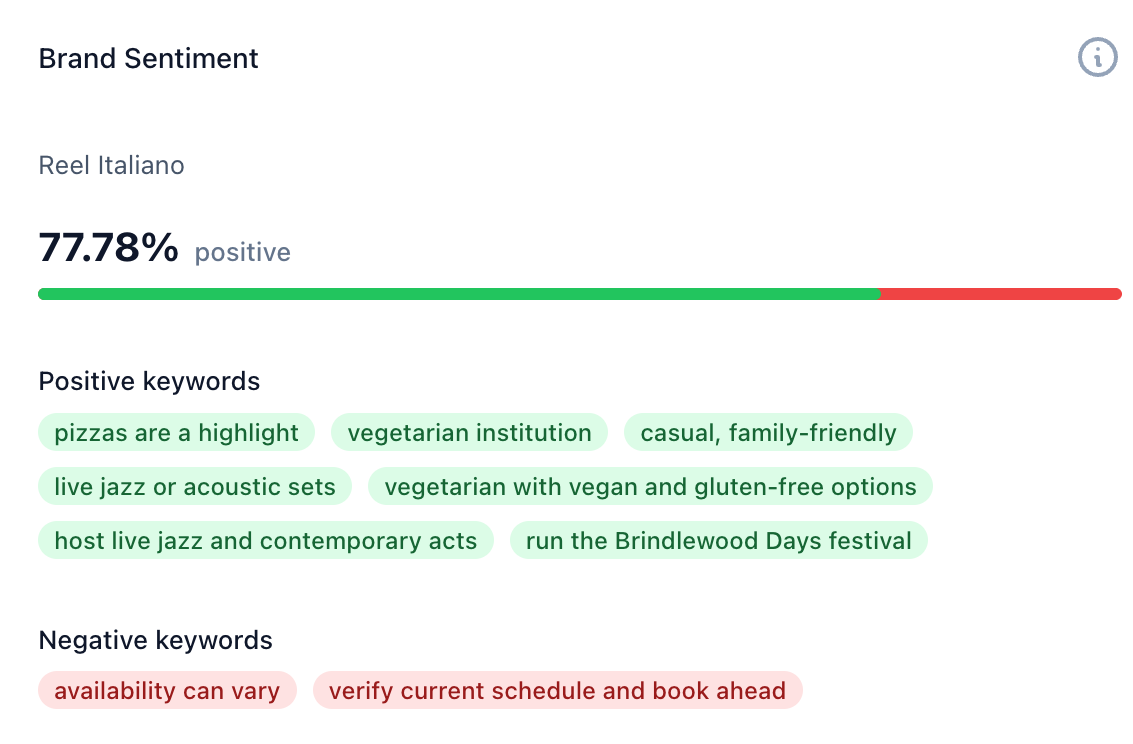
Understand how your brand is perceived in AI-generated responses. The tool analyzes keywords associated with your brand and shows whether the overall sentiment is positive or negative. This will help you identify tone problems and changes over time.
Citation analysis (brand mentions)
See when and where your brand is cited. More importantly, understand what sources AI platforms are pointing to besides your brand so you can identify citation gaps and opportunities to improve your presence.
Competitive benchmarking
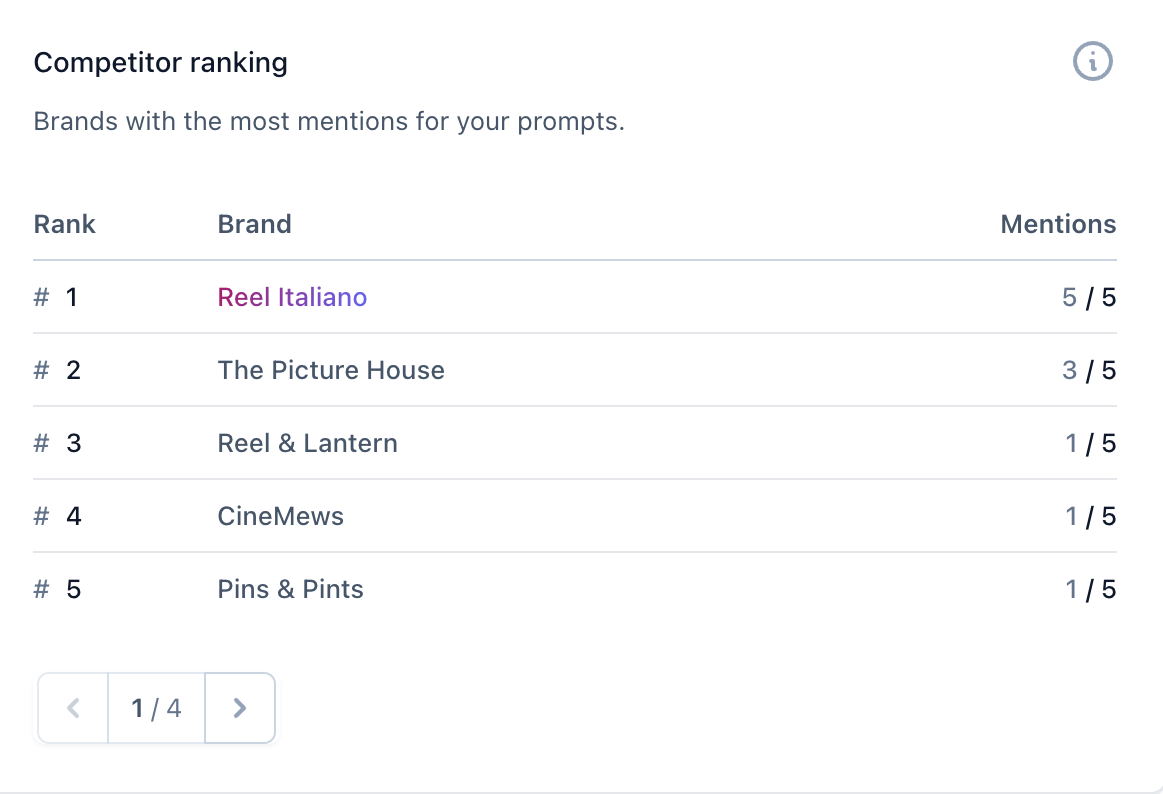
AI visibility is relative. This feature allows you to compare your brand’s quotes, mentions, and sentiment with the competition, helping you better understand who’s showing up more and why.
Question monitoring
AI search is query driven. Question monitoring allows you to track specific brand-related or industry-related questions and see if your brand appears in the answers. This gives you direct insight into where you are visible and where you are missing.
AI visibility index
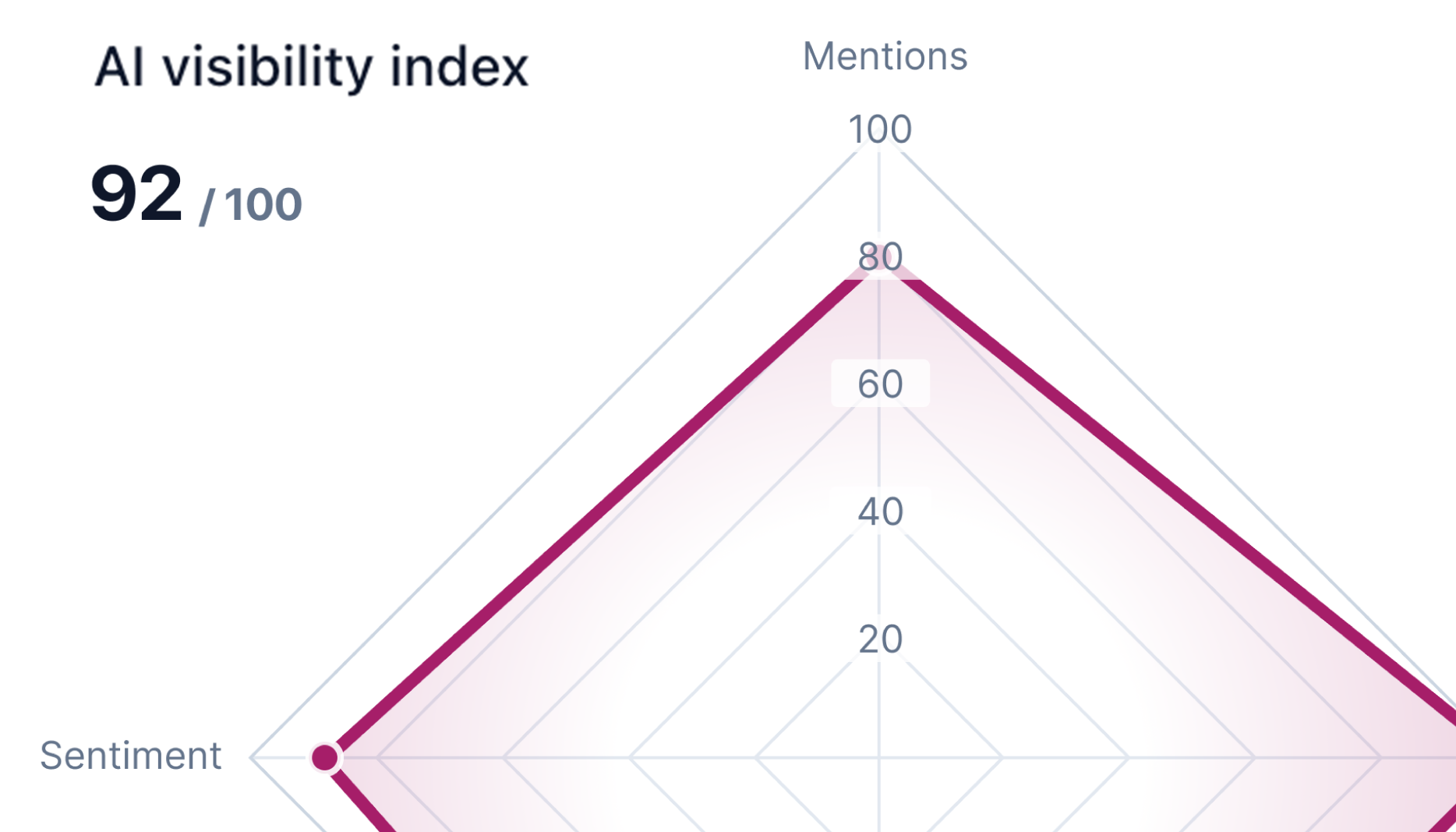
Instead of looking at metrics in isolation, Yoast combines signals like citations, mentions, sentiment and rankings into a single visibility metric. This gives you a clearer picture of how your brand performs across AI systems over time.
The big picture here is simple: Yoast AI Brand Insights helps you understand your position in this new ecosystem so you can strengthen your presence, fill gaps and ensure your brand is part of the answers your audience is already consuming.
AI Quotes FAQs
AI citations can feel complex at first, especially as search evolves. Here are answers to some of the most common questions to help you navigate it better.
Are backlinks different from AI citations?
Yes, they serve different purposes. Backlinks help your pages rank in traditional search, while AI citations determine whether your content is included in AI-generated answers. In short, backlinks increase visibility in the SERPs while citations increase visibility in replies.
If you want a deeper breakdown, check out this guide on AI citations vs. backlinks.
Do AI systems always provide citations?
No, AI systems do not always include citations. If answers are generated solely from pre-trained knowledge rather than retrieved sources, citations may not appear.
To test this, I tried the following prompts on ChatGPT:
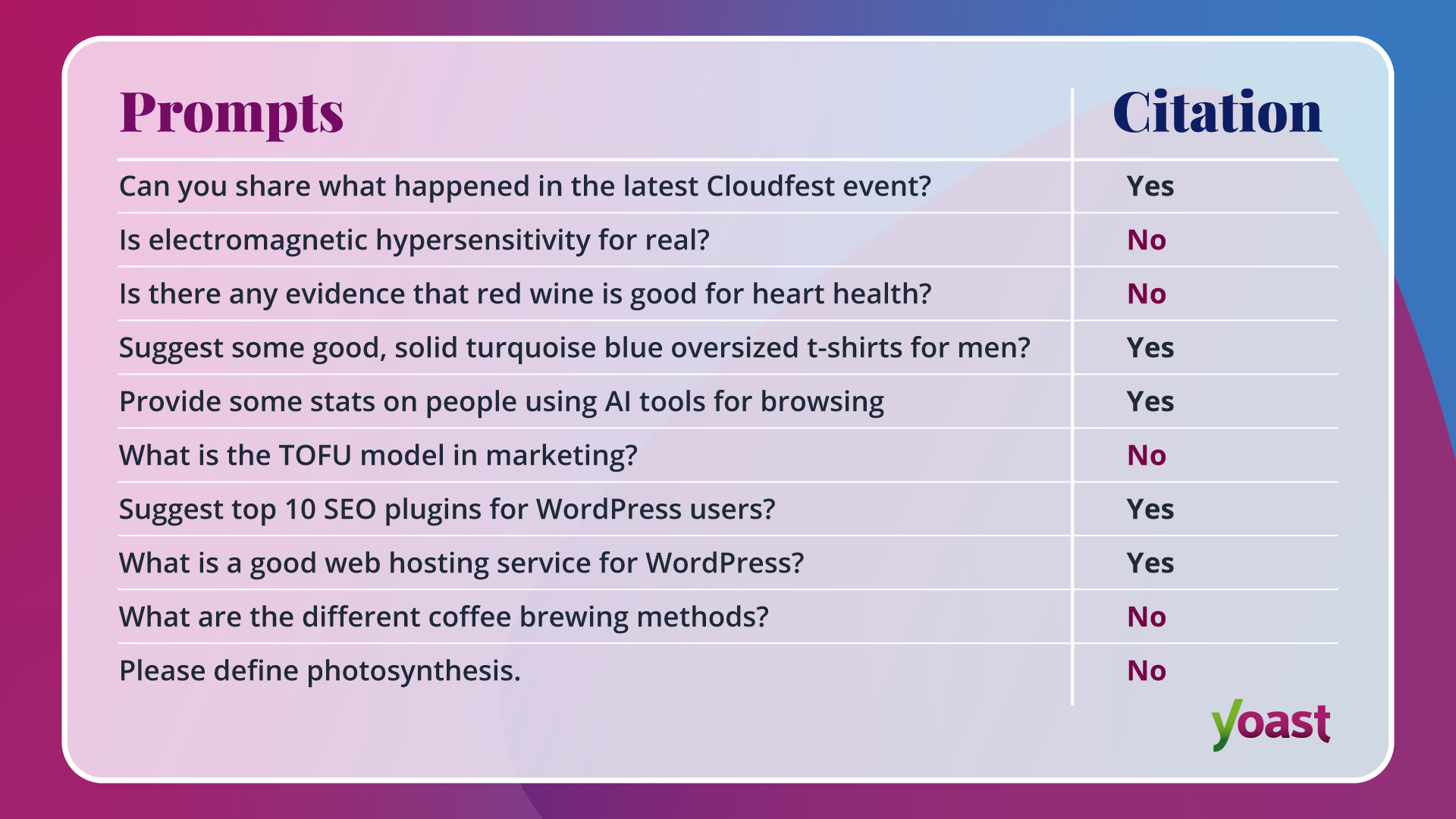
Of these, about half of the answers contained quotations.
A clear pattern emerged:
- Inquiries about products, recommendations, statistics or current events were more likely to trigger citations
- Queries that focused on definitions or general knowledge often did not contain citations
This shows that citation behavior depends heavily on query type, intent, and context. Not every answer requires a source, but the more specific or evidence-based the query, the more likely citations are to appear.
How do I direct AI models to the most important content on my website?
You can’t directly control which AI models cite, but you can make it easier for them to understand and prioritize your content.
An effective way to do this is to use llms.txt, a feature in Yoast SEO. It creates a structured, LLM-friendly Markdown file that highlights your most important pages and helps LLMs better understand your site when generating responses.
A smarter analysis in Yoast SEO Premium
Yoast SEO Premium has one Intelligent content analysis This will help you take your content to the next level!
Think of it as a way to clearly communicate what content is most important, making your key pages easier to interpret and find when AI systems search for reliable sources.
AI Quotes: The Currency of the AI-Driven Web
AI citations are changing the way users discover and trust information. They don’t just supplement rankings; They reshape it by deciding which sources become part of the answer itself. In many cases, users no longer need to click to explore. When your content is cited, you are visible. If not, you are invisible.
This change also changes what we optimize for. It’s not just about traffic anymore; it’s about trust, relevance and inclusion at the response level. As we explored in our recent read, Rethinking SEO in the age of AI, the central question for SEO continues to evolve. It’s no longer just a matter of “Can Google find my website?” It is now, “Does the AI have a reason to remember my brand?”
