


When I was still running banner ads on my SEO blog, I learned something valuable. The location where you place an ad is just as important as the ad itself.
I tested different ad positions such as header, sidebar, footers, and between paragraphs and observed how users interacted with each placement.
Some spots got clicks, others were ignored, and some even drove people away.
Ultimately, this hands-on experience taught me how AdSense actually works.
I learned which layouts make ads look natural, which placements attract attention without disturbing visitors, and which themes make the entire process easier.
Now I’m helping others figure out the same thing.
If you’re trying to make money with Google AdSense or even using AdSense alternatives, your choice of topic makes a big difference.
The wrong theme will leave you struggling with code, your website slowing down, or wondering why no one is clicking on your ads.
The right topic? It gives you clean ad placement options, makes your pages load quickly, and makes ads look like they belong instead of sticking out like sore thumbs.
Therefore, in this article, I will list the best AdSense themes that will help you improve ad placement and skyrocket your sales.
Key Takeaways:
- Websites that generate revenue from ads need themes where the ads blend naturally with the content rather than screaming for attention
- The AdSense themes I have listed here do just that
- Even non-programmers can place ads anywhere using drag-and-drop builders – no code required
- These themes either include visual builders or work seamlessly with popular ones
- Marketers who test ad placements earn more than those who guess
- Some of my topic picks include A/B testing tools that show you which positions convert
- Up to 26% of your visitors block ads, costing you real revenue
- I add themes with ad blocker detection to help you recover the lost revenue
- News sites with heavy content need space for more than 10 ads without looking like a billboard
- I mention magazine-oriented themes that manage multiple ad units while maintaining a clean layout
- Editorial websites that prioritize advertising revenue need designs that are monetization-focused
- Some themes place advertising spaces front and center as part of their core layout
Additionally, you can use the table of contents below to jump to any section of this article.
With that out of the way, let’s get started.
This is how I test AdSense themes
Testing AdSense themes isn’t about opening a demo and calling it finished. I actually install these themes, add real ad code and see how they work.
Here’s what I’m looking for:👇
- Ad placement flexibility: Can you control where ads appear without editing theme files? The best themes offer widgetized areas for sidebars, header spots for leaderboards, and options for in-content ads. I’m testing how easy it is to add a 728×90 header ad, a 300×250 sidebar ad, and ads between paragraphs.
- Speed when advertising is displayed: Top topics are fast on their own, but what happens when you add three AdSense units? I run Google PageSpeed Insights And GTmetrix Testing with loaded ads to determine actual performance impact.
- Mobile ad display: Over half of web traffic comes from phones. I check each theme on mobile to ensure that the ads are sized correctly, the layout is not broken, and there is enough spacing to avoid accidental clicks.
- Integrated advertising features: Does the theme include ad widgets, management areas, or dedicated ad areas? Or do you need to install additional plugins just to display ads? The best AdSense themes handle ads without the need for additional tools.
- Design balance: I look at how ads fit into the overall design. Do they fit naturally with the content or do they scream “ADVERTISING” and turn visitors away?
- Easy setup: How long does it take for a beginner to add their first ad? I’m timing this. If it takes longer than 10 minutes or requires code, that’s a red flag.
Why trust IsItWP?
At IsItWP, we’ve been the WordPress community’s go-to source since 2009, helping over 2 million users choose better tools and themes for their websites.
But what sets us apart from the AdSense guide is this: I was actually there. 👇
I used to run an ad-supported SEO blog myself. Not just testing ads on demo sites. Actually run real banner ads, track performance, and find out what worked.
This experience taught me things that you can’t learn from reading documentaries. I’ve seen firsthand which ad placements got clicks without disrupting visitors. I’ve observed how different themes handle ad code.
I also had to deal with the frustration of themes that looked great but made ad management a nightmare.
As you can see, I don’t just look at theme demos and guess. I install these themes, add real AdSense code, test them on different devices and measure the impact on speed and user experience.
Unlike review sites that never actually use the products, the IsItWP team and I maintain active accounts, run real websites, and provide ongoing WordPress advice.
That means understanding both sides. What publishers need to generate revenue and what visitors expect from a good user experience.
When I recommend a theme for AdSense, it’s because I’ve seen it work in practice, not just in theory.
What theme features you can expect from an AdSense optimized theme
Not every WordPress theme handles ads well. The best AdSense optimized themes have specific features that make monetization easier and more effective.
Let’s discuss them below:👇
Strategic ad placement options
Look for topics with specific sections for standard AdSense sizes.
- Header areas for leaderboard ads in 728×90 format.
- Sidebar widgets for 300×250 or 336×280 rectangle displays.
- In-content blocks that allow you to place ads between paragraphs without affecting your layout.
Placement is important because ads above the fold (visible without scrolling) typically get more views. But cramming everything upstairs annoys visitors. Good themes balance visibility and user experience.
Integrated ad management
Some of the best themes include widget-ready areas designed specifically for ads. You enter your AdSense code using a simple widget interface – no coding required.
Some themes go further with radio buttons, where you paste an ad code once and it then displays across your entire site. This is better than manually adding code to each post or installing additional plugins.
Speed optimization
Advertising slows down websites. That’s just the reality. But lightweight themes minimize these impacts through clean code and efficient loading.
Look for themes that support lazy loading for ad scripts, maintain good Core Web Vitals scores, and don’t bloat your site with unnecessary features. Fast themes ensure visitors stay long enough to see (and click) your ads.
Mobile-first ad
As mentioned earlier, more than half of web traffic comes from mobile devices. Your theme needs responsive ad units that automatically resize to fit different screens.
Good mobile ad integration includes proper spacing so visitors don’t accidentally tap on ads, mobile-specific placement options, and AMP compatibility for lightning-fast mobile pages.
Design that doesn’t say “ADVERTISING!” screams
Professional themes ensure ads blend naturally with your content. They use white space around ads to improve visibility without making them look cluttered. Color schemes work with standard ad formats and do not conflict.
The goal is to have ads that feel like a part of your site, not interruptions scattered everywhere.
Best Themes Optimized for WordPress AdSense
Now that you know what to look for when looking for an Adsense optimized theme, you are now in a better position to choose one that suits your needs.
Additionally, you can use the features list above and the comparison table below to narrow down your ad topic choices even further.
| Theme | Free version | Best for | Important ad features | Speed rating | Starting price |
|---|---|---|---|---|---|
| 🥇Sydney | ✅ | Small Business Websites | Widget areas, clean integration, Elementor support | Fast | $47/year |
| 🥈SeedProd | ✅ | No-code builder | Drag anywhere, HTML blocks, complete control | Flaming | $39.50/year |
| 🥉Thrive Themes | ❌ | Marketers and testing | A/B testing, conversion tools, optimizing rankings | Fast | $80/year |
| 4th Division | ❌ | Design flexibility | Built-in ads tab, visual builder, flexible placement | Good | $67/year |
| 5. Astra | ✅ | Speed oriented | Widget areas, hooks, ultralight | Ultra-fast | $59/year |
| 6. OceanWP | ✅ | Budget publishers | Multiple widget areas, over 210 demos | Fast | $31/year |
| 7. Ad Sense | ❌ | Sales max | Ad blocker detection, content blocking, 8 layouts | Fast | Single site license for $39 |
| 8. Newspaper | ❌ | News/Magazines | 18 permanent advertising spaces, intelligent advertising system | Excellent | $59 single site license |
| 9. Neve Magazine | ✅ | Modern publishers | Special advertising spaces, light design | Light | $69/year |
| 10. News portal | ✅ | Budget News | Header/sidebar areas, basic widgets | Good | $59.99/year |
| 11. Felt | ❌ | Elegant magazines | Dedicated ad widget, modular layout | Fast | $75/year |
| 12. Magazine | ❌ | Editorial/advertising-heavy | Emphasizes ads, 42 layouts and prominent places | Optimized | $59 single site license |
Let’s get to the list!
1. Sydney ⭐⭐⭐⭐⭐
5/5 stars | Best for: Clean business pages with professional ad integration
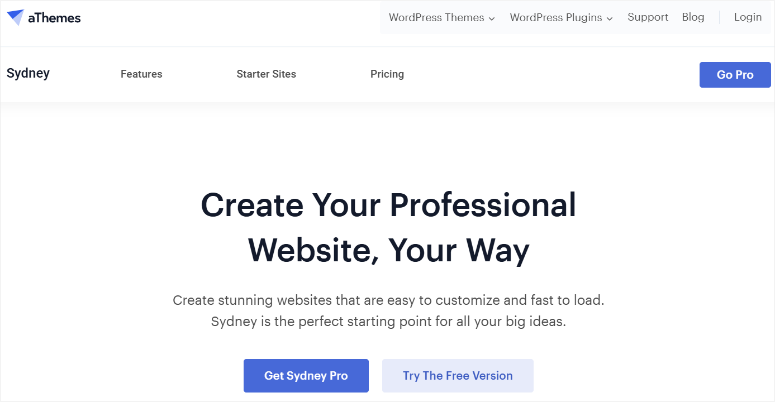
Sydney is my top recommendation for an AdSense theme because it ensures that you place the ads strategically without making your website look like a cluttered billboard.
Since Sydney is designed for corporate websites with multifunctional features, you can place ads in the widget areas while maintaining your professional image.
What stands out most is how naturally the ads fit into Sydney’s clean business layout. Visitors don’t feel bombarded.
How does Sydney handle AdSense?
When I tested Sydney on a demo business site, the widget-ready sidebar and header sections made ad placement straightforward.
Using the Sydney customizer, I added a 300×250 rectangular ad in the sidebar and a 728×90 leaderboard in the header. The entire process took less than 5 minutes without touching the code.
Officially recommended by Elementor, the Elementor integration Sydney gives you even more control.
This AdSense theme includes custom Elementor widgets designed specifically for the theme, allowing you to create custom layouts with ad spaces exactly where you want them.
What makes Sydney so good for advertising?
During testing, the theme loaded quickly, even when running multiple ad units, and maintained good PageSpeed values throughout.
Additionally, Sydney offers over 100 demo sites with professional business layouts and multiple widget areas perfect for standard AdSense sizes.
The best part? With the sticky header option, navigation and header ads remain visible while scrolling. This ensures that users can see your ad no matter where they are on the page.
Additionally, mobile-optimized responsive design ensures ads look good on all devices, improving user experience.
►Advantages:
- Clean, professional design that doesn’t distract from advertising
- Multiple widget areas for flexible ad placement
- The Elementor integration offers unlimited customization options
- The free version allows you to test before you commit
►Disadvantages:
- Pro version is required for advanced features
- Some users report that support response times vary
- Less advertising-specific features than dedicated AdSense themes
My verdict: If you run a professional business website and want ads that blend in rather than stand out, Sydney is for you. It’s perfect for consultants, agencies or service companies who want to make money without seeming desperate. The free version gives you enough to get you started, but the Pro version’s additional layouts and widgets are worth the upgrade if you’re serious about ad revenue.
For more information, see my Sydney review.
Start here with Sydney Pro | Try Sydney for free
Prices: Starts at $47/year
2. Seed Prod ⭐⭐⭐⭐⭐
5/5 stars | Best for: Complete control over ad placement (no code required)

Seed Prod I solved my biggest AdSense problem: placing ads exactly where I wanted them without asking a developer for help.
After using it to create my personal website, I noticed that the Google PageSpeed score remained incredibly high even with ads running. That’s when I knew this wasn’t just another top page builder; it was the best.
How does SeedProd handle AdSense?
Building with SeedProd’s drag-and-drop theme builder is smooth and easy.
Instead of struggling with preset ad widget areas, I simply dragged an HTML block where I wanted an ad and inserted my AdSense code.
Other than that, the visual builder showed me exactly what it would look like before publishing.
What really impressed me during testing was the speed.
I ran a website through Google’s PageSpeed Insights after adding several ad units using SeedProd’s HTML Blocks and the theme still delivered lightning-fast results.
The theme’s lightweight code doesn’t bloat even when you add custom elements.
What makes SeedProd so good for advertising?
SeedProd’s 350+ theme kits include layouts already optimized for ad placement. I tested the magazine kit and found that advertising spaces are naturally integrated into the sidebar, header and content areas.
Once you’ve chosen a template that fits your idea of ad placement, you can fully customize it. If nothing suits your needs, you can create your own theme from scratch using the drag-and-drop interface.
You can use Theme Builder to build any part of your website. From headers, footers, sidebars, individual posts to archives. This gives you complete control over where ads appear.
Additionally, mobile responsive design ensures ads look perfect on all devices without the need for additional optimizations.
►Advantages:
- Complete control over ad placement anywhere on your website
- Lightning-fast performance
- Pre-built theme kits are a huge time saver
- HTML blocks make adding AdSense code easier
- Build a complete website with AI
►Disadvantages:
- The free version does not include a theme builder
- Elite version required for eCommerce support
My verdict: SeedProd is my personal favorite for anyone who wants complete ad control without touching the code. If you’ve ever been frustrated because a theme was limiting ad placements, SeedProd completely eliminates this problem. The speed, flexibility and time savings resulted in a high priority on every topic list.
For more information, see my detailed SeedProd review.
Get SeedProd Pro here | Try SeedProd Lite here
Prices: Starting at $39.50/year
If this ads WordPress theme is right for you, check out our SeedProd coupon code page for more offers.
3. Thrive Themes ⭐⭐⭐⭐⭐
4.9/5 stars | Best for: Marketers who want to test and optimize ad performance
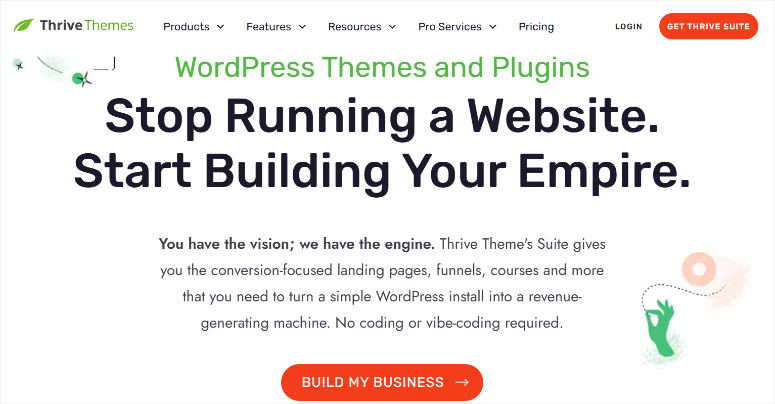
Thrive Themes‘ Built-in A/B testing has changed the way I think about ad placement.
Instead of guessing which spot performs better, I can test header ads versus sidebar ads and see real data. This feature alone can quickly increase AdSense RPM (Revenue Per Mille).
Thrive Themes is a combination of marketing tools that can not only help you build a website but also optimize it for your business model. In this case, advertising revenue.
How do Thrive Themes deal with AdSense?
The theme builder from Thrive Themes feels like using tools designed by marketers for marketers. First, the site wizard walks you through setting up important pages like the homepage, blog, and footer.
Then use Thrive Architect to adjust the layout. This makes it easy to add ads. They just dragged in a custom HTML element and pasted in my AdSense code.
For a full breakdown of how it works, check out my Thrive Architect review.
But this is what sets Thrive Themes apart: Thrive Optimize lets you create multiple versions of a page and split test different ad placements. I tested sidebar ads versus in-content ads in a demo blog post.
Thrive Themes showed me which version got more clicks and I was able to switch to the winner without creating new landing pages.
This type of data-driven optimization is worth its weight in gold for anyone serious about advertising revenue.
What makes Thrive themes good for ads?
Thrive Architect includes pre-built elements designed to increase conversions. For example, you get built-in testimonials sections, attention-grabbing buttons, and email signup forms.
With this in mind, you can save any section you create and reuse it on your website. This will save you a lot of time setting up consistent ad placements across multiple pages.
Additionally, the theme works seamlessly with popular advertising plugins like Ad Inserter and the clean code architecture ensures pages load quickly.
►Advantages:
- A/B Testing for Ad Placements (Huge Benefit)
- Conversion-focused design elements included
- Full Thrive Suite included (Thrive Leads, Optimize, Architect)
- Marketing-focused features that go beyond just design
►Disadvantages:
- Higher price
- The learning curve is steeper than with simpler topics
- The interface can be a bit busy for beginners
My verdict: If you’re a marketer or serious blogger who wants to test what actually works instead of guessing, Thrive Themes is worth the investment. A/B testing alone is worth it as it helps you find the highest-earning ad positions. It’s not the easiest option, but the data-driven approach makes it perfect for anyone who treats their website like a business.
Start here with Thrive Themes.
Prices: Starts at $80/year
4. Divi ⭐⭐⭐⭐⭐
4.9/5 stars | Best for: Design flexibility with ad integration

Divi’s visual builder is so flexible that you can adjust column widths, fine-tune spacing, and place ads exactly where they need to go without any programming. This makes it one of the best visual website builders.
Additionally, you can now create pages, posts, images, and even a complete website using AI.
How does Divi handle AdSense?
During testing, I found that Divi includes a built-in Display tab in the theme options where you can add a 468×60 banner that appears below the post content.
But the real power lies in using Divi’s builder modules. I placed text blocks on all pages and dropped AdSense code directly into them, giving me complete control over ad positioning.
What makes Divi good for advertising?
Divi’s extensive library of pre-built modules, sections, and full-page layouts provides a fantastic starting point.
I tested several Divi layouts and customized them to include ad spaces in sidebars, between content sections, and in headers.
Additionally, Theme Builder allows you to create templates that apply to your entire website. So you set up ad placement once and it works everywhere.
The learning curve is real. Divi’s editor initially feels different than standard WordPress. But once you get the hang of it, the customization options are incredible.
With caching plugins like WP Rocket, Divi works well even when running multiple ads.
►Advantages:
- Unlimited design flexibility for ad placement
- Visual Builder shows exactly how ads will look
- Huge library of pre-built layouts
- Works great with ad management plugins
- Create AI images, pages and even full websites
►Disadvantages:
My verdict: Divis Editor makes adjustments. But once you figure it out, you can create a responsive WordPress theme with perfectly placed ads. Despite the initial learning curve, the freedom of design makes it worth considering for publishers who want complete creative control.
Check out my updated Divi Theme and Builder review.
Get started with Divi here.
Prices: Starts at $67/year
If this ad-optimized theme meets your needs, check out our Elegant Themes coupon page for more Divi deals.
5. Astra ⭐⭐⭐⭐⭐
5/5 stars | $59/year | Best for: Speed-focused publishers

Astra became one of my top recommendations for AdSense optimized themes after it loaded in under 0.5 seconds with three AdSense units running.
This speed is important because every additional second of loading time costs you visitors and advertising revenue.
How does Astra handle AdSense?
What impressed me most about the Astra is how light it feels.
This ad theme integrates seamlessly with popular page builders like Elementor and Beaver Builder, giving you design freedom without sacrificing speed.
When testing, I used Astra’s widget areas to place a sidebar ad and a header ad, then added in-content ads using a simple plugin. Everything worked smoothly.
What makes Astra good for advertising?
Astra offers over 180 starter templates, many with layouts already optimized for ad placement. The theme options are well organized and beginner-friendly, so you won’t lose track when adding your first ad.
Additionally, the mobile-responsive design ensures your ads look perfect on mobile phones and tablets.
AMP compatibility is a bonus if you’re focused on mobile traffic. Astra works with AMP plugins to create lightning-fast mobile pages that still display your ads properly.
With over 2.5 million active installs, there’s a reason why so many publishers choose Astra.
►Advantages:
- Ultra-fast loading speeds even with ads
- 180+ starter templates for quick setup
- Clean code and excellent performance values
- Free version available for testing
►Disadvantages:
- Many options can be overwhelming for beginners
- Pro version is required for advanced features
- Less advertising-specific tools than dedicated themes
My verdict: Astra is really a no-brainer if you’re looking for a WordPress theme that’s quick and easy to use. The speed alone is worth considering, especially if you make money with AdSense and can’t afford slow page loads.
Check out my Astra theme review.
Get started here with Astra Pro | Try Astra for free here
Prices: Starts at $59/year
If this theme is right for you, check out our Astra coupon page for more offers.
6. OceanWP ⭐⭐⭐⭐⭐
4.9/5 stars | Best for: Budget-conscious publishers
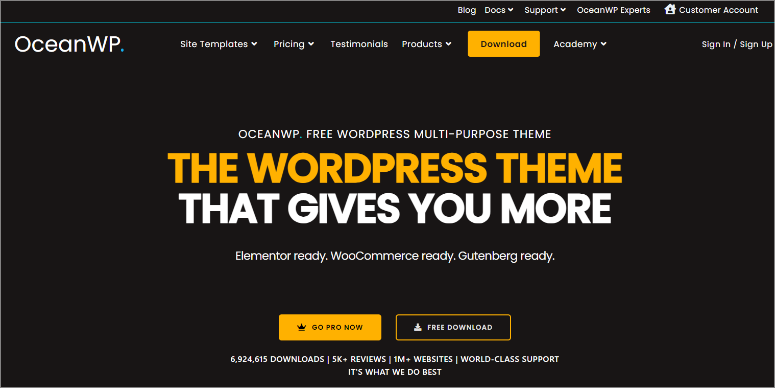
OceanWP caught my attention as one of the most downloaded free themes with premium features. With over 4.8 million downloads, it’s clearly the right choice for publishers on a budget.
How does OceanWP handle AdSense?
During testing, I found that OceanWP’s widget-ready areas made ad placement straightforward.
The theme includes multiple sidebar options and header areas where you can insert AdSense widgets without touching the code.
I used the built-in customizer to adjust colors and spacing around ads so they fit naturally into the layout.
What makes OceanWP good for advertising?
The 1-click demo content importer significantly speeds up setup. I imported a magazine-style demo and found that it already contains strategic locations for ads in the header, sidebar, and footer.
The theme works seamlessly with all major page builders and gives you the flexibility to further customize layouts if necessary.
Additionally, OceanWP performs well in speed tests and you can disable unused scripts to make it even faster.
I like how quickly this AdSense WordPress theme loads, even when running multiple ad units. Additionally, the responsive design ensures that ads display properly on mobile devices without breaking the layout.
►Advantages:
- Free version with solid advertising support
- Over 210 premium demos available
- Fast loading and SEO optimized
- Works with all popular page builders
►Disadvantages:
- Premium features require paid extensions
- With so many options, it can be overwhelming
- Support mainly via forums for the free version
My verdict: OceanWP offers great value for price-conscious publishers. The free version offers you enough to earn money effectively. Premium extensions, on the other hand, unlock advanced features when you’re ready for an extension.
For more information, check out my OceanWP review here. You can also check out Astra vs OceanWP to see how the number 5 and 6 themes on this list compare.
Get started here with OceanWP Pro | Try the free version of OceanWP here
Prices: Starts at $31/year
7. Ad Sense Theme ⭐⭐⭐⭐⭐
4.7/5 stars | Best for: Maximizing AdSense revenue

MyThemeShop’s Ad-Sense theme is the only theme I tested with built-in ad blocker detection.
If a visitor blocks ads, they will receive a popup asking them to deactivate their blocker. You can even hide content until your site is whitelisted. This feature alone can help you recover lost advertising revenue.
How does the Ad Sense theme handle AdSense?
During testing, I was impressed by how many ad placement options are built in.
- Header areas for leaderboards in 728×90 format
- Below the navigation points
- Above and below the content positions
- Sidebar widgets
Therefore, the Ad-Sense theme covers all strategic locations. The theme includes an ad management panel where you can control everything without having to install additional plugins.
What makes the Ad Sense theme suitable for advertising?
The Clickable Website Background feature allows you to turn your entire background into a clickable ad space.
But what really impressed me was the automatic ad scheduling, which shows ads after a set number of days. This is perfect for advertising campaigns.
Additionally, Ad Sense theme includes 8 pre-built layouts with one-click demo import. Because of these features, I was able to get a test site up and running within a few minutes.
Also, this theme for ads loads quickly despite all the ad features.
The best part is that the 4 pagination options, load more, infinite scroll, numbered, next/previous, help maximize ad exposure across multiple pages.
►Advantages:
- Built-in ad blocker detection and content blocking
- Multiple strategic ad placement areas
- The ad management panel eliminates the need for plugins
►Disadvantages:
- Design less modern than newer themes
- Heavily focused on advertising (not ideal for all websites)
- No free version to test
My verdict: If maximizing AdSense revenue is your main goal, the Ad Sense theme offers features that no other theme offers. Ad blocker detection alone is worth considering for serious publishers.
Start here with the Ad Sense theme.
Prices: Starting at $39 for a single seat license
8. Newspaper ⭐⭐⭐⭐⭐
4.7/5 stars | Best for: Content-heavy news and magazine sites
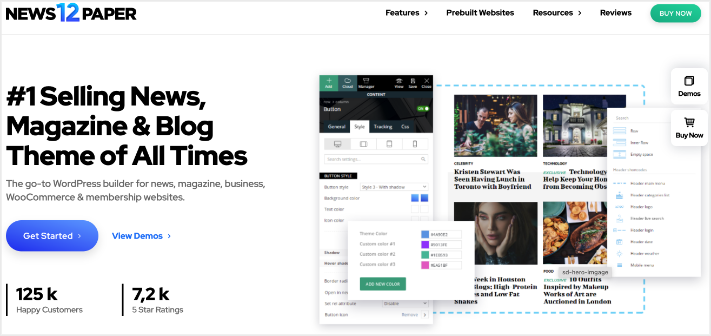
Newspaper is one of the best AdSense WordPress plugins because it has 18 permanent ad slots that help you monetize your website without plugins.
The intelligent ad system places ads in headers, footers, articles and sidebars, all managed via the topic panel.
How does the newspaper deal with AdSense?
During testing, I used tagDiv Composer, its front-end page builder, to create layouts with advertising spaces between content sections.
This ad-optimized theme allows you to display ads on individual posts or pages using the ad box elements. This gives you precise control over where ads appear.
I tested both AdSense and Custom HTML Ads and both worked fine.
What makes newspapers suitable for advertising?
With over 120 importable demos and over 1,500 post templates, Newspaper eliminates the problem of blank pages. I tested this by importing the Tech News demo, which already included optimized ad placements.
Once this was set up, I found that the Mobile Theme plugin ensured that ads displayed properly on mobile phones and that the AMP support delivered lightning-fast mobile pages.
The newspaper’s loading times impressed me in speed tests.
The theme handles content-heavy layouts well and maintains good performance even with multiple ad units and featured images.
With over 150,100 sales on ThemeForest, it is one of the most popular magazine themes of all time.
►Advantages:
- 18 permanent advertising spaces integrated
- No ad management plugins required
- Over 120 demos with over 1,500 templates
- AMP ready for fast mobile pages
►Disadvantages:
My verdict: Newspaper is perfect for publishers who run content-intensive websites and need professional ad management without additional plugins. The integrated ad system saves time and keeps your website running efficiently.
Start here with newspaper.
Prices: Starting at $59 for a single seat license
9. Neve ⭐⭐⭐⭐⭐
4.6/5 stars | Best for: Modern publishers who value speed
Neve caught my attention as one of the fastest loading magazine themes I tested.
The lightweight design ensures that pages remain clutter-free even when multiple ad units are running, which is important if you’re competing for mobile traffic.
How does Neve handle AdSense?
During testing, I found that Neve’s special advertising spaces are easy to work with.
The Ads WordPress theme includes widget areas optimized for standard AdSense sizes, and the Customizer allows you to adjust spacing and colors around ads.
I worked with Elementor to create custom layouts with ads placed exactly where I wanted them.
What makes Neve good for advertising?
Neve’s starter templates offer pre-built magazine layouts that already include strategic ad positions.
I imported a news-style demo and was running ads within minutes. Additionally, the theme’s mobile-first approach ensures that ads resize correctly on mobile phones without breaking layouts or causing accidental clicks.
With over 300,000 active installs, Neve has proven to be a reliable choice for publishers.
The clean, modern design doesn’t distract from the content, so ads feel like a natural part of the page rather than intrusive elements.
►Advantages:
- Extremely light and fast
- Works seamlessly with Elementor and Beaver Builder
- Modern, clear design aesthetics
- Free version available for testing
►Disadvantages:
- Less advertising-specific features than dedicated themes
- A Pro version is required for full functionality
- Less variety of demos than the competition
My verdict: Neve strikes the right balance between speed and functionality for modern publishers. If you want a fast-loading magazine theme with good advertising support and contemporary design, Neve delivers without unnecessary complexity.
Start here with Neve | Try the free version of Neve here
Prices: Starts at $69/year
10. News portal ⭐⭐⭐⭐
4.5/5 stars | Best for: Budget-conscious news sites

News Portal surprised me because even the free theme handles ads well. It’s perfect for any blogger who doesn’t have a budget but still wants their AdSense ads to work with their website.
How does the news portal handle AdSense?
During testing, I found that News Portal includes advertising space in the header and sidebar, the two most important places for basic monetization.
Additionally, it offers 5+ custom widgets to help you organize content sections while leaving space for ad placement.
I used text widgets to add AdSense code to the sidebar and header area without any coding and was surprised at how easy it was.
What makes a news portal suitable for advertising?
The homepage layout includes multiple content sections that engage visitors and encourage scrolling, resulting in higher ad exposure.
News Portal’s category color options make it easier for readers to navigate different topics, and the built-in news ticker provides the professional touch you’d expect from paid themes.
►Advantages:
- The free theme is powerful
- Includes header and sidebar advertising areas
- Multiple content sections on the homepage
- Works with standard WordPress widgets
►Disadvantages:
- Limited customization options
- Simple design compared to premium themes
- Fewer ad placement options in the free version
My verdict: News Portal proves that you don’t have to spend money to make money with AdSense. The free version is perfect for beginners looking to test their skills or for local news sites on a minimal budget.
Start here with the news portal | Try the free version of News Portal here
Prices: Starting at $59.99/year
11. Felt ⭐⭐⭐⭐
4.5/5 stars | Best for: Elegant magazine pages
Felt by Pixelgrade is my recommendation for content creators like travel bloggers who are looking for ads that go well with photography.
The special ad widget fits seamlessly into the magazine-like layout without screaming “ADVERTISING.”
How does Felt handle AdSense?
During testing, I liked Felt’s “plug-and-play” advertising widget, which is specifically designed for monetization.
Instead of generic text widgets, Felt offers a proper ad widget that fits naturally into the modular layout.
I placed ads in the sidebar and between content sections, and both looked professional and well integrated.
What makes felt good for advertising?
The carousel and slideshow widgets create an impressive digital magazine feel while leaving strategic space for ad placement.
Felt’s flexible and simple homepage layout allows you to drag and drop sections to balance content with advertising visibility. Additionally, this AdSense theme works flawlessly with Gutenberg and simplifies page creation.
During the speed tests, it was noticeable that Felt maintained fast loading times despite its visual diversity.
Additionally, the SEO-optimized code and attention to typography make the content readable, which engages visitors for longer. This creates more time for ad impressions.
►Advantages:
- Dedicated ad widget for clean integration
- Beautiful magazine style design
- Gutenberg compatible for easy editing
- Fast loading despite visual elements
►Disadvantages:
- Higher price
- Fewer demos than the competition
- No free version to test
My verdict: Felt is worth the investment if you’re creating a visually focused magazine where ads need to blend elegantly with the content. The dedicated ad widget and thoughtful design make monetization feel natural rather than forced.
Start here with Felt.
Prices: Starts at $75/year
12. Magazine ⭐⭐⭐⭐
4.4/5 stars | Best for: Editorial websites that emphasize advertising revenue
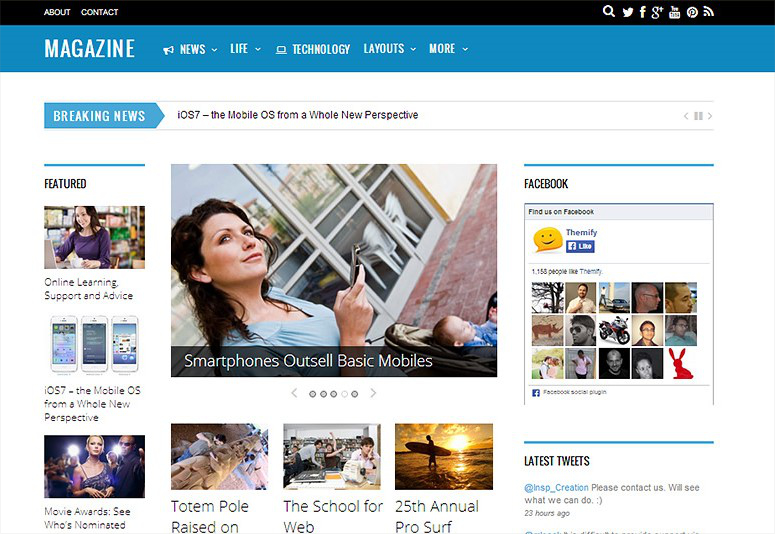
Themify magazine is literally designed to highlight advertising.
When you set it up, you’ll quickly see how the layout places advertising spaces in prominent locations that perfectly fit standard banner sizes. This means you can immediately see that monetization is a priority with this AdSense theme.
How does the magazine deal with AdSense?
The magazine contains dedicated advertising space in the header (best list 728 x 90), under the navigation, in the sidebar and a rectangular banner space next to related posts.
When testing, I used text widgets to add AdSense code anywhere. Everything fits perfectly without having to resize or disrupt the layout.
What makes magazines good for advertising?
The magazine has 42 pre-built layout options and Themify Builder, which creates complex grid layouts like Guardian or CNN using drag and drop.
I created a news-style homepage in minutes that naturally integrated ads. The current news ticker provides a professional editorial touch, while the mega menus help with navigation.
Additionally, the 3-column design gives you plenty of space for content and ads without feeling cramped.
I tested mobile slide navigation and found that ads remained visible and functional on mobile without causing any layout issues.
►Advantages:
- Specially designed to highlight advertising
- 42 pre-built layouts with Themify Builder
- Fits perfectly into standard AdSense sizes
- Current news ticker and mega menus included
►Disadvantages:
- Requires Themify membership
- Design feels more traditional than modern
- Learning curve with Themify Builder
My verdict: The magazine makes no apologies for prioritizing advertising revenue, which is exactly what some publishers need. If you run an editorial website where ads are the main source of revenue, Magazine’s custom design is for you.
Start reading the magazine here.
Prices: Starting at $59 for a single seat license
Is this ad theme right for you? For more offers, visit our Themify promo code page.
This is my list of the 12 best WordPress AdSense themes. But we’re not done yet! Below are the topics that narrowly missed making the list.
Bonus: Other AdSense optimized themes
- OriginMag: OriginMag is a detailed WooCommerce theme that combines eCommerce features with multiple ad placements. It’s perfect if you sell products and make money with AdSense at the same time.
- The customizable homepage includes a featured slideshow, video widgets, and strategic commercials that don’t detract from the shopping experience.
- Additionally, the 1-click content importer lets you get started quickly with professional layouts already optimized for sales and ads.
- Noozbeat: Noozbeat features a classic, minimalist layout with a white background that makes the content easy to read. The clean design offers multiple ad placement options without visual clutter.
- Category layouts help organize content while naturally integrating sidebar and in-content ad spaces.
- Additionally, the color variations and custom widgets give you enough flexibility to match your brand while maintaining advertising visibility.
- Newsly Magazine: Newsly Magazine is a completely free theme for magazines, blogs, newspapers and content publishers. It includes multiple ad display locations optimized for AdSense and is compatible with Google Ads.
- With highly customizable header widgets, sidebar layouts, and custom background options, you can create a professional-looking website without spending a dime.
- It’s perfect for testing AdSense before investing in premium themes.
- MH Magazine: MH Magazine is a responsive magazine theme with over 1 million downloads and thousands of satisfied users.
- Used by major brands like Forbes and Imgur, it offers dedicated header ad spaces and sidebar ad spaces optimized for recommended AdSense sizes (728×90, 300×250, 336×280).
- The image slider, font selection, and translation preparation features make it versatile for international publishers making money from AdSense.
- Neuton: Neuton is a modern news and magazine theme focused on presenting content. It offers strategic ad placement areas, multiple category layouts, and custom widgets for editorial websites.
- The dual navigation menu system helps organize the site, while color schemes ensure brand consistency.
- Advertising spaces fit naturally into the clear, content-oriented design without overwhelming visitors.
- Spring magazine: Feather Magazine is a free WordPress theme for personal blogs, magazines, newspapers and product reviews.
- It offers advertising space in the header area and supports Google DFP ads in addition to standard AdSense.
- The flexible header, sidebar widgets, featured images, and custom background options give you solid customization for a free theme. Translation-ready features make it suitable for multilingual websites.
AdSense WordPress plugins
While a good theme provides the foundation for ad placement, plugins offer advanced features that can increase your AdSense sales even further.
Here are the top plugins that fit these themes:
- WP Code – Ideal for adding AdSense code snippets without editing theme files. Using shortcodes, you can insert ad code anywhere, schedule ads for specific time periods, and track performance on platforms like Facebook and TikTok. The Conversion Pixels add-on helps improve the ROI of your advertising spend through detailed tracking.
- Advanced ads – The most powerful ad management plugin with features like ad rotation, visitor conditions and placement testing. Perfect if your theme doesn’t have built-in ad management. It offers unlimited ad placements, effortless split testing, and refined targeting of specific content and user groups for higher performance.
- AdSanity – An easy-to-use option that simplifies ad management with a clean interface. Ideal for publishers who want easy ad insertion, scheduling, and easy performance tracking without overwhelming features. Works seamlessly with most WordPress themes and offers good control over ad placement.
Should you use plugins with these themes?
It depends on. Themes like Ad-Sense, Newspaper and Magazine have robust built-in ad management. You don’t need any additional plugins. But powerful multipurpose themes like Sydney, Astra or OceanWP benefit from combining with ad plugins for more control.
How to choose the right AdSense theme for your website
Choosing the right AdSense theme doesn’t have to be overwhelming. Start by matching your actual needs to what each theme does best.
Here’s how to think through your decision.
Start with your site type
Don’t choose a theme based on looks alone. Choose based on what you are actually building.
Do you run a professional business website?
Are you creating a content-rich news or magazine site?
- Newspaper was designed for this in the truest sense of the word – 18 permanent billboards and over 120 news-oriented demos
- magazine (Themify) focuses on ad placement in its core design with 42 layout options
Are you creating a blog or personal website?
Sell products alongside content?
- Seed ProdThe theme builder is suitable for any website type and gives you complete control over the layout and ad placement
- DiviThe flexibility of allows you to create eCommerce layouts with strategic ad positions
Consider your technical ability
Be honest about your comfort level with WordPress and programming.
Complete beginner who wants easy setup?
Easily learn new tools?
- Seed ProdThe drag-and-drop builder is intuitive, but requires learning how the theme builder works
- OceanWP gives you tons of options without being completely overwhelming
Do you want maximum control and don’t mind a learning curve?
- DiviThe visual builder offers unlimited design freedom once you understand how it works
- Thrive Themes provides you with A/B testing and conversion tools for marketers
Developer or advanced user?
- Seed Prod allows you to create completely custom themes from scratch
- AstraThe hooks and filters provide developers with precise control
My top 3 recommendations
Best overall: Seed Prod
- SeedProd gives you complete control over ad placement without touching the code.
- The drag-and-drop theme builder lets you place ads exactly where they work best, and blazing performance means you don’t have to sacrifice monetization.
Best for those on a budget: Astra
- Astra delivers professional results without breaking the bank.
- The free version offers solid ad support and the Pro version unlocks over 180 starter templates with advanced features.
Best for Maximizing Sales: Thrive Themes
- Thrive Themes maximizes AdSense revenue through data-driven optimization.
- Built-in A/B testing lets you test different ad placements and see which ones actually convert.
FAQs: Best AdSense Optimized WordPress Themes
What makes a WordPress theme “AdSense optimized”?
AdSense-optimized themes include widget-ready sections for common ad sizes. For example, you get ad widgets in sizes 728×90, 300×250, and 336×280. These themes also have fast-loading code that doesn’t slow down with ads, mobile-responsive ad display, and clean layouts where ads fit naturally. The best ones offer built-in ad management features, so you don’t need additional plugins. Look for themes with dedicated ad widgets, strategic placement options, and designs that balance monetization and user experience.
Can I use AdSense with any WordPress theme?
Yes, you can technically add AdSense to any WordPress theme using plugins or custom code. But AdSense optimized themes make the process easier with ready-made advertising sections. They also offer better ad placement options and designs that don’t make the ads seem intrusive. You’ll save time and likely get more sales with a theme designed specifically for ad monetization, rather than forcing ads into a theme that wasn’t designed specifically for them.
Which is better: free or premium AdSense themes?
Premium themes like Thrive Themes and Sydney typically offer better ad management features, faster loading speeds, ongoing support, and regular updates. Additionally, they offer advanced features (ad blocker detection, built-in ad management, A/B testing) that can significantly increase your advertising revenue. The investment often pays for itself through better monetization. On the other hand, free WordPress AdSense themes are good for beginners testing AdSense.
Do I need plugins if I use an AdSense optimized theme?
Not always. Themes like Ad-Sense, Newspaper and Magazine have integrated ad management that eliminates the need for additional plugins. Themes like Sydney, Astra or OceanWP work best when combined with ad plugins like Advanced Ads, WPCode or AdSanity. These plugins add features like ad rotation, visitor targeting, scheduling, and detailed analytics that basic themes don’t offer.
How many ads should I place on my website?
Google allows multiple ad units per page, but quality counts more than quantity. Focus on strategic locations: a sidebar ad above the fold, an in-content ad after 2-3 paragraphs, and one below the content. Avoid placing advertisements everywhere as this annoys visitors and can actually reduce your revenue. Your AdSense optimized theme should facilitate these strategic placements without cluttering up your design.
Are advertising slowing down my WordPress site?
Ads do increase loading time, but lightweight themes like Astra, SeedProd, and OceanWP minimize this impact. Look for themes with clean code, support for asynchronous ad loading, and good Core Web Vitals scores. Combine your theme with caching plugins (WP Rocket, W3 Total Cache) and image optimization tools to maintain high speeds. AdSense’s automatic ads can be particularly extensive. Therefore, consider manual placement for better performance control.
Can I change the theme without losing my ad setup?
This depends on how you have set up your ads. If you use a plugin like Advanced Ads or WPCode, your ads will remain intact when changing themes. However, if you added ads via theme-specific widgets or theme radio buttons, you will need to reconfigure them in your new theme. For this reason, using an ad management plugin often offers more flexibility in the long term.
Final Thoughts: Should I Use AdSense WordPress Themes?
In any case! However, keep in mind that choosing an AdSense-optimized theme is not about finding the “best.” It’s about finding the right one for your specific situation.
The topics in this guide are all well-suited to dealing with ads, but they excel in different areas. Some value speed. Others focus on design flexibility. Some of these are specifically designed to maximize sales.
Most importantly, balance your actual needs with what each theme does best.
A beginner starting their first blog needs something different than a marketer running A/B testing or a publisher managing a content-rich news site.
Start where you are right now. Consider your technical capabilities, budget, and primary goals. Then choose the topic that will make your work easier instead of harder.
The right theme pays for itself in better ad performance, faster setup, and less frustration. Your time is also important.
Resource Center
Looking for more great topics? Check out the instructions below.
Each of these guides follows the same practical testing approach that we used here. I don’t just list topics, I actually use them and show you what works in real-world scenarios.
I hope this guide helped you find the right AdSense optimized WordPress theme for your website.