
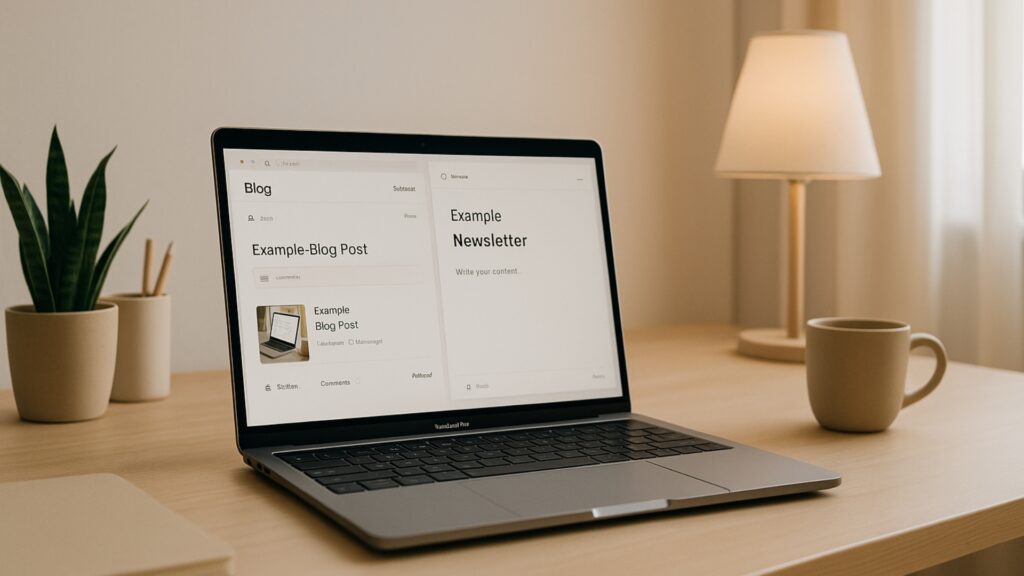
Repurposing content is one of the smartest ways to grow an online presence without constantly starting from scratch. Many creators already maintain a website or blog and then add Substack as a platform for newsletters, long-form posts, and community building.
As both platforms grow, developers often realize that the same ideas can work in multiple places, they just need to be designed differently. A blog thrives on structure and search visibility, while Substack shines on connection, personality and reader engagement. Repurposing bridges these strengths, making each piece of content more powerful for you.
The problem is that running both programs can feel like double work.
Without a system in place, authors often rewrite the same topics twice or are unsure of what belongs on which platform. A simple repurposing process eliminates this confusion and ensures publishing remains consistent without increasing workload.
This guide shows how to repurpose blog content for Substack in a way that feels natural for each platform, without adding additional stress. With small adjustments in tone, structure, and formatting, the same core idea can serve both your blog and your Substack audience. You’ll learn how to turn a blog post into a newsletter, turn a Substack letter into a polished article, and streamline your workflow.
A blog remains your long-term home for fresh, SEO-driven content, while Substack helps you build community and deepen trust. Together they form a powerful content system that grows your audience on both sides.
Below are simple ways to get the most out of both platforms without doubling the workload.
Why repurposing works so well
Repurposing content saves time, increases visibility, and helps creators reach audiences who prefer other formats. Blog readers often want structured, SEO-friendly articles. Substack readers enjoy storytelling, insight, and a conversational tone delivered straight to their inbox.
A blog post can perform well due to search traffic, while a Substack version of the same topic can encourage discussions or comments from subscribers. Instead of constantly generating new ideas, refocusing allows developers to make better use of each strong theme and continue to publish consistently.
Step 1: Choose the right blog posts to reuse
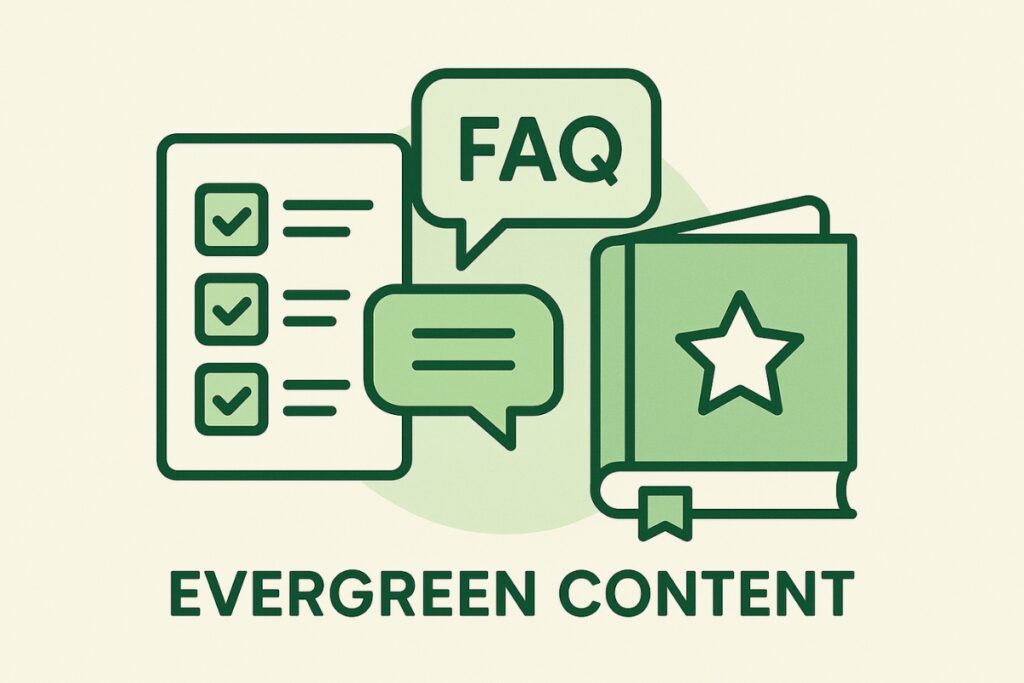
Not every post on a website has to go to Substack. The best posts to convert are usually:
- Evergreen topics that remain relevant for months or years
- How-to posts that can be turned into newsletter-style stories or lessons
- Highly trafficked posts with demonstrated interest
- Personal or opinion-based content that fits Substack’s tone
- Insightful posts that can spark a discussion or conversation
A quick rule of thumb is that if a blog post is already performing well in Google Analytics or search results, then the topic is demonstrably in demand, which also makes it one of your strongest Content ideas for cross-platform reuse. This makes it a good candidate for repurposing.
For anyone just starting out with a blog, basic topics like beginner’s guides, frequently asked questions, and list-based posts are good because they naturally support you evergreen content strategy. These posts create a reliable library that you can easily reuse for Substack or any future platform.
Step 2: Break down the blog post into a Substack-friendly format

Emails should feel easy. The distance is crucial. Short paragraphs help readers scroll comfortably and avoid the “email fatigue” people feel with dense text.
Ideal pace:
- Paragraphs of 1 to 3 lines
- short sentences mixed with medium length sentences
- clear transitions between ideas
This makes the content seem like a thoughtful note rather than a strict guide.
3. Soften the tone while maintaining authority
Substack lives from:
This doesn’t necessarily require personal stories. Instead you can use:
- simple explanations
- relatable phrases
- Observations on common errors
- Sound cues such as “Here is the quick version” or “Here is what usually works”
Readers want guidance without feeling lectured.
4. Customize formatting for email-friendly reading
Substack readers prefer:
- short subheadings
- bite-sized lists
- Bold lines for emphasis
- occasional pull quotes
These help readers skim and process content better than typical web formatting.
5. Add a discussion note at the end
Unlike blogs, Substack fosters community.
A short question or thoughtful prompt signals that the conversation doesn’t end with the post, but continues with the readers. This small change makes your newsletter a place where subscribers feel invited to participate, not just consume.
A simple prompt can dramatically increase engagement:
Examples:
- What part of this topic feels most confusing right now?
- Which version of your content has the most problems?
- Would you like a template for this?
This keeps the platform’s community alive.
Step 3: Adjust content length and depth for each platform
Blog posts often benefit from 1200 to 2500 words, as longer content increases search visibility. Substack doesn’t always require this length.
This difference comes from the way each platform is used. Blog readers usually come with a specific question and are willing to read more in-depth explanations as long as the content is helpful and well-organized. Substack readers, on the other hand, often consume posts alongside other emails in their inbox, so shorter, more targeted messages tend to seem more natural and easier to digest.
In many cases, readers prefer newsletters that are shorter, more direct and more personal.
To successfully reuse content:
- Keep blogs detailed and comprehensive
- Keep Substack posts conversational and more focused on reader connection
Both formats serve different goals, but both help build trust and authority.
Step 4: Add new elements to make reused content feel fresh
Repurposing only works if each version feels tailored to its platform. Adding new details enhances the new version without requiring a complete rewrite.
1. Add a new intro for each platform
Substack intros can be warm and conversational. Blog intros should be SEO friendly and direct. Just changing the intro creates a feeling of uniqueness.
2. Update examples or tips
If the original blog gave general advice, the Substack version may include:
- a specific scenario that readers face
- an updated trend
- a mistake people often make
- a short lesson that fits the newsletter tone
Small details go a long way in making content feel new.
3. Change the order of ideas
Rearranging the sections creates uniqueness in Google’s eyes and improves clarity for readers.
4. Add clarifying explanations
If a topic feels complicated, use Substack to explain it more simply.
These additional explanations help readers feel guided and not overwhelmed. When repurposing content, clarity is often more important than length, especially on Substack, where readers value thoughtful pauses, gentle pacing, and simplified explanations that support deeper understanding.
If a topic seems too casual on Substack, use the blog to provide a deeper breakdown.
5. Incorporate platform-specific bonuses
Substack Bonus Ideas:
- quick templates
- Mini checklists
- makes you think
Blog Bonus Ideas:
- downloadable resources
- Step-by-step breakdowns
- visual diagrams (also simple text diagrams)
6. Add another CTA
Each platform has different goals. Just changing the CTA makes the content unique enough for both audiences.
Step 5: Ensure consistent branding across both platforms
Readers should also recognize the voice across different platforms. Whether someone finds the post through search or receives it in their inbox, the tone and message should still match.
Ways to stay consistent:
- Use the same brand colors in the visuals
- Maintain a similar writing style
- Keep the examples tailored to your niche
- Use consistent formatting patterns
Some creators organize their content in a management tool such as Notion, ClickUp or Trelloespecially when juggling blogs, newsletters and other content resources. A simple system makes reuse easier and helps you keep track of drafts, ideas, and publishing schedules.
Step 6: Avoid duplicate content issues
Concerns about duplicate content are common, but it’s usually not a problem to repurpose blog posts for Substack or vice versa. Google flags duplicate content especially when it is copied verbatim on multiple websites and thus confuses search engines.
Here is the safe method:
- Add a fresh intro
- Make minor changes to the structure
- Change headings
- Customize examples
- Add insights
- Reformat paragraphs
These small changes already make the piece unique, even if the core idea remains the same.
Step 7: Create a simple reuse workflow
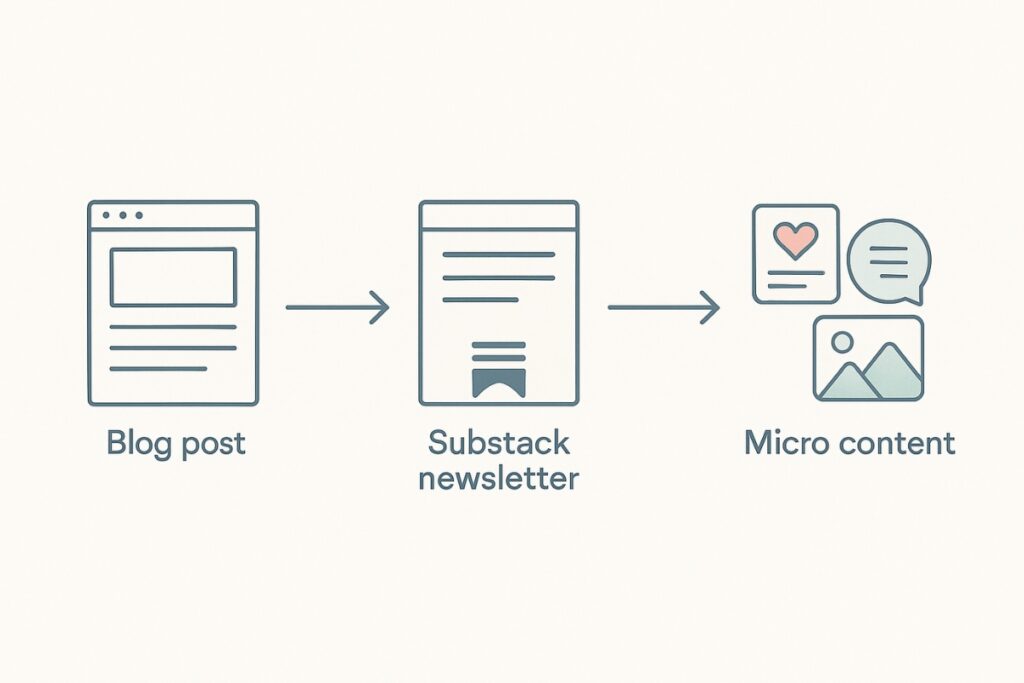
Repurposing is easier with a routine because it fits naturally into a routine broader content strategy. A simple workflow looks like this.
1. Start with a blog post
A blog is the home base for always up-to-date content. It ranks in search, attracts readers, and gives you a library of topics to reuse.
Anyone who hasn’t started a blog yet can benefit from starting one early. A blog becomes a long-term digital asset that supports steady growth on platforms like Substack.
2. Convert the blog to a Substack post
Customize intro, tone and CTA.
3. Break it down into micro content
Turn pieces into tweets, short videos, Pinterest descriptions, quote graphics, and simple carousels.
Example: How a blog topic can be expanded into multiple Substack posts
To make the workflow clearer, here is a simple example of how one blog post can become several newsletter-friendly parts.
Example topic:
“10 Productivity Tips for Creative Entrepreneurs”
Here are several possible newsletter views:
- A hidden error
Pick one tip and expand it into a reflection on why many creators struggle with productivity. - A repeatable routine
Turn another tip into a simple weekly ritual that readers can use. - A mindset correction
Use a point, such as multitasking, to teach a targeted lesson. - Myths versus reality
Group a few tips together and reframe them into misconceptions that slow people down. - A boost of motivation
Turn a mindset tip into a short and encouraging reminder for readers.
Each newsletter can also be converted into micro-content such as tweet ideas, short video scripts, carousel drafts, Pinterest descriptions, and quote graphics.
This shows how a strong blog theme can fuel a lot of content without increasing the workload.ms.
Step 8: Track what performs best
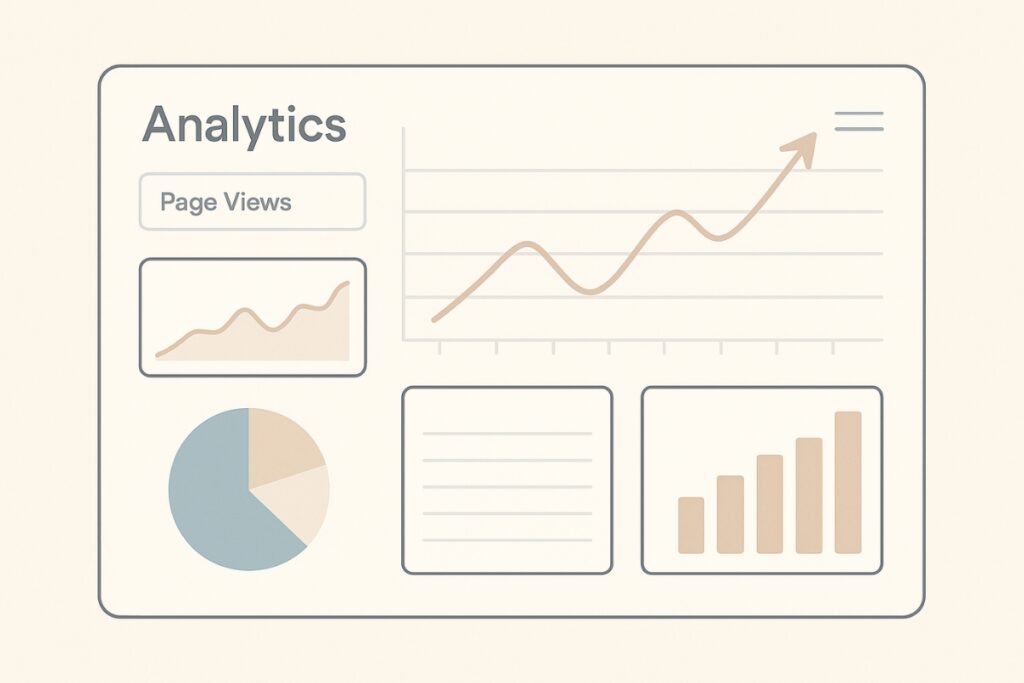
Transforming the analytics guide, whether you track performance with tools like Google Analytics or use alternative methods of measuring blog success without Google Analytics.
1. Blog analytics for monitoring
- Page views – shows which posts are resonating in search
- Average time spent on page – shows how engaging the post is
- Top keywords – reveal what topics are important to readers
- Bounce rate – helps identify which posts need better structure
- Link clicks – show whether readers are exploring more content
2. Substack analytics for monitoring
- Open rate – measures how strong the headline and topic are
- Click rate – shows how engaged the audience is
- I like it – simple but effective indicator of reader response
- Comments – Highlight topics that spark conversation
- Shares – Show what topics you think others should see
3. Use analytics to select topics for repurposing
If a blog post has a lot of views but little engagement, convert it into a Substack letter to explain the topic in more detail. If a Substack post gets a lot of comments, convert it to a blog post to gain long-term search visibility. If a topic resonates widely, expand it into a guide, course module, series, or core content.
Analytics takes the guesswork out of reuse and makes it easier to fit each piece into a content strategy template that organizes your publication.
Bonus: How to turn a Substack post into a high-quality blog article
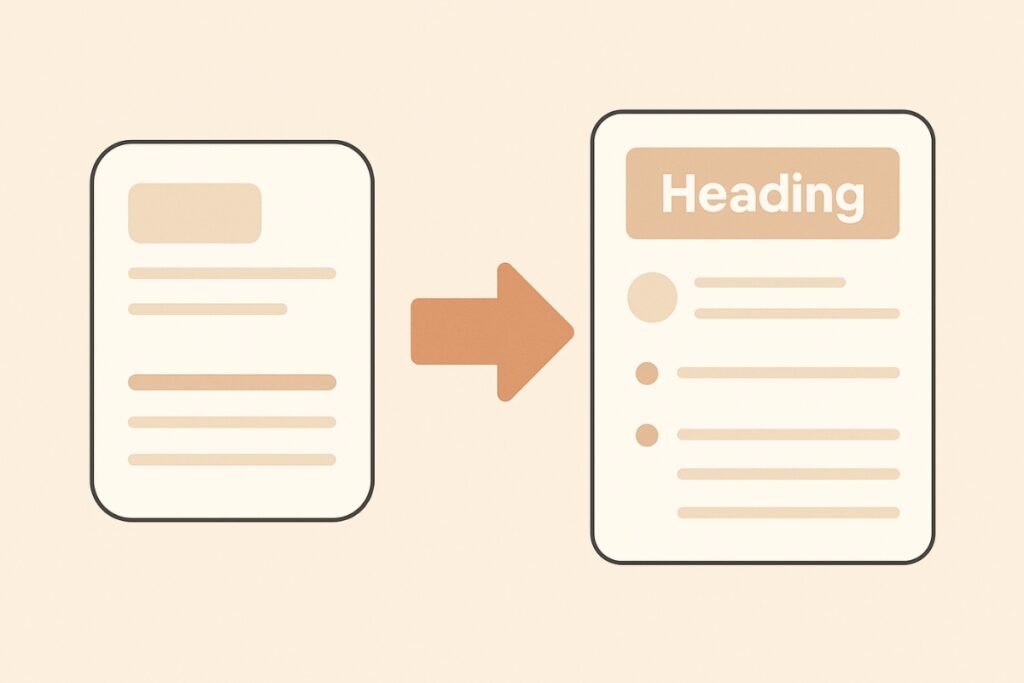
A Substack newsletter often reads like a message to a trusted audience. When converting to a blog article, the focus shifts to structure, clarity, and search intent.
Blog readers typically come through search rather than a personal connection. This means they need immediate guidance on what the post is about, why it is important and what they will learn. A Substack draft can already contain great insights; It just needs a clearer framework so that both readers and search engines can easily follow the main idea.
Search engines need organization and Google readers want quick answers. Below you will find the transformation process.
1. Remove conversation filler
Writing newsletters includes kind gestures like:
- Questions that are too rhetorical
- casual opening lines
- Storytelling that feels slow
- Comment that doesn’t serve the main point
These are great for Substack but unnecessary for SEO. Remove anything that doesn’t directly support the theme.
2. Identify the principal claim or claim
Blogs perform best when the purpose is clear.
For example, a Substack post about content reuse could be:
- highlight a story
- share a lesson
- Focus on a difficult reader experience
Convert this into a clear thesis for the blog. This helps create a structured process.
3. Add subheadings that reflect search intent
Google understands content based on headings. Rewrite or add subheadings that match users’ search queries.
Examples:
- Instead of “Why this is important” → “Why Repurposing Substack Posts Improves SEO”
- Instead of “That helps” → “How to Turn a Substack Letter into a Blog Post”
This strengthens your SEO signals and makes the content more scannable.
4. Turn insights into structured tips
Substack often shares insights in a narrative form, while blogs require clear insights.
This shift doesn’t mean changing your message, just presenting it more clearly. Converting narrative insights into defined steps or bullet points helps readers understand the lesson faster and makes your post more attractive to search engines that prioritize structured information.
Convert important ideas into bullet points, numbered lists, or clear steps. Readers love clarity and search engines prefer organized information.
5. Insert keywords naturally
Take the primary keyword and smoothly integrate it into:
- the introduction
- one or two subheadings
- a few main paragraphs
- the conclusion
This signals relevance without keyword stuffing.
6. Add internal links
Blogs become stronger when articles are connected to each other. Add links to:
- relevant guidelines
- Category Hubs
- Beginner tutorials
- relevant resources
This improves SEO rankings and makes it easier for readers to navigate the website.
7. Add a helpful conclusion
The end of a newsletter often ends with an appreciation or community note. A blog ending should summarize the topic and lead the reader to an actionable next step.
A proper closing paragraph also signals completeness to search engines.
Key insights on repurposing blog content for Substack
Repurposing content between a blog and Substack is a simple and powerful way to grow an audience without doubling the workload.
It also allows developers to get more value from the ideas they have already developed. Instead of constantly searching for brand new topics, repurposing existing content creates formats that meet readers where they are. This leads to better consistency, more touchpoints across all platforms, and an overall smoother publishing rhythm.
A strong blog ensures perpetual, SEO-driven visibility, while Substack provides connection and depth. With clear steps and a simple workflow, any creator can turn an idea into multiple pieces of content on both platforms.
Anyone who has not yet started a blog is encouraged to consider creating one, as it lays the foundation for repurposing, search visibility, and long-term growth.
A blog also creates a structured archive of ideas that can be reused over months or even years. This makes it easier to spot patterns, expand on existing topics, and convert high-performing articles into newsletters, micro-content, or more sophisticated resources. Over time, the blog will become a central hub supporting every other platform, including Substack.
Substack works well as a partner platform, especially when both are used together as part of a consistent content strategy.
The easiest way to grow online without burnout is to make strong content work in multiple places. This is the true magic of repurposing.
Frequently asked questions

Yes, it can. Just make small adjustments, e.g. B. changing the introduction, formatting, or examples to make each version feel native to its platform.
No, it does not harm search engine optimization. Duplicate content issues only occur when posts are copied word for word without updates.
Evergreen guides, how-to posts, listicles, and insight-based topics work well. These formats can be easily adapted to a more conversational Substack style.
Blogs tend to perform best when they are longer and more detailed. Substack posts can be shorter and more conversational depending on reader preference.
Repurposing every week or two is a simple and effective step. Analytics can help identify which topics deserve another release.
Substack does not rely heavily on keyword optimization. Clear copy and compelling insights are more important than strict keyword placement.