
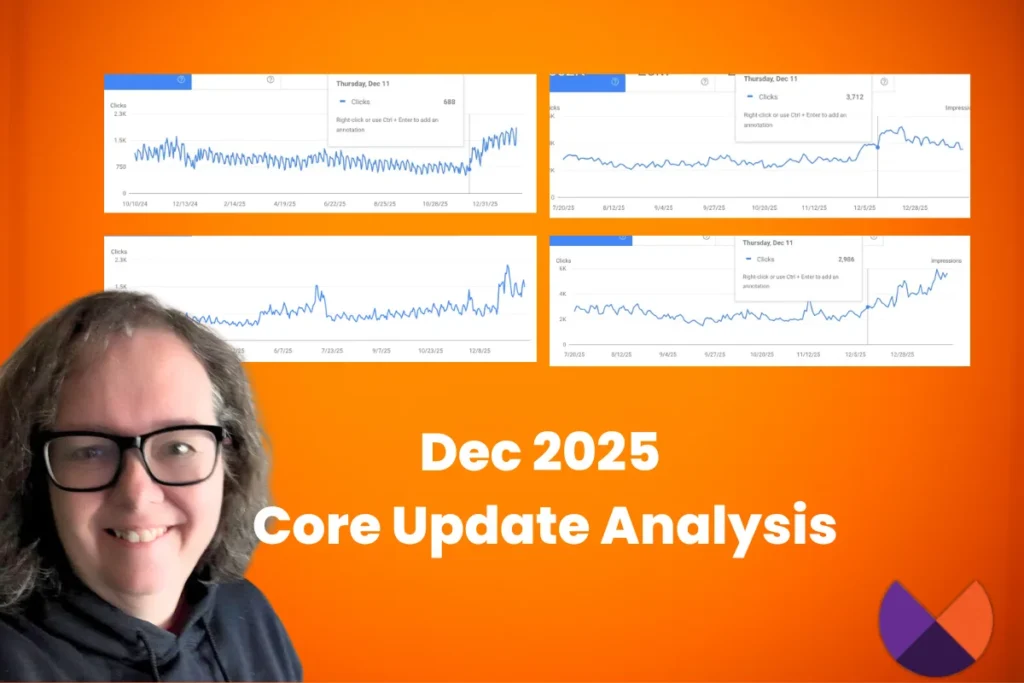
The December 2025 core update had a significant impact on a large number of websites. All of the sites listed below that performed well are either long-time customers, former customers, or sites that I have conducted a site review for. While we can never say with certainty what changed by changing Google’s core algorithms and systems, I would like to share a few observations about what I think helped improve these sites.
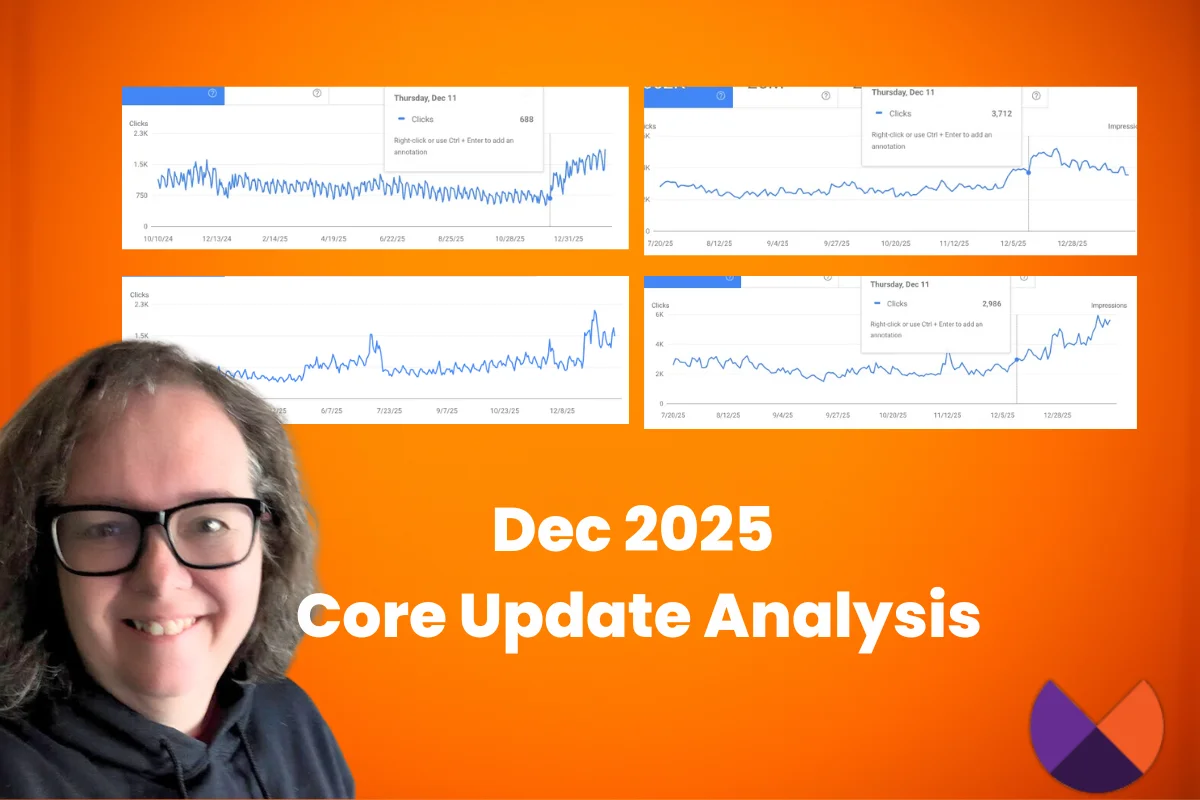
1. Trust is immensely important
This first client, a medical e-commerce website, contacted me in mid-2024 and we began a long-term collaboration. A few days into our relationship, they were severely negatively impacted by the August 2024 core update. It was devastating.
In most cases, if you are affected by a core update, you will remain suppressed until another core update occurs. Usually it takes time several Core updates. And since this only happens a few times a year, this page remained suppressed for quite a while.
We worked on many things:
- Improving the quality of blog posts so that they are no longer “standard content”.
- Improve page load time.
- Optimize images.
- Improving FAQ content on product pages to make it easier to answer customer questions.
- Create helpful guides.
- Improving product descriptions to better answer your customers’ questions.
- Add more information about the authors’ EEAT.
- Adding more authors with medical EEAT.
- Get more reviews from satisfied customers.
While I think all of this helped give a better appreciation for the quality of this site, I actually think what helped the most had very little to do with SEO, but rather was the result of the company’s hard work to really improve customer service.
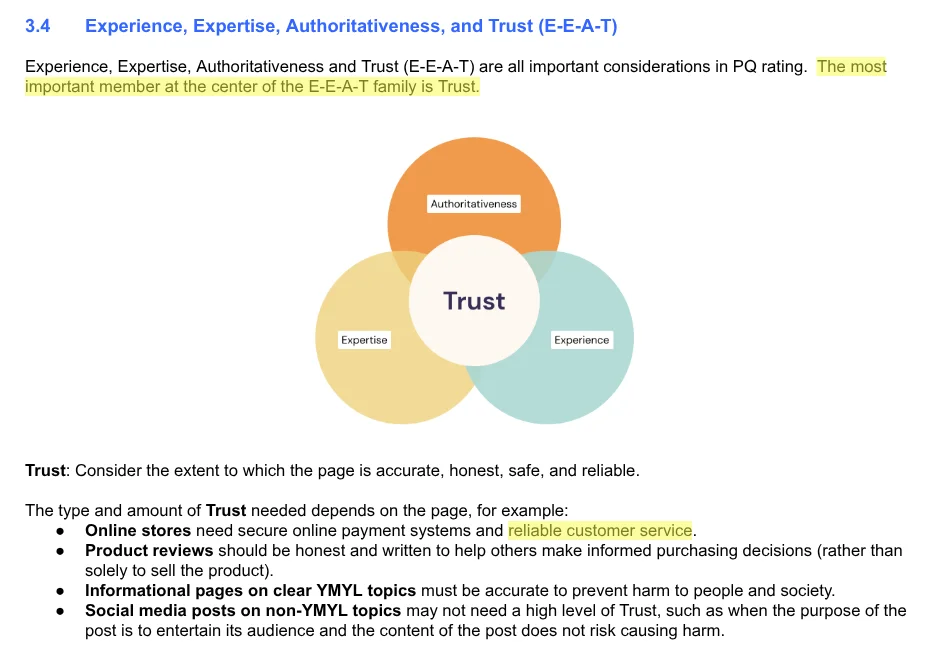
Core updates are closely related to EEAT. According to Google, trust is the most important aspect of EEAT. In the Quality Rater Guidelines, which serve as a guide for Google’s quality raters to help train their AI systems to improve their ability to create high-quality search algorithms, “trust” is mentioned 191 times.
In online shops, this is communicated to the reviewers reliable customer service is crucial.
A few bad reviews probably won’t hurt your ranking, but this company had done this before significant logistical problems with shipping. They had worked hard to fix this. However, if I asked AI Mode to tell me about this company’s reputation compared to its competitors, it would always tell me that there were serious concerns.
Here is an interesting prompt you can use in AI mode:
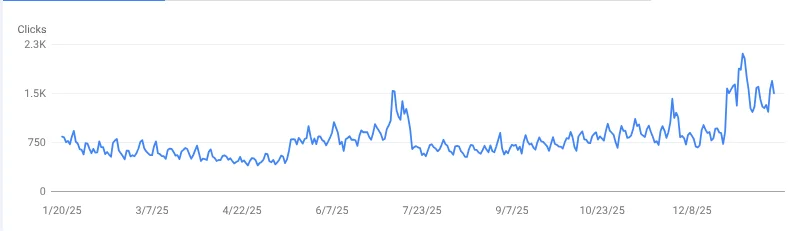
Create a graph showing perceived trust in (URL or brand) over time.
You can see that Finally In 2025, overall trust in this brand has improved.

My suspicion is that these trust issues were the main reason for core updates being suppressed. I can’t say whether it was the improvement in customer trust that made the difference, the quality improvements we achieved, or perhaps both. But these results were so beautiful to see.

They continue to improve. Google recommends them more often in the popular product carousels, ranks them higher for many important terms and, more importantly, now leads to far higher sales. 🦾
2. Original content requires a lot of work
The next site is another site that was affected by a core update.
This site is an affiliate site that writes about a big ticket product. They have a lot of competition from some big players in their industry. As I was checking their website, one thing caught my eye. Although they had a lot of content, Most of these offered essentially the same value as everyone else. This was frustrating considering they actually purchased and reviewed these products. What they wrote about was largely a collection of known facts about these products rather than their personal experiences. And what Was The experimental content was buried in massive walls of text that readers found difficult to navigate.
Google’s guidance on core updates recommends that if a disruption occurs, you should consider rewriting or restructuring your content to make it easier for your audience to read and navigate the page.

This site has put an incredible amount of work into improving the content quality:
- They purchased the products they reviewed and took detailed photos of everything they discussed. And videos. Really helpful videos.
- The blog posts are written by an expert in their field. This was already the case, but we worked to make it clearer what their expertise is and why it is helpful.
- We brainstormed with AI to come up with ideas for adding helpful, unique information based on their experiences that isn’t likely to be found on other sites.
- We used Microsoft Clarity to identify aspects of pages that were frustrating users and work to improve them.
- We’ve added interactive quizzes to help readers and encourage engagement.
- We’ve worked to improve the timeliness of all key posts and ensure they’re up to date with the latest information.
- We worked to really put ourselves in the shoes of a searcher and understand what they wanted to see. We’ve made sure this information is easy to find even if a reader just skimmed.
- We divided large walls of text into sections with good headings that were easy to skim and navigate.
- We did not index pages that talked about YMYL topics for which they lacked expertise.
- We’ve been working on improving key web vitals. (Note: I don’t think this is a huge ranking factor, but in this case the largest content color took forever and probably frustrated users.)
Once again it took many months of tireless work before improvements became visible! For many important keywords, the rankings on the first page improved and some slipped from page 4 to positions #1-3.
3. Work to improve user experience
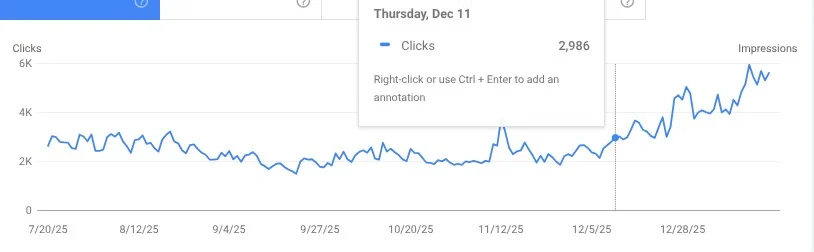
This next website wasn’t a long-term customer, but a website review I did for an e-commerce website in a YMYL niche. The SEO working on this site implemented many of my recommendations and also made some other smart changes including:
- Improving site navigation and hierarchy.
- Improved UX. They have a nicer, more modern font. The site looks more professional.
- Improved customer checkout flow, improving checkout abandonment rates.
- The About Us page has been improved to add more information that illustrates the brand’s experience and story. Note: I don’t think this is of much importance to Google’s algorithms since most of their trust judgment is based on external signals, but it can help users feel more comfortable interacting.
- Produced content on some topics that attracted public attention. This actually helped get some new links and mentions from reputable sources.
After these changes, the site was able to provide a knowledge panel for brand searches. And search traffic increases.
4. First-hand experience can be really helpful
This next site is another one that I did a site review for. It is a city guide that makes money through affiliate links and sponsors. Every page I looked at I came to the same conclusion: There was nothing on this site that couldn’t be covered by an AI overview. Almost every piece of information was essentially paraphrased from somewhere else on the internet.
The recent review guidelines update increased the use of the word “paraphrased” from 3 to 25. I think this is true for many websites!

And

and also,

But when I spoke to the website owner, she informed me that there were writers on the website who actually wrote from their experiences.
While I don’t know exactly what changes this site owner made, I looked at several pages that received nice improvements related to the core update and noticed the following improvements:
- They added videos filmed by their team to some posts.
- There are original photos of their team that are not from anywhere else on the internet. Not every photo is original, but some of them are.
- Information has been added to help readers make a decision, such as “This place is best for…” or “Must-try dishes include…”
- They wrote about their actual experiences. Instead of just sharing what dishes were available at a restaurant, they share which ones they tried and how they stood out compared to other restaurants.
- They have worked to keep the content fresh and current.
This site has seen some nice improvements. However, they still have room for improvement as they were doing much better in the days before the helpful content updates.

The December 2025 core update had a devastating negative impact on many websites. If you’ve been affected, your answer probably doesn’t lie in technical SEO fixes, disavowing links, or building new links. Google’s ranking systems are a collection of AI systems that work together with one goal in mind: to present searchers with pages they are likely to find helpful. Many components of the ranking systems are deep learning systems, meaning they improve these recommendations over time.
I would recommend you the following:
1. Consider whether the brand has trust issues.
You can try the AI mode prompt that I used above. A few bad reviews will not result in the core update being suppressed. But a long history of repeated customer service frustrations, fraud, or anything else that significantly impacts your reputation can seriously impact your ability to rank. This is especially true when writing about YMYL topics.
2. Look at how your content is structured.
It’s a helpful exercise to look at which pages use Google’s algorithms Are Ranking for your search queries. If they don’t make sense to you, see how quickly they get people to the answer they’re looking for. I have found that affected websites often force their readers to scroll through a lot of informational material or advertising to get to the important parts. Improve your headings – not for search engines, but for skimming readers. Place the important parts on top. Or, if that’s not possible, make it really easy for people to find the “main content.”
Here’s a good exercise: Open the reviewer guidelines. These are guidelines for human reviewers that help Google understand whether the AI systems are providing good, helpful rankings. CTRL-F for “Main Content” and see what you can learn.
3. Really ask yourself if your content is mostly “commodity content.”
Commodity content is information that is widely available in many places on the Internet. There was a time when a company could be successful by writing pages that summarized known information on a topic. Now that Google has AI Overviews and AI Mode, this type of page is much less valuable. The AI overviews still cite some pages that essentially parrot what is already in the AIO. These are typically reputable websites that are helpful to readers who want to see information from an authority rather than an AI answer.
Google’s Liz Reid said these interesting words in an interview with the WSJ:
“What people click on in AI overviews is Content that is richer and deeper. People don’t want this superficial AI-generated content because when they click on it, they don’t learn much more than before. You no longer trust the results on the Internet. So what we’re seeing with AI overviews is that we’re kind of uncovering these websites and getting fewer, so-called bounce clicks. A bounce click is like clicking on this page and saying, “Ah, I didn’t mean that,” and then going back. And so AI overviews deliver some content and then We get to deeper, more comprehensive contentand we will try to continue to do this over time so that we truly preserve creator content and not AI generated content.”
Here’s a good exercise to try out some of the pages that were deprecated with the core update. Provide your URL or copy the content of your page into your preferred LLM and use this prompt:
“What 10 concepts are discussed on this page? For each concept, tell me if there has been extensive writing about that topic online. Does this content I’m sharing with you add something truly unique, interesting and original to the already existing knowledge? Your goal here is to be completely honest and not just flatter me. I want to know if this site is likely to be considered bulk content or if it really is content that is richer and deeper than other sites available on the web.”
You can follow up with this prompt:
“Give me 10 ideas that I can use to really create content that goes deeper into these topics? How can I draw on my real-world experiences to produce this type of content?”
Final thoughts
I’ve been involved with Google updates for a long time – since the early days of Panda and Penguin updates. I built a business dedicated to helping websites recover from Google update hits. However, over the years I’ve noticed that when a website is affected by a Google update, it becomes increasingly difficult to recover. For this reason, today I generally refuse to work with sites that are heavily affected by Google updates, although I still love creating site reviews to give you suggestions for improvement. While recovery is possible, it generally requires a year or more of hard work and even then recovery is not guaranteed as Google’s algorithms and people’s preferences are constantly changing.
The sites that saw a good recovery with this Google update were sites that worked on the following things:
- They really improve the global perception of their customer service.
- Creating original and insightful content that was significantly better than other existing sites.
- In many cases, your own images and videos are used.
- We are working hard to improve the user experience.
In case you missed it, I recently published this video where we talk about what we’ve learned about the role of user satisfaction signals in Google’s algorithms. Traditional ranking factors create an initial pool of results. AI systems rearrange them and work to predict what the searcher will find most helpful. And the quality raters as well as live users in live user testing help fine-tune these systems.
And here are some other blog posts that might be helpful for you:
What if user satisfaction was the most important factor in SEO?
User data is important in Google’s ranking systems. What we learned from Liz Reid’s appeal statement.
What Google’s test documents reveal about clicks, links and other ranking signals.
Ultimately, Google’s systems work to reward content that users are likely to find satisfying. Your goal is to be the most helpful result there is!
If you liked this, you’ll love my newsletter:
Or come to us Search bar for the latest news on search and AI.
Mary