

Consistency is the key to achieving any goal.
Would you like to learn to play the piano? Practice consistently. Are you trying to get in shape for your siblings’ wedding? Exercise regularly and eat healthy. Do you want your brand to be seen and positioned as the first choice in its industry by both your target audience and the AI? Enter brand optimization.
Although the term sounds new and exciting, brand optimization has been around for years. It’s all about brand consistency, a topic I first wrote about in my second blog post in 2013. Although the idea is ancient, the strategies and tactics we use to optimize a brand have evolved.
In this article, we’ll go over what brand optimization is, how to know when you need it, how it differs from rebranding, and more.
Table of contents
TLDR summary
Brand optimization is an ongoing practice to improve positioning, messaging and customer experience across all channels and teams. It differs from rebranding in that it focuses on small, iterative improvements rather than a complete identity redesign. Brand optimization is typically triggered by events that impact brand perception, competition, and overall performance among your target audience.
Brand optimization areas of focus include visual consistency, message clarity, customer experience alignment, team and channel alignment, and AI visibility, among others. HubSpot And Breeze AI offer a variety of tools to help you with brand optimization, including free ones AEO Search Grader, Brand voice tools, And Contents/Document templates.
What is brand optimization?
Brand optimization is the continuous, data-driven optimization of the way your brand is perceived, experienced and communicated across all channels and teams to improve sales and marketing without overhauling your core identity.
Unlike a rebrand, which usually changes Considering a brand’s identity, logo, voice, name or core positioning, brand optimization works within your existing brand framework to find and close the gaps between your brand’s potential and its actual performance.
Think of it this way: rebranding is a cosmetic surgery and brand optimization is a fitness routine. A rebrand is a one-time reconstruction, but optimization restores function and builds long-term strength through consistent, targeted work.
Brand optimization focuses on a few key areas:
- Clarity of messaging: Is your offer correct and clear? Does your value proposition resonate with your ideal customer? Is it consistent across marketing, sales and customer service?
- Visual and linguistic consistency: Does your brand look and sound the same across your website, ads, emails, social media and sales platforms?
- Customer Experience Alignment: Does the brand promise you make in marketing match the actual customer experience?
- Team and channel alignment: Are your marketing, sales and service teams aligned with the brand narrative? Do they all promise the same thing?
- AI and search visibility: Is your brand accurately represented and cited in AI-powered search tools?
It’s a continuous improvement cycle based on data from brand health surveys, conversion analysis, customer feedback, competitor analysis and, increasingly, AI citation monitoring.
Brand optimization vs. digital marketing optimization
To anyone outside of the marketing industry, brand optimization and digital marketing optimization may sound like the same thing. You may use the words interchangeably, but the strategies actually differ significantly, and confusion can lead to misaligned priorities and unclear measurements.
Simply put, brand optimization focuses on how your brand is perceived and experienced across all touchpoints, while digital marketing optimization focuses on the performance of your channels and campaigns.
They need both, but they need different strategies, ownership, metrics, and cadences.
The easiest way to think about it: Brand optimization asks, “Are we saying the right things?” When optimizing digital marketing, the question becomes: “Are we saying it in the right place, at the right time and to the right people?”
But what about optimizing marketing campaigns?
Brand optimization vs. digital marketing optimization vs. marketing campaign optimization
Again, these three concepts are closely related but are used at different scales and serve different purposes.
- Brand optimization differs from digital marketing optimization in that it focuses on brand clarity and consistency, not just channel performance
- Marketing campaign optimization focuses on improving the performance of specific campaigns, creatives, and channels.
- Brand optimization guides the optimization of marketing campaigns by defining the message, promise and test evidence.
The easiest way to explain it is that brand optimization guides the optimization of digital marketing and marketing campaigns.
Brand optimization defines that What – the message, the promise and the proof points. Then defines the optimization of digital marketing Where These elements are communicated and the campaign optimization is tested and refined How to express them most effectively on those specific channels and audiences.
Without a solid brand foundation, you’re optimizing your tactics on a shaky foundation.
Do you need brand optimization?
Ok, so brand optimization, digital marketing and marketing campaign optimization are not the same thing. But how do you know when you need one over the other?
Brand optimization is most valuable when triggered by a specific condition. Before investing time and resources, consider whether any of these apply to your business.
The most common triggers that signal it’s time to optimize your brand include:
- Unclear brand perception: Customers, prospects, or even your own team struggle to describe what your brand stands for or what sets it apart.
- New or changing competitors: Your competitive landscape has changed and your positioning no longer clearly differentiates you.
- Strategic direction changes: You’ve launched new products, entered new markets, or adjusted your ICP, but your brand messaging isn’t up to par. Think of Spotify expanding into podcasts and audiobooks, or Netflix offering personal pop-ups.
- ICP or Persona Drift: The customers you actually attract are not the same as the customers you are try to attractor you see increased churn due to false expectations.
- Stagnant brand performance: Key brand health metrics such as brand recall, Net Promoter Score (NPS), and share of voice have plateaued or declined.
- Negative brand events: A PR problem, a product failure, a leadership change, or a failure in customer service has resulted in a damaged brand perception.
- Inconsistent customer journey: Marketing, sales and service each tell a slightly different story to the same buyer, creating tension or confusion.
- Invisible in AI search: Your brand won’t appear or will be misrepresented when shoppers ask ChatGPT, Perplexity, Gemini, or other LLMs about your category.
Conclusion: If three or more of these apply to your business, you are probably not allowing any more revenue. Brand inconsistency is not just a marketing problem; It lengthens sales cycles, increases churn, and makes it harder to build a pipeline.
How to Optimize Your Brand: Brand Optimization Checklist and Strategy
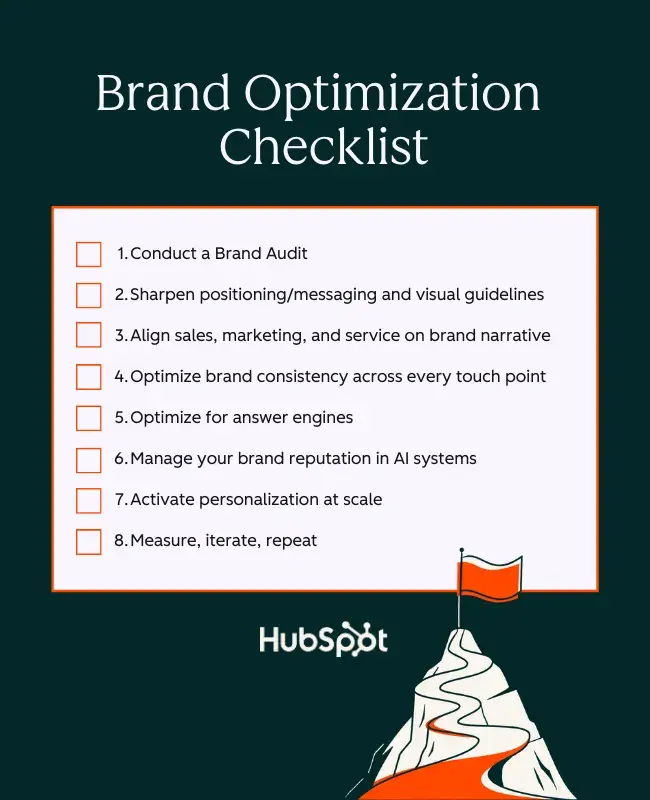
A strong brand optimization initiative follows a clear workflow:
- Check where you are
- Define where you need to be
- Align your team
- Iterate based on real data.
Here’s how to do it.
Step 1: Conduct a brand audit
A brand audit is the basis of every optimization measure. You can’t set a goal or goal if you don’t know where you are, and many companies are surprised at how inconsistent their brand is when they actively look for it.
Your audit should include:
- Consistency of messages: Gather your website, sales collateral, email sequences, paid ads, social profiles, and support documentation. Does your core value proposition sound the same to everyone?
- Visual identity: Are your fonts, color palette, logo usage and images consistent? Are your brand guidelines actually being applied?
- Brand perception: Conduct a quick survey with customers, prospects, and churned accounts. Ask them to describe your brand in their own words. Compare your answers with how you describe yourself. You can also check your brand mentions on social media and forums to assess how your audience openly describes and discusses you.
- Competitive positioning: How do your messages compare to your top three to five competitors? Where do you sound like? Where do you see a real difference?
- Team alignment: Survey your sales and customer success teams. What words and stories do they use to describe your brand? Do they fit with marketing?
Pro tip: Tools like HubSpot Marketing Hub can help you centralize brand assets and check email and landing page consistency at scale – especially useful for larger teams managing multiple campaigns simultaneously.
Step 2: Sharpen your positioning/message and visual guidelines.
The audit will reveal gaps. Step 2 is about repairing the underlying messaging foundation before launching new content.
Positioning and messaging
Your message should contain the following:
- A clear, differentiated positioning statement and brand narrative (not just a slogan – the full strategic logic of why you win)
- A value proposition ladder organized by audience segment or persona
- Proof points and customer evidence for each key claim (e.g. usage statistics, testimonials, case studies)
- Consistent language for your core products, features, benefits and results.
- Understanding your brand architecture
In this step, you should also check your brand’s alignment with the customer Trust signals.
According to the 2025 Edelman Trust Barometer Special Report on Brand Trust80% of consumers trust brands that they now use more than most institutions (e.g. corporations, media or government), and trust has become as important a purchasing factor as quality or price (88% cite both as important factors).
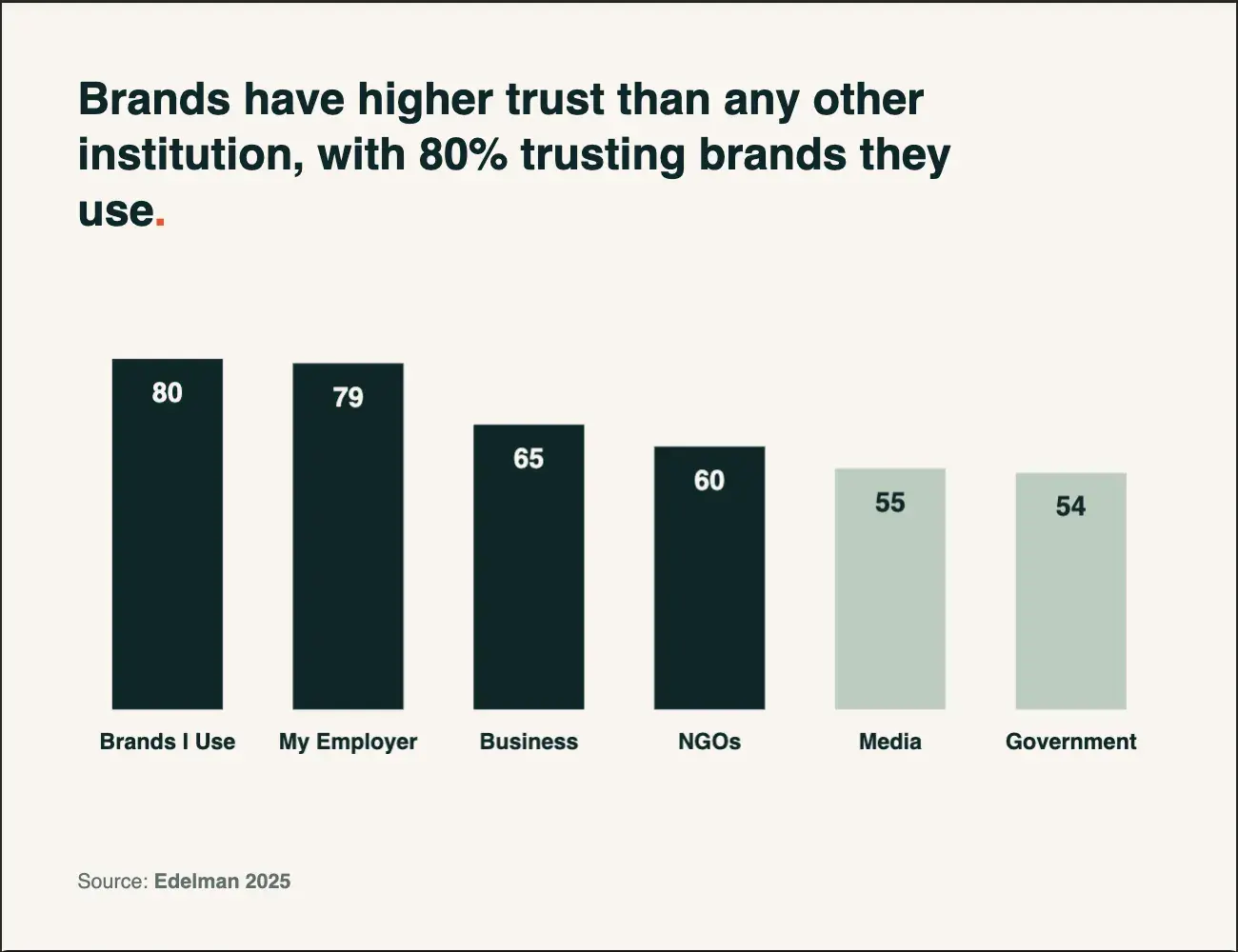
Look for trust signals that you want to convey consistently in your messages, such as: E.g. customer reviews and ratings, safety badges, certifications or industry awards.
Overall, the message should reflect what your brand actually delivers, not just what sounds appealing.
Pro tip: Our AI Brand voice function can help keep your voice and tone consistent across all your assets and touchpoints by analyzing and documenting your unique style. This information is used to generate content for you using Breeze Assistant, or you can upload it to other tools such as ChatGPT, Grammarly or Claude.
Visual guidelines
Visual brand guidelines can rightly be detailed. When it comes to marketing, make sure you at least have clear guidelines on:
- Logos and product/service images: Should your product only be shown in certain scenarios? Are there specific ways your logo can or cannot be displayed or used? Provide files and examples of correct and incorrect usages.
- Permitted brand colors: Share approved color codes and combinations for your brand.
Apple does a great job of showing how its brand badges should be used in its media kit.
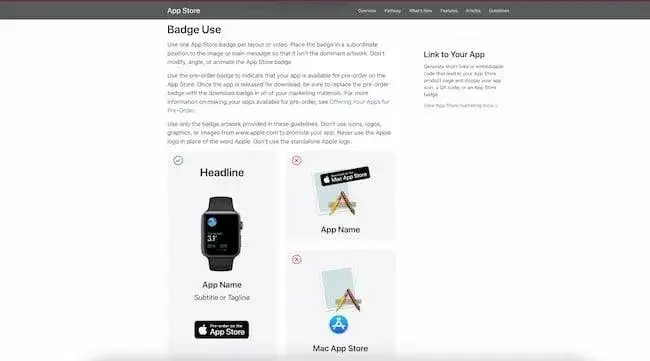
Step 3: Align sales, marketing and service with the brand narrative
Research from Capital One Shopping found that about 95% of companies have brand guidelines, but only about 30% say they do widespread and recognized throughout your organization. That is, the problem is not in the documentation, but in the acceptance.
Once you’ve defined your message and brand narrative, you need to make sure your team is using it.
Inconsistent messaging across teams is one of the most common and costly brand issues teams can face. Marketing says one thing and a sales rep says another; Buyers notice. It undermines trust, lengthens sales cycles, and can even lead to churn if buyers feel they were misled during the sales process.
I mean, think about how you would feel if a salesman drastically exceeded the mileage on a car he was trying to sell you. This happened to me once and it still wears me out to think about it.
These inconsistencies are often unintentional, but harmful nonetheless.
To avoid them, ensure your teams are aligned with your brand narrative by:
- Develop a shared brand narrative document (not a long style guide, but a concise, practical reference for how to talk about the brand). HubSpot Brand Voice can help here too.
- Conduct brand narrative workshops with your entire company, not just marketing.
- Create modular message blocks and templates that sales reps can use and customize without going off-brand.
- Incorporate brand consistency checkpoints into your evaluation process. Here too, inconsistencies can easily occur accidentally. A quick QA can help stop the problem.
Pro tip: HubSpot’s sales hub allows marketing and sales teams to share approved content, sequences and message templates, making it easier to maintain brand consistency at the moment of actual customer interaction.
Step 4: Optimize brand consistency at every touchpoint
Once the team is trained, it’s time to implement your brand and ensure it’s applied consistently everywhere a shopper encounters it.
Map your customer journey from initial awareness to post purchase and review the brand experience at every touchpoint. This may include, but is not limited to:
- Paid ads
- Social media content
- Organic content (e.g. website texts, blog articles)
- Landing pages
- Emails
- Sales conversations
- Suggestions
- Onboarding materials
- Support documentation
- Renewal communication
Pro tip: Pay particular attention to the transitions between marketing, sales and service. It is during these handoffs that brand consistency tends to break down and buyer trust is most easily lost.
Step 5: Optimize for Answer Engine Optimization (AEO)
Ok, this step is new territory for most brand teams, but it quickly becomes essential.
Nobleman found that 91% of consumers using generative AI and LLMs (ChatGPT, Perplexity, Gemini, Claude, and others) use them for shopping, including brand research, product comparison, and review aggregation.
This is not niche behavior. This is a mainstream buyer journey.
However, the way your brand appears (or not) in AI responses is critically important as it can impact your brand awareness, credibility, and even sales. It also relies heavily on brand consistency, not just on your website but across the internet.
To optimize your brand for AI visibility or AI search:
- Create reliable, well-structured content. Directly answer common questions your buyers ask LLMs. Think conversationally, specifically and broadly.
- Use structured data (schema markup) on your key pages. This helps AI systems easily rank and classify your content.
- Get third-party mentions and citations from high-ranking sources. Think of trade publications, analyst reports, industry summaries and rating platforms.
Research shows that brand search volume is the strongest predictor of LLM citations with a 0.334 correlation coefficient outperforms traditional backlink metrics.
- Maintain consistent social and database profiles. Consistent profiles on Wikidata, LinkedIn, Crunchbase, G2, social media and relevant review platforms make your brand easily recognizable as a true entity.
- Support your claims. Incorporate data-backed statistics and original quotes from experts into your content. Research shows that these elements can increase AI visibility by 22-37%.
Learn more about each of these tactics and brand consistency in our articles:
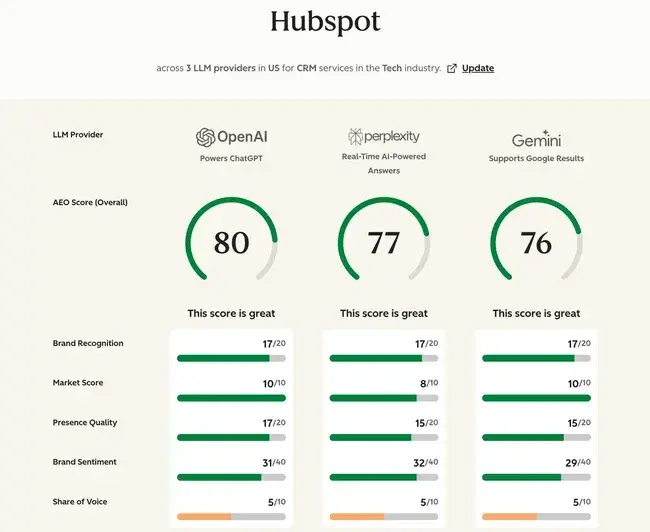
Pro tip: HubSpot’s free AI Search Grader AEO Grader tools help you audit and track your brand’s visibility and representation in AI-powered search – a critical measurement gap for most marketing teams in 2026.
Step 6: Manage your brand reputation in AI ecosystems
Optimizing for AEO is not just about appearing in LLM responses, but also about controlling how they represent you. AI systems can perpetuate outdated, inaccurate, or competitive narratives about your brand if you don’t actively manage the signaling landscape.
So stay alert. 77% of market leaders They admit that they lack a clear strategy for detecting AI engines. That’s a significant competitive difference – and an opportunity for teams willing to make the first move.
To Manage your AI brand reputation, Follow these practical steps:
- Conduct regular brand audits using AI tools: Query ChatGPT, Perplexity, and Gemini with the questions your buyers are most likely to ask. Are the answers correct? Is your brand mentioned? Which competitors appear alongside you?
- If necessary, update and consolidate your Wikipedia presence. Wikipedia is one of the most frequently cited sources by LLMs and serves as an important entity signal.
- Monitor and respond to reviews: G2, Capterra, Trustpilot and other review platforms are regularly cited by AI systems.
- Proactively publish and distribute original data. Don’t just cite other people’s data; Be the source that others link to. Invest in original research, case studies, and thought leadership that reinforce your brand’s key narratives and demonstrate ownership HubSpot’s State of Marketing Report 2025.
Step 7: Enable brand personalization at scale
Personalization and brand consistency may seem like opposing goals, but they are not. Let me explain.
Brand personalization at scale means delivering content and experiences that feel tailored to the individual while remaining unmistakably on brand. In other words, it’s about creating values and experiences that are unique to each individual, as only your brand is.
Going back to Spotify, Wrapped is a perfect example of combining personalization and brand optimization.
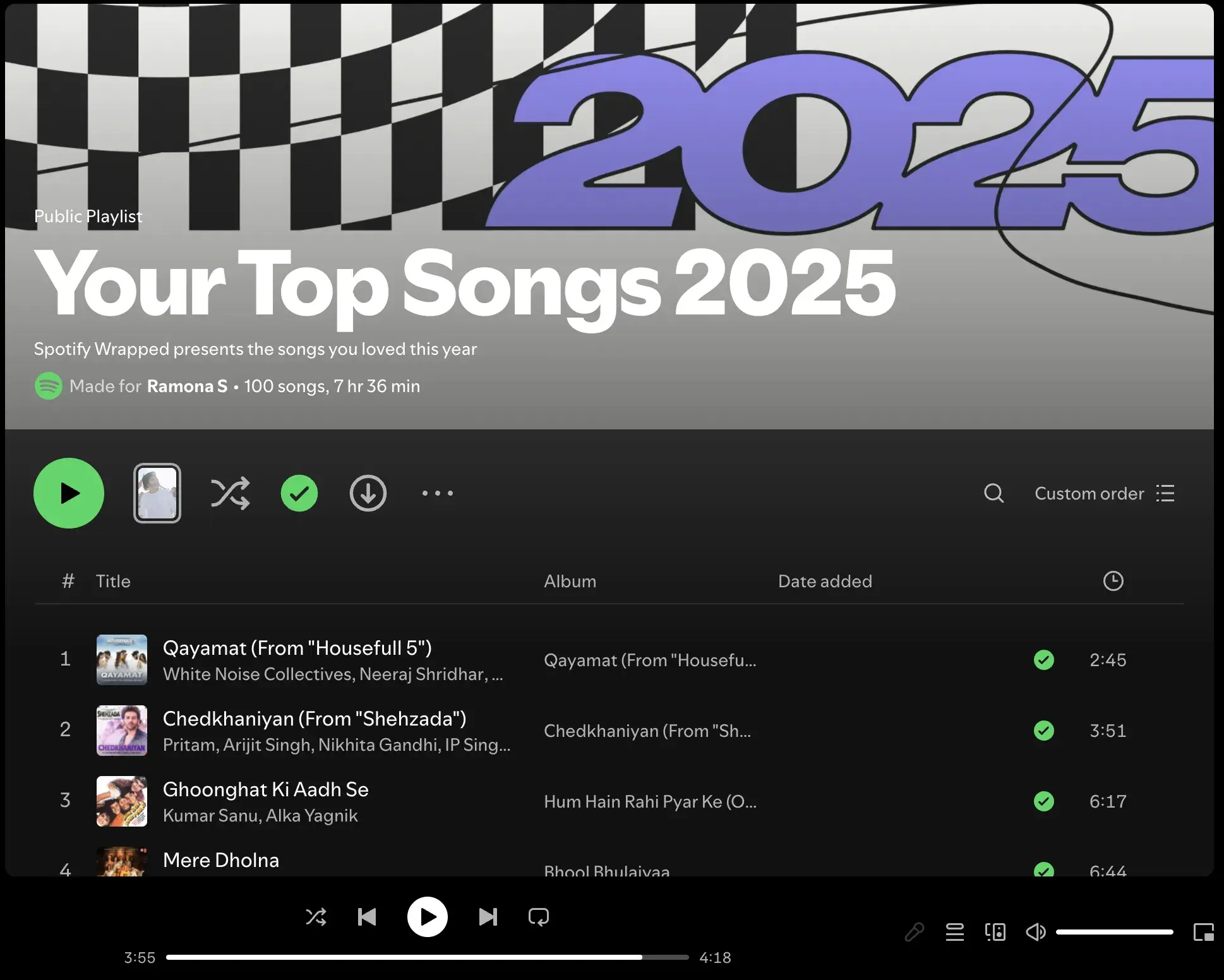
But there are also simple and thoughtful ways smaller brands can make this happen. For example:
- Use dynamic/personalized content. Develop segment-specific messaging variations that share the same positioning foundation but adapt focus, proof points, and language to different industry verticals, buyer personas, stages of the funnel, or lifecycle stages.
- Use AI to generate personalized content. AI can help you quickly create content variations at scale without compromising the consistency of the brand voice. Breeze AI can help you do this directly in HubSpot.
- Create content templates and AI-powered workflows. These give your team the flexibility to personalize while defining core brand design elements and experiences.
- Train your AI tools based on your brand voice guidelines. Knowing these guidelines allows AI-generated content to remain on-brand even at high speeds.
Step 8: Measure, Iterate and Repeat
Brand optimization is not a project with an end date; It is a regular improvement practice. Step 8 is about building the rhythm of measurement and review that shapes your brand over time.
This schedule is subject to the conditions or triggering events we discussed previously. However, if these remain consistent, review your brand’s performance at least quarterly. The review should include:
- Brand health survey data
- Message consistency checks
- AI visibility monitoring
- Assessment of competitive positioning.
Use insights from each cycle to prioritize next optimization efforts. In the next section you will find the specific metrics and tools you can track.
How to measure success through brand optimization
Vanity metrics like impressions, follower counts, and page views can be exciting to look at, but for most companies, they don’t provide real insight into whether brand optimization is working. Here are some metrics that do this and how you can track them.
1. Brand health and perception metrics
To get an overall picture of how your brand is perceived by your audience, track the following:
- Unsupported brand awareness (or Brand presence). So often you spontaneously think of your brand in your category. For example, if someone asks, “What companies come to mind when you think of CRM software?”
Note which brands are spontaneously mentioned and in what order (the first mention, called “top of mind awareness,” is the most valuable). You can run these through tools like Qualtrics, SurveyMonkey, or TypeForm, or run your own focus groups.
- Brand popularity. This was measured by asking respondents who know your brand to rate their positive impression of it (usually on a scale of 1 to 5) and tracking the percentage at which you were viewed positively (top two box – “favorable” or “very positive”).
- Net Promoter Score (NPS). On a scale of 0-10 (Promoters (9-10), Passives (7-8), Detractors (0-6)), this is how likely a customer is to recommend your brand to a friend.
HubSpot Service Hub has a native NPS survey feature – you can send surveys via email (see below) or embed them in web pages, and responses are tracked in an Analyze tab per survey.
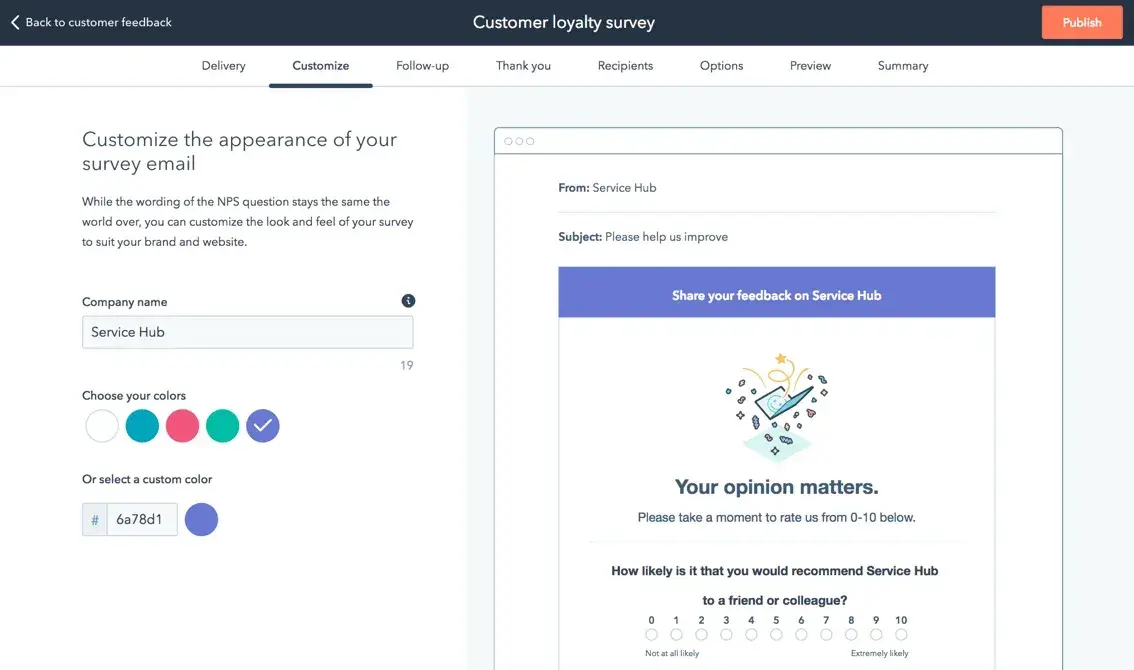
You can’t add a calculated NPS score to a custom dashboard in HubSpot. But with an integration like Delighted or Retently, you can sync your results back to HubSpot contact records for better reporting.
All of these metrics are only valuable if you track them regularly and pay close attention to how they rise or fall. Benchmark them quarterly to track their performance. A rising NPS, along with an increasing close rate and unsupported brand awareness, is a strong signal that brand optimization is working.
Free Download: 5 free customer satisfaction survey templates
2. Evaluating message consistency
Review your key brand touchpoints (e.g. website homepage, sales platform, top emails and paid ad copy) quarterly and evaluate them against your messaging architecture.
How many use the agreed value proposition? How many deviate from the script? This internal metric will become a leading indicator of brand health over time.
3. Revenue and pipeline attribution
Organizations that consistently maintain a strong brand presentation report sales growth of 10-20% This is due to brand consistency initiatives, with some studies putting it as high as 33%. But how do you measure that?
Specifically, look at direct traffic (an indicator of brand demand), branded search volume in Google Search Console, and offers that come from brand-building activities like thought leadership, events, and PR.
HubSpot’s Marketing Hub and Content Hub can too Measure and track attribution across the entire customer lifecycle using a variety of models and interactions.
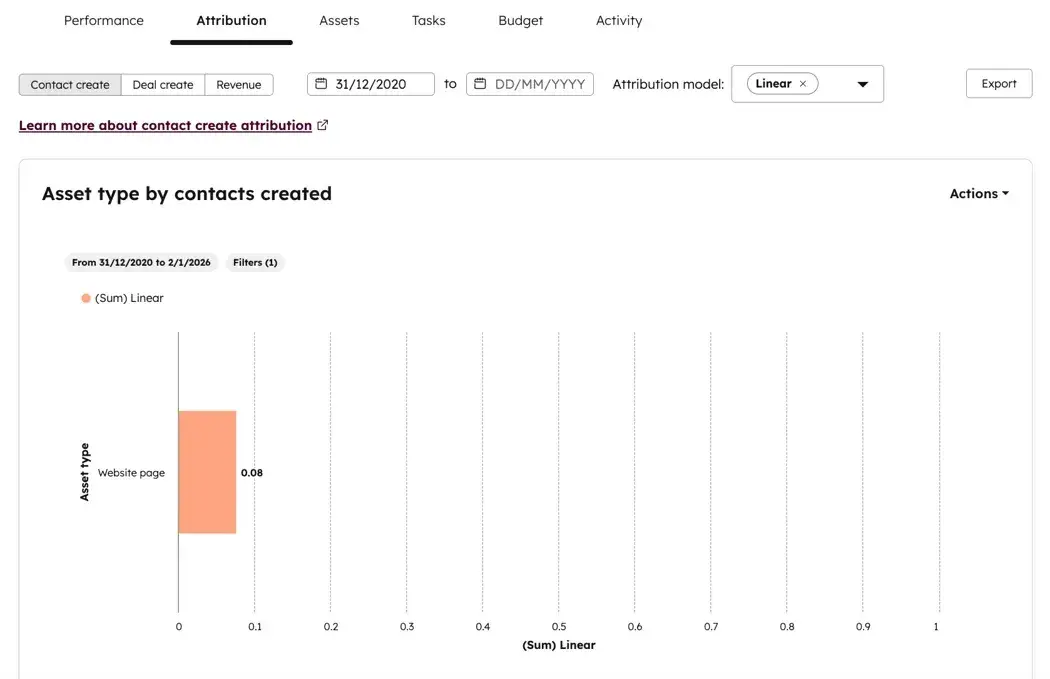
Learn how to set up and use attribution in HubSpot our free online course “Attribution Reporting in HubSpot”.
4. AI brand visibility and share of voice
You’ve probably heard a lot about brand visibility and share of voice with the rise of AEO and GEO. They evaluate how often your brand appears in LLM answers to the most important questions in your category, but why do they even matter?
SEMrush data shows that LLM Recommendation users convert 4.4x faster than traditional organic search visitors. So you want to be visible in AI systems.
To monitor your performance, track how often your brand appears in AI-generated answers to the questions your buyers are most likely to ask. There are two main approaches:
- Manual query – Periodically (weekly or monthly), run a set of 10-20 goal prompts in ChatGPT, Perplexity, Gemini, and Claude, screenshot or log the results, and track whether your brand appears and where it lands in the response. Low-tech but gives you direct insight into what buyers actually see.
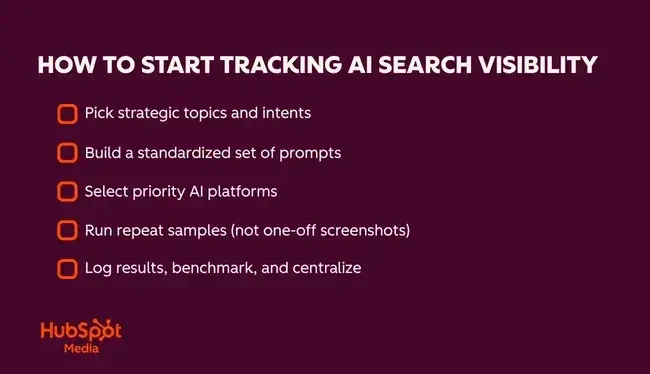
- Dedicated AEO/LLM tracking tools – Tools like HubSpot’s AI Search Graderas well as third-party platforms like Semrush’s AI Visibility Index allow you to systematically track brand mentions, citation frequency, share of voice compared to competitors, and which of your pages are cited.
Pro tip: Not sure what questions your customers are asking? Chat with your sales and customer service representatives to see what concerns or questions they address most frequently. You can also stop by AnswerThePeople to see what your target audience demands overall.
Make sure you create a simple brand KPI scorecard to track these metrics quarterly. Include benchmarks from your previous quarter and note any brand optimization activities that may have resulted in movement. Over the course of 12 months, this will become one of the most valuable strategic assets your marketing team owns.
Frequently asked questions about brand optimization
When should you optimize a brand or rebrand?
Brand optimization differs from rebranding in that it focuses on iterative improvements rather than a complete identity realignment.
Therefore, it’s best to optimize your brand if your core identity – your name, your basic positioning, your visual system – is still solid, but the execution is inconsistent or your messaging hasn’t kept pace with business changes.
Rebrand if your identity itself is the problem. Maybe your name is causing confusion, your visual identity is irretrievably outdated, you’re entering an entirely new market, or a significant reputation crisis requires a clean break.
Most companies that think they need a rebrand actually just need a brand optimization. Rebranding is expensive, disruptive, and takes 12 to 18 months to see results. Optimization is faster, more targeted and often delivers greater impact in the short term.
How long does it take for brand optimization to show results?
The brand optimization timeline depends on what you are optimizing and what you are measuring.
- Internal alignment improvements (consistency in sales team messaging, adoption of brand guidelines) can produce measurable results within 30-60 days.
- Brand perception metrics such as NPS and unaided awareness typically range from two to three quarters.
- Revenue attribution associated with brand investments typically occurs over a period of six to twelve months.
- AI brand visibility is newer and harder to generalize, but initial improvements in LLM citation counts can occur within four to six weeks of content and AEO strategy changes, with significant share-of-voice gains requiring three to six months of consistent effort.
How can sales and service best adapt to a new brand narrative?
Don’t send them a document. Alignment and acceptance require commitment.
The most effective approaches combine live workshops (where teams can ask questions, express their own language, and see why the new narrative is important to them) with practical tools: modular message blocks, battlecard updates, updated conversation tracks, and leadership reinforcement. If the sales manager doesn’t use the new narrative in pipeline reviews, neither will the sales reps.
HubSpot’s sales hub makes it easier to distribute and track adoption of branded content and sequences, so marketing can see if the new narrative is actually being used and not just downloaded.
Can small teams optimize their brand without an agency?
Absolutely. Brand optimization is more of a mindset and process than a budget line. A small team can implement a meaningful brand optimization initiative by:
- Conduct a cost-effective brand perception survey (even a five-question survey of 50 customers is valuable)
- Review the top ten brand touchpoints using a simple messaging checklist
- Conduct regular LLM queries to check the visibility of your AI brand
- Use HubSpot’s Content Hub and Breeze AI to optimize the production of brand-consistent content
Agencies can speed up the process, but are not a requirement. The most important input is an honest, structured self-assessment – and the discipline to act on what you find.
How do you ensure personalization stays aligned with the brand at scale?
The key to maintaining consistency while personalizing at scale is to have a clearly defined brand voice and messaging architecture before launch. That way, whether it’s an AI or a team member doing the work, they have something to evaluate their language against.
In practice, this means setting brand guidelines and creating on-brand content templates using AI tools like HubSpot’s Breeze. These resources provide both AI and humans with clear guidelines about what they can and cannot do. As a safety net, careful review of personalized content against brand standards should also be part of your quality assurance process.
Stay optimized. Stay relevant.
Brand optimization is one of the most powerful activities available to a marketing leader, but also one of the most underrated.
Unlike its flashy cousin, rebranding, optimization doesn’t require a new name, logo, or six-month agency engagement. It requires honesty about where your brand is lagging, a structured process for closing those gaps, and the discipline to measure what matters.
In 2026, that job includes ensuring your brand is accurately represented and visible to the AI tools shoppers use every day. The teams that embrace AI brand visibility as a core brand management effort will have a significant and compounding competitive advantage.
Start with the audit. Build the messaging foundation. Align your teams with one another. And then track it – because a brand that isn’t measured can’t be optimized.
To get a head start, download it HubSpot’s free Brand Style Guide template for documenting and distributing your brand standards across teams.