


TL;DR: I rate and compare the best peer-to-peer fundraising plugins for WordPress. Charitable is the best free option and easy to use thanks to the drag-and-drop builder. GiveWP offers more features compared to the free plan and uses a modular add-on approach to keep costs down.
One of my most ambitious projects was helping a food bank with their online presence. Their main problem was retaining donors.
They asked for help, people gave once and then disappeared.
Then her volunteer coordinator had an idea: What if regular supporters could create their own donation pages and ask their friends? The answer came immediately.
Nonprofits, individuals and small charities are realizing the same thing. Peer-to-peer fundraising works because it harnesses the power of personal networks.
Instead of just asking for money once, empower your community to fundraise on your behalf. WordPress makes this possible. And choosing the right plugin will determine whether your supporters find it effortless or frustrating.
In this article, I list the best peer-to-peer WordPress plugins that will not only help you raise more money but also motivate your donors to support more.
Key insights
- I’ll show you peer-to-peer fundraising plugins that your supporters can use to create their own campaign pages without any coding
- I mention tools that don’t charge a platform fee. A decisive advantage over external SaaS fundraising platforms
- Discover which plugins work best for small nonprofits versus larger organizations with teams
- I tested seven options to find out which ones actually make peer-to-peer setup easier
This is how I test peer-to-peer fundraising plugins
🔍 Click here to see my testing methodology
Here’s exactly how I evaluate peer-to-peer fundraising plugins:
- Easy campaign creation – Can a non-technical supporter create a fundraising page in under 5 minutes? Are the steps intuitive?
- Customization without code – Drag and drop builder, template library, colors/branding (not just API access for developers)
- Donor experience – Are campaign pages mobile friendly? Can donors see progress toward their goals? Is the donation process smooth?
- Reporting and transparency – Can you see which campaigns are active, how much they have raised and who is contributing?
- Impact of platform fees – Does the plugin charge a percentage per donation or is it truly fee-free (for self-hosted payments)?
Tools I use:
- WordPress test sites – Setting up live donation forms in test environments
- Payment gateway documents (Stripe, PayPal) – Review of fee structures and payment processing
- WordPress.org review sites – Real user feedback on the setup experience
- GTmetrix – Testing campaign page speed (slow forms = fewer donations)
Why trust IsItWP?
At IsItWP, we’ve been the go-to source for the WordPress community since 2009, helping over 2 million users choose better plugins and tools.
Unlike review sites that never actually use the products, we maintain active accounts, conduct real fundraising testing, and offer ongoing WordPress consulting.
When I write about peer-to-peer fundraising plugins, I have set them up myself, created test campaigns, and watched supporters interact with them.
The best peer-to-peer fundraising plugins in comparison
Peer-to-peer fundraising has changed the way nonprofits and charities engage supporters.
With the right plugin, your community can collect donations on your behalf and turn donors into fundraisers.
Below is a comparison of the top options to easily launch and manage peer-to-peer campaigns from your WordPress site.
If you’re looking for more comprehensive fundraising strategies that go beyond peer-to-peer, check out our guide to the best WordPress fundraising plugins for a more comprehensive overview.
You can also use the table of contents below to see all peer-to-peer plugins for WordPress at a glance. Click on the links to read the section you want.
With that out of the way, let’s dive in.
1. Non-profit ⭐⭐⭐⭐⭐
Ideal for: Nonprofits who don’t want to pay platform fees and want full control over supporter fundraising pages
Non-profit is characterized by the fact that supporters can use it to create their own fundraising pages without making a contribution. Most SaaS fundraising platforms charge 2-5% per donation. Not charitable.
This means every dollar goes to your cause. When I tested the peer-to-peer setup, I was impressed by how straightforward it was.
A supporter creates an account, clicks “Start Fundraiser,” selects your cause, and their page goes live. No approval delays. There are no hidden fees when paying.
Why is Charitable one of the best peer-to-peer fundraising plugins?
The platform has gained trust from over 10,000 organizations worldwide. The 4.8/5 rating on WordPress.org reflects real-world usage by nonprofits managing hundreds of concurrent campaigns.
Thanks to the drag-and-drop campaign builder and multiple templates, you don’t need to customize the code.
You can set team donation limits, enable anonymous donations, and control what features supporters see.
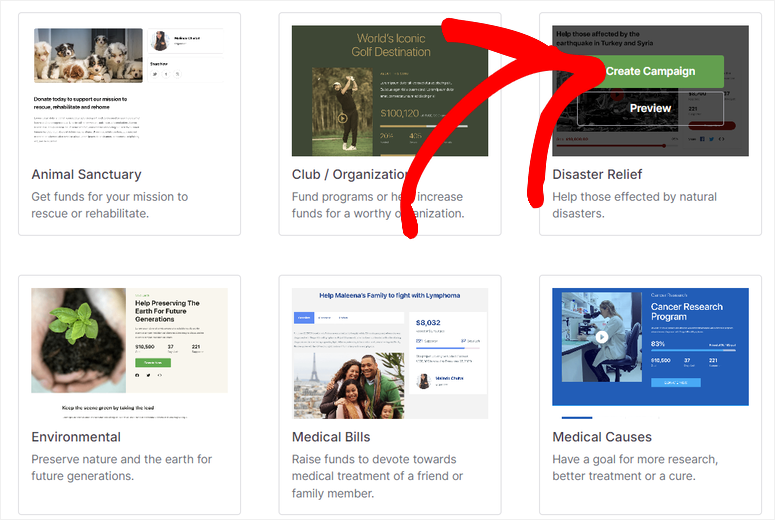
Unlike simple donation form builders, Charitable is specifically designed for peer-to-peer campaigns.
My experience with Charitable
I set up Charitable on a test site for a fictional non-profit organization (a wildlife rescue).
Using the drag-and-drop builder, I created a fundraiser, invited three test supporters, and watched their campaign pages fill up within 20 minutes.
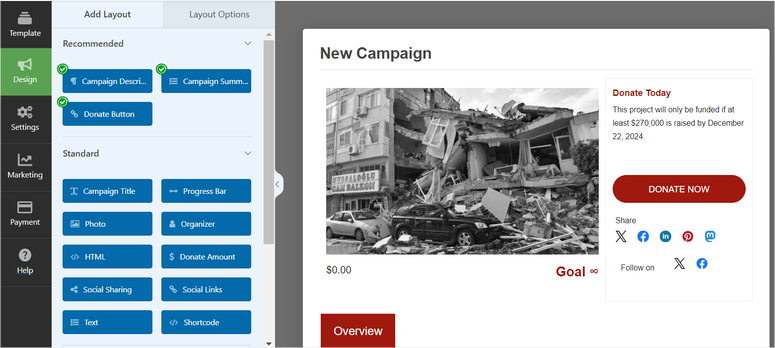
The interface felt intuitive. Supporters didn’t get lost in menus.
The reporting dashboard gave me a clear overview of which campaigns were active, how much each had raised, and who was donating.
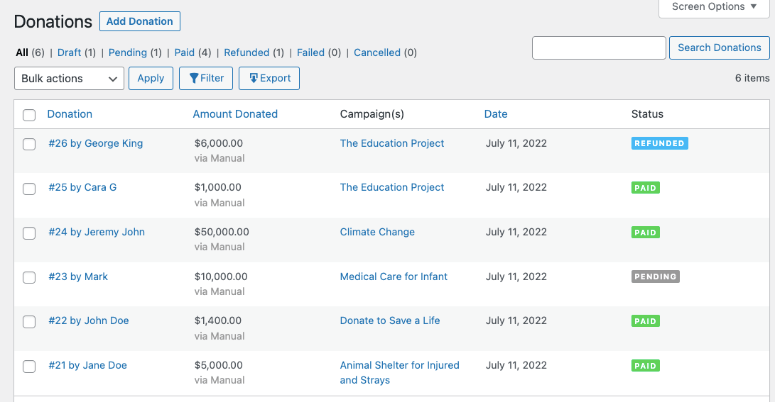
This is important because you need to recognize and publicly thank the best fundraisers. Charity makes this easy.
I also tested it on mobile devices and the campaign pages loaded quickly. I recorded it in under 2 seconds over a 4G connection.
Speed is important because slow fundraising sites lose donors, which is why testing your website speed is crucial for fundraising sites.
I noticed one point of friction: Peer-to-peer functionality requires the paid Plus plan. If you only purchase the Essential tier, you will not be able to unlock this feature, although the Essential tier will still cover basic donations.
🟢► Advantages
- No platform fees for all plans – Every donation goes to your cause, not to charities or payment processors
- Autonomy of supporters – Your community can create unlimited campaign pages without any approval issues
- Integrated team functions – Supporters can form fundraising teams with shared goals and leaderboards
- Professional reporting – Detailed dashboards showing which campaigns are generating the most revenue
- Customizable donor experience – Set minimum donations, recurring options and thank you messages
🔴► Disadvantages
- Peer-to-peer requires a paid plan – Plus level is required to unlock supporter campaigns
My verdict: Charitable is the best choice for your nonprofit if you want to maximize revenue by eliminating platform fees. If you run a large nonprofit with multiple fundraising teams at once, the reporting and fee structure makes this a no-brainer.
Prices: Free plugin available | Pro starts at $69/year
For more information about its features, see my Charitable review.
2. GiveWP ⭐⭐⭐⭐⭐
Best for: Organizations that want to start peer-to-peer fundraising for free and scale it as they grow
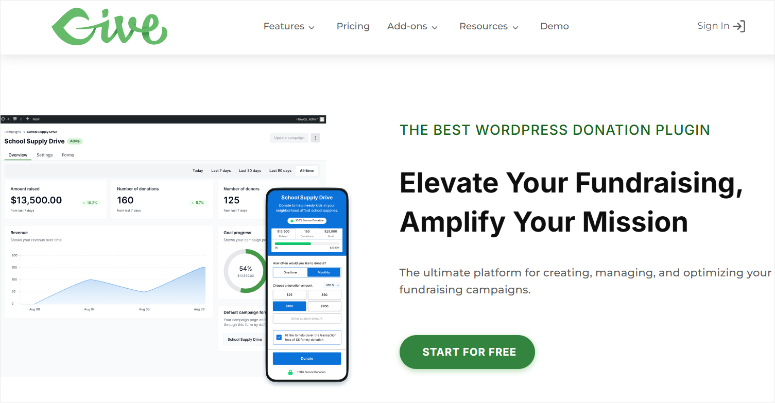
GiveWP powers over 100,000 nonprofit websites. This scale tells you something: it works.
The free version alone includes unlimited donation forms, donor management, and payment processing via Stripe or PayPal with no platform fees.
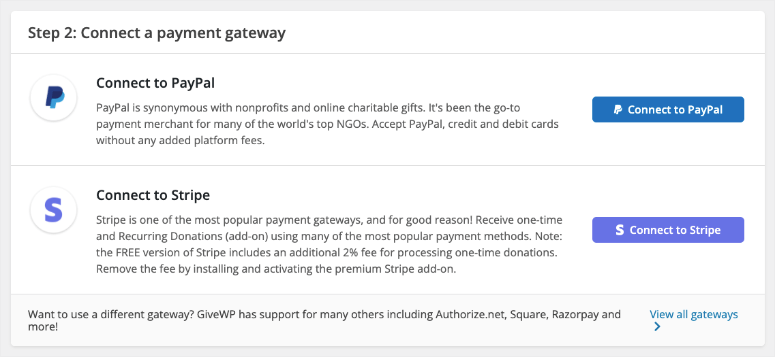
Most competitors lock these features behind a paywall. If you want advanced features like fundraising thermometers, leaderboards, and sponsorship tracking, then upgrade.
Why is GiveWP one of the best peer-to-peer fundraising plugins?
The peer-to-peer add-on turns GiveWP into a complete team fundraising platform.
Supporters get their own fundraiser profiles, see live leaderboards of top fundraisers, and attract sponsors for their campaigns.
I’ve watched nonprofits use this to turn their largest donors into co-funders. It’s a multiplier effect: you’re not charging 100 people $100 each. You ask 10 advocates to recruit 10 friends each.
That’s good growth.
My experience with GiveWP
I tested GiveWP on a non-profit website for a nonprofit youth education organization. Setting up the free version took 15 minutes: installation, creating a form and connecting Stripe. Completed.
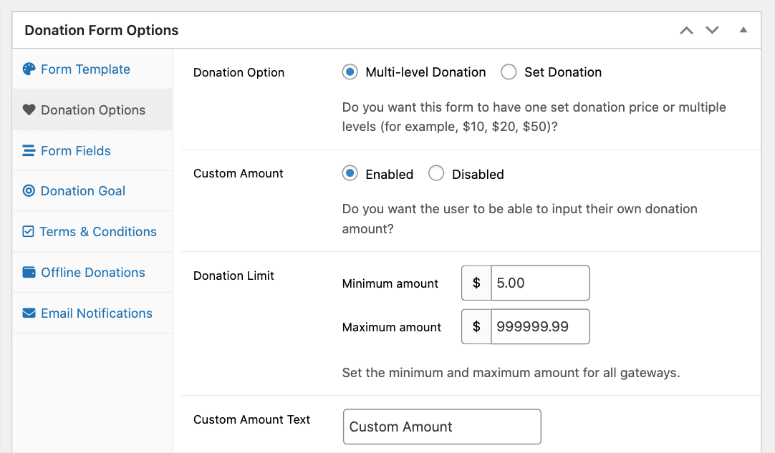
Two months later I upgraded to add peer-to-peer. The activation went smoothly. I could immediately see where supporters could click “Start Fundraising.”
Her dashboard was clean and clutter-free, which made scanning faster. I shared a donation link with five test accounts. Everyone created their own campaign page in less than 90 seconds.
I noticed the leaderboard feature.
Top fundraisers, totals, and progress bars were displayed for each campaign. That built-in social proof. Find out who is gathering the most motivated supporters to continue fundraising.
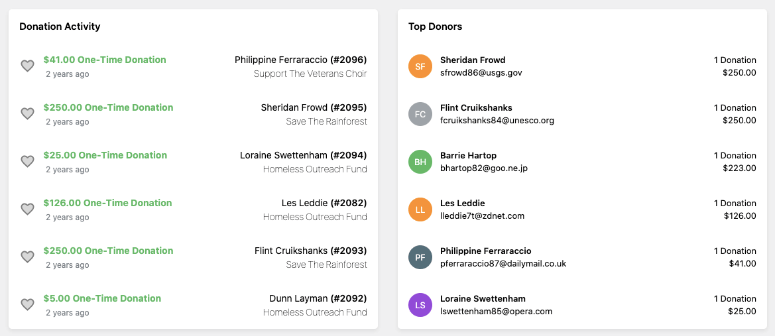
I’ve seen this psychology work in practice: people compete (in a healthy way) to support causes they care about.
One disadvantage: Setting up the peer-to-peer add-on required an additional step to integrate the new extension, and the documentation could be clearer for non-technical teams.
🟢► Advantages
- The free tier is really useful – Unlimited forms, Stripe/PayPal integration, donor database with no fees
- Modular extensions – Pay for peer-to-peer only when you need it; Other features do not require bundled upgrades
- Leaderboard and sponsorship features – Gamification drives engagement and repeat fundraising
- Greatest community support – Over 100,000 nonprofits means active forums and documentation
- Mobile-first design – Campaign pages and forms are optimized for phone donors (70% of online donations occur on mobile devices)
🔴► Disadvantages
- There is a separate cost for the peer-to-peer add-on – Peer-to-peer is not included in the free tier, so opt for the premium plan for this feature
- Steeper learning curve for smaller teams. More features = more menu options to navigate
My verdict: GiveWP is ideal if you’re ready to start lean with the free tier and scaling. The modular approach means you aren’t forced to buy features you don’t yet need. For nonprofits with a limited upfront budget, this is the way to evolve into peer-to-peer organizations.
For more information, see my GiveWP review.
Prices: Free plugin available | Pro starts at $149/year
👉 Get started with GiveWP here
3. Dispenser box ⭐⭐⭐⭐⭐
Ideal for: Teams that want the fastest onboarding, even if it means incurring transaction fees
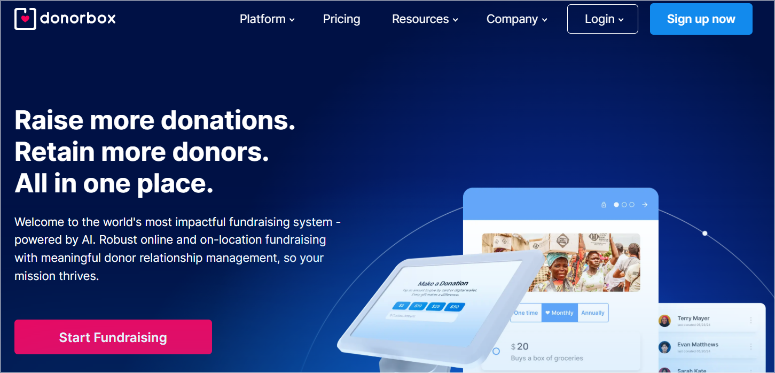
Donorbox is a SaaS solution embedded in WordPress.
You do not host the fundraising on your server; Donorbox hosts it and embeds the widget on your website.
There is one downside to this: setup is incredibly quick (literally minutes), but Donorbox charges 2.95% + transaction fees per donation. A $100 donation will set you back about $4.95. Over a year it adds up.
Why is Donorbox one of the best peer-to-peer fundraising plugins?
However, Donorbox is peer-to-peer because supporters do not need WordPress accounts. You create a fundraiser directly on Donorbox, receive a link and share it.
The barrier to entry is lower than self-hosted plugins. Donorbox also includes team fundraising, milestone tracking, and integrated social sharing. If your priority is speed of launch, Donorbox wins.
My experience with Donorbox
I embedded Donorbox on a test WordPress site. The widget installed in two minutes. I created a campaign and shared the fundraiser link with test supporters.
They didn’t need accounts. They clicked on the link, created a fundraiser in less than a minute, and received a shareable URL.
The supporter experience was effortless. Mobile fundraising pages loaded quickly. Donors could donate without creating an account (guest donations). This is important: fewer friction points = more completed transactions.
The friction I experienced was cost transparency. When I checked the reports, the dashboard showed donations, but the fees weren’t clearly broken down until I delved into the settings.
For nonprofits with low profit margins, this hidden fee structure is risky.
I also noticed that Donorbox doesn’t integrate as seamlessly with WordPress native tools WordPress security plugins or custom post types. You rely on Donorbox’s hosted infrastructure.
🟢► Advantages
- Fastest setup of all options – Minutes, not hours, to start peer-to-peer fundraising
- No WordPress account is required for supporters – Lower barrier to entry; Guest fundraisers work
- Integrated team fundraising – Supporters can form teams, see common goals and compete on leaderboards
- Strong mobile experience – The donation pages are fully responsive and fast
- Recurring support – Monthly subscriptions and recurring fundraising campaigns are integrated
🔴► Disadvantages
- The transaction fees add up – 2.95% + payment processing fees represent a loss of approximately 5% per large scale donation
- Less WordPress integration – Does not directly use your WordPress audience/member plugins
- Prices for monthly billing – Plan on paying $150/month for full access, which quickly adds up for smaller nonprofits
My verdict: Donorbox is best suited for companies that value speed and convenience over cost optimization. If you have limited technical resources and need live peer-to-peer fundraising this week, Donorbox will get it done. However, budget-conscious nonprofits should compare fee impacts over a year.
Prices: Free Tier | Pro starts at $150/month
👉 Start here with Donorbox
4. Why donate ⭐⭐⭐⭐
Best for: Smaller nonprofits and individuals who need peer-to-peer fundraising without the complexity
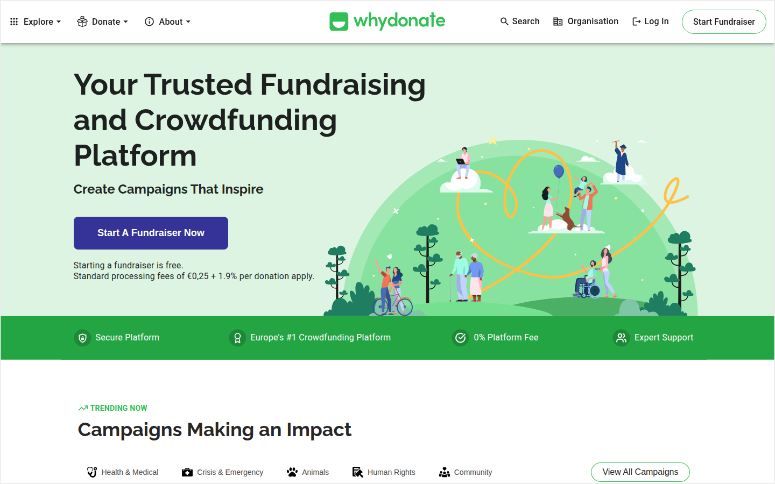
Why donate Reduces complexity as the interface is minimal. You simply create a campaign, customize the colors, set a goal, and embed it in WordPress. Completed.
There is no overwhelming dashboard or advanced reporting features. For a food bank, animal shelter, or individual fundraiser, this simplicity is a strength. You don’t pay for features you’ll never use.
Why is WhyDonate one of the best peer-to-peer fundraising plugins?
This peer-to-peer plugin lets you customize fundraising buttons and styles, making campaigns feel like a part of your website rather than a third-party embed.
WhyDonate also handles both one-off campaigns and ongoing fundraising efforts. This allows you to run a seasonal fundraising campaign or a permanent stream of donations at the same time.
My experience with WhyDonate
I tested WhyDonate on a very small nonprofit website.
Installation took five minutes and the interface immediately felt familiar and not bloated. I created a campaign, got a short code, put it on a page and the campaign went live.
I shared it with testing supporters. Your campaign creation was even easier than with Donorbox: Name, Goal, Description and Live. Most importantly, the mobile rendering was clean.
The downside: WhyDonate has less community documentation than Charitable or GiveWP. When I had a question about customizing donor emails, I had trouble finding an answer.
For nonprofits with in-house tech support, this isn’t a dealbreaker. For those who rely on community forums and tutorials, this is a risk.
🟢► Advantages
- Simplicity first – No overwhelming feature bloat; easy to manage for small teams
- Customizable donation pages – Colors, fonts and messaging match your brand
- Freemium model – Start at no cost but pay transaction fees and a flat fee per transaction
- Individual and organizational fundraising events – Flexible for personal and nonprofit campaigns
🔴► Disadvantages
- Smaller community support – Fewer tutorials, forums, and third-party integrations than larger plugins
- Limited reporting – Basic fundraising tracking; Not suitable for nonprofits managing more than 50 campaigns simultaneously
- Transaction and processing fees add up quickly – If you are a large business, paying per transaction may result in you spending more than a normal monthly fee.
My verdict: WhyDonate shines for organizations with fewer than 5 employees or individuals conducting in-person fundraising events. If you prefer simplicity over advanced reporting, this is your choice.
Prices: Free, but with a processing fee of €0.25 + 1.9% per donation
5. FundEngine ⭐⭐⭐
Ideal for: Budget-conscious organizations that want full peer-to-peer functionality without paying a plugin fee
FundEngine is the placeholder. It is completely free on WordPress.org and requires no paid upgrades. This free peer-to-peer plugin is packed with features.
It includes peer-to-peer fundraising and front-end campaign creation, allowing supporters to create campaigns directly on your website.
Additionally, you get Stripe/PayPal integration with no platform fees or hidden costs. That’s rare.
Why is FundEngine one of the best peer-to-peer fundraising plugins?
You get a front-end dashboard where supporters can log in, click “Create Campaign,” and manage their fundraising pages without touching the WordPress admin.
The plugin also includes management of rewards/perks (Kickstarter-style campaign perks) and funding progress bars.
My experience with FundEngine
I installed FundEngine on a test site and was immediately impressed by the simple approach. The plugin is approx. 500 KB in size and can be activated quickly. The free features were really robust.
I created a campaign, set up the frontend dashboard, and invited test supporters. Your onboarding went smoothly. The progress bar UI was clean. Donation processing via Stripe worked smoothly.
The catch: FundEngine has limited community documentation. When I wanted to customize the campaign page template, I couldn’t find any clear instructions.
The plugin also lacks the polish and leaderboard gamification of GiveWP or Charitable. It does what it promises, but doesn’t delight you with design or community resources.
🟢► Advantages
- Completely free with full peer-to-peer features – No plugin fee; Only pay the payment processing fees
- Creation of frontend campaigns – Supporters never touch the WordPress admin; You manage campaigns on the public website
- Light and fast – The small plugin footprint keeps your website fast
- Elementor integration – Can customize campaign pages using Elementor builder
🔴► Disadvantages
- Minimal community support – Fewer third-party plugins, tutorials or integrations
- Basic design and UX – Functional, not pretty; minimal integrated gamification
My verdict: FundEngine is the right choice if budget is your main criterion and you’re willing to sacrifice gloss for affordability. Nonprofits just starting out with peer-to-peer fundraising or testing the concept should start here.
Prices: Free
6. Growfund ⭐⭐⭐
Best for: Community-driven causes that want to emphasize the autonomy of supporters
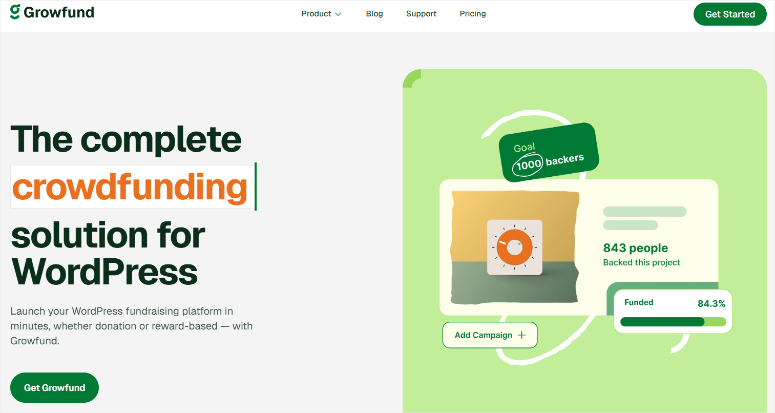
Growfund is based on one philosophy: your supporters are your best marketers.
The plugin prioritizes visibility like leaderboards, social sharing, and milestone updates. With every fundraising event, we see how others are doing.
Why is Growfund one of the best peer-to-peer fundraising plugins?
This transparency promotes healthy competition and motivates supporters to continue fundraising.
The plugin also includes support for recurring fundraising and peer funding, where supporters can support others’ campaigns, not just your organization’s cause.
My experience with Growfund
I set up Growfund on a test website run by an environmental nonprofit.
The setup was straightforward. The highlight was the leaderboard with real-time rankings of the top fundraisers, creating visible status that motivated test supporters.
One of my test accounts noticed that they were in second place and asked to advertise more. This psychology works.
The problem: Growfund’s documentation is sparse, similar to FundEngine. You rely on trial and error to adjust.
The plugin also doesn’t integrate deeply with membership plugins or email marketing tools, requiring you to manually notify your fundraisers.
🟢► Advantages
- Leaderboard and visibility – Real-time rankings of top fundraisers motivate continued engagement
- Peer funding support – Supporters can fund each other’s campaigns, not just the main cause
- Recurring fundraising events – Set campaigns to reset monthly or annually to generate ongoing revenue
- Easy customization – Colors and messages can be changed without code
🔴► Disadvantages
- Limited documentation – For extensive customization, you will need to experiment or hire a developer
- Smaller ecosystem – Fewer integrations with other WordPress tools like email marketing, analytics, etc.
My verdict: Growfund is best suited for causes with tight-knit communities where fundraising visibility and peer engagement are more important than expanded reporting. Environmental, educational and social justice nonprofits often thrive here.
Prices: Free plugin available | Pro starts at $74.50/year
That’s it for my list. But there is one tool, even though it’s not a peer-to-peer fundraising WordPress plugin, that I knew I had to include.
Also consider: WPForms
WPForms is the best drag and drop form builder for WordPress. As mentioned earlier, while this is not a dedicated peer-to-peer fundraising plugin, it does excel in donation forms.
You can set up payment collection and recurring donations and integrate them with your email marketing tool. If you already use WPForms for contact forms and surveys, adding the donation feature is seamless.
The downside: You still have to add peer-to-peer functionality manually via custom pages or additional plugins. WPForms is the foundation, not the complete solution.
For more information, see my WPForms review.
That’s it for my list of peer-to-peer fundraising plugins. But as you have seen, each has its strengths and weaknesses. To help you choose a product that meets your needs, read the section below.
How to choose
If you are a nonprofit with more than 5 employees and a budget:
- Non-profit or GiveWP are your top choices. Both eliminate platform fees and scale with your business.
If you are a small nonprofit or running your first fundraiser:
- FundEngine or Why donate allows you to perform peer-to-peer testing without any financial commitment. Start for free, upgrade if it works.
If you need the fastest setup and don’t mind transaction fees:
- Dispenser box is your plugin. Deploy it today, not next month.
When community and transparency drive your fundraising:
GrowfundThe leaderboards and peer funding features provide the social dynamic you need.
If you’re creating an integrated WordPress experience:
- GiveWPWith the free tier and modular add-ons, you can start easily and scale up.
The right choice depends on three things:
- Your budget. Free, $69/year or $199/year?
- Your team size. Solo, small team or large non-profit organization?
- Your technical comfort. Can you debug if something breaks or do you need plugin support?
Answer these questions honestly and the list will shrink quickly.
That’s it from me. If something is unclear, check out the frequently asked questions below.
FAQs: Best WordPress peer-to-peer fundraising plugins
What is the difference between peer-to-peer fundraising and regular donations?
Regular Donations ask supporters to donate directly to your cause. Peer-to-peer fundraising allows supporters to create their own fundraising campaigns for your cause, turning every supporter into a fundraiser. Instead of asking 100 people for $100, ask 10 advocates to recruit 10 supporters each. The leverage is exponential.
Do I need programming knowledge to set up peer-to-peer campaigns?
No. Every plugin on this list uses drag-and-drop builders and functional codes. You can set up a live peer-to-peer campaign without touching a line of code. If you can install a WordPress plugin, you can start peer-to-peer fundraising.
Which peer-to-peer plugin works best with WooCommerce?
Charitable and GiveWP both integrate with WooCommerce, so you can run a store and do peer-to-peer fundraising on the same website. If you sell products and collect donations, these two options are the safest for seamless integration.
How much does peer-to-peer fundraising cost per donation?
It depends on. Charitable and GiveWP do not charge platform fees. You only pay payment processing fees (Stripe/PayPal fees ~2.2% + $0.30 per transaction). Donorbox and similar SaaS solutions charge an additional 2.95%+. FundEngine is free. Over time, royalty-free plugins save thousands of dollars.
Can donors see the overall goal and progress of the campaign?
Yes. All plugins in this list display progress bars, target amounts, and funding milestones. Transparency leads to more donations. Donors like to see that a campaign is moving close to its goal.
Which plugin is best for fundraising for large nonprofit teams?
GiveWP and Charitable both shine here. They manage hundreds of simultaneous campaigns, provide bulk reporting, and have team management features. When you’re coordinating 50+ fundraisers, these two don’t sweat it.
Final Verdict: Should I Use Peer-to-Peer Fundraising on My WordPress Site?
Yes. Peer-to-peer fundraising works because it multiplies your reach without multiplying your demand. You don’t ask the same 100 donors for more money.
They give these 100 donors the opportunity to survey their networks. This shifts the psychology from “another donation request” to “helping something I care about.”
WordPress plugins make this possible without having to learn advanced code or move to external platforms.
Choose the plugin that suits your budget and team size, launch it within a week and watch what happens.
The food bank I mentioned three years ago now raises 40% of its annual budget through peer-to-peer campaigns. Your request can too.
Resource Hub: Peer-to-peer fundraising for nonprofits
Peer-to-peer fundraising is powerful, but it’s part of your nonprofit’s digital strategy. Here are resources to deepen your approach: