
Current data shows this 88% of marketers Now use AI every day to guide your most important decisions, and for good reason. Marketing automation is proven Generate 80% more leads and get 77% more leads. higher conversion rates. Now with global advertising spend over $1 trillionthere is simply too much data for even the most experienced teams to manage manually.
The secret is to move away from manual “guessing” and toward intelligent, integrated systems that do the heavy lifting. By letting sophisticated tools handle the technical details of testing, targeting, and scaling, marketers can focus on the overall strategy.
This article explores how tools like HubSpot, Optimizely, and AdStellar AI can help marketers optimize campaigns faster through smarter workflows.
Table of contents
What is campaign optimization?
Campaign optimization is the data-driven process of refining marketing efforts – especially digital ads – to improve performance and ROI. Instead of the “set it and forget it” approach, this method relies on constant analysis to ensure every dollar is working harder.
Successful marketing optimization includes monitoring key metrics, including click-through rates, conversions, and cost per acquisition.
How to optimize a marketing campaign
The process of optimizing marketing campaigns begins with universal best practices that apply to almost all channels. It then develops tailored tactics for paid ads, email, lifecycle marketing, and social and content programs.
Here are the eight fundamental steps that form the core of any optimization effort, divided into three pillars.
Pillar 1: Strategy and data alignment
Step 1: Set clear goals. Define concrete, measurable goals, e.g. B. increasing leads by 20% or improving click rates. These should serve as the north star of the campaign.
Step 2: Analyze audience data. Segment audiences by demographics, behaviors and preferences to enable the precise messaging needed for relevance.
Step 3: Review performance metrics. Examine key indicators from previous campaigns (such as conversion rates, cost per acquisition, and revenue impact) to determine the path forward.
Pillar 2: Allocation and review
Step 4: Allocate resources wisely. Distribute budget across channels based on historical performance and expected returns to ensure every dollar has a purpose.
Step 5: Run A/B or multivariate testing. Test variations of headlines, images, copy, and calls to action to find out what really resonates with your target audience.
Step 6: Real-time monitoring. Use analytics dashboards to track progress and quickly identify anomalies, giving you instant visibility during the flight.
Pillar 3: Iteration and Measurement
Step 7: Iterate based on insights. Apply data-driven adjustments to creative, targeting, and timing throughout the campaign lifecycle to keep the strategy agile.
Step 8: Measure overall impact. Compare the final results to the original goals to capture the insights necessary for all future campaigns.
Channel-specific optimization methods
Once you’ve established the general framework, apply these targeted steps to each major format. This two-part structure—starting with general, foundational steps and then moving to format-specific tactics—ensures campaigns are both strategically sound and compelling in execution.
Here are just a few of the tactics marketers can use across different channels:
1. Paid Ads Optimization
- Refine Targeting and bidding. Use lookalike audiences and retargeting lists to identify users with high purchase intent and adjust bids to prioritize the most profitable keywords, devices or placements.
- Test and track performance. Run multiple creative variations to identify the most relevant assets and implement pixel or server-side tracking to ensure an accurate record of every conversion.
- Scale and exclude. Shift budget to best-performing ad groups and pause underperforming audiences while excluding low-performing audiences or times to minimize wasted spend.
2. Email and lifecycle marketing optimization
- Segment and personalize. Segment lists by engagement level or purchase history, and customize subject lines, content, and send times based on specific subscriber data.
- Automate and test. Create automated workflows for welcome series or cart abandonment and A/B test layouts, copy, and offers to find the highest converting combinations.
- Monitor and clean. Track open rates and unsubscribe trends to assess health, and regularly remove hard bounces or inactive subscribers to maintain high deliverability.
3. Optimization of social and content programs
- Audit and planning. Review existing content to identify high-engagement posts and create a publishing calendar that aligns with peak audience times and current trends.
- Amplify and analyze. Increase reach through strategic hashtags or user-generated content and examine likes, shares, and saves to identify actionable engagement patterns.
- Repurpose and discover. Convert top-performing assets into native formats for multiple platforms and use SEO-friendly subtitles and alt text to increase organic discoverability.
Campaign optimization metrics that drive decisions
Effective marketing optimization requires different levers depending on where a lead is in the journey. Applying the same metrics across all phases results in wasted spend; Instead, alignment between channel and intent is imperative.
1. Awareness Stage (TOFU): Build visibility
At the top of the funnel, the goal is broad exposure and initial spark for the brand. When it comes to digital marketing optimization, the focus is on reach and initial response.
Social media
Social media emphasizes cost-effective visibility through Reels, viral content, and broad targeting. Here are the key metrics worth tracking:
- To reach. Measures unique user exposure. A low reach indicates that the targeting parameters are too narrow.
- Engagement rate. (Engagements / Reach) × 100. Early response here predicts stronger downstream progression.
Search (paid/organic)
Search targets intent-light discovery via broad keywords. The most important metric to pay attention to is:
- Click through rate (CTR). How to calculate it: ((Clicks / Impressions) × 100). High impressions with low CTR indicate a lack of relevance in the ad copy or meta descriptions.
Emails use broad blasts or list building tactics to create renewed awareness. Observe:
- Open rate. Here is the formula to calculate it: (Opens / Delivered) × 100. This serves as the primary impulse check for the effectiveness of the subject line.
Display & Programmatic
Display and programmatic advertising provide mass visual exposure and brand awareness.
- Reviews. Tracking non-click influence can help determine early brand impact that doesn’t result in an immediate visit.
2nd Consideration Phase (MOFU): Nurturing Evaluation
In the middle of the funnel, the strategy shifts to interaction and education to build trust.
Social media
Social media is moving towards stories, polls and educational posts. Check:
- Video completion rate. High completion rates signal great interest and often increase the favorability of the algorithms.
Seek
Search targets middle-of-the-funnel keywords (e.g. “best (product) reviews”). Check out:
- Time on the page. Low dwell time or high bounce rates indicate a mismatch between search intent and landing page content.
Email uses nurturing sequences designed to educate the lead.
- Click rate. How to count it: (clicks/opens) × 100. High click-through rates confirm that personalization and content are successfully driving progress.
- Advertisement. Uses dynamic retargeting to stay top of mind with a warm audience.
3. Conversion phase (BOFU): Driving action
The bottom of the funnel is where the effectiveness of the marketing campaign is most clearly visible. The focus is solely on completing the deal.
Social media
Social media uses shoppable posts and high urgency CTAs. Measure:
- Conversion rate. Actions per visitor. The optimization here focuses on reducing friction in the checkout or registration process.
Seek
Search captures high-intent searches to close the sale. Monitor:
- Cost per acquisition (CPA). Total spend divided by conversions. Frequent bid adjustments are necessary to maintain profitability.
Email provides promotional offers and cart abandonment streams. Measure:
- Email conversion rate. Tracks purchases or signups directly from the inbox.
Advertisement
Display executes the final retargeting push. Rail:
- ROAS. (Attributed sales / advertising costs). A target of 4:1 or higher is a general benchmark for sustainable growth.
4. Retention and Loyalty: Post-Purchase Growth
Customer retention relies on multi-channel efforts (email, social, notifications) to encourage repeat buyers. There are some metrics worth tracking:
- Repeat purchase price. The percentage of repeat buyers.
- Customer Lifetime Value (CLV). Total profit per customer. High churn rates during this phase indicate the need for more effective loyalty tactics.
Here is a brief overview of the most important key figures:
Quick wins for optimizing digital marketing
1. Double-check that your lead segments and landing page fit.
Sometimes high click-through rates just don’t translate into real customers. Volodymyr LebedenkoMarketing Manager at HostZealotexplained that even the most expensive campaigns can suffer from disappointing conversion rates if there is a “message mismatch” between the ad and the objective.
He noticed that his team had been combing through their own data, puzzled by a series of paid campaigns that were generating strong interest but producing stagnant results.
The cause of the fight was a classic case of overgeneralization. “Multiple ads with different value propositions directed all visitors to the same generic landing page,” Lebedenko explained.
This disconnect meant that when someone clicked on an ad for a specific tech feature, they suddenly had to search for that information on a broad homepage. This friction was enough to scare away potential leads, resulting in high bounce rates and a higher cost per acquisition than expected.
To solve this problem, Lebedenko and the team reorganized the campaigns into intent clusters and ensured that each ad group represented a specific buyer motivation. They developed landing page variants that exactly reflected the promise in the ad copy. For example, if an ad highlights the benefits of server location, it redirects the visitor to a page that focuses solely on latency benefits and regional infrastructure.
Lebedenko said that psychological orientation is the real success factor. “Visitors immediately saw the same narrative they clicked on,” he noted. In just five weeks, conversion rates improved by 31% while bounce rates decreased by 18%.
2. Focus on moments of greatest urgency.
A common hurdle in digital marketing optimization is capturing traffic that is simply too early in the research phase. High-volume keywords like “Japan eSIM” or “Japan SIM Card” often drive decent traffic, but if the user plans a trip months in advance, the conversion rate stagnates.
Oleksii SosnovenkoDigital marketing expert at Mobal, recognized this gap when its campaigns had a conversion rate of just 2.1%. Despite the high intent of the keywords, the timing was off.
The shift involved moving away from general product terms and focusing on the specific moment of “arrival anxiety” – the stress of needing connectivity the moment a traveler lands.
By switching the strategy to localized, high-urgency searches, the results changed dramatically:
- The campaigns targeted “Narita Airport SIM card” and “Internet when landing in Tokyo” rather than broad product categories.
- The landing pages no longer highlighted the technical eSIM specifications, instead focusing on the immediate benefit of the connection upon landing.
- Within two months, the conversion rate tripled from 2.1% to 6.3%. Although these specific keywords only made up 23% of the total list, they generated almost half of all paid conversions.
This approach proves that focusing on the precise moment when a consumer’s “need” becomes “urgent” often improves the effectiveness of marketing campaigns.
3. Segment campaigns by customer maturity level.
A network that is too wide often results in a communication breakdown that delays the conversion process. That was a challenge for the team Emmaa platform to simplify hybrid and multi-cloud environments.
The company’s CMO, Dirk Alshuthshared that while their campaigns were attracting significant traffic, demo requests remained frustratingly low. At the heart of the problem was the fact that ads spoke to everyone the same way and didn’t differentiate between cloud novices and experienced infrastructure teams.
The team divided its campaigns based on customer maturity. One set of ads targeted teams just beginning their journey, with an emphasis on simplicity and cost control, while another set targeted advanced users, with an emphasis on automation and governance.
“Messaging becomes much more effective when it is tailored to where the customer is in their journey,” the CMO noted. For Emma, this helped increase demo conversion rates from 3.5% to over 6% within a month.
4. Reduce form fields to avoid friction.
Dinu NegoiCEO and co-founder of Brizy, faced a common SaaS bottleneck: a stagnant 9% conversion rate for free trial signups. Despite the constant traffic, the registration form acted more as a barrier than a gateway. The team realized that the form required too much engagement too early, asking for data like company size and job roles before providing any value.
The customization included stripping the form down to the bare essentials, like email and password, and moving all secondary data collection until after the user enters the product. This shift confirmed a fundamental psychological principle: leadership dynamics are fragile and easily broken by unnecessary administrative tasks.
Within a few weeks, the registration conversion rate increased from 9% to 14%, representing a 55% increase in test users for the same traffic volume. This result shows that removing barriers is often more effective than creating incentives. By simplifying the entry point, the brand made it easier for potential prospects to transition from curiosity to active use.
5. Test value-oriented CTAs instead of general ones.
Colleen BarryMarketing Manager at Ketchfound a plateau in performance on a high-quality privacy compliance guide. Despite strong organic and paid traffic, the landing page conversion rate remained stagnant at 4%.
The analysis revealed that the call to action (CTA) lacked a specific value proposition and instead relied on the generic “Download Now.” This created a mismatch between the user’s intent and the promised result.
The refinement strategy replaced vague commands with utility-oriented language. By changing the CTA to “Get the 2024 Privacy Compliance Checklist,” the team immediately conveyed a picture of the value behind the click. This clarity was reflected in the button text and surrounding copy to reinforce the specific win for the user.
Within three weeks, the conversion rate climbed from 4% to 7.2%. This adjustment allowed lead generation to nearly double without requiring a website redesign or increasing traffic spend.
The success of this shift highlights the importance of descriptive messaging; When a visitor understands exactly what they are receiving, the perceived friction of providing contact information is reduced.
Tools that make campaign optimization faster
1. HubSpot Marketing Hub
Marketing Hub includes Breeze and marketing automation tools, which we discuss below.
breeze
Breeze is HubSpot’s AI-driven engine integrated into the platform. It includes tools that help accelerate the content lifecycle by leveraging existing CRM data and brand guidelines.
It can draft, rewrite or expand copy across major marketing channels. Whether a content agent helps write a blog post or Breeze Assistant When you refine a CTA, the system works natively within the interface and keeps the entire process in one place.
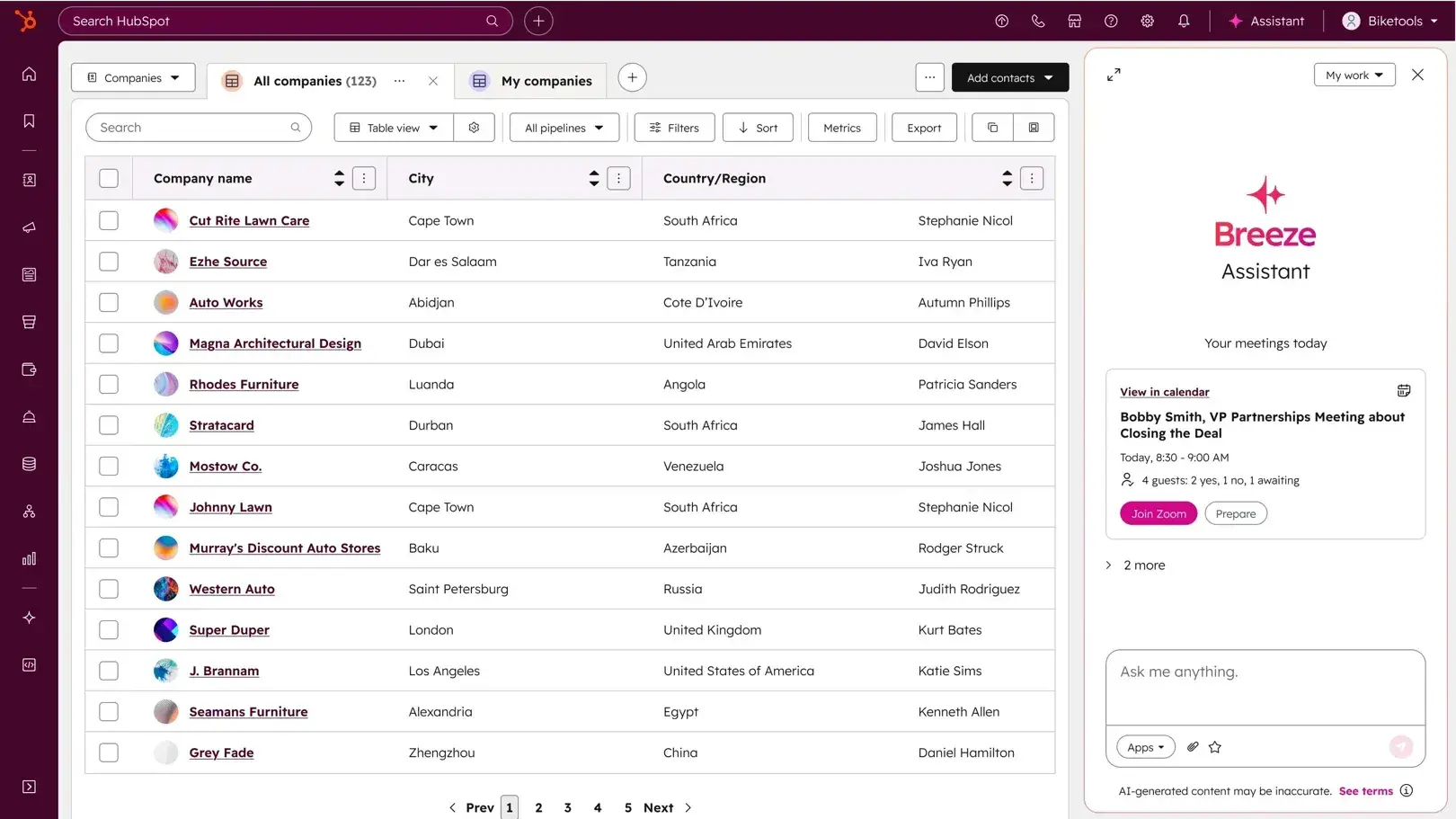
The main advantage is that there is no need to manually fight for “blank pages”. The tool enables the quick creation of message variants, such as: B. multiple ad headlines or different email subject lines. By integrating into the workflow, every AI-generated output is still based on actual customer data and established brand rules.
Why it matters: Breeze clears the creative logjam.
When it comes to campaign optimization, the team that iterates the fastest usually wins. With Breeze, marketers can produce the volume needed for meaningful A/B testing in a fraction of the time.
The true value of the platform lies in streamlining the optimization loop that includes planning, testing, measuring, scaling and developing, effectively eliminating manual bottlenecks early in the cycle.
By letting the AI do it repetitive parts of content productionAdding social captions and personalized landing page elements, like social captions and personalized landing page elements, allows teams to refocus on the larger strategy. This leads to greater relevance and a faster path to ROI as news moves at the same speed as data.
Core functions
- In-editor Content generation. The system uses slash commands to generate headings, meta descriptions or full emails. It also lets you rewrite text for specific tones – such as professional, authoritative, or funny – while automatically adjusting length and clarity.
- Brand voice consistency. Once users define brand guidelines within the platform, the system applies them to every issue. This keeps the tone and style consistent across all marketing channels without the need for manual controls.
- CRM-powered personalization. By accessing live contact and company data, the tool creates tailored copy, such as specific email intros, that reflect the prospect’s true relationship with the brand.
- Multi-channel support. The wizard works directly within website pages, blogs, emails and social publishing tools, eliminating the need to switch between applications during the creative process.
- Prompt based control. The tool responds to natural language instructions and allows users to request specific changes, such as: B. to make a paragraph more compelling to B2B buyers or to shorten the text to a specific word count while maintaining the main benefit.
- Human-in-the-loop editing. While the AI handles the first draft, the entire output remains fully editable. Technology provides the starting point, but the final review process ensures accuracy and a proper strategic fit.
What users like
Users appreciate of the tool high intuitiveness. If a team is already familiar with HubSpot, AI feels like a natural extension, accelerating workloads and helping campaigns go live.
Breeze reviewers Also note that integrating AI into their core data is a significant advantage, especially for larger companies. It offers a level of safety and reliability that is hard to find when putting multiple separate tools together.
Beyond the technical benefits, the feedback shows how the platform handles the heavy lifting of content creation. This allows the marketing team to stop focusing on the “rut” of production and instead focus on performance strategy.
HubSpot Marketing Automation
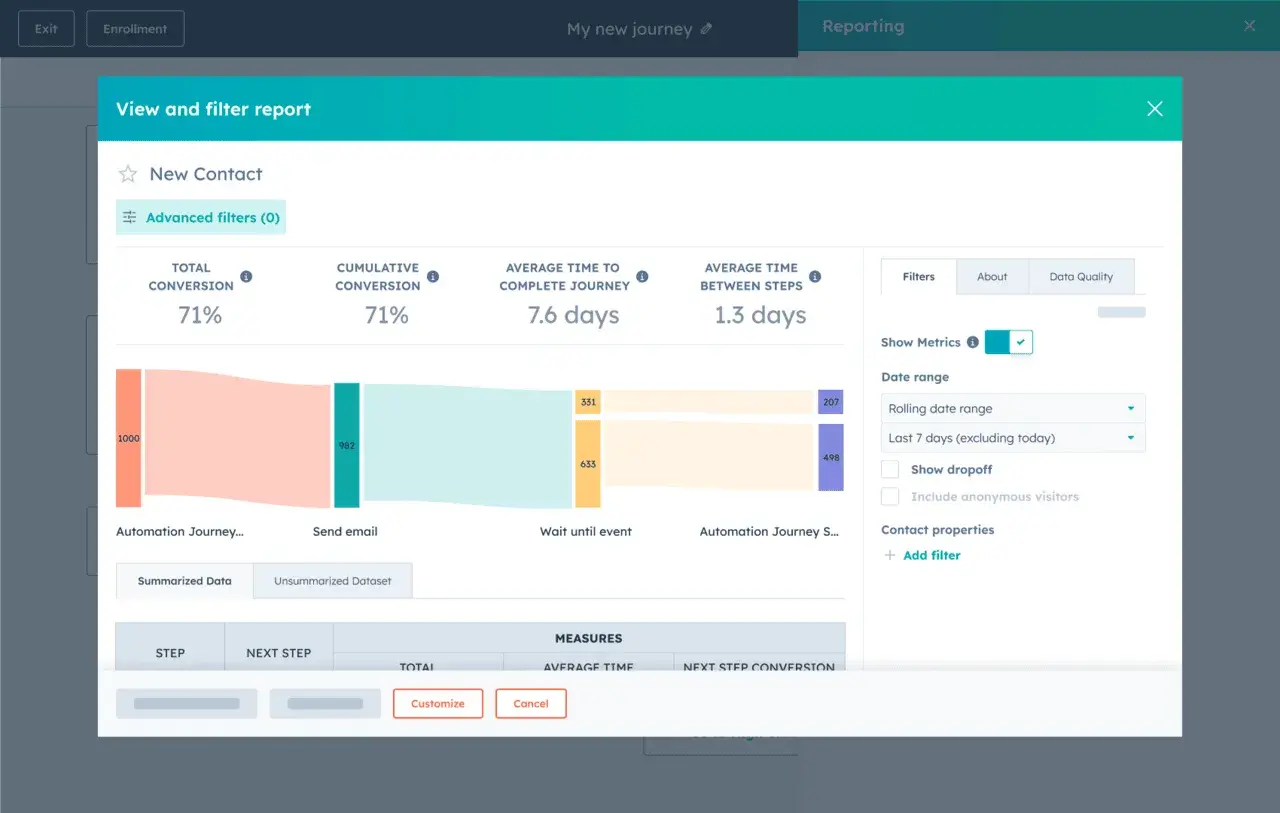
HubSpot Marketing Automation is an AI-powered solution within the Marketing Hub designed to handle repetitive tasks and scale personalized efforts. Because the tool is based on a unified CRM, it uses live customer data to trigger specific actions based on real-world behaviors. These triggers – such as form submissions, page visits, or email opens – allow the system to manage content delivery and workflows without manual intervention.
By putting lead capture and nurturing on autopilot, the platform ensures marketing efforts remain consistent even as prospect volume increases. This shift from manual execution to automated monitoring enables more sophisticated campaign structures where data directly determines the next step in a lead’s journey.
Why it matters: This is the tool people would use to run their drip campaigns.
The value of this tool lies in delivering personalized experiences at scale without manual effort. It’s the go-to place for building drip campaigns that guide leads through educational sequences, qualifying them along the way, and bridging the gap between marketing and sales.
This automation can significantly increase the number of qualified leads – some studies show increases of up to 451% – while shortening sales cycles and improving ROI. By leveraging shared data, the system breaks down internal silos and eliminates missed follow-ups. It supports the growth of both small teams and large companies, allowing you to scale without fear of per-contact penalties.
Key Features
- Trigger-based workflows. The visual drag-and-drop builder allows you to create multi-stage journeys that respond to specific behaviors such as page visits or form submissions. This enables automated care sequences that dynamically adapt to real-time performance signals.
- Automated A/B testing. Tests include emails, subject lines, CTAs and timing. The system identifies high-performing variants based on open rates and conversions and automatically sends the winning version to the rest of the audience to ensure iterative improvement.
- Personalization at scale. Customizing messages in email, social, and ads using dynamic content and progressive profiling creates a level of relevancy that increases engagement by ensuring content aligns with the prospect’s specific interests and behaviors.
- Lead scoring and prioritization. Prospects are automatically scored based on their engagement. This process qualifies high-quality leads and routes them for immediate follow-up, ensuring resources are focused on the most promising opportunities.
- Analytics and attribution. Comprehensive reports provide a clear overview of the conversion path and ROI. Multi-touch attribution and revenue impact tracking identify which elements drive results and where bottlenecks occur, enabling more precise refinements.
- AI-driven improvements. Built-in tools like Breeze AI provide intelligent recommendations and predictive lead scoring. These features provide real-time insights and help automate optimization of bidding, targeting, and creative assets.
What users like
Although the platform is intuitive, the depth of data remains available to those who need to perform in-depth analysis. The main advantage quoted by frequent users is the enormous time saving. Once the initial setup is complete, the automation acts as an additional team member and handles the heavy lifting of campaign management and execution.
User feedback highlights the platform’s ability to combine marketing tasks with CRM, content and sales tools in a single, organized environment. This integration is often cited as a major benefit because it eliminates the need to switch between different applications, streamlines daily workloads, and reduces manual friction.
Users also note that the platform’s drag-and-drop tools for emails, landing pages and workflows significantly speed up the execution of even complex multi-stage campaigns. Robust contact segmentation and smart lists increase this speed, ensuring the right message reaches the right audience segment at the ideal funnel stage.
2. Optimized
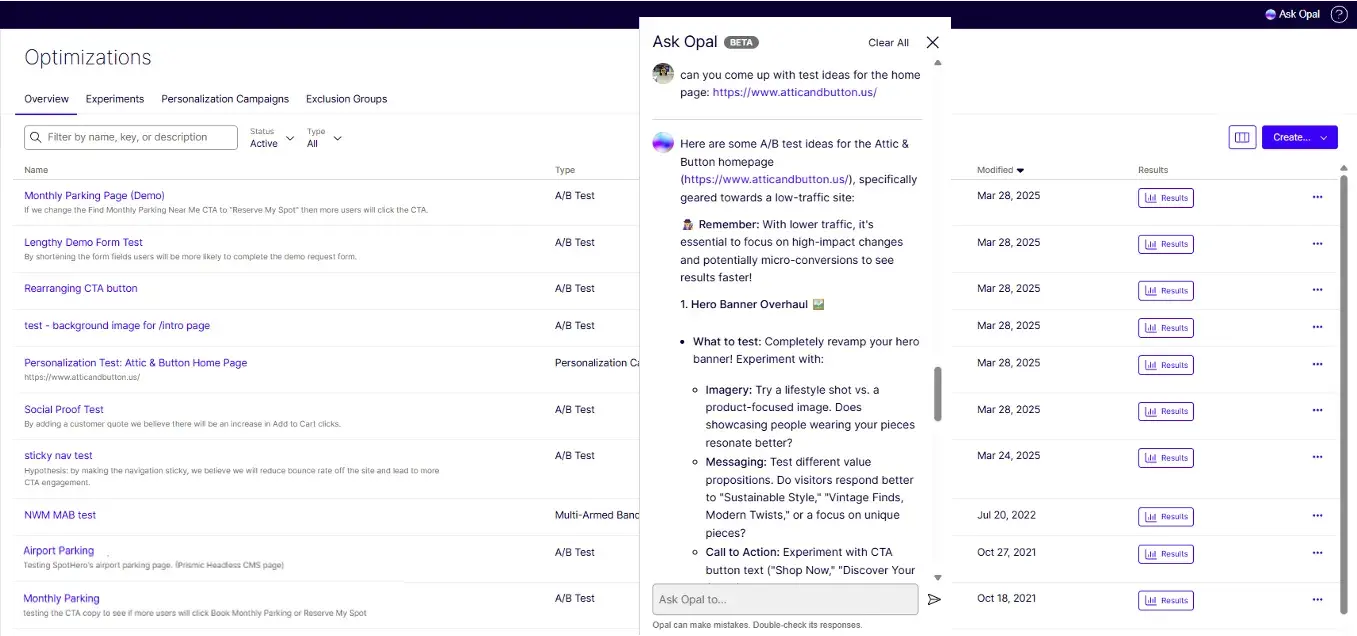
Optimized is a leading experimentation platform that enables marketers to maximize campaign performance through rigorous, data-driven testing and personalization. It enables teams to conduct A/B and multivariate testing across websites, apps, and various digital touchpoints to determine exactly which elements resonate most with their audience.
Core functions
- Integrated A/B testing. The platform enables Test subject linesContent variants and shipping times. It automatically identifies and scales winning versions based on engagement metrics like opens and clicks, ensuring campaigns are iteratively refined for maximum impact.
- AI-powered optimization. Use Tools like Opal AIThe system provides intelligent recommendations for content and subject lines. Additionally, it automates airtime optimization and provides predictive insights, accelerating the testing cycle and significantly reducing manual performance management efforts.
- Smart campaigns. Marketers can quickly introduce both one-off and automated campaigns which include built-in optimization options. This feature supports rapid iterations, enabling teams to immediately act on performance data and maintain a high-performing campaign environment.
Prices
Optimizely does not disclose fixed pricing tiers or startup costs for its campaign product. Instead, the platform uses a tailored, offering-based model tailored to specific business needs. Variables such as contact volume, level of usage, and integration of advanced features, including Opal AI enhancements, determine the final cost.
This tailored approach requires collaboration with the sales team for a customized offer, often following a product demo. While this allows for a flexible plan that can scale across the Optimizely One platform, transparent list prices are not available for instant online comparison.
What we like
Optimizely makes experimentation accessible. The interface is so intuitive that non-technical team members can set up and launch tests without requiring constant developer support. The visual editor is a game-changer; It’s incredibly convenient for making quick adjustments on the site and getting basic experiments live in minutes.
3. AdStellar AI
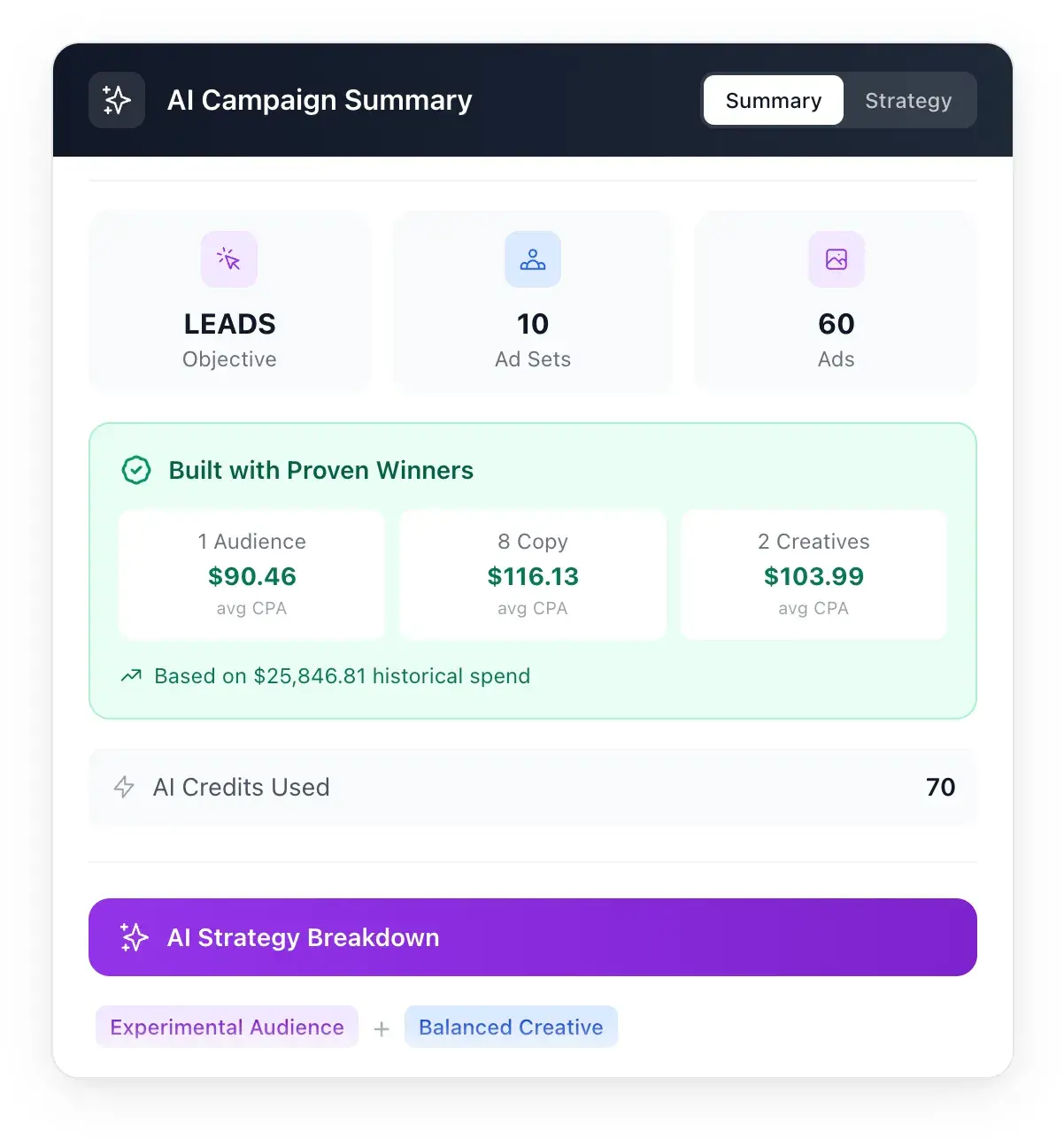
AdStellar AI is an autonomous meta advertising campaign builder that can plan, structure and launch optimized campaigns in less than 60 seconds. It uses a coordinated “orchestra” of seven specialized AI agents to replace the hours of manual configuration typically required in Ads Manager.
Core functions
- Seven specialized AI agents. The platform is powered by a coordinated team of AI specialists who take care of everything from page analysis to budget allocation. Unlike many automated tools, it offers complete transparency, allowing users to see the logic and reasoning behind every decision made by agents.
- Mass ad launch. To find winning combinations more quickly, the Mass Start feature scales campaigns by using multiple variations at the same time. This enables high-speed testing of different creative and targeting combinations without the hassle of manual setup in Ads Manager.
- Winner Hub. The Winners Hub increases the efficiency of the system by automatically identifying the best-performing ad elements. These proven creatives and headlines are stored in a central library, allowing for immediate reuse in future campaigns to maintain performance consistency.
- AI insights dashboard. The dashboard provides custom goal scoring tailored to specific KPIs. Whether the focus is on ROAS, cost-per-acquisition (CPA), or lead volume, AI aligns its optimization strategy with the metrics that matter most to a business.
Prices
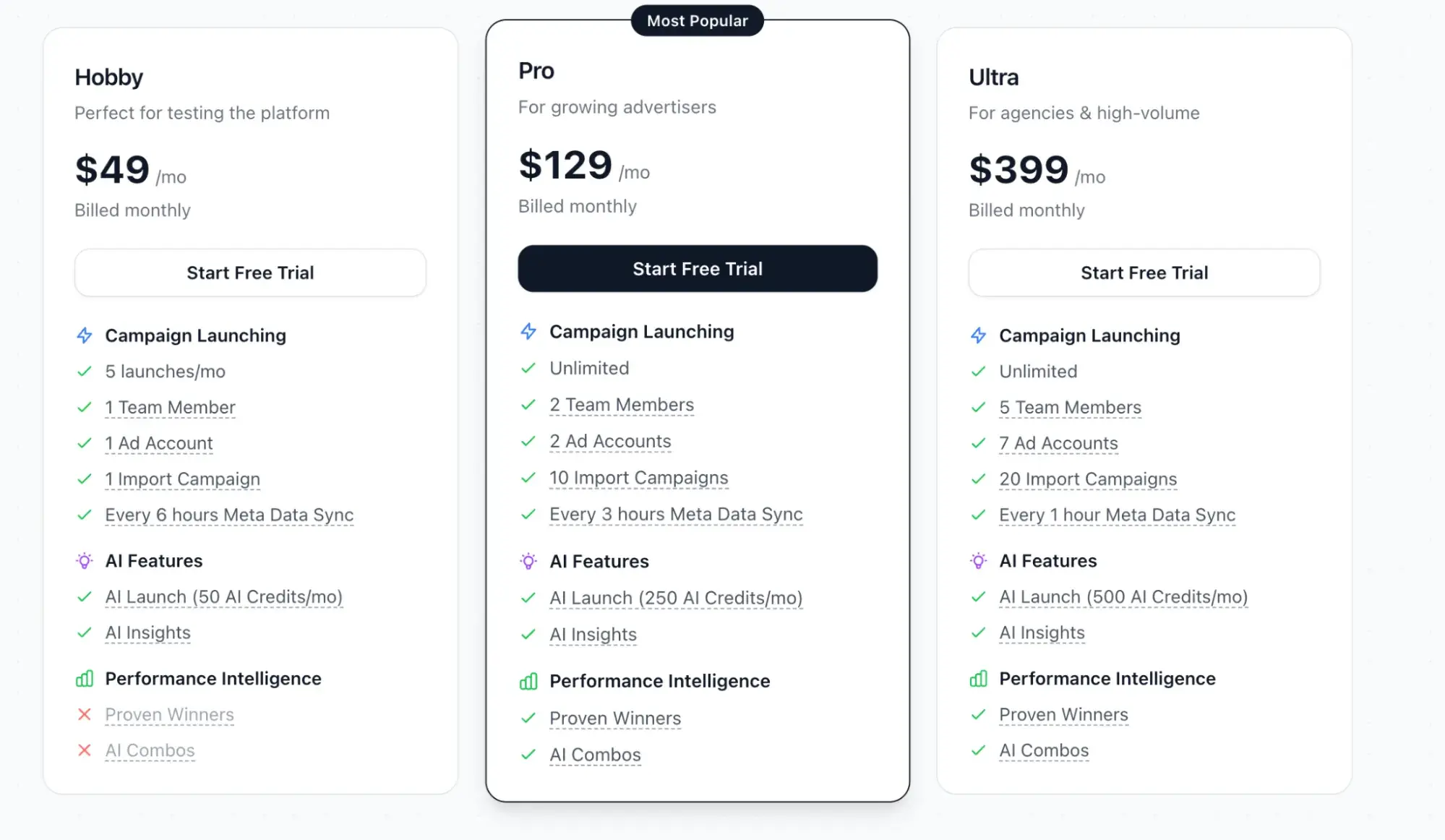
AdStellar AI offers three monthly subscription tiers: Hobby for $49, Pro for $129, and Ultra for $399. While the entry-level plan is limited to five launches and a single ad account, the higher tiers offer unlimited campaign launches and support for up to seven ad accounts.
Key features like Proven Winners and AI Combos are reserved for Pro and Ultra plans to help scale for advertisers and agencies.
What we like
The Winners Hub is an absolute lifesaver; It automatically captures the best-performing creatives and headlines without having to dig through old spreadsheets to find what worked. The ability to immediately integrate these proven elements into a new campaign makes scaling successful ads almost effortless.
4. Hootsuite Analytics
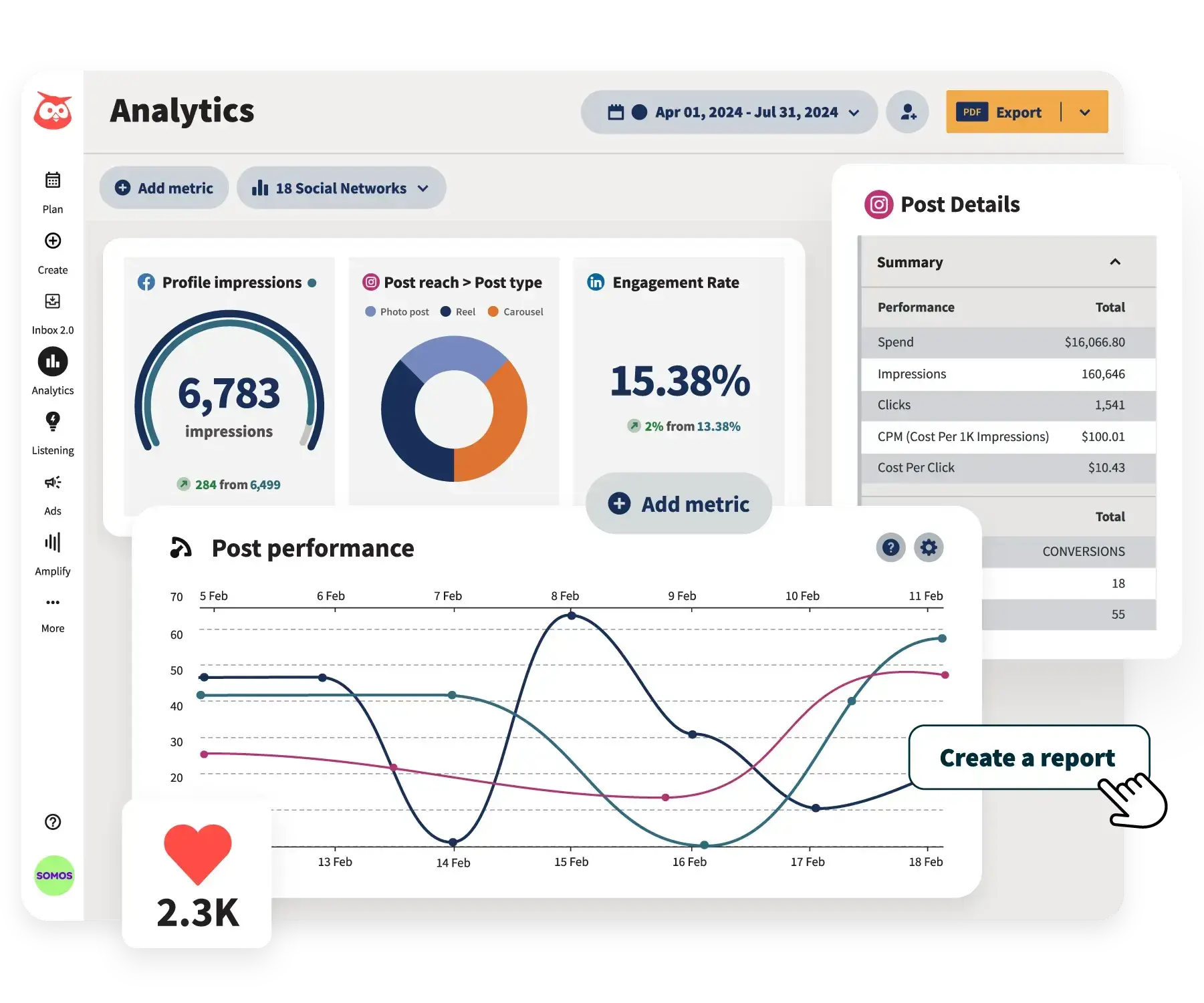
Hootsuite Analytics is a comprehensive social media monitoring platform that also provides a unified dashboard for tracking performance across all major networks including Facebook, Instagram, TikTok, X (Twitter), LinkedIn, Pinterest, YouTube and Threads.
It covers organic, paid, and earned content across hundreds of different metrics and allows users to create customizable reports and compare their performance with the competition. Providing a centralized view of different social streams eliminates the need to switch between different native platforms to understand the impact of the campaign.
Core functions
- Unified performance dashboard. The platform centralizes metrics at the post, profile and network levels – including views, engagement rates, clicks and cost per click – for both organic and paid content. This provides a single source of truth for social media performance across all integrated networks.
- Custom and pre-built reports. Performance snapshot, audience growth, and post engagement templates are available. Data can be exported to various formats such as CSV, XLSX, PDF or PPT to facilitate sharing with stakeholders.
- Competitive analysis and benchmarking. The system tracks up to 20 competitors and monitors their posting frequency, audience growth and engagement. This allows for direct comparison with industry leaders and specific industries.
- AI-powered insights and recommendations. The tool provides performance ratings and identifies top or worst performing content. It also suggests which “successful” assets are best suited for repurposing and advises on the most effective publishing times based on actual audience activity.
Prices
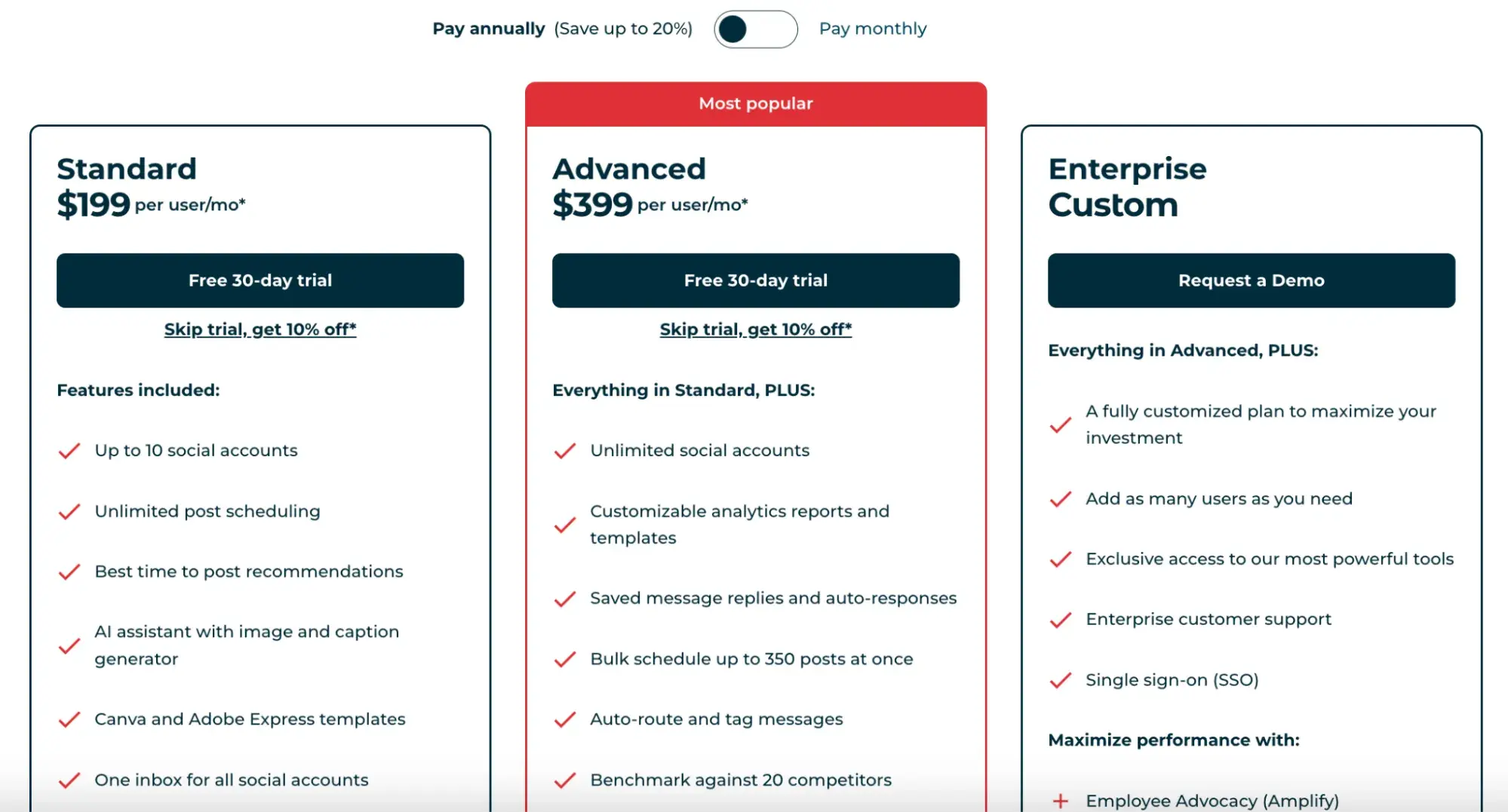
Hootsuite Analytics can be bundled with the platform’s more comprehensive subscription plans. Starting in 2026, the standard tier starts at approximately $199 per user per month (or $249 per month) when billed annually and covers basic analytics for up to 10 social accounts.
For teams that need the advanced customizable reports mentioned above, the plan scales to around $399 per month.
What we like
Many appreciate Hootsuite for its simplicity and intuitive interface, and now the platform has evolved. In particular, the AI-driven campaign optimization recommendations, such as best publishing times and content repurposing suggestions. They can add real value by saving time and improving performance with minimal manual effort.
5. MailReach
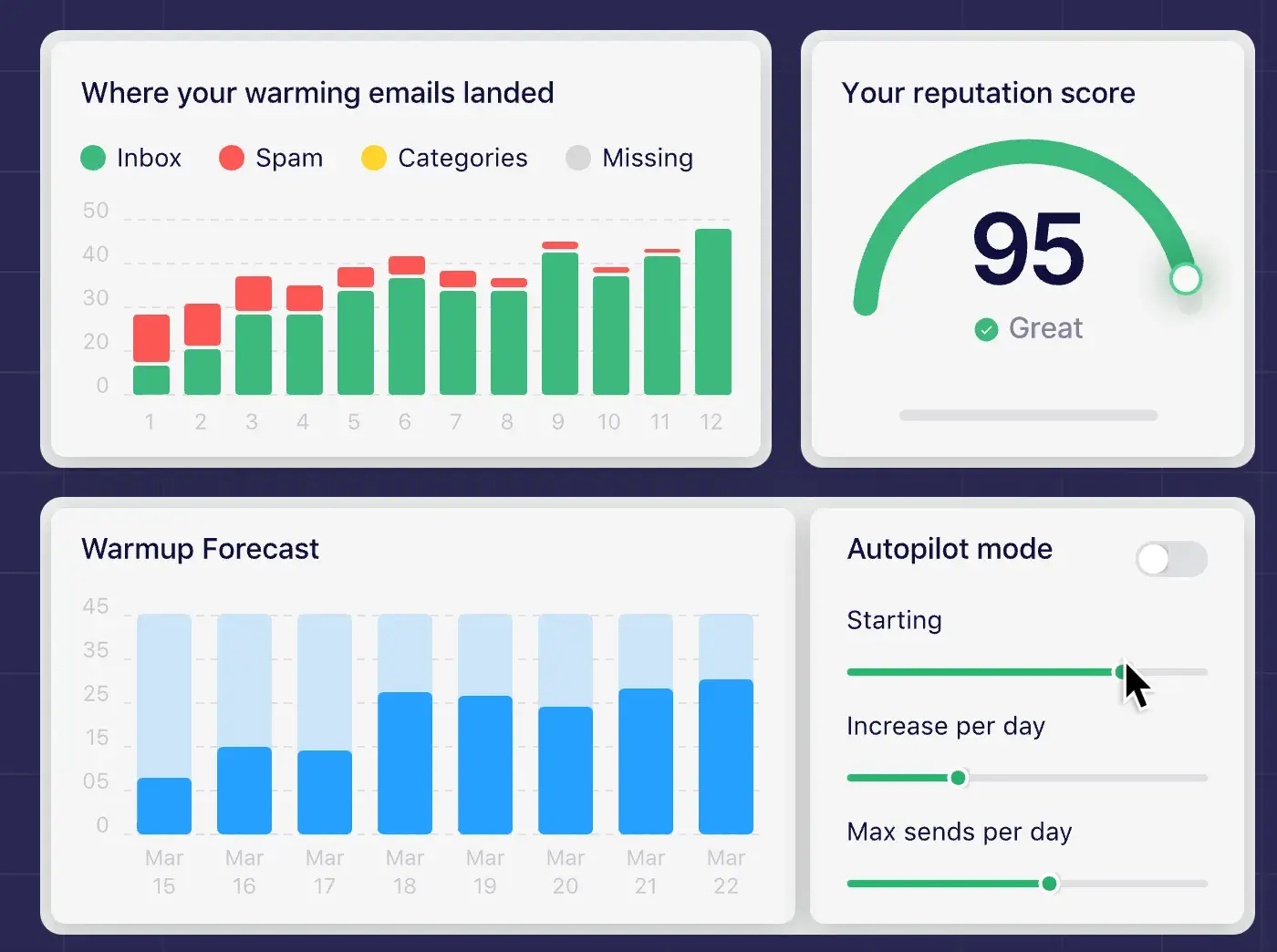
MailReach is a specialized email deliverability platform that ensures cold emails and marketing campaigns reach the intended inbox. The tool focuses on repairing and protecting the sender’s reputation through an automated warm-up process that leverages a network of real, highly reputable accounts. By helping users avoid spam filters, the platform directly supports higher response rates and higher overall ROI for email-driven initiatives.
Core functions
- Automated email warm-ups. The system maintains or repairs sender reputation by simulating natural interaction across the specific inbox types that users target.
- Proactive spam checker. This feature enables real-time tracking of inbox placement and measurement of deliverability through consistent, automated spam testing.
- Built-in email verifier. To minimize bounce rates and protect domain health, the tool cleans up lists of invalid or risky addresses before a campaign begins.
- Broad provider compatibility. The platform works seamlessly with Gmail, Outlook and various SMTP providers while providing dedicated support for managing multiple mailboxes at the same time.
Prices
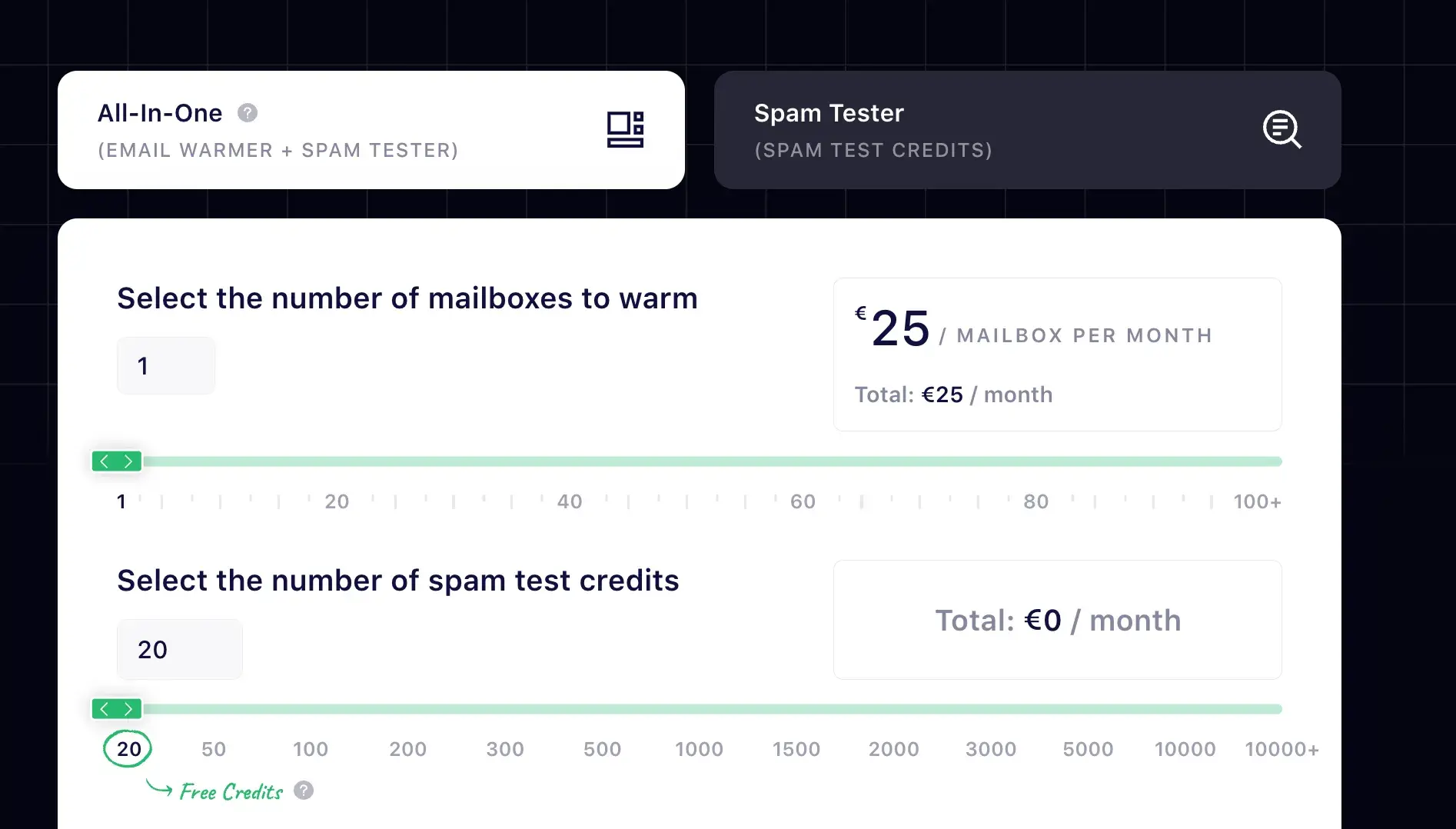
MailReach pricing starts at $25 per mailbox per month on a monthly basis. For teams looking for long-term commitment, annual plans bring the cost down to $20 per mailbox per month.
What we like
The Autopilot Mode feature eliminates the need to constantly monitor deliverability and manually manage warm-up sequences.
Frequently asked questions about campaign optimization
How often should I run campaign iteration cycles?
Campaign iteration cycles should be continuous, with monthly core reviews and weekly or bi-weekly tactical adjustments depending on channel and data volume. For paid ads, check performance every seven to 14 days to avoid learning periods, while email and social may allow for more frequent optimizations. Remember that campaign optimization is a continuous process of testing, measuring and improving. Therefore, treat it as a continuous loop rather than as isolated events.
How long should I run an A/B test before calling a winner?
An A/B test should run until it reaches statistical significance (typically over 95% confidence) and collects enough data, often one to two weeks for paid ads to account for day-of-week fluctuations, or at least 24-48 hours for email opens/clicks (longer for revenue-focused tests). Shorter timeframes carry the risk of unreliable results, while exceeding opportunities leaves opportunities untapped. Prioritize data quality over speed.
When should I pause or optimize a campaign?
Pause a campaign if it shows no conversions after spending two to three times the target CPA, persistent declines with no recovery potential, or fundamental misalignment (e.g. wrong audience or wrong offer). Instead, optimize when you start to see signs of traction (e.g. engagement or partial conversions) by adjusting creative, targeting, or bidding. Avoid frequent breaks as restarting can reset the algorithm’s learning and affect long-term performance.
Do I need multi-touch attribution to reallocate budget?
Unified attribution allows for better optimization of marketing spend, so pursuing a multi-touch attribution approach is certainly a good idea. Although not strictly required, it is highly recommended for accurate budget reallocation as it shows how channels interact throughout the customer journey and prevents overestimation of last-click sources.
Single-touch models are often misleading, while multi-touch supports a smarter transition to effective touchpoints.
What is the best way to scale without driving up costs?
The best way to scale without increasing costs is to increase budgets gradually (in 20-30% increments every few days), expand horizontally with new audiences/creatives while consolidating winners, improve conversion rates through landing page/funnel optimizations, and leverage automation for efficient attribution. Focus on proven performers first and monitor CPA closely to maintain efficiency. Automation and AI tools accelerate campaign optimization workflows when these steps are consistently followed.
Campaign optimization is a continuous process.
Marketing campaign optimization involves a cycle of testing, measuring, and improving marketing efforts across all channels. Moving away from the “set it and forget it” mindset allows marketers to reduce customer acquisition costs, shorten sales cycles, and make faster, data-driven decisions.
The process involves several different phases, such as establishing a clear hypothesis, tracking metrics in the funnel stage, and using consistent attribution to reallocate budget to winning tactics. However, because many of these actions are channel-specific (what works for a paid search ad is different than what works for an email sequence), it’s important to tailor tactics to the specific environment in which your target audience lives.
To manage this complexity, leverage marketing automation in HubSpot. The platform helps you streamline your optimization loop and handle these different steps without the manual effort. And that means faster and more accurate campaign decisions.