
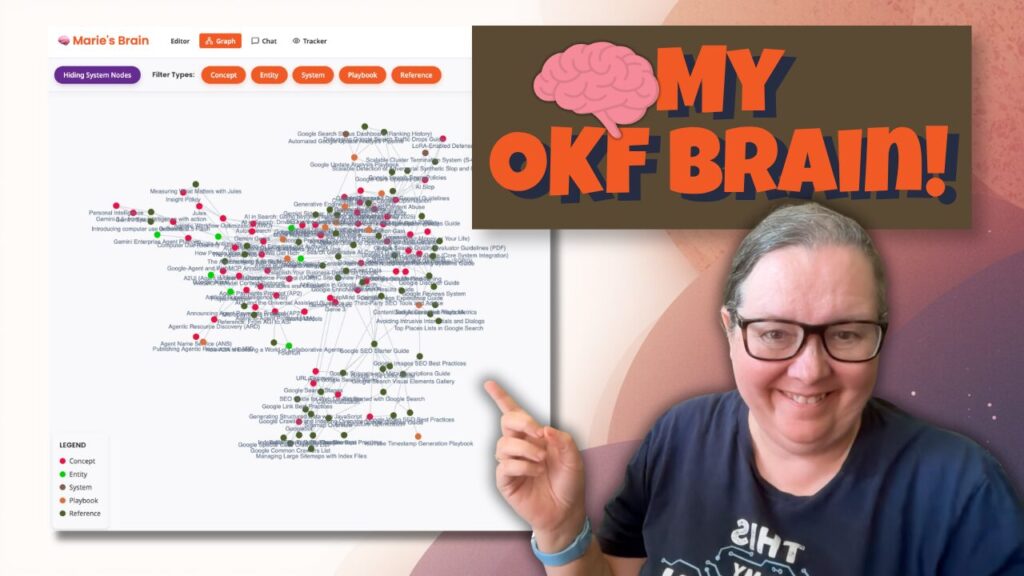
Standardizing knowledge for the future of AI agents
My last article about Google’s Open Knowledge Format (OKF) was one of the most popular I’ve ever published. Since then I have been working hard on my own OKF structure. I essentially built my own brain and today I want to show you how it works and why this standard is so incredibly important to the shift towards an agent web.
The beauty of OKF is that it follows a very simple, standardized structure. While many people have pointed out that Markdown files are nothing new, Google has created a standard. This means that when I give an agent my OKF files, they know exactly how to read them without the need for custom software. It is a universal language for AI agents.
Watch the video where I show my OKF brain
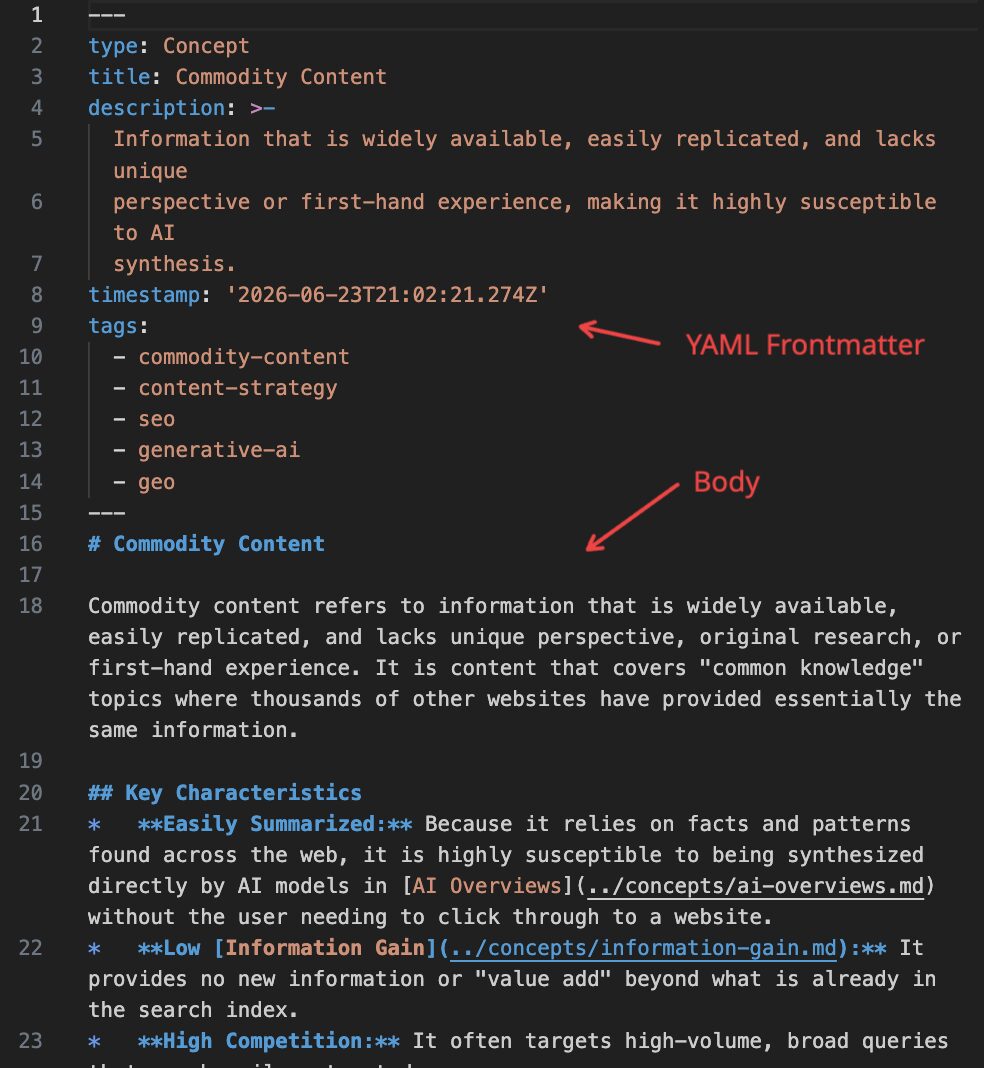
Understanding of YAML Frontmatter, Index and Markdown files
Every OKF file begins with the so-called YAML front matter. This is a small block of metadata at the top of your Markdown file that tells an agent exactly what they see. In my personal brain, I use specific types for everything. I have concepts, entities, playbooks, references and systems.
This is what my folder structure looks like for my OKF brain:
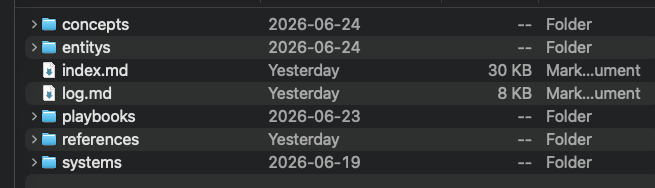
(I’m not sure why Antigravity misspelled “entities” in my brain. 😂)
And here is the Markdown code for one of the concepts in my brain:
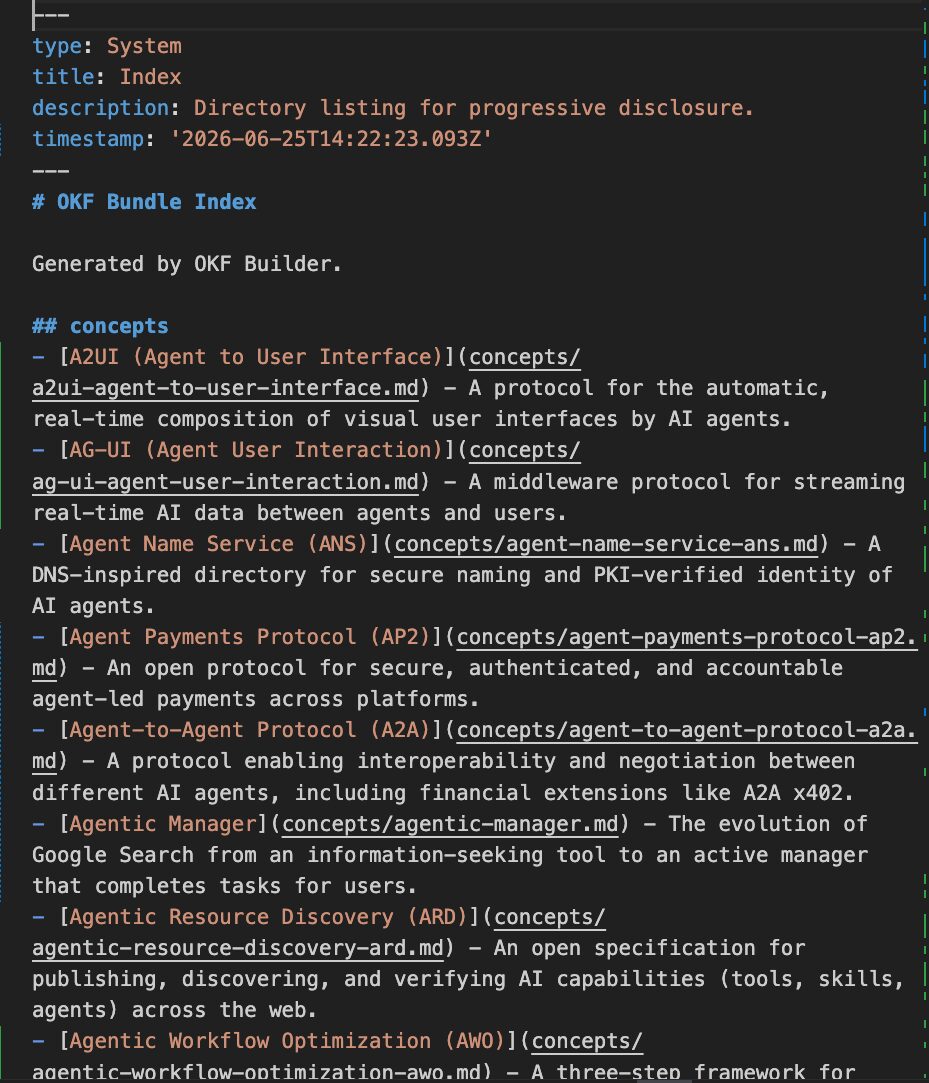
When an agent views my OKF, they first look at the index file. This index.md file is essentially an index of the different areas that the agent in my brain can access. This way my agent doesn’t have to do a RAG operation everything In my knowledge database it can focus specifically on the relevant areas.
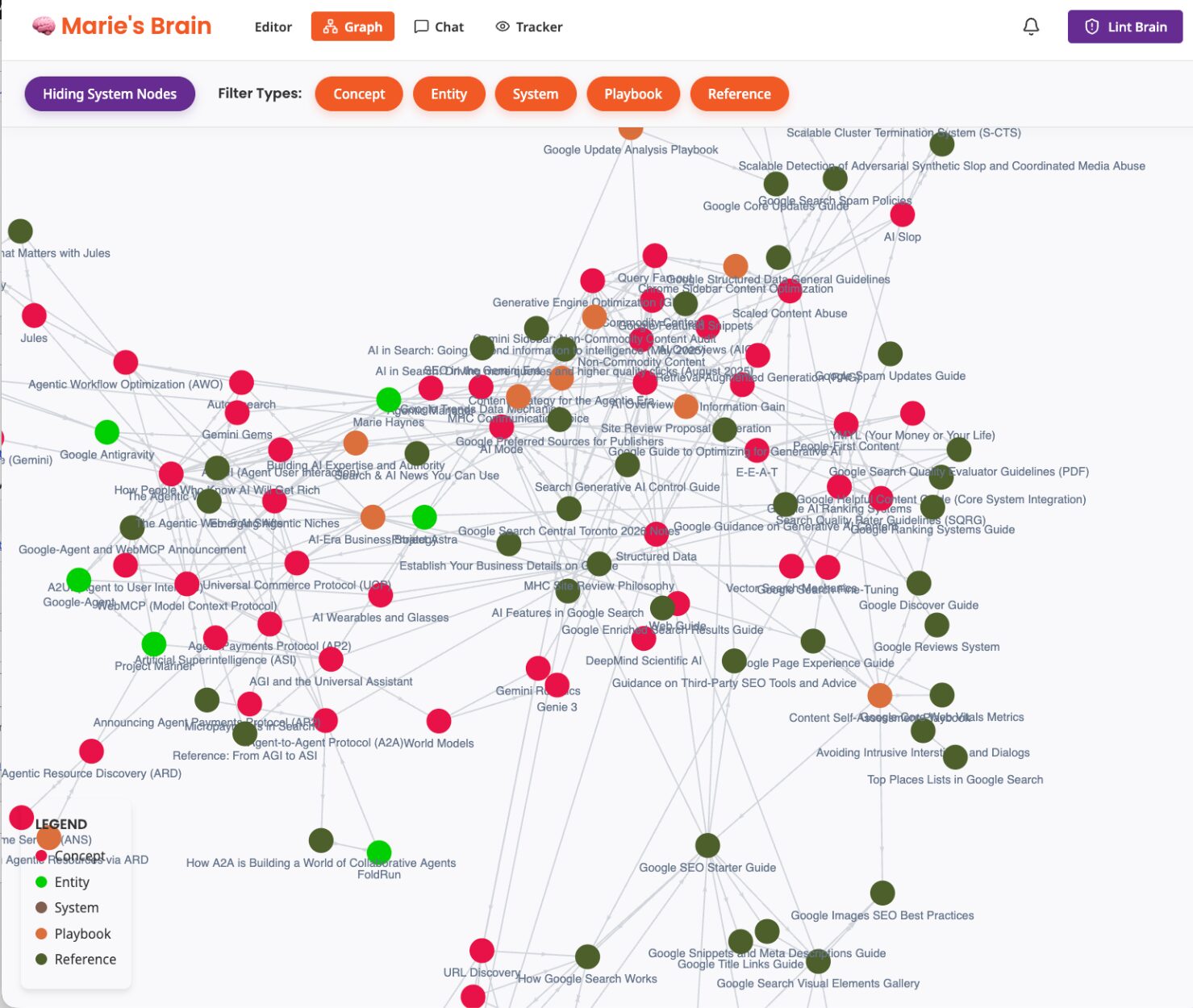
The system I created also combines related concepts. When it picks up new content, be it a blog post I wrote, a Google announcement, or research, it figures out what other concepts we’ve created that should be linked. The result is a really cool graph of all the knowledge we have in our brains. This idea that agents extract concepts and make connections comes from Andrej Karpathy’s LLM wiki idea.
Visualization of your knowledge graph
If you use OKF correctly, you can visualize your brain as a connected graph. Every item in my system is a Markdown file. You can see how my AI overview concepts are linked to my references from Google documentation and my internal playbooks. It’s a living map of everything I know about SEO and AI.
I also automate the way I absorb information. I have a system that checks Google’s documentation daily. When they update something, like AI Answers documentation or Search Console features, my brain notifies me and automatically updates the relevant reference files. I no longer have to rely on my biological hardware to remember every little change. My OKF brain has access to far more than I could ever hold in my head at once.
I can then query my brain and it will write something for me, synthesized from my notes and the other information I have stored in my brain. If I see something wrong, I can simply ask the agent in my brain to correct it. Additionally, my agent is always looking for ways to improve and connect information in the brain.


Create playbooks to save days of work
One of the most exciting things I’ve built into my OKF brain is a series of playbooks. For example, I have a playbook for generating customer suggestions. Typically, this is a lengthy process that requires a lot of manual work. Now my agent (Antigravity) follows the steps laid out in my proposal playbook to design everything with my specific voice and logic.
I also created a playbook for analyzing website impact after a Google update. I have created a procedural checkpoint for my agent to follow when analyzing these shifts. What once took two days to analyze now takes just hours and I am incredibly happy with the report produced. This is the power of documenting your wisdom in a way that agents can actually act on.
I really encourage you to experiment with it. You don’t have to be a programmer to get started. You can ask an agent to help you create your first OKF package based on the documentation provided by Google. It makes me more productive and I think it’s key to staying relevant as search evolves.
To create something similar, pass these links to your agent (Claude Code/Cowork, ChatGPT Codex, or my favorite, Google’s Antigravity) and try this prompt:
“I want to build an OKF system similar to Marie’s. Read these links and then give me some ideas of what that might look like. Then ask me one question at a time so we can decide together what we want to build:
https://cloud.google.com/blog/products/data-analytics/how-the-open-knowledge-format-can-improve-data-sharing/
https://github.com/GoogleCloudPlatform/knowledge-catalog/blob/main/okf/SPEC.md
https://gist.github.com/karpathy/442a6bf555914893e9891c11519de94f
https://www.mariehaynes.com/okf/ https://youtu.be/esYAIA6lU-s”
Or, Join us in the search bar for the latest news on search and AI. Or better yet, join my paid community where we call regularly to brainstorm on the use of AI and I also share tips and ideas.