
The brand tracking dashboard shows that awareness has increased. Social listening tools have a consistent volume of mentions. The PR platform received a dozen media views last quarter. But none of these tools show how a brand appears when a shopper asks ChatGPT, Perplexity, or Gemini for a recommendation.
AI citation tracking monitors when AI-generated responses cite a brand as a source. This requires a fundamentally different toolkit than traditional search engine optimization or media monitoring. Consider purpose-built platforms that poll requests across multiple response engines, run prompt variations, and enable competitive share of voice. Most tool stacks cannot do this, even with AI market research tools in the mix.
This guide explains what AI citation tracking means, which features to prioritize, and how eight leading tools compare in terms of price and performance. A four-dimensional framework is also run through to evaluate each option. Want to track AI quotes? Start with HubSpot AEO Today.
Table of contents
What is a citation in the AEO?
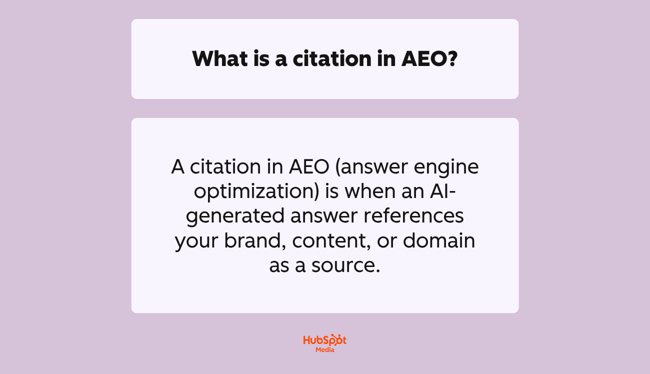
A citation in AEO (Answer Engine Optimization) occurs when an AI-generated answer references a brand, content, or domain as a source. It’s the AI equivalent of quoting in a news article, except the “journalist” is ChatGPT, Perplexity, or Gemini and the “article” is the response a shopper reads before ever visiting a website.
In practical terms, if someone asks an answer machine, “What is the best CRM for small businesses?” and the answer says “According to HubSpot’s 2026 Marketing Report…” or linked directly to a page in a company’s domain, that is a citation. The AI selected the content of a particular brand from everything it indexed and presented it as a credible source in its response.
This selection fundamentally distinguishes citations in the AEO from traditional mentions. The LLM didn’t just refer to one brand; It recommended the brand in response.
However, citations in AI answers typically take three forms:
- Direct sources: The AI links directly to a specific page as a source. It is also the most visible and trackable data point upon which most AEO tools are based.
- Brand Company Mentions: The AI names a company, a product or an expert without referencing a source. A sentence like “HubSpot recommends using a content calendar…” signals authority, even without a URL.
- Indirect references: The AI paraphrases a brand’s content without naming it. These are the hardest quotes to detect, but some advanced AEO tools detect them by performing semantic similarity checks against a brand’s published content library.
Most teams only pursue the first type. This is a problem because all three determine how visible a brand is in AI-generated responses. If a team only tracks direct URL citations, they are underestimating their AI presence. They also miss signals about where their brand has authority but doesn’t receive explicit recognition.
HubSpot AEO captures all three citation types – direct links, brand mentions and indirect references – so teams don’t underestimate their true visibility in AI-generated answers. Citation analysis shows how often each citation type appears in prompts and engines.
Why are AEO citations important for marketers?
Citations in AI answers carry more weight than traditional search rankings or social media mentions because they influence buyer behavior. When a response engine cites a brand’s content, it does three things at once:
- Positioning the brand as a trustworthy source. The LLM evaluated and selected the brand’s content in comparison to all other indexed sources on the topic. This is an algorithmic endorsement and buyers treat it as such.
- Influence decisions before the click. Unlike organic search results, where a user scans 10 blue links, an AI response provides a synthesized recommendation. If a brand is mentioned in this recommendation, it has shaped the buyer’s perception before visiting a website. If a brand is missing, a competitor steps in.
- Creating a new attribution channel. AEO citations drive measurable referral traffic visits ChatGPT, confusionand other AI domains that appear in marketing analytics. But they also drive not measurable Influence: Shoppers who see a brand mentioned in an AI response, then search for it directly or mention it in an internal Slack thread.
In short, AEO citation tracking focuses on citations and citations displayed in AI-generated answers. However, the downstream impacts go far beyond what any tool can fully attribute. This is why tracking AEO has become a priority for marketing leaders, SEO strategists, and PR teams alike.
Pro tip: Not sure if a brand is even mentioned in AI answers? Start with a free baseline before investing in paid tools. HubSpot’s AEO Grader measures brand visibility in ChatGPT, Perplexity and Gemini response engines and evaluates brands based on awareness, sentiment, share of voice, market positioning and quality of presence.
How do AEO citations differ from traditional citations?
An AEO citation is a citation within an AI-generated answer. This means that the LLM has selected a brand’s content as relevant, credible and useful enough to include in its response.
This definition should not be confused with other uses of the word “citation” in science, SEO, and PR. In traditional search engine optimization, a citation often refers to a NAP (name, address, phone number) listing in a local business directory. In academic research, it is a footnote that refers to a source. In PR it is a mention in the media.
Here are the key differences between traditional and AEO citations:
Understanding this distinction is the first step to choosing the right AEO citation tracking tools. The tools, metrics and optimization strategies differ fundamentally from traditional citation management.
HubSpot AEO and AEO features in Marketing Hub Pro and Enterprise show where content is selected or skipped in AI responses. Integrated competitive comparisons turn citation tracking into a true share-of-voice analysis and not just a visibility check.
What is AI citation tracking in AEO?
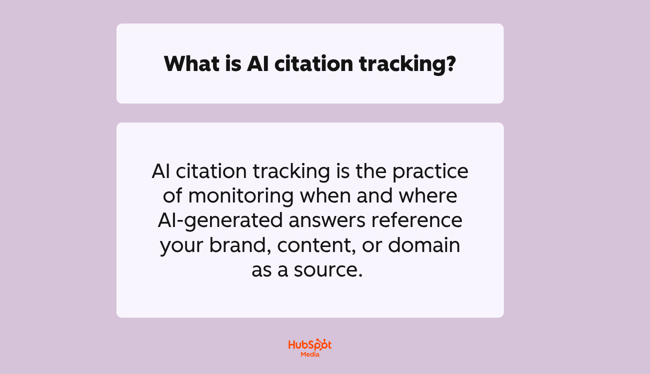
AI citation tracking monitors when and where AI-generated answers reference a brand, content, or domain as a source. When a user asks ChatGPT, Perplexity, or Google’s AI Overview a question, the AI draws on indexed web content such as articles, reports, product pages, and documentation. Then these sources are often cited directly in the answer, which are the “quotes” in LLM answers that marketers need to keep track of.
AI citations are different from traditional brand monitoring. With traditional brand monitoring, marketers learn that someone has mentioned their company on X or in a news article. Through citation tracking for AEO, they learn that ChatGPT cited her blog post when answering a user’s question about her industry. It’s a fundamentally different type of visibility with different impacts on traffic, authority and pipeline.
AI-generated answers are now a primary way decision makers consume information. This is why tracking AEO citations is essential. When a brand’s content is cited in an AI response, it influences the buyer before they even visit the site. If this is not the case, the brand is invisible in a growing part of how decisions are actually made.
Traditional monitoring and AI citation tracking don’t just measure different things; they look in completely different places.
For teams looking to track citations to their website in AI results, this means existing PR dashboards and social listening tools aren’t showing the data they need. You need purpose-built AEO tools that directly query and log LLMs when their domain appears as a source.
Top citation data tracking tools solve this problem by automating multi-model, multi-prompt verification at scale. HubSpot AEO automates prompt tracking across ChatGPT, Perplexity, and Gemini, running daily queries and logging when a brand or its competitors are quoted. The results are aggregated into a single response engine visibility score so teams can quickly see where they stand.
Pro tip: Want to learn more about AEO in less than 30 minutes? Check out this video HubSpot’s Marketing YouTube Channel:
Who needs AI citation tracking and why?
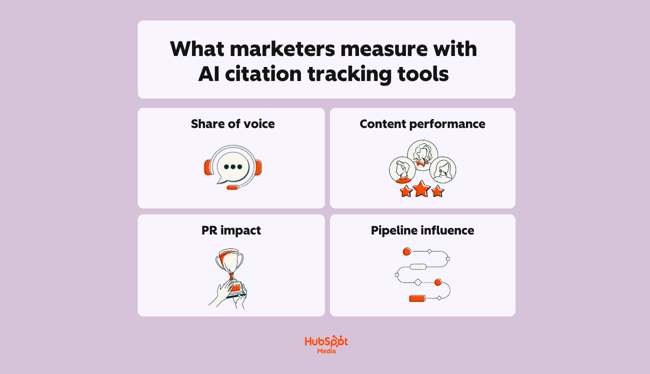
Marketers use AI quote tracking tools to measure:
- share of the vote
- PR effect
- Content performance
- Pipeline influence
However, the specific use cases vary depending on the function. Let’s take a look below.
SEO and content strategists
SEO and content strategy experts use AEO citation tracking tools to assess:
- Share of voice in AI answers: Track how often a brand’s content is cited compared to competitors for priority keywords and topics. This is the AEO equivalent of ranking, and the best citation analysis tools for response engine optimization make this data accessible at the keyword level.
- Content performance signals: Identify which pages, formats, and content structures receive the most citations. Good AEO content uses clear definitions, consistent entity names, concise factual statements, and structured headings. Content strategists can use citation data to determine whether their content meets this benchmark.
- Optimization prioritization: Use citation data to decide which existing content needs to be restructured to meet AI response eligibility criteria and which gaps to fill with new productions.
HubSpot AEO helps content teams identify which prompts trigger citations and which pages influence those results. It then generates prioritized recommendations on what to build or optimize next.
PR and communications teams
PR and communications teams use AI citation tracking tools to quantify:
- Earned Media in AI Channels: AI citations are a new form of earned placement. When an LLM cites a company executive’s text or a company’s research report, that is influence on a large scale, and citation tracking quantifies it.
- Crisis and narrative monitoring: Track whether AI responses point to outdated, inaccurate, or competitive narratives about their brand, then create content that corrects the record.
- Visibility of speakers and thought leaders: Measure how frequently cited people within the organization appear as cited experts for AI-generated answers across their industry.
HubSpot’s AEO tool includes sentiment analysis in addition to citation tracking. This allows PR teams to see not only where they are mentioned in AI responses, but also how their brand is being represented.
Marketing Operations and Leadership
Here’s how marketers and executives use an AEO quote tracking tool to measure:
- Pipeline mapping: Connect AI citation data to downstream metrics. To measure the impact of citations on the pipeline, ask these questions: Did prospects who started with AI-quoted content convert at different rates? What is the path from citation to pipeline?
- Cross-channel reporting: AI quote tracking fills a gap in the modern marketing dashboard. Without it, marketing leaders have visibility into paid, organic, social and email marketing, but have a blind spot in the fastest-growing information channel.
- Tool consolidation options: Many teams currently assemble manual LLM queries, spreadsheets, and disconnected monitoring tools. An AI quote tracking definition shared across marketing, PR, and SEO teams ensures alignment on what each team measures and why.
AEO features In Marketing Hub Pro and Enterprise, you connect citation data directly to CRM records. This allows teams to track response engine visibility from prompt to site visit to lead and pipeline without manually cobbling together data.
Thought leadership programs
Finally, here’s how to run a thought leadership program using an AI citation tracking tool.
- Track Expert Recognition: Monitor whether LLMs associate their brand’s subject matter experts with specific topics. See if this connection grows stronger over time as more authoritative content is published.
- ROI of the content format. Determine whether original research, how-to guides, or data studies get more AI citations in their niche. Allocate production resources accordingly.
Key takeaway: AI citation tracking bridges the gap between publishing great content and being recognized as an authority by AI systems.
In the next section, let’s break down the key features you should look for when choosing an AI citation tracking tool.
Must-have features in AI Citation Tracking Tools for Marketers
Not every tool that claims to monitor response engine visibility actually does its job. Marketing teams need a tool that tracks citations across multiple LLMs, captures brand mentions, measures share of voice, and delivers actionable insights.
Pursuit across multiple LLMs
Start with LLM coverage: Does the tool track citations across the models customers actually use, or just one?
ChatGPT, Perplexity, and Gemini each refer to different indices, weight content signals differently, and display different citations for the same query. A tool that monitors just one gives teams a part of the picture.
The best tools track citation data across all major response engines simultaneously and present the results in a consistent format so teams can compare the performance of different models.
When evaluating LLM coverage, pay attention to the following:
- Model width: Does the tool query at least ChatGPT, Perplexity, Google AI Overviews, Claude and Gemini? These five account for the majority of AI-powered search behavior among B2B buyers.
- Prompt variant: LLM editions are non-deterministic, meaning the same question may produce different citations each time. The best tools run the same query multiple times and in different ways so that citation data reflects a real pattern and not a one-time result.
- Update frequency: AI models are constantly updated. A tool that only checks weekly may miss changes that occurred days ago. Make sure to monitor at least daily.
Pro tip: If a provider can’t say exactly which models they’re querying, how many prompt variations they’re running per keyword, and how often they’re updating the results, that’s a red flag. AEO citation tracking is only as reliable as the methodology used to query it.
HubSpot AEO tracks visibility across multiple engines in one dashboard. It shows which prompts cite a brand, which cite its competitors, and where a brand is completely missing.
Brand mentions capture more than direct quotes
There is a very important difference between a direct quote and a brand mention. Both are important, and the best citation analysis options for AEO capture both. If a tool only tracks linked quotes, it doesn’t take into account a brand’s true presence in AI responses.
However, look for tools that differentiate:
- Direct sources: The LLM explicitly refers to a specific URL of a brand’s domain or names it as a reference.
- Brand Company Mentions: The LLM references a company, product, or named expert without a direct link (which still signals authority and recognition).
- Indirect references: The LLM paraphrases or reflects the content of a brand without citing the source. Some advanced tools detect this by matching semantic similarities to the brand’s published content library.
This granularity is what differentiates a monitoring tool from an actual AI citation tracking platform. Without it, marketers cannot answer the fundamental question: “How visible is our brand in AI-generated responses?”
HubSpot AEO breaks down citations by type and source, including the domains and content formats most trusted by reply engines. This helps teams understand not only if they are visible, but also why.
Measure share of voice and competitive position
It’s helpful to know a brand’s citation count. It is actionable to know it compared to its competitors. Any good tool should answer the following question: How often are we quoted on the questions that matter to our business compared to the competition?
The share of voice for AI answers is different from traditional SERP results. In organic search, a website will either rank or not. With AEO, multiple sources can appear in a single answer, meaning a brand can appear next to two competitors or not at all.
Powerful AI citation tracking tools provide competitive analysis that includes:
- Citation frequency in direct comparison: For a brand’s target query group, how often does each competitor appear as a cited source across models?
- Co-citation pattern: Which brands frequently appear in the same AI response? This shows who LLMs view as a brand’s true competition, which may deviate from the traditional competitor list.
- Topic level authority mapping: For which topics does each participant receive the most citations? This shows where a brand wins, where it loses and where there is room for claims.
HubSpot AEO and Marketing Hub include competitor analysis that shows share of voice across tracked prompts. This shows where competitors are consistently receiving citations and where gaps exist.
Deliver actionable insights, not just dashboards
Most tools stop at dashboards. They show the data but don’t tell teams what to do with it. Raw citation counts and mention logs are data. What marketers need are insights that drive decisions: What content should we restructure? Which units need reinforcements? Where do we lose previous quotes?
When tracking citations to a website in AI results, the data should be related to the action. In particular, look for:
- Content-level attribution: Which specific pages on a website are cited and for which search queries? This helps marketing leaders learn what works and what they need to replicate.
- Citation trend analysis: Do a brand’s citations increase or decrease over time? Has a content update or competitor change changed visibility? Trend data transforms static snapshots into a narrative that teams can act on.
- Optimization recommendations: The most powerful tools go beyond reporting and suggest what should change. Good AEO content uses clear definitions, consistent entity names, concise factual statements, and structured headings. The best tools to report when cited content doesn’t meet these standards.
- CRM and pipeline integration: For marketing ops teams, the question is not an easy one “Are we quoted?” It is “Do citations correlate with pipeline?” Tools that integrate with a company’s CRM enable marketers to track the journey from mention to site visit to lead and opportunity, closing the attribution loop.
Pro tip: Before you evaluate paid tools, determine the starting point. HubSpot’s AEO Grader Brand visibility benchmarks in response engines for free. This shows marketers where they are currently appearing, where they are not, and what they should prioritize.
HubSpot AEO links citation data to clear, prioritized recommendations. In Marketing Hub Pro and EnterpriseThese recommendations connect directly to content tools so teams can move from insights to published updates in one workflow.
A quick evaluation scorecard for AI citation tracking tools
When comparing AI citation tracking tools side by side, evaluate each option based on these five criteria:
- Scope of LLM Coverage: Does it monitor quotes across five or more major models and run each query in multiple ways to ensure consistent results?
- Mention type granularity: Are direct quotes, brand mentions and indirect references recorded separately?
- Competitive intelligence: Does it show the share of voice, which competing brands appear alongside the brand and where the brand has the greatest authority thematically?
- Actionable Output: Does it connect citation data to content recommendations and business results?
- Depth of integration: Does it connect to the tools the team already uses, like CRM, analytics, and content management, so that citation data appears where decisions are actually made?
Best AI tools for citation tracking
1. HubSpot AEO
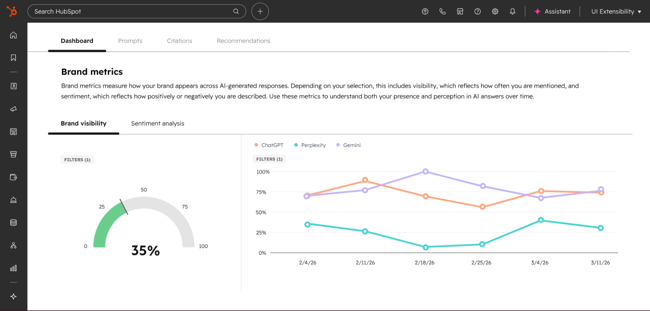
HubSpot AEO is designed to help marketers understand how their brand appears in AI-generated responses and act on that visibility. Unlike tools that only monitor visibility, HubSpot AEO combines citation tracking, content insights, and optimization workflows in one platform. This allows teams to move from insights to actions.
Core functions
- Response Engine Visibility and Sentiment Analysis: HubSpot AEO monitors how brands appear in ChatGPT, Gemini, and Perplexity and whether mentions are positive, negative, or neutral. This helps teams track citations, mentions, and overall presence in AI-generated responses.
- Prompt follow-up and suggestions: HubSpot also suggests prompts based on a company’s competitors and industry.
- Content Optimization Insights: The AEO tool determines which pages and topics are most likely to be cited and makes recommendations to improve structure, clarity and authority.
- Actionable recommendations: HubSpot turns visibility data into clear, prioritized recommendations to improve a brand’s AI presence.
- Competitive Visibility Analysis: Marketing teams can compare the brand’s presence with competitors to understand share of voice and identify gaps in coverage.
restrictions
- Not natively connected to other tools like CRM or content and marketing tools.
Best for: Marketing teams that want an all-in-one platform to monitor, optimize and improve brand visibility in AI search and response engines.
Prices: $50/month (or $45/month if billed annually). No HubSpot platform subscription required.
2. Marketing Hub Pro and Enterprise
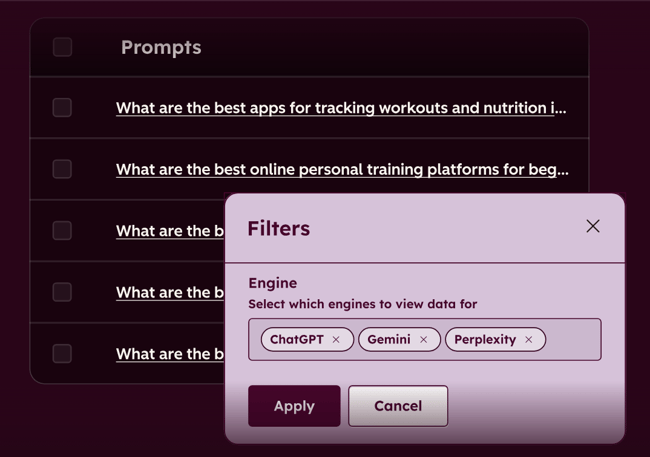
HubSpot Marketing Hub (Pro and Enterprise tiers) included integrated AEO functions which enable teams to optimize content for AI-generated responses without adding a separate tool. These features extend HubSpot’s existing SEO, content, and analytics tools to help optimize response engines. Teams can adapt their current workflows to AI-driven detection without having to start from scratch.
Another benefit of HubSpot Marketing Hub’s AEO features is how closely tied they are to a company’s CRM and customer data. With everything on the same platform, teams can directly link content performance to real business outcomes like leads, pipeline, and revenue. This closed-loop reporting makes it easier to understand what content appears in AI-generated responses. More importantly, it shows which elements actually drive customer loyalty and conversions.
By combining AEO insights with rich customer data, marketers can create more targeted, personalized content. They can also continually refine their strategy based on what has worked throughout the customer journey.
Core functions
- Competition monitoring: For each prompt, see how often a competitor appears in the answer and where a brand is missing. See which sources are driving their citations so marketers know where to focus.
- AI-powered content optimization: The HubSpot Marketing Hub provides recommendations for improving the structure, clarity, and relevance of content so that it aligns with the way response engines extract and cite information.
- SEO and AEO targeting: The platform combines traditional SEO insights with AEO best practices. This helps teams create content that performs well in both search rankings and AI-generated answers.
- Content Performance Tracking: Teams can analyze page performance across all channels, including traffic, engagement, and conversions.
- Integrated reporting and attribution: Built-in analytics and CRM integration enable marketers to link content performance to leads, opportunities and revenue without additional tools.
- Scalable content workflows: With integrated content creation, publishing, and optimization tools, teams can immediately act on AEO insights.
restrictions
- Teams not already using HubSpot may need to migrate data or adapt existing processes to realize the full benefit.
Best for: Growing and enterprise-wide marketing teams looking to embed AEO directly into their existing content, SEO and campaign workflows.
Prices:
- Included in delivery Marketing Hub Pro And Pursue Plans.
3. HubSpot’s AEO Grader
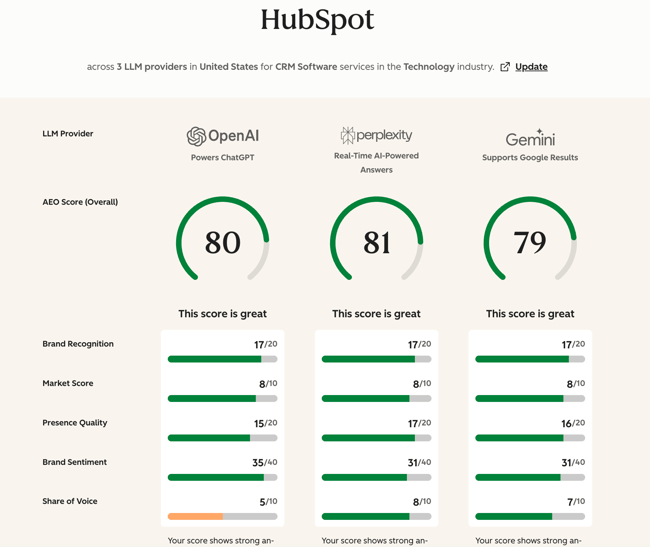
HubSpot’s AEO Grader measures brand visibility on ChatGPT, Perplexity and Gemini. It evaluates brands based on brand awareness, market positioning, quality of presence, sentiment analysis and share of voice. Users enter their brand name and the tool does the rest automatically.
Core functions
- Five-dimensional scoring: HubSpot’s AEO Grader provides an overview of brand awareness strength, competitive market positioning, contextual relevance, sentiment analysis and share of voice. Everyone contributes to a score out of 100.
- Analysis of the narrative theme: HubSpot’s AEO Grader identifies the specific topics and contexts that response engines associate with a brand. Marketers can see if their brand is appearing in the right use cases.
- Source quality assessment: HubSpot’s AEO citation tracking tool shows which external sources (publications, review sites, forums) influence how AI represents a brand.
- Multilingual support: Available in English, Spanish, French, German, Portuguese and Japanese for global teams.
Best for: Marketing leaders, brand managers and SEO experts who need an instant response engine visibility baseline before opting for paid monitoring tools.
Prices: Free (no credit card, no usage limits, no features behind a paid plan).
4. Otterly.ai
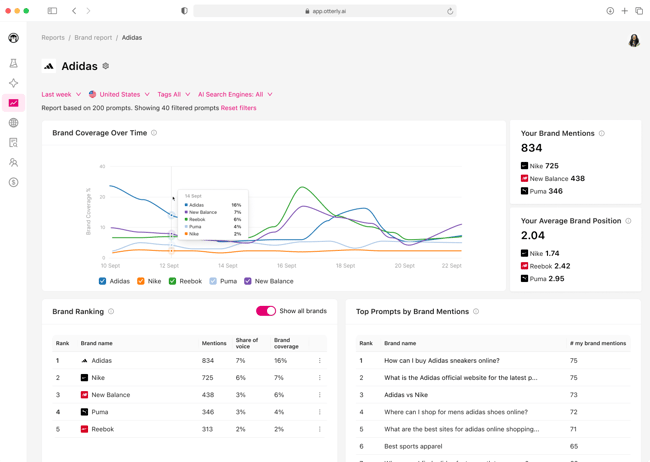
Otterly.ai is a subscription-based AI citation tracking platform that monitors brand mentions and website citations in ChatGPT, Google AI Overviews, Perplexity, and Microsoft Copilot. Gemini and Google AI Mode are available as paid add-ons.
Users define tracked prompts (conversational questions that reflect real user queries), and Otterly automatically runs them daily or weekly through response engines, logging which brands are quoted, how often, and in what context.
Core functions
- Automated prompt monitoring: Otterly.ai can track quotes across six response engines and updates results daily or weekly.
- Link quote analysis: Otterly.ai’s citation dashboard shows which URLs are referred to most often and by which response engines.
- Brand Visibility Index: Otterly.ai’s AEO citation tracking tool provides teams with a single metric to track all AI presence.
- AEO exam tool: Otterly.ai’s built-in AEO tool includes competitive benchmarking and shows where a brand’s strategy is falling behind.
- CSV export for stakeholder reports and custom dashboards: With Otterly.ai, data can be downloaded across all tariff tiers.
restrictions
- The prompt-based pricing model allows for rapid cost scaling, so tracking 100+ prompts across five engines can quickly consume credits.
- Gemini and Google AI Mode require paid add-ons beyond the basic subscription.
Best for: Small to medium sized marketing teams and agencies that want continuous, automated citation monitoring at an affordable price.
Prices:
- Lite: $29/month (15 prompts)
- Standard: $189/month (100 prompts)
- Premium: $489/month (400 prompts)
- Free trial available
5. AirOps
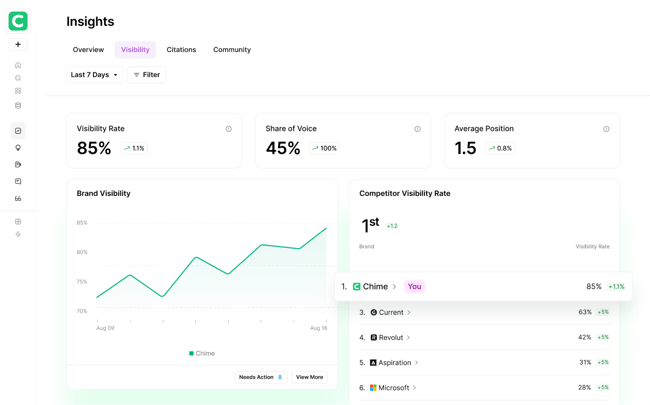
AirOps is fundamentally different from the other tools on this list. Most tools focus on monitoring visibility. AirOps is designed as an end-to-end content operations platform with response engine visibility tracking as a layer within a broader production system.
The platform tracks brand presence in ChatGPT, Perplexity, Gemini and Google AI Mode and identifies citation gaps. From there, it provides the workflow infrastructure (e.g. Power Agents, Grids, and CMS integrations) to create and publish content that completes this.
Core functions
- Answer machine Visibility dashboard: The AEO tracking tool tracks brand citations, share of voice, and competitor positioning across multiple response engines.
- Power agents: AirOps runs custom multi-stage AI workflows that automatically move from research to design and optimization.
- Grid: AirOps includes a spreadsheet-style content management interface for planning, assigning, tracking, and publishing at scale.
- Opportunity module: With weekly (Pro) or monthly (Solo) reports, it uncovers citation gaps, declining mentions, and prompt-level content priorities.
- Direct CMS publishing to WordPress, Webflow and Shopify: AirOps also offers integrations with SEMrush and Google Search Console.
- Page360 analysis: AirOps’ LLM tracking capabilities combine citation data, rank position, AI-generated traffic, and content freshness into a single page-level view.
restrictions
- The Solo plan only tracks ChatGPT; Multi-engine insights (Perplexity, Gemini, Google AI Mode) require the Pro plan.
- The response engine coverage is less and the platform has a notable learning curve. Teams without an established content strategy may struggle to deliver value quickly.
Best for: Established content teams and agencies with a proven strategy that need to combine AI citation tracking with scalable content production workflows.
Prices: Start with a 14-day free trial for any plan. Solo plans start at $199 per month.
6. Profound
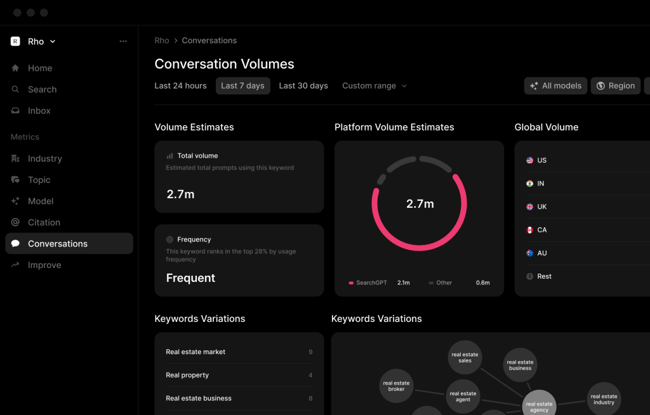
Profound positions itself as an AI “read/write” marketing platform, meaning it both monitors visibility and generates optimized content. The platform processes millions of quotes daily and tracks brand mentions in ChatGPT, Perplexity, Google AI Overviews, Google AI Mode, Gemini, Copilot, Claude and Grok.
Core functions
- Prompt volume analysis: Conversation Explorer displays an estimated AI demand score for topics in a brand’s category.
- Tracking citation approvals: Profound provides domain-level ranking compared to all of a brand’s competition.
- Sentiment and topic analysis: The platform goes beyond mention count to assess how AI represents a brand.
- Automated content workflows: Profound has built-in tools for creating AI-optimized content briefs and drafts.
- SOC 2 Type II Compliance, SSO and Enterprise Reporting for Regulated Industries: All are included in all tariff levels.
Restrictions:
- The $99 Starter plan only covers ChatGPT with 50 prompts, compared to HubSpot AEO at $50/month for multi-engine visibility across ChatGPT, Perplexity, and Gemini.
- The learning curve is steep and platform users would benefit from a dedicated analyst.
Best for: Enterprise brands and large agencies that need comprehensive competitive intelligence, compliance-level security (SOC 2 Type II), and cross-industry citation data at scale.
Prices:
7. Peec.ai
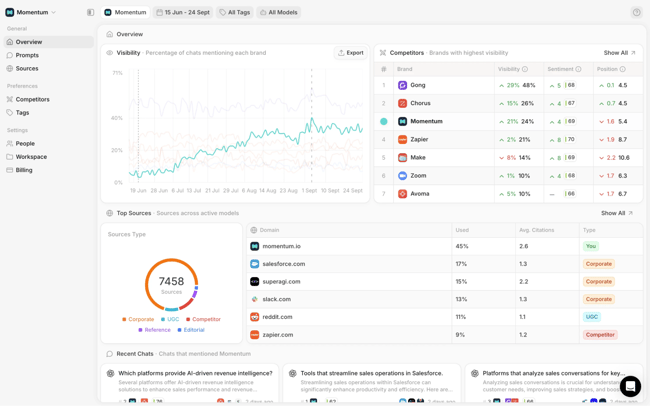
Peec.ai is a pure AEO analysis platform. It tracks visibility in ChatGPT, Perplexity, Google AI Overviews, Copilot, Gemini, and Google AI Mode, but does not bundle content creation or optimization tools.
This focus keeps the interface simple and the data clean, which teams that already have separate content workflows prefer.
Core functions
- Prompt-level visibility tracking: Peec.ai provides location data for six AI models.
- Sentiment analysis: Peec.ai’s AEO tracking tool breaks down positive, neutral and negative brand characterizations.
- Competitor benchmarking: AEO citation tracking tools provide regional visibility breakdowns for multi-market brands.
- Looker Studio integration: Peec.ai Integrates with Looker Studio to create custom reporting dashboards.
- Multi-language and multi-region support. This feature is available in multiple countries with Peec.ai.
restrictions
- Full coverage of multiple engines will be expensive; Adding Claude, Gemini, DeepSeek, and Grok to the Starter plan can increase the total monthly cost to $170-200/month.
- The platform focuses solely on monitoring and has no content optimization or generation tools.
Best for: Marketing teams and agencies that want clean, focused response engine visibility analysis with a strong UX and Looker Studio integration for custom reporting.
Prices:
- Starter: $95/month
- Per: $245/month
- Progressive: $495/month
- Company: Individual prices
- Free trial available
8. Crunch
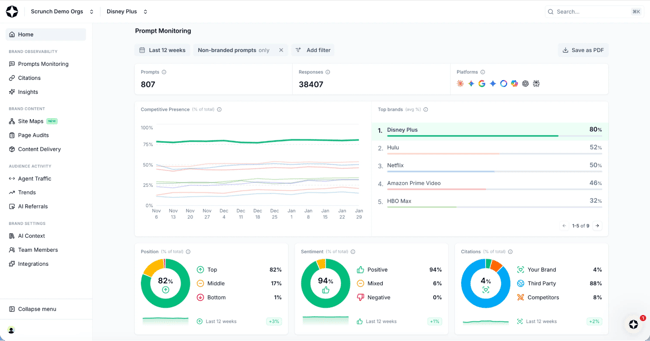
Scrunch AI monitors brand visibility across seven response engines: ChatGPT, Claude, Perplexity, Gemini, Google AI Overviews, Google AI Mode and Meta AI. The platform’s GA4 integration is a differentiator. It tracks AI crawler bot traffic to a website and provides traffic attribution from AI platforms. This helps teams link citation data to actual website visits and conversions.
Core functions
- Seven response engines covered: Scrunch offers the most comprehensive platform coverage compared to most AEO tracking tools.
- GA4 integration for AI reference traffic attribution and bot traffic monitoring: This is Scrunch’s strongest differentiator compared to other AEO quote tracking tools.
- Misinformation detection: Scrunch highlights inaccurate brand representations in AI responses.
- Site audit tool: This feature of Scrunch’s AEO tracking capabilities assesses each site’s readiness for AI citations.
- Sentiment analysis and competitive share voice tracking are included in all levels.
- SOC 2 compliance and enterprise-grade security are included for corporate buyers.
restrictions
- The starting price of $250/month is one of the highest in the category and the instant credit system can be confusing. Chasing prompts across multiple engines depletes credit faster than the headlines suggest.
- Insights and optimization recommendations are still in beta and are less developed than the monitoring features.
Best for: Mid-sized to large organizations and agencies requiring the most comprehensive response engine coverage, GA4 integration for traffic mapping, and SOC 2 compliance.
Prices:
- Core: $250/month
- Company: Individual prices
- Free trial available for Explorer plan
Now that we’ve looked at the best tools on the market, let’s talk about how we can judge which one actually fits a team’s stack.
How to evaluate AEO citation tracking tools for your stack
Choosing between AI citation tracking tools is not a feature checklist task, but a stack decision. The right tool depends on:
- Which response machines a company’s buyers use.
- Which systems a company already operates.
- How much can a company spend relative to the gap it is closing?
- Whether the team can actually operationalize the data.
The scorecard framework below provides a structured, repeatable way to evaluate any citation tracking AI platform across four dimensions:
- Cover.
- Integrations.
- Cost.
- Team-friendly.
Rate each tool on a scale of 1-5 per dimension and then weight the dimensions based on business priorities.
Dimension 1: Coverage (What response engines and data types are tracked?)
Coverage is the foundation. If a tool doesn’t monitor the response engines in which a company’s target audience searches, nothing else matters. AI citation tracking tools differ from traditional brand monitoring by tracking citations within LLMs and AI-generated responses. But each tool covers a different set of engines.
Rate 1-5 based on these criteria:
- Motor width: How many major AI platforms does the tool monitor? The base in 2026 is ChatGPT, Perplexity and Gemini.
- Mention type granularity: Does it differentiate between direct URL citations, brand name mentions and indirect references? A tool that just reports “You were cited” without specifying it How leaves teams guessing about the nature of their visibility.
- Fast variation and sampling. LLM outputs are non-deterministic. A tool that polls each prompt once per cycle provides teams with a snapshot. One that performs three to five variations will give you a statistically meaningful signal. Ask the providers: How many prompt runs per query, per engine, per cycle?
- Geographical and linguistic coverage. If the audience spans multiple markets, the tool needs to track AI responses by region and language. In this case, the default US English settings are restrictive.
Dimension 2: Integrations (Is a connection to your existing workflow possible?)
Most AEO citation tools reside in their own dashboard, separate from the CRM, analytics platform, and content workflows a team already uses. The most common pitfall is not bad data; It is data that no one responds to because it never appears where decisions are made
Rate 1-5 based on these criteria:
- CRM connectivity: Does it connect citation data to HubSpot, Salesforce, or your CRM of choice? Without it, teams must manually correlate spreadsheets.
- Analytics platform integration: Does the AI Citation Tracker connect to Google Analytics 4, Looker Studio or a BI tool? Teams tracking citations to a website in AI results need to see this data alongside organic traffic, paid performance, and conversion metrics.
- CMS and SEO tool connections: If the tool reveals opportunities for content optimization, can teams use these within their existing workflow? Through integrations with WordPress, Webflow, SEMrush or Ahrefs, teams can go straight from identifying the vulnerability to delivering the update.
- Export and API access: Any tool worth considering should at least export the data as a CSV. For teams building custom dashboards or automating reporting, API access is essential. Check whether API access is included in a plan tier or tied to Enterprise pricing.
- Alert and notification channels: Can the tool send notifications to Slack, Email, or Teams when citation status changes? Real-time notifications mean teams notice visibility changes the same day they occur.
Pro tip: Before evaluating paid tool integrations, establish the brand’s baseline for free. HubSpot’s AEO Grader measures brand visibility on ChatGPT, Perplexity and Gemini. It creates a report that marketers can instantly share with their team and use when evaluating paid platforms.
Dimension 3: Costs (What is the actual price for the insurance coverage you need?)
Pricing in all AEO citation tracking tools is designed to hide true costs. The basic plan looks reasonable until marketers add the engines they need, take into account how quickly the instant credit runs out, and hit the tier jump that doubles the bill.
To compare costs fairly, measure each tool using the same metric.
Rate 1-5 based on these criteria:
- Cost per query tracked per engine per month: This is the most useful comparison metric. Divide the total monthly cost by (number of queries tracked × number of engines monitored). The best tools keep the cost per query per engine low, with no surprise add-ons.
- Add-on transparency: Does the base price include all the engines a business needs, or do critical platforms (Gemini, Claude, Google AI Mode) require paid upgrades? Calculate the total cost of the required motor set. The base tier doesn’t accurately reflect what you actually spend each month
- Clarity of credit usage: Some tools count each query × each engine as a separate credit. Tracking 50 queries across five engines consumes 250 credits, not 50. Confirm the invoice before signing.
- Feasibility of the step jump: Some entry-level plans only cover ChatGPT, with multi-engine tracking behind a 5x to 10x price jump and no mid-tier option. Consider whether the budget can accommodate this jump – because broader coverage is usually unavoidable.
- Stack move value: Does the tool replace all existing tools in the current stack? A $400 per month platform that saves $150 in social listening costs and $100 in manual review work has a net effective cost of $150.
Dimension 4: Team Fit (Can your team actually use it?)
The AI citation tracking definition a team adopts is less important than whether they can act on the data provided by a tool. A platform with comprehensive analytics that requires a dedicated analyst to interpret is not a good fit for a three-person marketing team.
A simple dashboard with no optimization guidance is a poor fit for an enterprise content operation with 20 authors.
Rate 1-5 based on these criteria:
- Time for a first insight: How quickly can a new user go from sign-up to actionable data? Tools that require multi-day onboarding, sales meetings, or timely library configuration slow down teams before they even begin.
- Learning curve and UX: Can a team navigate the interface without training? Request a trial or demo and let the person who will actually use it evaluate the usability.
- Feasibility of output: Does the tool tell the marketers what to do with the data, or simply present it? For teams without a dedicated AEO analyst, platforms have been developed to provide specific content recommendations, priority rankings, and optimization guidance. Data-only tools are ideal for teams that have someone to interpret them.
- Reporting and stakeholder communication: Can users create exportable reports for executives, customers, or cross-functional partners? When it comes to proving the impact of AEO to the VP or CMO, the tool needs to produce shareable artifacts.
- Seat model and collaboration: Is the price per user tiered or are seats unlimited? For teams where marketing, PR, SEO, and operations require access, per-seat pricing can double or triple the effective cost.
Put the scorecard into action
After marketers evaluate each platform against these criteria, evaluate each tool across all four dimensions and then weight the ratings based on the team’s primary need.
HubSpot AEO is a quick starting point for teams new to AEO. It delivers a visibility score, competitive benchmarking, and actionable recommendations without requiring broader engagement with the platform.
For teams already using HubSpot Marketing Hub, this is built-in AEO features Expand these possibilities by linking insights directly to implementation. Teams can do everything from identifying a citation gap to publishing the solution on the HubSpot platform.
Frequently Asked Questions about AI Citation Tracking Tools
How often should you check LLM and AI answer citations?
Marketing teams should check AI citations weekly for high-priority searches and monthly for broader keyword sets. Because LLM outputs are non-deterministic, a single snapshot cannot reliably represent citation visibility. A weekly rhythm helps teams identify changes early, before competitors gain sustained visibility through new or updated content.
HubSpot’s AEO Grader Brand visibility benchmarks in response engines for free. Marketers should run it monthly for both their brand and their top three competitors to identify positioning shifts between their automated monitoring cycles. Then use these monthly snapshots to check whether the paid tools’ reports match what the response engines actually display.
How can you check quotes and deal with AI hallucinations?
AI systems can create hallucinated quotes by referencing nonexistent sources or misattributing brands to claims. Marketing teams should implement a verification workflow that includes checking URLs for accuracy, validating claims on cited pages, and testing multiple prompt variations to assess citation consistency across runs.
How can the costs of different tools be fairly compared?
Companies should normalize pricing by calculating costs per query tracked, per engine, per month, as providers use different billing models that can obscure true costs. By evaluating this standardized metric, teams can make accurate comparisons between tools with different prompt limits and engine coverage.
What are the basics for improving AEO metrics?
Content teams should structure pages to align with the way AI systems extract and cite information. This includes leading with clear definitions, using consistent entity names, and organizing content with question-based headings that address common user queries.
Without an AEO tracking tool, you cannot survive the AEO era
Without a system to measure and improve how their brands are represented in AI-generated responses, marketers cannot compete in the AEO era – and that starts with the right tools.
Platforms like ChatGPT, Perplexity and Google AI Overviews now determine which sources are cited. This shifts visibility from traditional rankings to whether content is selected, trusted, and reinforced across responses.
HubSpot offers AEO capabilities in two ways: through its dedicated AEO product and integrated features in Marketing Hub Pro and Enterprise. Both help teams track AI citations, analyze generative search performance, and turn those insights into action.