
AI search engine citation tracking helps measure brand visibility and authority in AI-powered search results. As AI-powered search experiences transform the way people find information, evaluate providers, and create shortlists, the visibility of AI answers is no longer just a superficial metric. If AI engines don’t cite your brand, you’ll lack influence at the very moment shoppers are forming an opinion.
Accordingly HubSpot’s State of Marketing ReportIn the study, which surveyed more than 1,500 marketers, brand awareness is a top marketing priority by 2026, alongside increasing conversion rates, closing more deals, increasing sales and strengthening customer relationships.
In a world of AI search, these goals are more interconnected than ever before. Why? A growing proportion of brand recognition now takes place within AEO tools and within Google’s AI Overviews (AIO). Users are increasingly relying on AI-driven responses to answer information requests, compare service providers and explore products before ever clicking on a website.
AI citation tracking lets you measure where, how, and why AI engines reference your brand, content, and expertise in generated responses, so you can shape your AI strategy and turn AI visibility into growth. Tools like HubSpot AEO Track brand visibility, citation counts, and share of voice across key response engines, then provide teams with the necessary recommendations to take action.
In this guide, I’ll explain what AI citations actually are, how they differ from mentions, how to track them, and how to increase your presence in AI-generated responses.
Table of contents
What are AI citations?
An AI citation is when an AI engine explicitly points to your website as the source for its answer. This typically includes a link to your content on platforms like ChatGPT, Perplexity AI, or Google AI Overviews (AIO).
There are two types of citations: those that appear in a sidebar and those that are included in the answer. Here’s what both types of AI citations look like in Google’s AIO:
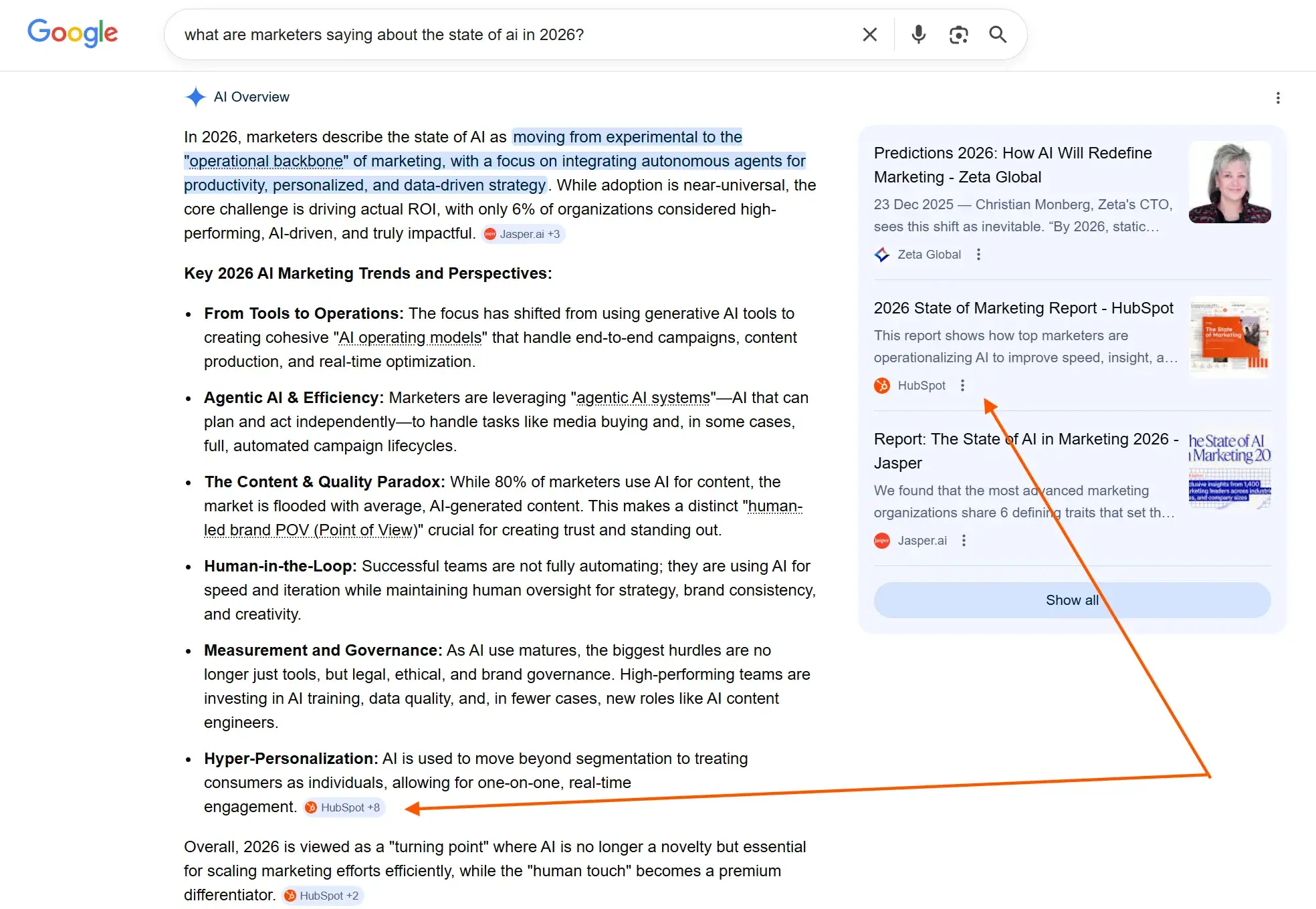
When AI cites your content, it signals that your website directly contributed to the response it generated. This is the clearest indicator of content authority in AI-generated search experiences.
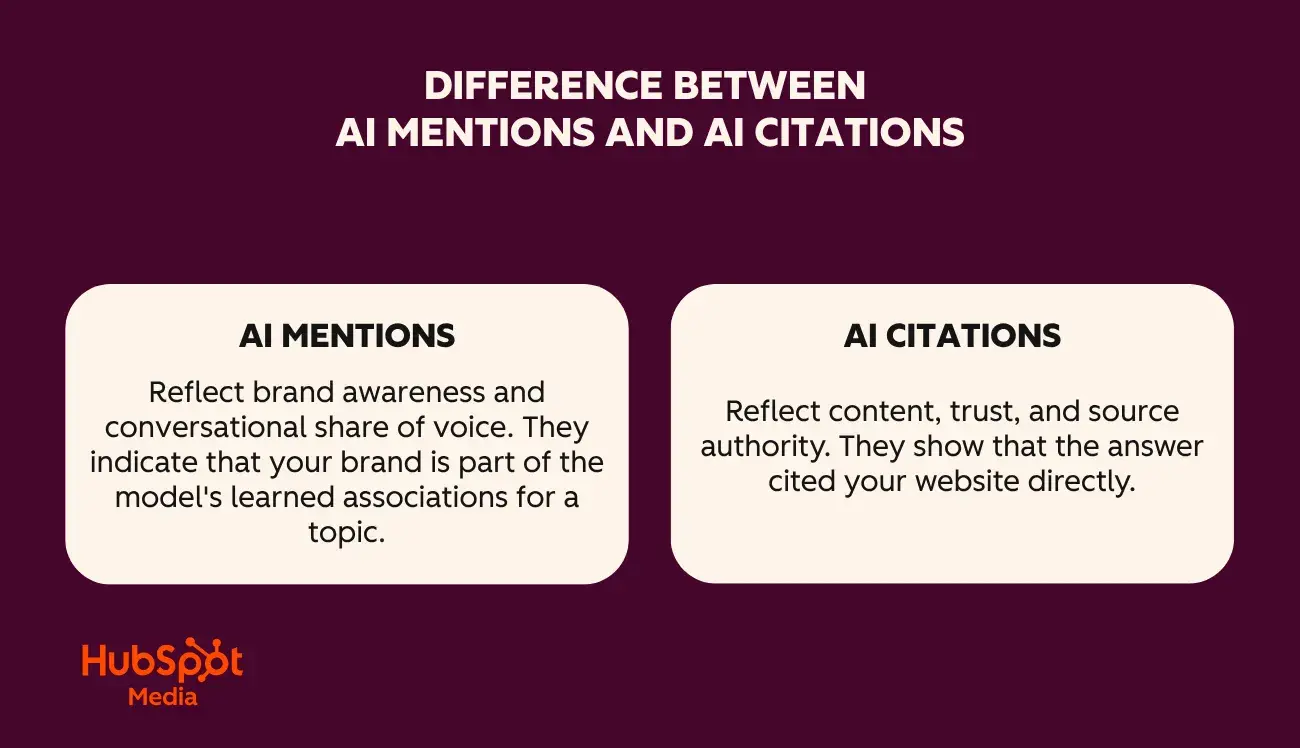
What counts as an AI mention compared to an AI citation?
An AI mention refers to a brand or content referenced in an AI response without a direct link. For example, an AI response might list your company under “Top Vendors” or “Recommended Tools” in a category. Your brand appears in the narrative, but there is no linked URL or formal attribution. This is what AI mentions look like in ChatGPT:
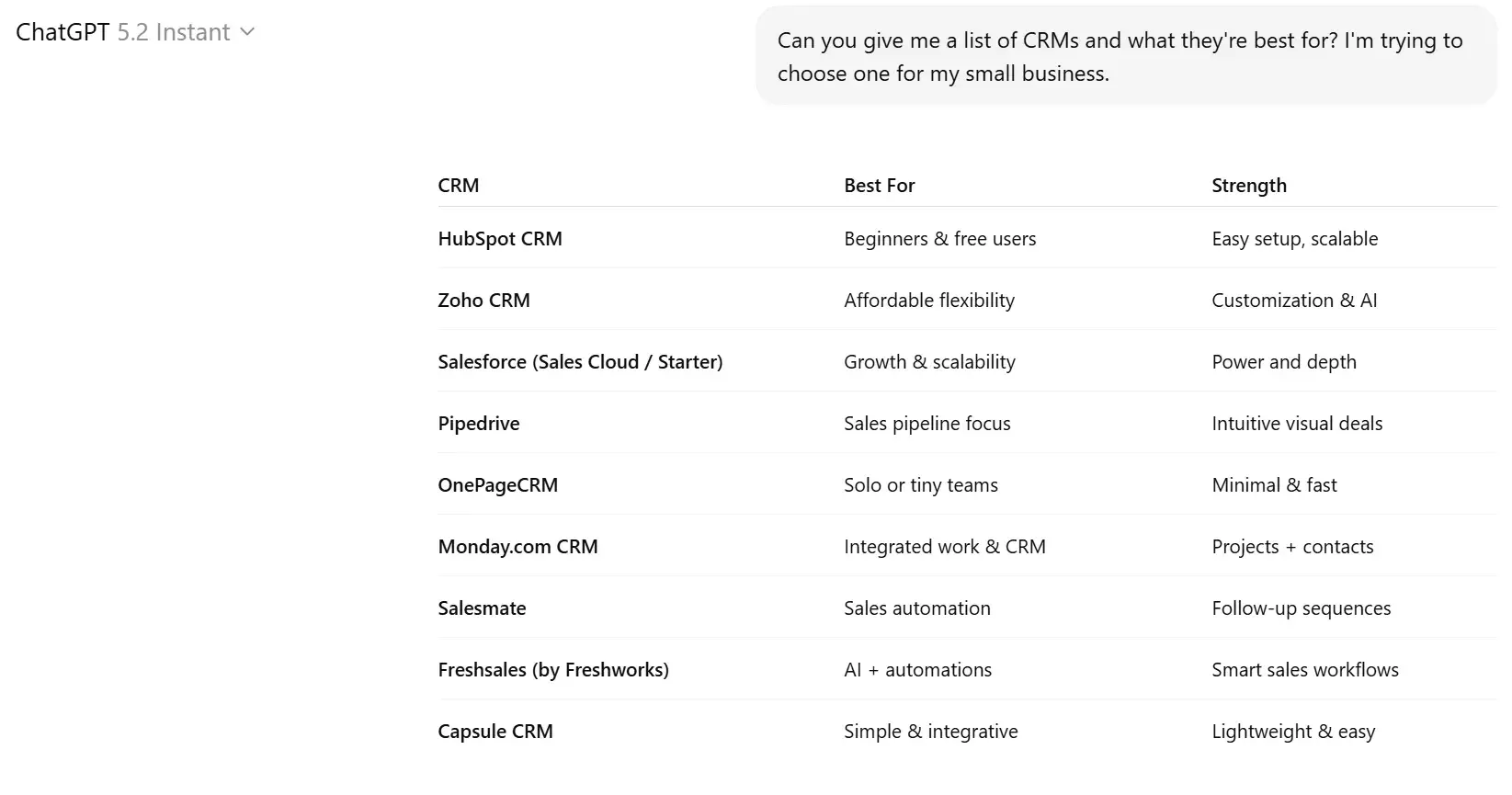
The main difference between mentions and quotes: Mentions are visible in the conversation. Quotations are sources.
Both mentions and quotes are helpful, but they serve different strategic purposes. Mentions help you understand whether your brand is present in AI-driven discussions. Quotes help you understand whether your content is influencing these discussions.
How to Track AI Engine Citations
The challenge with AI citations is measurement. AI visibility isn’t as simple as traditional SEO tracking, but there are a few things you can do to get an idea of your site’s performance. Tracking AI citations requires logging citations and mentions by search engine, keyword, and date. Here’s what you can do.
Manually search for your most important keywords.
One of the easiest ways to get started is to manually search for your top keywords on AI-driven platforms like ChatGPT, Perplexity AI, and Google AI Overviews. Run informational queries, comparison-based searches, and “best of” prompts that reflect actual buyer behavior. Check whether AI overviews:
- Mention your brand
- Include your website as the source
- Show competitors instead
Tip: If competitors show up where you think they should be, then you’ve identified a potential opportunity. You can then look at what competitors are doing and develop a plan to replace their quotes with your own.
Although manual searches are simple, they are extremely limited. AI results are highly personalized based on user history, context and even wording, so your own use of the tool you search in influences the output. Two users can see different answers to the same query. The results are not static.
Most importantly, you cannot realistically test every relevant query variant yourself. Manual searches are useful for directional insights, but they are not scalable or reliable enough for comprehensive tracking.
Search for parameters in URLs.
When AI engines send traffic to your website, they often insert identifiable referral parameters into the URL. These parameters don’t tell you how many times an AI engine has cited your content, but they do confirm that a citation generated a click. For example, links generated by ChatGPT often include:
?utm_source=chatgpt.com
By monitoring these parameters in your analytics platform, such as Google Analytics 4 (GA4), you can attribute visits different types of AI agents. This is what a URL looks like when a user visits it via ChatGPT:
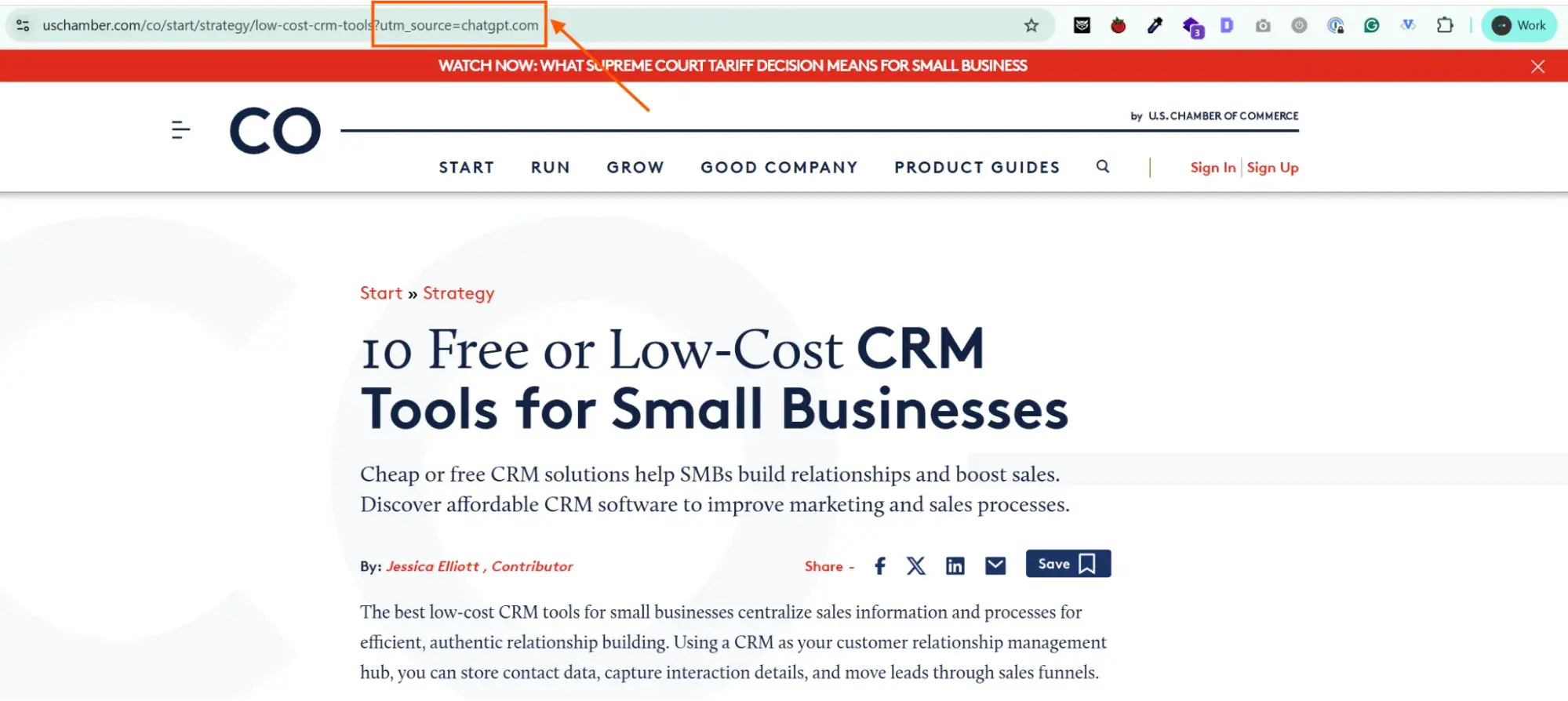
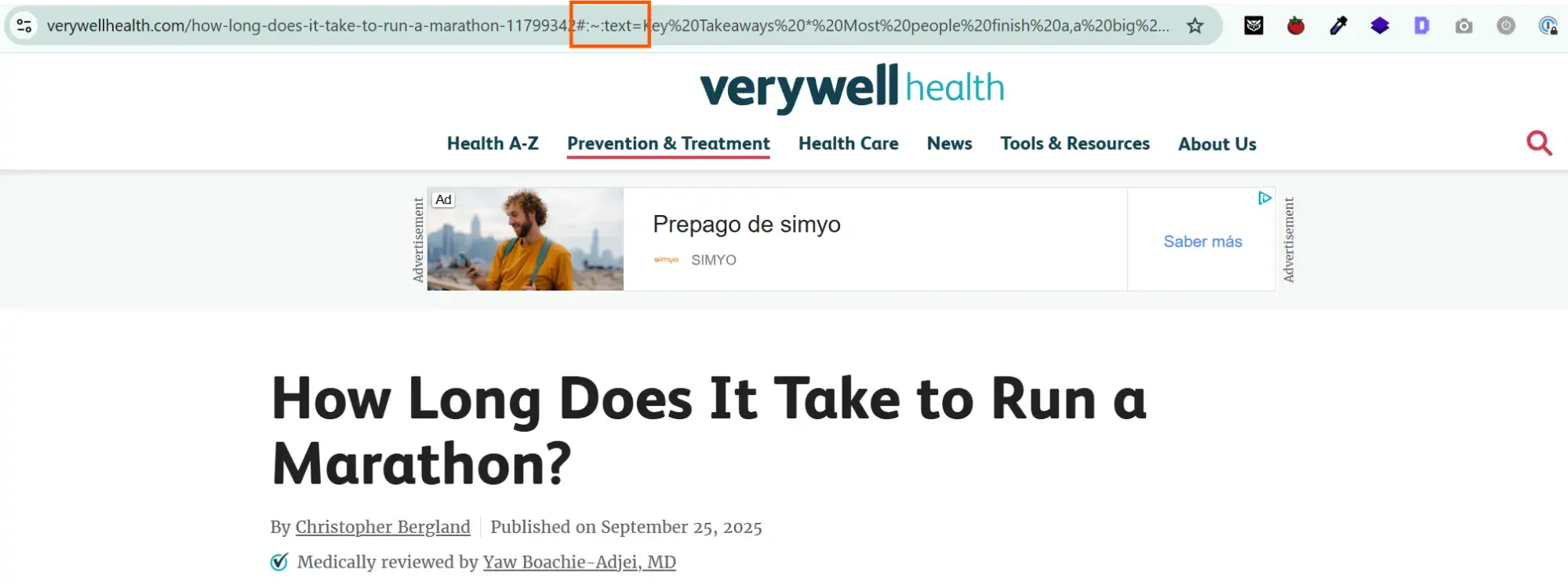
Likewise, Google AI Overviews traffic often contains a #text= fragment in the URL. This means that the user clicked on a cited source in an AI overview and Google highlights the specific passage they referenced. This is what the #text=fragment looks like:
Track traffic with Google Analytics.
In Google Analytics 4 (GA4), you can monitor referral traffic from AI systems. Use GA4 and GSC to estimate AI-driven traffic using event parameters and CTR analysis. How to use GA4:
Reports → Capture → Traffic Capture
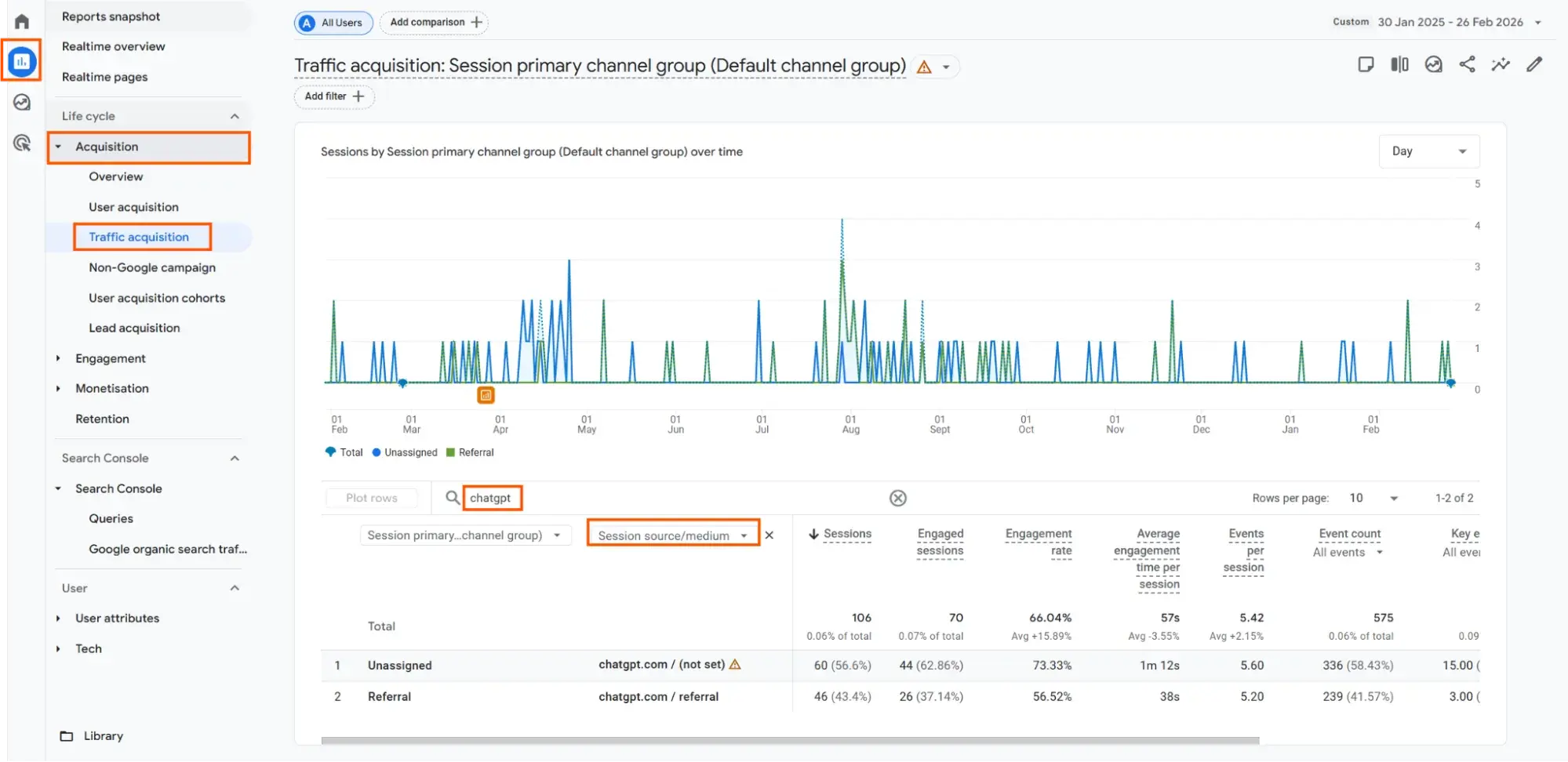
From there, filter by:
- Session source/medium
- Referral domain (e.g. chatgpt.com, perplexity.ai)
You can also create comparison segments specifically for AI traffic sources. This allows you to analyze engagement metrics like:
- Engagement rate
- Conversions
- Supported conversions
- revenue
While this approach won’t tell you how often your content is cited in AI responses, it will show whether citations are driving meaningful traffic. When recommendation visits from AI systems increase – especially to high-intent pages – this is a strong indicator that your citation footprint for commercially relevant searches is growing.
Set up custom dashboards that isolate AI recommendation domains over time
For teams that need a scalable, customizable way to monitor the impact of AI citations, a dedicated dashboard in Looker Studio is a convenient option.
This is what mine looks like:
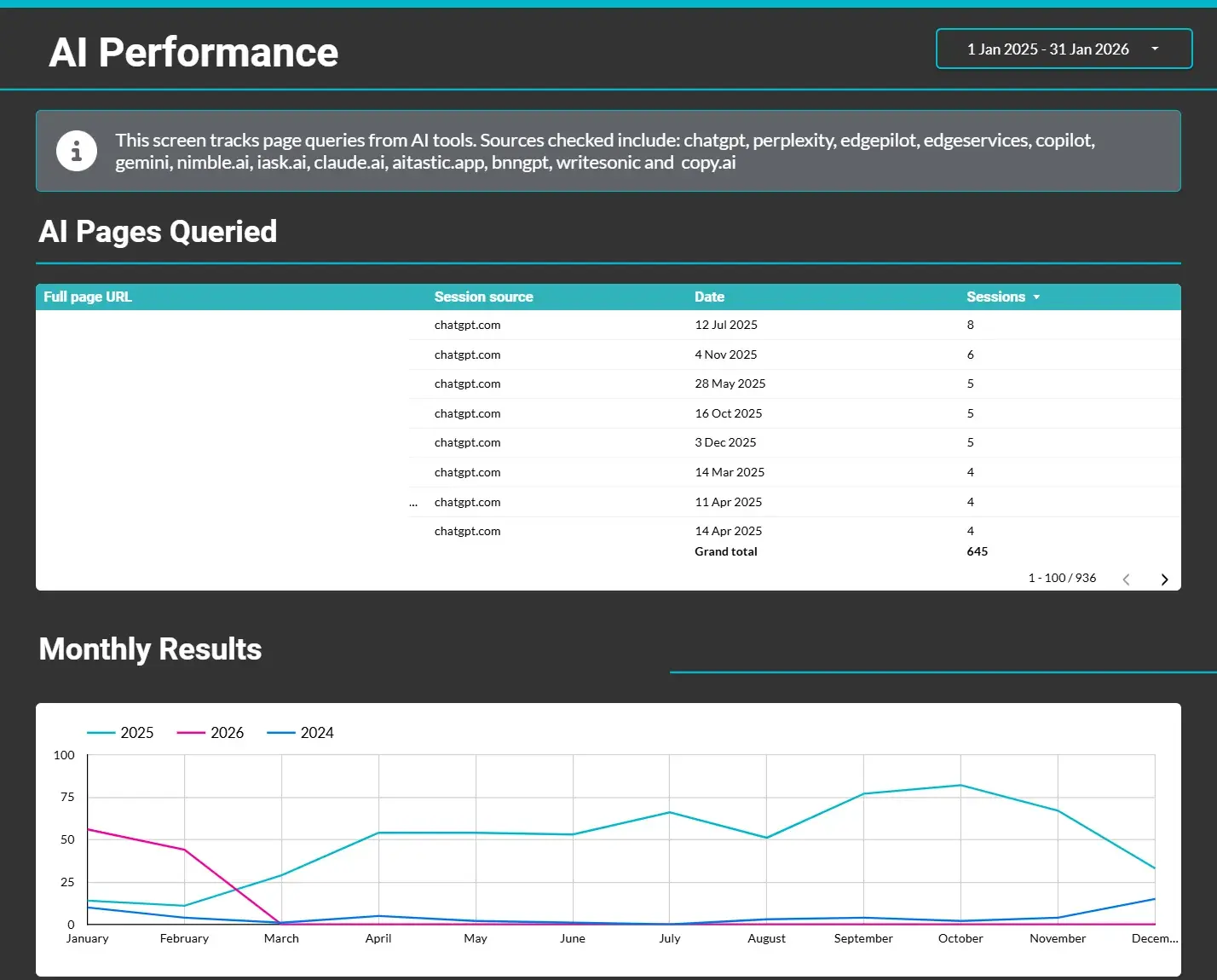
You can create a dashboard that includes:
- AI recommendation domain sessions
- Engagement rate
- Conversions and sales
- Supported conversions
- Landing pages that receive AI traffic
- Monthly AEO trend comparisons
This can be easily scaled by using regex filters on the session source/medium dimension. Instead of manually checking GA4 every time, your dashboard becomes a live AI visibility panel that updates automatically.
This approach does not measure the pure citation frequency within AI engines, but rather the impact. If AI-driven sessions increase over time, especially for targeted or educational content, that’s a strong signal that your citation footprint is increasing.
Pro tip: Kyle Rushton McGregormy favorite GA4 specialist, makes setting up custom AI Looker Studio dashboards easy his tutorial.
Free benchmarking tools: Use HubSpot AEO Grader for ad hoc visibility testing.
If you want a quick, directional overview of your brand (and competitor brands) performance, HubSpot is for you AEO grader Provides a basic assessment of AI visibility and citation opportunities. It helps you evaluate how well your website performs in AI systems.
Because it’s free, teams can evaluate competitive domains without incurring additional software costs. This makes it useful for side-by-side comparisons and helps you identify structural or content gaps that may explain why competitors are achieving more AI visibility than you.
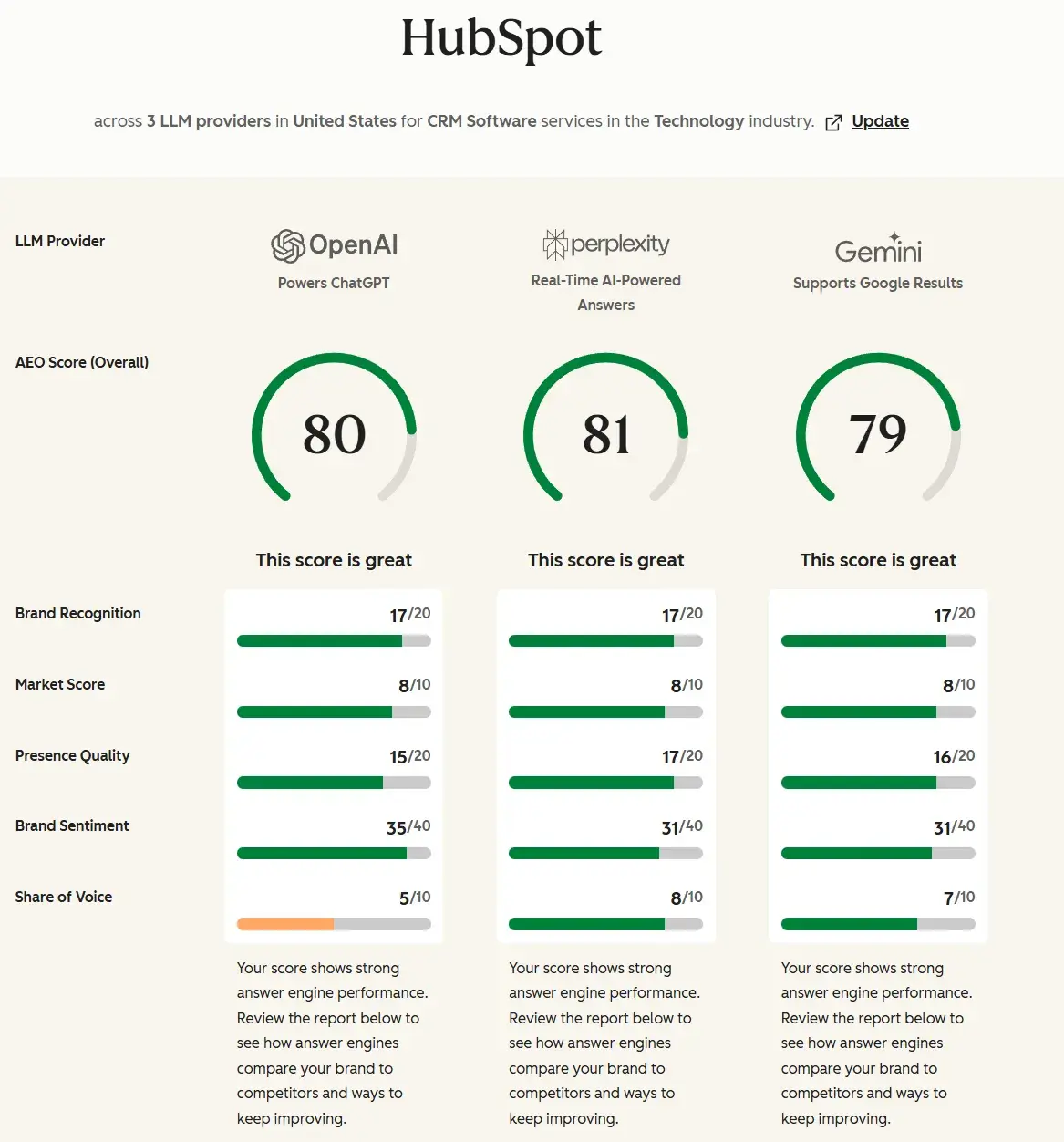
However, it is important to understand the limitations. AEO Grader does not track live AI quotes like dedicated tools do HubSpot AEO do (see the next section for more information on these types of AEO tools). It does not monitor citation frequency across queries, citation share over time, or alert you to citation errors. Instead, a static evaluation is carried out based on the current structure and content signals of your website.
As a free tool, AEO Grader relies heavily on manual interpretation. The tool still requires manual interpretation of results, patterns, and likely impacts on participants’ performance. Here you can see what AEO Grader looks like:
Use tracking tools.
Manual checks and analyzes provide you with some transparency. Dedicated AI citation tracking platforms offer a more systematic approach. Tools like HubSpot AEO are specifically designed to measure how often AI engines cite your content.
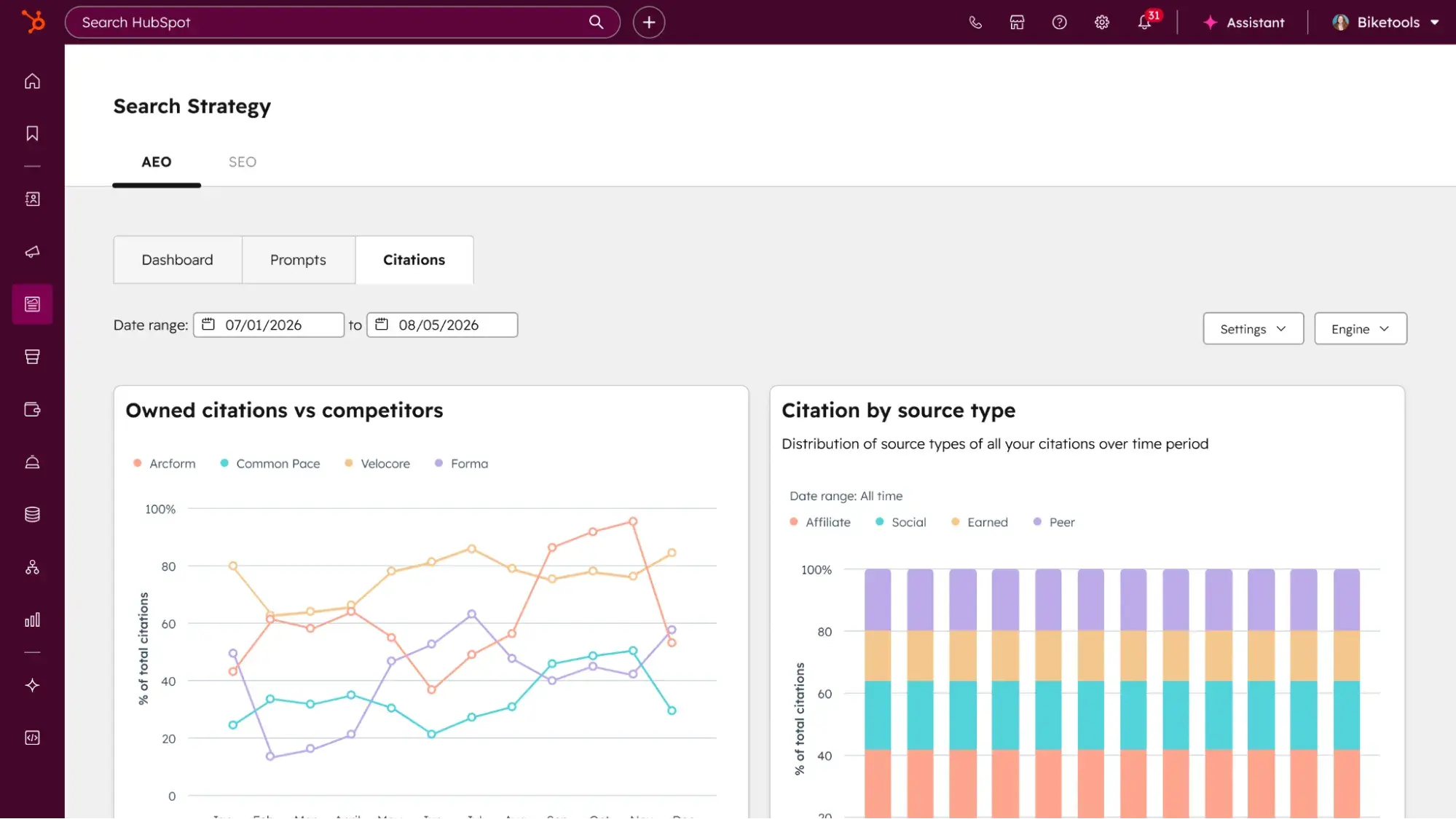
Instead of relying solely on referral traffic, they monitor AI responses at scale, track citation frequency across keywords, and compare your citation share to competitors.
This gives teams visibility into impression-level exposure, not just site clicks. Visibility is important because many AI searches don’t result in clicks. So measuring clicks alone doesn’t give you a complete picture of your influence. This creates clarity about:
- Which pages are cited?
- What queries do they trigger?
- Where the competition outperforms you
- How your citation percentage changes over time
How to close the citation gap with your content
To close the gap between mentions and citations, content needs to be updated and optimized to get more AI citations. Here are five AEO best practices to increase your chances of winning an award:
Create definitive, resource-worthy content.
AI engines prioritize content written for Search Generative Experiences (SGE). This means that the content appears authoritative, complete and trustworthy. Pages that comprehensively answer a question (with clear structure and supporting evidence) are more likely to be cited as sources.
How to do it
- Create detailed guides that fully answer a question, not just skim over it
- Add original data, statistics or expert commentary
- Cite reputable third-party sources to build credibility
- Use clear headings that reflect common search phrases
- Keep content updated to maintain relevance
Creating the depth needed in AI to rank well and get citations and mentions likely requires more than just good writing. You need strong writing processes, including research, editing, structured content systems, and well-placed product or service promotions.
Tools like breeze Accelerate research, uncover relevant questions, and support content planning that can be extracted directly into your workflow.
Content Hub helps teams operationalize templates, briefs, and reusable content patterns that make answers clearer, more structured, and easier for AI systems to extract at scale.
Visibility doesn’t stop at publication. Marketing Hub enables teams to orchestrate cross-channel promotion and curation around responsive content. Its SEO tools help identify high-intent information queries, content gaps, and structural optimizations that support both traditional SEO and AEO, which increasingly overlap.
Optimize for informative query intent
AI citations most often appear in informational queries, such as: Such as “what is,” “how,” “best,” “comparison,” and “why” searches, which are helpful in educating buyers. Effective citation-focused content directly addresses these query types.
How to do it
- Identify informative keywords or high-volume prompts in your category
- Create dedicated pages that directly answer these questions
- Structure content with concise, quotable definitions
- Add comparison tables for “best” and “vs” queries
- Make sure the first few paragraphs clearly summarize the answer
Improve content structure for AI analysis.
AI systems extract and synthesize content. Clear formatting and structure make it easier for models to understand and refer to your page.
How to do it
- Use descriptive H2 and H3 headings
- Add FAQ sections with direct answers under each question
- For clarity, use bullet points and numbered lists
- Implement structured data (FAQ, HowTo, article schema)
- Keep paragraphs concise and focused
Build topic authority, not just isolated pages.
AI engines are more likely to cite brands that show depth across a cluster of topics, rather than just a single well-written article.
How to do it
- Create interconnected content hubs around core topics
- Strategically link related articles internally
- Publish supporting subtopics that reinforce expertise
- Maintain consistent terminology throughout content
- Update older posts to align with your authority narrative
Strengthen external signals and brand associations.
AI models learn associations from across the web. Strong third-party testimonials increase the likelihood of your brand appearing or being cited.
How to do it
- Bring your thought leadership to reputable industry publications
- Earn mentions in listicles and “Top Vendor” roundups
- Publish original research that others reference
- Encourage partners and customers to publicly reference your brand
- Maintain consistent brand positioning across all platforms
What are the best tools for tracking citations in AI search?
AI citation tracking is still a new category, meaning different tools serve different purposes. Some are specifically designed for AI citation monitoring. Others provide supportive signals. The right choice depends on the size of your business, reporting needs and level of complexity. Here are four strong options:
Xfunnel
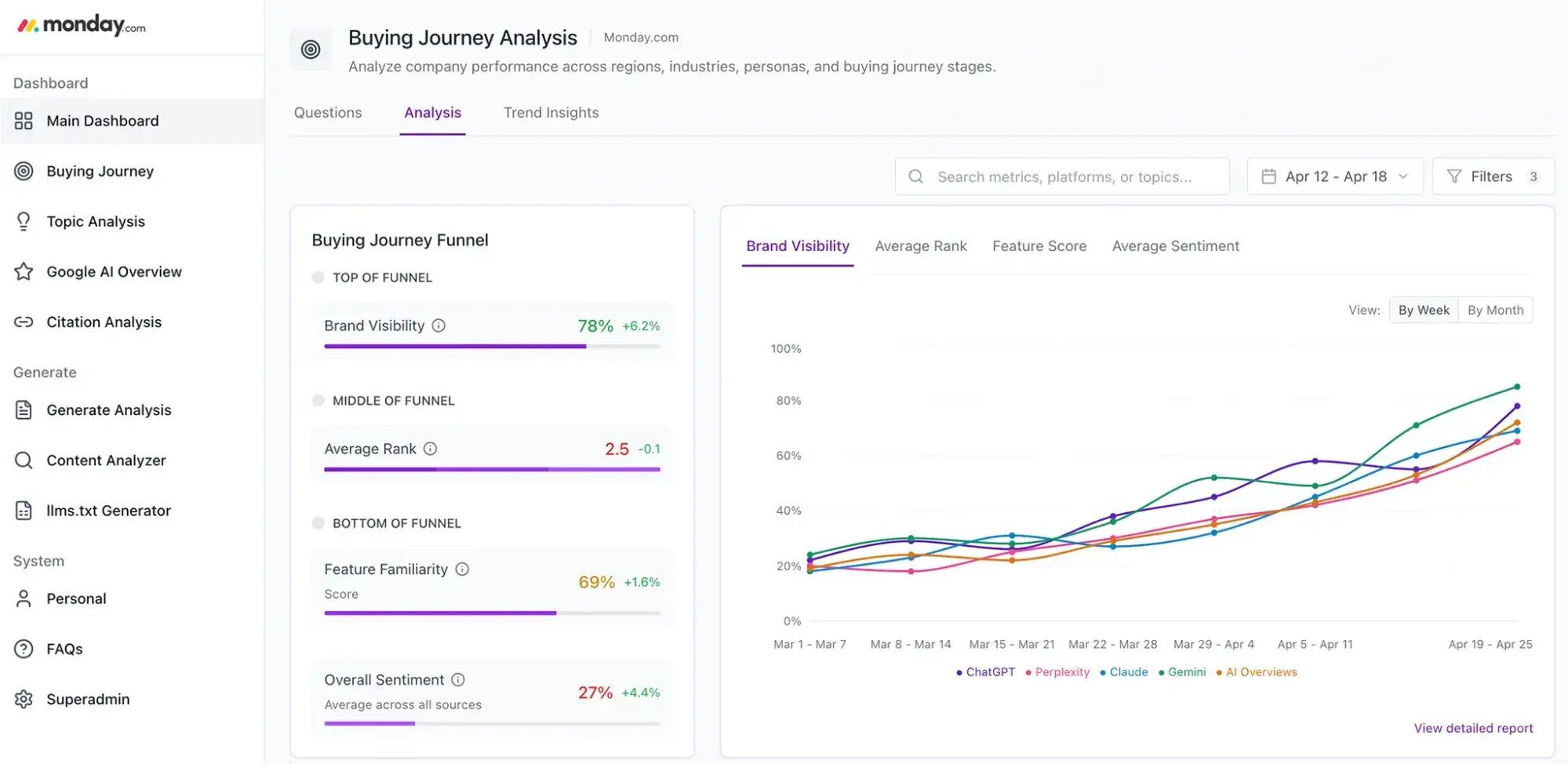
Xfunnel is specifically designed for tracking AI engine citations at scale. It monitors how often your brand and URLs are cited in AI systems and compares your citation share with competitors.
Unlike analytics-based tracking (which only shows traffic after a click), Xfunnel focuses on the visibility of the citations themselves, including:
- Citation frequency across defined query sets
- Competitive citation share
- Displacement events
- Trends over time
This makes it ideal for growth teams, B2B companies and agencies that need structured reports on AI visibility. If AI search is strategic to your revenue model, this is the most comprehensive solution on the market today.
Best for: Dedicated AI citation tracking and competitive share
HubSpot AEO
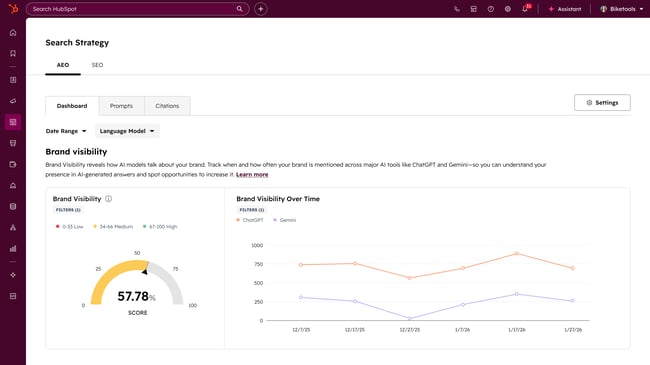
HubSpot AEO is specifically designed to track and improve a brand’s appearance across major response engines, including ChatGPT, Perplexity and Gemini. Unlike analytics-based tracking, HubSpot AEO monitors AI responses directly. It measures citation frequency, brand visibility and competitor share of voice across a defined set of prompts.
HubSpot AEO centralizes AI citation tracking into a single dashboard so performance can be consistently monitored over time and linked to content strategy and business outcomes. It’s available in HubSpot Marketing Hub Pro and Enterprise, or can be purchased as a standalone tool without an existing HubSpot subscription.
Best for: Linking AI citation tracking to content actions
SEMrush One
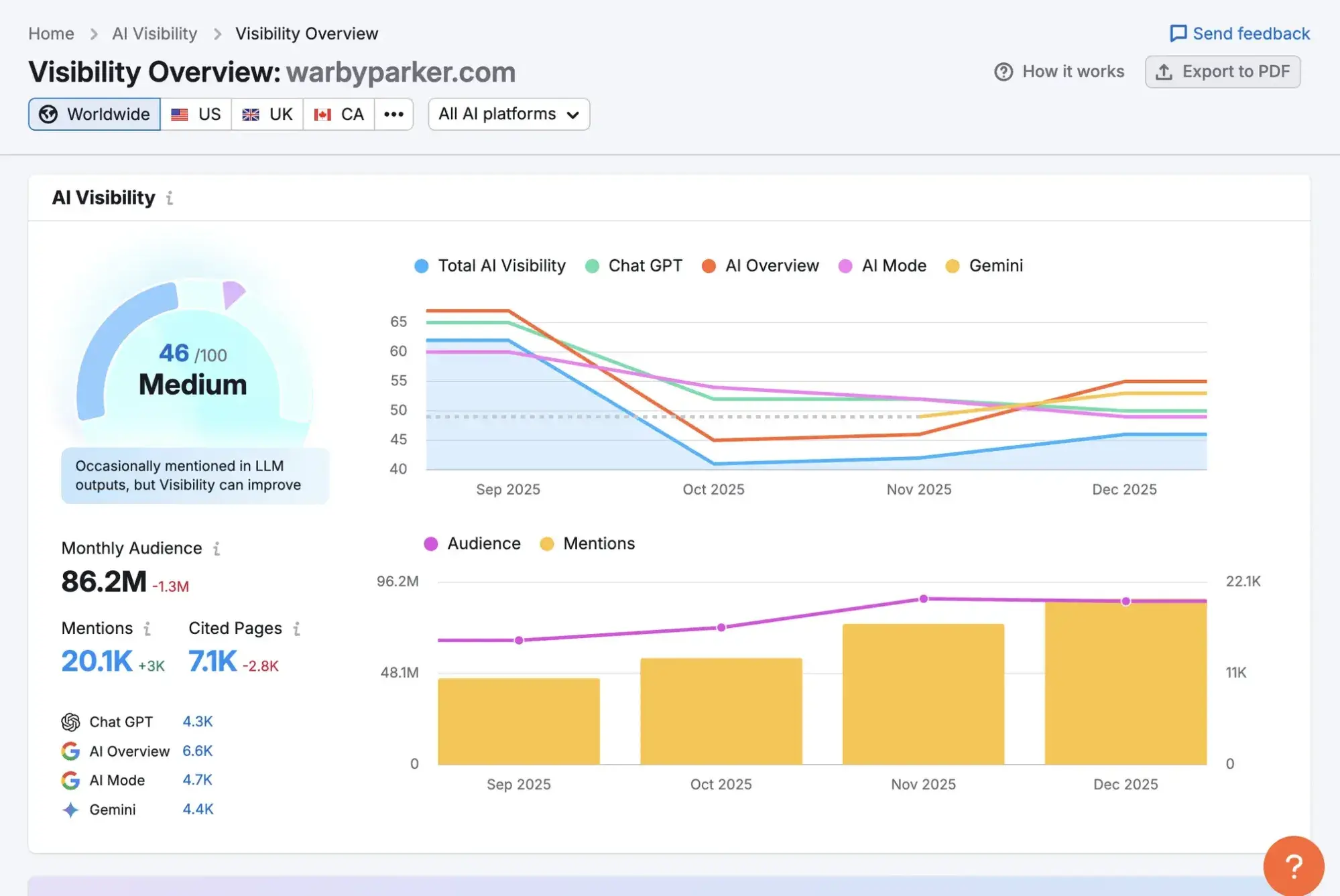
Semrush is one of the oldest SEO platforms in the industry and well positioned for AI SEO tracking. While it is not a pure AI-powered citation tracking tool like Xfunnel, Semrush is increasingly incorporating AI search visibility insights into its broader platform. It allows you to:
- Monitor keyword performance changes that may correlate with AI overviews
- Track branded and non-branded visibility changes
- Identify competitor content that is gaining traction
- Analyze content gaps at scale
For medium to large enterprise teams already embedded with SEMrush, this is a convenient way to integrate AI search monitoring into existing workflows. While it doesn’t give you granular citation counts across all AI engines, it does provide broader visibility signals that help contextualize AI performance within your overall search strategy.
I personally have been using SEMrush for years for technical SEO, keyword research, competitor analysis, and content strategy. I started using the AI tools and found that the recommendations were good and consistent with what I was giving my clients.
Best for: Established SEO teams are expanding into AI tracking
AEO grader
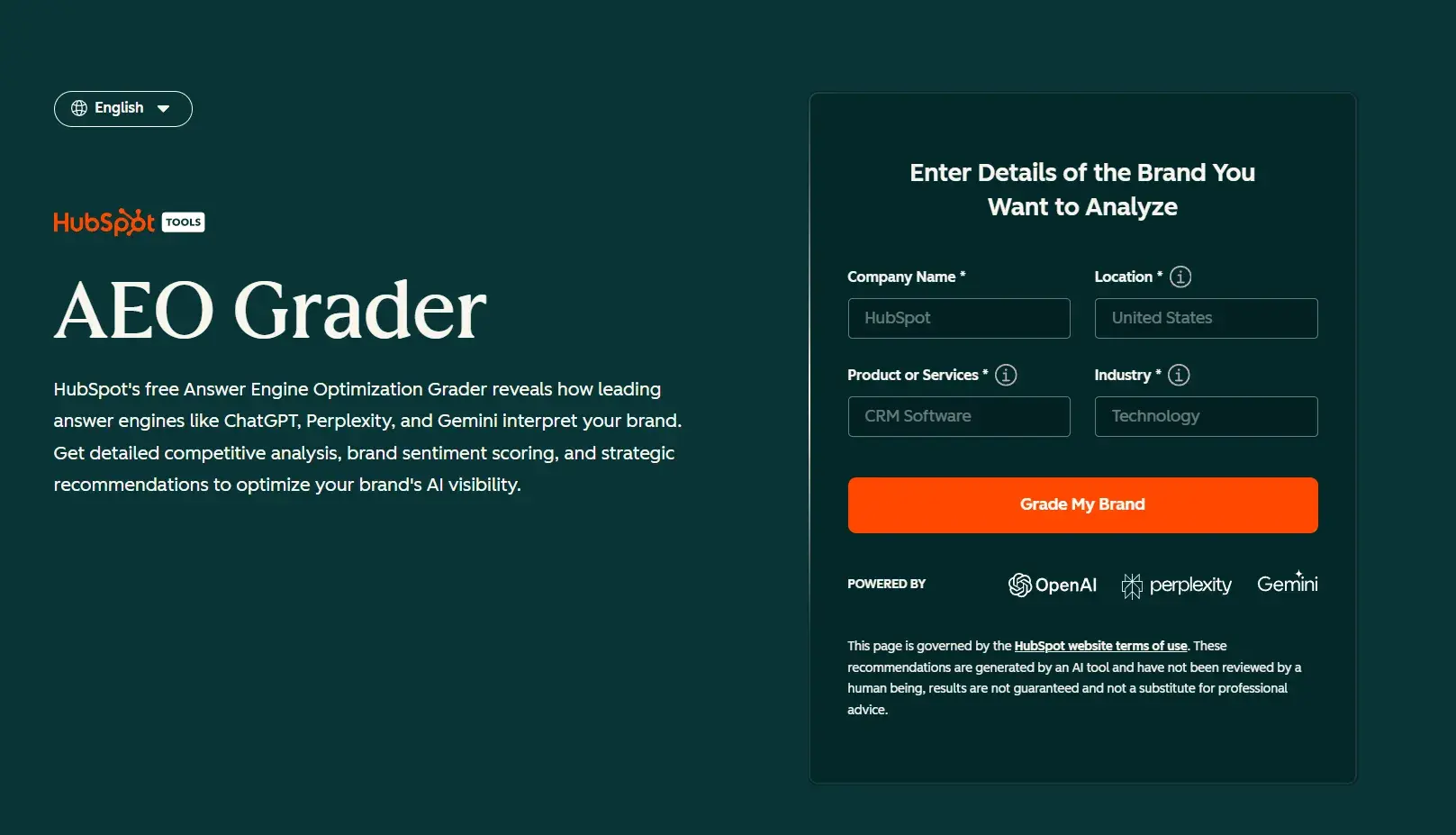
AEO grader is a free tool that evaluates a website’s optimization for response engines and AI-driven search environments.
It assesses structural and substantive factors that influence the likelihood of an AI citation, such as clarity, schema usage, and response formatting. Since it’s free, you can also run competitor domains through it to enable a quick, side-by-side comparison.
However, AEO Grader is not a tracking platform. Live citations are neither monitored nor citation share measured over time. Instead, it provides a static snapshot of readiness.
I personally use AEO Grader as part of audit workflows and in pitch scenarios. This is a quick way to assess the performance of a prospect’s website in terms of AI visibility and identify obvious optimization gaps.
Best for: Fast diagnostics and benchmarking
Frequently asked questions about tracking AI citations in search engines
How often should we update AI citation and mention tracking?
Check AI citation and mention tracking at least once a month. AI search environments are evolving rapidly: models are updated, competitors publish new content, and citation patterns change as authority signals change. A monthly review helps you identify trends, move events, and new query opportunities before they impact the pipeline.
Should we separate AI-influenced traffic from organic in reports?
Yes, segment AI-driven traffic from traditional organic search in your reports. While some AI traffic may technically fall under organic channels, its user behavior, intent patterns, and conversion paths may differ significantly from standard Blue Link search traffic. For my clients, the conversion rate of AI traffic is around 7%, compared to around 1% for organic traffic.
What is the best way to prioritize content for citations over mentions?
If your goal is authority and influence, prioritize quotable content first. Informative, highly trustworthy assets like guides, definitions, comparisons, and research-based articles are more likely to be cited because AI engines rely on them as sources.
Mentions, on the other hand, are often influenced by brand authority and third-party signals. If you’re early in your growth journey, investing in thought leadership, digital PR and brand positioning can increase the visibility of conversations. Ideally, your strategy should balance authoritative content to get citations and brand-building efforts to increase mention exposure.
How do we address privacy and consent when adding tracking parameters?
When you use UTM parameters or track recommendation sources from AI systems, you typically work with standard analytics practices. However, you should ensure that your cookie consent mechanisms and privacy policies clearly explain how tracking data is collected and processed.
AI Citation Tracking is the new frontline of brand visibility
AI citation tracking is a visibility metric for the age of AI search. Mentions show whether your brand is part of the conversation. Quotes show whether your content shapes it.
To track effectively, you need layered measurements: manual context checks, traffic impact analysis, trend monitoring dashboards, and dedicated citation share and competitive crowding tools.
Tools like HubSpot AEO can help teams connect AI visibility data to traffic, engagement, and reporting workflows. Integrating citation insights into a broader analytics stack makes them easier to implement.
In my experience, a monthly review cadence is the minimum required for AI visibility reports to remain useful. More frequent check-ins can help identify shifts earlier, but even a simple baseline from a free tool like AEO Grader can help brands increase AI-related citations and mentions.
I noticed that the letter asks for factor-based H3s in this section, but the current structure is method-based. It works, but if stricter short targeting is required, the H3s could be reformulated around inputs such as query set coverage, reference visibility, analytics segmentation, dashboard reporting, and dedicated citation platforms.