
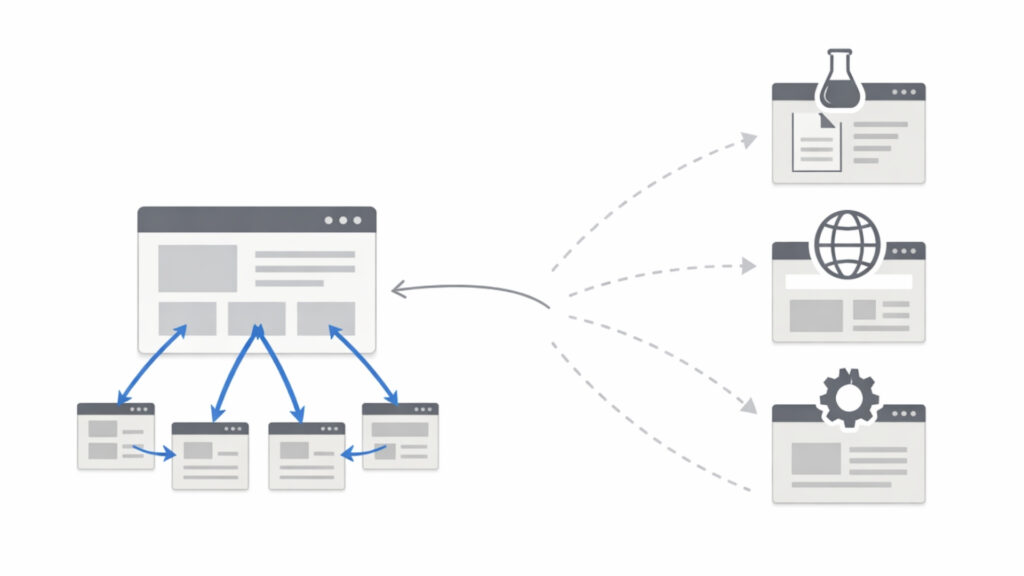
Search engines rely on links to understand content, relationships and trust. However, many website owners still wonder which is more important for SEO, internal or external links.
This guide explains both step by step, without jargon or technical overload. The goal is simple: understand what each link type does, when to use it, and how to use them together for better rankings.
Key insights
- Internal links help search engines understand the structure of the website and the importance of the page
- External links strengthen credibility when they point to relevant, trustworthy sources
- Internal links are completely controllable and should be prioritized first
- External links work best when used sparingly and consciously
- A balanced linking strategy supports long-term SEO growth
Table of contents
What are Internal Links in SEO?
Internal links connect one page on a website to another page on the same website. They guide users and search engines through content in a logical manner.
Common examples include blog posts with links to related guides, service pages with links to FAQs, or navigation menus with links to core pages.
Internal links are entirely under the control of the website owner. This makes it one of the most powerful and underused SEO tools available.
What are external links in SEO?
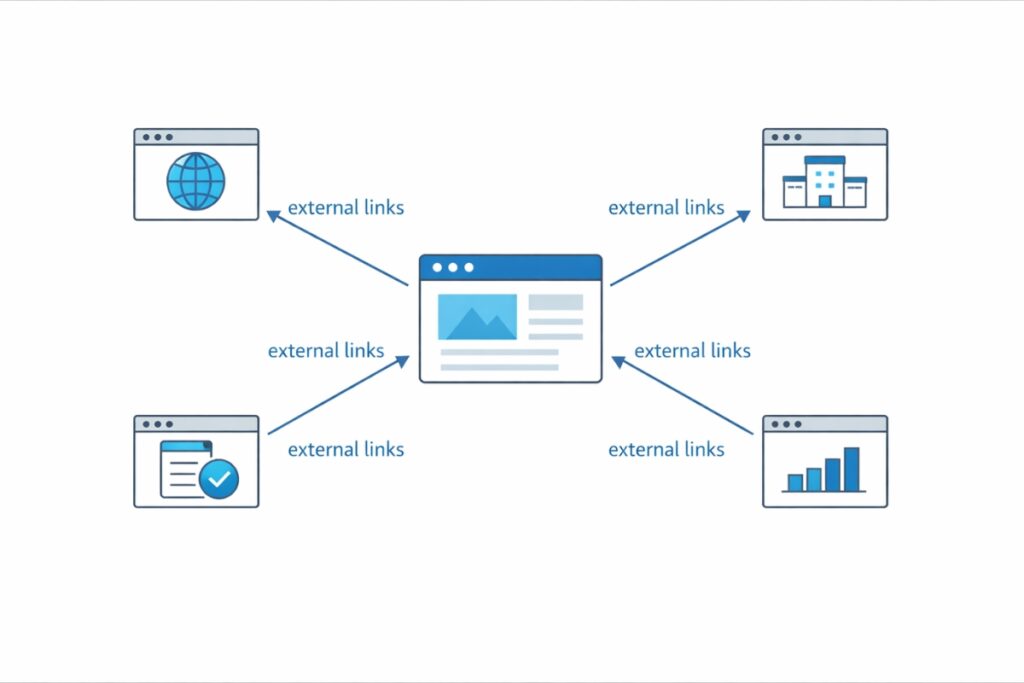
External links point from one website to another and help provide readers with context, references, or additional resources. Common examples include links to studies, tools, industry definitions, or trusted publishers that support or expand on a topic.
When used correctly, external links signal relevance and credibility. This is not about randomly redirecting traffic, but rather about creating added value and increasing trust in the content.
Internal vs. External Links: Key Differences
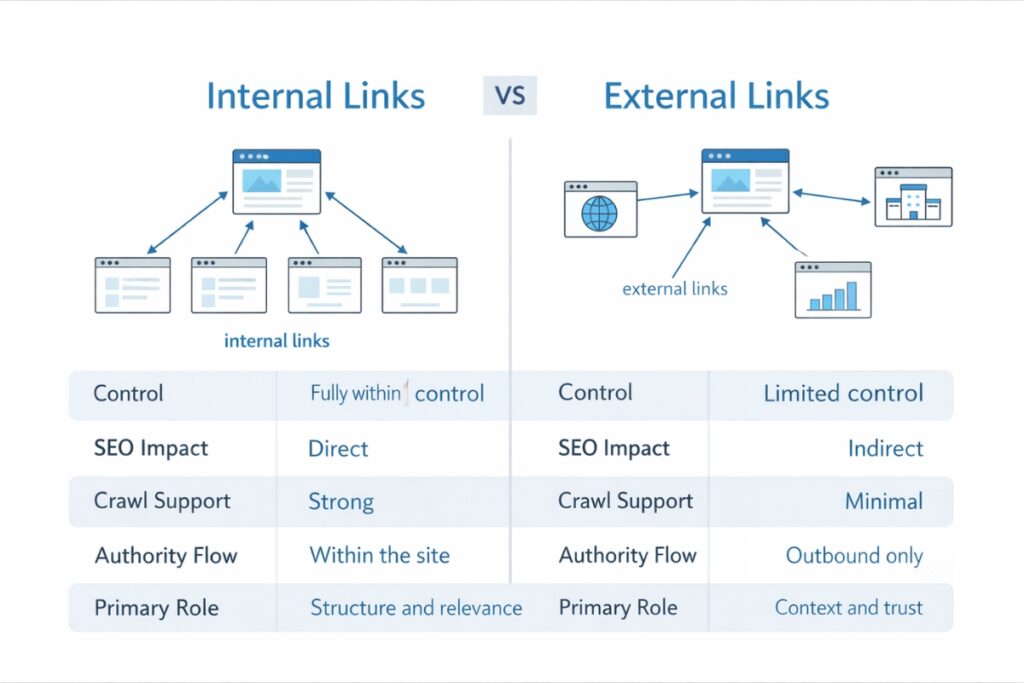
Internal and external links serve different purposes within an SEO strategy. Understanding how they differ will help you clarify how each contributes to site performance and content credibility.
| aspect | Internal links | External links |
| control | Totally under control | Limited control |
| SEO impact | Direct | Indirect |
| Crawl support | Strong | Minimal |
| Flow of authority | Within the website | Outbound only |
| Primary role | Structure and relevance | Context and trust |
Internal links focus on how content is organized and linked within a website. External links focus on how that content is supported and contextualized on the broader web.
How do internal links help with SEO ranking?

Internal links directly impact how search engines crawl, understand, and rank content, which plays an important role in how SEO works.
They show how pages are connected, which pages are most important, and how authority moves across a site. Because internal links are completely under control, they remain one of the most reliable SEO actions available.
How local SEO works for professional services businesses
How internal links help search engines crawl content
Search engines use internal links to discover pages and understand site structure. When pages are logically linked, crawlers can move through the website efficiently and index content more quickly.
Without clear internal links, search engines may rely only on sitemaps or random discovery paths, which can slow indexing and reduce the visibility of deeper pages. A well-connected structure acts like a roadmap, helping crawlers quickly reach important content and understand how different pages within the topic relate to each other.
Pages with few or no internal links are harder to discover and may be treated as less important, even if the content itself is strong.
How internal links distribute page authority
Some pages naturally gain authority over time, especially older posts, pages with backlinks, or pages with consistent traffic.
These stronger pages often act as centers of authority within a website. When they link to related pages, they convey contextual signals and ranking strength that help supporting content perform better in search results. This is one of the few ways website owners can actively control the flow of authority without having to wait for new backlinks.
Internal links allow that authority to flow to other relevant pages, creating one Competitors miss out on SEO benefits if the internal link is overlooked.
When a strong page links to another page, it signals importance and relevance, which is especially helpful with newer content that hasn’t yet received backlinks.
How internal links illustrate topic relevance
Internal links help search engines understand what a page is about and how it fits into a broader topic by improving content structure across related pages.
Anchor text provides context and strengthens the relationship between pages. When multiple related pages link together, it signals topical depth and coverage and supports better rankings for related keywords.
Here’s how keyword clusters can help your blog
How internal links improve user behavior
Internal links lead the reader to helpful next steps instead of dead ends. This often results in more pages viewed per session, longer time on site, and lower bounce rates.
They also reduce decision-making difficulties by providing readers with clear paths to related answers, definitions, or deeper explanations right when questions arise. Instead of having to search again, users can continue learning on the same site, resulting in a smoother content journey and improving the overall experience.
Strong engagement supports overall SEO performance and signals that the content is useful.
Why internal links should be a priority
Internal links do not require contact, approval or external validation. They can be added, adjusted and improved at any time, making them one of the fastest and most reliable ways to strengthen SEO.
Do external links help with search engine optimization or not?
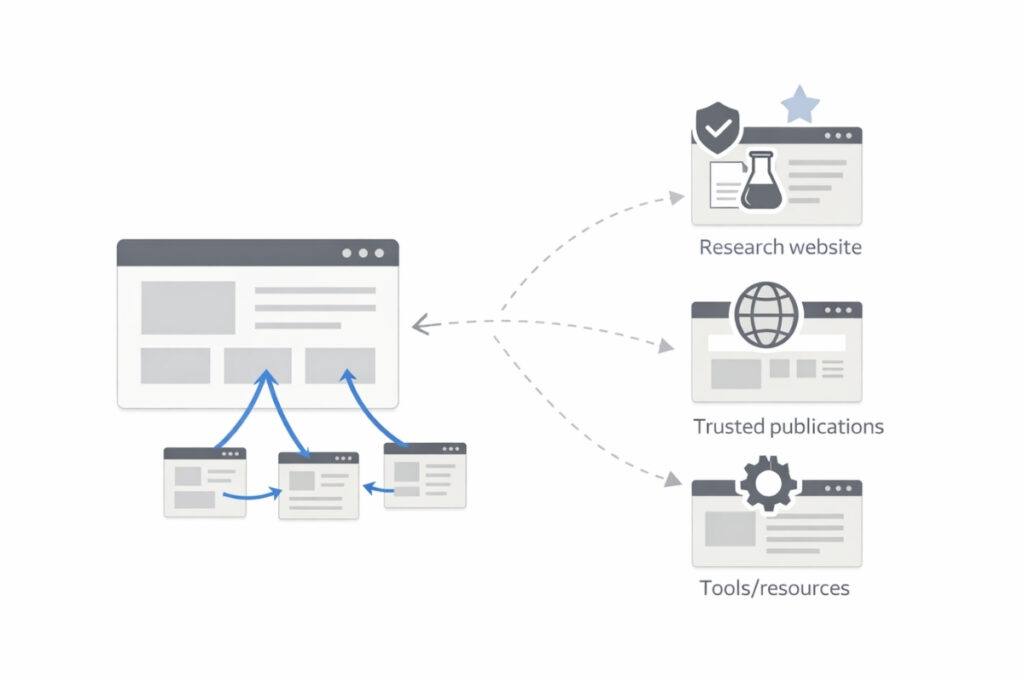
External links support SEO indirectly rather than directly. They help search engines understand how content fits into the broader web and signal that a page is based on credible, relevant information.
External links are most helpful when they point to authoritative sources, support factual claims, or agree with proven ones Best practices for evergreen content strategies that strengthen credibility.
While external links do not return ranking power to the website, they do improve trust signals and user experience. Used correctly, they support credibility without reducing SEO value.
Internal vs. external links: Which helps SEO more?
Internal links contribute to more consistent and predictable SEO because they have a direct impact on the structure, relevance, and authority flow of the website. They play a central role in how search engines evaluate and rank pages.
External links are still important, but they work best as support. For most websites, especially blogs and service-based websites, internal linking should come first, with external links being used once a solid internal structure is already in place.
Step-by-step internal linking strategy
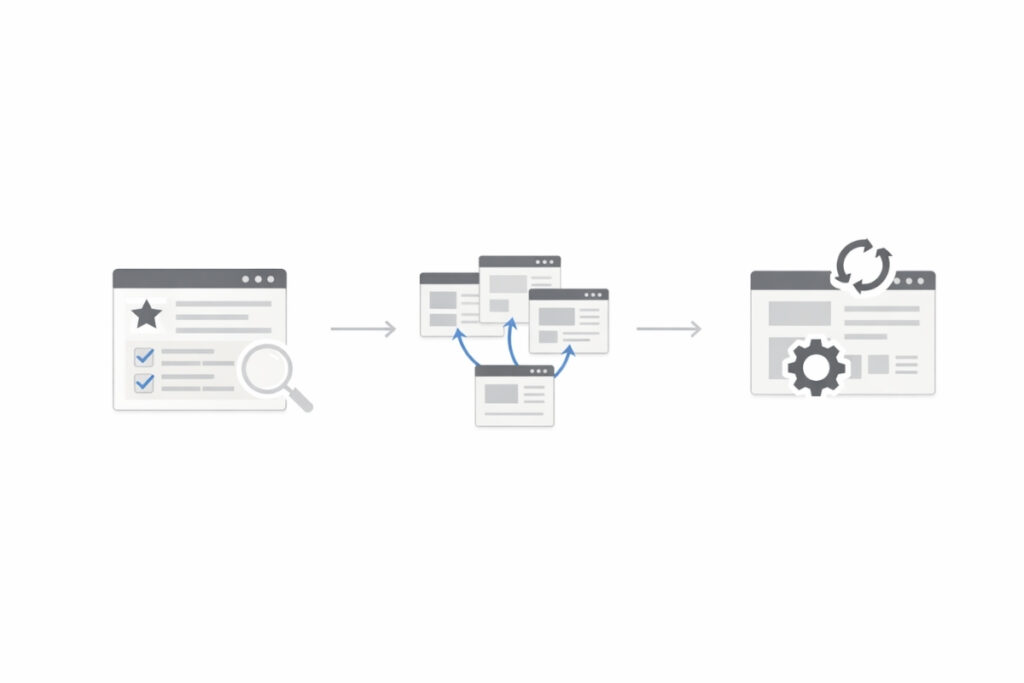
This internal linking strategy is simple, repeatable, and scalable. It works for small blogs and still makes sense as the content grows.
Step 1: Identify the main topic pages
Start by identifying pages that represent core topics, such as: B. Pillar posts, evergreen guides or important service pages. These pages should receive the most internal links because they serve as central reference points for related content.
Step 2: Link related content
Link to blog posts that cover similar ideas, subtopics, or questions. These links should feel natural and helpful, taking the reader deeper into the topic rather than randomly redirecting them. This creates clear topic clusters that are easier for search engines to understand.
Step 3: Use descriptive anchor text
The anchor text should clearly describe what the linked page is about. Avoid vague wording that doesn’t provide context. Clear anchor text helps search engines understand relevance and helps readers decide whether the link is useful.
For example, weak anchor text would be something like “Click here” or “Read this” because it gives no indication of the topic. A stronger anchor text would be “Internal Linking Strategy Guide” or “Internal Link Structuring Guide” because it tells both readers and search engines what to expect after clicking.
Step 4: Link from stronger sites
Use pages with higher traffic or stronger authority to support newer or weaker pages. By linking to established pages, new content is discovered more quickly and visibility is improved without having to rely on external links.
Step 5: Check and update links regularly
Internal linking is not a one-time task. As new content is published, older posts should be updated to include links to newer, relevant pages. Regular checks help prevent isolation of important pages and keep the site structure intact.
Step-by-step external linking strategy
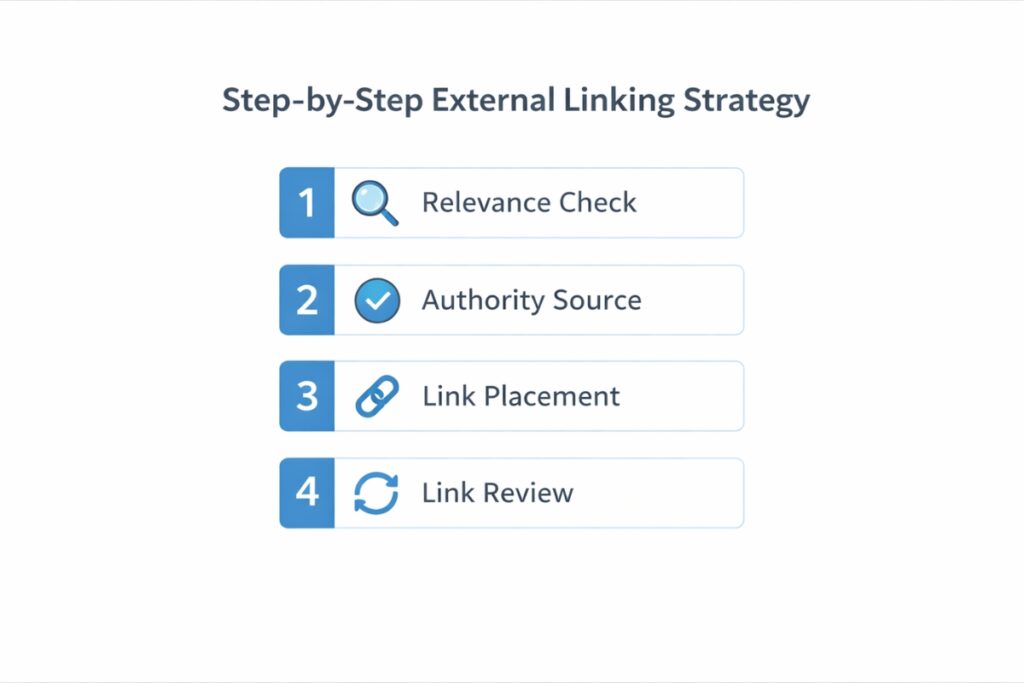
External links should be deliberate and selective. The aim is to create added value without distracting from the content.
Step 1: Only link to relevant sources
Relevance is more important than popularity. Choose sources that clearly support the topic being discussed.
Step 2: Avoid overlinks
One to three external links per section are usually enough. Too many links can overwhelm readers and distract attention from the main content.
Step 3: Provide a natural user flow
External links should feel like a natural extension of the content and aid comprehension without interrupting the reading experience.
Step 4: Keep links updated
Broken or outdated external links damage trust. Regular reviews help maintain content quality and credibility.
Common internal and external linking mistakes to avoid
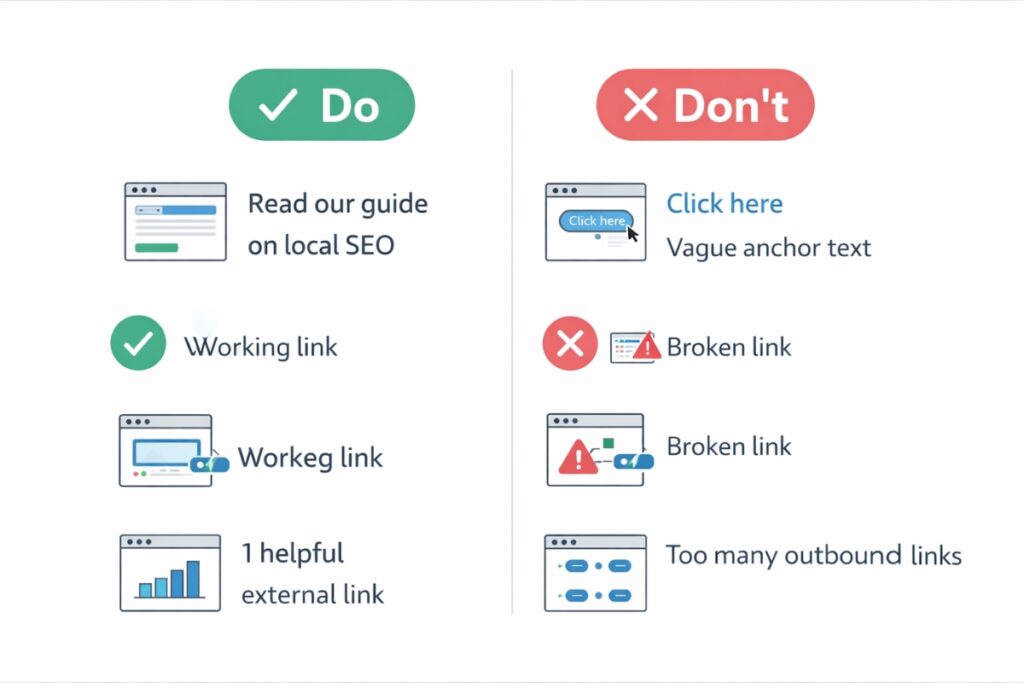
These linking errors are common and can silently weaken SEO performance if left unaddressed.
- Using vague anchor text like “Click here”
- Linking unrelated pages together
- Ignoring older content when publishing new posts
- Excessive use of external links at the beginning of the content
- Forgetting to update broken links
Just fixing these errors can noticeably improve SEO performance.
How internal and external links fit into an SEO strategy
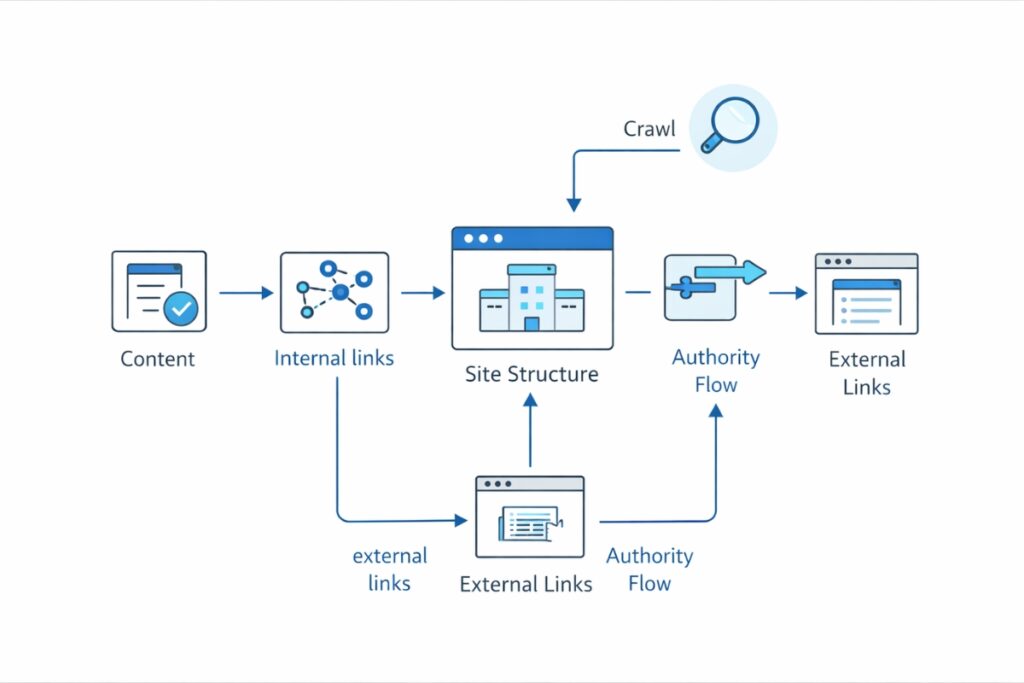
Linking works best as part of a repeatable process.
A basic SEO system includes:
- Clear page structure
- Consistent internal linking
- Intentional external references
- Regular content updates
For anyone planning to start or strategically grow a blog, building internal links early saves time later.
A clear linking system ensures dynamism that increases with every new post.
Internal vs. External Links: What SEO Actually Helps
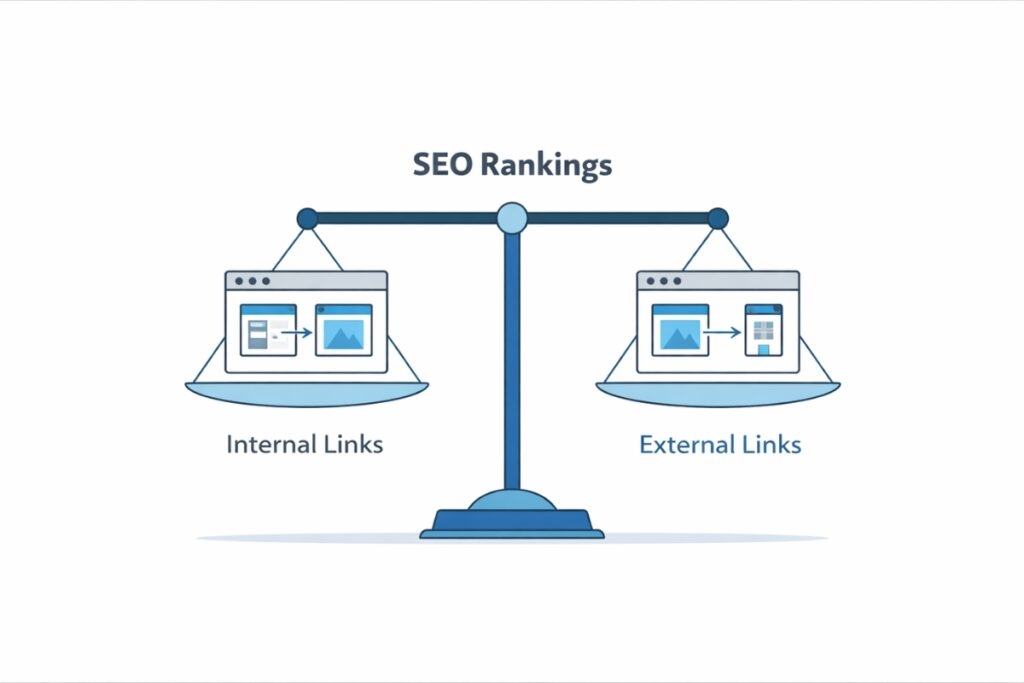
Internal links shape a website’s search performance by defining structure, relevance, and authority flow. External links shape the trustworthiness of content by strengthening credibility and context.
Taken together, they form a balanced SEO foundation. The strongest approach is to start with internal links and then add external links only where they truly add value and support the reader.
Link decisions should be based on usefulness, not habit. If a link helps clarify a point, guide the next step, or support a claim, it belongs. If this is not the case, it can be waived. Quality and relevance are more important than the number of links.
This strategy supports rankings, usability and long-term SEO growth when content is created to remain relevant over time.
Frequently asked questions
Internal links are generally more important for SEO. They help search engines understand website structure, page importance, and content relationships. External links support credibility, but do not have such a direct influence on the ranking.
There is no fixed number. Most blog posts benefit from 3 to 5 internal links, depending on length and topic depth. Links should always feel natural and useful to the reader.
External links do not harm search engine optimization if they point to relevant and trustworthy sources. They can improve content quality and user trust. Problems only arise when links are spam or irrelevant.
Exact match keywords are not required. Clear, descriptive anchor text works better than forced optimization. The goal is clarity, not keyword stuffing.
Yes. By linking to older, established pages, search engines can discover and evaluate new content more quickly. This is one of the easiest SEO improvements to implement.
Internal links should come first. They are completely manageable and strengthen the website as a whole. External links work best when the internal structure is already solid.