

Promoting a blog isn’t about doing everything at once. It’s about choosing the right strategies for the right audience. What works for a food blog won’t work the same way for a local business or personal finance blog.
This guide breaks down blog promotion by niche using simple, practical steps that are easy to apply. The focus is not on going viral, but rather on building steady traffic that grows over time.
Key insights
- Blog advertising works best when it is tailored to the niche and audience
- One or two strong channels beat being everywhere
- Content must be repurposed for each platform and not blindly reused
- Consistency is more important than volume
- Simple systems make advertising sustainable in the long term
Table of contents
Step 1: Clearly define the blog niche
Advertising fails when the niche is unclear. When a blog tries to appeal to everyone, it usually reaches no one. A clear niche answers three key questions.
These questions determine the direction of the blog:
- Who the content is intended for
- What problem it solves
- Why it’s different
For example:
- Instead of “fitness blog,” think “home workouts for busy moms.”
- Instead of “marketing blog,” think “local SEO for service businesses.”
This clarity later shapes every promotional decision and forms the basis for a clear content plan.
When the niche is clear, it becomes easier to take strategic actions.
This includes the ability:
- Choose platforms
- Write better headlines
- Speak the language of the audience
Step 2: Understand where the audience already is
Audience research doesn’t have to be complicated, but it does have to be targeted.
Instead of guessing where to promote your blog, look at how different age groups and audiences already use social platforms. Current social media demographic data shows clear patterns in the way people interact online.
General trends in social media usage
- Younger audiences tend to prefer short video and visual platforms
- Millennials often use a mix of visual discovery and community-driven platforms
- Older audiences are more likely to engage on platforms focused on discussions, information and connections
Different platforms also serve different purposes:
- Some are primarily for entertainment and discovery
- Others are used for learning, research and decision making
- Some are better for community and conversation
This is why advertising works best when it matches both the audience and the intent of the platform, not just popularity.
Before you choose a platform:
- Look at where similar blogs are getting real engagement
- Pay attention to comments, saves, and shares, not just the number of followers
- Test a small number of posts and see how people react
Understanding audience behavior makes every advertising decision easier and more effective.
A more detailed breakdown of social media demographics by platform and age group can be found here Sprout Social Research.
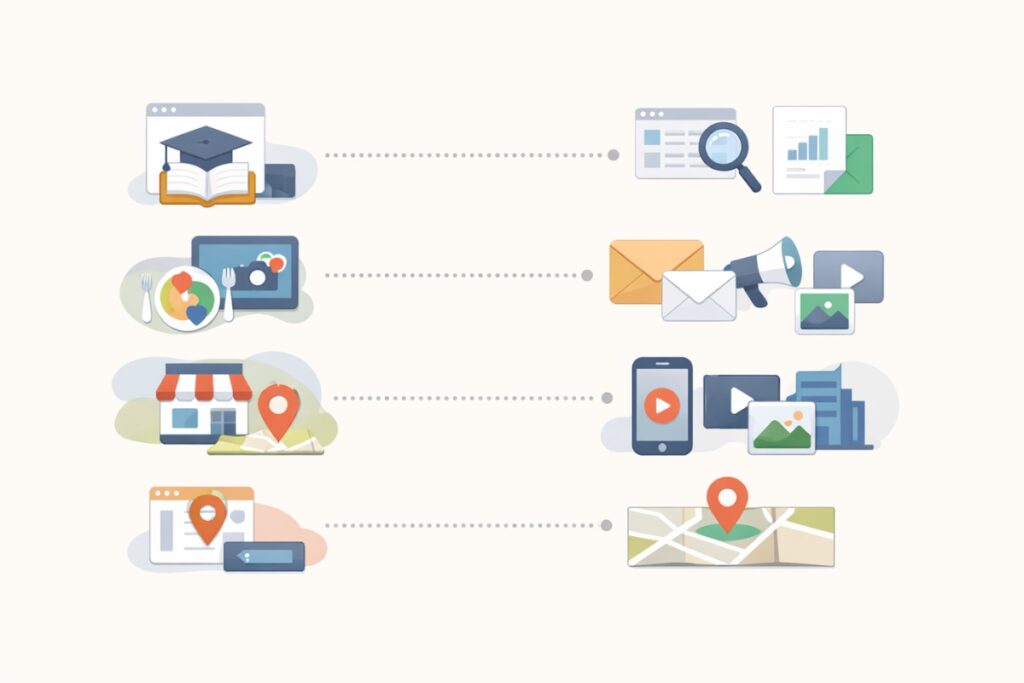
Not every platform works for every niche.
Advertising is most effective when content appears where the audience is already expecting information, inspiration or solutions. By choosing the right channels, unnecessary effort is reduced and content is addressed more quickly.
Below is a breakdown of common blog niches and the platforms that work best for each.
Educational and information based blogs
(Examples: menopause education, personal finance, health advice, blogging, self-improvement)
Blogs that teach, explain, or guide perform best on platforms where users are actively searching for answers and are willing to spend time learning.
These audiences value clarity, depth, and long-term usefulness over frequent updates.
Platforms that work well:
- Search engines (Google)
- Email newsletter
- Long-form publishing platforms (e.g. Medium or Substack)
These blogs benefit greatly from this evergreen content that continues to attract readers long after publication.
Advertising should focus on:
- Keyword optimized blog posts
- Clear headlines that match search intent
- Internal linking between related topics to build thematic depth
Lifestyle, food and visual blogs
(Examples: recipes, wellness routines, interior design, fashion, hobbies)
Visual niches thrive on discovery-based platforms where users look for inspiration rather than solutions.
Platforms that work well:
- Instagram (Carousels and Reels)
- TikTok
- YouTube Shorts
When advertising, visual elements should be emphasized first and then the text.
Each blog post should be converted into multiple visual formats and not just shared once. For visual niches, consistency is more important than variety.
Community-driven and personal experience blogs
(Examples: menopause support, parenting journeys, mental health, chronic illness, personal growth)
These blogs grow through trust, shared experiences and conversations.
Platforms that work well:
- Facebook groups or pages
- Email newsletter
- Niche forums or discussion-based platforms
Advertising is most effective when content reflects shared experiences and Community-driven relevancerather than general or generic news.
Encouraging discussion and contact often leads to greater engagement than simply distributing links.
Local business and service blogs
(Examples: consultants, service providers, location-based brands)
Local blogs perform best when advertising helps build trust and local visibility.
Platforms that work well:
- Google business profile and local search results
- Email marketing
- Local Facebook communities
Content tied to local needs, seasonal themes, or common customer questions tends to perform well over time.
Beginner friendly rule
Start with a primary platform that best fits the blog niche.
Once consistent traffic or engagement occurs, a second channel can be added. Trying to grow everywhere at once usually slows progress and leads to burnout.Low progress.
Step 4: Optimize the content before promoting it
Advertising works best when the content is prepared correctly.
Driving traffic to weak sites is a waste of effort.
Before promoting a post, read the basics first.
On-page elements should include:
On-page basics
- Clear headline
- Short paragraphs
- Easy to read formatting
SEO basics
Each post should contain the following:
- A primary keyword
- Related terms that are used naturally
- Descriptive subheadings
User experience
- Fast loading pages
- Mobile friendly layout
- Clear purpose of the post
Well-optimized content keeps visitors on the site longer, which sends positive signals to search engines. Advertising increases quality but does not fix weak content.
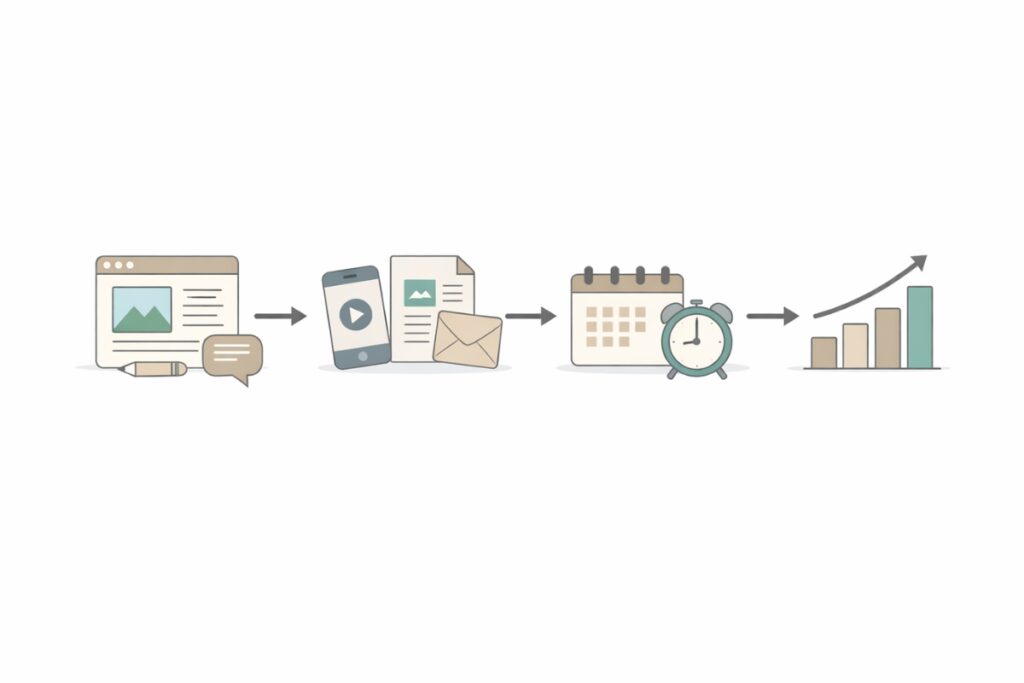
Random promotion often leads to burnout, while a simple, repeatable system keeps blog promotion manageable and consistent.
A simple promotion system should follow the same steps for each new post as part of a simple promotion system Content marketing plan.
Example of a simple weekly advertising flow
- Publish a blog post
- Share it once on the primary platform
- Transform it into two supporting formats
- Schedule reminders or follow-up posts
This approach reduces decision fatigue. Promotion becomes routine instead of stressful.
Repurpose blog content without much thought
A blog post can be converted into multiple formats without changing the core message.
For example, a single post can become:
- Quick tips shared as Instagram carousels, Facebook posts or text-based Pinterest pins
- Visual highlights converted into Pinterest pins, Instagram carousels or short videos
- Email content will be sent to subscribers as a simplified version or as a take-home key
The message remains the same. Only the format changes.
This approach saves time while increasing reach across platforms where different audiences prefer to consume content.
Make blog advertising sustainable
Advertising systems should be tailored to the time and energy available.
Simple tools or workflows can help organize content and follow-up as volume increases.
If you post on multiple platforms, there are services like Repurpose.io that make posting content easier (and less time consuming).
Tools should support the system and not complicate it.
Common mistakes to avoid
- Promote everything everywhere
- Changing platforms too often
- Over-automation too early
Simple systems outperform complex ones in the long run.
Step 6: Build authority within the niche
Advertising is not just about traffic. It’s about building authority as a blogger.
Authority then serves to increase trust, shares and return visits.
Ways to build authority include:
- Answering common niche questions
- Updating older content
- Linking related posts together
Consistency plays a big role here.
Regular publication in a niche:
- Strengthens timeliness
- Helps search engines understand expertise
- Builds audience familiarity and power Finding new content ideas easier over time
Authority grows faster when content stays focused.
Switching between unrelated topics slows growth.
Step 7: Track what works and double down on it

Tracking turns advertising into a feedback loop that improves decision making. It helps to find out which platforms and formats deserve more attention.
At the beginning, only a few key figures matter.
Metrics worth monitoring early on
Early follow-up should focus on:
- traffic source
- Time on the page
- Returning visitors
These key figures show whether the right target group is being reached.
High traffic with low engagement usually indicates a mismatch.
What can be ignored early on?
Avoid focusing too much on vanity metrics like number of followers or likes that don’t translate into clicks or meaningful engagement. The quality of engagement is more important than volume.
How to use tracking to improve advertising
When a platform works well:
- Create more content for it
- Improve formats that work
- Reduce effort elsewhere
Doubling what works accelerates growth without additional work.
Blog promotion tips that actually work depending on your niche
Blog promotion doesn’t have to seem overwhelming.
If advertising fits the niche:
- Content reaches the right people
- Growth becomes predictable
- The effort feels purposeful
For readers thinking about starting a blog, understanding advertising early will help avoid frustration later. Building with support in mind creates a stronger foundation from day one.
Focus on clarity, consistency and sustainable systems.
Over time, these efforts result in predictable and meaningful growth.
Frequently asked questions
Results depend on the niche, competition and consistency. Social platforms may show faster engagement, while search traffic typically takes several months.
Focusing on one main platform is more effective in the early stages. Once consistent results are achieved, additional platforms can be added.
Evergreen blog posts should be re-promoted, especially after updates. Updating older content can attract new traffic and improve performance.
Paid ads are not required to successfully build a blog. Many blogs rely on organic advertising via search and social platforms.
The frequency of advertising depends on the platform and audience behavior. Consistency is more important than posting volume.
Advertising strategies should be adjusted depending on the niche. Different audiences respond to different platforms and content formats.