
Search and AI news you can use (Marie’s newsletter)
In this episode, I’ll share the top five things I discussed with clients this week. I’m finding that playing around with some of these new features of Gemini, especially Gemini in Chrome, has led me to an existential crisis! The internet is changing so quickly and many of the things we have spent years working on could soon be wiped out by advances in AI. But there are also so many possibilities if we figure out what to focus on.
Note: Newsletter has changed again! At the end of this article I wrote more about why I changed my newsletter approach and moved it from my community back to my blog.
If you would like to receive the Cliff’s Notes version of future episodes of this newsletter via email as I publish, sign up here:
Here are the five topics I discussed most frequently in my recent client meetings.
1. The development of search to become an “agentic manager”
Search is changing from a place where we passively look for information to an “agent manager” where we actually look for information get things done. Sundar Pichai said in an interview: “Many of the purely information-seeking queries will serve as an agent in the search.” And search director Liz Reid acknowledged that while people will continue to use the web, much of the web is just agents talking to each other.
If your search clicks have declined over the past few years, it’s unlikely you’re doing anything wrong when it comes to SEO. The search goes in a different direction and AI overviews and AI mode directly answer the questions for almost every information need. When I expand an AI overview on my phone, traditional search disappears completely and I’m in the AI mode infrastructure, where AI answers my questions and websites are available when I need them. Some people see this happening with desktop searches as well. Google just announced this when you In AI mode, click a link. The website will open in a panel next to your AI Mode conversation.
As I write this, Google has released a new tool for Windows This will allow you to press Alt+Space and open a search bar that allows you to search your files, Google Drive, apps, and more. Searches open in AI mode, meaning many of the things we used to search for on websites are easily answered by AI. Oh, and there’s one now similar app for Mac users. I just press the spacebar and Gemini appears on top of whatever I’m doing. I can start a conversation there and continue it in the sidebar while browsing Chrome.
As we’ll discuss below, Chrome is becoming a place where we can do this Do Things with Gemini – not just getting information.
The purpose of the search changes. It’s changing from a place where we go for information to a place where our agents do things for us.
Yesterday I published a post about how I really thought about what the purpose of a blog is in this new age of agent searching. I don’t think the blog is dying, but I think our motivations for writing content are different now.
2. Gemini in Chrome will change the way people search
The second thing I want to highlight is how deeply AI is integrating into our daily workflows. I finally have access to Gemini right in Chrome and can’t believe how often I use it to communicate across my open tabs and Google Docs. It’s hard to imagine how I used to work without it!
Did you know you can open multiple tabs and talk to Gemini about them? As I might say, “Look at my GSC data for this site and also my site itself and tell me what questions my audience is asking that I don’t cover well:sea.”

When I saw this, I was excited but also sad because I realized that much of what I spent months building into my personal SEO tools dashboard using multiple hand-coded agents can be done much better in Chrome using prompts in Gemini. And then Google released this week Knowledge of Chrome This allows us to reuse and modify prompts. Instead of a prompt like in the image above, I can now save it as a skill and use it on any page of my website that I want to improve. It’s not hard to imagine that browser usage features or WebMCP will come into play here at some point and I’ll be able to develop skills that not only make suggestions for me, but also perform agent functions like opening my WordPress dashboard and making the suggested changes.
3. Antigravity is amazing
You may have tried Claude Code or Cowork. These tools are incredible, but in my hands Antigravity is better. I think it’s good to get familiar with some of these tools. Personally, I used ChatGPT Codex as much as possible for a week and then did the same with Claude Cowork. But eventually I returned to Google Antigravity.
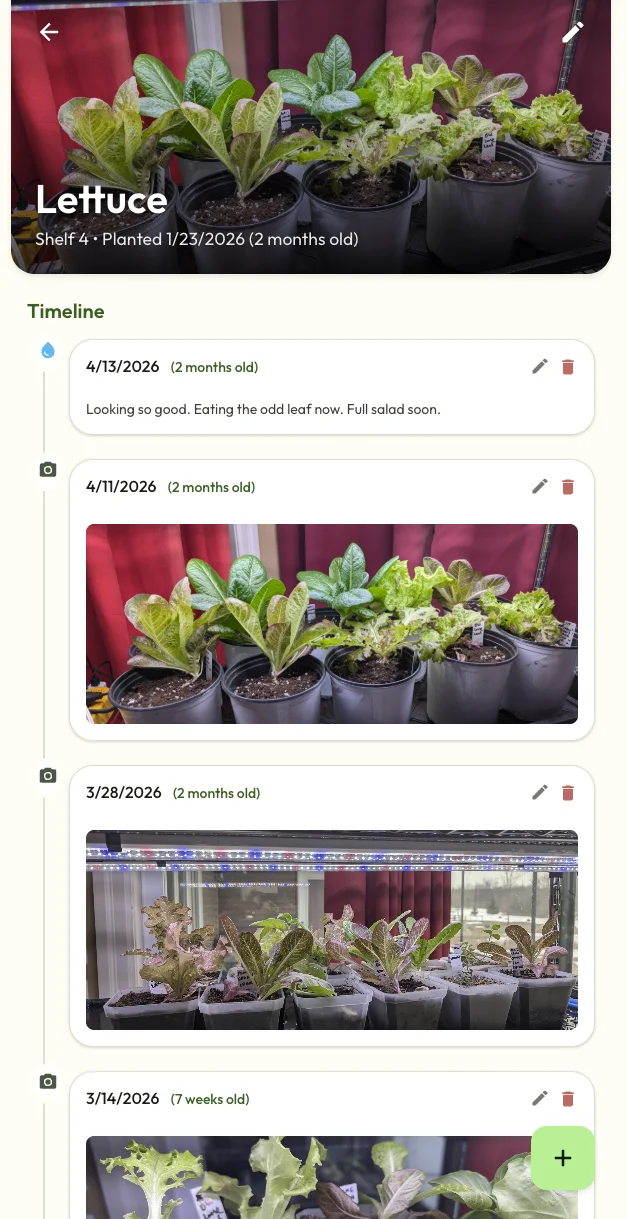
Antigravity is not a coding tool. I mean, that’s it. But its strength lies in Agent Manager. I worked with Claude Code for months to develop an app to monitor my plants, but never got to the point where I could actually use it. On Sunday I opened Antigravity and continued talking about what I wanted to build. In the end, I used my favorite prompt: “Ask me one question at a time so you understand what I want to build.”

Antigravity asked if I wanted a food for each of my plant types. What a good idea. From the first prototype to a working project with a Supabase database and deployment to Netlify, it took about an hour and it works amazingly well.

Even if you think Claude Code/Cowork is the most amazing thing ever (you’re not wrong), I encourage you to really spend a week trying to use Antigravity in your workflows. I imagine its functionality may be part of Gemini in Chrome, the Gemini app, and even AI Mode. Sundar Pichai said teams at Google are using it. This is what Google engineer Jaana Dogan says Everyone she works with uses Antigravity “like every second of the day”. Sundar said the team working on the search only started using it last week. For some reason they call it “Jet Ski” internally. (More here for my recap of Sundar Pichai’s recent interview discussing the future of search.)
4. UCP and WebMCP – whoever jumps first could have an advantage
I’ve been talking a lot about UCP (Universal Commerce Protocol) lately. Here’s my latest conversation with Andrea Li about it:
And here is another video of me loads more information about UCP. If you work with e-commerce, it is imperative to stay up to date with the development of this protocol. This week Google released new documentation for UCP This is something every development team involved in eCommerce needs to read. You should also read this information on Implementation of UCP via Merchant Center. There is a link there to join the UCP waiting list.
The other thing all my customers talk about is WebMCP. WebMCP allows agents to interact with the tools and features on your website. Again, it’s not hard to see that Gemini in Chrome will eventually be able to detect if a page you’re on has WebMCP capabilities. I recommend you register early Preview of WebMCP. Google will send you documentation for implementation and testing.
On a call with one of my customers this week, we asked Gemini to predict when people will start using WebMCP. Keep in mind that AI isn’t always the best at predicting the future, but when it’s right, those predictions are crazy! Gemini said we will start seeing some sites using it in late 2026 and that it will be commonplace by 2027. Gemini also predicted that if my client implemented WebMCP functionality before their competitors, they might have an advantage because agents would be more likely to recommend and interact with pages that have web tools they can use through MCP without having to use the page as a browser agent and click on pixels like humans do.
5. The way we create and modify websites is changing
The way we manage our websites is about to be turned on its head. Cloudflare has released a product called EmDashand calls it the spiritual successor to WordPress. At first I thought it was an April Fool’s joke, but it’s definitely true. EmDash is AI native, has agent capabilities and also has a CLI (command line interface).
Shopify also blew me away Shopify AI toolkit. You can use this with Claude Code, ChatGPT Codex, VS Code, Cursor or the Gemini CLI. In their demo, they showed a user using Claude code in the terminal and simply saying, “Optimize my products for SEO,” and Claude went about rewriting title tags and more.
The Shopify AI Toolkit is here
Manage your business with your favorite agent
Claude Code, Codex, Cursor, VS Code and more pic.twitter.com/gmQiRTdA8p
– Shopify (@Shopify) April 9, 2026
I know. I know. There is so much potential for something to go wrong here. But there is also huge potential for people to use agent tools to gain a huge advantage.
Have you heard about it? Andrej Karpathy’s car research? It is a simple system that uses agents to conduct experiments and improve their own algorithms. It’s not hard to see that we will eventually have an agent system that not only optimizes our websites (in terms of content, speed, agent readiness, and more), but also continually tests, learns, and improves.
This kind of agent self-improvement is even more mind-blowing when we think about the powerful AI models to come. Anthropic released a model called myth This is significantly more powerful than your current one Opus 4.6 Opus 4.7 model (damn, things are moving fast). Although Mythos wasn’t designed for cybersecurity, they found that it could find vulnerabilities in almost any existing software. Now consider what this means if we have recursive self-improvement.
We are quickly approaching an era in which AI will be smarter and more capable at all cognitive tasks that a human can currently perform.
In Sundar Pichai’s interview, he was asked how long it will take for companies to easily have fully agent-based processes that don’t require humans. He said we’ll be tuned in for a while, but he expects 2027 to be “a major turning point” and “a big year where some of these changes happen pretty profoundly.”
About my newsletter changes
I’m experimenting more with how I create my newsletter. In the 14 or so years I’ve been writing it, it’s seen several new seasons!
You may have noticed that I’ve moved the newsletter back in and out of my blog my community. As I mentioned in my post about the purpose of a blog, our purpose in writing is to change as the web shifts to become more agentic. I want my blog to be a place where you can use it do things with your agents. The blog performs much better in search because as much as I love my community host Mighty Networks, there are SEO issues that are beyond my control.
So let’s go back to “Search Messages.” You can use it!”
Ideas for agentic use of this site
With that in mind, here are some ideas for what you can do with your agent in this blog post. If you’re reading this on desktop, I recommend opening Gemini in the sidebar in Chrome. (If you have it, you’ll see an “Ask Gemini” button at the top right of your screen.) I should mention that Gemini Pro often tends to perform better than the free versions of Gemini. So if you’re disappointed, it might be worth upgrading to a paid package to give it a try.
Try versions of these prompts:
1. Brainstorm how WebMCP could be used on your website.
Open the Gemini sidebar in Chrome on the page you are currently on. Then open a new tab for your homepage and this one too Github repo for webmcp. Then use the plus sign to add all three tabs to your Gemini conversation in Chrome and enter this prompt:
I’m interested in learning more about WebMCP. Explain it briefly, then take a look at my website as well as the Github repo and tell me 5 practical ways I could use WebMCP for my website.
2. Tailor my newsletter to your customers
Assuming you have customer documentation in Google Drive and Google Meet transcripts, try the following. (If you don’t use Drive and Meet, you can try this by opening your client’s website in another tab and adding it.)
Find my customer conversations and recent reports for (customer/brand name) and use them to create a short newsletter that covers topics relevant to them. Make sure you include hyperlinks to the URLs you want them to read that are related to the specific topic.
Note: If it doesn’t sound like you but more like AI, try playing with Gemini and asking how to customize it by looking at your past conversations. Then turn this into a skill.
3. Consider car research
I can’t stop thinking about Andrej Karpathy’s car research. I’ve seen YouTube videos talking about how to use it to improve your marketing. For example, you could give them the goal of maximizing newsletter signups and prompt them to create new copy for your signup page and continually iterate and improve it.
Here you can find some YouTube articles about it Search on Karpathy’s car research and add the tab for this video to your current Gemini in Chrome conversation. Add this tab too Autoresearch Github and your homepage.
I am very interested in Andrej Karpathy’s author research. Help me brainstorm ways I could use it in my business.
Then you can take the ideas Gemini gives you and move forward Antigravity and say to the agent manager: “How do we build this? Here is the Github repo we want to use.”
Do you prefer a video? Here are some of my thoughts on how Search becomes an agent manager
Sign up for the newsletter
If you would like to be notified by email every time I publish a newsletter like this in the future, you can sign up here:
Or, Join us in the search bar for the latest news on search and AI. Or better yet, join me paid community There we regularly hold brainstorming calls on the use of AI and I also share tips and ideas.
By the way… Antigravity helped me create code snippets to dynamically insert the best conversations in the search bar into my blog posts. 🦾
Leave a comment
Gulp. I open my comments section. I closed it because of spam and bad people. Now I have a system I built with AntiGravity that filters out comments that are clearly intended to be hurtful, meaning I don’t see them and only see those of you amazing people who are learning to use AI just like me.
If you enjoyed this new format, please let us know what you think in the comments section!