
I set up a push cart for a thrift store customer last month. Every item in the inventory was unique. Think vintage leather jackets, handmade boxes and upcycled furniture. All different prices.
The owner watched as customers browsed, added something they liked, and then left the shopping cart page. When they returned, this unique item had already been purchased by someone else.
Worse still, many would no longer be interested in the product after visiting the checkout page again because they are no longer in the mood to buy.
This is the core problem that most cart abandonment software tries to solve. But the real separation doesn’t happen on the checkout page; it happens sooner.
Then I realized: A sliding sidecar keeps the checkout moment alive without losing customers to page reloads.
For stores that want to take full advantage of a user’s willingness to purchase, a sliding sidecar is the way to go.
It slides in from the page when someone adds a product, allowing them to stay in the moment of shopping and allowing checkout without leaving the page.
To help you with this, here are the best WooCommerce sliding side cart plugins I’ve found to make this work.
Key insights
- I tested sliding side cart plugins and ranked them based on real conversion features and not hype.
- I’m talking about one with a milestone reward feature and another that offers legendary support.
- You can get a solid side cart for free, but the paid versions unlock upsells, shipping blocks, and checkout bypass features.
- If you use Elementor or WooCommerce Blocks or need complete design control, I have a selection for you.
- If you want the easiest setup, this list also includes the perfect Push Cart plugin.
How I test WooCommerce Sliding Side Carts
🔍 Click here to see my testing methodology
This is exactly how I rate sliding side cart plugins:
- AJAX performance – Does the shopping cart update without reloading the page? How fast?
- Completeness of features for the theme – Does it process upsells, coupons, shipping estimates, and express checkout?
- Easy setup for beginners – Can a non-technical shop owner get it up and running in 15 minutes?
- Mobile and device support – Does it work responsively on phones without affecting the layout?
- Theme and page builder compatibility – Does it fit well with your theme, Elementor, Divi, Block Builders?
- Conversion functions – Does it offer free shipping bars, product recommendations, or a checkout bypass?
- Support quality and responsiveness – How quickly do you react if you get stuck?
Tools I use:
- WordPress.org reviews and installs – real user feedback and adoption rates
- Live product testing on WooCommerce test sites
- Comparison of functions at different price levels
- Testing theme compatibility
Why trust IsItWP?
At IsItWP, we’ve been the WordPress community’s go-to source since 2009, helping over 2 million users choose better WooCommerce tools and plugins. Unlike review sites that never actually use the products, we maintain active WooCommerce shops, run real customer sites and test everything practically. Every recommendation on this page comes from direct testing and not from affiliate hunting.
The best WooCommerce Sliding Side Cart Plugins in comparison
A sliding shopping cart is one of the fastest ways to reduce cart abandonment and increase conversion rates.
The right plugin integrates smoothly when a customer adds a product, keeps them engaged without requiring a page reload, and allows them to checkout without ever leaving the page they’re currently visiting.
The following plugins represent a mix of dedicated side cart tools and conversion suites.
Some are free, some are premium, some are lightweight, and some are feature-packed. Here’s how they compare in terms of pricing, ease of setup, and the features that matter most in turning browsers into buyers.
| product | Best for | Free version | Top feature | Starting price |
|---|---|---|---|---|
| 🥇 Dealer | All-in-one CRO toolkit | ✅(Sliding trolley only with Pro) | Over 40 conversion modules in one plugin | $79/year |
| 🥈 Push cart for WooCommerce by FunnelKit | Upsells + rewards | ✅ | Milestone rewards unlock free gifts and discounts | $99.50/year |
| 🥉 Side Cart WooCommerce | Special side trolley | ✅ | Legendary 24/7 support + express checkout | $29/year |
| 4️⃣ Shop Engine | Elementor stores | ✅ (Fly Cart only with Pro) | Complete WooCommerce design control via Elementor | $59/year |
| 5️⃣ Fast Shopping Cart for WooCommerce | Lightweight free | ✅ (version only) | Only 16.2 KB; ultralight performance | $0 |
| 6️⃣ XT Floating Cart for WooCommerce | Adjustment | ✅ | Live preview customizer + 11 animation styles | $59/year |
| 7️⃣ shopping cart in one | Cheapest premium | ✅ | $30 one-time payment (not annual) | $30 one time |
| 8️⃣ Addonify Floating Cart | Just free, feature rich | ✅ (version only) | Shipping calculator + voucher system free of charge | $0 |
| 9️⃣ Caddy | Free perks | ✅ | Free shipping bar + product recommendations in the free tier | $99/year |
For the complete ecosystem guide, check out 30+ Best WooCommerce Plugins to Increase Sales Quickly.
Additionally, you can use the table of contents below to jump to any of the WooCommerce sliding side cart plugins in my list.
With that out of the way, let’s dive in.
1. aThemes dealer⭐⭐⭐⭐⭐
All-in-One CRO Suite | Ideal for: Businesses that want multiple conversion tools in one plugin
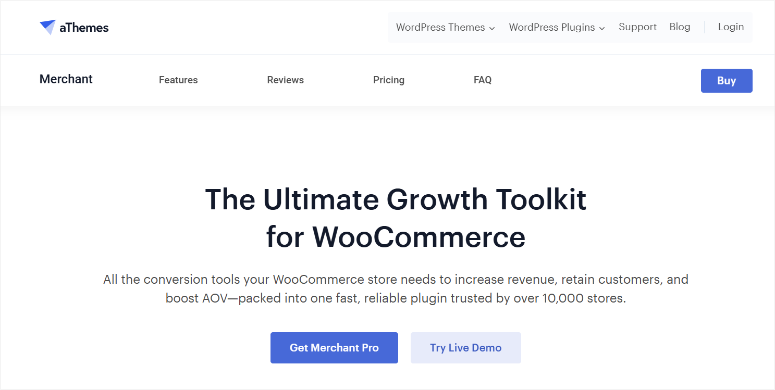
aThemes dealer is not just a side cart plugin. It is a complete WooCommerce conversion optimization toolkit.
The sidecar module is one of over 40 functions. You get upsell widgets, countdown timers, discount rules, variation patterns, wish lists, and more. Everything lives in one place.
Why is Merchant one of the best WooCommerce sliding side cart plugins?
The real advantage of Merchant is consolidation.
Instead of installing a special side cart plugin, a special WooCommerce upsell plugin, a countdown plugin, and a wishlist plugin, you get everything with one activation.
This means fewer plugins bloating your WordPress installation, fewer settings pages to manage, and fewer support tickets when something breaks.
The sidecar module itself works perfectly.
Your shopping cart icon floats on the page. When you click on it, it expands from the page and shows all items, prices and a direct checkout button. You can customize colors and positioning.
But here’s the thing: If all you need is the shopping cart and nothing else, you’re paying for 39 features you might not use. However, the reality is that as you expand your online store, you will end up using several other features.
My experience with Merchant
Last year I set up Merchant in a cosmetics store. While the owner wanted a side cart, she also wanted to create urgency through countdown timers for products.
To make the setup even more comprehensive, I also added product recommendations and a wishlist feature so customers can save items for later.
To complete the checkout setup, I added an upsell in the sliding sidecar with a simple toggle button.

With Merchant, I installed a plugin and configured everything via a dashboard. The setup took about 30 minutes.
The side cart itself performed well. AJAX updates were quick and customers were able to navigate directly to checkout.
I didn’t notice any slowness and the theme options were flexible enough to match their brand colors.
Check out the screenshot below to see what the final sidecar looked like on a live page.

Merchant by aThemes WooCommerce Sliding Side Cart Pros and Cons
🟢► Advantages
- Consolidation: I installed one plugin instead of four, which made setup easier and reduced conflicts
- Compounding lift: The upsells, the wishlist, and the timers worked together. Each feature increased conversions
- Unified dashboard: I managed all 40 modules from one place instead of switching between plugin panels
- Subject independence: Sidecar worked with any WordPress theme without any custom code
- AJAX performance: I tested the cart updates and found that they work quickly and don’t require page reloads
- Theming flexibility: I customized the cart colors to match the brand palette with no code required
🔴► Disadvantages
- Limitations of the free version: The sidecar module is tied to the Pro plan. No free access to the quota
- Premium prices: Can be expensive if you’re just looking for a dedicated shopping cart plugin
My verdict: Merchant makes sense if you want to use multiple conversion tools. If all you need is a side cart, that’s overkill. But for stores that use full conversion optimization playbooks, the setup investment is worth it.
Prices: Free plugin available. Side Cart requires a Pro plan, which starts at $79/year (1 site)
👉 Get started here with Merchant by aThemes
2. Push Cart for WooCommerce by FunnelKit ⭐⭐⭐⭐⭐
Premium Funnel + Shopping Cart Integration | Best for: Conversion-focused stores that want in-cart upsells and milestone rewards
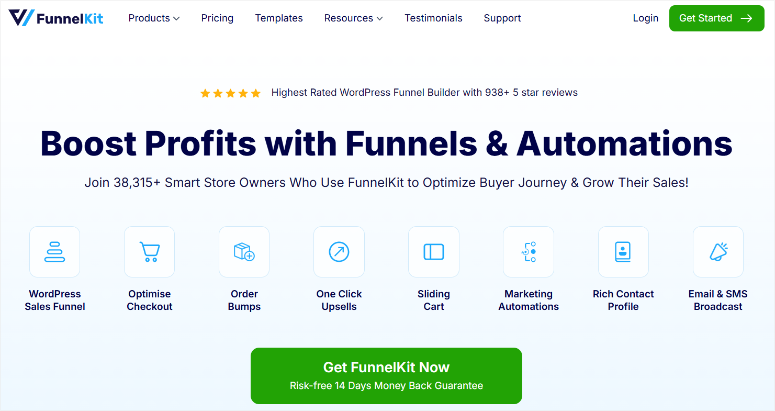
Sliding Cart for WooCommerce by FunnelKit is the most feature-rich option on this list.
Yes, it is a shopping cart plugin. But more importantly, it is a conversion machine. Your shopping cart becomes a place to upsell and cross-sell, offer discounts, unlock free gifts at spend tiers, and track every micro-conversion.
Why is FunnelKit one of the best sliding side cart plugins for WooCommerce?
FunnelKit’s milestone reward system is its standout feature for me.
Imagine: “Spend $50 and get free shipping.” A progress bar is displayed in the shopping cart, showing the customer exactly how far they are from this threshold. Most customers add another item to achieve it.
This means a 10-20% increase in order value without additional marketing spend.
The upsells in the shopping cart are just as effective.
When a customer adds a product to their cart, FunnelKit can display a related upsell or cross-sell right there. Something like “Customers also purchased this item” without redirecting them to a product page.
You click on “Add to Cart” and the order is completed.
The free version works as a standalone side cart. You also get AJAX updates, a floating icon, and coupon support, all included.
Pro features (upsells, rewards, analytics) require Plus plan and above. But the free tier alone is worth it.
My experience with FunnelKit
I tested FunnelKit at one of my merchandise clothing stores to see how the WooCommerce conversion tools worked. The average order was $18.
First, I set up an area in the sliding sidecar with voucher codes to motivate people to pay. Every time someone added an item to their cart, the sliding side cart appeared with the coupon code section bolded.

Step one was to improve checkout and step two was to improve spend. How did I complete step two with the FunnelKit Sliding Side Cart? By adding a progress bar.
I set it up so that users get free shipping when they spend over $20 in my store. But I called it “Special Gift” to make it sound more tempting. This ensured easy cross-selling.

In the first month, the percentage of orders that reached the $20 threshold increased from 22% to 51%. This increased sales and displaced slow-moving products that previously didn’t move as much.
FunnelKit WooCommerce Sliding Side Cart Pros and Cons
🟢► Advantages
- Milestone Reward Work: I simply set a spending threshold to enable free shipping to drive more orders across the board
- Completeness of the free tier: The free version supports simple side cart, AJAX and coupons without immediate upsell to upgrade
- Convert upsells in cart: I tested related products in the shopping cart and found that they convert better than upsells on product pages
- Sales measurable: I calculated that free shipping per order resulted in a higher net increase in average order value
- Automation ecosystem: FunnelKit’s broader funnel tools integrate well with each other. I could automate follow-ups along the shopping cart
🔴► Disadvantages
- Pro features are expensive: The upsell and rewards features cost more than competing carts
- Required learning curve: It took some time to configure the milestone rules and conditional upsells correctly
My verdict: If conversion optimization is a priority for you, FunnelKit is your best choice. The milestone rewards and in-cart upsells pay off in stores with a wide product collection.
Prices: Free version available. Pro plans start at $99.50/year. 14 day money back guarantee.
👉 Get started here with Sliding Cart for WooCommerce by FunnelKit
3. Sidecar Woocommerce | Woocommerce shopping cart ⭐⭐⭐⭐⭐
Special side trolley | Ideal for: Any business looking for a reliable, simple side cart with legendary support

Sidecar Woocommerce | Woocommerce shopping cart is the most reviewed dedicated side cart plugin on WordPress.org with over 440 reviews and 4.9 stars.
This is not hype. This means that thousands of store owners are saying, “This plugin does one thing, and it does it perfectly.” I tested it to see if that was actually true.
Why is Side Cart Woocommerce | Woocommerce Cart One of the best?
Simplicity is the winner here. The developers focused obsessively on one task: developing a sidecar that loads quickly, fits any theme and doesn’t get in the way.
No bloat or forced upsells. Just a shopping cart drawer that does exactly what you need.
The free version includes everything you need for a simple side cart. For example, you get an add to cart button to trigger the drawer, AJAX updates, a floating icon, and customizable design.
Pro offers express checkout to allow users to bypass the shopping cart and checkout pages entirely, a shipping calculator, a coupon application, product recommendations, and a rewards system.
But the killer feature is the support. If you have a question or error, the team responds within minutes.
My Experience with Side Cart Woocommerce | Woocommerce shopping cart
I deployed Side Cart WooCommerce to seven different client sites. The fastest setup time? Eight minutes. It just works. I’ve never had a compatibility issue or need to troubleshoot.
Plus, the side basket looks great with minimal customization, as you can see in the screenshot below. It ensures that the user checks out smoothly without complicating the process.
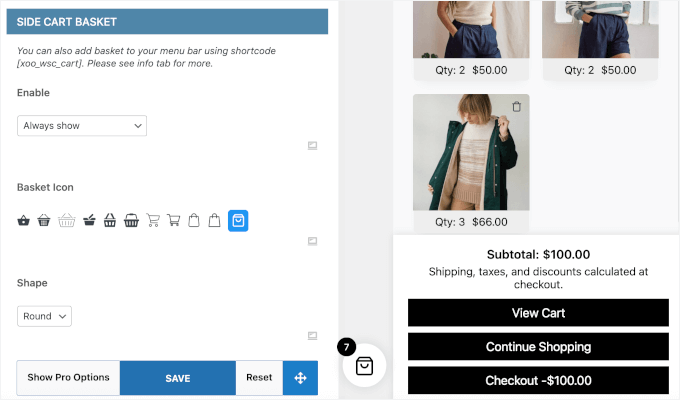
At a clothing store, I tested Express Checkout (Pro feature) and found that it reduced the average checkout time from 3 minutes to 45 seconds.
Fewer steps = fewer cancellations. The customer saw a 12% increase in conversion rate from this one feature alone.

Sidecar Woocommerce | Advantages and Disadvantages of Woocommerce Shopping Cart
🟢► Advantages
- Free version complete: The free tier includes basic shopping cart, AJAX, floating icons, and customizations
- Legendary Support: I deployed this to seven customer sites and never waited more than minutes for a response
- Fastest setup: My fastest deployment took 8 minutes, with no configuration friction
- Express checkout works: I tested the Pro feature and found that checkout time dropped from 3 minutes to 45 seconds
- Theme universal: I’ve never had a compatibility issue between multiple themes and client sites
🔴► Disadvantages
- Gaps in the free version: Express checkout and shipping calculator are missing in the free tier. Both behind professional
- Minimal customization: Compared to other options on my list, the design options are limited
My verdict: If you want a foolproof, trustworthy sidecar and legendary support, go for this one. It’s the WordPress plugin equivalent of a Honda Civic: reliable, boring and perfect.
Prices: Free version available. Pro starts at $29/year (1 site)
👉 Get started with Side Cart Woocommerce | Woocommerce shopping cart here
4. ShopEngine ⭐⭐⭐⭐⭐
Elementor WooCommerce Builder | Ideal for: Elementor users who want complete design control

ShopEngine is a 70+ widget Elementor add-on for creating custom WooCommerce pages.
The Sticky Fly Cart is the module I will be focusing on the most in this list. If you already use Elementor, ShopEngine lets you control your entire store experience through a drag-and-drop builder.
Why is ShopEngine one of the best WooCommerce sliding side carts?
If Elementor is your page builder of choice, ShopEngine is the natural solution. You design your shopping cart, checkout, product pages, and store archive – all in Elementor.
This means you don’t have to code anything and experience no theme restrictions. Simply complete freedom of design.
The Sticky Fly Cart appears as a widget that you drag into your shopping cart layout. The adjustment is then carried out in the Visual Builder of Elementor. You can change colors, positions and animations in real time.
The downside: You’re tied to Elementor and have to use ShopEngine for everything, not just the shopping cart. If it allowed me to use other top site builders, it would honestly be at the top of my list.
My experience with ShopEngine’s sliding sidecars
I set up ShopEngine with Elementor in a furniture store. The owner wanted an individual store layout. With ShopEngine I was able to build it in the builder without touching the code.
First, I selected a product page for Elementor’s large library of templates. A preview was displayed so I could easily decide what worked best for my client.
Then I selected a checkout block using the Elementor block library.

After that, I used toggle keys to enable the ShopEngine features I wanted for the sliding sidecar. And I was able to get started.

The sticky fly cart worked well. AJAX updates went smoothly. Plus, the sliding cart didn’t look out of place on the checkout page.
ShopEngine WooCommerce Sliding Side Carts Pros and Cons
🟢► Advantages
- Elementor native: I designed the entire store in Elementor without touching any code
- Freedom of design: In the visual builder I had complete control over the layout, colors and animations
- Mobile responsive: The Sticky Fly Cart worked fine on phones
🔴► Disadvantages
- Free version incomplete: The Fly Cart module is only available for professionals, although there are over 70 other widgets
- Elementor locked: The plugin only works with Elementor
My verdict: Only select this option if you already use Elementor and want to customize multiple WooCommerce pages. If you only need one side cart, the extra effort isn’t worth it.
Prices: Free version available (no fly cart). Pro starts at $59/year (1 site). Lifetime options available. 14 day money back guarantee.
👉 Start here with ShopEngine
5. Fast shopping cart for WooCommerce ⭐⭐⭐⭐
Lightweight free | Best for: performance-driven businesses that don’t need bloat

Fast shopping cart for WooCommerce is a free WooCommerce side cart plugin that I think is easy to use and very powerful.
The problem is that it is new, very niche-oriented, and designed for a target audience: developers and store owners who care about site performance above all else.
Why is Fast Cart one of the best WooCommerce sliding carts?
At 16.2KB, Fast shopping cart for WooCommerce is the lightest side cart plugin available. Competitors have an average size of 98 KB. That’s a 6-fold difference.
On mobile networks, slimmer plugins mean faster page loads and therefore more conversions. If you are doing a speed optimization project, this is a good choice.
The sliding side cart plugin does the basics perfectly: AJAX add-to-cart, floating icon, light/dark mode, shake animation when adding.
Unfortunately, Fast Cart for WooCommerce has no upsells, no coupon field, and no express checkout features. It is simply a shopping cart tray that opens when you add a product and allows you to adjust quantities and remove items.
My experience with Fast Cart for WooCommerce
I tested this in a dropshipping store where page speed was crucial. The owner’s website was penalized in Google’s Core Web Vitals. Every plugin addition was important.
I used Fast Cart for WooCommerce and measured the difference: page load time dropped by 0.3 seconds.
That sounds small, but with a total load time of 3 seconds, it’s a 10% improvement. The car worked perfectly.
Fast Shopping Cart for WooCommerce: Pros and Cons
🟢► Advantages
- Lightest Available: At 16.2 KB, I measured a 0.3 second improvement in loading time in a dropshipping shop
- Completely free: No pro version, no upsell pressure, no “missing features” behind a paywall
- Performance first: I chose this specifically for Core Web Vitals optimization and it worked
🔴► Disadvantages
- Unproven at scale: Only over 200 installs, meaning it’s too new to trust without fully testing it
- Feature minimal: No upsells, shipping calculators or coupon fields
My verdict: If performance is your main filter, this is the answer. For everything else, choose a more established option.
Prices: Free, forever. No Pro version.
👉 Get started with Fast Cart for WooCommerce here
6. XT Floating Cart for WooCommerce ⭐⭐⭐⭐
Maximum customization | Ideal for: Design-focused stores that want ultimate control and express checkout

XT Floating Cart for WooCommerce offers more customization options than any other side cart.
Eleven loading animations, live preview customizer, multiple cart icon styles, full color and design control. If you are a designer or a perfectionist, this is your sliding side cart.
Why is the XT Floating Cart for WooCommerce one of the best?
The Live Preview Customizer is the killer feature. You can change colors, animations and positioning. Then watch the changes in real time on your live site.
This ensures you don’t have to guess or take extra “save and reload” steps that slow you down. This alone saves hours of setup time.
The express checkout form is also exceptional. Customers can enter shipping and billing information, redeem vouchers and complete payment in the shopping cart drawer.
You can do all of this without having to navigate to a separate checkout page, ensuring higher conversion than traditional checkouts.
My experience with XT Floating Cart for WooCommerce
I used XT Floating Cart for WooCommerce in a coaching business store that sells online courses. The owner wanted a specific look: modern, minimalist, with smooth animations.
I used Live Preview Customizer to design the cart in 20 minutes.
Express checkout reduced abandoned carts by 8% because fewer people abandoned their purchase during the multi-page checkout flow.
XT Floating Cart for WooCommerce Pros and Cons
🟢► Advantages
- Live Preview Adjuster: I designed the cart in 20 minutes and watched the changes live on my website. I didn’t have to save and reload
- Express checkout works: I tested it and found that the simplified checkout flow reduced cart abandonment by 8%
- Animation options: 11 loading animations meant I could do justice to the brand personality
- Complex products: The plugin processes bundles and composites. It could handle more types of products than the competition
🔴► Disadvantages
- Learning curve for the customizer: It took some time to understand the live preview system
My verdict: Choose XT Floating Cart for WooCommerce if design and checkout conversion are a priority. Customization options and express checkout make the setup time worth it.
Prices: Free plugin version available. Pro starts at $59/year (1 site). Lifetime options available.
👉 Get started here with XT Floating Cart for WooCommerce
7. Shopping Cart All-In-One for WooCommerce ⭐⭐⭐
Cheapest Premium | Ideal for: budget-conscious shops that want a feature-rich toolkit at minimal cost

Shopping Cart All-In-One for WooCommerce costs $30 once. That alone makes it unique.
You purchase a sidebar cart, menu cart icon, sticky add to cart button, recently viewed products, and related product recommendations. All for the price of a single coffee subscription.
Why is Cart All In One for WooCommerce one of the best sliding side cart plugins?
The value is undeniable. For $30, you get features that competitors charge $59 to $99 per year for. Yes, the free version has limitations but the pro version is really affordable.
The sidebar cart is responsive and customizable. First of all, the menu cart icon with a drop-down menu gives customers another way to access their cart.
Then the sticky “Add to Cart” button at the bottom of product pages reduces scrolling. Together, these create a multi-channel shopping cart strategy at a fraction of the cost of the competition.
My experience with Cart All In One for WooCommerce
I tested it in an e-book store. The owner’s budget was tight. Cart All In One’s price of $30 was perfect.
The setup took 15 minutes. The sidebar cart worked immediately. I added the menu cart icon, which gives customers a second way to access their cart.
Finally, I enabled the sticky add to cart button on the product pages. Simple, effective, cheap.
Shopping Cart All-in-One for WooCommerce Pros and Cons
🟢► Advantages
- $30 one-time: I received features that competitors charged over $99/year for
- Multi-channel shopping cart: I have activated the shopping cart, menu icon and sticky button in the sidebar. Three access options for customers
- Free version functional: The free tier was not affected. I only upgraded the sticky “Add to Cart” button
- Multilingual support: WPML/Polylang compatibility worked without additional configuration
🔴► Disadvantages
- Price uncertainty: The $30 price is valid until December 2027. This means that it can change afterwards
My verdict: If budget is a constraint, Cart All In One For WooCommerce can be your answer. You can optimize a shopping cart experience on a budget or completely free.
Prices: Free version available. Pro starts with a one-time payment of $30.
👉 Get started here with Cart All In One for WooCommerce
8. Addonify Floating Cart for WooCommerce ⭐⭐⭐
Just free, feature rich | Best for: Classic-themed stores that need a completely free option
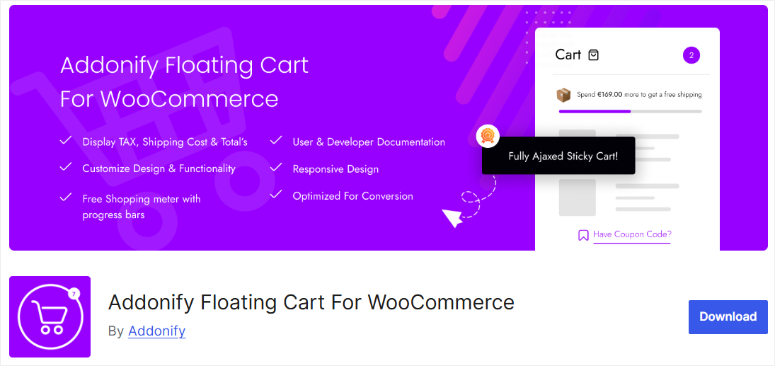
Addonify Floating Cart for WooCommerce is completely free. No pro version or upsell pressure.
Still, it includes features that other plugins charge extra for, such as: B. Shipping calculator, coupon system, shopping counter (spending progress) and undo on removal.
Why is Addonify one of the best WooCommerce carts?
For a free plugin, the range of functions is exceptional. The shipping calculator allows customers to view shipping costs before paying.
The shopping counter shows progress toward a spending goal. For example, you can create something like “Add $15 more for free shipping.”
You also get coupon support, undo on item removal, and RTL support – all for free.
One caveat: It’s not compatible with block themes and WooCommerce blocks, otherwise it would have been higher on my list.
If your website uses Full Site Editing or the new WooCommerce block checkout, avoid Addonify.
My experience with Floating Cart for WooCommerce
I tested it in a small clothing store with a classic WordPress theme. The features worked perfectly: floating cart icon, shipping calculator, coupon field, everything.
A test showed its strength: the shopping counter.
I set it to “Add $10 for free shipping.” Within a month, 34% of customers added an additional item to reach this threshold. That’s 34% of orders that receive a small lift without a code or configuration.
All I had to do was activate the function.
Floating Cart for WooCommerce Pros and Cons
🟢► Advantages
- Completely free: No Pro version means no feature gatekeeping or upsell pressure
- Shipping cost calculator included: I set shipping costs and customers can see the charges before paying
- Shopping counters influence behavior: I set “Add $10 for free shipping” and 34% of customers added an additional item to score
🔴► Disadvantages
- Smaller community: Only over 1,000 active installations. This means a higher risk of abandonment
- Block theme incompatible: The plugin does not work with Full Site Editing or WooCommerce blocks
My verdict: Floating Cart For WooCommerce is a good free option for classic WordPress themes. If you are interested in a block topic, skip this.
Prices: Free, forever. No Pro version.
👉 Get started here with Addonify Floating Cart for WooCommerce
9. Caddy ⭐⭐
Free tier with discounts | Best for: Stores that want a generous free tier with shipping bar and product recommendations

CaddyThe free version (Lite) is generous. Most plugins turn on upselling or shipping features behind the pro version.
Caddy includes the free shipping bar, product recommendations, save for later, and custom design in the free tier.
Why is Caddy one of the best?
The free tier shipping bar is the differentiator. Set “Free Shipping on $75” and a progress bar will appear in the cart showing how close the customer is.
Most add an element to reach the threshold. This is a conversion increase over a free feature.
With product recommendations in the free tier, you can suggest bestsellers or related products in the shopping cart. The Save for Later feature allows customers to organize items without losing them.
The Pro version offers analytics, multi-tiered rewards, and automation. But the free tier gives you the essentials.
My experience with Caddy
I set up Caddy in a supplement store. The free shipping bar worked great. With the “Free Shipping on $50” setting, the percentage of orders reaching $50 increased from 28% to 46%.
However, I noticed that the admin interface seemed crowded with Pro upgrade prompts. There was an “Upgrade to Pro” banner on every settings page. It felt intrusive.
I also noticed that the shopping cart icon can disappear unexpectedly, which is why I can’t give it a higher rating despite the features.
Caddy advantages and disadvantages
🟢► Advantages
- Generous free tier: I got the shipping bar and product recommendations in the free version – most plugins hide these
- Shipping block valid: With the bar set to “Free Shipping on $50,” the number of orders meeting that threshold increased from 28% to 46%.
- Save for later helpful: Customers were able to organize items without losing them. Great help with cart recovery
- Free Coupon Support: I could apply coupon discounts without upgrading
🔴► Disadvantages
Admin UX intrusive: There were banners on every settings page that said “Upgrade to Pro,” which seemed confusing and annoying
My verdict: The features are solid, but the admin UX is annoying. If you’re looking for a clean experience, this can be confusing.
Prices: Free Lite version available. Pro starts at $99/year (1 site). 14 day guarantee.
This is my list of the best sliding side cart plugins for WordPress. There are a few options that were just missing from my list. Check them out below.
Bonus: Best WooCommerce Sliding Side Cart Plugins
WPC Fly Cart for WooCommerce
A solid mid-range option with a free version that handles basic AJAX cart updates, floating icons, and product removal.
The Pro tier offers instant checkout, coupon application, and shipping calculator. WPC Fly Cart for WooCommerce is best suited for stores that want a reliable balance between features and cost.
Not as specialized as FunnelKit’s rewards or Side Cart WooCommerce’s support, but competent and affordable.
Prices: Free version available. Pro from $29/year.
👉 Start here with the WPC Fly Cart
UpsellWP Side Cart for WooCommerce
Very new with a few installs, but interesting for stores that already use UpsellWP.
The side cart becomes an upsell channel. You create targeted campaigns in UpsellWP and they appear in the cart drawer.
Free core features, but upsell integration requires UpsellWP Pro. Only consider this if you are already committed to the UpsellWP ecosystem.
Prices: Free version available. Upsells require UpsellWP Pro starting at $75/year.
👉 Get started with UpsellWP here
That’s it. My list is now complete with the nine best sliding side cart plugins and bonus options. If something is unclear, check out the frequently asked questions below.
FAQs: Best WooCommerce Sliding Side Cart Plugins
Will sliding sidecars slow down my WooCommerce store?
No, if you choose a lightweight plugin. Fast Cart at 16.2KB incurs minimal overhead. Most plugins average 50-100 KB in size. The actual impact is negligible compared to topic weighting or image optimization. Monitor before and after installation with Google PageSpeed Insights or the free performance tool IsItWP.
What is the difference between a side cart and a mini cart?
A sidecar slides in from the edge of the screen and covers part of the page (usually the right or left side). A mini cart is usually a dropdown menu of a shopping cart icon in the header. Sidecars are more immersive and reduce side friction. Mini carts are less intrusive but drive fewer conversions.
Can a side cart replace the WooCommerce shopping cart page?
Yes, with express checkout features. FunnelKit, XT Floating Cart and Cart All In One offer checkout forms in the cart drawer. This allows customers to complete purchases without having to navigate to a separate shopping cart or checkout page. This reduces friction and abandonment.
Which slide cart plugin works with every WordPress theme?
dealer, Side Cart WooCommerce and FunnelKit work with all themes. They don’t require Elementor or specific builders. ShopEngine is blocked for Elementor users. Most others are theme-agnostic, but test them before launching.
Do I need a paid plugin to get a free shipping bar in my shopping cart?
No. Caddy, Addonify, and Merchant include shipping progress bars in their free or free versions. The feature is now table stakes; Even free options include it.
Which push cart plugin is best for variable product stores?
Merchant and XT Floating Cart offer the best support for variable products including bundles and composites. Side Cart WooCommerce also works well, but with fewer design options. All other plugins support variables, but may have limitations for complex product types.
Final Verdict: Should I Use Sliding Side Carts on My WordPress Site?
Yes. A sliding sidecar eliminates friction at the moment of purchase and keeps customers engaged without having to reload the page.
For stores where inventory is limited or precious, this single feature results in a measurable change in conversion rates.
You don’t need expensive software. Free options work well and paid tiers are affordable. What’s important is that you choose one that fits your workflow and test it first during staging.
The difference between a side cart and a traditional checkout is simple: fewer steps, faster completion, fewer abandonments. This is a game-changer for most WooCommerce stores.
Choose one, activate it and measure the results. If it reduces abandonments, keep it. If not, the competitive landscape means you can switch without wasting any time.
Resource Hub: WooCommerce Store Optimization
Now that you understand sliding side cart plugins, here are more posts you can read.
Use these articles to learn how to better convert your audience in your store. They also help you improve the checkout experience.