
My WordPress site looked great on mobile devices. But “mobile-responsive” is not the same as “mobile app.”
I watched my course completion rates remain unchanged. Members would log in once and then drift away.
No app icon on their home screen or push notifications to lure them back or a native experience to keep them engaged.
Then I tried the BuddyBoss app. Within a few hours, my WordPress site was online as a native app in both the Apple App Store and Google Play.
The difference was immediately noticeable and this guide shows exactly how I did it.
Key insights
- I’ll show you how to connect the BuddyBoss app to your WordPress site without any coding
- I’ll go over both the iOS and Android configuration so you can publish to both app stores
- Discover the Firebase push notification setup that keeps members coming back automatically
- I’ll cover the branding settings that will make your app feel premium from day one
- I’ll address common problems and tell you what to do if something goes wrong
What we will achieve in this tutorial
By the end of this guide, your WordPress site will have a branded native app available on both the Apple App Store and Google Play.
Your members can add it to their home screen, receive push notifications, and access your content through a native mobile experience rather than a browser window.
Here’s what changes for your website:
- A real home screen icon, not a browser shortcut
- Push notifications that retarget members without email
- Faster, native navigation through your content
What you need before we begin
Skill level: In between
Time to completion: ~3-4 hours (Apple setup takes most time)
Budget about $1,719 per year before you start. These include the BuddyBoss app ($79/month), an Apple developer account ($99/year), and a Google Play developer account ($25 one-time). Firebase is free.
- BuddyBoss app installed and activated – go to buddyboss.com/mobile-app/purchase a plan and download the plugin and license key from your account dashboard. Install it like any other plugin in WordPress (Plugins » Add New » Upload). Need full setup instructions?
- BuddyBoss platform Already installed and active on your WordPress site? The BuddyBoss platform is required for the BuddyBoss app to function
- Apple developer account – Register at Developer.Apple.com ($99/year; required for iOS publishing)
- Google Play developer account – Register at play.google.com/console ($25 one-time; required for Android)
- Firebase account – Create one below firebase.google.com (free; handles push notifications)
How to turn your WordPress site into a mobile app
With that all done, it’s time to convert your WordPress site into a mobile app. Below is a table of contents where you can click on any link to jump to that section.
You also get a quick overview of all steps at a glance.
With that out of the way, let’s dive in.
Step 1: Download and connect the BuddyBoss app plugin
~15 minutes | Your WordPress site linked to BuddyBoss
This step creates the bridge between your WordPress content and the native mobile apps you want to build.
This is the quickest step in the entire process, but I’ll show you exactly where to find the credentials that most people waste their time looking for.
First, log in to your BuddyBoss account and go to Downloads Tab.
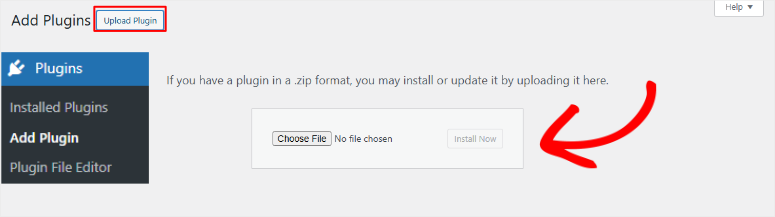
Then download the BuddyBoss app plugin file. Go back to WordPress Plugins » Add new » Upload pluginupload the file and activate it. Once activated, the BuddyBoss app will appear in your left sidebar.
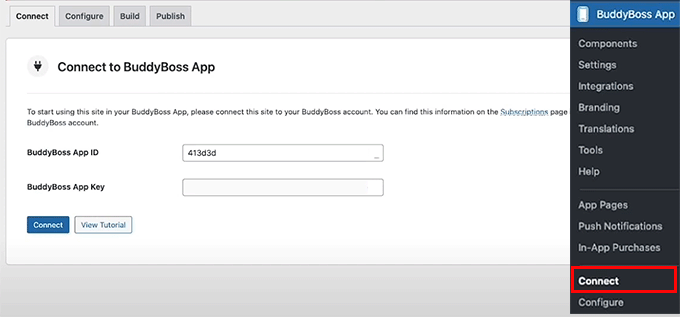
Then navigate to BuddyBoss app » Connect.
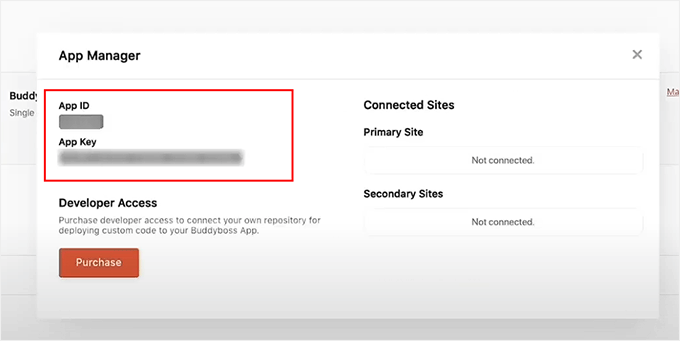
You will see two empty fields waiting for an App ID and App Key. To get these, go back to your BuddyBoss account and click Apps Click the tab, find your website in the list and click Administer next to it.
A section will appear with your login information. Copy both values carefully.
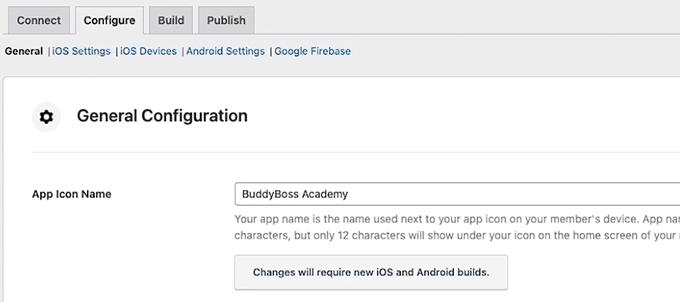
Then paste both values into the Connect tab fields and save. When you’re done, switch to Configure Tab and enter your app name App icon name Field.
This is the label that appears under your icon on the user’s home screen. Again, you should choose it carefully before saving it.
⚠️ Quick check: After saving you should see a confirmation status in the Connect Tab. If you get an error, check that you have copied both the app ID and app key without any additional spaces at the beginning or end.
Step 2: Configure iOS settings
~90 minutes | Your app is connected to the Apple App Store
iOS setup is the most involved step in this tutorial. It requires three separate platforms.
That means your BuddyBoss dashboard, the Apple Developer Portal, and App Store Connect. Additionally, multiple files must be created in a specific order.
The good news is that it is mechanical and not technical. Follow the order below and it will move faster than it looks.
I’ve done this setup several times and the 90 minute estimate holds true once you know where everything is.
Create your Apple developer account
If you don’t have one Apple developer account Still, go to Developer.Apple.com and register. I should point out that it costs $99 per year. To complete registration, you will need a personal or work Apple ID.
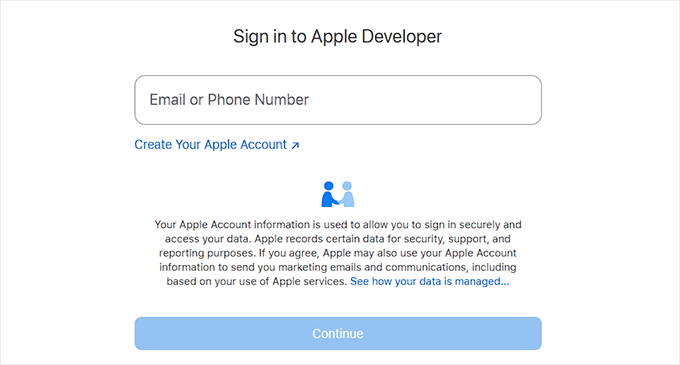
Apple typically approves new accounts within 24 to 48 hours.
So don’t start the rest of Step 2 until your account is fully approved. Attempting to create API keys for a pending account results in confusing errors.
Connect your Apple developer account to BuddyBoss
Once approved, go to WordPress and navigate to BuddyBoss app » Configure and click iOS Tab. This becomes the central hub for everything Apple-related in your setup.
Any Apple credentials you collect in this step will be entered here
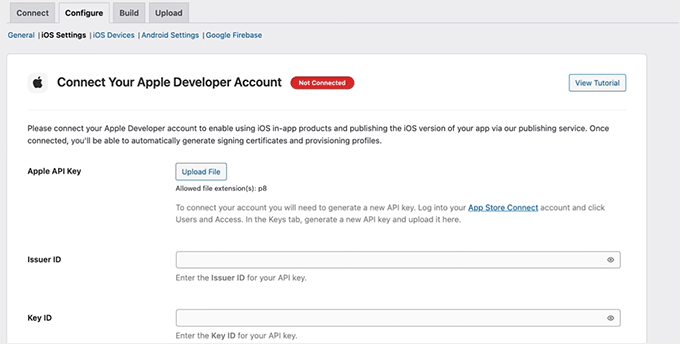
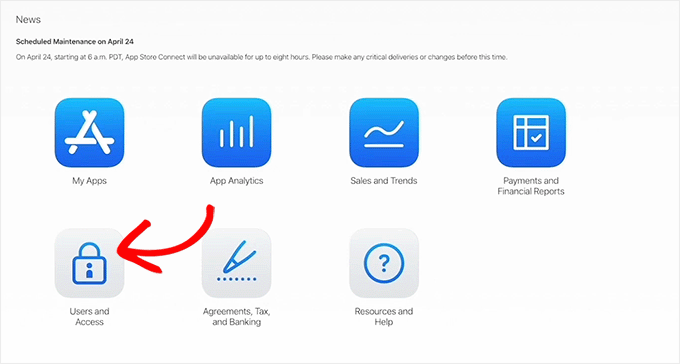
Now go to App Store Connect (appstoreconnect.apple.com) and navigate to Users and access.
Click on Key Click the tab and then select the + Icon for creating a new API key. Enter a name here and select App Manager from the Access drop-down list and click Generate.
After you click Generate, the new key will appear in the list.
Download the API key file immediately as Apple only allows you to download it once. On the same screen, copy yours Key ID And Exhibitor ID. You need all three values together.
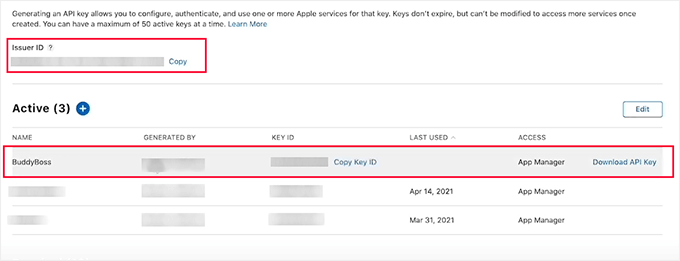
Download the .p8 file and copy the Key ID and Issuer ID. You need all three items in BuddyBoss.
In BuddyBoss, paste your Issuer ID and Key ID into the iOS fields, upload the .p8 API key file and click Connect account. As soon as the connection works, a confirmation of success appears.
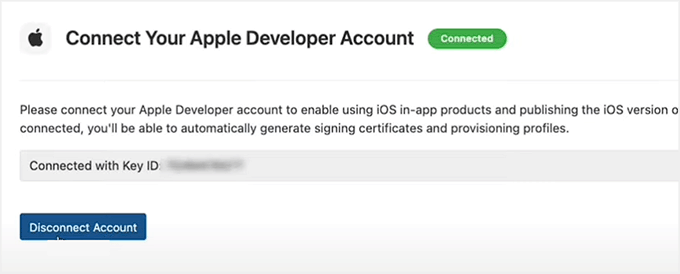
A connected status confirms that BuddyBoss can now communicate with your Apple developer account.
Configure bundle ID, certificates, and provisioning profiles
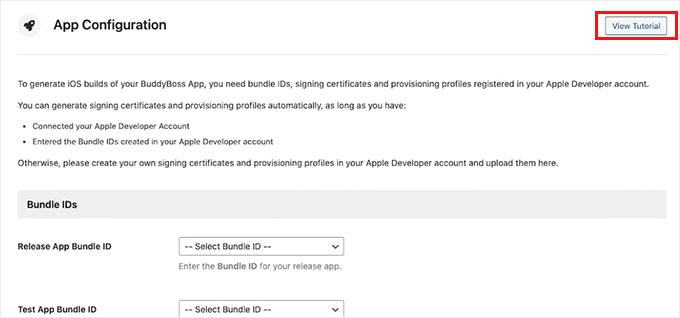
When you’re done, navigate to BuddyBoss app » Configure » iOS and find the “Bundle ID” section.
BuddyBoss provides a dedicated video tutorial for the Certificates and Provisioning Profiles step. All you have to do is follow it exactly instead of piecing it together from Apple’s documentation.
The video is linked directly in this section. You can do that too Click this link to go directly to the BuddyBoss YouTube tutorial.
Create your app in App Store Connect
Navigate to App Store Connect » My Apps and click + Symbol. Next, enter your app name, select iOS as the platform, add your bundle ID and set access to full access. Save the new app.
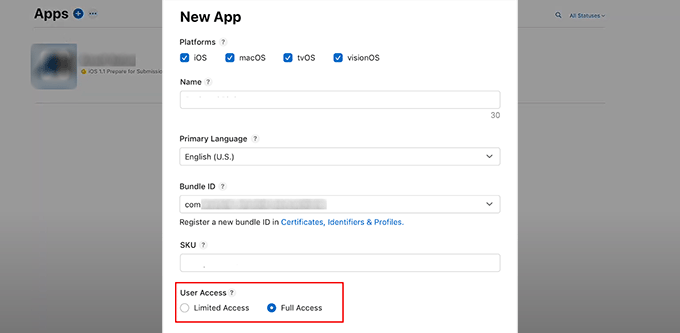
Your bundle ID here must exactly match the one you configured in BuddyBoss. A mismatch will lead to errors later.
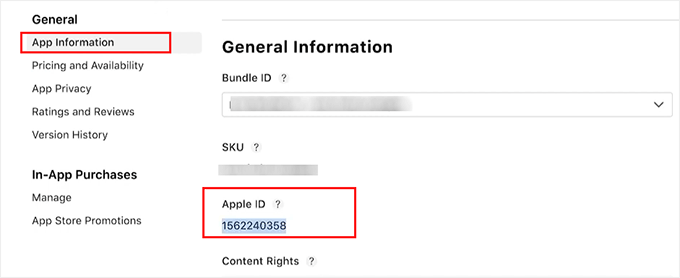
Of the App information Tab, copy yours App ID; It’s a numeric identifier, not the name of your app.
Now navigate to manager Tab and click App-specific shared secret to generate and copy this value. This is a separate credential from the App ID.
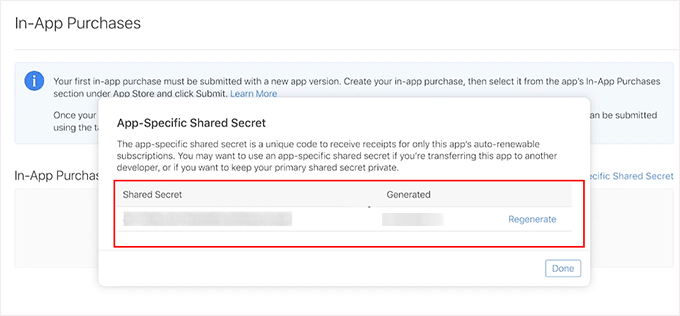
On the Manager tab, click the Shared Secret button to generate and copy this value.
Back in BuddyBoss, paste both the App ID and Shared Secret into the iOS settings fields and save.
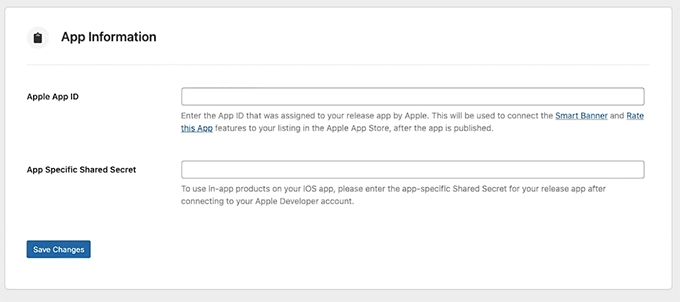
Enter both values into BuddyBoss to complete the App Store Connect credentials.
Register your iOS device for testing
Before submitting to the App Store, test the app on a real device.
To do this, navigate to iOS devices In BuddyBoss, click the tab and follow the on-screen instructions to enroll a physical iOS device for testing.
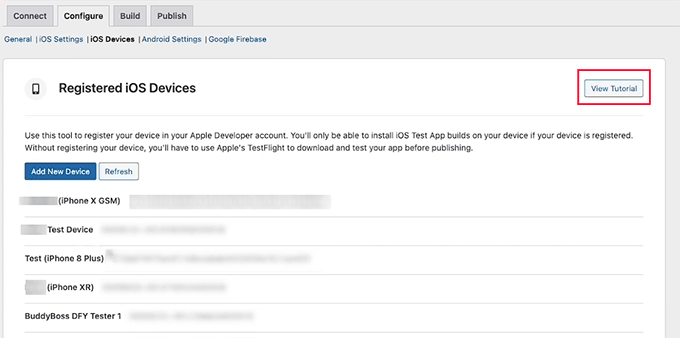
Register a physical iOS device here so you can run the app before submitting it to the App Store.
⚠️ Quick check: The iOS tab should show a connection status for your Apple developer account, with your Bundle ID, App ID, and Shared Secret saved.
Step 3: Set up Android configuration
~45 minutes | Your app is connected to Google Play
Android setup is easier than iOS setup because it requires fewer certificates and files. The most time-consuming part is setting up the service account in Google Cloud Platform, which you only do once.
Create your app in the Google Play Console
Go to play.google.com/console and click Create app. Then enter your app name, select your default language and set it to “Free”. Mark the required declaration fields and click Create app.
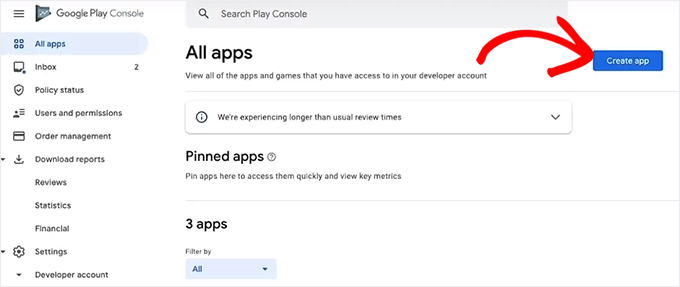
In the Google Play Console, click Create App to create your Android app listing.
Next, fill out the app details form below with your app name and language preferences.
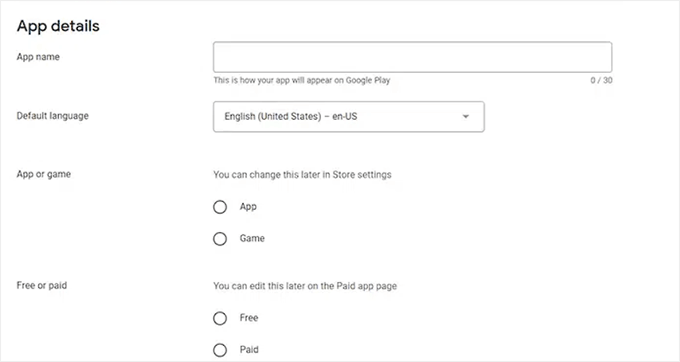
Fill out the form: app name, default language and whether it is free or paid.
Create a service account
In the Google Play Console, navigate to Settings » API Access. Click Create new projectThen Link Project. This will take you to Google Cloud Platform.
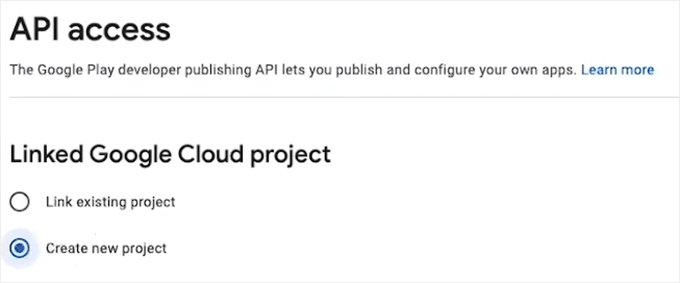
Settings » You connect the Google Cloud Platform to your Play Console via API access.
In Google Cloud Platform, click Service accounts Tab. Then click on “+ Create service account” to start building the account that BuddyBoss needs to connect.
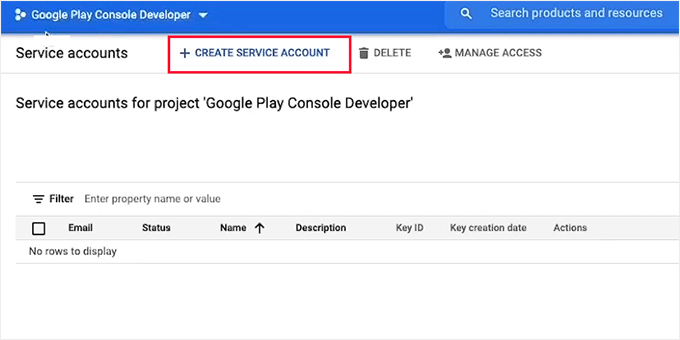
The Service Accounts tab in Google Cloud Platform. Click + Create service account.
On this screen, give your service account a recognizable name and description, then click Create.
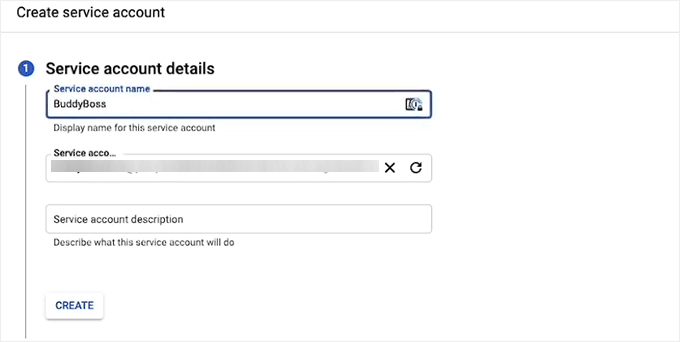
Give the account a unique name like “BuddyBoss App” so you can identify it later.
Select on the next screen owner In the Roles dropdown, click Carry onThen Completed.
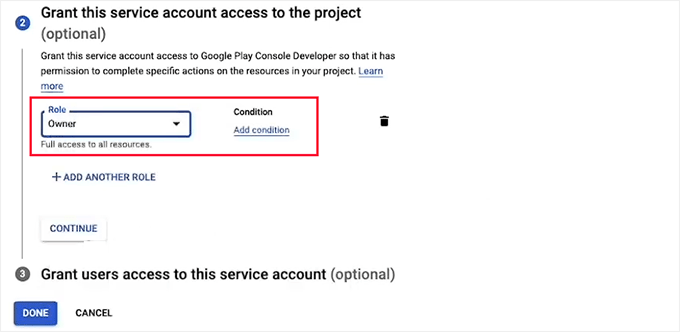
Select Owner Access. BuddyBoss requires full permissions to manage your app builds.
Generate and connect the JSON API key
Back in the list of service accounts, click the three-dot icon at the bottom Actions next to your new account and select Manage keys.
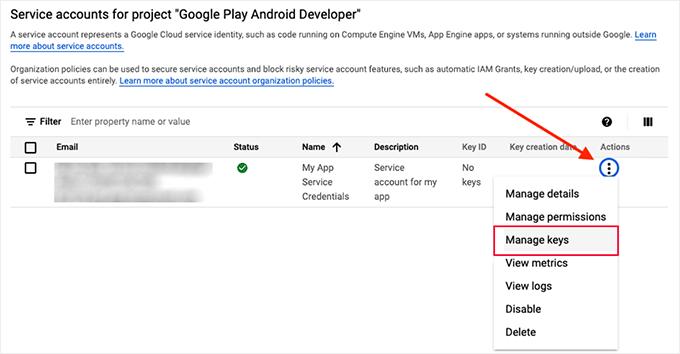
Open the three-dot menu in your service account and click Manage Keys.
Then click on Add keychoose JSON as the key type and click Create. The JSON file will automatically download to your computer.
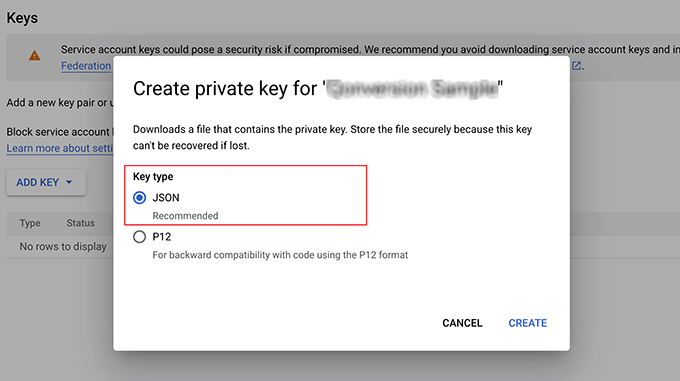
Choose JSON. This will create a file that you can upload directly to BuddyBoss.
Navigate to WordPress BuddyBoss App » Configure » Android Settings. Upload the JSON file to the Service Account Key field. Once processed, you should see the Connected status.
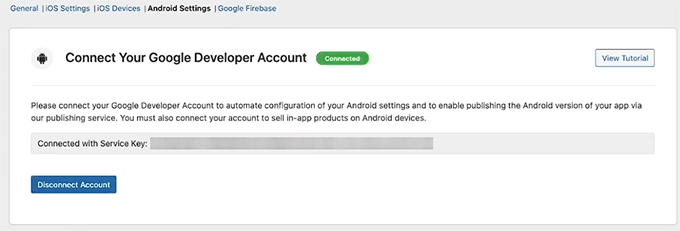
After uploading the JSON key, BuddyBoss confirms that the Google account is connected.
Add your application ID and generate the KeyStore
In Android Settings, scroll down and enter your Application ID Using reverse domain format.
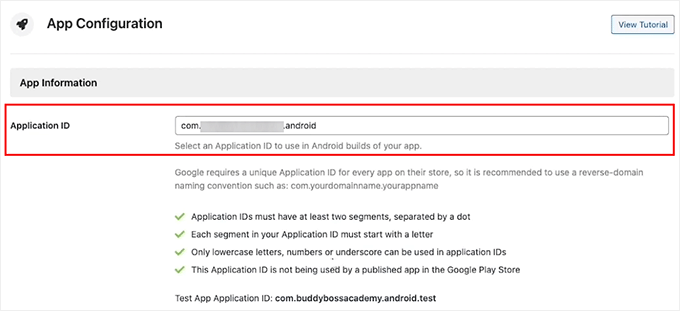
Enter your Application ID in reverse domain format: com.companyname.appname.
For example, com.mycompany.myapp. This is a unique identifier that Google uses to distinguish your app from others.
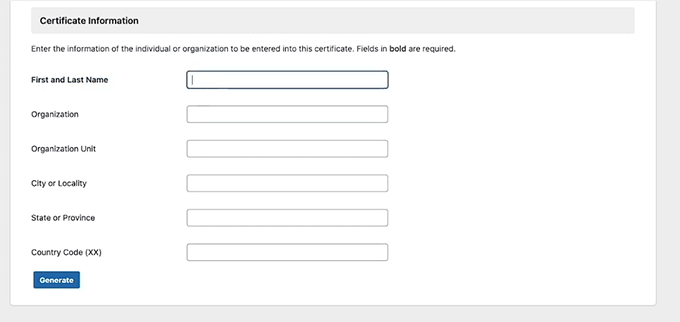
Now click Generate KeyStore. Fill out the form with the certificate information, including your name, organization, city, state, and country code. When you’re done, click Generate.
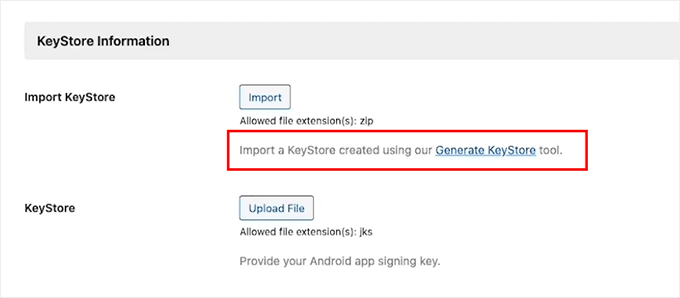
Click “Generate KeyStore” to create your Android app signing certificate.
Then fill out the certificate information form. This will generate the signing certificate for your Android app.
BuddyBoss generates a KeyStore file. Download it and then upload it back to the KeyStore area. Then click on save Changes.
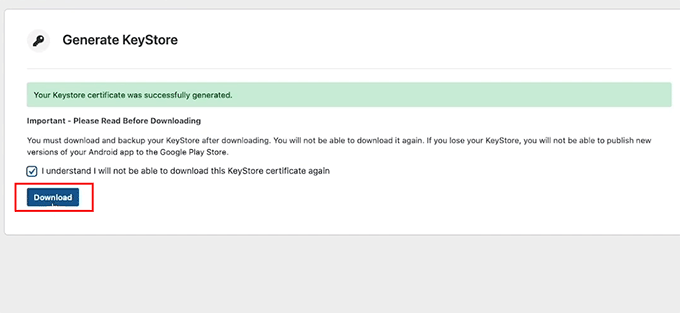
Download the KeyStore file generated by BuddyBoss and then upload it again here.
⚠️ Quick check: In the Android Settings tab you should see a connected Google Account with both your Application ID and KeyStore file present.
Step 4: Configure Firebase push notifications
~30 minutes | Push notifications enabled for both platforms
Fire base is Google’s free cloud messaging service.
It is the basis for the push notifications your app sends. This includes notifications of new content, replies to comments, mentions, and more.
Every file you create here will be uploaded to BuddyBoss, so keep your downloads organized.
Create your Firebase project
Navigate to WordPress BuddyBoss app » Google Firebase to see the connection panel.
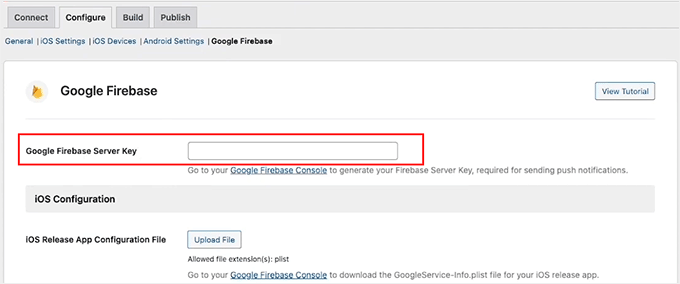
The Firebase tab in BuddyBoss. This is where you add credentials and upload all configuration files.
Go to the Firebase console (console.firebase.google.com) and click Start by setting up a Firebase project. Enter a project name and click Carry on.
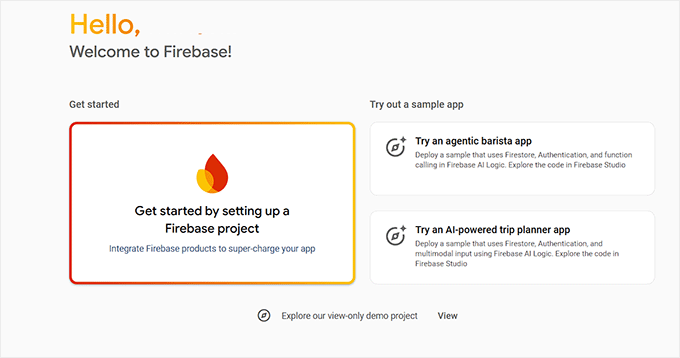
First, create a new project in the Firebase console.
Using the same name as your app keeps everything organized across platforms.
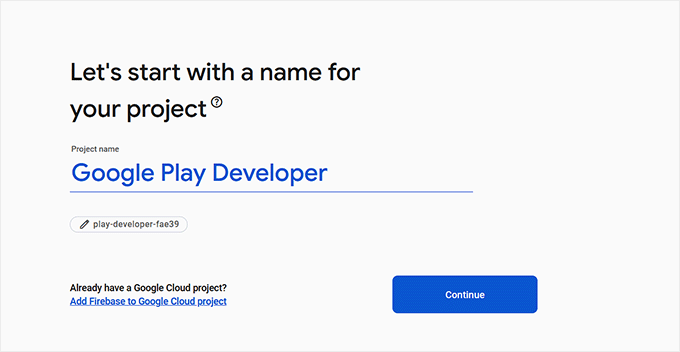
Name your Firebase project; Matching your app name will make it easier to identify it later.
Complete the remaining setup steps and decide whether you want to enable Google Analytics.
Copy the server key
In your Firebase project, click the gear icon and go to Cloud messaging Tab.
Find them Server key and copy it. The trick I learned is to copy it from that very tab. It’s easy to accidentally select a different button on the General tab.
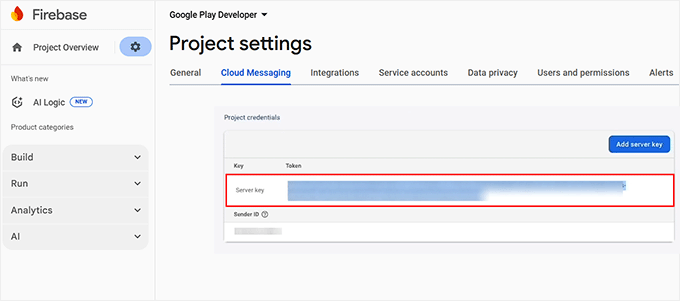
Copy the server key from the Cloud Messaging tab, especially from the General or Project Settings tab.
Paste it into the Firebase Server Key field in BuddyBoss.
Register your apps in Firebase
In Firebase, navigate to Project overview and click Generally Tab.
Scroll down to Your apps section and select the Android icon.
Enter your package name here (same application ID of BuddyBoss), add an app nickname and click Register app. When you’re done, download the configuration file.
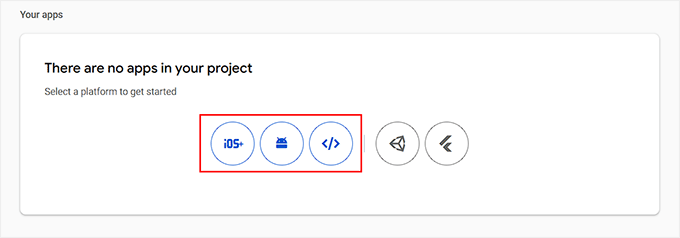
Click on the Android or iOS icon to register the respective platform. You register a total of four apps.
Repeat the process for iOS. So you enter your bundle ID, app nickname and app store ID. Also, create trial versions of both apps by attaching them .test to their IDs. You will end up with a total of four configuration files.
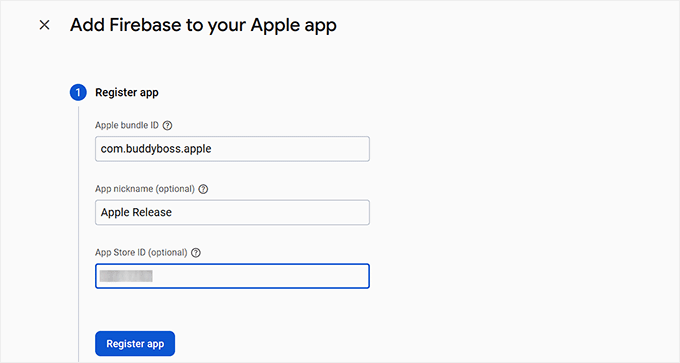
Register your iOS app with the same bundle ID from your BuddyBoss iOS settings.
Keep all four configuration files together in one folder. Next, upload them all to BuddyBoss.
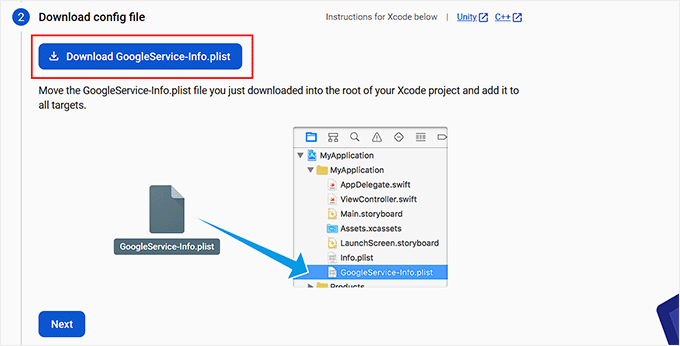
Download the configuration file for each app. When you’re done, you’ll have four files. Two live, two tests.
Upload the APN key and configuration files
In Firebase, return to the Cloud messaging Click the tab and upload your iOS APN authentication key.
Then go back to WordPress and upload all four iOS and Android configuration files to the appropriate fields in BuddyBoss. Once finished, press save Changes.
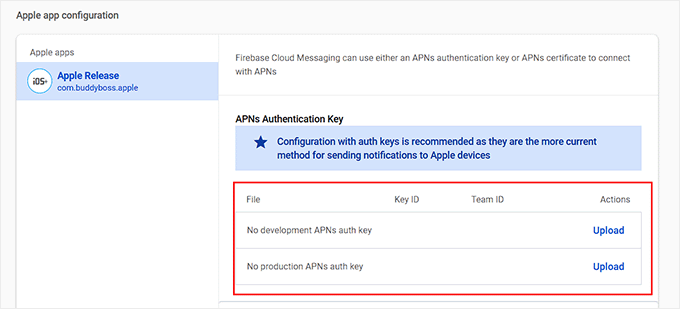
Upload your iOS APN authentication key in the Cloud Messaging tab in Firebase.
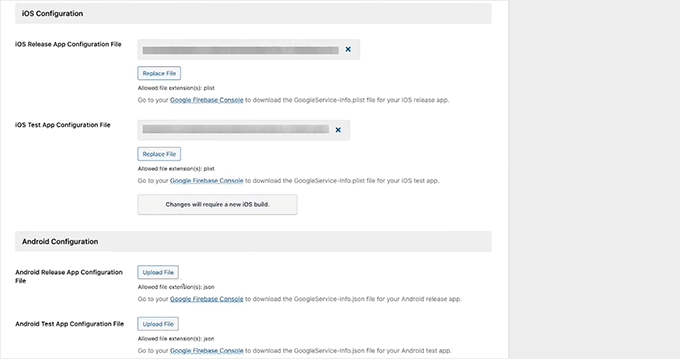
Upload and save all iOS and Android Firebase configuration files to BuddyBoss. Remember that no field should be empty.
⚠️ Quick check: No error messages in Firebase tab. All file upload fields should display files without red warnings.
Step 5: Adjust app settings and notifications
~15 minutes | Registration, privacy and push notification triggers configured
The settings here control how users interact with your app. For example, who can register, which feedback options are displayed and for which actions push notifications are sent.
There are more options than it seems at first glance. So take a few minutes to read through each tab.
When you’re done, navigate to BuddyBoss app » Settings.
Check those Enable registration Select the registration page from the drop-down menu and check the box for a confirmation email.
This ensures that new members receive a welcome message after signing up via the app.
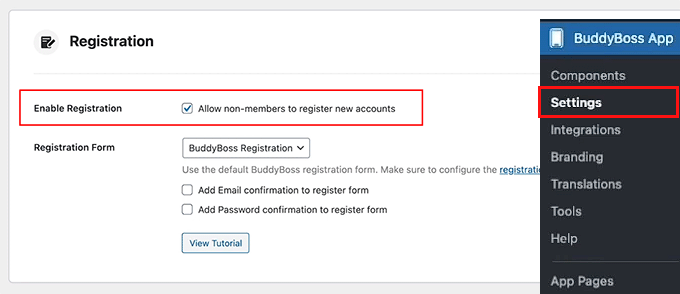
Enable registration to allow users to create accounts directly from the mobile app.
Scroll down and check the Privacy Option to limit app access to logged in members only. This is essential for paid memberships or private groups.
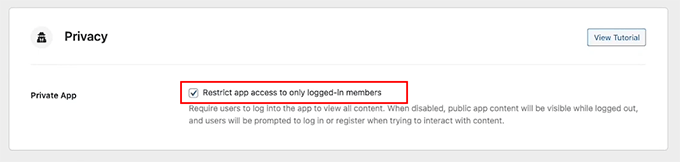
If you enable privacy, your app will only be accessible to members. Important for gated content or paid communities.
Then switch to Return message Tab.
Here, check Send us feedbackenter your support email address and activate Report a bug And Rate this app. These provide your members with a direct channel without the need for a separate help desk.
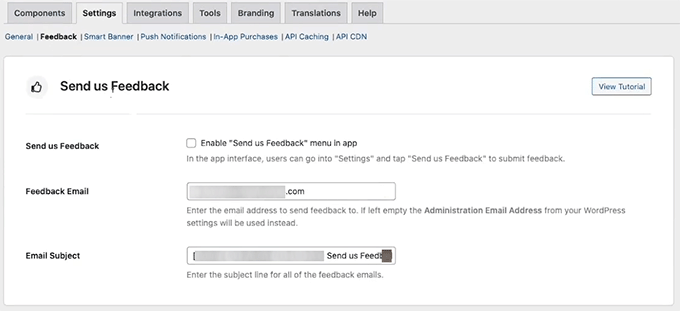
Enable all three feedback options. App Store reviews improve discoverability over time.
Now switch to Smart banner Click on the tab and enable Smart Banner for iOS and Android.
This banner appears when someone visits your website on a mobile browser, prompting them to download the app instead.
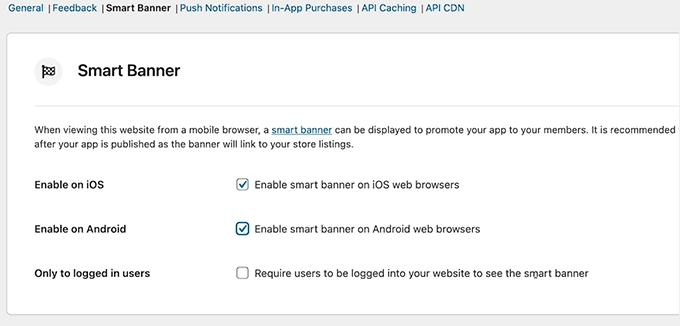
The smart banner appears in mobile browsers to encourage existing visitors to switch to the native app.
Finally, open the Push notifications Tab. Select the triggers you want to activate. I suggest you enable mentions, invitation notifications, and activity replies as solid starting points.
Click save Changes when finished.
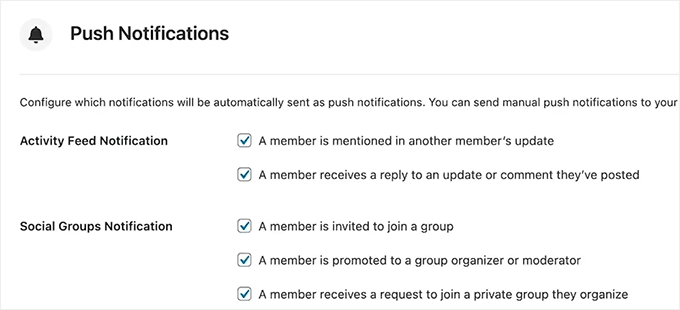
Enable notification triggers that suit your community. Mentions and replies drive the most re-engagement.
⚠️ Quick check: A saved confirmation will appear on all settings tabs. Once activated, the Smart Banner will be immediately activated for mobile browsers.
Step 6: Design your app’s branding
~20 minutes | Your app looks and feels like your brand
This is the step that makes the app feel like yours. The trick I learned is to prepare all your logo files in the correct dimensions before opening BuddyBoss.
This saves you a lot of back and forth between the dashboard and your design tool.
Once you’re done, go to BuddyBoss app » Branding.
Upload your home screen logo, login screen logo, and home screen image here. BuddyBoss displays the recommended dimensions for each.
Therefore, follow these carefully as images that are too small in size will be cropped unpredictably on different devices.
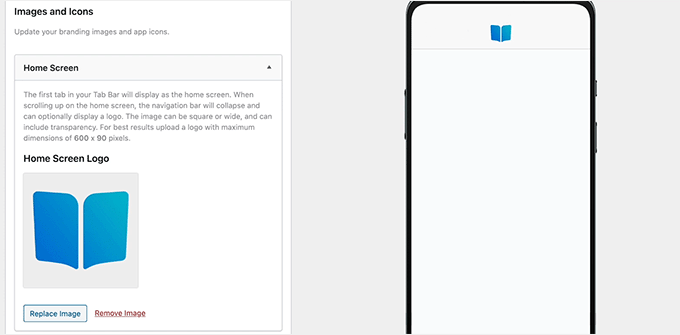
Upload your home screen logo. This will appear next to your app name on the iOS and Android home screens.
The login screen is the first thing new members see when they open the app. Make sure your branding here is clear and on-brand before proceeding.
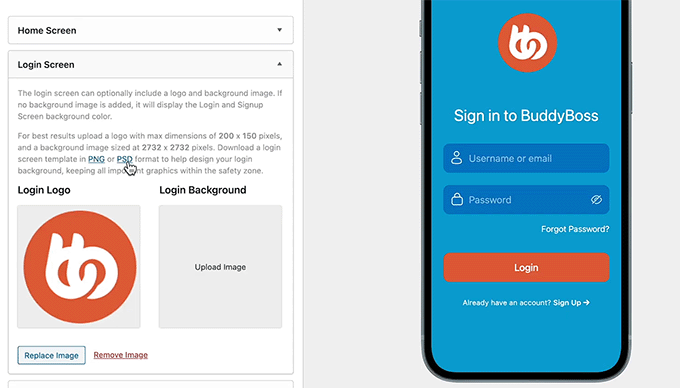
The login screen leaves the first impression. Upload a high-quality logo and clean background image.
Then switch to Colors Click the tab and set your brand colors for the background, buttons, accent elements, navigation bar, and text. These apply globally, meaning every screen in the app inherits them.
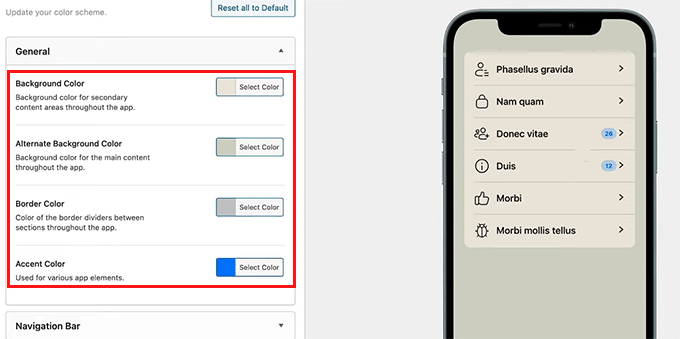
Set your global brand colors here. They automatically apply to every screen in the app.
Then click on typography Tab. Select your preferred fonts for body text, headings, top bar, and menus. Adjust the font size to suit your brand style.
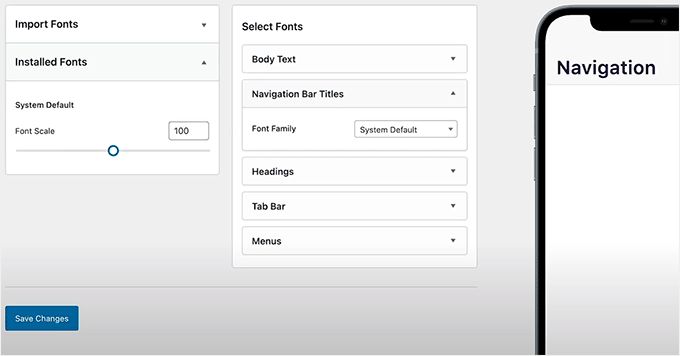
Choose fonts and sizes for each content type. Customize your website’s typography to ensure consistency.
When you’re done, select save Changes.
Then navigate to Upper bar Page and add your most important pages, e.g. B. Homepage, Profile and Account, which work well for most communities.
Switch to in the drop-down menu More screen structure and add your secondary pages: Blog, Notifications, Activity and Forums.
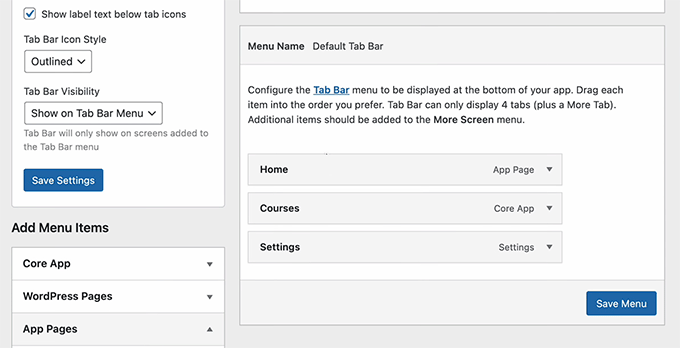
The top bar contains your primary navigation. For clarity, limit yourself to 3 to 4 elements.
⚠️ Quick check: Preview your branding in the BuddyBoss dashboard. The preview updates when saving. Use it to spot anything that looks suspicious before moving on to a test build.
How to test your app
Before submitting it to the App Store or Google Play, test it on a real device. BuddyBoss generates test builds that you can install via QR code without the need for a third-party testing service.
To do this, navigate to BuddyBoss app » Configure and look for the test build option for your platform.
Scan the QR code with your registered iOS device or install the test APK on an Android device.
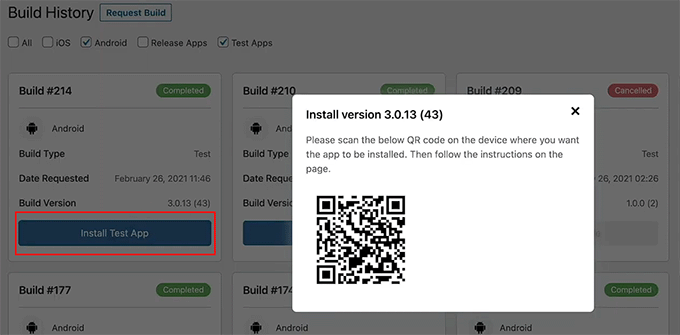
After installation, perform the following checks:
Sign in with a test account and confirm that the registration and login process works as expected.
- Navigate between pages using the Top Bar and More Screens menus. Make sure each page loads correctly.
- Trigger a push notification by sending yourself a test mention or reply and confirming it arrives.
- Finally, check that your branding, colors, fonts, and logos display correctly on the actual device and not just in the dashboard preview.
If your login page looks incorrect, check your registration page settings again BuddyBoss app » Settings.
If no push notifications are received, go back to your Firebase configuration and confirm that the server key was saved in BuddyBoss without trailing characters.
Common problems and quick solutions
Problem: The Connect Account button doesn’t work in the iOS tab
- What happens: The issuer ID, key ID, or .p8 API key file does not match. Apple generates these as a sentence. They only work together in the same key generation session.
- Quick solution: Delete the API key in App Store Connect, generate a new one and download the new .p8 file. Copy the Key ID and Issuer ID from the same screen in one session. Don’t copy them from different lines.
My experience: On my first attempt I accidentally took the issuer ID from another key row. Always ensure that all three values come from the same entry.
Problem: Your bundle ID is already taken
- What happens: Someone else or a previous attempt has already registered this identifier with Apple.
- Quick solution: Add a short version tag to make it unique. For example,
com.mycompany.myappbecomescom.mycompany.myappv2. Check availability on the Apple Developer Portal before registering.
My experience: Common abbreviations for company names are quickly adopted. Check availability early. Renaming a bundle ID during setup results in cascading changes across multiple steps.
Problem: Firebase server key is rejected in BuddyBoss
- What happens: You probably copied the wrong key. Firebase displays similar looking keys in several places.
- Quick solution: Go back to the Firebase console, click on the gear icon and go to targeted Cloud messaging Tab. The required server key is there and not on the “General” tab of the project settings.
My experience: I copied the wrong key on my first pass. If you’re on the move quickly, you can easily skip the Cloud Messaging tab.
Problem: Apple rejected your app after submission
- What happens: Most first-time rejections are metadata issues. These include missing screenshots, an incomplete privacy policy or a vague app description.
- Quick solution: Read the rejection email carefully. Apple provides specific reasons for rejection with policy references. Update and resubmit your App Store Connect metadata (screenshots, description, privacy policy URL). Resubmissions are generally processed more quickly than initial submissions.
My experience: Apple expects screenshots in very specific dimensions. Prepare before sending, not after.
That’s it. You can now convert your WordPress site into a mobile app. On both iOS and Android devices. If something is unclear, check out the frequently asked questions below.
FAQs: How to turn your website into a mobile app
Do I need to know how to code to create a WordPress mobile app with BuddyBoss?
No. The BuddyBoss app takes care of all the technical app creation in the background. You configure settings via a WordPress dashboard, upload files from Apple, Google and Firebase and BuddyBoss does the rest. No coding, no Xcode, no Android Studio required.
Can I publish my app without an Apple developer account?
No. Apple requires an active developer account ($99/year) to publish an app on the App Store. There is no workaround. If you just want an Android app, you can skip the entire iOS setup and just need a Google Play developer account (one-time $25).
How long does it take to verify in the Apple App Store?
Apple typically reviews new apps within 24-72 hours. Apps with in-app purchases or complex functionality sometimes take longer. Track your status on App Store Connect. If rejected, you can fix the problems and resubmit. Resubmissions are usually quicker than initial reviews.
Does the BuddyBoss app work with any WordPress site or just BuddyBoss platform sites?
The BuddyBoss app requires the BuddyBoss platform. It is not a standalone app builder for a WordPress site. It is specifically designed to transform BuddyBoss-powered communities and online learning platforms into native apps. If you’re using a different setup, look into PWA solutions instead.
What happens to my app if I cancel my BuddyBoss subscription?
The app remains in the app stores, but no longer works. Your members will see an error message when they try to use it. The app can no longer connect to your WordPress site. Consider the $79/month as a commitment and not just an upfront cost in your ongoing budget.
Can I update the app after release?
Yes. Daily changes such as new branding, updated navigation, and new settings are automatically pushed into the app without the need for resubmission to the App Store. Major feature changes or new screens may require a new build, but routine content and configuration updates occur immediately.
Final thoughts
If your WordPress site serves a community or hosts courses, a native mobile app changes the picture of engagement.
Members who have your app installed are significantly more active than those who access it via a browser. The icon on your home screen ensures that you are visible.
BuddyBoss The app enables the process without any development knowledge. The iOS setup is the steepest part of the curve, but it’s a one-time process.
Once this is done, updates and changes will occur without the need to resubmit to stores.
Go to BuddyBoss to review your plan options. And once your app is live, you can use BuddyBoss’ community features.
Take a look at push notifications and native navigation, which are just the starting point of what a complete BuddyBoss community can achieve.
Resource Hub: Mobile Apps, Memberships and Community Sites
These resources will help you build the rest of your BuddyBoss-powered WordPress site along with your new mobile app.