
If a brand is not visible in the response engines, it lacks critical influence in the early stages. According to McKinsey50% of consumers now use answer machines and more than 70% rely on them to ask questions and gather information. This means that a growing proportion of discovery occurs within AI tools and before users click on websites.
But how do marketers know how their website performs in these new search models? Marketers track performance using AEO Tools like Profound and Bluefish AI. These AI visibility platforms help marketing teams monitor, measure, and improve how their brand appears in AI-driven search experiences.
As AEO becomes a priority, many teams are evaluating Profound vs. Bluefish AI for AEO to determine which platform offers the strongest visibility, most secure brand positioning, and clearest ROI. This guide explains what each tool offers, how they differ, and which solution will best support your AEO strategy.
Table of contents
What is profound?
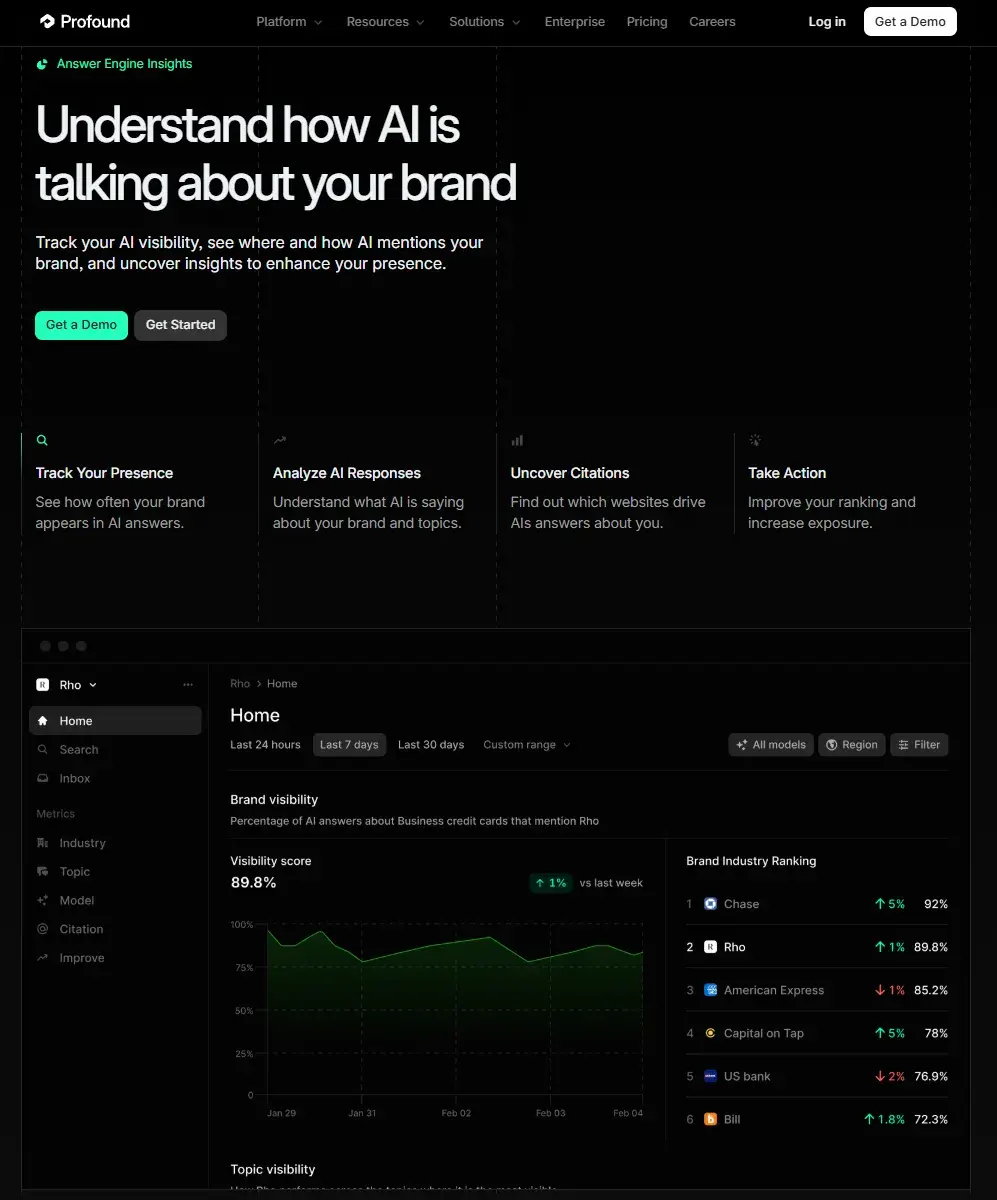
Profound is an enterprise-grade AI search visibility and response engine optimization platform designed to help brands understand and improve their representation in AI-generated responses.
At its core, Profound specializes in AI visibility tracking and citation analysis. The platform monitors how brands are referenced in key AI systems, tracks citation sources, and provides prompt-level insights so teams can see exactly where and why they appear in AI responses.
For marketing and SEO executives, Profound stands out for its depth of data, enterprise-grade reporting, and workflow integrations. It combines AI search visibility with measurable business outcomes, helping teams move from passive monitoring to active optimization.
As AI answers increasingly replace traditional blue links, platforms like Profound provide brands with the infrastructure to measure, attribute and improve their presence in AI-driven search experiences.
What is Bluefish?
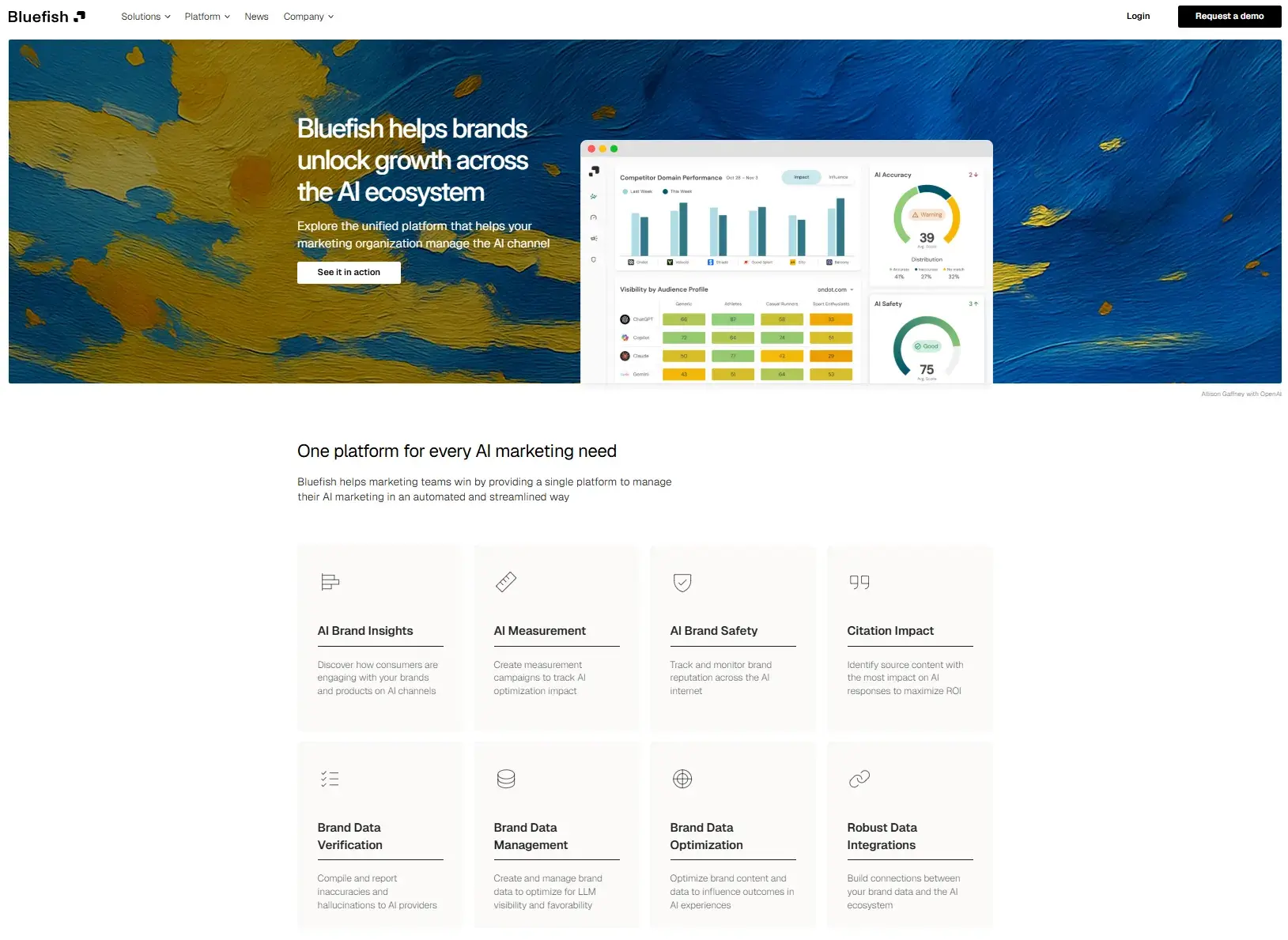
Bluefish AI is an AI visibility and brand safety platform that helps companies monitor how their brand is referenced in AI-powered search and generates answers, while prioritizing risk management and accuracy.
Bluefish AI goes beyond basic visibility metrics and prioritizes protecting brand integrity. It alerts teams when their brand is being misrepresented, associated with harmful content in search generative experiences (SGE), or appearing in AI responses that could pose a reputational risk.
For risk-sensitive industries like healthcare, finance, legal, and enterprise brands operating at scale, Bluefish AI provides context-rich insights, governance workflows, and signal filtering that help marketers maintain control over how AI systems cite and present their content.
As AI-generated responses become part of the customer journey, tools like Bluefish provide a nuanced perspective on visibility that combines optimization with oversight, helping teams not only track presence but also manage the risk associated with that presence.
Profound vs. Bluefish AI for AEO: At a glance
Before choosing an enterprise platform, many teams start with a free platform AEO tools for benchmarking.
HubSpot’s AEO Grader offers a free Snapshot of how major answer search engines represent each brandThis gives marketing managers a quick and practical way to assess AI visibility before investing in a tool like Profound or Bluefish AI. This is what it looks like:
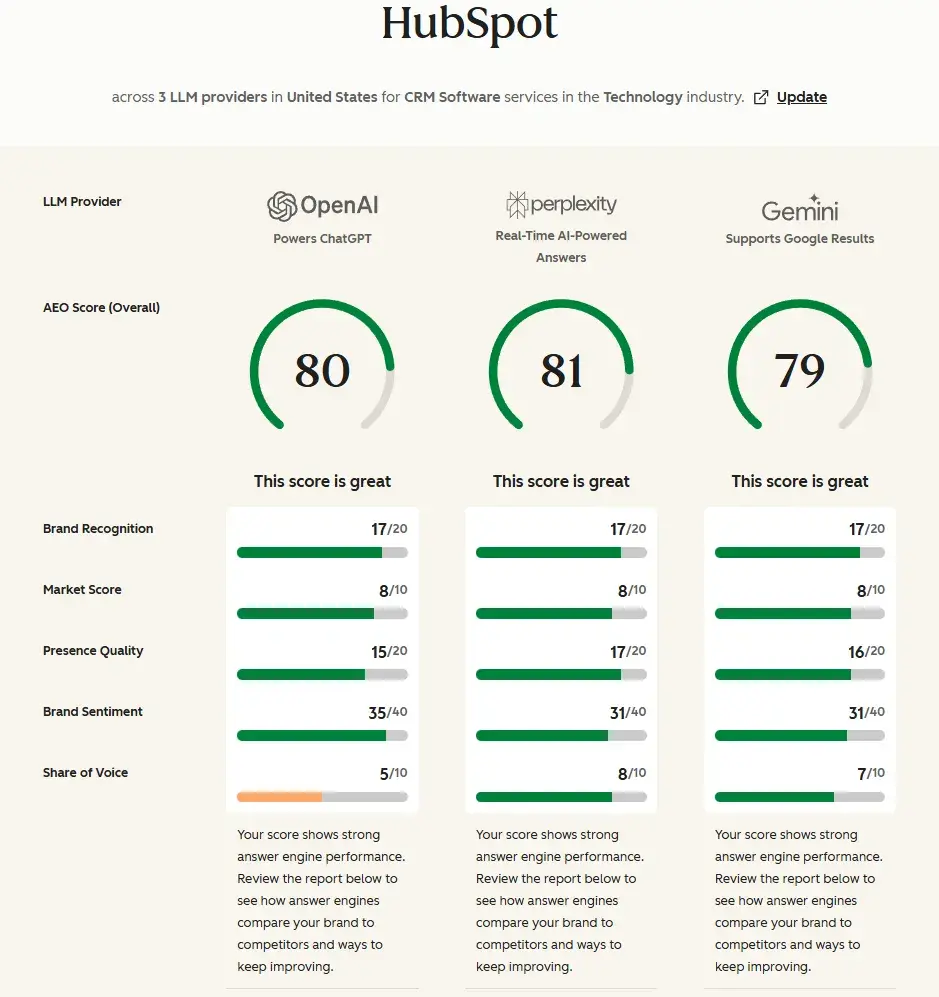
The platform enables a detailed breakdown of how a user’s brand is performing across all AI systems. Marketers can check competitive positioning, visibility scores, and the frequency with which their brand is cited compared to others in their field.
The Market Competition Score shows where a brand stands, while built-in recommendations highlight specific actions to improve AI visibility, from content strategy adjustments to opportunities to build authority.
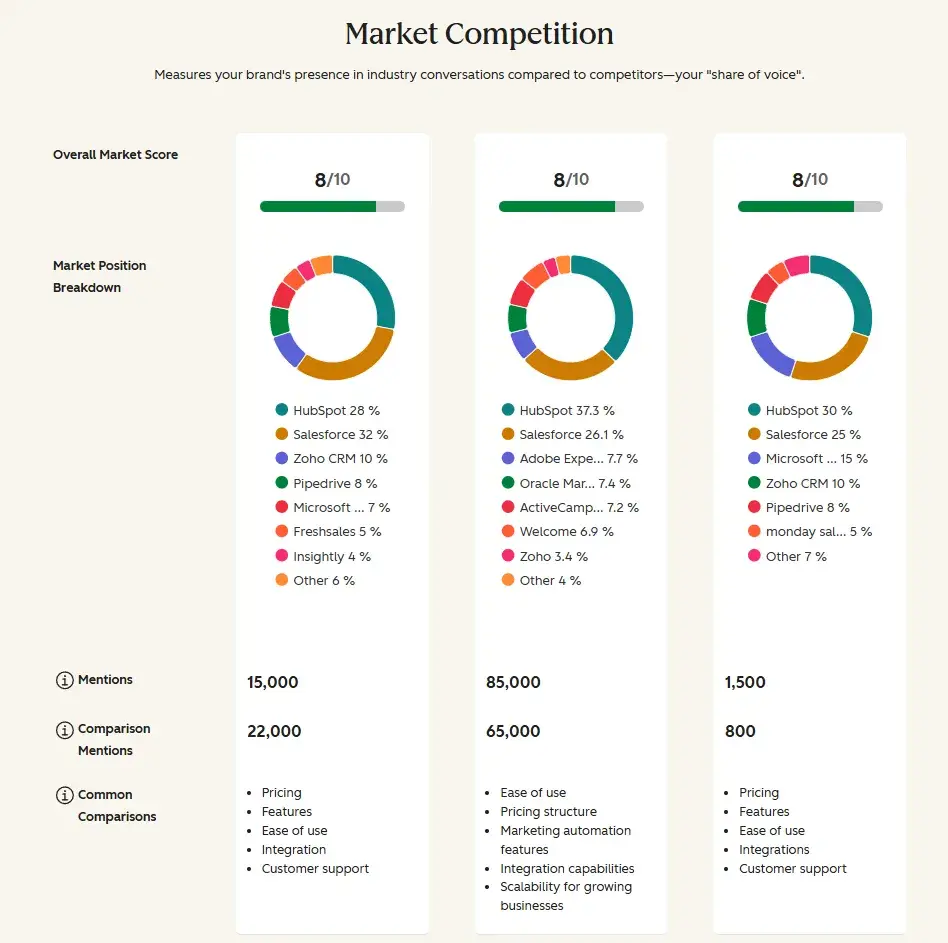
The tool also offers:
- Brand awareness metrics (market position, depth of mentions, source quality).
- Strength and trajectory analysis across AI platforms.
- Contextual topics associated with your domain.
- Sentiment analysis that shows how positively AI engines rate your brand.
HubSpot AEO Grader helps marketers benchmark AI visibility before choosing a platformThis makes it a useful first step in evaluating Profound vs. Bluefish AI for GEO (generative engine optimization) and determining where deeper investment is warranted.
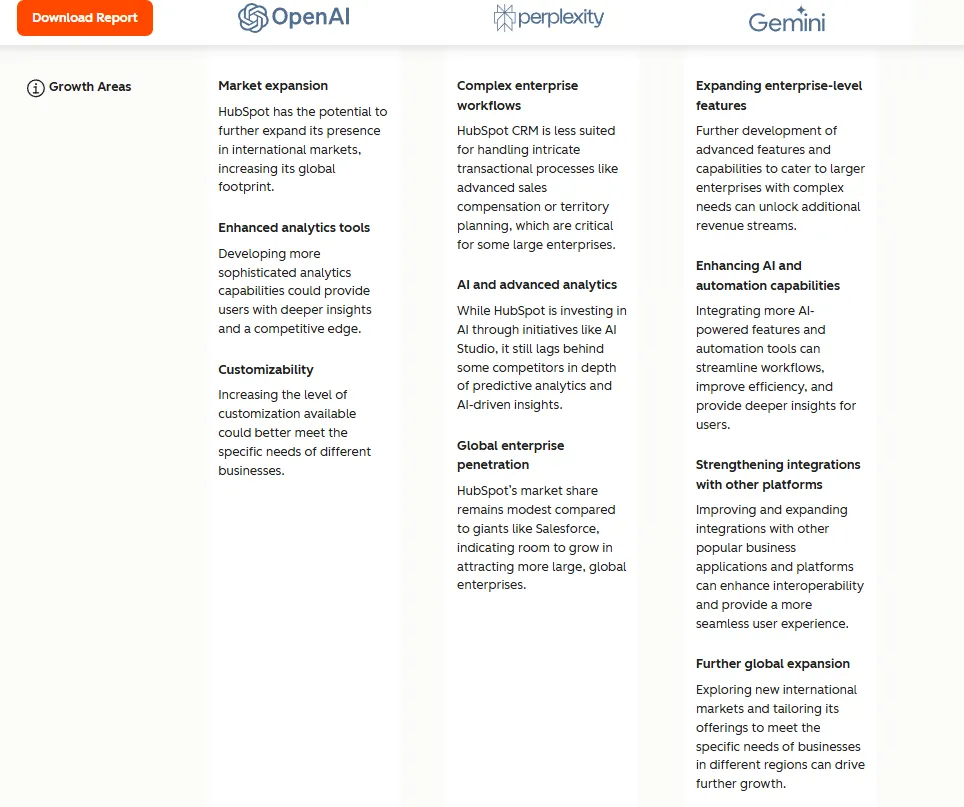
The free Grader tool also provides marketers with options for action. Marketers can start solving AEO problems with free tools before moving on to paid tools like Profound or Bluefish. This is what the detailed actions look like:
Profound vs. Bluefish comparison
Here is a comparison of four key factors to help teams decide between Profound AI and Bluefish AI for AEO.
Supported AI engines and platform coverage
For marketers investing in AEO, platform coverage is crucial. Buyers search across multiple platforms, switching between Google AI Overviews, ChatGPT, Perplexity, Gemini, and other AI systems. When a monitoring platform only tracks a limited subset, marketers make decisions based on incomplete data.
How Bluefish AI handles platform coverage
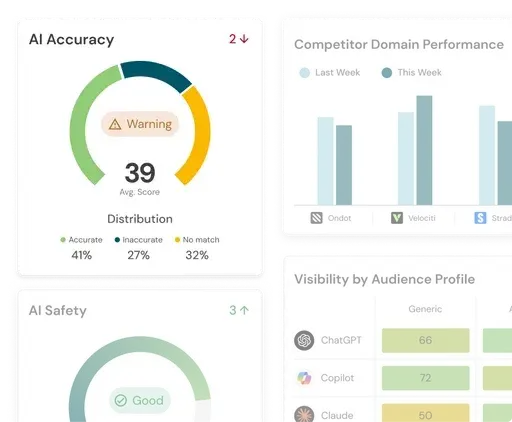
Bluefish AI focuses on monitoring brand representation across major generative AI platforms, particularly those that influence consumer research and companies’ risk exposure.
Reporting prioritizes widely used AI engines where misinformation or brand misrepresentation could pose a reputational risk. Instead of focusing on exhaustive engine lists, Bluefish focuses its tracking on high-stress environments and alert-driven monitoring.
This approach supports organizations that care less about covering experimental models and more about ensuring presence in the most commercially relevant AI ecosystems.
How Profound handles platform coverage
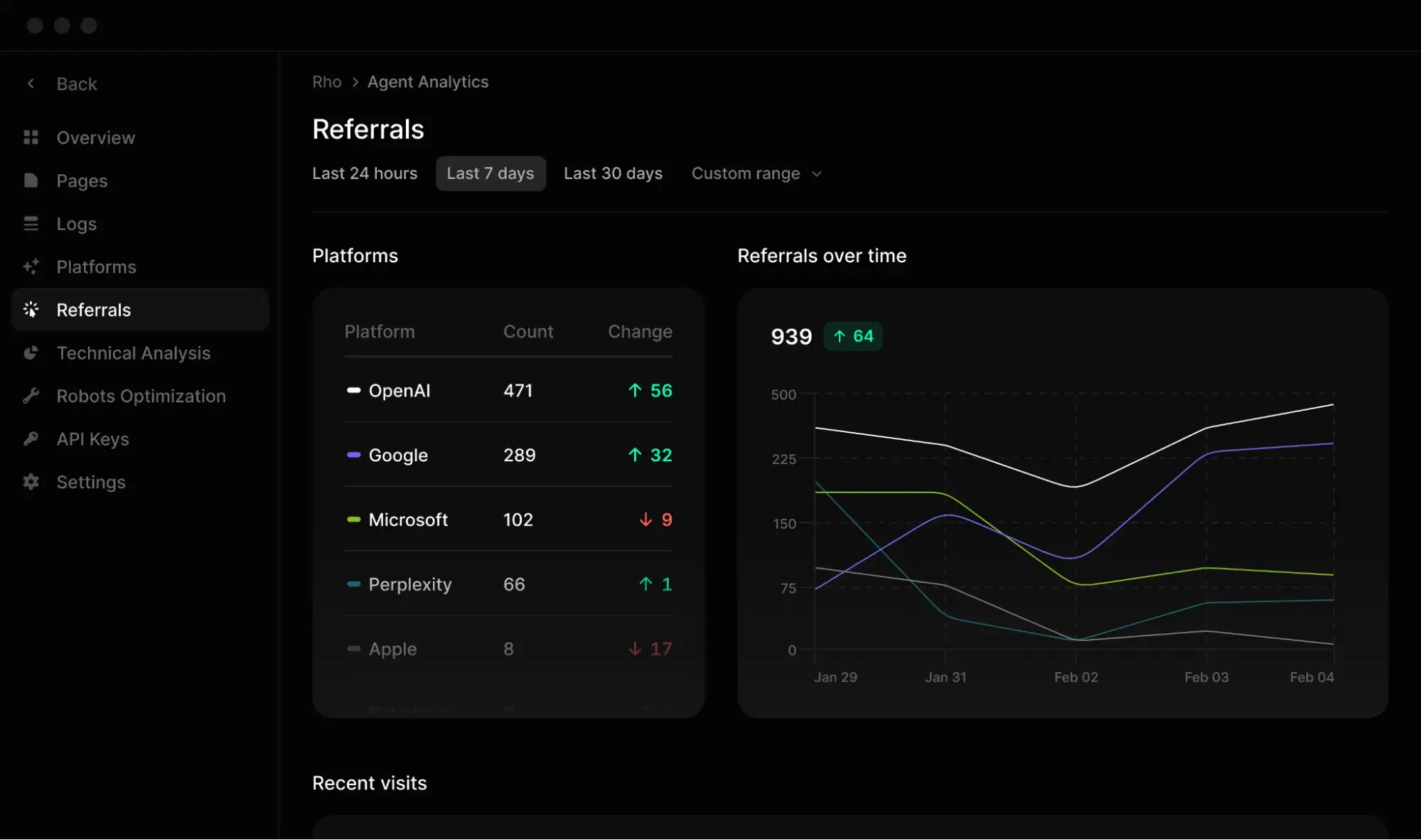
Compared to Bluefish AI, Profound takes a more comprehensive approach that puts visibility first. Profound supports Google AI Overviews, ChatGPT (including search), Perplexity, Claude, Gemini, Microsoft Copilot, Grok, DeepSeek and other new models.
Using front-end capture and prompt-level tracking, Profound enables marketers to analyze how answers appear across multiple search engines, compare citation order, and monitor competitor share of voice at scale. This makes it particularly powerful for teams running proactive, multi-engine AEO programs.
Who wins?
- Profound victories for brands that want the broadest possible engine coverage and future-proof monitoring across established and emerging AI systems.
- Bluefish AI wins for brands whose priority is monitoring effective platforms, with a strong focus on brand risk and representation control.
Reporting depth and competitive intelligence
Tracking AI visibility is only useful if it inspires action. Marketing leaders need more than just mention counts – they need context, competitive positioning, and insights into shaping AI narratives.
How Bluefish AI handles reporting and competitive intelligence
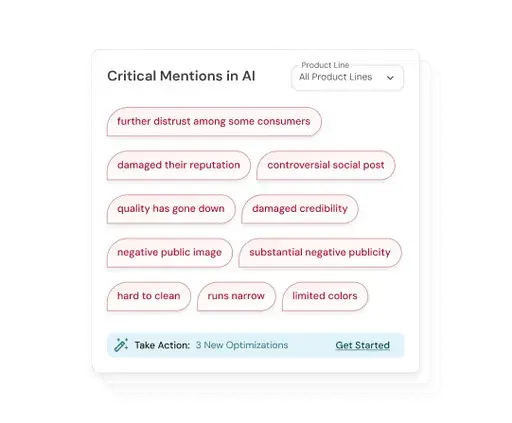
Bluefish AI focuses on brand safety monitoring and misinformation alertsThis occurs when a brand is misrepresented, associated with sensitive topics, or misquoted in AI responses. Bluefish values signal clarity:
- Where a brand appears.
- Whether the context is correct.
- Whether an intervention may be necessary.
This makes it particularly valuable for compliance-driven teams where narrative control outweighs aggressive optimization.
How Profound handles reporting and competitive intelligence
Profound places great emphasis on analytical depth. Profound specializes in AI visibility tracking and citation analysisThis allows teams to evaluate citation order, share of voice, prompt-level variations, and cross-engine positioning. With granular tracking, marketers can analyze:
- Which competitors are mentioned first?
- How messaging is shifting across different engines.
- Which requests trigger visibility gains or losses?
- How citation performance and AI trends change over time.
For teams that view AEO as a growth channel rather than a monitoring function, this depth supports structured experimentation and attribution.
Who wins?
- Profound victories for teams requiring comprehensive investigative reporting, citation analysis and competitive benchmarking.
- Bluefish AI wins for teams that prioritize brand accuracy, governance transparency, and rapid identification of reputational risks.
Integrations and workflow connectivity
For AEO to achieve measurable ROI, it cannot remain in a silo. Profound and Bluefish AI integrate with GA4, BI tools and CRM systems like HubSpot.
How Bluefish AI handles integrations and workflow connectivity
Bluefish AI supports API access and data exports, enabling teams to integrate AI monitoring insights into broader reporting environments. The focus is on governance workflows, alert routing and structured reporting for compliance and brand teams. For organizations that prioritize oversight, this ensures AI-related brand risks are quickly exposed to the right stakeholders.
How Profound handles integrations and workflow connectivity
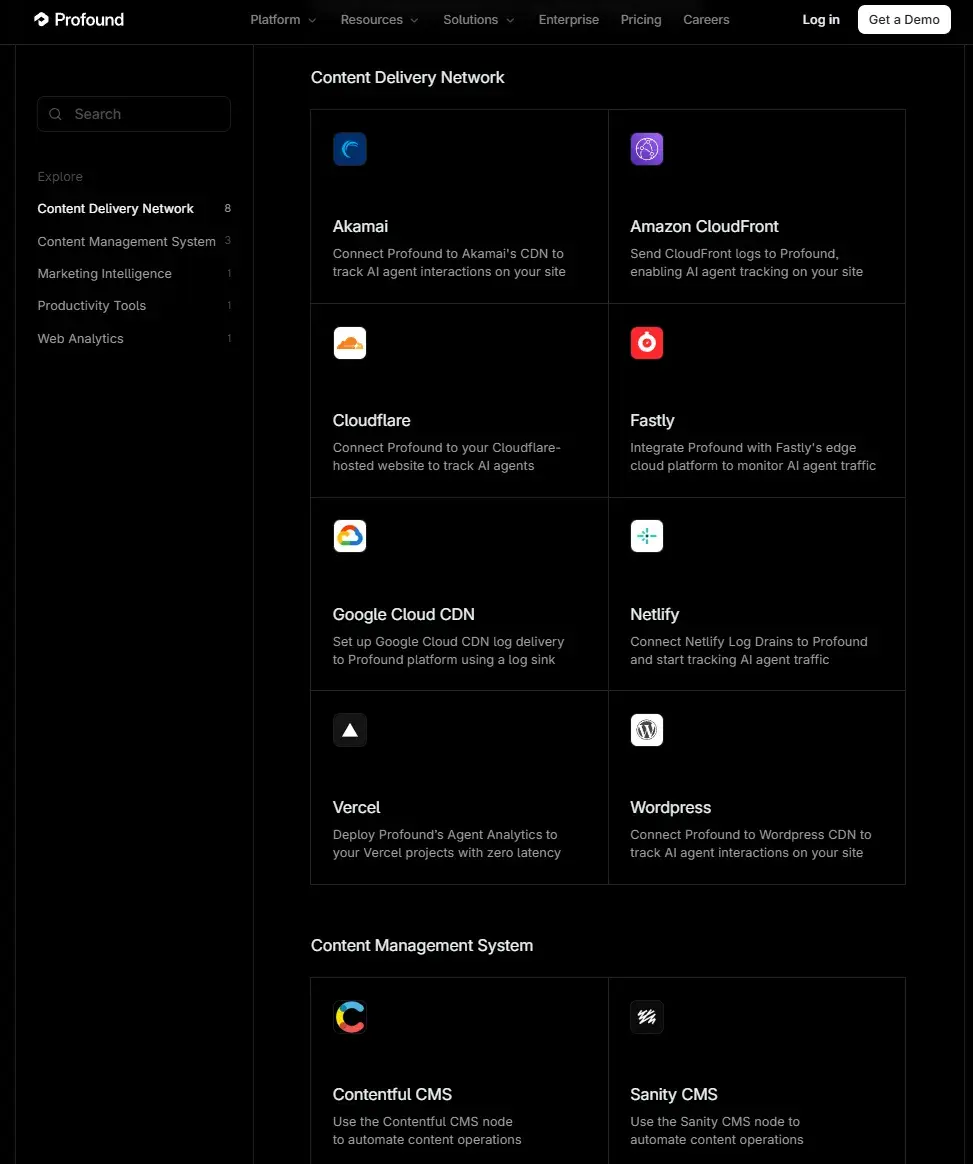
Profound has a comprehensive integration ecosystem designed to operationalize AEO insights across the marketing stack. Instead of limiting visibility data to standalone dashboards, the platform connects to content management systems (CMS), content delivery networks (CDNs), marketing intelligence tools, analytics systems and collaboration software. Profound ensures AI visibility data is actionable and not siled.
This allows teams to integrate AI search signals into:
- CRM reporting and pipeline mapping.
- Content strategy, planning and optimization cycles.
- BI dashboards and executive-level reporting.
- Marketing automation systems and multi-touch attribution models.
For growth-oriented teams, this structure makes it easier to directly link AI visibility to measurable business outcomes.
Who wins?
- Profound victories for growth-focused marketing teams that need AI visibility deeply embedded into CRM, analytics, content and attribution workflows. It is designed for operational integration, not just monitoring.
- Bluefish AI wins for organizations that prioritize structured reporting, governance and risk monitoring and do not require the same level of integrations.
Pricing structure, onboarding and scalability
When evaluating Profound vs. Bluefish AI for GEO, the cost of AI tools and scalability are often crucial. Budget constraints, internal resources, and long-term growth plans all influence which platform makes sense.
How Bluefish AI handles pricing, onboarding, and scalability
Bluefish offers no transparency into how it handles pricing, onboarding, or scalability. If teams are interested in learning more about Bluefish, they must do so Contact sales and speak to Bluefish AI directly.
How Profound handles pricing, onboarding and scalability
Profound is strongly focused on enterprise and growth-oriented marketing organizations. It offers enterprise-class security controls, compliance features, and structured onboarding processes to support large, distributed teams.
The implementation model is often aligned with enterprise procurement cycles, including stakeholder onboarding, governance setup, and technical integration planning. While this may increase ramp-up time compared to lighter GEO tools, it supports scalable deployment across global regions and business units.
Prices
With Profound, teams jump straight into paid packages. In my experience there is no free trial, but CTAs suggest you can try it for free.
Paid packages start at:
- Starter: $82.50/month
- Growth: $332.50/month
- Company: custom
Note: Profound’s starter package only includes ChatGPT.
Which should you choose AEO, Profound or Bluefish?
The right choice depends less on feature lists and more on an organization’s priorities. Are you optimizing for growth and attribution? Or protect brand integrity in AI-generated responses?
AEO platforms don’t create a strategy – they implement it. Here’s how to evaluate Profound AI vs. Bluefish AI for AEO by scenario.
Consider HubSpot AEO as an alternative to Profound vs. Bluefish AI for AEO.
If you’re evaluating Profound vs. Bluefish AI for AEO, this is worth considering HubSpot AEO as an alternative.
HubSpot AEO is an ongoing solution to measure and optimize AI visibility. It combines timely tracking, competitive intelligence, citation analysis, and prioritized recommendations to help teams move from monitoring to action. Key skills include:
- Prompt follow-up. HubSpot AEO suggests and tracks buyer prompts in ChatGPT, Gemini, and Perplexity, filtered by buyer’s journey stage, product relevance, and more. The tool suggests suggestions based on knowledge of your company, your competitors, and your industry, so teams don’t have to start from scratch.
- Competitive intelligence. The tool tracks brand mentions, share of voice, and sentiment across major response engines, allowing marketers to compare performance with competitors.
- Quote analysis. It shows which domains, content types, and specific pages drive AI mentions for your brand and your competitors, so teams know exactly what to create, update, or optimize.
- Prioritized recommendations. HubSpot AEPO transforms visibility data into concrete, actionable next steps. Each step includes a complete content description that explains what prompts triggered it, which content types dominate citations, and which URLs are most frequently cited.
- Coverage of the buyer’s trip. Prompt tracking can be filtered by the buyer’s journey stage, from early awareness to evaluation and decision-stage queries.
For Marketing Hub For Pro and Enterprise customers, recommendations are linked directly to HubSpot’s content and social tools, allowing teams to act on AEO insights without leaving the platform.
Perhaps most valuable is the optimization level. Instead of stopping at dashboards, HubSpot AEO displays prioritized recommendations that guide teams on how to improve – from creating new content to updating existing pages to contacting third-party sites – making AEO strategy more actionable and measurable.
Frequently asked questions about Profound vs. Bluefish AI for AEO
What is the main difference between Profound and Bluefish AI for response engine optimization?
Powered by proactive AI search visibility and optimization, Profound provides teams with comprehensive citation analysis, prompt-level tracking, and competitive benchmarking to improve share of voice across all AI engines.
In contrast, Bluefish AI values brand integrity and risk management. While it still offers transparency, its core value is to alert teams to misrepresentations, misinformation, and context that could harm their reputation.
What AI engines and platforms are Profound and Bluefish AI pursuing?
Profound’s coverage is broad and growth-oriented. It tracks major AI systems including Google AI Overviews, ChatGPT (including search-based variants), Perplexity, Gemini, Claude, Microsoft Copilot, Grok, and other emerging engines. The search engine listing is designed to reflect the current landscape of AI-powered search and response systems that influence buyer behavior and organic visibility.
Bluefish AI is also pursuing major generative platforms. The list includes widely used tools where misattribution or harmful contextual associations are most prominent.
Is Profound or Bluefish AI better for tracking multiple regions and languages?
Profound is generally better suited for multi-regional and multilingual AEO, especially when teams need consistent, comparable visibility data across all markets. Bluefish AI also supports multi-region monitoring, but its strength lies in contextual accuracy rather than comprehensive linguistic coverage.
How do the prices for Profound and Bluefish AI compare?
Bluefish AI does not publicly disclose pricing tiers. In contrast, Profound offers defined paid tiers and clearer entry points. Packages typically start at around $82.50/month for Starter, $332.50/month for Growth, with Enterprise pricing customized.
The bottom line: Profound vs. Bluefish AI for a modern AEO strategy
While AI-powered search is transforming discovery, the decision between Profound and Bluefish AI comes down to strategic intent. Profound is designed for proactive growth: comprehensive citation tracking, competitive intelligence, and integration into revenue workflows. Bluefish AI is designed for governance: brand safety monitoring, misinformation alerts, and risk control in high-risk industries.
If a marketing team’s goal is measurable AI visibility, attribution, and content optimization at scale, Profound is typically the better choice. If your priority is protecting brand integrity and managing reputational risk across all AI systems, Bluefish AI may be the smarter choice.
However, before investing in any of the platforms, I recommend starting with HubSpot’s AEO Grader. It provides a free benchmark of a brand’s current AI visibility, helping marketers understand where it stands before setting budget and internal resources. AEO Grader helps marketers benchmark AI visibility before choosing a platform, making it a practical first step in their AEO journey.
From my perspective, the biggest mistake teams make is purchasing an AEO tool before determining whether their strategy is defensive or growth-oriented. I’ve found that the clarity of this question makes the platform decision much easier and ensures the investment supports measurable results and not just another dashboard.