

You’ve set up your affiliate program, gotten some partners on board, and sales have started. Commissions have been paid here and there – and on the surface everything looks like it’s working.
But here’s the question most program owners keep asking themselves: After paying out those commissions, covering your tooling costs, and accounting for the hours you spend managing the whole thing, is there actually more money coming in than going out?
Because selling and making money are not always the same thing.
That’s what ROI – Return on Investment – helps you answer. For every dollar you invest in your affiliate program, how much do you actually get back?
In this article, you’ll learn how to calculate it, what numbers you need, and how to read your results so you know if your program really works – or just looks like it.
Why Most Affiliate Program Owners Don’t Really Know Their ROI
Ask most program owners about their affiliate program performance and they will point to clicks, conversions, and possibly overall sales. They rarely point out what the program actually costs them. And this is exactly where the problem begins.
Commissions are the obvious cost – you pay an affiliate a percentage every time they make a sale. But there’s a longer list that most people never add up:
- Your platform or plugin subscription – The tool you use to run the program is not free
- Administrative time – the hours you spend onboarding partners, reviewing performance, and processing payouts. Your time has value, even if it doesn’t appear on an invoice
- Creative assets – any banners, graphics or affiliate creatives you have created for affiliate use
None of these feel like big numbers on their own. But together, they quietly erode your return every month – and if you don’t count them, your ROI calculation will be wrong before you even start.
This is where changing your mindset matters: affiliate marketing is not free marketing. It’s performance-based marketing – meaning you only pay when a sale happens, but you pay anyway. Traditional advertising costs you upfront, with no guarantee of success. Affiliate marketing costs you according to the result. The timing is different, but the costs are real.
If you only track sales and commissions, you are not tracking ROI. They track activities. These are two very different things.
The five numbers you need before you can calculate anything
Before you do any calculation, you need five specific numbers. Some of these are already in your dashboard. Others require a quick estimate – but even a rough estimate is better than leaving it out entirely.
- Revenue generated by affiliates – This is the total value of sales that your affiliates have achieved in a certain period of time. You get it by multiplying the number of conversions – each completed purchase that an affiliate was responsible for – by your average order value, which is the typical amount a customer spends per transaction.
- Total commissions paid – Every dollar you actually paid to affiliates during the same period. Not forecast, not estimated – just actual payouts.
- Platform and tool costs – Whatever you pay to run the program infrastructure, your affiliate tracking software, or your plugin subscription. Small individual item, but it belongs in the calculation.
- Your time commitment – Take the hours you spend each month managing partners – onboarding, answering questions, reviewing performance, processing payouts – and multiply them by a rough hourly rate.
- Customer lifetime value of affiliate-referred customers – Lifetime value is the total amount a customer is likely to spend with you over time, not just on their first purchase. If affiliate-referred customers tend to come back and buy again, they’re worth more than the first sale suggests – and that significantly improves your ROI picture.
How to calculate the ROI of your affiliate program
Once you have your five numbers, the formula is simple:
ROI = (revenue from partners − total cost of the program) ÷ total cost of the program × 100
The result is a percentage that tells you how much you will get back for every dollar you deposit. This is what it looks like with real numbers.
Example 1: The program that works
| Affiliate-driven revenue | $8,000 |
| Total number of commissions paid | $1,600 |
| Platform costs | $300 |
| Time required (estimated) | $600 |
| Total cost of the program | $2,500 |
| ROI | 220% |
A 220% ROI means that for every dollar you spent running this program, you got $3.20 back. This is a healthy program worth continuing to invest in.
Example 2: The program that looks good but isn’t
| Affiliate-driven revenue | $4,000 |
| Total number of commissions paid | $2,200 |
| Platform costs | $300 |
| Time required (estimated) | $600 |
| Total cost of the program | $3,100 |
| ROI | 29% |
Sales are coming in. Convert affiliates. But after costs are deducted, you’ll barely break even – and a weak month will result in a loss. This program is not broken, but it is fragile. It needs attention before it becomes a real problem.
💡 Quick check: If your commissions alone are eating up more than your margin allows, more volume won’t fix the problem. More sales with a poor commission rate simply means more money flowing out faster.
What your results actually tell you
There is no one-size-fits-all ROI number that says your program is healthy. A 200% ROI looks very different for a company with high profit margins than for a company that sells physical products with low margins. As a rough guide:
- Subscriptions and SaaS: 300-600%+ is realistic. Customers pay monthly, so their long-term value justifies higher commission rates
- E-commerce: 200-400% is a solid range, with product margins doing most of the heavy lifting
- Digital products and online courses: 300-500%, depending on your commission structure and how well your affiliate target group fits your offer
If your ROI falls below these ranges, it doesn’t automatically mean your program is failing. But it does mean something needs attention before the bill gets worse.
Aside from the number itself, how you got there is just as important. Here you can find out what you should pay attention to.
Signs that your program needs attention
- High clicks, low conversions. There is a lot of traffic coming but very few sales. This usually means that the affiliate audience is not a good fit for your product – their followers are interested in the content, but they are not your customers. Check your affiliate click reports to spot this pattern early.
- Sales are concentrated in a subsidiary. When one partner is responsible for most of your results, you don’t really have a program, but rather a dependency. If that affiliate stops promoting you tomorrow, your numbers will collapse.
- Commission creep. These are individual tariffs that have been quietly negotiated over time and that no one has checked again. Small increases compound until your margins no longer make sense.
- Most of your partners have never made a single sale. If 80% of your squad is inactive, that’s not a recruiting gain – it’s dead weight. A healthy program relies on a small, active core of partners who actually promote your program
Signs that your program is in good shape
- Revenue constantly comes from multiple partners, not just one
- Affiliate referred customers who come back and buy again – strong customer loyalty means the right people are referred to you
I would rather see five affiliates each generating stable revenue than one superstar taking over the entire program. Concentration feels like success until it isn’t.
Here’s how to track all of this without a single spreadsheet
At this point you have the formula, the five numbers and a clear picture of what healthy looks like.
The final part is actually adding up those numbers—and if you’ve ever tried to do this manually, you know how quickly it turns into an afternoon of exporting data, creating formulas, and questioning whether the numbers even add up.
drift kings media is a WordPress plugin that allows you to run your own affiliate program – and it’s based on exactly the numbers talked about in this article.
This is what it looks like in practice:
Find your sales and commission figures in seconds

Instead of pulling sales reports from one location and commission records from another, drift kings media displays both in an affiliate reporting dashboard as soon as you log in. Your two biggest ROI inputs – revenue generated and commissions paid – are already in place.
You can see which affiliates actually earn their commission
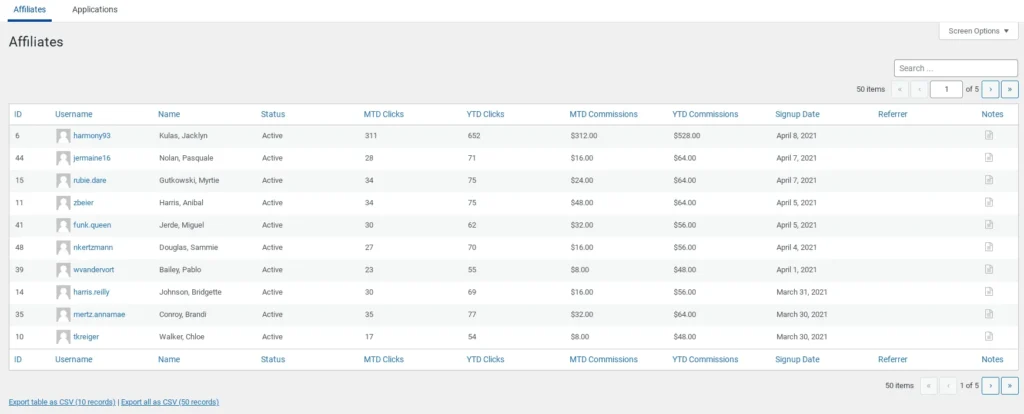
Instead of guessing who is successful, drift kings media shows you the clicks, conversions and income of each affiliate individually in the affiliate overview.
So if someone is sending a lot of traffic but isn’t generating sales, you’ll see it immediately instead of finding out three months later.
Your payout numbers are exact and not estimated
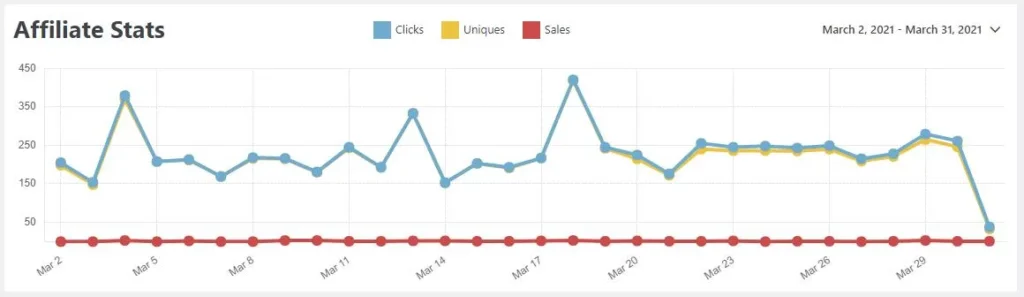
The affiliate statistics and payout report shows you the exact amount paid out to each affiliate in a time period you choose. No reconstructing from bank records or memory – just the actual number, ready to plug into your formula.
You know your sales figures are trustworthy
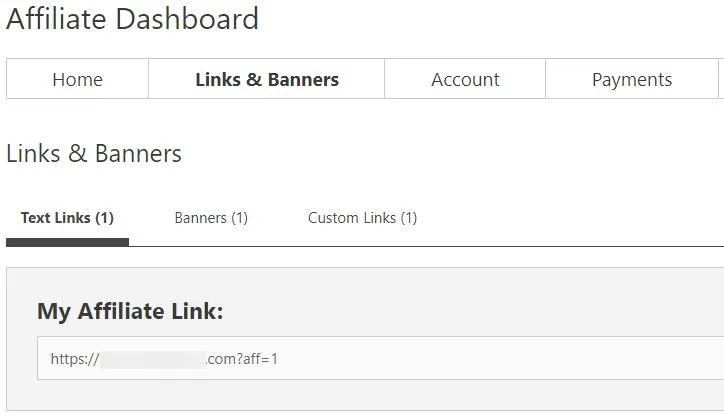
This is more important than most people realize. If a sale is credited to the wrong partner – or not at all – your ROI calculation will be wrong from the start. drift kings media’s referral tracking links each conversion to the affiliate that triggered it, so the numbers you’re working with are clean.
When you add these four points together, your ROI calculation will no longer be a quarterly headache, but rather something you can do in twenty minutes.
If you’re not using drift kings media yet, what are you waiting for?

Either your program makes money or it doesn’t – now you can find out
You now have the formula, the five inputs, the benchmarks, and a clear way to read the meaning of your results. The only thing left is to actually run the numbers in your own program – you might be surprised at what you find.
Which metric do you monitor most closely in your partner program? Write it in the comments – let’s talk about it.
And if this helped you think differently about your program, share it with someone who still runs their program based on gut feeling.
Affiliate Link Disclosure