
Do you have a website or are you thinking about creating one? And do you want to attract more people to your company? If the answer to these questions is yes, there is no doubt: SEO should be part of your marketing efforts. It’s a great way to build your brand and attract people to your website. However, to do this you need to start with the basics. In this post, we’ll explain what SEO is and how you can get started!
Key insights
- SEO stands for search engine optimization and aims to improve website visibility and attract organic traffic.
- Search engines use a process of crawling, indexing and ranking to show users relevant results.
- SEO focuses on technical improvements, content optimization, and brand building to meet audience intent and support business goals.
- There are different types of SEO, including eCommerce, local, and video SEO, each tailored to specific needs.
- Effective SEO requires ongoing efforts and strategies that include technical SEO as well as on-page and off-page practices.
What is SEO?
The acronym SEO stands for Search Engine Optimization. Let’s start with a definition from one of our top SEO experts at Yoast:
SEO is both the art and science of improving a website and the pages within it so that they are as visible as possible when people search for a relevant topic on a search platform. SEO covers many areas, from technical aspects, including optimizing the performance and structure of a website, to strengthening brand authority by providing great content and aligning it with the person’s search intent.
Alex Moss – Lead SEO at Yoast
SEO is the process of improving a website and its content so that it is discovered, understood and trusted when people search for relevant topics. While this was once focused on traditional search engines like Google and Bing, today SEO also helps ensure content appears in AI-powered search experiences, chatbots, and other discovery platforms. SEO combines technical improvements, content optimization, and brand building to increase visibility, attract the right audience, and support business goals.
How SEO works
How does Google work? For search engines like Google, the process consists of crawling, indexing and ranking. The crawler is an online bot that crawls the web to collect all available pages and store them in a huge database called an index. This index is continually updated with new pages or updated versions of existing pages. When someone searches online, the search engine pulls up the index and uses complex algorithms to determine which pages are relevant to display. This determines the ranking of results shown to the online searcher.
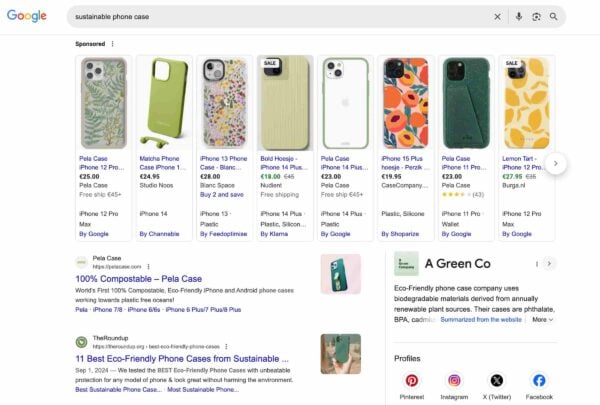
For example, if I search for the term “sustainable phone case,” Google will display these results. Based on my search term and the intent behind it, Google considers these results to be the best found in its index.
Organic vs. paid search
SEO focuses on attracting more organic traffic to your website, which is traffic that comes to your website from unpaid search results. But as you can see in the image above, search results also show ads and sponsored results. Often at the top of the page. To make a clear distinction, some acronyms are used that are valuable to know:
- SEM: Search engine marketing refers to all marketing efforts that aim to appear in search results, both through ads and organic results.
- SEO: SEO is all about improving a website so that it appears when people search for a relevant topic on any search platform.
- SEA: Search engine advertising is the act of paying for ads that appear in search results for relevant keywords.
- PPC: Pay per click. The advertising model used in SEA, where the advertiser pays a fee for each click on one of their ads.
These paid results may allow you to appear as a top result for a search term, but they cost you money every time a user clicks on your website. When comparing SEO and PPC, both have their advantages and disadvantages. But mostly they complement each other well.
SEO vs GEO
With the constant changes in search engine optimization and the rise of AI-powered search, there are a few other acronyms you may have come across. There is a lot of talk about GEO (Generative Engine Optimization) online. This term focuses on optimization to improve the visibility of the answers generated by AI tools. We want to emphasize that this is not a replacement for SEO. The Yoast perspective is that the acronym SEO is still enough. The basics are the same, we just need to be aware of how they apply to AI and other platforms like social media.
Why SEO is important for website owners
Huge search volume
The reason so many (large) companies invest heavily in SEO is the huge impact it can have when done right. To give you an idea, Google, the most used search engine, has gotten around 8.3 billion searches per day in 2024. A number that has only (and significantly) increased since 1998. So if you have a website, you want to make sure it shows up on Google and other search platforms.
SEO is intent-driven
Online search is very intent-driven. Unlike other marketing channels like social media where people randomly scroll over your brand and content. This means you’re interrupting a user’s experience to grab their attention, making it harder to keep them interested. Appearing in your search results corresponds to an existing demand – your customers are actively looking for information, products or solutions. This makes SEO a powerful inbound marketing strategy where users come to you rather than the other way around. Because searchers already have an intent, they are more likely to convert, making SEO an essential tool for attracting high-quality leads.
Competitive advantage
Creating a website and leaving it at that is not enough. With new websites popping up everywhere, it’s becoming increasingly difficult to attract attention and maintain customer loyalty. SEO can give you higher online visibility, a stronger brand, more authority in your field, more contact moments with your audience, and higher quality traffic to your website (and/or offline location). All of this leads to higher brand loyalty and more sales.
It’s not just about clicks
Today, SEO is about more than just generating clicks from search results. Your content can also be quoted in AI-generated answers, referenced in AI overviews, or discovered via other platforms. Even if users don’t visit your website right away, appearing as a trusted source can increase your company’s brand awareness, credibility, and future demand.
Types of SEO
Although the basic principles remain the same, there are a few different types of SEO worth mentioning. They may not all apply to your situation, but it is beneficial to look into the ones that do:
- Ecommerce SEO: SEO specifically focuses on driving more visibility and organic traffic for online stores. With the aim of acquiring more sales.
- Local SEO: Local SEO is the optimization of your website for a specific local area. This is to ensure that you are easily found by a local audience (both online and offline).
- Video SEO: The process of optimizing videos and video pages to appear in search results for relevant keywords. Whether it’s Google search results or search results on other platforms like YouTube and social media.
- News SEO: Most relevant to news publishers, news SEO focuses on getting content displayed as the top result in Google News and other news-specific areas of search results.
The 3 pillars of SEO
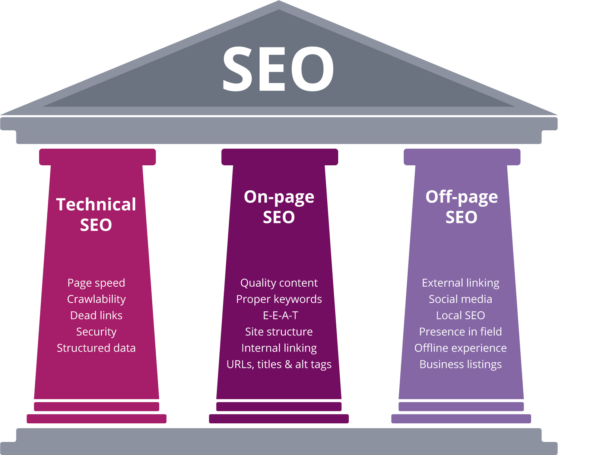
SEO is about optimizing your website to increase your online visibility. But what do we mean by that? What exactly should you optimize? Well, there’s a lot you can do and it can be broken down into three main areas.
Technical SEO
First of all, it is important to focus on the technical part of SEO. Technical SEO is all about improving the technical aspects of a website to improve user experience and ensure search engines understand your pages. Aspects that fall under technical SEO are:
- Loading time of your pages
- Make the right parts of your website crawlable by search engines
- The number of dead links on your website
- Security
- Use of structured data
Search engines value these aspects because they want to present their users with websites that offer a good user experience. A page that takes forever to load, no longer exists, or is not secure provides a terrible user experience and will not make users happy. Aspects such as crawlability and structured data also help search engines understand what your pages are about. This helps search engines understand your relevance and rank your pages higher.
On-page SEO
Although technical SEO is also part of on-page SEO, it can be considered an “under the hood” optimization to improve your pages. The other efforts that can be categorized as on-page SEO are aimed at optimizing the content of a page. Think about:
- The quality of your content
- Using the right keywords
- Show EEAT in your content
- Site structure
- Internal linking
- Thoughtful URLs, titles and alt tags
On-page SEO is primarily about content SEO and leveraging the elements surrounding that content to improve your discoverability for relevant terms.
Off-page SEO
Unlike on-page SEO, off-page SEO includes everything you do for SEO outside of page optimization. For example, external link building, social media and local SEO (off-site). The focus is on expanding your reach and building your brand to attract more traffic. An important part is link building, where other relevant websites link to your content. This can really help increase your visibility and improve your reputation as an authority – think of links as tokens of trust from other sites
But you can do much more. For example, speaking at events, giving interviews and blogging for other websites. These activities give you the opportunity to demonstrate your expertise and reach new people. If you own a local business these may not be as relevant. In this case, it’s important that you focus on the experience people have with your store. Make sure customers leave happy and that this experience is positive both offline and online. This also extends to social media. Even if your activities there don’t have a direct impact on the ranking, it’s worth staying in touch with your audience there too. And offer a similar (positive) experience through these platforms too.
One final aspect to remember is your business listings. Make sure these are accurate on your Google Business Profile and other websites relevant to your business.
SEO ranking factors
To determine which results are displayed and in what order, search engines use ranking factors. Ranking factors or ranking signals are characteristics of a page that search engines use to determine how relevant that page is to a specific search query. Although the exact list of ranking factors and their importance are a bit mysterious and change from time to time, we have a pretty good idea of the most important ones:
- The quality, relevance and usability of your content
- External and internal links
- The technical aspects of your website (e.g. security)
- User experience on your website (site speed, ease of navigation, mobile parity)
- Your brand’s entire online presence
In addition to these top ranking factors, there are many others (both well-known and unknown). But to get a head start with SEO, it makes sense to focus on these aspects first. If you want to quickly check your site’s performance, you can rely on our SEO Checker tool to help you identify problems and make recommendations for improvements.
SEO now compared to the early days: a brief history
SEO in the 90s
Although websites have been around for a while, people started optimizing their websites for search engines as early as the mid-1990s. As you can imagine, SEO was a lot easier back then. The algorithms used by search engines were far less sophisticated and relied on ranking factors such as keyword density to determine a page’s relevance. The “trick” back then was to make sure the keyword was used frequently enough on your page and in your meta tags.
Search engines are evolving
Of course, the companies behind search engines quickly recognized the problems with this approach. Showing the results that use the keyword the most isn’t always the best experience for your users. Therefore, they needed to find a way to better handle the ranking of potential outcomes. Search engines like Google have started to find ways to become smarter and rely less on “tricks” and static ranking factors. This led to a series of algorithm updates, each resulting in a smarter Google that was better able to understand a page’s relevance.
With a team working non-stop to improve Google’s search engine, the focus shifted from factors like keyword density to user experience and quality content. These algorithm updates are still a staple in the SEO space, with Google releasing a new one (or several) every year. It can be assumed that this is a continuous process in which search engines adapt to current search behavior and adjust their algorithms to continue showing users the best results for their search query.
SEO in 2026
Where does this leave us in 2026? As mentioned earlier, search engines continue to work on their algorithms to improve user experience. The focus of SEO in 2026 continues to be on quality content and technical factors such as site speed, security and mobile parity. However, one important development that we cannot ignore is the increasing prevalence of SEO. It is no longer limited to traditional search engine results pages. People now also receive their information via AI assistants, AI-generated search results, social platforms and video platforms.
The fundamentals of SEO have not changed. That’s why we continue to use the term SEO. The channels are expanding, but the basic principles remain the same. More and more people are using AI tools for their online searches, and search engines are also investing in providing AI-driven search experiences. An example of this is Google AI Overviews, where Google uses AI to merge and combine information about a search query from different resources. This is then presented in an overview in the hope that the specific question asked will be answered directly.
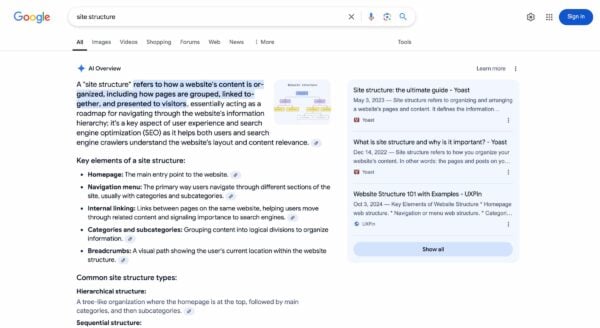
One result of this is zero-click searches, where search engines or AI tools display the full answer to a search query in their results. This may result in fewer clicks to your site, but it’s still worth being the site that provides this answer. In fact, this is a good example of where SEO is heading. Shift your focus from “just clicks” and staying in a specific spot in search results to building a strong brand and visibility across multiple platforms.

Rankings are still important, but they are no longer the end goal. They are an indicator of visibility and not a guarantee of impact. As search shifts from ranking pages to selecting sources, rankings should be interpreted alongside presence, citation, and narrative accuracy.
Carolyn Shelby – Lead SEO at Yoast
Set SEO goals
Previously, SEO experts closely monitored ranking positions, clicks, website traffic, and statistics like bounce rates. Of course, all of this data is still relevant, but there has been a shift in what goals to focus on. Search behavior has changed and search engines and other online tools display your content in many different ways. So it’s no longer just a numbers game. You need to focus on the overall perception of your brand and being present in the right places.
Set SEO goals around engagement, brand awareness, user experience on your site, user satisfaction, and how all of this can be linked to sales or other actions you want your audience to take. This can be more difficult than just looking at your daily rankings, but it will give you a better idea of the success of your SEO strategy and how you are being perceived. Through online tools and your audience. The action plan in our 2026 Yoast Perspective report will help you shift your metrics from traffic to influence.
How to learn SEO and get started
Although it consists of many different aspects, it is possible to tackle (many) SEOs yourself. Let’s look at how you can achieve this and what resources can get you started.
Start with the basics
Before you start creating content, it’s important to get your technical SEO in order. If you understand redirects, page speed optimization, crawlability, security, and structured data, make these your first priority. If not, get help from your website builder or hire someone with technical SEO experience. Once that’s done, you can start looking at the site structure and the content of your pages.
Keyword research allows you to create content that fits your business and attracts people to your website. You’ll also get lots of input on topics you can write about. With the increase in AI-generated content, it is even more important to create original content that reflects your insights and expertise. This way, you can create an SEO strategy and plan to continue working on it throughout the year. Because SEO is never finished. That’s why it’s important to create a realistic plan and stick to it (or your team). This may feel like a big effort, but remember that SEO not only brings more traffic to your website, but also helps build your brand and increase user loyalty in the long term.
How we can help you
At Yoast, we want to make SEO accessible to everyone. And we want to help you do it yourself. That’s why we offer a free SEO plugin and a premium SEO plugin for WordPress sites so you can start improving your website without much effort. Our free plugin has features like SEO and readability analysis that give you instant feedback on your content. It also handles parts of the technical SEO for you. Our premium plugin gives you access to a few more features like AI-powered features, a redirect tool, and the ability to add multiple keywords per page. This makes working on SEO even easier. There is also a Yoast SEO app for Shopify that offers many of the same features but focuses more on SEO for online stores.
We also offer a variety of SEO courses in our Yoast SEO Academy, where you’ll find 5 free courses to get you started. For example, the SEO beginners course, the WordPress beginners course and a course on structured data. If you are a Yoast SEO Premium user, you will get access to all 16 courses there. This will really help you dive into the different aspects of SEO and how to approach them.
Finally, we have an SEO blog with numerous blog posts on SEO basics, more advanced SEO, new developments and related topics. All this to ensure that you have all the tools you need to successfully work on SEO yourself!
Read more: The Ultimate Guide to WordPress SEO »
