

Imagine a web where a machine fills out your lead forms, buys your products, and negotiates with your backend. While many SEOs are currently arguing about whether to block AI search bots, whether we should call ourselves SEOs or GEOS, or whether we should optimize to get featured in ChatGPT, the reality of the web goes far beyond simple crawlers. With the new WebMCP and Google Agent bot from Google, the Agentic Web is already here.

The web becomes an agent
The web as we know it (where people click on links and scroll pages) is radically disappearing. What it replaces is the Agentic Web.
This week Google announced a new user agent only for agents. When an agent using Google infrastructure crawls your website (e.g Project Mariner), this new tag is used.
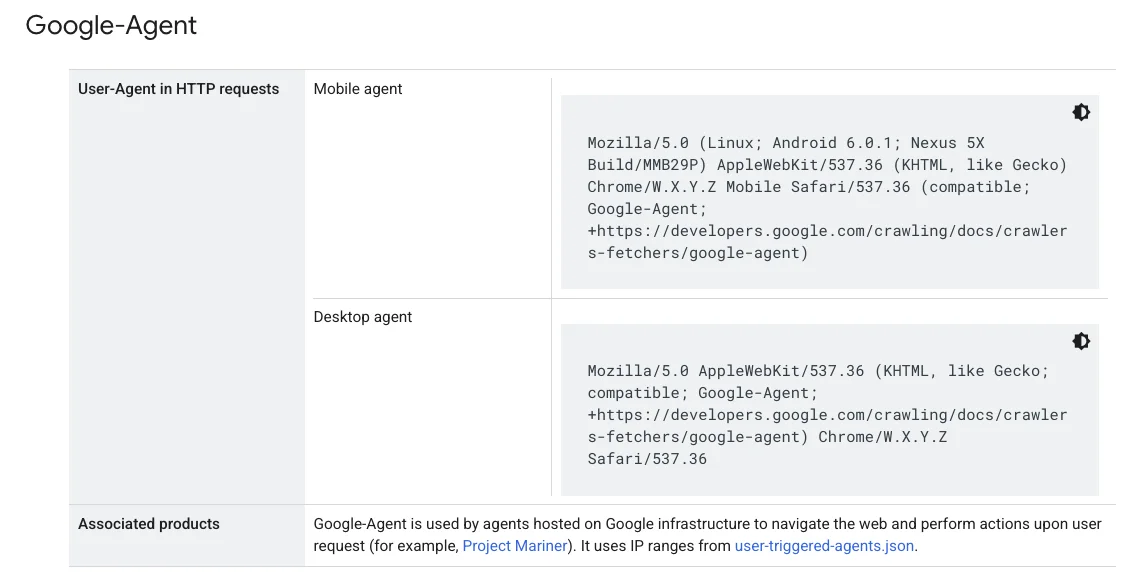
This is just the beginning. Agents can do much more than just surf the Internet like a human.
Liz Reid describes a web where agents do much of the surfing
In a recent interview, search director Liz Reid noted that she believes people still want to hear from others, but said: “I think that probably means there’s a world where lots of agents talk to each other.”
Outlines of Google’s latest blog post multiple AI protocols we all need to understand immediately:
| protocol | What it stands for | The business impact |
|---|---|---|
| MCP | Model context log | Allows agents to securely access your backend data. |
| A2A | Agent2Agent | Enables bot-to-bot communication and transactions. |
| UCP | Universal trading protocol | Allows a machine to buy your product directly from the SERPs. |
| A2UI | Agent-to-UI | Automatically creates new visual layouts for users. |
| AG UI | Agent user interaction | A middleware for streaming real-time AI data. |
I had a great conversation with Member of the search bar Liz Micik talks about it:
WebMCP allows agents to use your website natively
Standard browser agents are slow because they treat pixels like people. In the agent web, machines communicate directly with the tools and functions available on our website.
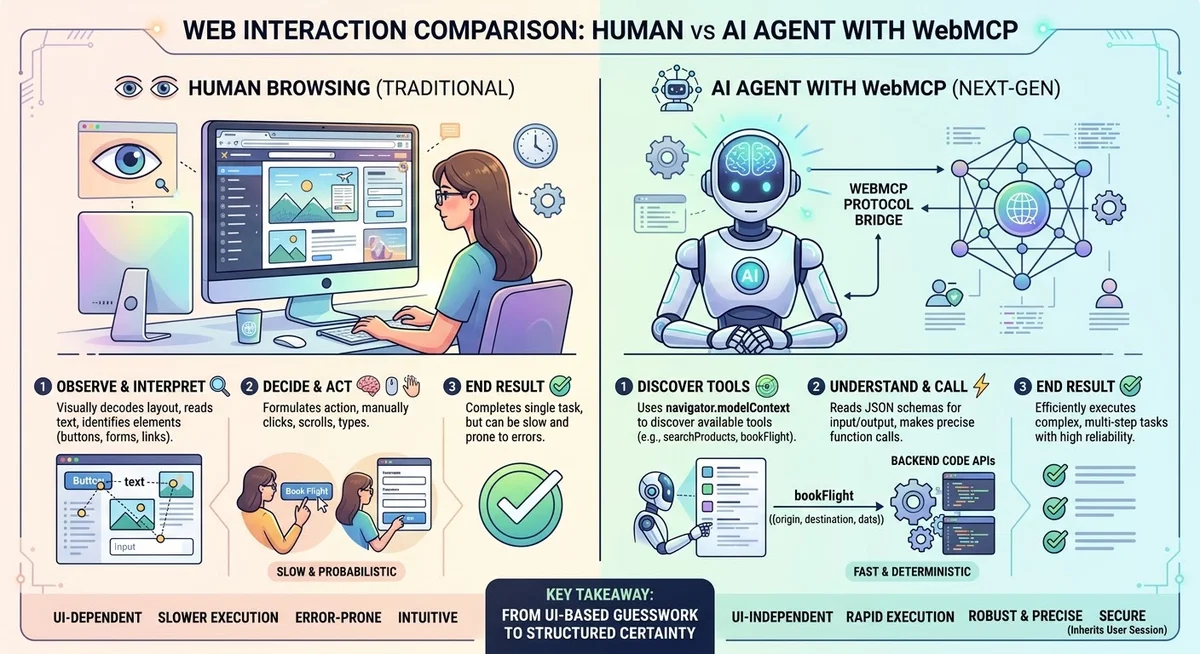
(Yes, it’s a nano banana image. 😛)
The improvement here is WebMCP. I think every SEO should pay close attention to this topic. With WebMCP, agents can natively leverage your website’s functionality in real time.
What does that look like?
The obvious use case is an agent automatically filling out lead forms perfectly. But I think we’ll see much more interesting use cases when we release our own agents. Let’s say I created agents for SEO. (I have! I just haven’t shared them with anyone yet.) I could perhaps share this with you via a SaaS model – where you pay a monthly fee for access. Or I think it’s most likely that your agent can access my agents via WebMCP. My agents will negotiate prices with your agents and may even help each other improve.
Search becomes AI search
Nick Fox from Google recently specified“Search becomes AI search and the Gemini app is your personal assistant.” He also said that Google is increasingly viewing AI Mode and AI Overviews as one and the same.
I keep looking back at it NYT article from three years ago.

They portrayed it as Google panicking over ChatGPT. However, there is no doubt in my mind that Google had much bigger things in mind. The Agent Web is not an afterthought! It has been in planning for many years.
I personally believe that those of us who create content have given it to Google to train AI from 1998 to today. In return we received human traffic and advertising revenue. I think that partnership in its traditional form no longer exists.
Why this is the most exciting time for SEO
This transition from a human-centric web to an agent-centric web may sound daunting if you rely solely on traditional keyword rankings. In reality, it is the greatest opportunity we have seen since the invention of the search engine itself. WebMCP and UCP mean we no longer just optimize for clicks; We optimize for direct action, frictionless commerce and automated lead generation. The developers who understand how these agents interact with backend systems will achieve levels of efficiency and reach that human browsing could never achieve. The partnership between creators and Google has definitely changed, but the future of what we can build on top of this agent web is incredibly bright.
My advice
It’s hard to know how to act right now because no one, not even Google, knows exactly how the agent network will evolve. I would recommend the following:
- Get involved WebMCP and understand how it works.
- When you do eCommerce, learn everything you can UCP.
- Start learning Vibe Code using tools like Claude Code, Google’s AI Studio, or my favorite, Antigravity. (If you’re a member of my paid community, I’ve just published a complete guide on how to use Antigravity Learning Center.)
- Instead of getting distracted by media and social media, focus on the exciting things you can do with AI! No one knows what awaits us in the future, but I am confident that those who get involved and learn how to use AI for good will achieve great success.
If you liked this, you’ll love my newsletter:
Or, Join us in the search bar for the latest news on search and AI.