
One morning I spent three hours trying to figure out why my client’s WooCommerce store wasn’t making more money.
Traffic was steady. The conversions looked good. But the average order value? Apartment.
Customers continued to buy only one product – even when it made more sense to buy related items together.
So I tested something simple: product bundles.
Within a few weeks, their average order value increased by 23%.
No price changes. No redesign. Simply smarter product grouping.
Then it clicked. Most shops don’t have a traffic problem. You have one Packaging Problem.
The hard part isn’t the strategy. It’s all about choosing the right bundling plugin without wasting hours testing the wrong ones.
I’ve already done that part.
In this guide, I’ll show you the WooCommerce bundling plugins that I’ve personally tested on real stores, what actually works, and where each one falls short.
Key insights
- I’ll show you how you can use product bundles to increase your average order value without feeling forced with customers
- I mention plugins with free versions so you can test them before paying
- Show which plugin works best for simple bundles versus complex, customizable kits
- I tested each plugin’s setup process, discount flexibility, and support quality
- I explain when to bundle and when to let customers create their own combinations
This is how I test WooCommerce bundle plugins
🔍 Click here to see my testing methodology
This is exactly how I rate bundle plugins:
- Easy setup: Time to build a basic package from scratch, learning curve for the administrator, required configuration steps
- Discount flexibility: Can I set percentage or fixed discounts? Are the price calculations working correctly?
- Warehouse management: How does the plugin handle bundled item inventory? Does it prevent overselling?
- Customer experience: Does the bundle interface load quickly? Can customers customize items? Is the shopping cart smooth?
- Support quality: How responsive is the developer? Are common problems documented?
Tools I use:
- WordPress.org reviews to identify pattern complaints
- WooCommerce test shop with over 20 products
- Troubleshoot WordPress plugins to identify conflicts
- Browser DevTools to check page load performance
Why trust IsItWP?
At IsItWP, we’ve been the go-to source for the WordPress community since 2009, helping over 2 million users choose better plugins and tools.
Unlike review sites that never actually use the products, we maintain active accounts, run real customer sites, and offer ongoing WordPress advice.
Every plugin here has been tested in a live environment and not just reviewed on marketing sites.
The best WooCommerce bundle plugins in comparison
By creating product bundles, you can increase sales per customer without adding inventory. The right plugin manages prices, discounts and inventory management automatically.
This means your customers see clear added value and you avoid the hassle of manual calculations. This is especially powerful for stores that use WooCommerce sales strategies that focus on upselling and cross-selling.
Here are the six best options compared:
Additionally, you can use the table of contents below to jump to the exact WooCommerce product bundling plugin you want to read.
With that out of the way, let’s dive in.
1. WPC product packages for WooCommerce ⭐⭐⭐⭐⭐
Ideal for: Shop owners who want a lightweight, feature-rich bundle plugin with a free version
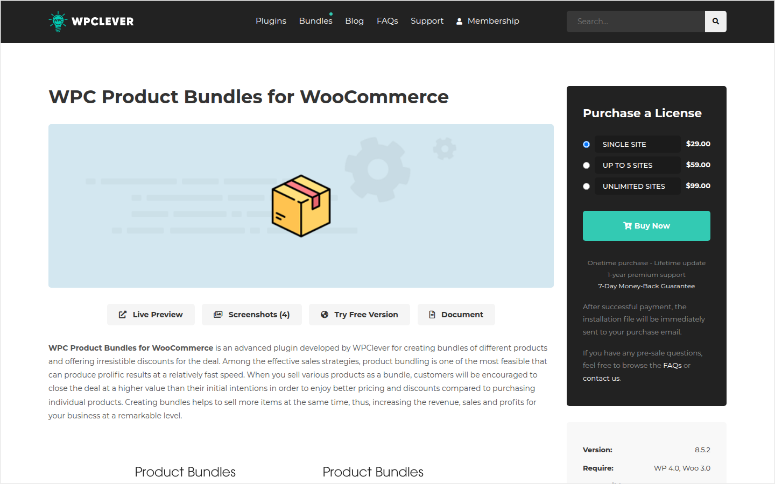
When I set it up WPC product packages for WooCommerceWhat struck me immediately was how quickly the interface loads.
Drag-and-drop product ordering, percentage or fixed discounts, and automatically calculated prices are seamless. The free version is not crippled. You get the most important bundling features.
The premium version unlocks variable product support and some additional customization options, but the free version is really functional for most stores.
Why are WPC Product Bundles one of the best WooCommerce bundle plugins?
WPC has been downloaded more than 30,000 times and maintains a solid 4.4/5 rating on WordPress.org, indicating consistent quality.
What impressed me most: WPClever regularly releases updates. I checked their changelog. New compatibility updates with WooCommerce versions occur every one to two months.
One point of friction I noticed: the plugin can feel feature-heavy when all you need is simple bundling.
There are many settings to sift through. If you’re new to WooCommerce, you might have to spend 20 minutes reading the docs to understand which switch does what.
My experience with WPC product packages
I tested this in a test store with a sporting goods catalog. I put together a “starter running package” (shoes + socks + water bottle) in about 5 minutes.
The interface is really intuitive: add products, set quantities, select a discount type (percentage or fixed amount) and you’re done. The price was calculated automatically because I changed the discount.
The warehouse management worked smoothly. When I edited the inventory of the bundled items, the bundle status updated correctly.
A test: I manually set the bundle inventory to zero. The “Add to Cart” button was immediately disabled. No overselling possible. This is especially important if you run a business with multiple product types.
🟢► Advantages
- Drag-and-drop bundling: Rearranging products takes seconds, no code required.
- The free version is really useful: Percentage and fixed discounts, quantity control, everything included.
- Fast loading times: Admin pages and frontend bundle ads respond instantly.
- Responsive Support: The WPClever team responds to most issues within 24 hours.
- Regular Updates: New WooCommerce compatibility builds are introduced monthly.
- Variable product support (Premium): If you need variations in bundles, the upgrade is affordable.
🔴► Disadvantages
- Settings can be overwhelming for beginners: 30+ toggles in the settings panel.
- No extended reporting: Without a third-party analytics plugin, you won’t be able to see which packages sold the most this month.
My verdict: WPC product bundles are overall the best choice if you want a plugin that does one thing really well without being bloaty. The free version is powerful enough for most stores and support is very responsive. Only upgrade to Premium if you need variable product bundling.
Prices: Free plugin available | Pro starts at $29.00 for a single site premium license
👉 Start here with WPC product packages
2. Product packages for WooCommerce ⭐⭐⭐⭐⭐
Ideal for: Stores that need the most flexible, official solution with comprehensive WooCommerce integrations
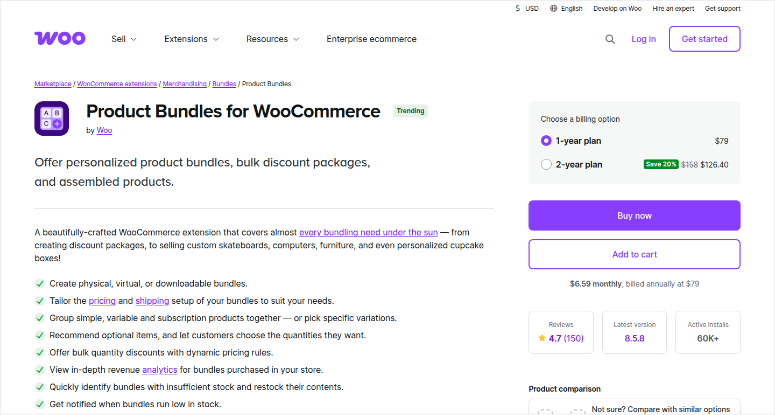
This is the official Woo extension developed and maintained by Automattic, the company behind WooCommerce.
This family tree is important. If you use an official extension, know that updates won’t break compatibility because the same team that develops WooCommerce also creates this plugin.
Why Product Bundles for WooCommerce is one of the best WooCommerce bundle plugins?
What separates Product packages for WooCommerce from the crowd is flexibility. You can bundle simple products, variable products, and even subscription products.
You can offer quantity-based discounts, set inventory limits per package, and configure which items are required and which are optional.
I tested this using a scenario where a customer could create a custom package with optional add-ons. It mastered logic perfectly.
The reviews tend towards 5 stars. Store owners consistently mention that support helps with edge cases like integrating bundles into their custom checkout flow.
The downside: This level of flexibility comes with a learning curve. Setup takes longer than lighter plugins.
My experience with product packages for WooCommerce
I set up the product type “Product Bundle” and immediately noticed that the admin felt more integrated with WooCommerce’s native product editor.
No separate settings panel, everything is in the standard product editing screen. This is an elegant design.
I created a package with three items: a variable product (t-shirt with size/color options), a basic product, and a subscription product. The package price is automatically calculated based on the customer’s selection.
When I checked out, the cart clearly displayed each item without any confusion about what they were purchasing.
A moment of friction: I had to dig into the documentation to understand why my custom discount formula wasn’t being applied.
It turned out that I had to configure the discount in a specific order. The documents covered it, but it had to be read.
🟢► Advantages
- Official Woo extension: Updates are guaranteed to work with WooCommerce core.
- Supports subscriptions in packages: Unique among the tested plugins.
- Deep report integration: Bundles report accurately in WooCommerce analytics.
- Flexible pricing logic: Conditional discounts, quantity-based rules and more.
- Enterprise-level support: Woo’s support team is responsive and knowledgeable.
- Warehouse management is bulletproof: Bundle inventory tied directly to component items.
🔴► Disadvantages
- Steeper learning curve: The configuration options are extensive; not beginner friendly.
- No free version: High price for the entrance fee.
- Setup takes longer: For a complex package you can expect more than 30 minutes.
My verdict: If you run a larger store or sell subscription products bundled with physical items, this is your plugin.
Official status and comprehensive WooCommerce integration mean you’re building on a rock-solid foundation. The setup effort is worth it for medium and large stores.
Prices: No free version | Pro starts at $79/year (single site)
👉 Get started with product bundles for WooCommerce here
3. YITH WooCommerce Product Bundles ⭐⭐⭐⭐
Ideal for: Beginners who want easy bundling with discount options (free tier available)
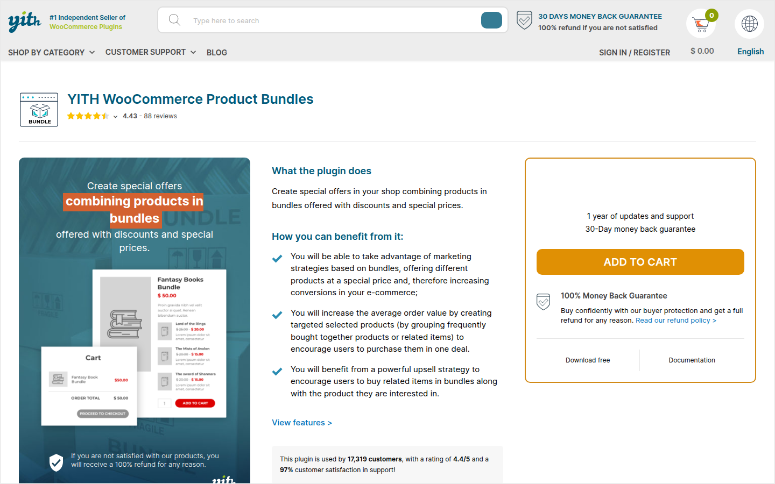
YITH has been around since 2015 and is present in WordPress with dozens of plugins.
This means they know what WordPress and WooCommerce users need. Their YITH WooCommerce product packages are intentionally simple. The free version offers basic bundling and discount percentages.
If you’re new to WooCommerce and don’t need advanced features, this is a good place to start.
Why is YITH WooCommerce Product Bundles one of the best WooCommerce bundle plugins?
The free version is really useful. I created a package, set a 20% discount, and published it in under 5 minutes. No complex configuration.
The plugin handles simple scenarios very well: bundle 3 products, give a discount and customers buy. That’s it.
The disadvantage: The main problem lies in the responsiveness of the support. Several reviewers mentioned long wait times for help.
My experience with YITH WooCommerce product bundles
The construction was really easy. The admin page opened, I selected three products, set a discount percentage and saved.
No drag-and-drop reordering or advanced settings. Easy bundling. The free version worked perfectly for what I needed.
On the frontend, the package was displayed cleanly and without any visual clutter. Customers could clearly see that the discount was applied.
The problem comes when you want more than “Product A + Product B at X% discount”. I was trying to mark a product as optional (so customers can add it or skip it). The free version does not support this.
I would have to upgrade to premium. That’s a reasonable limitation for a free plugin, but it means you’ll quickly outgrow it as your product strategy evolves.
🟢► Advantages
- Extremely easy setup: No learning effort, even for WordPress beginners.
- The free version can be used: Percentage discounts and basic bundling included.
- Clean frontend display: Customers see the discount immediately.
- Light: Doesn’t bloat your WordPress installation.
🔴► Disadvantages
- Limited support quality: Several WordPress.org reviews mention long wait times.
- A premium is required for optional products: In the free version, items cannot be marked as “optional”.
- No variable product support: Cannot be bundled with product variants (not even in Premium).
My verdict: YITH WooCommerce product bundles are good for a small store that just wants to bundle three related products with a flat discount.
The construction is very easy. However, if you later need support or advanced features, you will need one of the other plugins. The complaints about the quality of support are too consistent to ignore.
Prices: Free version available | Pro starts at €89.99/year
👉 Get started with YITH WooCommerce product bundles here
4. Composite products for WooCommerce ⭐⭐⭐⭐
Best for: Creating customizable kits where customers select options (e.g. configurable computers)
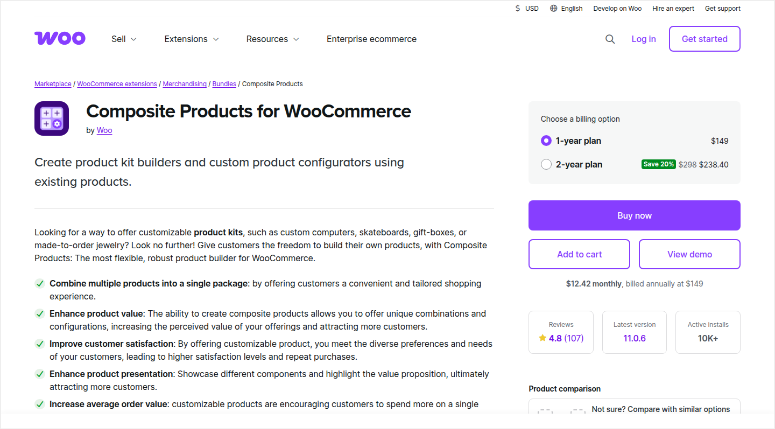
Composite products for WooCommerce differs from traditional bundling.
Instead of pre-made combinations, customers can create their own kit by selecting options. Think “Build your own PC” or “Create your own desk setup”.
Each component (CPU, RAM, case, etc.) is a separate product and the customer selects from the available options for each component.
Why is Composite Products one of the best WooCommerce bundle plugins?
This is the official Woo extension for composite products. It is more expensive, but it is specifically designed for stores that do configuration-based sales.
Real-time price calculation, conditional logic to hide unavailable options, and inventory management that tracks each component work smoothly.
The documentation is excellent. I found WooCommerce’s guides to be clear and comprehensive. Reviews on WordPress.org average 4.8/5, with users consistently praising its flexibility and reliability.
My experience with composite products
I created a test “gaming PC bundle” where customers select CPU, GPU, RAM and storage.
For each component, I set a drop-down menu with available options (e.g. “Intel i7” or “AMD Ryzen”). The price updated in real time as customers made selections.
A powerful feature: I set conditional logic so that certain high-end GPUs were unavailable when a customer selected a budget CPU to prevent mismatched configurations.
The frontend did this immediately without having to reload the page.
The camp administration was bulletproof. I set a limit of 5 GPUs in stock.
After I “sold” 3 through a composite package, the inventory updated correctly and the GPU option showed “3 remaining” to other customers. This is crucial for stores that run complex warehousing operations.
🟢► Advantages
- Custom configuration: Customers build what they need, not pre-selected combinations.
- Real-time price updates: Prices adjust instantly as customers select options.
- Conditional logic: Hide or show options based on previous decisions.
- Solid warehouse management: The component inventory is linked to the actual inventory count.
- Official Woo Support: Responsive, competent help.
- Excellent documentation: Woo’s guides are clear and comprehensive.
🔴► Disadvantages
- Highest Price Point: The most expensive WooCommerce product bundling plugin for a single website on my list.
- Not ideal for simple bundles: If you just want “three products at a discount,” that’s overkill.
- Steeper learning curve: More configuration than lighter plugins.
My verdict: If your store sells configurable products (computers, furniture, clothing sets, etc.), Composite Products is worth investing in. It is specially designed for the customer’s choice and the quality justifies the cost.
For simple preset bundles it may be overkill.
Prices: No free option | Pricing starts at $149/year (single site)
👉 Start here with composite products
5. WPC composite products for WooCommerce ⭐⭐⭐⭐
Best for: Kit creation with easy drag-and-drop functionality and a free tier
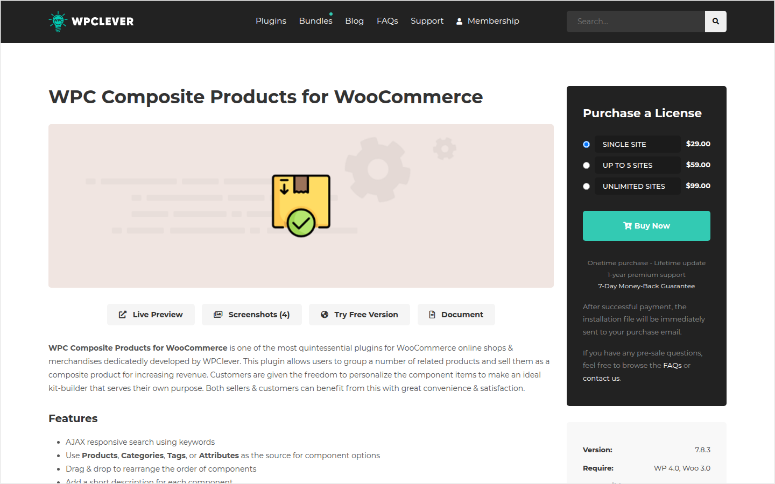
WPC composite products for WooCommerce is WPClever’s answer to the official Woo Composite plugin.
It’s cheaper, has a free version, and uses an intuitive drag-and-drop interface.
The downside: slightly less advanced features, but for most stores you won’t notice it.
Why are WPC Composite Products one of the best WooCommerce bundle plugins?
The WordPress.org rating is 4.6/5 with more than 9,000 active installs, so the community trusts it.
I tested both WPC Composite and the official Woo version side by side and for smaller shops, WPC offers 90% of the functionality at a third of the price.
My experience with WPC composite products
Setup felt quicker than the official Woo extension. Drag and drop to add components, set required/optional toggles, and configure discounts per component. No learning curve for basic configurations.
I built the same gaming PC kit that I tested using Woo’s Composite plugin. WPC Composite mastered this smoothly. In addition, the price updates worked in real time and the inventory management was correct.
One caveat: conditional logic requires the premium plugin. That’s a significant gap if you need it, but most stores don’t do this.
🟢► Advantages
- The free version is capable of: Composite bundling with no upfront payment.
- Drag and drop interface: Faster setup than the official Woo extension.
- Affordable Premium: Cheaper to unlock advanced features.
- Over 9,000 installs, rating 4.6/5: Community trust is high.
- Fast loading times: The frontend interface is fast.
🔴► Disadvantages
- Conditional logic is only available for Premium: Without updating, options based on selection cannot be hidden.
- Advanced customization limited: Fewer styling options than Woo’s version.
- Support variability: Some users report slow response times; others praise WPClever’s support.
My verdict: If you want composite bundling but don’t want to pay more than a hundred dollars per year, WPC Composite is an excellent middle ground. The free version covers basic kit building. Upgrade to Premium if you need conditional logic.
Prices: Free plugin available | Pro starts with a one-time purchase of $29.00
👉 Start here with WPC composite products
6. Bundler ⭐⭐⭐
Ideal for: budget-conscious stores that want a free, lightweight bundle option
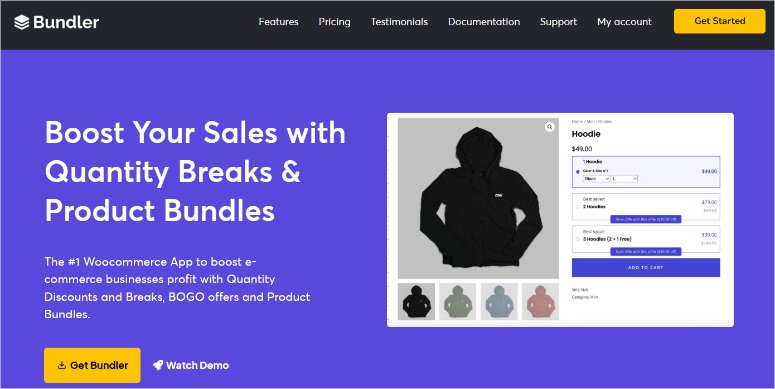
Bundler is the shabby alternative. It is completely free on WordPress.org, open source and maintained by the community. When you’re upgrading your business and every dollar counts, Bundler gets the job done.
Why is Bundler one of the best WooCommerce bundle plugins?
Setup is easy: create a bundle product type, add items, and set discount percentages. It covers the essentials without being bloaty.
The code is clean and because it is open source, developers can review it and contribute to improvements.
The trade-off is obvious: fewer features and less formal support. If you encounter a bug, response time depends on the goodwill of the community.
My experience with Bundler
Installation and setup took 10 minutes. I created a package, added three products, applied a 15% discount, and published it without any issues. The bundle worked correctly in the frontend.
Tests with complex scenarios revealed the limitations. I tried setting minimum/maximum quantities per product but that wasn’t possible.
I was able to add variable products in packages, but it offered limited support. Additionally, quantity-based discounts are not supported.
I like that this WooCommerce product bundling plugin allows for hassle-free bundling. But complex scenarios quickly overwhelm its performance.
🟢► Advantages
- Completely free: No license costs.
- Light code: Minimal impact on website performance.
- Open source: Maintained and verifiable by the community.
- Easy setup: Creating your first package takes 5 minutes.
🔴► Disadvantages
- Limited features: No variable product support, no quantity limits, no upfront pricing.
- No formal support: Depends on WordPress.org forums; Response time varies.
- Slow feature development: Community contributions mean slow updates.
- Not suitable for complex transactions: Quickly outgrown by growing companies.
My verdict: Bundler is honest software. Use it if you have simple bundling needs and don’t have a budget for plugins. As your store grows, you can upgrade to WPC product packages or Woo’s official option.
Prices: Free plugin available | Pro starts at $8.25/month
This is my list of the best WooCommerce product bundling plugins. But there are a few that just barely made it into my rankings. I list them below.
Bonus: Best WooCommerce Product Bundling Plugins for WordPress
FunnelKit
FunnelKit focuses on sales funnels and checkout optimization for WooCommerce.
Although it is not a pure bundle plugin, it offers bundle-like functionality through the Product Blocks feature on custom checkout pages.
You can group products, offer them as a set and offer discounts. However, the main use case is funnel building and not bundling.
Best for: Stores optimize entire sales funnels with customized checkout experiences.
Combine products for WooCommerce
Let customers create their own package by selecting one item from each category. Unlike fixed packages, this is all customer driven. Pricing is straightforward.
Ideal if you want to choose “one shirt, one pair of pants and one accessory” packages.
Best for: Clothing, subscription boxes, modular product combinations.
WPC is often purchased together
This is not a traditional bundle plugin. It displays “frequently purchased together” recommendations on product pages.
Customers see that 92% of people who bought product A also bought product B, and they can add both to their cart with one click. It’s focused on upselling, not bundles.
Perfect for stores looking to increase average order value.
Best for: Stores that want cross-selling recommendations without explicit bundling.
That’s it. You now have my complete list of the best WooCommerce product bundling plugins. If something is unclear, check out the frequently asked questions below.
FAQs: Best WooCommerce Bundle Plugins
Do bundle plugins affect website performance?
No, if you choose the right one. WPC product packages and bundlers are lightweight. I tested them in a test store and saw no measurable impact on performance. Official Woo extensions (WooCommerce product bundles, composite products) are also optimized and fine. The free version of YITH is lightweight; The premium version adds more code. Run your site through GTmetrix before and after installation. You probably won’t see any difference.
Can I use bundles with variable products (size, color, etc.)?
Yes, but it depends on the plugin. WooCommerce product bundles fully support variable products in bundles. Customers can select the size/color for each bundled item. WPC product packages require a premium for variable support. Composite products and WPC composites handle variable products well. YITH WooCommerce Product Bundles does not support them, even in the premium version. Bundler offers limited support.
What happens to the bundled inventory when a customer purchases?
The plugin tracks the inventory of each component separately. If a customer purchases a package that contains Item A and Item B, the inventory levels of Item A and Item B decrease by 1. If Item A is no longer in stock, the package is no longer available. This is correct behavior and prevents overselling. All major plugins handle this exactly.
Can I set different discounts for different bundle items?
Most plugins allow you to set a discount at the bundle level (e.g. “10% off the entire bundle”). Discounts per item within a package are more difficult. WooCommerce product bundles support per-item pricing rules. WPC Composite supports discounts per component. This is not the case with WPC product packages (free). If you need detailed pricing per item, test before purchasing.
Does my bundle plugin work with my favorite page builder?
Modern plugins are compatible with Elementor, Beaver Builder and the WordPress block editor. Test your specific page builder before committing. WPC plugins work well with most builders. Official Woo extensions work everywhere. YITH occasionally has conflicts with advanced builders (check out their documentation).
How much can bundling increase my sales?
On average, customers who purchase bundles spend 15-30% more per order. The exact number depends on your pricing strategy. When you bundle high-margin items with low-margin items, you can increase overall value while maintaining customer satisfaction. I’ve seen stores increase the average order value from $45 to $55-$60 through smart bundling.
Final Verdict: Should I Use Product Bundles on My WooCommerce Site?
Yes. Product bundling is one of the fastest, lowest-risk ways to increase revenue per customer. You don’t change your prices. They simply make it easier for customers to purchase complementary items together.
You also already offer the products individually. A bundle simply shows customers that these items fit together well.
The barrier to entry is low. Choose one of the plugins in the free version, create three test packs with your best-selling products and measure the results over a 30-day period.
Most stores see an immediate improvement in average order value. The cost of the plugin (or free) is recouped in the first month of increasing sales.
The right plugin depends on your needs: simple bundles, customer-customizable kits, subscription bundling, or budget constraints. Try the free versions first. You’ll find what you’re looking for in an afternoon.